Allen Schellack unboxes a fan at the ministry storage room.
People who have a need for a fan in this hot, humid weather can call Allen Schellack at Fort Scott Compassionate Ministries Center, 620-223-2212.
Schellack has a large stack of 20-inch box fans to give away through a grant from Evergy Inc., a local utility, to the Salvation Army. Schellack is the Bourbon County Service Extension Coordinator for the Salvation Army.
Elderly and disabled people without access to air conditioning or other means of staying cool during hot and humid weather can receive fans by appointment by calling Schellack.
“We need proof of a Bourbon County address,” Schellack said. “And some form of identification.”
To help the most people, each household is eligible for one fan.
Applications will be accepted until all fans are distributed.
This is the Salvation Army’s fourth year to give out fans in Bourbon County, Shellack said.
Schellack is also the Compassionate Care Pastor for the Fort Scott Nazarene Church, Director of Fort Scott Compassionate Ministries and Outreach Center, Bourbon County Coordinator for CarePortal and treasurer of the Fort Scott Ministerial Alliance, in addition to his services with the Salvation Army.
His office is located at 26 N. Main, on the second floor of the Senior Citizens Center.
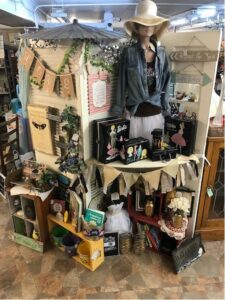
Some merchandise at the Main Street Gallery and Flea Market. Submitted photos.
This Saturday, June 20 beginning at 9 a.m. Main Street Gallery and Flea Market is hosting what they are calling the 1st Annual Junk and Disorderly event.
“We are starting a tradition of having an open house for the flea market every year because we want the vendors to know that they are a big part of the store,” Rechelle McClellan, one of the owners, said. ” We want them to know we appreciate them for trusting us to sell their wares. It is a celebration for them.”
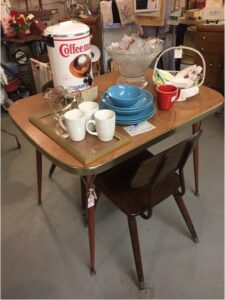
Items for sale at Main Street Gallery and Flea Market. Submitted photos.
In addition, Rechelle with her husband, Josh, and mother-in-law Julie, want to showcase what the shop has to offer.
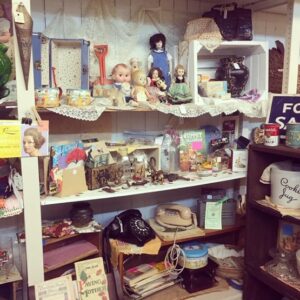
“We also want the public to know that we are a one-stop-shop,” Rechelle said. “If there is something you are looking for, chances are we have it at Main Street Gallery & Flea Market between new and vintage items.”
Items for sale at Main Street Gallery and Flea Market. Submitted photo.
Vendors, family and friends will be helping with the event, Rechelle said.
There will be complimentary coffee, juice and a Mimosa-an adult beverage made of orange juice and champagne.
There will also be door prizes.
Items for sale at Main Street Gallery and Flea Market. Submitted photos.
The business is located at 23 South Main in downtown historic Fort Scott.
Contact Rechelle McClellan at the store’s number (620)223-2210 for more information.
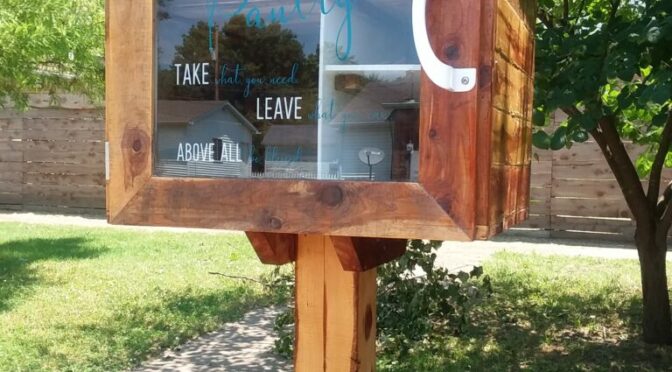
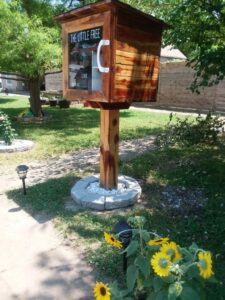
The Warner’s Little Free Pantry at 4th and Holbrook Street.
A couple of Fort Scottians saw a need in their neighborhood and decided to help meet it.
Chase Warner and Whitney Wratchford purchased their house last summer and immediately saw the need within their neighborhood for some food assistance.
“Chase and I have had this on our hearts since we first became homeowners in our community,” she said. ” We noticed immediately that our own neighborhood was in need of a little help. We were seeing children daily that would make comments like ‘Can I have a banana? I had Ramen Noodles for breakfast.’ And ‘My mom doesn’t have money to buy us dinner.’ We know that this problem isn’t just in our neighborhood but all throughout our community and when the Covid-19 pandemic really hit hard and people started to lose jobs we set out to put the pantry up as soon as the stay-at-home order lifted! Chase and I just really wanted to help and the best way was to provide food that any individual could choose from on their own time and when they feel comfortable.”
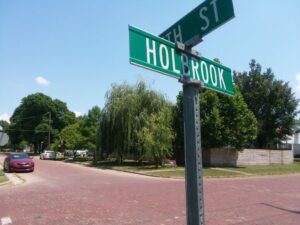
Warner’s Little Free Pantry is located at 4th and Holbrook Street.
“We ourselves are a working-class family and have at times in our lives struggled to provide as well and knowing the heartache that those parents and children are feeling just put our plan in motion,” she said. “I have since seen our pantry helping lots of people and lots of people helping fill the box! That is exactly how the pantry should work!”
They opened Warner’s Little Free Pantry on June 6, 2020.
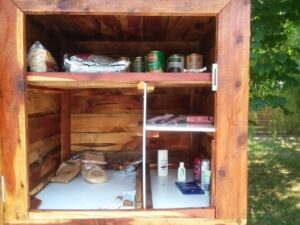
It is a box on a stand that contains numerous items for the taking: food, hygiene items and other shelf-stable items that can stand Kansas temperatures housed in a box.
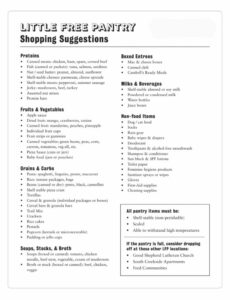
“Take what you need,” Wratchford said. ” Leave what you can. Above all be blessed! We ourselves donate whenever possible and just hope that others will decide to donate as well. The pantry is open for donations for nonperishable food items and various toiletries and household items. If anyone has any questions or concerns they can reach us via email, phone or on our Facebook page Warner’s Little Free Pantry.”
The inside of the Warner’s Little Free Pantry on Wednesday afternoon.
Wratchford stumbled across a grassroots movement and decided this would help fill that need.
The Little Free Pantry is a grassroots, locally sourced solution to local need, Wratchford said. “Whether a need for food or a need to give, our mini pantry helps neighbors feed neighbors, nourishing neighborhoods. It is meant to meet immediate needs for families or individuals who are struggling to make ends meet. “
“Jessica McClard launched the movement in May 2016 in Fayetteville, AR,” Wratchford said. “Since that time there have been many families like ours, building and opening little pantries of their own…. We used wood we purchased for our fence and Chase and his dear friend Lincoln Brubaker built the box in a day! “
“The box sits on 4th Street between Holbrook and Eddy facing north., she said. “If you need to use GPS to find us you can program 314 W. 4th St. You can’t miss it!”
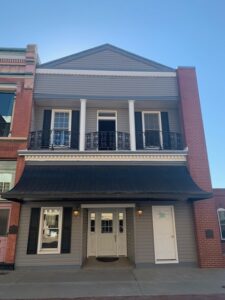
Front Door Real Estate, 119 S. Main, Fort Scott. Submitted photo.
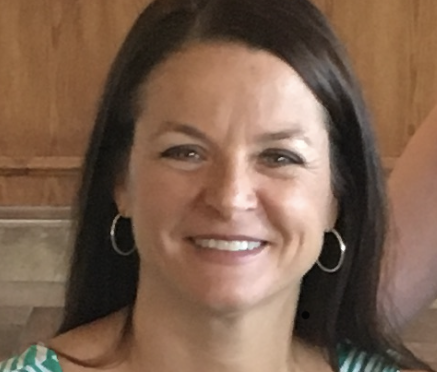
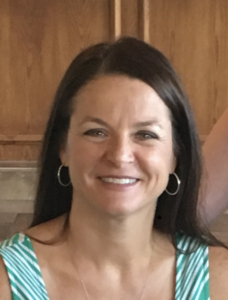
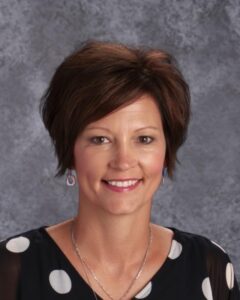
Diane Striler, 53, is a new realtor with Front Door Real Estate.
Diane Striler, a new realtor with Front Door Real Estate. Submitted photos.
Her hometown is Mission, KS.
Striler began April 2, 2020, with the real estate business.
Her duties include working with clients to purchase / and or sell residential, commercial, lots, land, and lake property, she said.
Striler has always been in the sales industry.
“After college, I started my career with Maytag as a territory sales manager,” she said. “After this position, I continued to work in the appliance industry selling high-end luxury appliance lines including
Sub-Zero, Viking, and Bosch. Most recently I was a regional manager selling Daily Sports high fashion ladies golf apparel.”
” In sales, I have always sold a product that I believe in and have been proud to represent,” she said. “Transitioning to real estate, I have a passion to help people find the best home/land/lot or building for their specific needs. Everyone needs something different, whether it is to find their first home, or sell a current home to find one that is more suited for their current needs. I want to be part of that! I want to provide a quality service to make the transaction seamless and positive. I want my clients to be able to look back at the experience and have a positive memory.”
Striler earned a Bachelor’s Degree in Marketing from Kansas State University
She is located at Front Door Real Estate, 119 S Main Street.
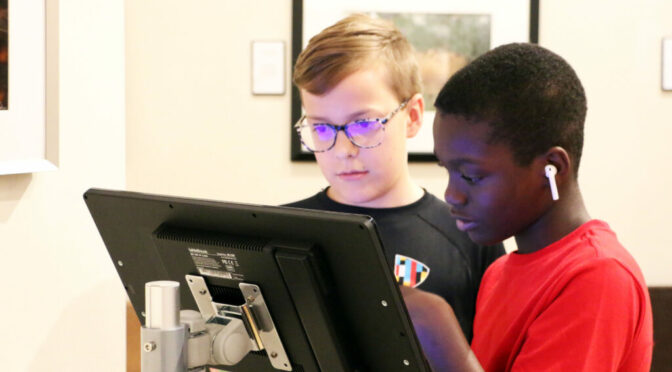
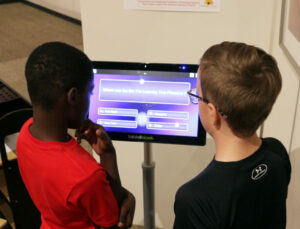
Submitted photos. Elijah Knight and Jax Armstrong use interactive technology at the Gordon Parks Museum.
A July 2019 grant from the Community Foundation of Southeast Kansas is helping to support interactive technology for youth and young adults, at the Gordon Parks Museum.
The museum is located on the campus of Fort Scott Community College, 2108 S. Horton.
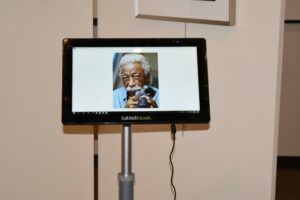
“The interactive technology tablet is up and running,” Museum Director Kirk Sharp said.
Submitted photos.
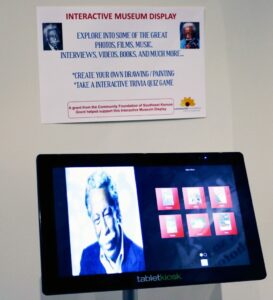
The museum purchased a tablet kiosk, a stand for the kiosk, and operational interactive software.
“It is designed to deliver content in an interactive setting for all of our visitors, especially younger audiences,” Sharp said. “This interactive software will not only provide information about Gordon Parks but will also allow the visitors to view photos, videos, interviews, review books, listen to music, create a drawing/painting, interactive trivia quiz game and much more.”
Submitted photos.
“It has been a goal of the museum board to offer an additional and more modern approach to learning, viewing and appreciating all of the collections and works of Gordon Parks,” Sharp said. “Providing interactive displays in different areas of the museum will benefit the viewer(s) by providing additional details and content to each supported exhibit. This tablet helps us achieve this goal.”
“This project helped to give us the ability to provide a more engaging way for the younger generation to learn more about our museum and keep visitors fully engaged,” Sharp said. “The interactive technology has helped make our museum more appealing to younger crowds and to encourage visitors return for future visits.”
“This project also supports our mission of using Gordon Parks’ remarkable life story to teach about artistic creativity, cultural awareness and the role diversity plays in our lives,” Sharp said.
Submitted photos.. Caleb Clay uses interactive technology at the Gordon Parks Museum.
“When the museum teaches about creativity, cultural awareness and diversity, it needs to be able to reach our visitors in creative ways, and by providing interactive technology, this will help us deliver on that objective,” Sharp said. “We want our visitors’ experience to be engaging, educational and interactive, especially for the youth so we can help to keep the Gordon Parks legacy alive for generations to come.”
The Fort Scott Aquatic Center is located at 723 S. Scott.
The hot days of June have many seeking ways to cool off.
The Fort Scott Aquatic Center is one option for cooling off.
However, because of the COVID 19 Pandemic, it has remained closed until staff worked on a plan to be able to open safely.
The center will open on June 22, Chasity Ware, the manager, said.
Chasity Ware. Submitted photo.
“With many days of the uncertainty of the COVID 19, a lot of research went into making a final decision to plan to open the facility, ” she said. “Once I had the facts of what we were capable of doing with restrictions placed upon us and then shared with the (Fort Scott) City Commissioners, their faith in me and my team of employees were given the go-ahead to open. Due to the many behind the scene hours to prepare the opening of the pool along with lifeguard training that had to be completed, we needed a little time. We also chose to wait until the phase-out plan per Gov. Kelly to help with even fewer restrictions.”
Precautions are in place
“The modifications will include but not limited to:
some masks being worn,
extra cleaning being provided,
no lounge chairs issued this season (we ask patrons to bring in their own chairs),
no 3 pm or 5 pm break will be provided,
and only pre-packaged foods will be served out of the concession stands.
We will initially limit our patrons to 250 each day for the first few weeks to help with gatherings as well.”
“Also NO pool passes will be sold,” she said. ” We can’t guarantee our season and know so much has already been missed we just didn’t feel the passes were going to be effective. If we were to close, we can’t imagine the nightmare for the refund/credit.”
“NO ONE will be allowed to come in and sit to watch anyone swim without paying,” Ware said. “We have to count them as part of the capacity number.
And one last thing, NO FLOATATION DEVICES of any sort. No padded suits, no arm wings, no life jackets.”
“There will be NO SWIM LESSONS, she said.
“We want to remind everyone to please pay attention to their symptoms and their children’s,” Ware said. “Please don’t attend the pool if you are sick, running a fever or overall not feeling well. Help keep others safe.”
Daily rates
Daily admission rates will apply: 3-14 years old-are $2, 15-62 years old- $3 and 63 years old and older- $2.
The center currently has 29 employees between lifeguards, office/concession personnel and managers.
“This number could change as the future moves forwards,” Ware said.
Pool hours, close date
Pool hours are 1 pm-7 pm Monday through Saturday and 1 pm-6 pm on Sundays.
The date to close will be no later than August 9 due to college lifeguards returning to college the first weekend of August and school for Fort Scott USD #234 is anticipated to start Aug. 12, she said.
“This could change as well as we move forward.,” Ware said. “We pray we have no outbreaks or other issues but are prepared to make decisions as needed. “
NO private pool parties
“We are sorry to say at this time there will not be private pool parties available this pool season,” Ware said. “We need the extra time to clean the facility. “
The center’s phone number is 620-223-8142.
Ware is the Fort Scott Aquatic Center Manager, in her 9th season. She was employed by Mound City Pool seven years prior to joining Fort Scott.
She is a Certified Lifeguard Instructor.
“I certify lifeguards for the Fort Scott Aquatic Center, Nevada, Iola, Pleasanton, and LaCygne pools. I have been doing that for six seasons now,” she said.
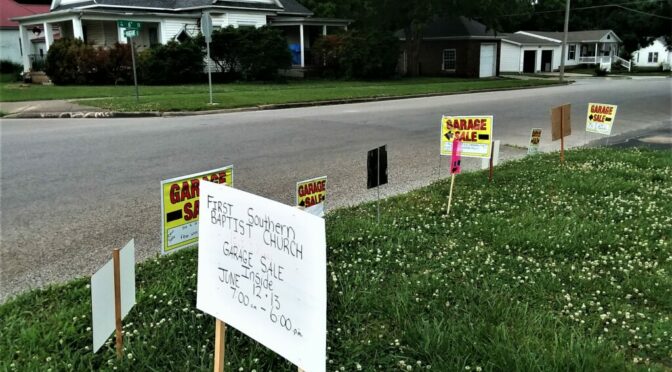
St. Mary’s Catholic Church’s annual multi-family garage sale was busy on Friday morning.
Fort Scott was busy Friday morning, June 12, with a town-wide garage sale, as residents enjoyed a mild day for shopping. The sales continue on Saturday, June 13.
This is the first town-wide garage sale of the season and is a month later than usual, due to the pandemic restrictions.
Fort Scott Christian Heights School had a multi-family garage sale.
Maps of sale locations can be picked up at the Fort Scott Chamber of Commerce Office, 231 E. Wall; Bids & Dibs, 108 S. Scott Avenue; Casey’s General Store, 2216 S. National; Pete’s, 1920 S. Main, and 603 S. National Avenue; Fort Scott Smoke Shop,1705 S. National; and 5-Corner’s Mini Mart, 1122 S. Clark.
At least three Christian organizations are having multi-family sales: St. Mary’s Catholic Church, 705 S. Holbrook; Fort Scott Christian Heights School, 1101 S. Barbee Street; and First Southern Baptist Church, 1818 S. Main.
Garage sale signs were located all over Fort Scott for the annual garage sale. These are at Margrave and Sixth Street.
To see the Fort Scott Chamber of Commerce map of all the town’s garage sales, click below:
Jody Hoener, Bourbon County Economic Development Director. Submitted photo.
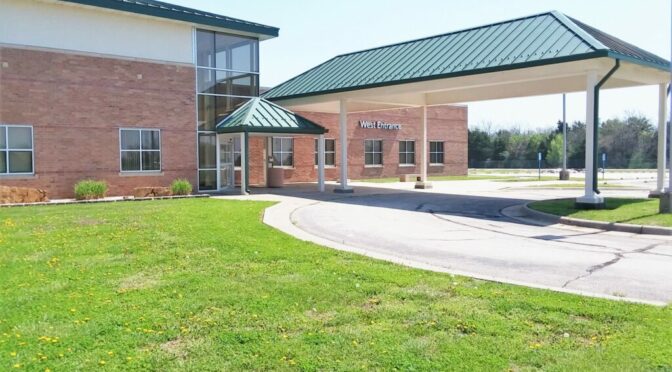
Bourbon County Economic Director Jody Hoener is working on securing leases in the former Mercy Hospital building on Fort Scott’s south end, in hopes of providing the county with a medical mall.
A medical mall is a facility offering comprehensive ambulatory medical services such as primary and secondary care, diagnostic procedures, outpatient surgery, and rehabilitation, except the overnight beds, according to merriam-webster.com.
“Bourbon County demographics show proportionately more elderly, more children living in poverty, lower incomes, and more chronic health conditions,” Hoener said. ” In addition, our community recently felt the impact of fewer health services (with the closing of Mercy Hospital in 2018). Rural health systems can overcome these challenges by creating linkages and efficiencies.”
“Access to robust and diverse health services is much more than a quality of life issue,” she said. “A vigorous and thriving health care system is essential not only for public health and welfare, but to enhance economic opportunity as well.”
Health organizations that currently have a part in Bourbon County health care have shown interest.
“We are currently working on leases with Community Health Centers of Southeast Kansas and Ascension Via Christi,” she said. “These leases will be ten-year long-term contracts,” she said. “Fort Scott Community College Nursing program will also be leasing space through an inter-local agreement.”
Other entities have “paused” conversations.
“Although we have been in talks with additional healthcare providers to occupy space, the COVID-19 pandemic has paused much of these conversations.,” Hoener said. “Recruitment activities will be a high priority with a goal of one additional anchor tenant in the next 3-5 years.”
The combined operation of many entities under one roof provides financial benefits to each involved, Hoener believes.
“The healthcare mall addresses many challenges local providers face in an innovative approach, creating synergy within the four walls, that will help each organization’s bottom line,” she said. ” In general, there are fewer healthcare providers in rural areas, and they operate on very thin profit margins. When compared to urban communities, our local health providers face unique challenges.”
Bourbon County’s vision for the community:
“Our vision is a healthy, safe, and thriving Bourbon County.,” she said. “A strong health care system is a critical piece of any community’s vitality and sustainability.”
The healthcare industry impacts the local economy.
“The healthcare industry is rapidly changing and has the potential to greatly impact access to these services in the future, ” Hoener said.
“Through the healthcare mall, we are becoming proactive in maintaining high-quality local health care services. In addition to health outcomes, healthcare services have shown to have an impact on:
Attracting and maintaining business and industry growth
Attracting and retaining retirees
Creating higher-paying jobs in a growing sector
Contributing to public finances, supporting essential public services”
” Americans are spending more dollars on healthcare,” Hoener said. “In 1970 healthcare costs accounted for 7.0 percent of the GDP. In 2017, Americans spent $3.5 trillion on healthcare, or 18.0 percent of the GDP. The projected GDP is 19.4 percent by 2027 (Kansas Health Association, 2019). Capturing a share of this economic growth will only help our community.”
“When residents spend health care dollars elsewhere, rather than purchasing the service locally, it can have a negative economic impact and result in loss of dollars within our local community,” she said. “Out of town trips to obtain healthcare services naturally offer opportunities to spend dollars outside of town that may have been spent locally.”
“Nationwide, employment in healthcare services increased 92 percent from 1990 to 2015. For Bourbon County, in 2017, health services ranked number 3 in terms of employment,” she said. ” Also, in 2017, the health care sector’s impact on retail sales was $19,308,000, county sales tax impact of $270,000, and a total impact of $65,378,000. (Kansas Health Association, 2017).”
“Industry and business leaders look for good health and education services when making location decisions,” Hoener said. “They also want to ensure the local labor force will meet their needs.”
” Attracting and maintaining retirees is also important as this is a special group of residents whose spending can provide a significant source of income for the local economy.”
The west end of the former Mercy Hospital is vacant. The county government is working to create a medical mall in the vacant section.
Because of the COVID 19 Pandemic, the annual All-Hit 103.9 Home, Sport, Farm and Garden Show was moved from spring to summer.
The event is now scheduled Friday, June 26 from 5 to 8 p.m. and Saturday, June 27 from 8 a.m. to 1 p.m. at Arnold Arena on the campus of Fort Scott Community College, 2108 S. Horton.
Submitted photo of a past show.
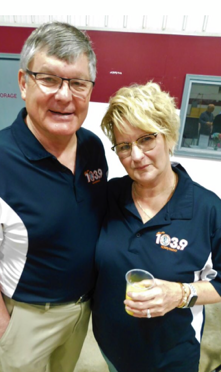
Hosted by Fort Scott Broadcasting, which includes radio stations 103.9, Red Dirt 98.3, and 1600 AM, the event is “a great opportunity to get local businesses to show off their products,” said Deb McKenney. Tim and Deb McKenney own the business.
Tim and Deb McKenney.
This year there will be pandemic guidelines, Tim McKenney said.
“We are encouraging people to wear masks and gloves, and we will provide some for those who would like some,” he said. “Also hand sanitizing will be available.”
Submitted photo of a past home show.
In addition, there will be more spacing between the vendors, he said.
“There will be fewer booths, so it won’t be so crowded,” Tim said.
This year they are expecting 40 vendors as opposed to 60, he said.
The show began in 1982, and in the late 80s the Pride Organization at Fort Scott Middle School took the reins, as a fundraiser, Deb said.
The broadcast company was asked to take the show on again and they have since continued the showcasing business event for the community.
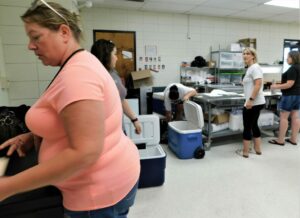
USD 235 Driver Bill Marlow loads food to deliver to the district’s children on June 9.
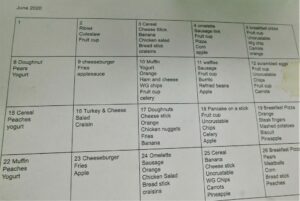
The Uniontown School District is providing a meal program to its’ districts’ children through June 25.
The first day for meals was June 2.
In addition, summer school children receive activity packets.
“We usually have kids in the building for summer school,” Tara Gorman, third-grade teacher at West Bourbon Elementary School, said. “We couldn’t because of the pandemic. This is our alternative plan, if they signed up for activity packets.”
“This week is a book, they get a book once a week, a craft kit and a couple of games to work on with siblings,” Gorman said. “This week they will be building paper airplanes and testing paper airplanes.”
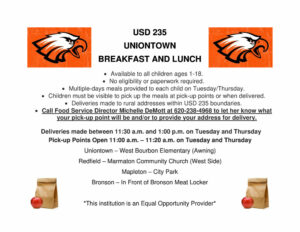
Breakfast and lunch are available to children ages 1-18 in this program, with no eligibility or paperwork required to receive the food.
Multiple days breakfast and lunch will be provided to each child on Tuesday and Thursday of each week through June 25.
USD 235 Food Service Director Michelle DeMott said food is prepared on Mondays and Wednesdays and delivered on Tuesdays and Thursdays.
USD 235 Food Service Director Michelle DeMott, left, checks lists of students that will be delivered food. In the back is Courtney Campbell, fifth-grade teacher; Hannah Hayes, social studies teacher and Tara Gorman, third-grade teacher. Teachers go on the route and deliver activity kits for students as well as the food.
Parents are asked to call DeMott at 620-238-4968 to sign up.
DeMott will ask for some information of either a pickup point or a rural address for delivery.
Deliveries will be between 11:30 a.m. and 1 p.m.
Driver Roxy Gregg, left and Food Service Director Michelle DeMott discuss the routes before leaving West Bourbon Elementary School.
Pickup points are the West Bourbon Elementary School on at the front of the building, Marmaton Community Church in Redfield, the city park in Mapleton, in front of the Bronson Meat Locker in Bronson.
Krista Postai, president and Cheif Executive Officer of Community Health Center of Southeast Kansas. Submitted photo.
The worldwide COVID 19 Pandemic has affected society in the last three months for all segments, especially health care.
“COVID certainly dominated our activities and thinking, for two solid months,and we’re just now getting back to thinking ahead,” CHS/SEK President and CEO Krista Postai said.
“We did commit to remaining in the (former Mercy) hospital once the county assumes responsibility,” she said. “We are planning some minor remodeling including enlarging the pharmacy and moving all of our diagnostics (including mammography) into the clinic space freeing up the former diagnostic space for Ascension/Via Christi.”
“We are starting to see more people in the clinic now as the state is ‘opening up’,” Postai said. “At one point about one-third of our visits were through televideo or on the telephone but we definitely find that folks in Ft. Scott prefer face-to-face visits. We’re not quite back to normal activity level but getting there.”
“In addition to testing for COVID, we are now offering the antibody testing with a doctor’s order,” Postai said. “This is used to see if you had the virus and have since developed antibodies that could help protect you for getting it again. Although the science is still out on that, as some people seem to be susceptible to having it a second time. So far everyone we have tested thus far have been negative.”
“We have added staff including mental health,” she said.
CHC/SEK welcomed Tien Nguyen, a board-certified psychiatric mental health nurse practitioner to it’s Behavioral Health Services team, according to a press release.
Psychiatric NPs assess and diagnose patients, provide psychotherapy and prescribe medication.
Tien Nguyen. Submitted photo.
In addition, six nurse practitioners were added to the team.
“CHC/SEK welcomed its first class of nurse practitioner residents, thanks to a partnership between the Irene Ransom Bradley School of Nursing at Pittsburg State University and the health center. The new residency program is the first such program in Southeast Kansas,” according to the CHC/SEK Facebook page.
“With guidance from their professional preceptors, six nurse practitioners — Lorraine Lorentz, Kelly McGuire, Kelly Mishmash, Brice Saunders, Maranda Scott, and Mayra Watson — will care for patients in Coffeyville, Fort Scott, Pittsburg, and Miami, Oklahoma clinics.”
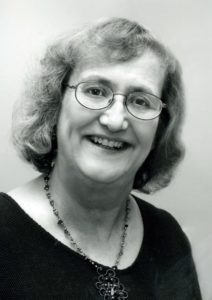
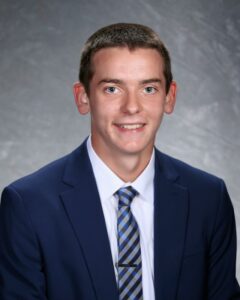
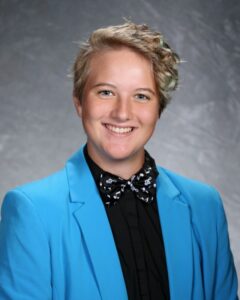
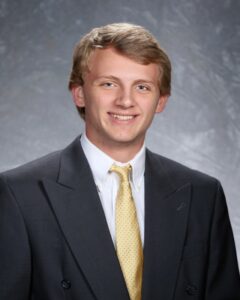
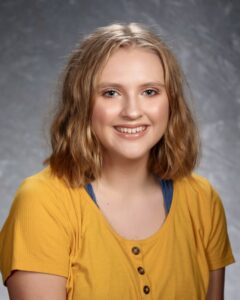
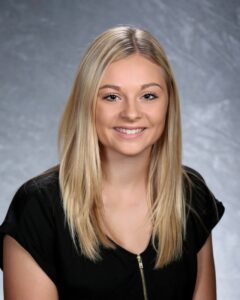
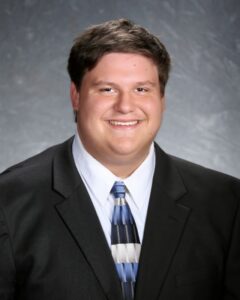
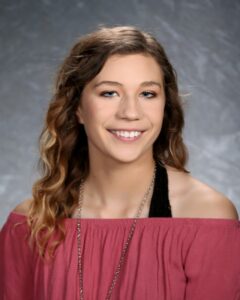
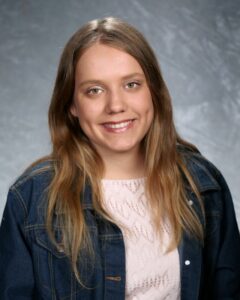
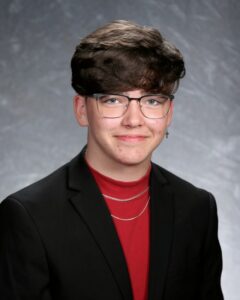
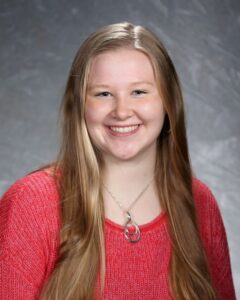
Luke George is valedictorian for the class of UHS 2020.Liberty Franks is salutatorian for the class of UHS 2020.
Uniontown High School personnel are working to provide an in-person graduation ceremony for its’ 2020 seniors.
The UHS Class of 2020 Graduation Ceremony will take place on Saturday, July 11 at 2:00 pm in the WBE gymnasium.
Mike Reith, Principal at Uniontown High School, recently posted a notice to the families of 2020 seniors on social media.
“When Governor Kelly modified the Reopen Kansas plan, it caused us to need to move our graduation date scheduled for June 21. The seniors who participated in the graduation ceremony discussion Zoom session with me wanted to set a date in each of the three summer months. The second date was originally set for Sunday, July 12, but I realized that for some families and situations, a Saturday graduation might be preferable. So I gave the seniors and families an option to vote for either July 11 or July 12. The result of that vote was to have the ceremony on Saturday, July 11.”
Reith answered questions in an email interview with fortscott.biz:
Will there be a limit on how many family members can attend the ceremony?
“Currently, we are not planning to limit attendance. It is a small class, so we feel we can structure the gymnasium for proper social-distancing while still being able to accommodate for all who plan to attend.”
Will social distancing be maintained?
“We have been advised by Rebecca Johnson, SEK Multi-County Health Departments Administrator, to follow the ‘Phase Out’ recommendations of Governor Kelly’s Reopen Kansas plan, which we were planning to do already. Graduates will be spaced 6 feet apart. We will encourage all those who plan to attend to use proper hygiene and stay home if they feel sick. We will advise those who may be at a higher risk due to their health situation to strongly consider staying home, but we will leave that decision up to them. We will structure the facility so that families can sit together, but different family groups will be social-distanced. We will make hand-sanitizer readily available, and we will encourage attendees to wear masks if they choose.”
Who will be the speakers?
” Speakers are Valedictorian – Luke George, Salutatorian – Libby Franks, Inspirational Speaker – Mrs. Alicia Jackson (chosen by the Class of 2020).” Jackson is a teacher at UHS.
The Class of Uniontown High School 2020 has 19 students”
Donavan Beerbower, Kord Bowen, Makenzie Brown, Alissa Button, Cheyanne Carpenter, Morgan Coulter, Ty Davidson, Colt Eck, Libby Franks, Luke George, Dalton.Graham, Jacquie Hampton, Matthew Harclerode, Breleigh Harris, Kolby Martinez, Sivanah McAnulty, Shelby Morillo, Gavin Ross, Lauren Shinn.