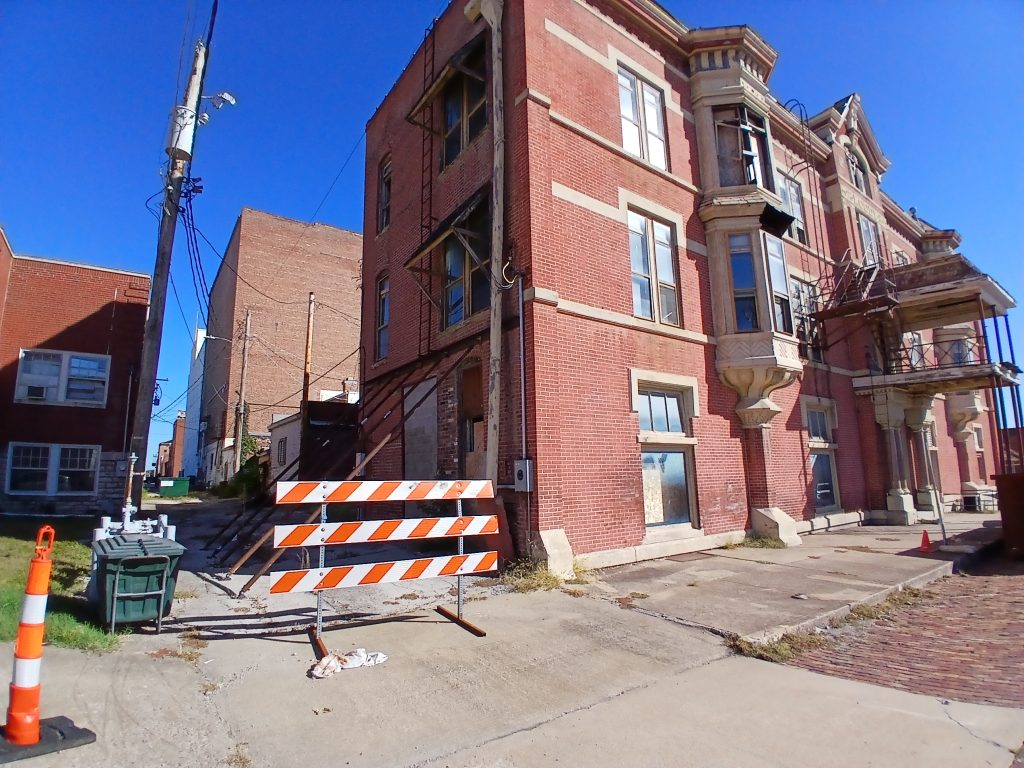
FORT SCOTT — The IRS has discharged its lien on the historic Moody Building and the city has a deed to the property in hand, City Attorney Bob Farmer told the Fort Scott City Commission Tuesday night, putting the long-delayed transfer to developer Al Niece within reach. The discharge still has to be recorded and a title company is checking whether anything else is needed. Farmer spoke minutes after Niece and his architects showed the commission what they hope to make of the historic building.
“I have in my hand a discharge of lien from the IRS on that building,” Farmer said.
Mayor Kathryn Salsbury presided, with Commissioners Julie Buchta, Tracy Dancer, Tim Van Hoecke and Matthew Wells, City Manager Brad Matkin, City Attorney Bob Farmer and City Clerk Lisa Lewis.
Moody Building: lien discharged, deed in hand
Farmer said he had worked his way up to the supervisor of the IRS agent handling the federal tax lien on the building at 124 S. Main. The supervisor, he said, offered to “speed this along,” discharged the lien outright, and the discharge arrived Tuesday. Farmer said the Register of Deeds was not sure how to record it, and the city was working on getting it filed.
The same day, he said, he received by overnight mail a resolution from Troy Schell, the attorney for what Farmer called the expired Moody LLC, authorizing transfer of the property to the city, along with a quitclaim deed to the city. Both documents went to the title company, which is checking whether anything else is needed.
“We are this close to having all the things that you were talking about satisfied so that Al owns this wonderful historic pile of bricks over there,” Farmer said.
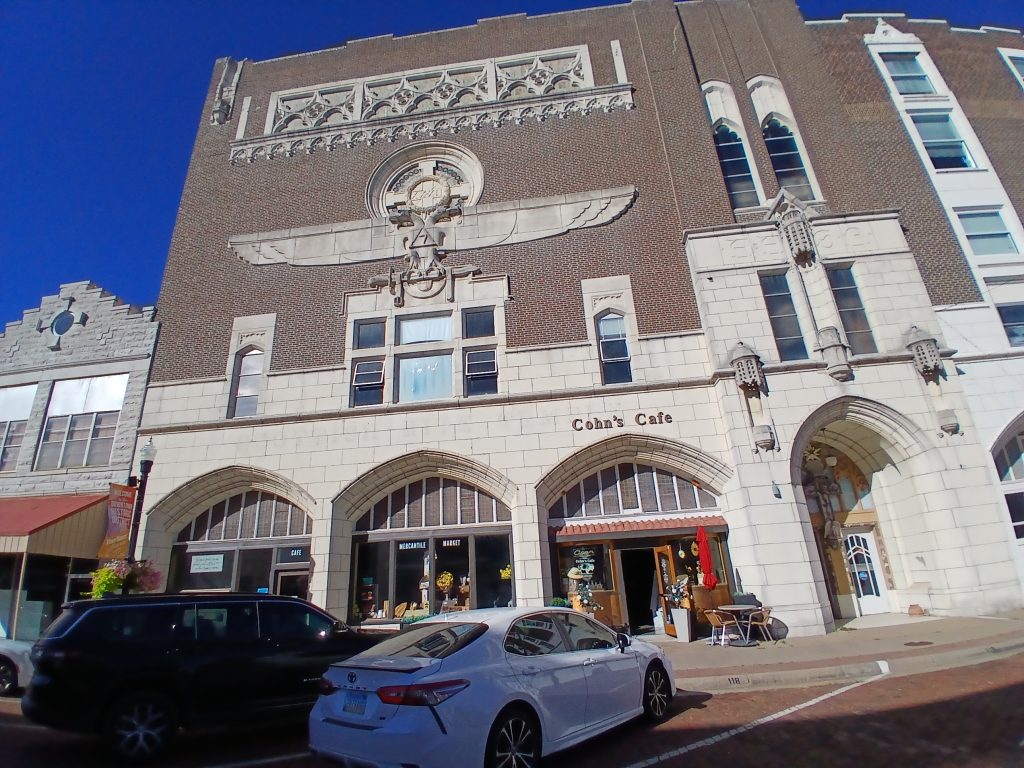
Niece thanked Farmer and Matkin for their help. “It has been an ordeal and it’s not done yet,” he said. He said the outside of the building will stay the same, and that what his team has found inside so far is “a little bit more than we anticipated.” He has worked with Architect One of Topeka on the project for four months.
Architect One project manager Tyler Duggan said the building was built by I.W. Moody, who founded the Fort Scott Granite and Marble Works, and that the historic plaque across the street puts its cost at $20,000 in 1890. “It’s just a stunning example within the Kansas community and the broader region of a strong historic project,” concluded Duggan.
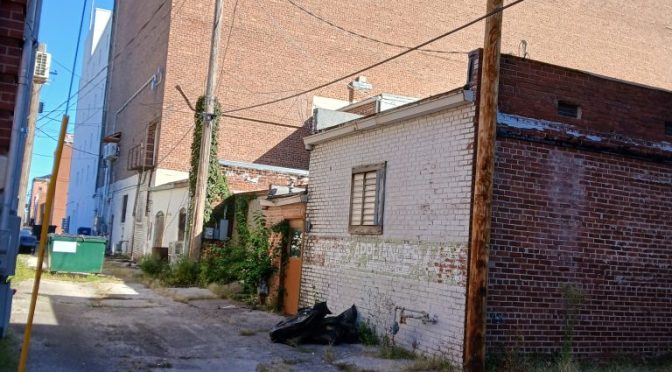
The firm’s early concepts call for restaurant and retail space on the main floor and apartments, or possibly a studio or loft condominium, on the upper floors. The team has been cleaning out the basement. The architect said the building is being held together on the alley side with “belts and posts” after years of improper care. He asked anyone with old photographs of the building to share them. Wells pointed the firm to Brian Allen, who has access to Don Miller’s photo collection, and Dancer suggested the Old Fort Genealogy Society.
“Lu and I really, really like this town,” Niece said. “And we want to turn the Moody Building into something that the community can be proud of.” Of the architects’ schedule, he said: “They’re giving me a timeline. I said, ‘well, let’s cut it in half.’ That ain’t going to happen, but we’re going to be moving on ahead. Just be patient with us, and you’ll start to see some improvements pretty quick.”
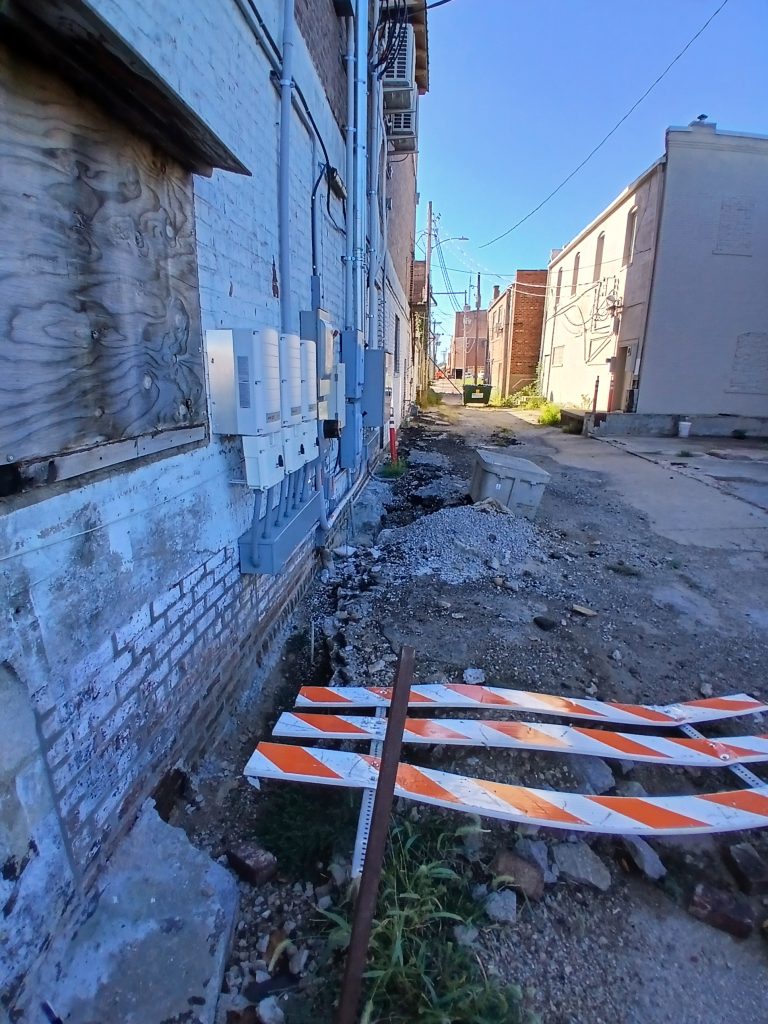
Earlier Tuesday, while looking over the building, Niece told fortscott.biz its basement also floods, and Matkin said alley work behind it cannot be done until the poles holding up the building’s west side are removed (Alley In 100 Block of South Main: Attention Needed).
118 E. Wall: a clinic, but how soon?
Brent Morris of Mercy and Truth Health Care Ministry, a faith-based health center with clinics in Kansas City, Kansas, and Johnson County, told the commission the owner of the red-tagged building at 118 E. Wall has agreed to donate it to the ministry. Morris, who called the ministry “an FQHC look-alike,” said it provides primary care and behavioral health, works with refugees and runs a mobile health unit that travels up to four hours out, and that maternity care and a birthing center are among its goals. He said its clinics are open 8:30 a.m. to 5 p.m. with no overnight stays, apart from maternity care if that comes later. He also emphasized the ministry’s model of partnering, not competing, with already-established health care in the region, and pointed out that a care clinic is a cost-effective way to meet the health care needs of the region.
Morris said repairs would cost more and be “a little more extensive than we thought,” and that the ministry might first open in a neighboring building, such as 116, while it raises money for 118. He estimated three to six months for an answer and said he hoped the building would be taken care of within six months to a year.
Wells said he supported the proposal but not the timeline. The city demanded repairs to the building 18 months ago, he said, and Salsbury put the total wait at three years. “And it feels like we’re fixing to kick the can again. I’m not okay with that,” he said, asking that the building at least be braced structurally right away to prevent collapse and damage to the adjacent buidlings. Asked by Van Hoecke whether the city had any other options for the building, Matkin said, “Your other option is you guys decide what you want to do with it.”
Kristine and Gavin Gemsky, who signed up to speak, objected to a clinic in the downtown historic district and questioned spending hundreds of thousands of dollars on the building. Gavin Gemsky asked what demands the ministry’s clinics put on emergency services; Morris said it varies, “one a week” or none. Kristine Gemsky said the ministry had told them it could also house refugees. Morris denied it: “Never said that we house them.” Salsbury invited the Gemskys to meet with her separately.
Later in the meeting, Leroy Kruger, the city’s director of community compliance, zoning and housing, told Buchta the ministry has said it would carry insurance on the building from the day it takes the deed.
CareVan letter approved
Becky Gray, director of Building Health Inc., a nonprofit subsidiary of the Community Health Center of Southeast Kansas, said its CareVan service gave just under 4,400 rides in Bourbon County in its last program year and had to turn down 412 for lack of capacity. She said close to 2,000 county households have one vehicle or none, and that a change in the state’s Medicaid broker cut the program’s rates so it is no longer operating in the black. She asked not for money but for a letter of support for a Kansas Department of Transportation grant. The commission approved the letter 5-0.
1110 S. Scott goes to a hearing
The commission approved Resolution 41-2026 on a roll call with no votes against, setting a Nov. 17 public hearing at 6 p.m. on the house at 1110 S. Scott as an unsafe and dangerous structure. Kruger said the house came before the commission on Nov. 6, 2018, for an order to repair it. “Eight years later, it’s in no better shape than it was back then,” he said. “I’ve received multiple different complaints in the neighborhood on this particular house.”
Neighbor Mitch Parker said a hole on the north side had been “the size of a Chevy,” which he believed had since been boarded up; animals had been living inside, and two real estate agents told him it would lower the value of his house. “We put up a $5,000 property privacy fence in the backyard just to cover it up,” he said.
Other business
- The commission voted 5-0 to approve the agenda after removing the lake lot sale discussion and adding a Strukel Electric item to the consent agenda. The consent agenda passed 5-0. It included Appropriation Ordinance 1417-A ($1,942,700.75 in payments dated Sept. 10–29), a final cape seal payment of $344,225 to Vance Brothers and $59,060.02 to Whitaker Aggregate for asphalt on 9th Street. Matkin said 72 blocks were done this year.
- Salsbury said timed limits are back: four minutes for public comment, and she asked speakers making appearances to keep to 10 to 12 minutes.
- Ray Streeter said he was still waiting for street striping he had asked for and that chip-seal gravel was left in front of the post office and the courthouse. Matkin said he would send the street sweeper; Wells said cars had been parked in those spots every day despite the signs.
- City Engineer Jason Dickman said preliminary work has started on Wall Street Phase 3 and the railroad permits have been paid for. A 12-inch water line already crosses the highway near Key Industries, he said, but sewer service west of the highway could need a lift station because nearby manholes are only about 5 feet deep.
- Van Hoecke said the commission has made no commitment to build roads or sewer for a proposed development across the road, only to investigate a water line. Wells said the city agreed only to find out what water and sewer service would cost. A business owner in the audience said the same.
- Wells asked about restoring turning-lane striping, the water and sewer master plan the city is doing with a Spring Hill group (he was told it is still under way) and the at-grade crossing and overpass study.
- Wells said the volunteer Hope Alliance has placed seven homeless people in jobs and housing in a few weeks and helps only people from Fort Scott and Bourbon County. He credited Honey Bidwell. Matkin said someone from the alliance will come to the next meeting to ask for a city liaison.
- Farmer and commissioners praised this year’s chip seal and the Wall Street work. Dancer thanked Public Works for notifying residents before road work and marked the last of 70 annual Pioneer Harvest Fiestas.
- Salsbury asked where the city stands on signing up for an emergency alert system.
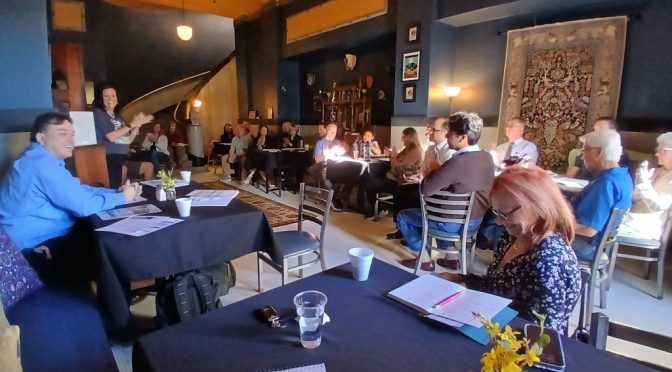
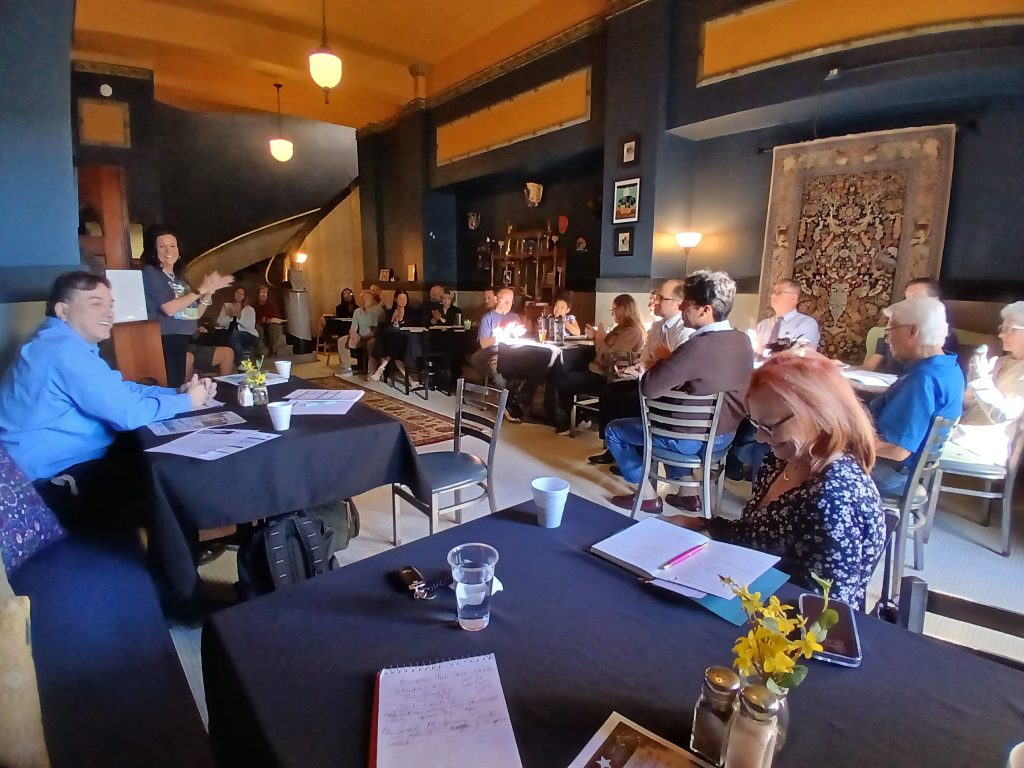
- Lindsay Madison of the Fort Scott Area Chamber of Commerce said the state Main Street director visited Tuesday morning and about 30 people attended the quarterly downtown meet and greet.
- Streeter asked about a street advisory committee; Matkin said the city will need to advertise for members.
The meeting adjourned on a 5-0 vote.
Full City Commission agenda packet, Oct. 6, 2026 (PDF, 100 pages)