TOPEKA – Kansas has taken new steps this year to protect children online and strengthen accountability for platforms and offenders, even as the State Child Death Review Board’s 2026 Annual Report underscores the continued need for prevention and early intervention.
The Board’s report, which examines deaths of Kansas children from birth through age 17, provides additional context for those efforts. It found that 31 children died by suicide in 2024, compared with 24 in 2023, for a rate of 4.5 deaths per 100,000 children, above the national rate of 2.1. Over the five-year period from 2020 through 2024, 130 Kansas children died by suicide.
Among the circumstances the Board identified in those deaths:
54% had communicated suicidal thoughts or intentions beforehand.
39% experienced a known crisis within 30 days of their death.
18% faced issues or barriers to mental health services.
12% had experienced bullying, including four cases involving cyberbullying.
“Behind every number in this report is a child whose life ended too soon, leaving family, friends and an entire community forever changed,” said Sara Hortenstine, the Board’s executive director. “While we cannot change what has happened, we can honor the lives lost by learning from them. My hope is that those lessons continue to shape how we protect children and help make Kansas a safer place for every child.”
The Board emphasized that youth suicide often involves multiple contributing circumstances. However, the findings point to the value of recognizing warning signs, responding during periods of crisis, and addressing barriers to care, including risks that can arise through online interactions.
Recognizing that online safety is one part of the broader effort to protect children, the Kansas Attorney General’s Office has taken additional steps to address online exploitation and strengthen protections for minors as technology continues to change how children communicate and interact.
In April 2026, Caleb’s Law was signed into law, expanding Kansas’ sexual extortion statute and strengthening criminal penalties in certain cases involving minors and dependent adults. Named in memory of Caleb Moore, a 14-year-old from El Dorado who died by suicide after being targeted in an online sextortion scheme, the law creates the offenses of aggravated sexual extortion causing great bodily harm and aggravated sexual extortion causing death. It also requires the Attorney General’s Office to prepare educational materials on sexual extortion and to work with the State Board of Education and law enforcement to inform schools, students, parents and guardians, and the public.
In August, Attorney General Kris Kobach announced Kansas’s participation in a multistate settlement with Meta Platforms, Inc., requiring new child-safety measures on Instagram and Facebook. The agreement includes stronger age-verification measures, parental controls, daily usage limits, nighttime restrictions, and additional safeguards addressing bullying and content related to suicide and self-harm.
Kobach also announced a $9.8 million settlement with Roblox, intended to raise the standard for platforms that market to children. Roblox will underwrite a $500,000, three-year multimedia public-awareness campaign on online child safety designed to reach a Kansas audience. Roblox has also agreed to implement or continue safety measures that include age-assurance so users see only age-appropriate content and chat features; expanded parental controls; protections that limit chat between users under 18 and unknown adults; and stronger chat-moderation tools to prevent off-platforming.
“Children should be able to navigate the digital world without becoming targets of exploitation or abuse,” Kobach said. “Through Caleb’s Law and our efforts to hold companies like Meta and Roblox accountable, we are working to protect Kansas children from online threats, strengthen accountability, and give parents additional tools to keep their children safe.”
Overall, the report found that 387 Kansas children died in 2024, compared with 360 in 2023. The state’s overall child mortality rate remained above the national average.
The State Child Death Review Board is a multidisciplinary, multi-agency volunteer board organized by law within the Attorney General’s Office to examine trends and patterns that identify risk factors in the deaths of children from birth through age 17. The 2026 Annual Report is available at ag.ks.gov/scdrb.
Individuals experiencing a mental health crisis or suicidal thoughts can call or text 988 to reach the Suicide & Crisis Lifeline.
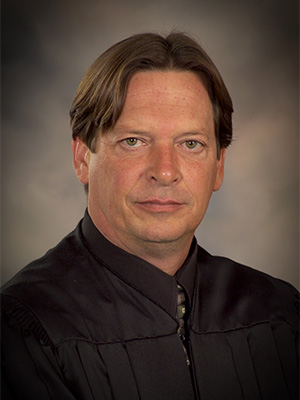
TOPEKA—District Judge Mark A. Ward will retire October 9 after serving 19 years in the 6th Judicial District, which is composed of Bourbon, Linn, and Miami counties.
Ward has served as a district judge since 2007.
He graduated from Pittsburg State University and earned his law degree from Washburn University School of Law. Before becoming a judge, Ward was general counsel for the Kansas State Fire Marshal’s Office, county attorney for Bourbon County, an adjunct professor at Pittsburg State, and in private practice.
Ward said he became interested in the law after being a member of his high school debate team. After law school he worked as an attorney for 26 years. He then applied to serve his community as a district judge in his hometown of Fort Scott, where he still serves today.
“I’ve found that serving as a judge is a rewarding career and encourage any eligible attorney to consider this honorable profession,” he said.
Chief Justice Lawton Nuss assigned Ward to sit with the Kansas Supreme Court to hear a case on the court’s September 2019 docket. He has also served on numerous committees and civic organizations.
Ward is an active member of the First United Methodist Church of Fort Scott and said he plans to travel, golf, and enjoy life on the lake in his retirement.
TOPEKA—The 6th Judicial District Nominating Commission will convene by videoconference at 9 a.m. Wednesday, October 7, to review applications for a district judge vacancy.
The judicial vacancy will be created when District Judge Mark Ward retires October 9.
The 6th Judicial District is composed of Bourbon, Linn, and Miami counties.
Applicants
Joshua Albin, Andover, attorney, Adams Jones Law Firm, P.A.; city attorney, Burden
James Crux, Pittsburg, Bourbon County attorney
Madeline Jensen, Spring Hill, assistant county attorney, Bourbon County
Jacklyn Paletta, Paola, municipal judge, Louisburg; county counselor, Linn County, Pascolo Law LLC
Terra Tecchio, Ft. Scott, attorney, Tecchio Consulting, LLC and Baseley Law Office
Public access
The meeting is open to the public. It will be by videoconference and livestreamed on the Kansas judicial branch YouTube channel.
To comment:
Call 1-845-361-8917
Enter Conference Code 3872788
Press #
Accommodation
Any person with a disability who requires accommodation to access the nominating commission meeting should notify the judicial branch ADA coordinator as early as possible: ADA@kscourts.gov, 785-296-2256, TTY at 711.
Eligibility requirements
To be considered for district judge, a nominee must be:
at least 30 years old;
a lawyer admitted to practice in Kansas and engaged in the practice of law for at least five years, whether as a lawyer, judge, or full-time teacher at an accredited law school; and
a resident of the judicial district at the time of taking office and while holding office.
Appointment process
The nominating commission seeks nominations and then meets to interview the nominees. Interviews are open to the public. The commission selects three to five people whose names are submitted to the governor to fill the position according to statutory qualification and residency requirements.
The governor has 60 days after receiving the names to decide whom to appoint.
Term of office
After serving one year in office, a new judge must stand for a retention vote in the next general election to remain in the position. If retained, the incumbent will serve a four-year term.
Nominating commission
The 6th Judicial District Nominating Commission consists of Justice Larkin Walsh as the nonvoting chair; Mark McCoy and Zackery Reynolds, Fort Scott; Patton Apple and Ronald Wood, Louisburg; Todd Schneider, Mound City; and Mary Stephenson, Paola.
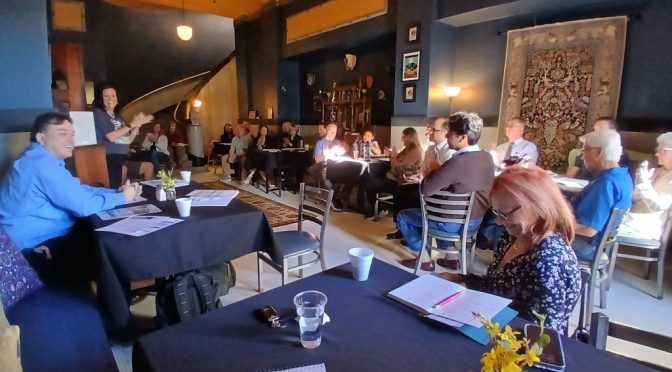
Drew Simpson speaks to attendees of the Downtown Meet and Greet on October 6. Lindsay Madison is in the center of the photo.
The quarterly Downtown Meet and Greet event was hosted by Cohn’s Cafe, 110 S. Main, on October 6.
A special welcome was given to Drew Simpson, Director of Kansas Main Street, a part of the Kansas Department of Commerce.
“Main Street is a self-help, technical assistance program that targets revitalization and preservation of downtown districts through the development of a comprehensive strategy.” -according to the website: http://www.KansasCommerce.gov/Main-Street
“You are a designated Main Street…you will see more traffic,” Simpson told the group of mostly business owners.
“Business owners, residents and property owners are…impacted.”
When a downtown is healthy, the benefits ripple outward, strengthening businesses, property, public revenues, community pride, quality of place, and future opportunity, according to a fact sheet provided by Kansas Main Street.
He outlined the long process to move forward on the Main Street Program, and commended the Chamber of Commerce CEO Lindsay Madison for “running the show; we are to provide the guardrails,” he said. “She is the face of Main Street in Fort Scott.”
There are a few grants available for businesses: ROOMS and HEAL. One can contact Madison at the Chamber office for more details.
The next Kansas Main Street Training is November 17-18 in Independence.
Other comments from attendees:
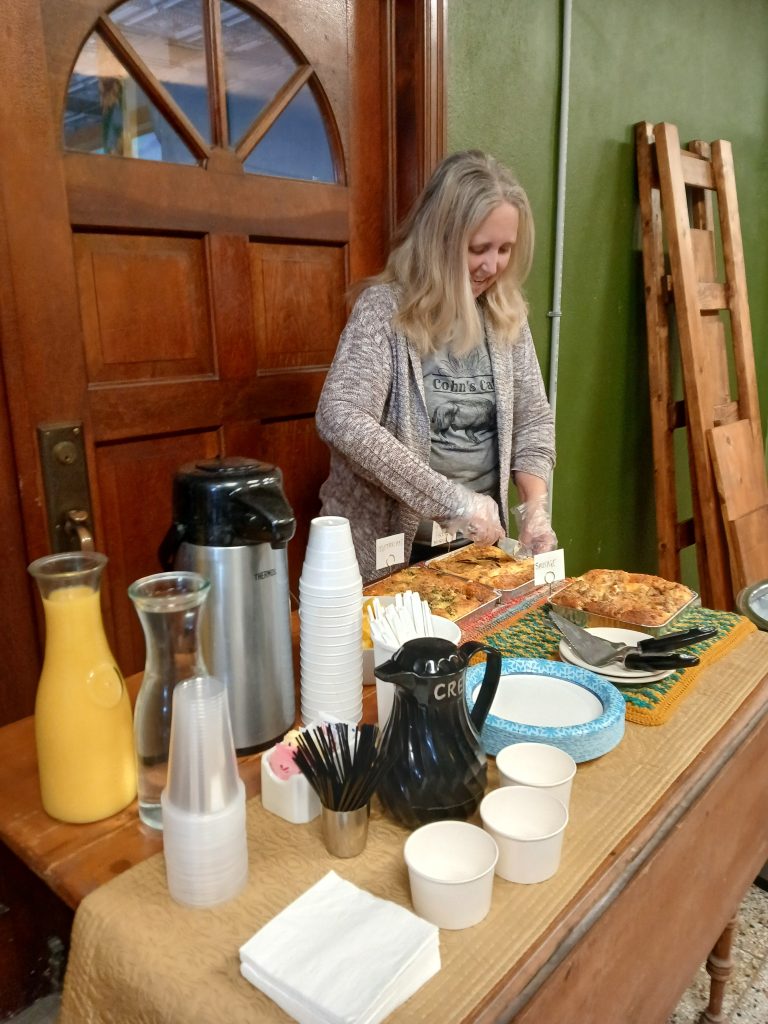
Kathy Dancer, owner of four downtown businesses cuts up quiche in preparation for the attendees of the Downtown Meet and Greet on October 6.
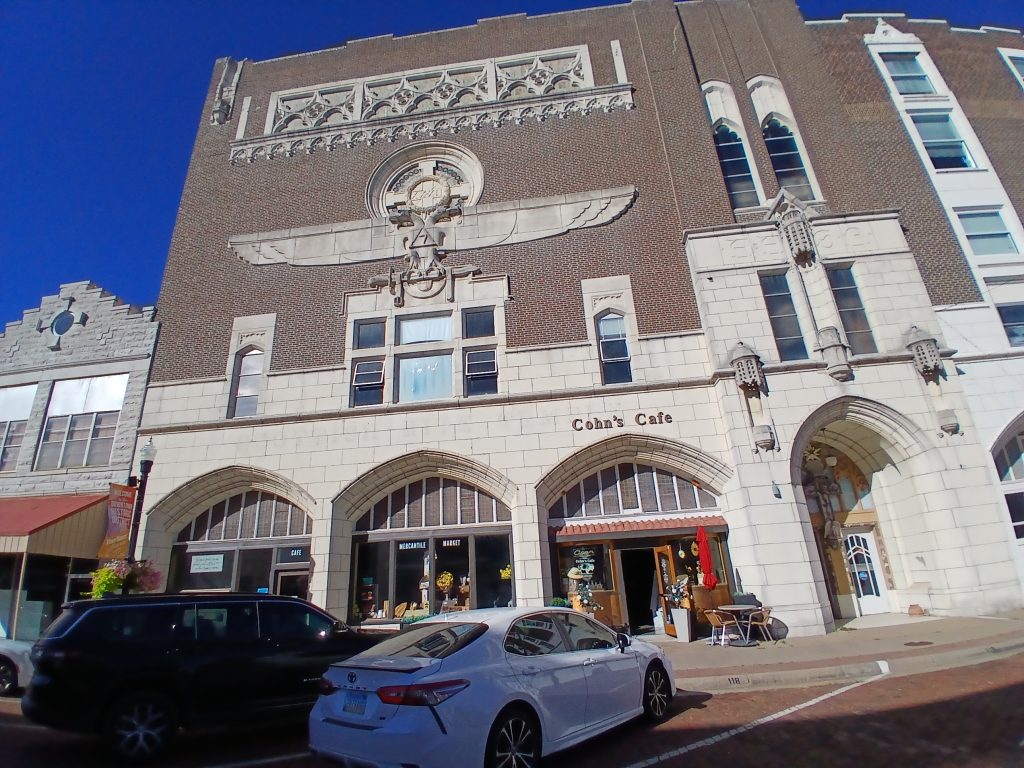
Kathy Dancer, owner of Cohn’s Cafe, 110 South Main Mercantile, Green Lantern Speakeasy and Bourbon County Handcrafted Spirits, all located at the former Scottish Rite Temple, gave a brief overview of all her businesses and provided a sampling of her quiches she makes daily in the cafe.
She also announced that the Old Fort Genealogical Society of Southeastern Kansas will be renting the southernmost storefront at 114 S. Main soon.
Jill Jaworski, Superintendent of Fort Scott National Historic Site, announced that the site is now open seven days a week, and some parts of the campus is undergoing remodeling. The Friends of FSNHS received a $10,000 grant to help with the 50th Anniversary celebration in 2028. The site is part of the Murder and Mayhem Tour for Halloween, and the annual candlelight tour is Dec. 4-5.
Mary Wyatt, business development with the City of Fort Scott, noted that many new businesses have opened, some businesses have expanded, and a few new businesses are on the horizon for the city. There will be a tax sale soon, she said.
Mid-Continental Restoration is currently working on Memorial Hall.
Rachel Carpenter, City of Fort Scott Human Resources person, introduced the new tourism contact Natalia Varzea. Varzea said she would “love to meet with businesses” in the community.
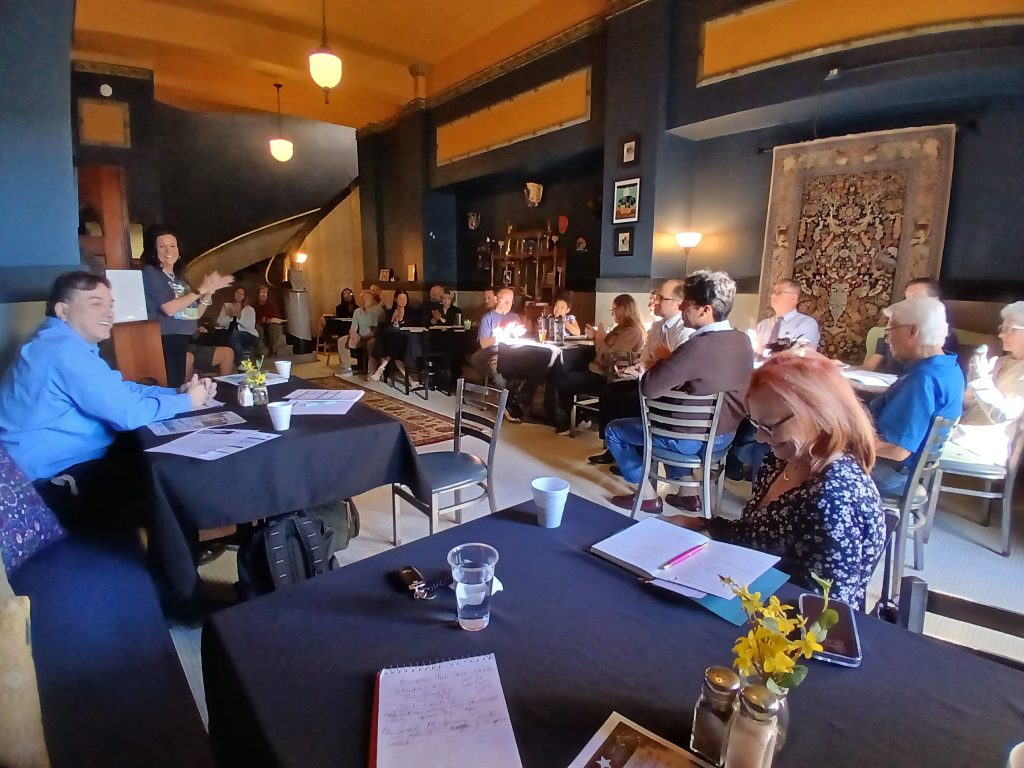
The October 6 Downtown Meet and Greet event met at Cohn’s Cafe.
She purchased the decade-long vacated 12,000-square-foot building in January 2022 at a Bourbon County Tax Sale.
The former Scottish Rite Temple has been transformed into four new businesses in Fort Scott’s Historic Downtown.
Since then, they have started four businesses after investing a lot of money in the infrastructure, said Kathy Dancer. They are Cohn’s Cafe, 110 South Main Mercantile, Green Lantern Speakeasy and Bourbon County Handcrafted Spirits.
In an interview about those businesses, Kathy said the Dancer’s drainage issue that has caused flooding in the building has been slow to be resolved.
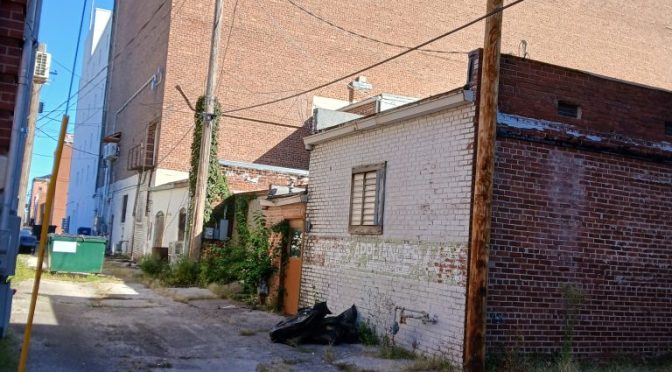
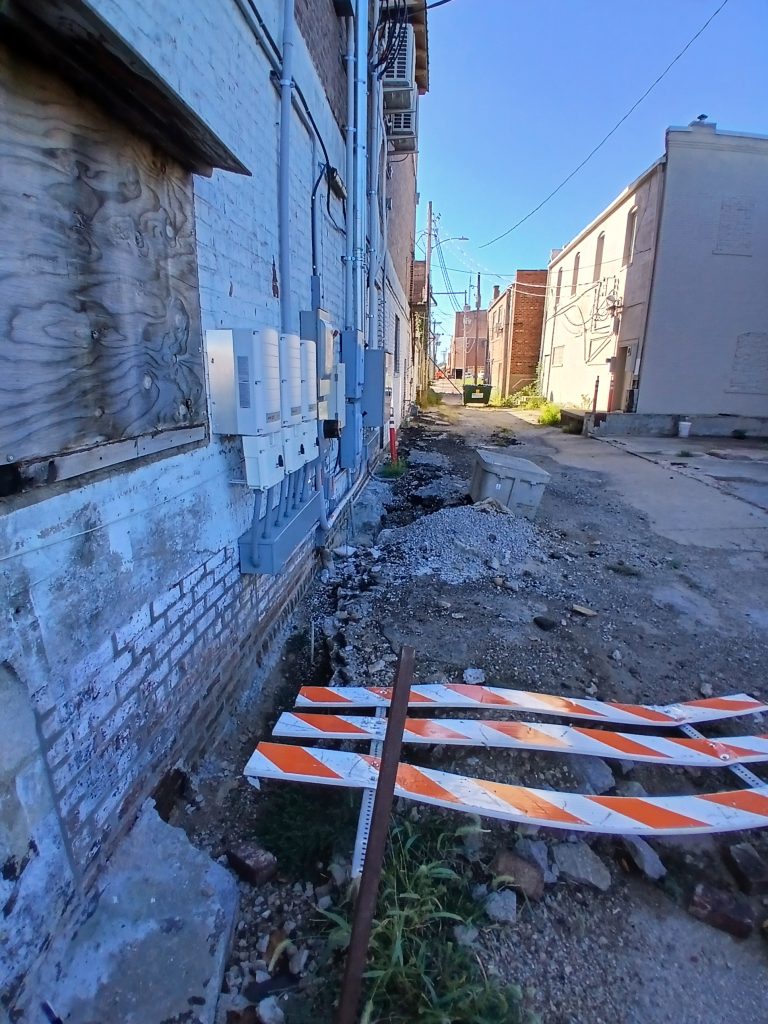
The City of Fort Scott directed the Dancers to do some repair work, and then the city would fill in the ditch at the base of the building in the alley on the west side of the building, she said.
“The trench is still there,” she said. “When it rains, it goes into the basement and the main floor.”
According to Dancer’s records, they hired someone to start digging out along the building’s foundation in the alley at the end of June.
“On July 13th we had an excavator come in so that we could get deeper to do additional repair work on the foundation. The city blocked off the alley on July 14th. We are approaching the three month mark on the alley being in disarray.”
“Their contractor has been in contact with the person who is going to install a curb for the city,” said Fort Scott City Manager Brad Matkin.
“This concrete contractor is working on another job and will get to that area as soon as they are done. We have tried to work with the Dancers on this for the past few years, but our engineers said there were things they had to do before the city would do any work.”
Kathy Dancer said she shared a video with the city commission showing the water flow from the city parking lot, northwest of their building. And also the water flow from the portion of the alley that is already concreted, in back of the apartment building north of 110 N. Main.
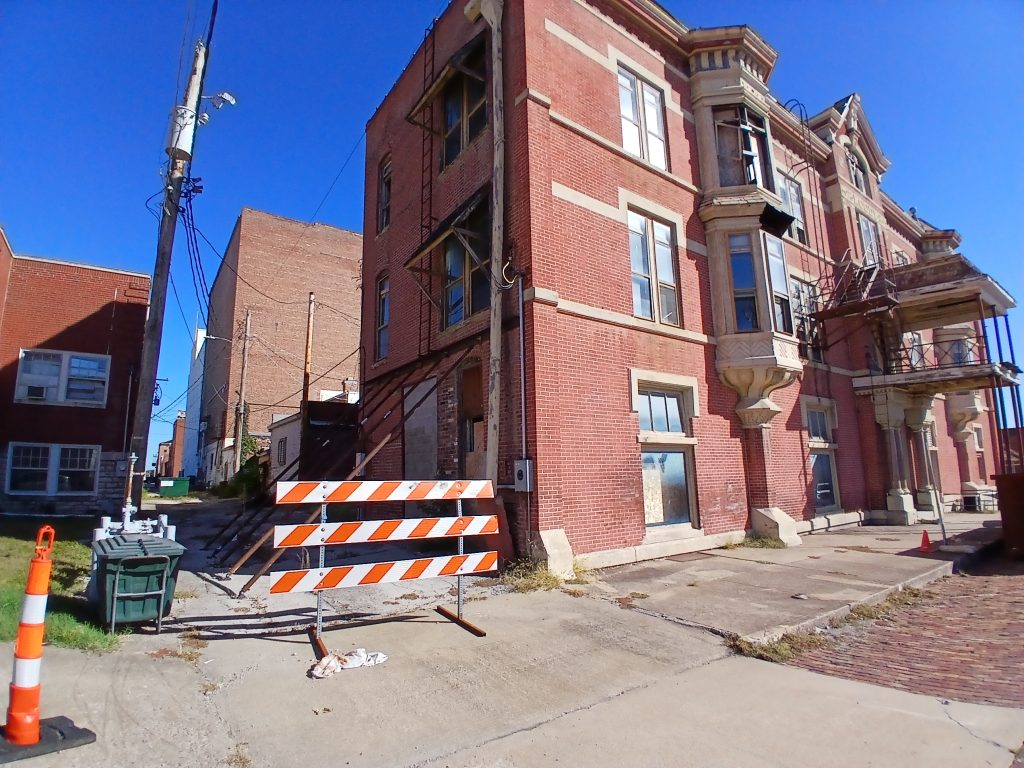
The apartment building, the Dancer property, and the former Moody Building on the 100 South Main block are the only buildings that have basements on that block, she said.
The ditch is the lowest place in the alley.
The apartment’s alley is concreted; their alley portion is not, she said.
“We had a contractor go in and seal it in (at the base of the building in the alley),” she said. “He had to go back in after the rains and did more.
“To be honest, the city is not responsible for the curb we are installing, but I agreed to do it,” Matkin said. “The water is not coming from the alley; it is coming from the building owner’s guttering and roof. Hopefully, that is taken care of as well.”
“We did a lot of gutter work already,” Mrs. Dancer said. “There is another spot that opened up.”
“When we had solar installed, some of the roof gravel moved into the guttering,” she said. “We can’t get in to fix the guttering problem because the alley is not accessible.”
Dancer said alley maintenance is “100 percent, the city’s job.”
She said at the moment, all four of the businesses remain open for business.
Moody Building
While taking photos of the alley, Al Niece, who is trying to purchase the Moody Building on Main Street, stopped by to look at the building.
He said the basement at that building also gets flooded.
Niece was looking at the property before the city meeting this evening, where the Moody Building will be discussed, he said.
Niece was frustrated at the slow process to acquire the building
The Moody Building is located across the street from Fort Scott City Hall on South Main.
“We cannot do anything extensively to the alley until the poles holding up the west side of the Moody Building are removed,” said Matkin.
“Our city attorney is working on the deed with the owner of the building, and we are really close to getting this done,” Matkin said. We have also worked with the IRS to remove the lien that is placed on the building so Mr. Niece will not have to worry about any of this.”
“Mr. Niece has permission to do whatever he wants with the building due to the city getting a letter from the owners for him to do so, Matkin said. “I for one, appreciate Al taking on this project and am working with him to get this building going in the right direction.”
TOPEKA—The Kansas judicial branch has launched a text messaging service to remind people of their upcoming court hearings to reduce missed court appearances.
Carrie McGinley, director of trial court services, said the service is meant to improve communication with court users and improve court appearance rates.
“This will help people who are juggling many responsibilities in their lives and need a quick and timely reminder about their court date,” she said.
McGinley said people can register for the messaging service on the Kansas Hearing Reminders website, HearingReminder.kscourts.gov. Registration involves entering a name, phone number, and case number as it appears on court documents.
Once registered, a person will receive a text message reminder three days before and one day before their scheduled hearing date. The service can also notify users about unexpected court closures.
McGinley said the text message reminders are offered as a convenience to court users and don’t replace official court notices, orders, or other required communications. Users may opt out of the service at any time. The service is free but message rates may apply depending on the user’s mobile service provider.
Text message reminders are an option for most case types, but not all. The service is not available for:
Protection from abuse
Protection from stalking, sexual assault, and human trafficking
TOPEKA – (September 29, 2026) – Kansas Attorney General Kris W. Kobach today announced that Kansas has reached a substantial settlement with Roblox, the interactive gaming platform used by millions of children. The agreement secures more than $10 million in financial commitments and requires Roblox to implement and maintain a series of child-safety reforms designed to give parents stronger tools and keep minors away from harmful contact with unknown adults.
“Parents should not have to compete with predators and poorly designed platforms just to keep their kids safe online,” Attorney General Kobach said. “This settlement puts real money, real tools, and real accountability on the table. Kansas children deserve age-appropriate content and meaningful parental controls.”
Under the settlement, Roblox will pay $9.8 million to the Office of the Attorney General over three years. Roblox will also underwrite a $500,000, three-year multimedia public-awareness campaign focused on online child safety and designed to reach a Kansas audience. The agreement further provides for $10 million in damages if Roblox fails to comply with any of its terms. The collaborative effort between Roblox and Kansas marks a blueprint for how platforms and regulators can work together to keep kids safe online.
Kobach emphasized that the agreement is intended to raise the standard for platforms that market to children.
“Kansas will not accept a system in which kids can be steered into conversations with strangers and then pushed onto other apps where parents have even less visibility,” Kobach said. “Age assurance, default age-grouped chat, stronger parental locks, and limits on Robux transfers are practical steps. Combined with a dedicated law-enforcement liaison and a Kansas-focused safety campaign, this settlement gives families and investigators more of what they have been asking for.”
In addition to the financial terms, Roblox has agreed to implement and/or continue safety measures including, but not limited to:
Requiring all users, both new and existing, to undergo age-assurance measures so that users have access only to age-appropriate content and chat features.
Providing expanded parental controls for parents with a linked parent account and giving parents an option to exercise parental controls on device through a passcode or other locking mechanism.
Protecting users under 18 from chat with unknown adults by restricting chat, by default, to users within the same or reasonably similar age groups.
Enhancing chat-moderation tools to prevent off-platforming and taking proactive steps to prevent users from moving communications off the platform to other sites, including Discord.
Continuously monitoring for and addressing communication-safety issues that arise with changing technology, and continuously improving safety measures as needed.
Prohibiting users under 16 from sending Robux to other users and from receiving Robux from other users without parental approval.
The settlement also includes Kansas-specific operational commitments. Roblox will hire a Kansas-based law-enforcement specialist to provide concierge-style service for Kansas and Midwest-region law-enforcement requests. Roblox will also engage a professional with experience in child online safety to advise on and help coordinate child-safety policies and initiatives that affect minor users in Kansas and the Midwest region.
The Office of the Attorney General will monitor compliance with the settlement. Kansas families who continue to experience safety concerns involving the platform may contact the Office of the Attorney General.
The Roblox settlement marks Kobach’s second sweeping online child-safety reform in the last few weeks. Last month, the Attorney General’s Office announced a multistate agreement with Meta, the social media giant that includes Facebook and Instagram. Under that agreement’s terms, Kansas will receive more than $134 million.
On November 3, 2026, an election for city, school and federal and state candidates will be held.
The ballot will also include the following constitutional amendment question about who is eligible to vote in Kansas. And for Uniontown’s School District citizens, a question on voting for at-large positions on the U.S.D. 235 School Board.
The following was submitted by Bourbon County Clerk Ann Clark, with information that tells who the candidates are, where you can vote, when advance voting starts and ends, when early voting begins and ends, and a special notice that some voting places have changed.
Please read the information and be prepared to let your vote count.
CONSTITUTIONAL AMENDMENT QUESTION
Explanatory statement. This amendment would clarify that only a person who is a citizen of the United States is eligible to vote in this state. “A vote for this proposition would clarify that only a person who is a citizen of the United States is eligible to vote in this state. “A vote against this proposition would make no change to the constitution of the state of Kansas, and the language concerning voter qualifications would remain the same. “Shall the following be adopted?“§ 1. Qualifications of electors.Every(a) No person shall be deemed a qualified elector unless such person:
(1) Is a citizen of the United States who;
(2) has attained the age of eighteen years; and who
(3) except as provided in subsection (b) or (c), resides in the voting area in which he or she such person seeks to vote shall be deemed a qualified elector.
(b) Laws of this state relating to voting for presidential electors and candidates for the office of president and vice-president of the United States shall comply with the laws of the United States relating thereto. A citizen of the United States, who is otherwise qualified to vote in Kansas for presidential electors and candidates for the offices of president and vice-president of the United States may vote for such officers either in person or by absentee ballot notwithstanding the fact that such person may have become a nonresident of this state if his or her such person’s removal from this state occurs during a period in accordance with federal law next preceding such election.
(c) A person who is otherwise a qualified elector may vote in the voting area of his or her such person’s former residence either in person or by absentee ballot notwithstanding the fact that such person may have become a nonresident of such voting area during a period prescribed by law next preceding the election at which he or she such person seeks to vote, if his such person’s new residence is in another voting area in the state of Kansas.”
The full list of candidates on the ballot is as follows:
UNITED STATES SENATE
Adam Hamilton, Democratic. Box 6, Stillwell, KS 66085
Roger Marshall, Republican,
David C Graham, Libertarian, Overland Park, KS
UNITED STATE HOUSE OF REPRESENTATIVES
Don Cover, Democratic, 9305 70th Road, Galesburg, KS 66740
Juan C. Luengo, Democratic,14904 S Summit St, Olathe, KS 66062
Steven Johnson, Republican,10197 S Hopkins Road, Asaria, KS 67416
Eric Lund, Libertarian, Paola, KS
COMMISSIONER OF INSURANCE
Dinah Sykes, Democratic
Daniel Hawkins, Republican, 9406 W Harvest Lane, Wichita, KS 67212
Rick Koehn, Libertarian, Cimarron, KS
KANSAS HOUSE OF REPRESENATIVES
Rick James, Republican, LaCygne, KS 66040
Robb Hodgkinson, Libertarian, Fort Scott, KS
MEMBER STATE BOARD OF EDUCATION
Heather Guernsey, Democratic, 18725 Ford Road, Chanute, KS 66720
Destry Brown, Republican, 2108 Jayhawk Rd, Fort Scott, KS 66701
SUPREME COURT JUSTICE
Eric S. Rosen,
Larkin E. Walsh
COURT OF APPEALS JUDGE
Lesley Ann Isherwood
Amy Fellows Cline
Kim R. Schroeder
Lori Ann Bolten Fleming
Jacy Hurst
DISTRICT COURT JUDGE
Amy L Harth
COUNTYCOMMISSIONER DISTRICT 1
Clint L. Walker (Democratic) 1999 105th St. Mapleton, KS 66754
Mike Hueston (Republican) 351 N Bourbon, Mapleton, KS 66754
COUNTYCOMMISSIONERDISTRICT 3
Joe Allen (Republican) 1025 260th Street, Fort Scott, KS 66701
COUNTYCOMMISSSIONER DISTRICT4
Gregg Motley, Republican 1904 Jayhawk Road, Fort Scott 66701, 66701
DRYWOOD TOWNSHIP CLERK
Laura Krom Republican, 2361 Fern Road, Fort Scott, KS 66701
FRANKLIN TOWNSHIP CLERK
No Candidate Filing
MARION TOWNSHIP CLERK
Brent M. Smit, Republican 763 95th Street, Redfield, Ks 66769
Michael Ramsey, Republican, 1270 Highway 3, Uniontown, Ks 66779
MARMATON TOWNSHIP CLERK]
No Candidate Filing
MILLCREEK TOWNSHIP CLERK
No Candidate Filing
OSAGE TOWNSHIP CLERK
No Candidate Filing
PAWNEE TOWNSHIP CLERK
No Candidate Filing
SCOTT TOWNSHIP CLERK
Donald Banwart, Republican, 982 Highway 69, Fort Scott, KS 66701
TIMBERHILL TOWNSHIP CLERK
Jennifer Epting Williams, Republican, 530 N Washington, Mapleton, KS 66754
WALNUT TOWNSHIP CLERK
No Candidate Filing
USD 235 QUESTION
CHANGE IN METHOD OF ELECTION TO ELECT AT-LARGE FOR MEMBER POSITIONS The Uniontown School District;
Unified School District No.235
Bourbon County, Kansas
Shall the following change in the Method of Election be adopted?
“Shall Unified School District No. 235, Bourbon County, Kansas change the method of election from the current three member district method under which the school district is divided into two member districts, in which three board members are elected from each member district is divided into two member districts, in which three members are elected from each member district and one board member is elected at-large, to the election at large for member positions method of electing school bord members under which:
The school district is not divided into any member districts, and all board members are elected at large.
“Shall a change in the method of election as described in the ballot title above, be approved?”
To vote in favor of the method of election change, make a cross or check mark in the square to the left of the word
Yes; to vote against it, make a cross or check mark in the square to the left of the word no.
VOTING PRECINCTS IN BOURBON COUNTY– PLEASE NOTE THAT THE POLLING PLACES HAVE CHANGED!!
It is hereby noted that the polls are open between the hours of 7:00 am to 7:00 pm at the following location:
1st,4th, 5th.and 6th Wards and Scott D1, D2 and D4 Townships at Community Christian Church, 1919 S Horton, Fort Scott
Freedom, Fulton, and Osage Townships at Fulton Community Building, 408 W. Osage, Fulton
2nd, 3rd, and 7th wards, Drywood Township, and Scott D3, and D5 Townships at Grace Baptist Church, 502 S. Margrave, Fort Scott
Franklin, Mapleton, Millcreek and Timberhill Townships and Mapleton City at Mapleton Community Building, 565 Eldora, Mapleton
East Marion, Marmaton, Pawnee, West Marion, and Walnut Townships and Bronson, Redfield, and Uniontown Cities at Uniontown City Hall, 206 Sherman, Uniontown
Voter Registration And Voting
You may register to vote at the office of the County Clerk during their regular business hours, or online
Deadline to Change Party: K.S.A. 25-3304(b) The deadline for party affiliation changes is October 14, 2026 at the end of the business day. Party affiliation changes will be accepted and processed after December 1, 2026. If you still desire to update or change your party affiliation, you may do so December 1, 2026, by filling out a new voter registration.
Closing of Registration Books: Pursuant to K.S.A. 25-2310 & K.A.R. 7-23-4 Notice is hereby given that on the 14th day of October 2026, registration books for the City/School General Election will close at the end of the business day. The books will remain closed until the day following the General Election.
Advance Voting by Mail; K.S.A. 25-1123 Any registered voter is eligible to vote by Advance Ballot, beginning Thursday, October 15, 2026. The last day to request an advance ballot by mail is Wednesday, October 28,2026
Apply for Advance Ballot: K.S.A. 25-1122 € (4). Applications for advance Ballots are available at the Bourbon County Clerk, Election Office or by calling 620-223-3800 Ext:100. A printable application for an Advance Ballot is available on the county website www.bourboncountyis.org or Kansas Secretary of State website www.kssos.org.
Returning Advance Ballots: K.S.A. 25-1132
In Person: ballots must be returned by 7:00 p.m. on Election Day to any polling location within the County or to the County Election Office, Courthouse, 210 S National Ave. Fort Scott, KS 66701.
By Mail: Ballot must be postmarked on or before Tuesday November 3, 2026 (Election Day) and received in the County Election office by Friday, November 6th, 2026.
Early Voting: Voters can vote in advance in the Commission Room at Bourbon County Courthouse beginning Monday, October 19th, 2026, through Monday, November 2, 2026, at 12:00 p.m. (Noon)
Important Note: Per K.S.A. 25-2908 All Voters must provide Valid Photo Identification (Drivers License, Military ID, Kansas College ID, Kansas ID or other qualifying ID card) to Vote. For a list of accepted identification and additional information go to www.gotvoterid.com or call 1-800. 262.vote (8683).
Public Demonstration: K.S.A. 25-4411(b) & 25-4610(b) A Public Demonstration of the Clear Ballot Election Software will be held Friday October 30th, 2026, at 9:00 a.m. in the Bourbon County Courthouse.
CANVASS: KSA 25-3101, 3104, 3107 Monday November 9th, 2026, at 10:00 a.m. in the Commission Room of the Bourbon County Courthouse.
New Commerce Grant to Boost Youth Registered Apprenticeship Opportunities
TOPEKA – Lieutenant Governor and Secretary of Commerce David Toland today announced the launch of the Kansas Office of Apprenticeship State Grant, a new funding opportunity designed to strengthen and expand Registered Apprenticeship programs across Kansas. The new grant will support both new and existing apprenticeship programs while promoting opportunities for youth ages 16 and 17 to enter high-quality career pathways in high-wage, high-demand occupations.
“Creating opportunities for our students and employers to connect at the early stages of professional careers is key to building a strong and sustainable Kansas workforce,” Lieutenant Governor and Secretary of Commerce David Toland said. “Investing in Registered Apprenticeship programs will provide Kansas businesses with reliable and skilled workers while also setting up young Kansans for rewarding careers right here in their home state.”
Grant funding will support activities such as program development and expansion, staffing, outreach, employer engagement, technical instruction, partnership development, and other operational costs that strengthen Registered Apprenticeship programs. Individual grants of up to $100,000 will be awarded.
As part of the grant requirements, applicants must commit to one of the following engagement activities:
Successfully register a minimum of two apprentices ages 16-17.
Complete a minimum of four structured K–12 and community engagement activities (e.g., presentations to students, school counselors, school boards, chambers of commerce, or local governing bodies, or coordinated site visits with K–12 partners). Career fairs will not qualify toward this requirement.
Applicants must also list both their target occupations and industries based on NAICS codes.
“Registered Apprenticeships have been one of the most effective workforce strategies in Kansas because we’re connecting education with real employment opportunities,” Kansas Office of Registered Apprenticeship Director Shonda Anderson said. “This grant supports the growth of Registered Apprenticeship by expanding opportunities for Kansas youth and helping employers develop the skilled workforce needed to keep Kansas competitive.”
The grant is designed to expand new and existing Kansas-based Registered Apprenticeship programs, with a goal of increasing new apprenticeship enrollment and the number of 16- and 17-year-old apprentices by at least 5 percent year over year, particularly in high-wage, high-demand occupations.
Eligible Kansas Registered Apprenticeship programs are encouraged to apply. Applications will be accepted from Friday, September 18, to Friday, October 23. A webinar to explain the grant will be from 1:30 to 2:30 p.m. Thursday, October 1. Join the Teams webinar by clicking here.
To learn more about the grant and to submit an application, click here.
The Kansas Office of Registered Apprenticeship continues to expand innovative workforce solutions that connect employers with skilled talent while creating sustainable career pathways for Kansans. More information about Registered Apprenticeship and available resources can be found here.
About the Kansas Department of Commerce:
As the state’s lead economic development agency, the Kansas Department of Commerce strives to empower individuals, businesses and communities to achieve prosperity in Kansas. Commerce accomplishes its mission by developing relationships with corporations, site location consultants and stakeholders in Kansas, the nation and world. Our strong partnerships allow us to help create an environment for existing Kansas businesses to grow and foster an innovative, competitive landscape for new businesses. Through Commerce’s project successes, Kansas was awarded Area Development Magazine’s prestigious Gold Shovel award in 2021, 2022, 2023 and 2024, and was awarded the 2021 and 2022 Governor’s Cup by Site Selection Magazine.
About the Kansas Office of Registered Apprenticeship:
The Kansas Office of Registered Apprenticeship was established by Governor Laura Kelly on Sept. 6, 2022, through Executive Order #22-07. The Office supports apprenticeships across multiple industries to provide a highly skilled source of labor for employers and ensure occupational proficiency for career-seekers. The program incorporates on-the-job learning, technical instruction and mentorship to create long-term employment opportunities in Kansas.
TOPEKA – The Kansas Department for Children and Families (DCF) announced today a new partnership with Binti, a technology company focused on child welfare. The Binti Family Finding and Engagement platform strengthens practitioners’ ability to quickly identify and engage a child’s relatives and trusted adults, including non-relative kin, to support family connections and kinship placements.
Research shows that children in foster care who remain connected to relatives and trusted adults experience improved well-being, reduced trauma, and a greater chance of finding a safe, permanent home. Kansas’ use of Binti’s platform will provide crucial support to children who are at risk of entering foster care or are already in care.
“Children do better when they remain connected to the people and communities they know,” said DCF Secretary Laura Howard. “By using advanced family finding technology, we can uncover important family and trusted adult connections that might otherwise be missed, giving more children the chance to stay with people who offer familiarity, support, and a lasting sense of belonging.”
“Every child deserves the chance to grow up surrounded by people who know and love them,” said Felicia Curcuru, Co-founder and CEO of Binti. “We’re proud to partner with the Kansas Department for Children and Families to give practitioners the tools they need to find those connections faster and help more children build lasting bonds with family and trusted adults.”
DCF Child Protective Services (CPS) staff and Prevention and Protection Services contractors are responsible for conducting and documenting their own family-finding efforts. Currently, multiple resources are used, including Consolidated Lead Evaluation and Reporting (CLEAR) software, internal DCF systems, contractor case-management systems, case records, internet searches, and other available sources. Due to differing systems and documentation practices, it can be difficult to share information, avoid duplicate searches, track previous outreach and responses, and maintain a complete statewide record of family-finding efforts.
The Family Finding and Engagement platform aims to remedy this by centralizing the approach to family finding to one platform. Available to CPS, Family Preservation providers, and foster care case management agencies, the Binti platform will connect information across the child and family well-being system, ensuring that what is learned at each stage of a family’s involvement is carried forward.
Binti has been awarded a one-year contract with a total cost of $624,620 for the initial term, with an option to renew for three additional 12-month periods. DCF expects the platform to be operational in 2027.
TOPEKA—Chief Justice Eric Rosen signed an administrative order today proclaiming September 17 Constitution Day and September 17 through 23 Constitution Week in Kansas courts and encouraging all Kansans to commend its observance.
He signed the order in the Supreme Court courtroom, where the court had convened to hear cases on its docket. Before signing, he gave brief remarks connecting the U.S. Constitution with the Declaration of Independence signed 250 years ago.
“The Declaration announced our ideals that all people are created equal and endowed with rights that no government may rightfully take away,” he said. “But it was the Constitution that established a government of laws and an independent judiciary to protect rights, fairly resolve disputes, and uphold the rule of law.”
He added that the words in the Declaration of Independence and the Constitution endure today because each generation accepts responsibility for giving them meaning. That responsibility now belongs to this generation, and it includes a duty to instill these ideals in others.
Celebrating Constitution Day in Kansas courts
Rosen noted several examples of court activities that celebrate Constitution Day and Constitution Week, including Supreme Court and Court of Appeals visits to schools, a mock trial for third graders, and educational programs at the Kansas Judicial Center.
Educational programs at Judicial Center
Students from northeast Kansas high schools visited the Kansas Judicial Center September 16 to participate in the Gene Balloun Legal Career Education Program. The Kansas 1st Amendment Foundation organized the event to introduce students to legal careers and help them develop related skills.
Staff in the Office of Judicial Administration led tours of the Judicial Center, taught students how to get into law school and become an attorney, and shared the history of the appellate courts. In the morning, the students attended Supreme Court oral arguments and were introduced to the court by Ken Thomas, executive director of the Kansas 1st Amendment Foundation. Chief Judge Sarah Warner and Judge Karen Arnold-Burger of the Court of Appeals spoke to the students to wrap up the daylong program.
Laurel Klein Searles, chief of attorney services and compliance, said the program is a great way for students to learn more about the legal field.
“These students chose the program because they are already interested in careers in law,” she said. “The visit is about connecting these students with professionals already working in the field who can share their firsthand experiences and answer their questions.”
Supreme Court special session in Liberal
The Supreme Court will visit Liberal High School as part of its outreach to familiarize Kansans with the court, its work, and the overall role of the Kansas judiciary in recognition of Constitution Week.
The court will be in session at 6:30 p.m. Tuesday, September 22, after which justices will greet the public in an informal reception.
On September 22, a three-judge panel will hear arguments in Lawrence at the Robert J. Dole Institute of Politics and the University of Kansas School of Law, while another panel will hear arguments in Manhattan at Kansas State University. A third panel will hear oral arguments September 23 at Washburn University School of Law.
When the visits were announced, Warner said the cases selected for them were chosen because they include constitutional questions.
“Through these cases, students and the public can witness how constitutional rights impact everyone’s daily lives and understand how judges approach and decide constitutional disputes,” Warner said.
Mock trial for third-grade classrooms
To reach a younger audience, Judge Robert Wonnell of the 10th Judicial District invited third-grade classrooms nationwide to participate in a mock trial conducted from his Johnson County courtroom.
More than 47,000 students from 47 states and more than 90 classrooms on military bases around the world registered to participate in this year’s virtual event.
“The mock trial teaches students about our responsibilities, opportunities, and rights under the Constitution of the United States of America,” Wonnell said. “Students listen to witnesses, evaluate evidence, and act as jury to decide whether the defendant is guilty or not guilty of violating a fictitious law that prohibits running in the hallway.”
Judges throughout the Kansas courts were encouraged to connect with third-grade classrooms in their communities and to volunteer to visit classrooms in person for the event.
“As justices, judges, and court staff, we are honored to uphold that promise and to share its meaning with the people we serve,” Rosen said. “We encourage all Kansans to reflect on the freedoms and responsibilities guaranteed by the Constitution.”
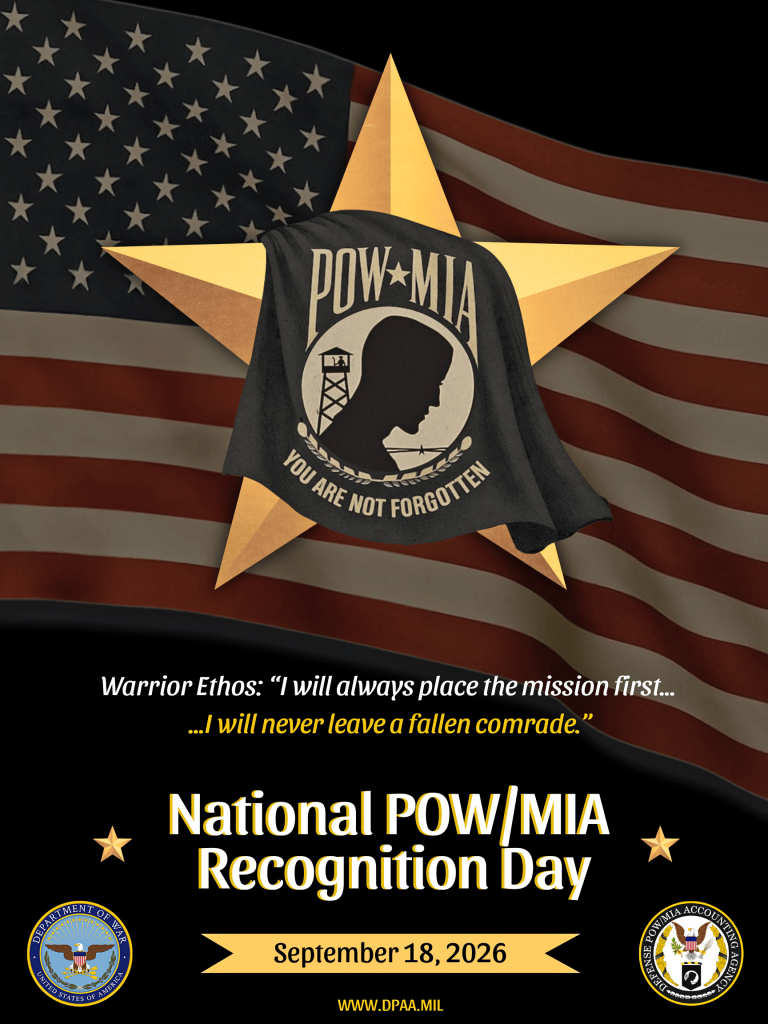
The local Veterans of Foreign Wars Post 1165 will honor American prisoners of war (POW) and those who did not come home from serving in the military (MIA) tomorrow, September 18.
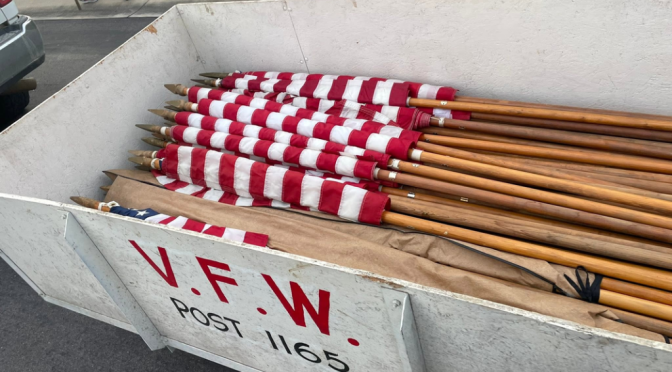
There will be an Avenue of Flags to commemorate the sacrifice of service members to their country, but there will be no ceremony, only individual remembrances.
National POW/MIA Recognition Day was established in 1979 through a proclamation signed by President Jimmy Carter, according to the U.S. Department of Defense POW/MIA Accounting Agency.
Since then, each subsequent president has issued an annual proclamation commemorating the third Friday in September as National POW/MIA Recognition Day.
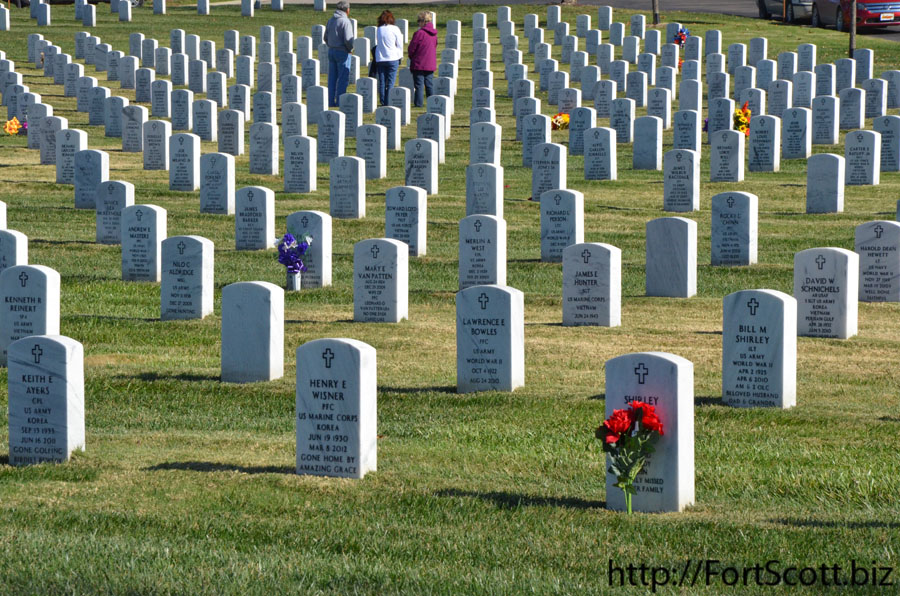
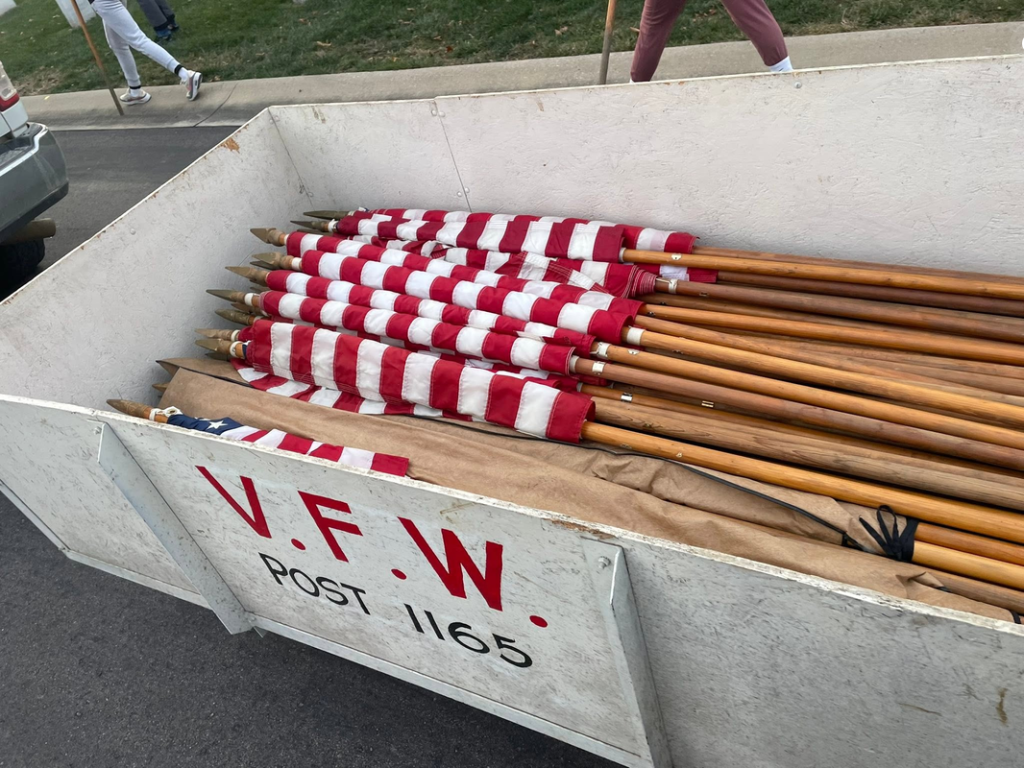
Deb Lust, spokesperson for the local VFW, said the group is facilitating an Avenue of Flags near the Fort Scott National Cemetery on East National tomorrow.
National Cemetery, Fort Scott.
“Because of the heat index, we are shortening the number of flags installed, from Margrave Street to all the way in the cemetery,” Lust said. “Normally, it’s East National Avenue through the cemetery.”
At 7 a.m. tomorrow, the flags will be posted, and at 4 p.m. the flags will be recovered, she said.
The Fort Scott Community College Softball Team and a group of youth from Kansas Renewal Institute will help the VFW with the flags.
“This is honoring all those who are POWs as well as those who were never recovered, those Missing In Action,” she said.
These are U.S. service members and civilians missing from past wars/conflicts.
“The Department of Defense has an agency that looks at archeological sites where there have been known battles or planes that went down in different locations in collaboration with the countries: Germany, France, Belgium, Korea, Vietnam, Laos, just to name a few. They help families get some closure,” she said.
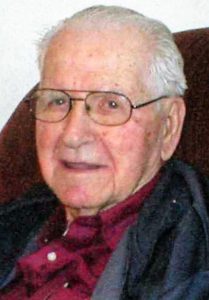
To her knowledge there has been only one POW in Bourbon County in recent memory, Jake Underwood. Underwood served in World War II.
Jake Underwood, from obituary in 2018.
Underwood, who was well known in the Bourbon County community, was captured during the Battle of Bulge in WWII and was a prisoner of war from December 1944 to April 1945.