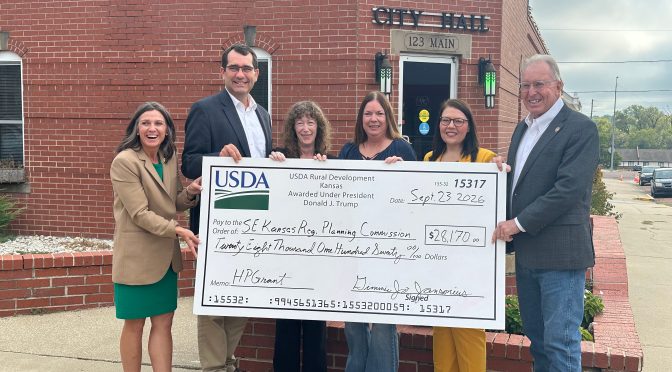
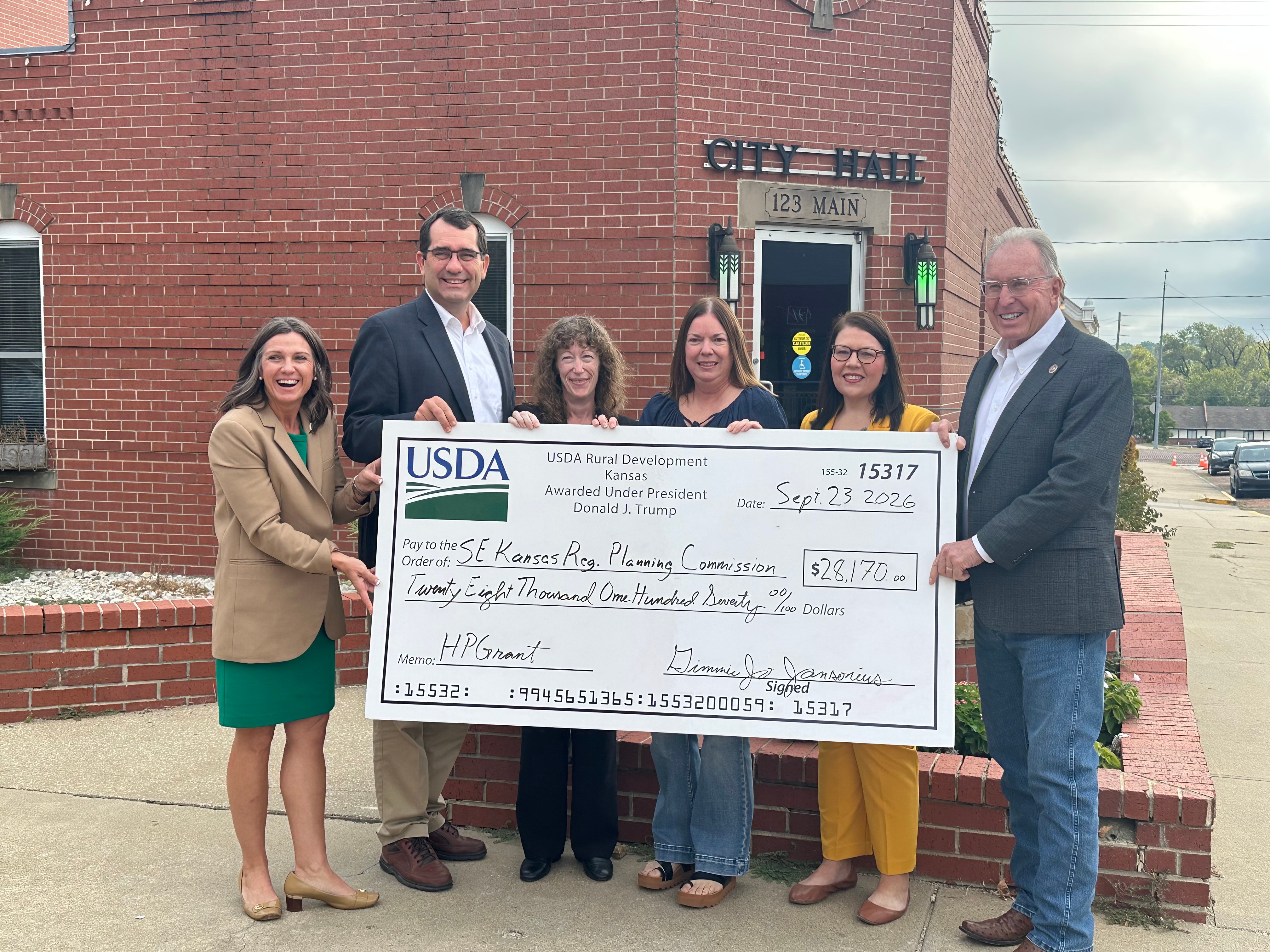
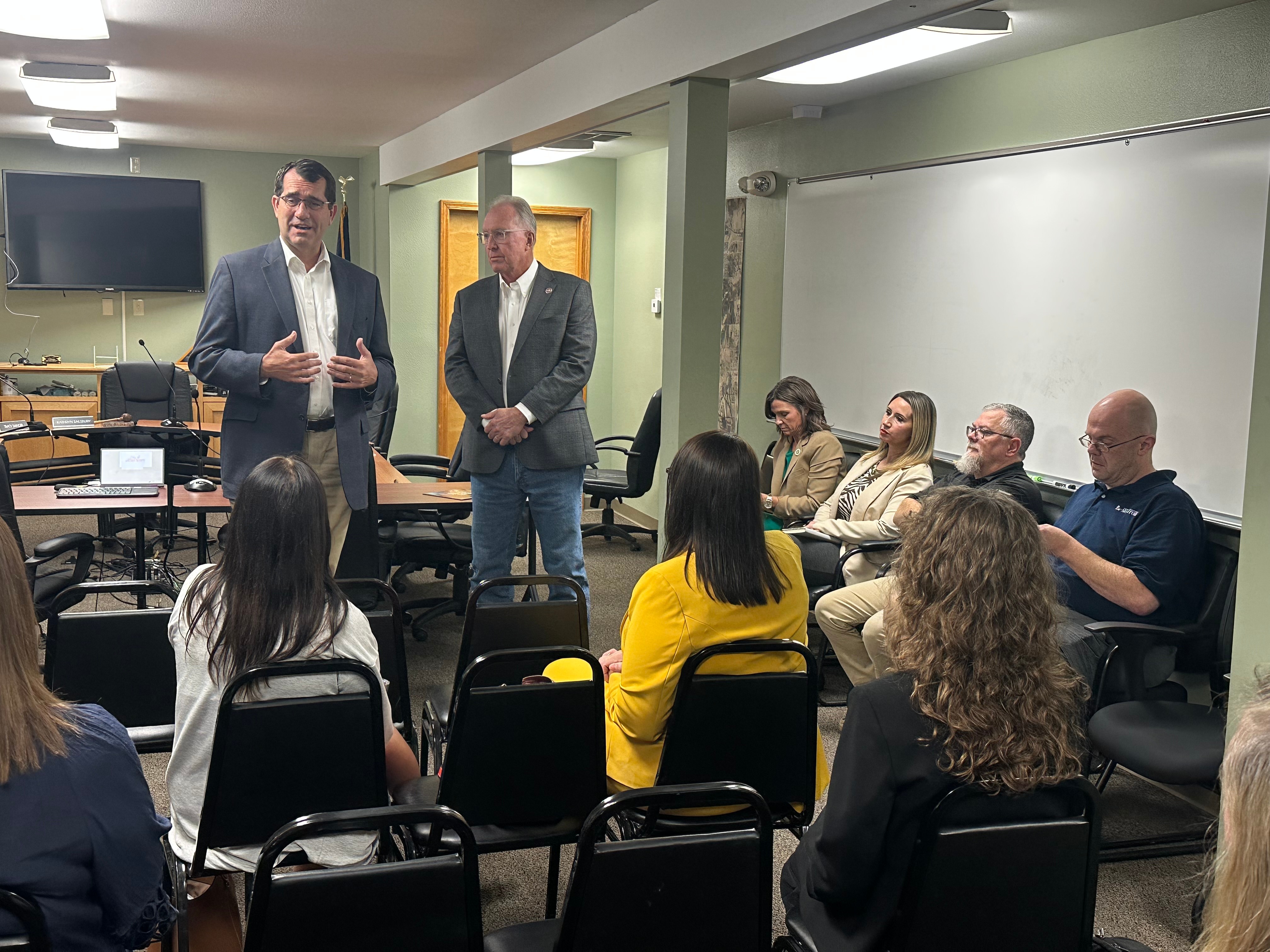
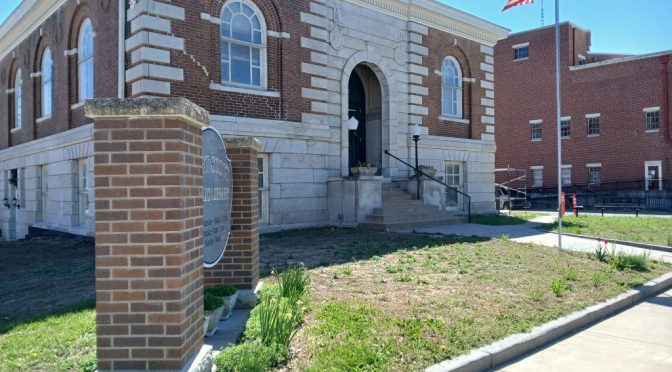
This week, U.S. Rep. Derek Schmidt welcomed Glen Smith, USDA Undersecretary for Rural Development, to Southeast Kansas for a rural housing roundtable in Fort Scott. Schmidt thanked everyone who joined the discussion and shared their perspectives, and also thanked USDA for presenting a $28,000 check to help address specific housing needs in Bronson.
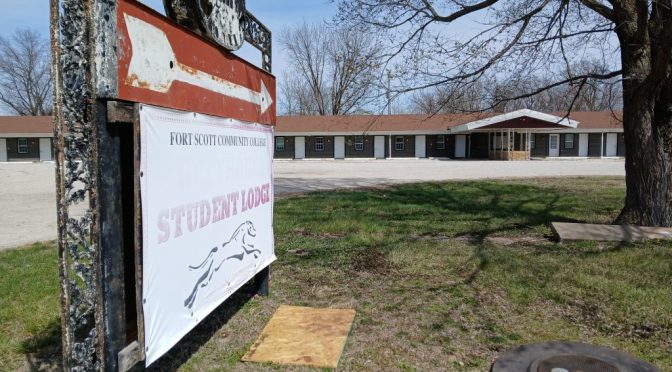
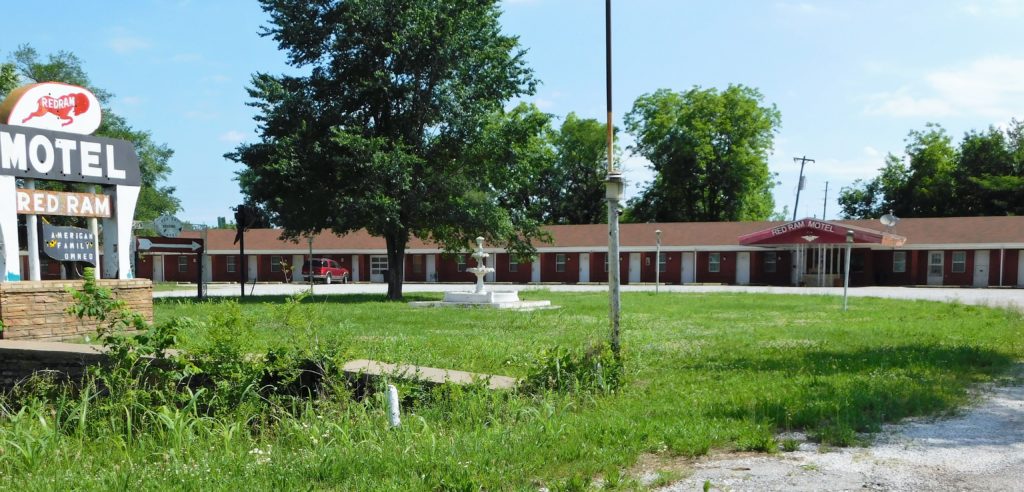
The Red Ram Motel on North National Avenue near U.S. Hwy. 54. U.S. Hwy. 69 junction. This photo was taken in 2018, before the remodel by Fort Scott Community College.
The former Red Ram Motel at the very north end of National Avenue in Fort Scott has new tenants.
For many years, the property was vacant of any business.
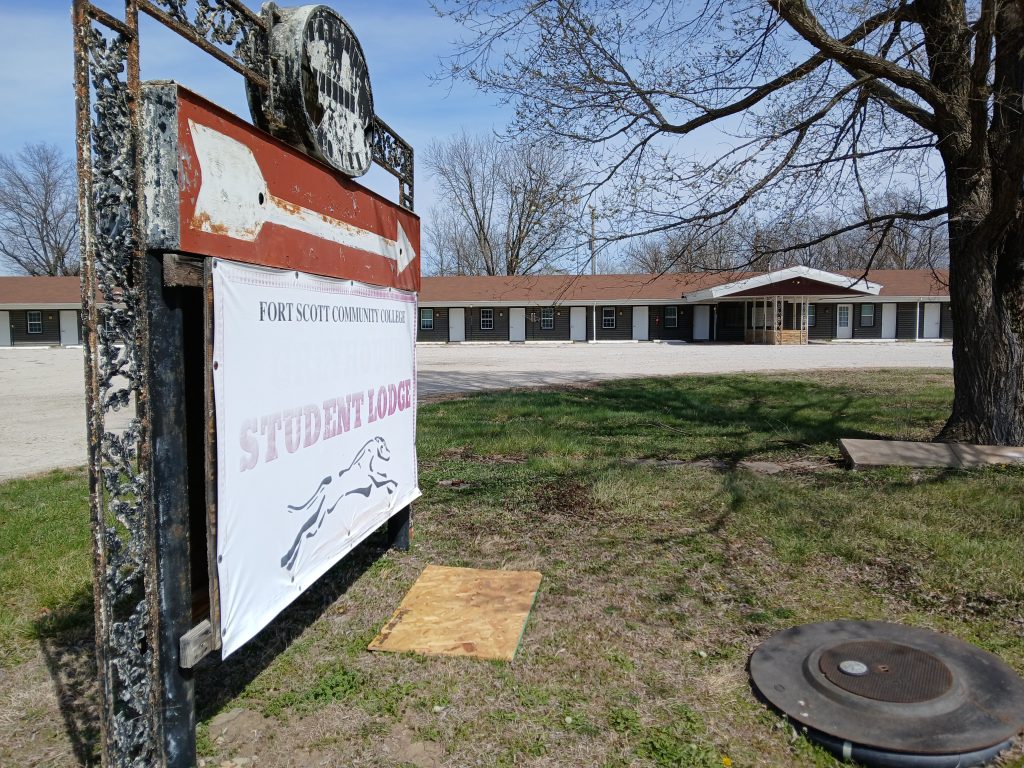
Then, for several years starting in 2018, the property was owned by Fort Scott Community College and was repurposed into student housing, known as the Greyhound Lodge.
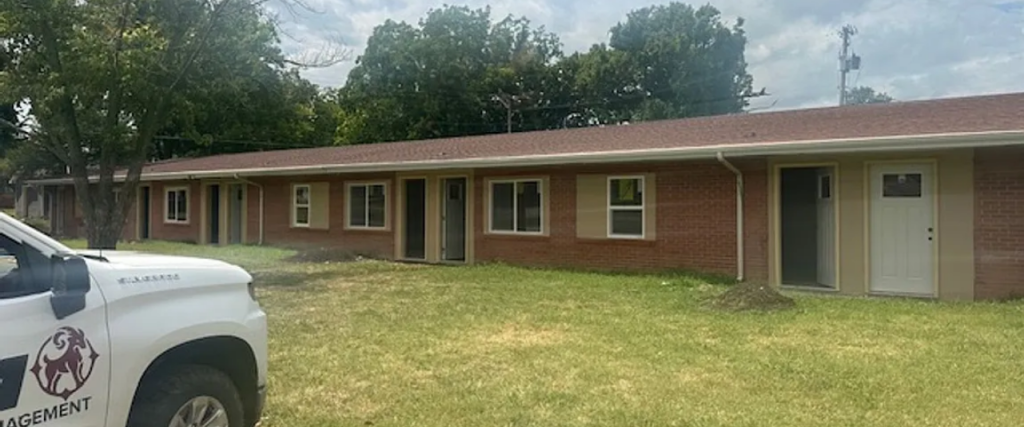
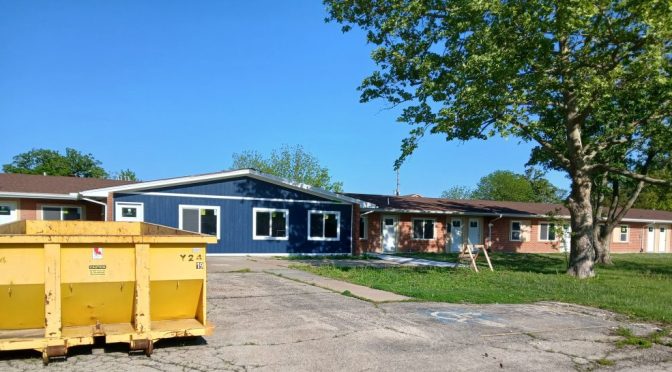
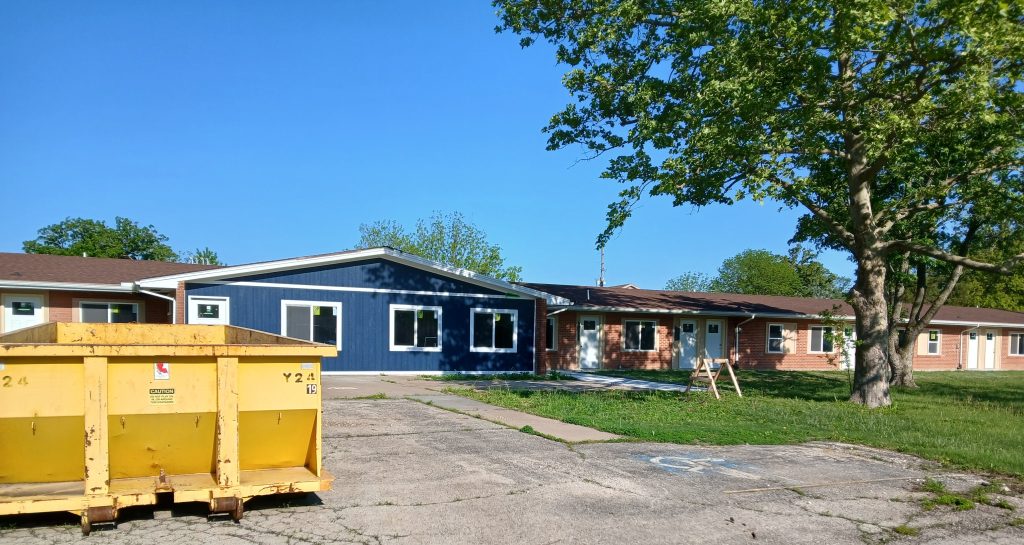
The former Fort Scott Community College Greyhound Lodge in 2026, before Rural Asset Management purchased the property.
This year, it was sold to Shane Lamb, with Rural Asset Management.
Lamb’s business also has a former nursing home, Fort Scott Manor, which is nearing completion and started accepting apartment tenants.
There was a clean-up of the Red Ram property, and two tenants have already moved in, Lamb said.
These are entry-level workforce housing, he said. “For young adults’ first apartment, or young marrieds or older people who want just one bill per month,” Lamb said.
“They come with water, electricity, trash, and sewer included in the $625 per month. One bill for everything.”
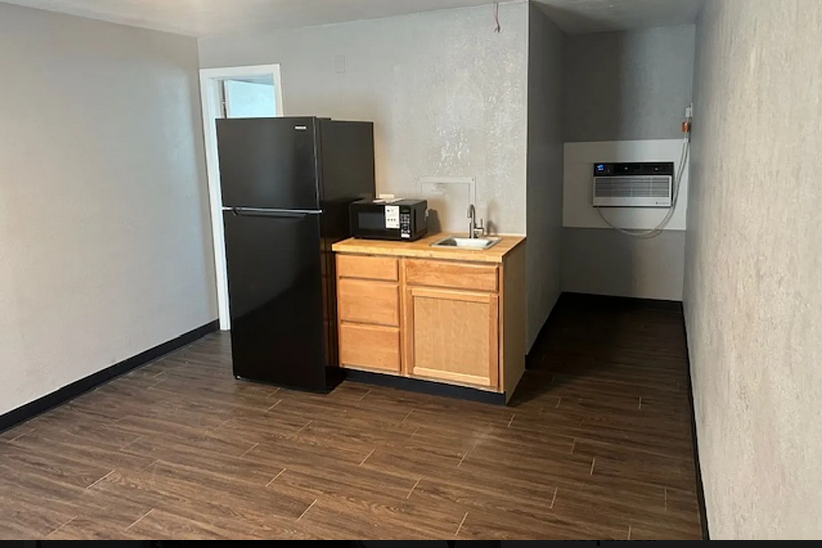
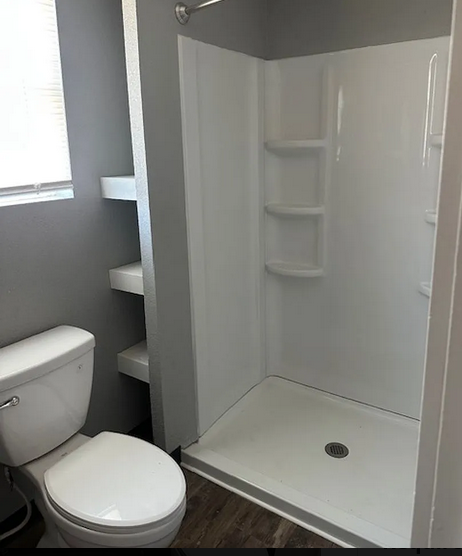
There are 20 studio apartments with kitchenettes. approximately 350-400 square feet in size. There will be one to two 1-bedroom and 1-2 two-bedroom apartments when the whole building is fully cleaned up and touched up.
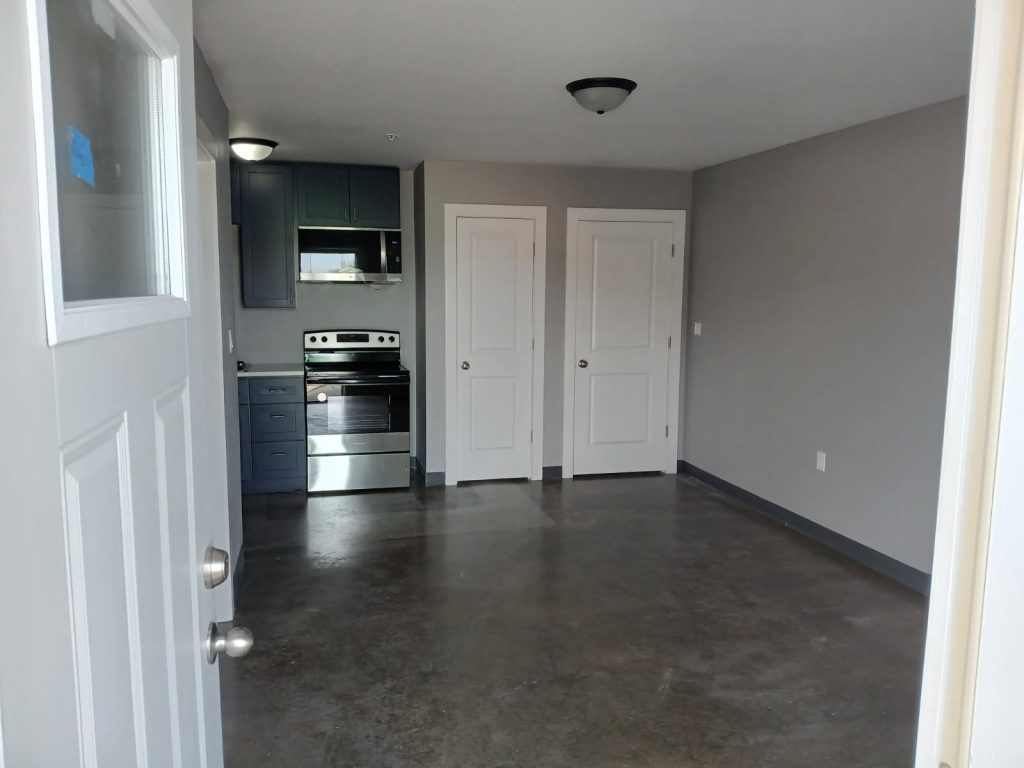
The kitchenette of the studio apartment. Taken from Zillow.com
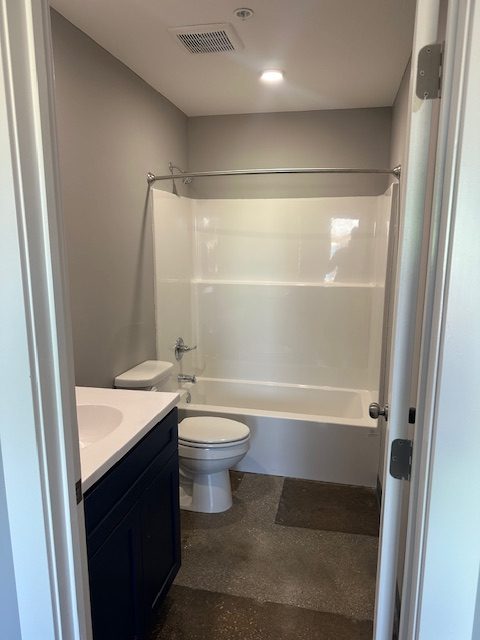
The bathroom of the studio apartment, taken from Zillow.com
There is a central laundry area on-site.
Eventually, the sign out front will be changed.
“We are not sure of the name yet,” Lamb said. “It will be rebranded in a month. My kids name all our properties,” Lamb said.
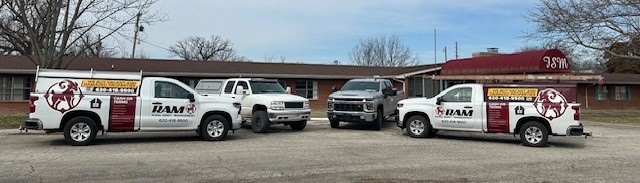
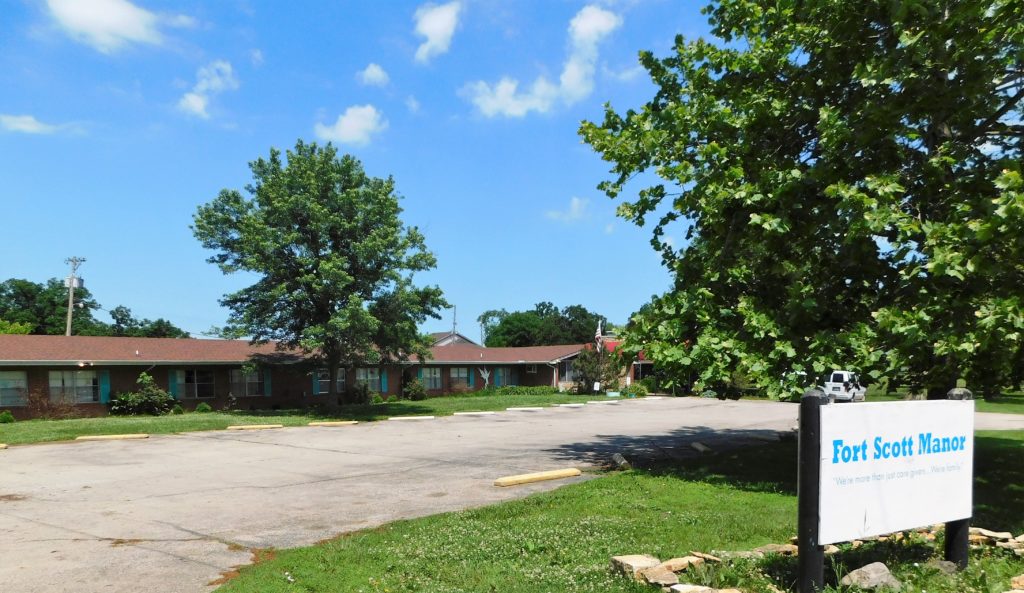
Work trucks line the driveway of the former Fort Scott Manor in 2024. Submitted photo.
Rural Asset Management also owns Charlotte Place.
Charlotte Place is located at 736 S. Heylman, the former Fort Scott Manor nursing home that he has been remodeling for several years.
Charlotte Place, 736 Heylman, from Zillow.com
Tenants started moving in there in April.
“We have four tenants on Heylman,” Lamb said. “There will be three to four apartments available every month until the project is completed.”
These are larger apartments, at approximately 600 square feet, with one bedroom, two bedrooms, and studio apartments as options.
These are $695 with utilities as extra costs.
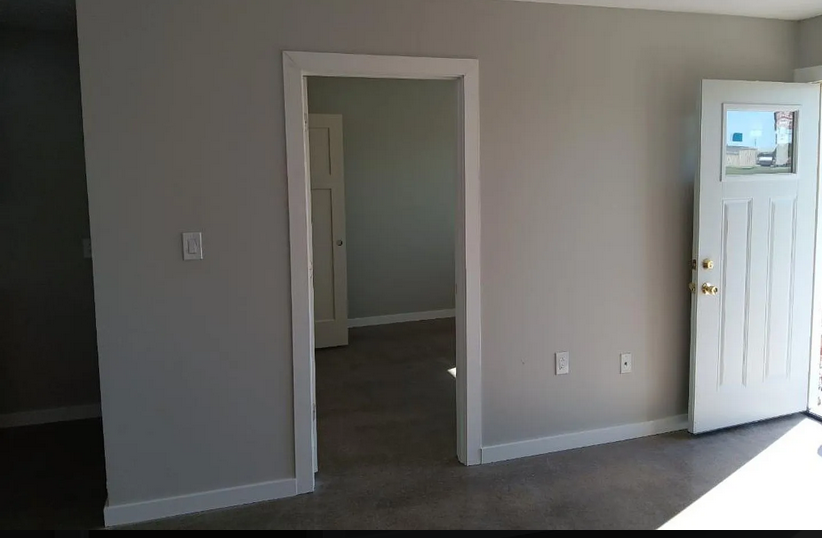
The interior of an apartment at Charlotte Place, 736 Heylman, from Facebook.
Don’t Be Scammed
For more information, Lamb said to call the business office at 620-418-9500.
“Call the office, not Facebook Marketplace,” Lamb said. “Some people have been scammed out of money using Facebook. Anybody can take photos and take money from you.”
TOPEKA – The Kansas Corporation Commission (KCC) wants to remind utility customers that there are two important dates coming up next week. First, the Cold Weather Rule ends on Tuesday, March 31. The Cold Weather Rule protects residential customers, served by KCC regulated utilities, from disconnection when temperatures are forecast to drop below 35 degrees.
When the Cold Weather Rule is in effect, regulated utilities are required to offer a 12-month payment plan upon request, even if a previous payment plan has been broken. When that protection ends on Tuesday, failure to make arrangements or failure to adhere to an already established payment plan could result in disconnection. Reconnection after March 31 may require past due balances to be paid in full, depending on the utility’s policy. That is why it is important to call now – while regulated utilities are still required to offer the Cold Weather Rule 12-month payment plan.
In addition, March 31 is the deadline to apply for the Low-Income Energy Assistance Program, known as LIEAP. Applications for the federally funded program must be received by the Kansas Department of Children and Families by 5 p.m. on Tuesday, March 31. Information about the program is available at https://www.dcf.ks.gov/services/ees/Pages/EnergyAssistance.aspx.
The Commission urges all customers facing financial difficulties to act now to stay connected. To find out more about utility assistance programs in your area, please contact your utility or the KCC Consumer Protection Office at 800-662-0027 or 785-271-3140. Utility assistance program information is also posted on the KCC’s website.
It is important to note that the Commission does not regulate co-ops or municipal utilities, although many of those utilities also offer a cold weather payment plan. For a complete list of utilities regulated by the KCC visit: http://kcc.ks.gov/about-us/jurisdiction.
The Kansas Senate has passed historic reform to cut through red tape and make building single-family homes faster and easier across our state, unlocking the potential of the American dream in Kansas.
At its core, SB 418 requires local governments to approve single-family homes, speeding up new construction to help ease housing shortages and make homes more affordable. It also allows more practical and affordable building options and treats all residentially-zoned land in cities as suitable for single-family use.
Senator TJ Rose, who carried the bill on the floor, said, “Kansas families have been asking us to help revive the American dream of homeownership, and this bill advances that effort by reducing red tape, allowing more practical and affordable building options, and opening more land for single-family homes. This bill particularly gives younger Kansans hope for the future, knowing that owning a home is now more attainable in our state.”
President Ty Masterson thanked Senator Rose for his work on the historic bill.
“Senator Rose worked for months with cities, builders, realtors, and key advocacy groups to craft this bill and ensure it would pass this session, as evidenced by the bi-partisan vote for the bill. As the father of six and the grandfather of seven, I want young Kansans to know that homeownership is possible. This bill helps fortify single-family homes as the bedrock of the American dream.”
###
Kansas Senate President Ty Masterson | 300 SW 10th St. 332-E | Topeka, KS 66612 US
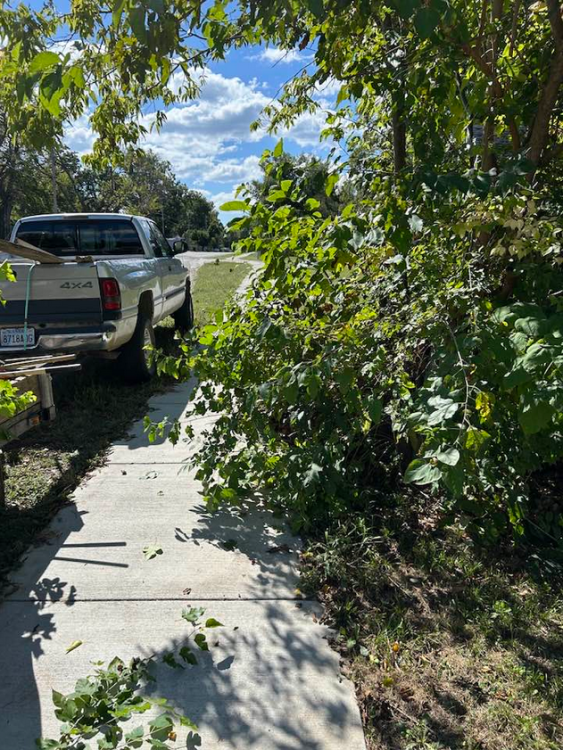
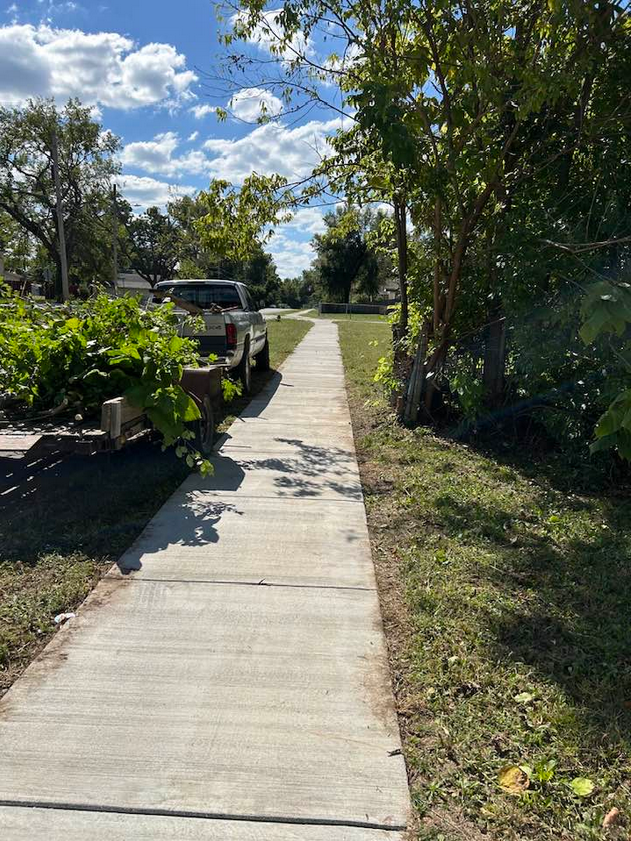
A before shot of a sidewalk that had bushes crowding in. From the group’s Facebook page.After GNAT work. From the group’s Facebook page.
The Good Neighbor Action Team (GNAT) helps the Fort Scott community in hands-on projects and is gearing up for this year’s projects.
They are planning for 2026, and are asking the community to let them know of potential projects.
They cannot do roofs, but can clear yard debris and help with light carpentry needs, with curb appeal as the goal.
If you have a larger project, they can assist with grant applications. Please send requests or ideas to Craig Campbell at 620.224.0167.
“We help people where they are overwhelmed, financially or physically,” said Campbell, a member of GNAT. “Our main mission focuses on helping people who are having trouble maintaining their properties. We do things like you would help a neighbor with.”
Craig Campbell coordinates projects on the Good Neighbor Action Team.
“We focus on the elderly and financially distressed, like single parents or veterans, or those with a physical disability, to do the work themselves,” he said.
“We do it whether someone has the ability to pay or not,” he said.
“We bring the people and the materials to get the job done.”
The group receives grants and donations to help with the materials, and recently received a Fort Scott Area Community Foundation Grant. “We have a person who helps with the grants, Jara Martin.”
“We have been successful in getting grants to help with roofs and heating/cooling. We coordinate house painting,” he said.
The GNAT examines the project for need and scopes it to determine how many volunteers are needed.
Then the team asks for volunteers to help with the projects through local organizations and churches.
Last year, the Fort Scott Community College softball women helped paint a house and got the job done in one afternoon, he said.
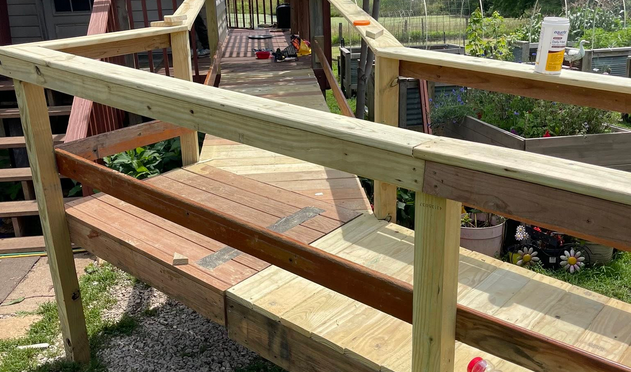
In recent years they have been building many wheelchair ramps.
“We were building a wheelchair ramp about once a week, but that has gotten slower,” he said.
“As soon as the weather is better, we will paint some houses. We do yard clean-up, life after a storm. Winter can knock branches down.”
Current GNAT members are Ed Allen, Campbell, Bailey Lyons, Lindsay Madison, Martin, Jake Province, C.J. Robison, Gayle Teter, and Don Tucker.
Commerce Seeking Support to Identify Vacant Buildings for Redevelopment
TOPEKA – Lieutenant Governor and Secretary of Commerce David Toland today announced that the Department of Commerce is launching an initiative to identify vacant, abandoned or underutilized buildings suitable for redevelopment into housing units. Local leaders, community organizations and property owners can assist in this effort by submitting information about buildings in their area that could be considered for conversion.
“Our communities are rich with structures that have strong bones and the potential for future use,” Lieutenant Governor and Secretary of Commerce David Toland said. “Connecting private developers to available vacant buildings is an easy way to address the prevalent housing crisis being felt throughout the country — while also preserving the architectural character and history of our Kansas communities.”
The Department of Commerce will compile submissions into a statewide list that will be shared with developers, contractors and housing partners seeking adaptive reuse opportunities. Examples of potential buildings include former schools, nursing homes, hospitals, churches, detention facilities — or other structures that might be vacant but well-positioned for conversion into residential units.
“Through this new effort, we’re able to help communities in a proactive way, attracting investments and meeting specific local housing needs,” Assistant Secretary of Commerce Matt Godinez said. “There are a lot of unique buildings that are full of history and even more potential — and what better way to activate these unique community assets than by turning these beloved buildings into new housing opportunities for Kansans?”
Communities and property owners interested in participating are encouraged to submit building or property details here.
For more information about the initiative, contact Kerri Falletti at Kerri.Falletti@ks.gov.
About the Kansas Department of Commerce:
As the state’s lead economic development agency, the Kansas Department of Commerce strives to empower individuals, businesses and communities to achieve prosperity in Kansas. Commerce accomplishes its mission by developing relationships with corporations, site location consultants and stakeholders in Kansas, the nation and world. Our strong partnerships allow us to help create an environment for existing Kansas businesses to grow and foster an innovative, competitive landscape for new businesses. Through Commerce’s project successes, Kansas was awarded Area Development Magazine’s prestigious Gold Shovel award in 2021, 2022, 2023 and 2024, and was awarded the 2021 and 2022 Governor’s Cup by Site Selection Magazine.
About the Quality Places Division:
Established in 2024, the Quality Places Division at the Kansas Department of Commerce exists to improve quality of life in communities across the state through various programs and services. The Kansas Department of Commerce understands the immense role played by strong communities in economic development and prioritizes investments in people and communities as major contributors to the overall strength of the Kansas economy. To learn more, click here.
The Low Income Energy Assistance Program (LIEAP) can help eligible households pay a portion of their primary home heating costs by providing a one-time per year benefit. LIEAP can help restore or maintain electricity, natural gas, propane and other home heating bills.
The application period begins
Jan. 20, 2026, at 8 a.m. and ends March 31, 2026 at 5 p.m.
Apply online at dcfapp.kees.ks.gov or get help in-person at an upcoming LIEAP event:
January 29 from 1-6 p.m. at the Fort Scott Public Library, at 2nd and National Avenue.
See the full schedule of LIEAP events at LIEAP.dcf.ks.gov
Please bring copies of the following information:
• Proof of income (earned and unearned) for anyone living in
the residence.
• Copy of all fuel bills (gas, electric, propane, etc.)
• Proof of child support payments received or the court order.
• If in subsidized housing, provide a copy of your rental
agreement.
• If your primary heating costs are included in your rent, provide
a copy of your rental agreement.
*Other information may be requested as needed.
LIEAP
**If your utility bills are in the landlord’s name, a copy of the lease
agreement must be provided.
LIEAP
Workers are finishing up work at the former Fort Scott Manor to turn it into apartments for the community, which are named Charlotte Place.
Fort Scottians need more apartments, and a Kansas contractor is turning a former nursing home, which has been vacant for several years, into new rentals after a complete renovation of the property.
The former Fort Scott Manor nursing home property, 736 Heylman, was purchased by Rural Asset Management (RAM) in January 2022, after being closed down by the state several years prior.
The new name for the Fort Scott property is Charlotte Place, RAM Owner Shane Lamb said, adding that his children pick the name of the business’s properties.
The first four units are slated for rental availability in late October, said Lamb, if all goes as planned.
Work started on the property, then halted to finish a similar Iola project in March 2025.
“It’s coming together, it’s been an intensive and costly project, and it should be nice when done,” he said. “Our goal is to be the nicest apartments in the community we are in, and to keep it affordable.”
There will be 24 units: one-bedroom, one-bath apartments are 550-626 square feet with a range of $650-695 per month, two-bedroom apartments are between 700-1000 square feet with a range of $800 to 875, and there will be a 500 square foot studio apartment for short-term rentals, Lamb said.
“The short-term rental, a couple of local businesses want to lease for their staff,” Lamb said.
The apartments will feature new appliances, including a stove, above-stove microwave, and fridge, and will be equipped with fiber optic internet availability.
Tenants will pay rent and their electric bill; the landlord pays for the water, trash, and sewer service.
There will be a brand new on-site laundry provided for the tenants.
Additionally, “there will be a pet-friendly fenced-in area in the back of the apartments,” he said.
These apartments will not be low-income rentals, but instead will be available to the standard market, said Lamb.
“The standard market means that they are not subsidized by the government,” Lamb said.
About Rural Asset Management
RAM focuses on rural towns and rural housing, purchasing nursing homes, schools, and hospitals that are converted to housing, according to a prior interview with Lamb.
“We currently have 13 projects under construction in rural communities,” he said. “We typically supply 300-600 apartments per year in rural communities.”
HUD issued Final Rule in the Federal Register on December 13, 2024, regarding termination of tenancy for non-payment of rent.
Effective January 15, 2025, HUD requires that a 30-day notice to pay be given to the tenant before a judicial eviction is filed due to non-payment of rent. While Kansas law provides for a 3-day notice to pay or quit, the HUD requirement prevails.
In addition, HUD details the requirements of the notice. “All termination notices in cases of failure to pay must include:
Instructions on how the tenant can cure the nonpayment of rent violation, and include:
an itemized amount, separated by month of alleged rent owed by the tenant,
any other arrearages allowed by HUD and included in the lease, separated by month,
the date by which the tenant must pay the amount of rent owed before an eviction for nonpayment of rent can be filed.”
This means owners may no longer state only the total amount owed but must provide a separate line item for each fee. An example of the itemization follows:
Overland Park Convention Center. This year’s event brings together housing professionals from across the state and region to network, learn, and explore the latest trends and innovations in affordable housing.
The conference hotel room block is open! Reserve your at the Sheraton Overland Park Hotel today! Our hotel block fills up quickly. We will share more information about overflow hotel booking as the Sheraton room block nears capacity. Unused rooms will be released on Oct. 6, 2025.
COMING SOON!
General registration opens; conference agenda released | mid-August 2025
Make sure you are subscribed to the conference mailing list for all the latest updates.
Gary Kirkman of US Housing Consultants will offer the following compliance training sessions for housing administrators Oct. 27-29, listed in the left column below. Attendees of these sessions will be provided with digital training materials.
Brandon Bay of US Housing Consultants will offer NSPIRE training sessions on Tuesday, Oct. 28, listed in the right column below. Attendees of NSPIRE training sessions will be provided with digital training materials that will make the class easy to follow.
Compliance Training
Monday, Oct. 27
2:15-3:45 | HOME Final Rule Summary
Gary Kirkman will delve into providing attendees with a brief overview of the HOME Final Rule. Some of the topics to be discussed will include income determinations, rent compliance, handling over-income tenant households, and what changed under verifications. Gary will conclude the session speaking about tenant protections and selection, which HUD delayed under April 20, 2026.
4:00-5:30 | Violence Against Women Act (VAWA) Training
Gary Kirkman will speak on the importance of understanding the Violence Against Women Act (VAWA). Gary will address where we are today as it relates to VAWA, protections under VAWA, key terms of VAWA you’ll want to remember, bifurcation process, and notification of occupancy rights. This session is vital to anyone working with applicants and tenants who have the ability to come in contact with those seeking protections under the law.
Tuesday, Oct. 28
9:00-10:30 | Calculating Income under HOTMA
Gary Kirkman will address how we calculate income to determine eligibility under HOTMA. Some of the topics to be discussed will include the Safe Harbor Income Determination, De Minimis Errors, Child Support/Alimony under HOTMA, student financial assistance for both Section 8 and non-Section 8 recipients, and the handling of in-kind benefits, when applicable. This session is a layered programs training and geared to those who will be determining a household’s eligibility.
10:45-12:15 | Calculating Assets Under HOTMA (Part 1)
Gary Kirkman will address how HOTMA changed the way we handle assets when determining a household’s eligibility. HUD recognizes that all assets fall into two categories, either personal property or real property, but how will that affect what we count as income, when do we need to impute, or how this affects the Asset Threshold (which can change each and every year). Gary will train to assist those working in the industry to determine eligibility for households to leave with a clearer understanding of the ins and outs of HOTMA assets!
2:00-3:30 | Calculating Assets Under HOTMA (Part 2)
Gary Kirkman will address how HOTMA changed the way we handle assets when determining a household’s eligibility. HUD recognizes that all assets fall into two categories, either personal property or real property, but how will that affect what we count as income, when do we need to impute, or how this affects the Asset Threshold (which can change each and every year). Gary will train to assist those working in the industry to determine eligibility for households to leave with a clearer understanding of the ins and outs of HOTMA assets!
3:45-5:15 Conducting Annuals & Interims under HOTMA
Gary Kirkman will tackle the complexity of conducting Annual and Interim Recertifications which changed under HOTMA. Gary will address how income should be calculated for recertifications, when you will be required to conduct interims, and speak about HUD’s non-interim transactions. This session is designed for those working HUD multifamily housing projects and will serve as a review of how HUD looks to see certifications processed for the tenants we serve at our properties.
Wednesday, Oct. 29
9:30-11:00 | Handling Student Eligibility
Gary Kirkman will review student eligibility requirements for our common affordable housing programs (e.g., LIHTC, HUD, Rural Development and HOME). Each of the programs has their own student requirements in order for a household to be eligible for housing, but what happens when management has layered funding at a property? Does one student rule outweigh another’s student requirements? This session will help clear up some of the questions an attendee may have to whether a student reside in a unit or not and be eligible.
11:15-12:45 | The Average income Test Refresher
Gary Kirkman will speak about the Average Income Test (AIT) and the requirements we have to remember when working on those projects where the owner made this very important Minimum Set-Aside MSA) election. Gary will review the two-point test owners/agents have to remember to satisfy AIT, speak about the grouping of units when determining AIT and the Applicable Fraction, and discuss the importance of AIT as it relates to handling non-compliances. This session is designed to be a refresher in this MSA and for those curious to see how units can affect the owner’s ability to claim credits.
Tuesday, Oct. 28 | NSPIRE Training
9:00 a.m.-10:30 a.m. | NSPIRE Chapter 1 Review
This first 90-minute segment includes a breakdown of the origins of NSPIRE, and the differences between UPCS, HQS, and NSPIRE. This includes the breakdown of the new severity ratings; the new pass or fail rating; the applicability of the rules for HCV, PBV, HUD CPD programs; and REAC agency inspections from Multifamily Section 8, Public Housing, and LIHTC. The course then reviews the procedures required to close out findings in REAC’s new online system after REAC Inspection, and the expectations of closeout procedures. We will then discuss new procedures for REAC appeals, consequences for non-compliance, and new oversight processes from both HUD and REAC.
This session will review the NSPIRE standards, following manual chapters 2 through 4 as a guide, including: Fire and life safety standards, and kitchen and bathroom standards. We will then cover how to understand the requirements and the underlying codes that many of these standards are based upon.
2:00-3:30 p.m. | NSPIRE Chapters 5-7 Review
This session will review the NSPIRE standards, following manual chapters 5 through 7 as a guide, including: Interior finishes; guardrails and railings; lighting and electrical standards; and windows and doors. We will then cover how to understand the requirements and the underlying codes that many of these standards are based upon.
3:45-5:15 p.m. | NSPIRE Chapters 8-11 Review
This session will review the NSPIRE standards, following manual chapters 8 through 11 as a guide, including: Mechanical standards; hazards; site and grounds standards; and structural issues. We will then cover how to understand the requirements and the underlying codes that many of these standards are based upon.
Brandon Bay, a Pacific Northwest native and father of two girls, has passionately worked in the Affordable Housing Industry in many capacities over the last 10 years. He is eager to use his knowledge and experience to serve the clients and partners of US Housing Consultants. His journey began as an investor in multifamily properties. Shortly thereafter, he began to develop properties and subsequently founded his own real estate investment, development and holding company in Oregon.
During this time, Brandon worked on all areas of Multifamily housing, and often refers to himself as “Maintenance Guy-CEO”, having truly learned to understand and appreciate all the roles involved in operating Affordable Housing. Brandon is an enthusiastic and engaging trainer. His passion for the sharing of knowledge is self-evident in his presentations. He conducts public and private trainings and also delivers information at industry conferences. He offers open forums with positive interaction, and assures attendees, “There is never a question that doesn’t benefit the entire room.”
Mr. Gary Kirkman has acquired over 18 years of valuable leadership experience within the affordable housing industry and now serves as the Director of Compliance Training for US Housing Consultants. Having started in the industry as a Regional Property Manager, Mr. Kirkman managed Rural Development and HUD properties before being promoted to Training Specialist, where he was responsible for overseeing multiple affordable communities while training personnel on the affordable housing programs.
The City of Fort Scott is seeking passionate and civic-minded individuals to serve on the Fort Scott Historic Preservation and Resource Commission (FSHPRC)—a key volunteer group that helps guide the city’s historic preservation efforts and ensure thoughtful stewardship of our architectural and cultural resources.
About the Commission:
The Fort Scott Historic Preservation and Resource Commission advises the City Commission on matters related to the preservation of historic properties and districts within Fort Scott. The board is responsible for reviewing Certificates of Appropriateness (COAs), assisting in the development of local preservation policy, and supporting public education and outreach related to Fort Scott’s historic character.
Qualifications for Appointment:
The following qualifications shall apply to appointees to the FSHPRC:
All appointees shall be residents of the City of Fort Scott.
All appointees should be individuals who have demonstrated interest, knowledge, or training in fields closely related to historic preservation, such as:
History Urban Planning and Design
Architecture Real Estate
Landscape Architecture Law
Architectural History Finance
Archaeology Building Trades
Geography
A majority of the commission must have a demonstrated interest or expertise in historic preservation, and at least one member must meet the professional qualifications established by the National Park Service.
Member Responsibilities:
Serve as a volunteer representing the public interest in historic preservation
Attend regular public meetings (typically monthly)
Review and vote on proposed alterations to designated historic properties
Provide input on preservation planning and ordinance updates
Participate in training or workshops as needed
Terms:
The terms of office shall be:
One year term – Three members
Two-year term – Four members
Apply Today:
Interested residents may submit an application for appointment to the City Clerk’s Office. Applications are available online at fscity.org or at City Hall, 123 S. Main St., Fort Scott, KS.
Twenty-two new standard market apartments will be available this year in Fort Scott, if all goes as planned.
Shane Lamb is president of Rural Asset Management and Rural ReDevelopment Group, De Soto, KS., and decided to take on the former Fort Scott Manor Nursing Home, 736 Heylman Street as a redevelopment project.
Shane Lamb, owner of Rural Asset Management and Rural ReDevelopement Group LLC, from his LinkedIn profile.
He purchased the property in January 2022, which had been closed for approximately three years, intending to create 24 standard market apartments.
In a prior interview, Lamb said they didn’t receive any state or federal grants or funds. They did apply for them but did not receive any.
Work began last year on the project.
“We went drastically over budget and over time,” he said. “All our contractors were slow, winter was slow.”
“We jumped off that project to finish phase 1 of a project in Iola,” Lamb said.
Lamb said the Fort Scott project will be restarting this week.
The former Fort Scott Manor is being developed into 1 bedroom apartments. May 3, 2025 photo.
Phase 1 of the Fort Scott project will take approximately 60 days once started. It will take six months for the whole project to be completed.
The building is approximately 20,000 square feet and has been completely gutted, and all new materials have been used.
The Fort Scott property will not be low-income apartment rentals but instead will be for the standard market, with prices for the large one-bedroom apartments at $675 to 695 per month, Lamb said.
“We focus on rural towns and rural housing,” he said in a prior interview. “Typically, we purchase nursing homes, schools, hospitals…single-use vacant properties we convert to housing.”
Lamb said he always tries to use qualified local contractors and buy materials locally.
“I always try to keep the money local,” he said. “It doesn’t work 100 percent of the time. Sometimes you can’t find local partners to meet those deadlines…because they are so busy. We do have a couple from Fort Scott, Chanute, and Iola.”
Photos submitted by Shane Lamb of the Iola project, which is similar.
Commerce Offers Funding Opportunities for Upper Floor Housing in Main Street Communities
TOPEKA – Lieutenant Governor and Secretary of Commerce David Toland announced today $250,000 is available under the Residential Opportunities on Main Street (ROOMS) grant program to support new upper-floor housing in commercial buildings in Designated Kansas Main Street communities.
“Last year’s initial round of ROOMS funding resulted in 34 new housing units across the state and nearly $6 million in total investment,” Lieutenant Governor and Secretary of Commerce David Toland said. “Another year of funding allows for us to continue breathing life into communities across this state and growing economic opportunities for generations to come.”
Upper-floor investments play an important role in addressing the affordable and quality housing shortage, which regularly is identified as a major issue throughout Kansas. Upper-floor housing enhances the overall livability and functionality of downtowns. It also can lead to increased investment, improved infrastructure, a positive cycle of economic growth, a stronger tax base, and a greater sense of place and community identity.
“The Kansas Main Street program has worked to help communities build their capacity in developing upper-floor housing in downtown buildings,” Kansas Main Street Director Scott Sewell said. “Housing in these historic buildings downtown helps generate excitement and vitality in the area while restoring buildings to maximize their full use. ROOMS grants help these types of projects become reality.”
ROOMS funds will be available to applicants within active Designated Kansas Main Street communities for projects that can be shown to lead directly to housing creation or retention in upper floors of existing buildings in downtown areas. Projects must incorporate Main Street design standards and follow local ordinances and codes for improvements.
More details about ROOMS can be found here. For more information about the Kansas Main Street program, click here.
About the Kansas Department of Commerce:
As the state’s lead economic development agency, the Kansas Department of Commerce strives to empower individuals, businesses and communities to achieve prosperity in Kansas. Commerce accomplishes its mission by developing relationships with corporations, site location consultants and stakeholders in Kansas, the nation and world. Our strong partnerships allow us to help create an environment for existing Kansas businesses to grow and foster an innovative, competitive landscape for new businesses. Through Commerce’s project successes, Kansas was awarded Area Development Magazine’s prestigious Gold Shovel award in 2021, 2022, 2023 and 2024, and was awarded the 2021 and 2022 Governor’s Cup by Site Selection Magazine.