The Vote Here sign sits in front of the north wing of the Bourbon County Courthouse, 210 S. National in an earlier election. A sales tax question will be on the ballot on May 14, 2024. for voters to decide the issue.
A citizen group working independently of the county commission plans a few community town hall meetings to inform people of the upcoming sales tax question on the May 14 ballot.
The group, Citizens For The ER, is presenting two town hall meetings regarding the one-quarter cent Bourbon County sales tax dedicated to re-opening the local emergency room.
The meeting aims to address questions and concerns about the sales tax.
Meetings are scheduled for:
Fort Scott on Thursday, April 11, at 6:30 p.m. at the Fort Scott Community College Ellis Center.
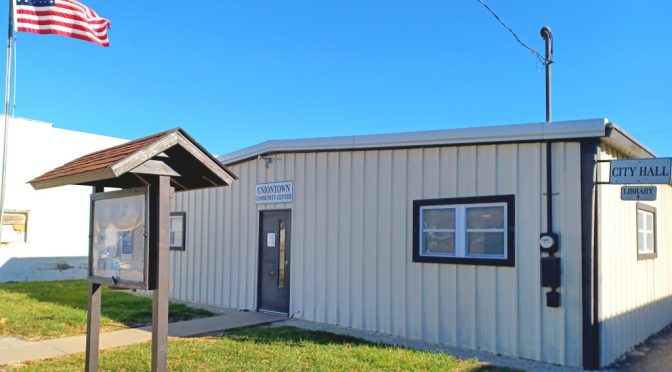
Uniontown on Wednesday, April 24, at 6:30 p.m. in the City Hall Meeting Room.
“This is an opportunity to learn how your vote will impact the well-being of our county,” said Charles Gentry, a member of the group.
“Our purpose is to support obtaining an emergency room (in the county) by getting the ¼ cent retail sales tax passed,” said Randy Nichols, another member. “The members are myself, Jamie Armstrong, Craig Campbell, Lynda Foster, Charles Gentry, Mark McCoy, and Doug Ropp.”
McCoy will be the moderator of the meetings.
“We are taking on the issue because we all feel strongly the need to have an ER for both community health and economic well-being,” Nichols said.
TOPEKA – The Kansas Department of Transportation is accepting applications for the Safe Routes to School Program for its second round of Planning and Programming (P&P) grants.
Applications are due by 5 p.m. on May 3. KDOT will award up to five grants for the 2024-2025 school year.
The P&P grants fund the development of SRTS plans that will include an overview of existing conditions and public outreach. The plans should also identify potential infrastructure and non-infrastructure solutions to help more children safely walk, bike and roll to school.
All communities, school districts and organizations are encouraged to apply. More information on the P&P grant program, including the application, recordings of prior informational webinars and a question/answer sheet can be found at https://saferoutes.ksdot.gov/grants-and-funding.
About KDOT Safe Routes to School
Safe Routes to School is a comprehensive approach to getting more kids walking, biking and rolling safely to school. It provides kids and parents with a variety of activities, events and lessons, while also addressing local pedestrian, bicycle and personal safety concerns. Visit KDOT’s Safe Routes to School website at SafeRoutes.ksdot.gov to learn more and sign up for the quarterly e-newsletter.
KFF Health News and Cox Media Group’s Series on Social Security Overpayments Wins the Goldsmith Awards’ Inaugural Government Reporting Prize
KFF Health News and Cox Media Group Television Stations announced today that they received the 2024 Goldsmith Awards’ inaugural Government Reporting Prize for their joint reporting in the series “Overpayment Outrage,” which exposed how the Social Security Administration routinely reduced or suspended monthly checks to take back funds to pay off large debts that were often created by its own miscalculation of people’s benefits.
The investigation revealed that more than two million people each year are hit with overpayments, including those least able to repay the debt, such as individuals who are poor, old, disabled, blind, or who suffer from a chronic illness.
The reporting triggered congressional hearings, a “top-to-bottom” review by Social Security officials, and increased Senate oversight. Commissioner Martin O’Malley also recently announced sweeping policy changes to stop what he called “clawback cruelty” and “grave injustices.”
The Shorenstein Center on Media, Politics, and Public Policy at the Harvard Kennedy School honored KFF Health News and Cox Media Group at the Goldsmith Awards ceremony yesterday with the new prize, which recognizes reporting on how government and public policy implementation works, including how and why it can fail and how it can most effectively and efficiently solve problems.
“This series exposed the significant impact of these mistakes on millions of people, including those who had little to no ability to pay back the government, forcing some people to lose their homes, cars and savings,” said KFF President and CEO Drew Altman, who is the founding Publisher of KFF Health News. “This is why KFF reports on systemic issues like this through our news service—to reveal how people are affected by policy. ”
“We’re honored to receive this prestigious award because it reflects CMG’s commitment to local news and investigative journalism,” said Marian Pittman, CMG’s President of Content. “The team’s relentless efforts to uncover the truth behind complex government policies and their implementation has resulted in tangible changes within the SSA and will directly benefit millions of people impacted by overpayments.”
The series was reported by David Hilzenrath and Fred Clasen-Kelly of KFF Health News and Jodie Fleischer of Cox Media Group. A list of additional contributors is available here.
More on “Overpayment Outrage”
Each year the Social Security Administration (SSA) issues billions of dollars in overpayments to recipients whose incomes or other qualifying criteria have changed. Under federal law, the SSA is required to demand repayment of this money, treating it as a debt to the federal government. These clawbacks can happen even decades after the initial overpayments.
In “Overpayment Outrage,” Cox Media Group and KFF Health News examined the overpayment issue and the impacts clawbacks have on vulnerable people. They found that overpayments happen due to rules that are complex and hard to follow, inadequate SSA staffing, outdated limits on assets and lagged or otherwise inaccurate data on income and other beneficiary information. The reporting also laid out potential solutions to address the legislative, funding, and process failures that cause this systemic problem.
About the Reporting Partnership
KFF Health News and Cox Media Group television stations used FOIA requests, reports by the inspector general and SSA, and interviews with agency employees, advocates for the disabled, and dozens of beneficiaries to piece together the story. What emerged was evidence of a systemic problem in which the SSA routinely reduces or halts monthly benefit checks to reclaim billions of dollars in payments it sent to beneficiaries then later said they should not have received.
After they published the series, hundreds of disability beneficiaries came forward with troubling accounts, including that the government sent them overpayment notices without explanation and threatened to cut off their main source of income with little warning. The agency has since restored benefits to several of the beneficiaries featured in the reporting.
About KFF and KFF Health News
KFF is a nonprofit health policy research, polling, and news organization. Our mission is to serve as a nonpartisan source of information for policymakers, the media, the health policy community, and the public. KFF Health News is a national newsroom that produces in-depth and award-winning journalism about health issues and is one of the core operating programs at KFF. KFF Health News has been recognized repeatedly for its journalism, with awards honoring its investigative reports on the American health care system.
Other major KFF programs include Policy Analysis; KFF Polling and Survey Research; and KFF Social Impact Media, which conducts specialized public health information campaigns. A new program on Health Misinformation and Trust will be launched soon.
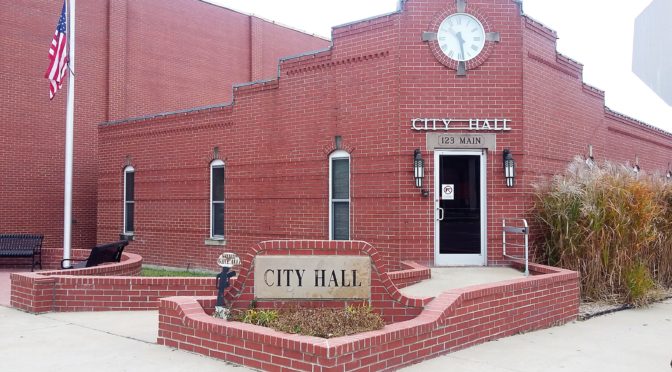
There are (2) open positions for the Fort Scott Public Library beginning in May. The function of the Library Board is to review requests in reference to the library. These are (4) year terms and the board meets the second Tuesday of each month. These are voluntary positions and board are not compensated. Please send your Letter of Interest to the City Clerk at [email protected] (or City Hall, 123 S. Main Street, Fort Scott, KS 66701) by April 16th, 2024 at 4:00PM, and PLEASE be sure to include your contact information.
All submitted letters will be presented to the Library Board for consideration. The board will then make a recommendation to the City Commission for approval. All letters will be posted on www.fscity.org, as they are included in the City Commission Agenda Packet and are a matter of public record (contact information will be redacted).
For further information or questions about the position, please contact Jennifer Gum-Fowler, Fort Scott Public Library Director at (620) 223-2882.
There are (2) open positions for the Fort Scott Public Library. The function of the Library Board is to review requests in reference to the library. These are (4) year terms and the board meets the second Tuesday of each month. These are voluntary positions and board are not compensated. Please send your Letter of Interest to the City Clerk at [email protected] (or City Hall, 123 S. Main Street, Fort Scott, KS 66701) by April 19th, 2024, and PLEASE be sure to include your contact information.
All submitted letters will be presented to the Library Board for consideration. The board will then make a recommendation to the City Commission for approval. All letters will be posted on www.fscity.org, as they are included in the City Commission Agenda Packet and are a matter of public record (contact information will be redacted).
For further information or questions about the position, please contact Jennifer Gum-Fowler, Fort Scott Public Library Director at (620) 223-2882.
Tax Relief is still being worked on, but it took an odd turn. After the House gutted Senate Bill (SB) 300, which was a bankers’ tax bill, and put the contents of House Bill (HB) 2844, which contained many of the tax cuts being considered, in SB 300, and created House Substitute for SB 300. They passed it 123 to 0. The Senate President ruled the bill materially altered. Senators could have challenged the ruling, but it hasn’t been challenged. There are similarities in House Substitute for SB 300 to the bill the Senate passed, SB 539. I am working to pass tax cuts for Kansans, especially property tax relief, exempting Social Security from state income tax, and other provisions.
Death Certificates could now be signed by a licensed physician, surgeon, physician assistant, advanced practice registered nurse, coroner, deputy coroner, or special deputy coroner if HB 2358 becomes law. It passed the Senate 39 to 1. I voted Yes. As with any bill returning to the originating chamber, the chamber can either concur, not concur and go to conference, or rule it materially altered and assign it to a committee. Most likely, the House will not concur and it will go to a conference committee.
K-12 Enrollment counts would change so that schools would use the greater of the preceding-year or current year on September 20. There are other counting changes and the bill was amended on the floor to help schools that are struggling with a declining population. SB 386 passed on a vote of 33 to 6. I voted Yes. We need to delve deeper into our K-12 school funding and spending. Of the billions of dollars being spent on K-12 funding, a greater percentage needs to get to the classrooms and teachers. The bill now goes to the House.
Unclaimed Property could be used to invest and possibly make money for the state. It may sound like a good idea, but what happens if the investments lose money and the property owner is found? It can and has happened. Legislators in the past blocked risky alternative investments because it almost broke KPERS and cost taxpayers. How they forget. The return on investments has been high so some perceive the risk to be low. Taxpayers will end up footing the bill for unclaimed property if these investments lose money. It’s a gamble I’m not willing to take. HB 2577 passed 38 to 2. I voted No. The bill returns to the House since it was amended.
Death or Disability to a police animal would be an increased penalty of a mandatory 90 days imprisonment and a minimum fine of $10,000 plus expenses such as veterinary treatment, funeral, and replacement. It is understandable we don’t want these animals harmed, but let’s strengthen the penalties for people who are harmed and not overdue for an animal. HB 2583 passed 25 to 15. I voted No.
Harm or Death to law enforcement or emergency responders for drivers who do not move-over another lane away from emergency responders would have increased penalties not less than $7,500 for death and $1,000 for harm. The current fine for not moving over for emergency responders would increase from $195 to $400. SB 426 passed 39 to 1. I voted Yes.
Public Utilities would not be able to use eminent domain for wind or solar facilities. SB 457 passed the Senate 38 to 0.
Energy Companies would be able to defer 90% of depreciation expenses and balances could be included in the utility’s rate base. If the bill becomes law, these changes could begin 7/1/2024 after the utility notifies the Kansas Corporation Commission (KCC). There are other provisions, like allowing for a new gas-fired plant to be built in Reno County. My concern is our ever-increasing energy costs and HB 2527 in its current form doesn’t address that. The bill passed 38 to 2. I voted No. The bill returns to the House since there were amendments.
It is an honor and a privilege to serve as your 12th District State Senator.
Governor Kelly Announces March Total Tax Collections $7M More than Estimate
TOPEKA – Governor Laura Kelly announced today that total tax collections in March were $760.4 million. That is $7.0 million, or 0.9%, more than the monthly estimate. Total tax collections are up 0.3% from March 2023.
“As we continue to work toward cutting taxes, the Legislature must be mindful that any tax relief must be fiscally sustainable,” Governor Laura Kelly said. “The bipartisan tax cuts plan I introduced in January, among other things, eliminates all state income tax on Social Security benefits and provides about $100 million in property tax relief for Kansas homeowners every year. It is a fiscally responsible plan that puts money back into every Kansan’s pocket while enabling us to continue to fully fund schools and invest in our infrastructure and other critical areas.”
Individual income tax collections were $364.9 million. That is $29.9 million, or 8.9%, more than the month’s estimate and up 16.0% from March 2023. Corporate income tax collections were $77.1 million. That is $7.9 million, or 9.3%, less than the estimate, and down 24.8% from March 2023.
Combined retail sales and compensating use tax receipts were $261.2 million, which is $8.8 million, or 3.2%, less than the estimate. Those collections are $14.2 million, or 5.1%, less than March 2023.
The Consensus Revenue Estimating Group (CRE), comprised of the Department of Revenue, Division of Budget, Legislative Research Department, and economists from the University of Kansas, Kansas State University, and Wichita State University, will meet on April 19, 2024, to review the fall estimate and make any revisions it may consider necessary.
Click here to view the March 2024 revenue numbers.
Fort Scott Community College President Dr. Jason Kegler held another Community Conversation on March 27, from 5:30 to 6:30 p.m. at the college.
These public discourses are to allow the public to have some knowledge of the challenges facing the college.
He referred to a recent FSCC Trustees board meeting where it was announced that the college is in much better shape and no longer at risk of not making payroll through June 30th.
At a recent employee meeting, he used the analogy of “just bobbing with our heads above the water,” Kegler said.
There are still definite challenges, but they can see the surface better than they could in the past, he said.
The audience at the March 27 Community Conversation led by FSCC President Dr. Jason Kegler.
Nursing
A recent update was given to the Kansas Board of Nursing after FSCC voluntarily ceased admitting new nursing students.
Vickie Laderer, Sonia Gugnani, and Darcus Kottwitz requested to the Kansas Board of Nursing that FSCC begin readmitting students for the fall 2024 semester, and was approved.
“This means one of our long-standing programs is no longer on hiatus,” Kegler said. .He said this represents a huge positive direction from being on ‘life support’ and ‘in trouble’ in December.
Dr. Kegler pointed out that FSCC’s nursing program used to be better than Pitt State University, but FSCC has lost the overall standard of excellence. He said there are still pockets of excellence, but the college needs to get back to having excellence across the board.
An audience member asked if the nursing program would be in a new location. Dr. Kegler said they hope to have them back in the lower level of the Hedges administration building. He said if anyone wants to help paint, there will be some opportunity to help.
Anne Dare asked if students had said they wanted to come to nursing but have been put on hold. Dr. Kegler said he wasn’t aware that had happened. He said they are working on a plan to make sure it is communicated to students that they will be accepting nursing students again.
FSCC Is Here To Stay
Dr. Kegler said he doesn’t want the local community wondering if the college is going to be here in the future. “We are going to be here,” he said.
An audience member asked if current students needed to enroll in another college as a backup. The president said he has no reason to believe a student would need to have a backup enrollment. He pointed out that FSCC has gone through one of the toughest times and has done so without laying people off.
“We have a long way to go before we truly need to be concerned about whether our doors are going to be open for students the following semester,” he said.
Dr. Kegler suggested that if people didn’t get a chance to attend the last board meeting, they should go to the YouTube channel and watch the agricultural presentation that highlighted the programs associated with the agricultural department.
FSCC President Jason Kegler speaks to the audience at the Community Conversation on March 27.
Four-day School Week
The college is switching to a four-day school week because students are asking for it. Several high schools are also going to four-day school weeks, and students from those schools are very interested in the flexibility that type of schedule allows. The college will still be open on Fridays, but the majority of courses will be Monday through Thursday.
An audience member said that the 4-day week was important for students because it allows them to take on more work responsibilities to help pay for college.
Softball Question
An audience member asked if softball would still be running this fall and accepting scholarships. He said it should continue to be fully functional in the fall.
FSCC’s Image
Dr. Kegler asked what the community thinks of when they think of the image of FSCC.
Some of the things that were mentioned:
Affordability for large families
A good stepping stone to a 4-year degree.
FSCC used to represent a lot of community involvement
The building we are meeting in used to be a lawn, but it is providing a lot of value to the community now.
Audience members mentioned that they would be very interested in taking some adult education classes and suggestions were made to gather survey information to see what people were interested in.
Jerry Witt mentioned that the community doesn’t know the faculty like they used to and there might be opportunities to “sell the faculty” so the community knows more about them.
Rodeo Team Member in Top Third In the Nation
Dr. Kegler said FSCC has a bronc or bull rider in the top third of the nation. “He was recently injured but his time is good enough that he should qualify for the national finals,” he said.
Future Students and Community Involvement
Aggie Day had 1,250 potential students visiting the college, he said.
Dr. Kegler said that in August the school is hosting a move-in day and asked if the community would come in to help greet the students, hand out water, and make people welcome.
He asked what it would take to get the community involved in the college.
Someone asked about a public relations person to let the alumni know what is happening at the college. Dr. Kegler said there were some other priorities first but that it was a good idea.
Dr. Kegler said the college would need help mowing, cleaning the residence halls, and painting and suggested that people interested in helping should contact the college.
He asked alumni why they attended here. Some of the answers:
Because it was close.
Dual credit when they were in Fort Scott.
They were paying for their own college and it was a good investment.
Their dad made them come because they were going to quit after going to Pitt State.
There was some discussion about how the community could be more informed about what was happening at the college. An audience member suggested that the community could be more active in seeking information about the college. Dr. Kegler said it was a two-way street. The college should try to do a better job of putting information out there, and the community can do a better job of seeking out information about what is happening.
Dr. Kegler said Dick Hedges used to come to work at the college, then run home and put on overalls and go drink coffee with members of the community at the sale barn. Dr. Kegler said he doesn’t drink coffee, but that type of relationship is what the college needs to be building with the community.
He asked if people would like to continue these conversations after the one planned for April. One person suggested continuing and another suggested taking a break.
U.S. Department of Agriculture (USDA) Rural Development Kansas State Director Christy Davis today announced $1,809,677 in investments in renewable energy and efficiency projects to lower costs, generate new income and create jobs for Kansas farmers, ranchers, and rural small businesses.
“USDA is committed to ensuring rural Kansas is benefitting from the clean energy economy,” Davis said. “These investments will expand access to renewable energy while creating good-paying jobs and saving Kansas communities and businesses money.”
The details of the Kansas projects are:
A $189,554 grant will help purchase and install 45.6 kW and 107.5 kW solar arrays for Concrete Service Co. Inc. in Barton and Ellis counties. This project will generate 225,623 kWh per year, enough to power 20 homes and save $19,628 per year.
A $39,532 grant will help purchase and install energy efficient improvements including new HVAC systems, resized ducting, heaters, and a waste oil heater for Niece Products of Kansas Inc in Fort Scott. The project is expected to save 1,943,100 cubic feet of natural gas, 1,160 gallons of diesel, and 85,293 kWh of electricity, the energy equivalent of powering 65 homes. The project is expected to save the company $41,037 per year in fuel, gas, and electricity costs.
A $62,027 grant will help purchase and install a 34 kW solar photovoltaic renewable energy system for Route 66 Hardware of Baxter Springs. The project is expected to generate 45,594 kWh per year, enough to power four homes and save the company $6,233 per year in electrical costs.
A $181,925 grant will help purchase and install three rooftop solar photovoltaic renewable energy systems, an 83 kW and two 17 kW systems, for American Bank at their Baxter Springs and Galena locations. The project is expected to replace 174,829 kWh per year, enough to power 16 homes and save the company $28,369 per year in electrical costs.
A $219,284 grant will help purchase and install two solar photovoltaic renewable energy systems, a 72.80 kW system and an 84.24 kW system, for US Assets Recovery LLC of Galena. The project is expected to generate 216,915 kWh per year, enough to power 20 homes. The project is expected to save the company $35,220 per year in electrical costs.
A $9,360 grant will help purchase and install a 6.24 kW solar photovoltaic renewable energy system for Brian Jordan’s commercial property management business in Galena. The project is expected to replace 8,395 kWh per year and save the company $1,352 per year in electrical costs.
A $16,380 grant will help purchase and install a 10.92 kW solar photovoltaic renewable energy system for Liberty Hall LLC of Galena. The project is expected to replace 17,009 kWh per year and save the company $2,450 per year in electrical costs.
A $20,659 grant will help purchase and install a 14.08 kW solar photovoltaic renewable energy system for Clark Repair of Baldwin City. The project is expected to replace 20,697 kWh per year, enough to power two homes and save the company $2,621 per year in electrical costs.
A $51,250 grant will help purchase and install a 41 kW solar array for Hi-Plain Farm Equipment Inc. of Dodge City. This project will generate 55,068 kWh per year, enough to power five homes and save $3,870 per year.
A $156,183 grant will help purchase and install a 137.16 kW solar array for Blake Koehn, an ag producer in Grant County. This project will produce 250,279 kWh per year, enough electricity to power 23 homes.
A $21,734 grant will help purchase and install a 15.96 kW solar array for Rick’s Auto Repair LLC in Gray County. This project will generate 27,415 kWh per year, enough electricity to power two homes.
A $22,028 grant will help purchase and install a 114.72 kW solar array for Country Feeds Co. in Gray County. This project will produce 184,860 kWh per year, enough electricity to power 17 homes.
A $70,565 grant will help purchase and install a 60.48 kW solar array for Nichols Ironworks LLC in Haskell County. This project will produce 89,498 kWh per year, enough electricity to power eight homes.
A $46,966 grant will help purchase and install three solar photovoltaic renewable energy system rated at 6.32 kW, 10.66 kW, and 15.40 kW for RVH Properties LLC of Dennis. The project is expected to replace 71,585 kWh per year, enough to power seven homes and save the company $5,599 per year in electrical costs.
A $60,494 grant will help purchase and install a 34.1 kW solar photovoltaic renewable energy system for Summit Center LLC of Emporia. The project is expected to replace 54,287 kWh per year, enough to power five homes and save the company $7,744 per year in electrical costs.
A $68,957 grant will help purchase and install a 59.2 kW solar array for Rusty Feather LLC of Canton. The project is estimated to replace 74,896 kWh per year, enough energy to power seven homes.
A $12,187 grant will help purchase and install a 7.5 kW solar photovoltaic renewable energy system for Ports Farms LLC of Chanute. The project is expected to replace 10,030 kWh per year, enough to power one home. The project is expected to save the company $1,522 per year in electrical costs.
A $106,850 grant will help purchase and install an 81 kW and 40 kW solar arrays for Fusion Bank of Pratt and Larned. The project is estimated to replace 180,047 kWh per year, enough energy to power 16 homes.
A $110,625 grant help purchase and install an 80 kW and 31 kW solar arrays for Mix-America Redi-Mix Inc. of Hutchinson and Lyons. The project is estimated to replace 65,060 kWh per year, enough energy to power six homes.
A $61,745 grant will help purchase and install a 40 kW solar array for Hutchinson Transportation Company Inc. of Hutchinson. The project is estimated to replace 65,060 kWh per year, enough energy to power six homes.
A $56,540 grant will help purchase and install a 47 kW solar array for Custer County Concrete Inc. of Great Bend. The project is estimated to replace 54,199 kWh per year, enough energy to power five homes.
A $67,717 grant will help purchase and install a 75 kW solar array for Doug Bradley Trucking Inc. of Salina. The project is estimated to replace 97,201 kWh per year, enough energy to power nine homes.
A $78,250 grant will help purchase and install a 25 kW wind turbine for St. Francis Feed Yard LLC in Sherman County. This project will generate 123,965 kWh per year, enough electricity to power 11 homes and save $8,895 per year.
A $34,750 grant will help purchase and install a 21.4 kW solar array for Ricky Totten, an agricultural producer in Oxford. The project is estimated to replace 29,494 kWh per year, enough energy to power two homes.
TOPEKA – (March 27, 2024) – Six grant programs serving victims of crime across Kansas are open for application, Kansas Attorney General Kris Kobach announced today.
More than $2.5 million in grant funds were awarded last year from six state programs through the Office of the Attorney General. Funds are used to assist local and state crime victim assistance organizations across Kansas in providing direct services to crime victims, as well as in developing prevention programs to address violence.
Grant opportunities are open in the following programs:
Child Exchange and Visitation Center Program (CEVC) – This fund seeks to provide supervised child exchange and visitation to children and families at risk due to circumstances relating to domestic or family violence.
Human Trafficking Victim Assistance Fund (HTVAF) – This fund was established by the Legislature in 2013 (K.S.A. 75-758) to provide training regarding human trafficking for law enforcement agencies throughout Kansas, and to support the care, treatment and other services for victims of human trafficking and commercial sexual exploitation of a child.
Child Abuse and Neglect (CVAF-CA) – This fund seeks to provide for ongoing operating expenses of programs assisting child victims.
Crime Victims Assistance Fund (CVAF) – This fund seeks to provide for ongoing operating expenses of programs assisting crime victims and establishing and maintaining new programs providing services to the victims of crimes.
State Protection from Abuse Fund (PFA) – This fund seeks to provide temporary emergency shelter for adult victims of domestic violence or sexual assault and their dependent children, counseling and assistance to those victims and their children, or educational services directed at reducing the incidence of domestic violence or sexual assault and diminishing its impact on victims.
Child Advocacy Center Fund (CAC): This fund seeks to provide for ongoing operating expenses of Child Advocacy Centers.
More detailed information on the application process for each of the grant programs can be found at www.ag.ks.gov/grants. Applications will be accepted through the Grant Management System located on the website. All applications are due on May 3, 2024.
Awards will be made this summer. These grant programs are administered by the attorney general’s Victim Services Division and the Victim Rights Coordinator.