Category Archives: Government

Governor Kelly Vetoes Eight Bills


TOPEKA
– Governor Laura Kelly has vetoed eight bills.

The following veto message is from Governor Kelly regarding her veto of Senate Bill 254:

“America’s immigration system is broken, but this is not the way to fix it. This bill targets Kansans who were brought to the United States as children. To punish these kids for decisions their parents made years ago is not only cruel, but also not in the best interest of the state. Kansas needs these young people to be educated and trained so they can enter our workforce and contribute to our state’s economy.

“Therefore, under Article 2, Section 14(a) of the Constitution, I hereby veto Senate Bill 254.”

The following veto message is from Governor Kelly regarding her veto of House Bill 2468:

“After years of neglect and budget disasters before I took office, we’ve worked hard to make sure Kansas’ public schools are fully funded and back on track. We must prioritize meaningful increases in Special Education funding over expanding the private school tax credit program. I will continue to fight for the full funding of our public schools.

“Therefore, under Article 2, Section 14(a) of the Constitution, I hereby veto House Bill 2468.”

The following veto message is from Governor Kelly regarding her veto of House Bill 2727:

“Kansans have made it clear that they want the government to stay out of women’s private health care decisions. This bill is another attempt by politicians to involve themselves in these private decisions, this time by trying to intimidate health care providers. At some point, I hope the politicians in Topeka will recognize that Kansans want them out of their doctors’ offices, but until they do, I’ll continue to veto bills like this.

“Therefore, under Article 2, Section 14(a) of the Constitution, I hereby veto House Bill 2727.”

The following veto message is from Governor Kelly regarding her veto of House Bill 2729:

“This bill requires the state to put false medical information out that has no scientific basis and only serves to mislead women. Kansans have made it clear that they want the government to stay out of women’s private health care decisions. This bill does the opposite.

“Therefore, under Article 2, Section 14(a) of the Constitution, I hereby veto House Bill 2729.”

The following veto message is from Governor Kelly regarding her veto of House Bill 2603:

“I’ve always believed that local elected officials are best suited to make these types of policy decisions for their constituents. Local leaders and law enforcement officials, not the state government, should determine how these types of security fences are used in their communities.

“Therefore, under Article 2, Section 14(a) of the Constitution, I hereby veto House Bill 2603.”

The following veto message is from Governor Kelly regarding her veto of Senate Bill 30:

“This bill would require updates to existing occupational licenses or new licenses to be reviewed and approved by the legislature. This is another inappropriate power grab inserting legislators without the technical knowledge to appropriately judge. Not only do they lack the required expertise, but this process would simply add bureaucratic red tape and bloated administrative busy work. It is the role of the legislature to solve big problems only it can, not micromanage the state agencies with technical expertise for these professions.

“Therefore, under Article 2, Section 14(a) of the Constitution, I hereby veto Senate Bill 30.”

The following veto message is from Governor Kelly regarding her veto of Senate Bill 375:

“The process by which this bill came to my desk was one of political games.  A bill of this magnitude needed much further vetting and a full debate in the House. Kansans expect their laws to be considered and written in a thoughtful manner that allow their elected officials in both chambers the opportunity to represent them. Not whatever this process was.

“Therefore, under Article 2, Section 14(a) of the Constitution, I hereby veto Senate Bill 375.”

The following veto message is from Governor Kelly regarding her veto of House Bill 2719:

“While I appreciate the Legislature’s efforts to clean up a bill that should have not been passed in the first place, this bill further confuses the rule-making process and makes state government less efficient and cost effective, not more. It is a blatant attempt by the Legislature to undermine the separate, but equal, authority of the executive branch by micro-managing state agency functions.

“Therefore, under Article 2, Section 14(a) of the Constitution, I hereby veto House Bill 2719.”

###

KS Combats Sexual Extortion

Governor Kelly Signs Caleb’s Law to Strengthen Protections Against Sexual Extortion


TOPEKA
– Governor Laura Kelly today announced she has signed House Bill 2537, known as Caleb’s Law, which expands and strengthens Kansas law to better combat sexual extortion and protect victims. The legislation is named after Caleb Moore, a 14-year-old from El Dorado, Kansas, who died by suicide after being targeted by an online sextortion scheme.

“Protecting Kansas children means staying ahead of the evolving threats they face, especially in an increasingly digital world where exploitation can happen in an instant,” Governor Laura Kelly said. “By prioritizing education and awareness, Caleb’s Law ensures that young people, families, and educators have the tools to recognize sexual extortion and seek help before it’s too late. By signing this bill, we’re honoring Caleb’s life by shining a light on this growing danger and taking meaningful action to prevent future tragedies.”

House Bill 2537 enhances criminal penalties and establishes new offenses to expand the types of exploitation that are covered by Kansas law. It also broadens the definition of sexual extortion and requires statewide education efforts to help students, parents, and educators recognize and prevent exploitation. The bill requires the attorney general to work with the Kansas State Board of Education and law enforcement agencies to prepare and provide educational materials and information regarding sexual extortion.

“Our kids are our future and protecting them from online predators, who are increasingly dangerous and sophisticated, must be a top legislative priority,” said Representative Bob Lewis, District 123. “I’m therefore pleased that the governor is signing Caleb’s Law, which I introduced and received unanimous, bipartisan support in both legislative chambers. What happened to Caleb is tragic and must be stopped. I look forward in the next legislative session to continuing to work across the aisle to protect our kids from online threats.”

House Bill 2537 strengthens existing Kansas statute by expanding the definition of sexual extortion to include threats involving explicit images, increasing penalties when an offender is 18 years of age or older and the victim is less than 18 years of age or a dependent adult.

“Sexual extortion in any form should never be tolerated, but children under the age of 18 are particularly vulnerable,” said Representative Dan Osman, District 48. “Thank you to the family and friends of Caleb Moore who championed this legislation. It’s because of your effort that Kansas can help protect our young people against future attacks.”

In addition to House Bill 2537, Governor Kelly also signed the following bipartisan bills:

House Bill 2574: Removing the expiration on certain cybersecurity requirements, modifying the duties of chief information security officers and cybersecurity programs, and requiring assessment of executive branch agency compliance with cybersecurity requirements.

House Bill 2602: Establishing requirements for a portable benefit plan for independent contractors, determining types of contributions to such plans, and providing a subtraction modification for Kansas income tax purposes.

House Bill 2618: Requiring the state board of education to report to the legislature on federal moneys received by the state, ending certain educational reporting requirements and applying expiration dates to other educational reporting requirements.

House Bill 2644: Requiring a county appraiser to adjust the value of residential and commercial property upon final determination or obtain a fee simple appraisal if the appraised value exceeds 5% increase over three years.

House Bill 2737: Enacting the taxpayer agreement act to provide for an alternative method of tax increment financing of municipal economic development projects through taxpayer agreements.

House Bill 2747: Specifying that courts shall consider certain factors in determining whether a prior violation of law is comparable to any act described in certain driving under the influence crimes when calculating a person’s criminal history score under the Kansas sentencing guidelines act.

House Bill 2769: Requiring members of governing bodies of subordinate service taxing areas to be residents of such taxing areas.

House Bill 2781: Authorizing the state historical society to acquire the junior officers’ quarters at Fort Dodge and provide for the use, preservation, improvement, control and maintenance thereof.

###

KS Bill Expands Opportunities For Rural Attorneys

Governor Kelly Signs Bipartisan Bill Expanding Opportunities for Attorneys in Rural Areas


TOPEKA
– Governor Laura Kelly has signed Substitute for House Bill 2595 (Sub for HB 2595), establishing the Attorney Training Program for Rural Kansas Act to encourage and expand opportunities and incentives for licensed attorneys or Kansas law students to practice in rural areas. The bill also establishes the Attorney Loan Repayment Program for Rural Kansas.

“Increasing access to attorneys in rural areas is key to ensuring that all Kansans have access to the well-qualified representation they are legally entitled to,” Governor Laura Kelly said. “By signing this commonsense bill, we are supporting law students and addressing our current shortage of attorneys in rural areas to build stronger, thriving Kansas communities.”

Sub for HB 2595 increases opportunities and incentives for licensed attorneys or those pursuing a law degree at the University of Kansas or Washburn University to practice law in rural Kansas, specifically in counties other than Douglas, Johnson, Sedgwick, Shawnee, and Wyandotte. The bill also establishes the Law Student Training and Stipend Program for Rural Kansas, which will be administered by the Department of Commerce in coordination with Washburn University and the University of Kansas for law students at those respective universities. Preference will be given to students who are Kansas residents.

“This bill takes meaningful, long-term steps to address the shortage of attorneys in Kansas’ rural areas, which has been decreasing as older attorneys retire,” said Representative Ken Rahjes, District 110. “Access to legal representation is a fundamental pillar of our justice system. Now more than ever, it is critical that we have qualified legal representation to preserve the economic and civic health of rural Kansas.”

The bill will provide a stipend of up to $3,000 per school year for up to three years to each student entering the Law Student Training and Stipend Program. The stipend can be used for tuition, books, supplies, or other school expenses. Students would be required to practice law in a rural area for a minimum of one year for each year they receive the stipend. Additionally, Sub for HB 2595 establishes the Attorney Training and Loan Repayment Program for Rural Kansas, providing loan repayment of $20,000 per year for attorneys who live and practice in a qualifying area for up to five years.

“Sub for HB 2595 is a good example of what the legislature can do when it sets aside partisanship and focuses on what is best for Kansans. The lack of attorneys in rural areas has put the state on the verge of a constitutional crisis,” said Representative Linda Featherston, District 16. “Sub for HB 2595 will help avert this crisis by encouraging legal practices in rural Kansas. This will help ensure justice for all Kansans.”

In addition to Sub for HB 2595, Governor Kelly also signed the following bipartisan bills:

House Bill 2444: Providing that jail credit when consecutive sentences are imposed shall not apply to more than one case and creating special sentencing rules and requiring certain minimum bonds when a felony is committed by certain offenders while on probation, parole, or post-release supervision.

House Bill 2467: Prohibiting past convictions or sanctions for failure to comply with a traffic citation that are more than five years old from being considered by courts and the division of vehicles in determining suspended or restricted driving privileges and eliminating certain notice requirements for the division of vehicles.

House Bill 2470: Providing that certain municipalities may designate the entire municipality within a neighborhood revitalization area under the Kansas neighborhood revitalization act.

House Bill 2487: Defining teacher and paraprofessional for purposes of eligibility for a scholarship under the Kansas education opportunity scholarship program.

House Bill 2520: Increasing the number of allowed residents in a home plus facility from 12 to 16.

House Bill 2539: Requiring that the members of the Eudora community library district board of directors be elected to such positions.

House Bill 2552: Requiring criminal presentence investigation reports and journal entries to be completed and submitted in the form and manner prescribed and approved by the Kansas Sentencing Commission.

House Bill 2562: Permitting the issuance of a special license plate or permanent or temporary placard for a person with a disability based on documentation of satisfactory proof of disability from a physical therapist.

Senate Substitute for House Bill 2571: Increasing the cost threshold for when a county shall use the public bidding process in awarding a construction contract.

###

Legislative Update by KS Senator Caryn Tyson

April 3, 2026
2026 Session There were 237 bills introduced in the Senate and 507 in the House.  Most of the bills didn’t get a hearing because there just wasn’t time.  Since this session was compressed, even more than previous years, it was intense.  Over 150 bills were sent to the Governor in the last week of session.  So far, thirty-four of those were signed into law, three vetoed, and one became law without the Governor’s signature.
 Nursing Instructors will only be required to have one degree higher than the students they are teaching.  “Additional or more advanced credentials for faculty shall not be required by the board.”  There is a shortage of healthcare providers, but how will lowering the requirements to be a teacher help?  SB 344 passed 38 to 2.  I voted no.  The Governor let it become law without her signature.
Vetoed Bills so far this year include SB 244, requiring multi use showers, bathrooms, and other such facilities in public buildings be designated for use by only one sex; SB 368, enacting income tax deductions for participants of health care ministries; and HB 2635, an act to protect the ability of private pregnancy centers to provide life-affirming care.  All three vetoes were overridden to become law.  I voted for each override.
Moving or Disposing of Human Remains with the intent to conceal a death or crime is now explicitly a criminal offense as HB 2331 was signed into law.  The original bill addressed unclaimed remains, allowing coroners to authorize burial after three years.  I was able to offer an amendment on the Senate floor to also make it a crime to move or dispose of a body with the intent to conceal a death or crime.  After Senators learned of the tragedy in Linn County, they unanimously supported adding this provision. The bill then went to conference committee, and following negotiations, it passed both chambers before being signed into law.
Vehicle Tags purchased at the County Treasurers office can be cumbersome and time-consuming in some counties.  Most Treasurers have said they do not receive enough of this money to cover their costs, although there are billions collected that goes to fund other aspects of local government.  CCR 325 creates a temporary group tasked with studying problems and recommending an updatedsystem.  The task force report will be due January 2028.  Meantime, a fee that is normally $5, will be allowed for the locals to increase to $10 for the next three years, until a new system can be implemented.  These funds must be used only for vehicle-related staffing, equipment, and operations.  County treasurers will also report back to the legislature on the increase in fees and how the money is being used.  It passed the Senate 33 to 7.  I voted yes as this has been a major issue in some counties and the process could be simplified for all Kansans.  CCR 325 was sent to the Governor.
Chief’s Stadium in Kansas continues to move forward.  There doesn’t appear to be any way to stop it.  Especially after CCR 2466 establishes the Kansas Sports Facilities Authority, an 11-member board to oversee the development and operation of the new stadium for the Kansas City Chiefs.  Most of the members are appointed by the Governor, Senate President, Speaker, Majority and Minority leaders.  It doesn’t give me comfort that the appointees may not have experience in building a multi-billion-dollar facility.  I didn’t vote for the STAR bond bill in 2024 that started this effort and I did not vote to continue it.  If these STAR bonds projects were so helpful, why does Wyandotte have some of the highest property taxes?  Maybe because these developments usually do not pay property taxes and sales tax goes to pay off the bonds for the project – can you say NASCAR?  It will be the same for the Chiefs stadium.
All legislation can be found at www.KSLegislature.gov.
 
It is an honor and a privilege to serve as your 12th District State Senator.
Caryn

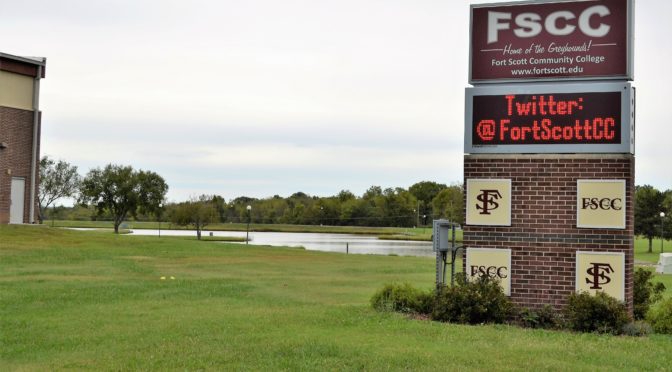
FSCC Board of Trustees Meet on April 6

FORT SCOTT COMMUNITY COLLEGE

BOARD OF TRUSTEES REGULAR MEETING

ELLIS FINE ARTS CENTER

APRIL 6, 2026 – 11:30 P.M.

PUBLIC AGENDA


1.0 CALL MEETING TO ORDER – CHAIR

2.0 FLAG SALUTE & INVOCATION

3.0 RESCIND APPROVAL OF RFP                                              (ACTION)

4.0 DISCUSSION OF FRAME GRANT NEXT STEPS         (POSSIBLE ACTION)

5.0 FLEET DISPOSAL                                                                        (ACTION)

6.0 ATHLETIC TRAINER DISCUSSION                      (INFORMATION)

7.0 INSTITUTIONAL UPDATE                                         (INFORMATION)

8.0 PERSONNEL

8.1 Enter Executive Session – Personnel Matters                                                                                                                     (ACTION)

8.2 Exit Executive Session – Return to Open Session                                                                                                      (INFORMATION)

8.3 Employment Matters of Nonelected Personnel                                                                                                                     (ACTION)

9.0 ADJOURN                                                                                       (ACTION)


Skilled Nursing Workforce Shortage Bill Becomes Law

Governor Kelly Allows Senate Bill 334 to Become Law Without Signature


TOPEKA
– Governor Laura Kelly has allowed Senate Bill 334 to become law without her signature.

The following statement is from Governor Kelly regarding Senate Bill 334:

“I understand the urgent need to address the workforce shortage in skilled nursing and to have a sufficient number of educators to prepare future nurses. However, I have concerns that the lowered educational requirements for educators in Senate Bill 334 would result in a decreased level of rigorous academic training that would leave prospective nurses unprepared to deliver the standard of care Kansans trust nursing professionals to provide. Nurses are on the frontlines of caring for Kansans in medical situations ranging from simple preventive care to emergency trauma response, and we should honor the responsibility of these roles by ensuring they receive the highest quality education possible.

“For these reasons, I am letting Senate Bill 334 become law without my signature.”

Distracted Drivers Bipartisan Bill Is Signed

Governor Kelly Signs Bipartisan Bill
Reducing Distracted Drivers in School and Construction Zones


TOPEKA
– Governor Laura Kelly has signed House Substitute for Senate Bill 366, which prohibits the use of a cell phone while driving in a school or construction zone.

“House Substitute for Senate Bill 366 takes concrete steps to make our communities safer for all – and safe communities are vital to making Kansas a state where people want to put down roots and raise their families,” Governor Laura Kelly said. “I’m pleased to sign smart, commonsense legislation that will help ensure drivers are distraction-free and schoolchildren, pedestrians, and constructions workers are protected.”

Under Senate Bill 366, individuals who use a cell phone while driving in school or construction zones will be subject to a warning citation. After July 1, 2027, individuals will be subject to a citation with a $60 fine. Additionally, this law permits the display of certain lighting in road construction zones by vehicles and trailers being used for highway construction and maintenance operations.

“We need to keep our kids and workers safe on the road. Car crashes and fatalities caused by distracted driving are far too prevalent in our state, with tragedy touching too many families,” said Senator for District 7 Ethan Corson. “Prohibiting cell phones in school and construction zones is a commonsense action to curb the inattention that leads to accidents. With the signing of this legislation, we are delivering on the promise to enhance public safety and protect Kansans from harm.”

By prohibiting and authorizing penalties for drivers’ cell phone use in school and construction zones, Senate Bill 366 aims to reduce accidents, protect children and construction workers, and ensure drivers are alert, focused, and distraction-free.

“Distracted driving from cell phone usage is one of the biggest preventable causes of traffic fatalities, injuries, and accidents,” said Representative for District 125 Shannon Francis. “This bill helps protect construction workers and school children where they are most vulnerable. We must build a culture of safety among Kansas drivers.”

In addition to House Substitute for Senate Bill 366, Governor Kelly also signed the following bipartisan bills:

Senate Substitute for House Bill 2212: Authorizing the governor to make a declaration of need for enhanced public safety and security for an extraordinary event.

House Bill 2393: Authorizing the supreme court to impose a charge to fund the costs of non-judicial personnel through June 30, 2030.

House Bill 2511: Permitting money received from agricultural production on a state-owned property to be used for the management of all state-owned properties.

House Bill 2519: Continuing in existence certain exceptions to the disclosure of public records under the Kansas Open Records Act.

House Bill 2622: Modifying the municipal lease-purchase protest petition requirements.

House Bill 2702: Providing that applicants for a physician assistant license submit to a criminal record check, providing for the collaboration between physicians and physician assistants, and requiring the revocation of a physician assistant license under certain circumstances.

House Bill 2761: Enacting the speech-language pathology assistant act to provide for the licensure of speech-language pathology assistants.

Senate Bill 55: Providing additional protections from exploitative contractors by prohibiting the assignment of benefits under certain property and casualty insurance contracts.

Senate Bill 425: Increasing the maximum annual registration fee limit for seed retailers and wholesalers and authorizing a late fee for registrations renewed after the registration deadline.

###

U.S. Congressman Derek Schmidt Newsletter

Rep. Derek Schmidt's header image

Friends,

This weekend, families across our district and around the world are gathering to observe Passover, Good Friday, and Easter Sunday. Whether you are commemorating the liberation of the Israelites or celebrating the joy of the Resurrection, I wish you and your loved ones a meaningful and blessed holiday.

As we gather in faith and community, please join me in keeping our brave service members in your prayers. We remain deeply mindful of those currently serving in the Middle East and stationed across the globe and of their families and friends at home. We are eternally grateful for their sacrifice and unwavering commitment to defending our freedoms, and we pray for their continued safety, success in their mission, and swift return home.

KS Total March Taxes Collected Are Below The Estimate

March Total Tax Collections at $577.1 Million;
10.7% Below Estimate


TOPEKA
– The State of Kansas ends March 2026 with total tax collections at $577.1 million. That is $68.9 million, or 10.7%, below the estimate. Total tax collections were down 9.4% from March 2025.

“Missing revenue estimates by nearly $69 million in March and by over $175 million cumulatively since the last Consensus Revenue Estimates in November is concerning,” Governor Laura Kelly said. “More concerning is that Legislative Leadership rushed through this session, turning off the lights and going home before the April Consensus Revenue Estimates are announced.

“This reckless, irresponsible approach to budgeting is not smart and it is not fair. I hope that future Legislative Leadership understands that the people expect them to be good stewards of Kansas taxpayers’ dollars and that means working until the job is done right, even during election years.”

Individual income tax collections were $271.3 million. That is $3.7 million, or 1.3% below the estimate. Individual income tax collections were up 3.7% from March 2025. Corporate income tax collections were negative $23.5 million. That is $63.5 million, or 158.8% below the estimate, and down 147.0% from March 2025.

Combined retail sales and compensating use tax receipts were $262.1 million, which is $8.1 million or 3.2% above the estimate, and up 6.2% from March 2025.

Click here to view the March 2026 revenue numbers.

###

Child Abuse Prevention Month: April

TOPEKA – (April 1, 2026) – Kansas Attorney General Kris Kobach and the Kansas State Child Death Review Board are encouraging Kansans to wear blue on Friday, April 10, to increase awareness of child abuse. The effort is part of April’s observance of Child Abuse Prevention Month.

The State Child Death Review Board indicates that child abuse and neglect can take many forms and often occur behind closed doors, making awareness and prevention efforts critical. While physical abuse may be the most visible, emotional abuse, sexual abuse, and neglect can have equally serious and lasting impacts on a child’s health, development, and well-being. Recognizing the signs and taking action to support families and report concerns are essential steps in preventing abuse and helping ensure children across Kansas grow up in safe and supportive environments.

“Child abuse prevention requires a collective effort from communities across Kansas,” said Sara Hortenstine, Youth Services Division Chief. “Wearing blue helps raise awareness and reminds us all that we share a responsibility to support families, recognize the signs of abuse and neglect, and report concerns. Speaking up can make a critical difference in protecting children and preventing tragedy.”

For additional information on child abuse and neglect, visit www.ag.ks.gov, or call (785) 296-7970. The Kansas Department for Children and Families maintains the state’s Protection Report Center. Residents who suspect a case of child abuse or neglect may report it at (800) 922-5330. In cases in which the child may be in imminent danger, call 911.

###

Kansas Attorney General’s Office | 120 SW 10th Ave. | Topeka, KS 66612 US
Unsubscribe | Update Profile | Constant Contact Data Notice
Constant Contact

U.S. Senator Jerry Moran Newsletter


March 30

Hello,

Welcome to “Kansas Common Sense.” Thanks for your continued interest in receiving my weekly newsletter. Please feel free to forward it on to your family and friends if it would interest them.

Good News: EPA Permits Year-Round Sale of E15
On Wednesday, the Environmental Protection Agency (EPA) announced it was issuing a waiver to extend the nationwide sale of E15 during the 2026 summer driving season. Current regulations prevent the summer sale of E15 without a waiver, which is why I have long supported legislation to allow the year-round sale of E15 to provide certainty to the fuels industry. Year-round availability of E15 expands markets for Kansas farmers and ethanol producers, supports American energy independence and provides consumers with more affordable options at the pump. I applaud the administration’s action to help meet our nation’s energy needs, and I will continue working with my colleagues to make this change permanent. You can learn more about my efforts to support year-round E15 here.

Urging Reinstatement of Sanctions on Russia & Iran
This week, I spoke on the Senate floor, expressing my concern over the administration’s decision to relax oil sanctions on Russia and Iran. The 30-day waiver permits both countries to sell their oil at market prices, potentially providing billions of dollars that they otherwise would not have had. This windfall provides resources for both Moscow and Tehran to sustain their wars against Ukraine and in the Middle East. It makes no sense to give financial relief to two adversaries who actively work, in cooperation with each other, to threaten American lives and interests around the world. I called on the President to rescind these waivers now and for them to not be extended once they expire. I also highlighted the importance of investing in domestic energy production to reduce America’s reliance on foreign countries for energy.

The U.S. military operations in Iran continue into its fifth week. As a member of the Defense Appropriations subcommittee, I received another classified briefing on the war. While there is potential for ceasefire talks to begin, I am monitoring reports of plans to send more forces into the region that could lead to introducing troops on the ground.

You can watch my full remarks on the Senate floor here.

Image

Passing Legislation to End Partial Government Shutdown

After weeks of trying to negotiate a deal in the Senate on funding for the Department of Homeland Security (DHS), President Trump took action to provide emergency pay for TSA workers who were facing a third missed paycheck. While this action will provide relief for the TSA employees and alleviate strain on air travel, a DHS funding bill must be enacted to ensure our national security and make certain thousands of employees do not continue going without pay. Despite the Appropriations Committee negotiating a bipartisan DHS funding package that includes resources for body-worn cameras for ICE and increases funding for the DHS Office of Inspector General to conduct investigations and hold the department accountable, my colleagues across the aisle rejected this package and additional offers for reform.

While Republicans worked in good faith to offer reforms for ICE and Border Patrol, defunding these critical agencies is not an option. Thanks to additional funding provided last year in the Senate Reconciliation Bill, ICE and Border Patrol operations will continue to be funded for the foreseeable future, and Senate Republicans will look for alternative ways to fund these agencies potentially through another Reconciliation Bill.

Requesting Update from DHS on World Cup Security Plans

As the U.S. prepares to host the 2026 FIFA World Cup, I led my colleagues in requesting an update from the newly appointed Secretary of Homeland Security, Markwayne Mullin, on the Department of Homeland Security’s (DHS) efforts to support the safety and security of host cities across the nation, including Kansas City. Kansas City’s role during the FIFA World Cup presents a unique opportunity to showcase our state and country but also requires significant coordination between federal, state and local partners to address evolving security threats. Specifically, I requested additional details on how DHS is working with law enforcement and emergency management partners to prepare for the event, as well as how federal resources are being allocated and which special designations would be granted to host cities to make certain they have the necessary tools in case of an emergency.

I appreciate the many Kansas-based law and fire departments that have visited with me in recent weeks to express their concerns and share questions ahead of the World Cup, and I look forward to remaining in contact with the emergency services community on the response we receive from Secretary Mullin. I remain committed to working to make certain our communities are as prepared as possible for the World Cup.

You can read more from KSHB here.

Calling for Briefing on Holding Perpetrators of Oct. 7 Attack Accountable
This week, I led 13 of my colleagues in requesting that Attorney General Pam Bondi and Federal Bureau of Investigation (FBI) Director Kash Patel convene a briefing on the Joint Task Force October 7 (JTF) to update Congress on efforts to investigate and prosecute terrorist networks such as Hamas. The task force was established in the wake of Hamas’ brutal attack on Israel and stands to investigate and hold accountable individuals connected to acts of violence and global terrorist organizations. In the letter, we requested an update on the task force’s progress, including the number of investigations underway, actions taken to hold perpetrators accountable and any additional authorities or resources needed from Congress to support the JTF’s critical work. As Chairman of the Commerce, Justice and Science Appropriations Subcommittee, I remain committed to making certain the Department of Justice and the FBI have the tools necessary to carry out their mission of keeping Americans safe. You can learn more from Jewish Insider here.

Touring Thales Group U.S. Headquarters
On Monday, I visited Thales Group’s U.S. headquarters in Arlington, Virginia, and met with members of their team to learn more about the work they are doing to support air traffic control modernization. We also discussed Thales Group’s presence in Kansas, including its facility in Overland Park that repairs air traffic control navigation and surveillance equipment. Thank you to the Thales Group team for hosting me and for conversations on strengthening aviation safety.

Leading Legislation to Protect Consumer Data Privacy
This week, I reintroduced the Consumer Data Privacy and Security Act to strengthen laws that govern consumers’ personal data and create clear standards and regulations for American businesses that collect, process and use consumers’ personally identifiable data. As more states adopt their own comprehensive data privacy legislation and as consumers face new and evolving threats to the security of their personal data, the need for a clear federal standard for data privacy has become more pressing, both for consumers seeking to secure their data and for businesses contending with a patchwork of state laws governing how that data is to be handled.

My legislation would establish a clear federal standard for data privacy protection, provide consumers with control over their personal data, create appropriately-scaled business requirements based on a company’s size and resources, require notification and consent measures, implement robust security programs and provide the Federal Trade Commission (FTC) and state attorneys general with the resources and authorities needed to enforce this clear federal standard.

As Congress works to develop a comprehensive federal privacy standard, I look forward to working with my colleagues in the Senate and soliciting feedback from consumers and industry leaders to make certain that this legislation manages the risks to consumers’ data privacy in a way that American businesses can execute.

You can learn my about my legislation here.

Introducing Bill to Bolster Training on Dementia Detection & Treatment
This week, I joined my colleagues, Sens. Shelley Moore Capito (R-W.Va.) and Amy Klobuchar (D-Minn.), in introducing the Accelerating Access to Dementia & Alzheimer’s Provider Training (AADAPT) Act. This bipartisan legislation seeks to bolster training for primary care providers so they can better diagnose Alzheimer’s and other dementia and deliver high-quality care in community-based settings.

The bill would make certain primary care providers have the tools they need to deliver earlier diagnoses, improving access to care and outcomes for individuals with Alzheimer’s and related dementias. I am committed to supporting robust funding for Alzheimer’s and dementia research to improve treatments and work towards a cure for these devastating diseases.

You can learn more about this legislation here.

Pittsburg office
306 N. Broadway, Suite 125 (rear entrance of bank)
P.O. Box 1372
Pittsburg, KS 66762
Phone: (620) 232-2286
Fax: (620) 232-2284