|
|||||||||
|
Category Archives: Government
Cold Weather Rule and LIEAP application period end soon
|
|


The Kansas Water Authority (KWA) will meet April 8,
Kansas Water Authority Meeting in Great Bend |
April 8, Camp Aldrich Dining & Events Center |
|
The Kansas Water Authority (KWA) will meet Wednesday, April 8, 2026, outside of Great Bend at the Camp Aldrich Dining and Events Center located at 884 NE 110 Ave, Claflin, KS 67525. The meeting will begin at 9 a.m. For additional meeting information and the online meeting link, visit the Kansas Water Office website calendar at kwo.ks.gov or call (785) 296-3185. The KWA is responsible for advising the Governor, Legislature and Director of the Kansas Water Office on water policy issues. They also ensure that water policies and programs address the needs of all Kansans as well as serve as advisors of the Kansas Water Plan. The KWA was established in 1981 and consists of 13 voting members who are appointed by the Governor or Legislative leadership. State agency directors serve as ex-officio members. If accommodations are needed for a person with disabilities, please notify the Kansas Water Office at 900 SW Jackson Street, Suite 404, Topeka, KS 66611-1249 or call (785) 296-3185 at least five working days prior to the meeting. |
|
Note to Editor: The Americans with Disabilities Act, (42 U.S.C. 12101), requires the Kansas Water Office to print the reasonable accommodations messages. |
Small Business Grants For Registered Apprenticeships Awarded
|
| Stay Connected with Kansas Office of the Governor: |
    |
“State Employees Deserve Better Than Table Scraps”
|
| Stay Connected with Kansas Office of the Governor: |
| |
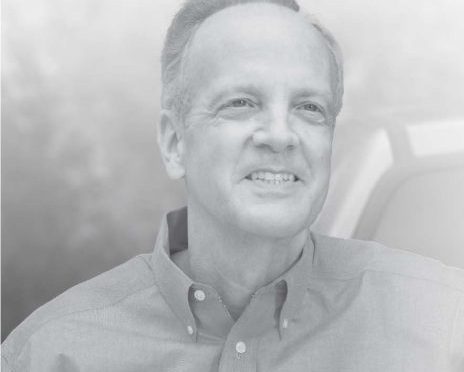
U.S. Senator Jerry Moran Newsletter
March 23
Hello,
Welcome to “Kansas Common Sense.” Thanks for your continued interest in receiving my weekly newsletter. Please feel free to forward it on to your family and friends if it would interest them.
Intelligence Briefing on Worldwide Threats
On Wednesday, the Senate Select Committee on Intelligence held its annual worldwide threats hearing with the leaders of the Intelligence Community. I used the opportunity to ask CIA Director John Ratcliffe about how the conflict with Iran will benefit Russia in its ongoing war against Ukraine. I am concerned that providing Russia with sanctions relief on its oil exports will provide Vladimir Putin with more revenue to sustain his war machine, and I am also concerned about the disruption of supply chains that are critical to providing for Ukraine’s defense. As military operation in Iran continues, our military continues to make progress in degrading Iran’s capabilities that threaten our interests and partners in the region. As the Iranian regime continues to block the Strait of Hormuz, it is necessary for ships carrying energy, fertilizers and food to be permitted safe passage. I continue to pray for the safety of our Armed Forces as they carry out their missions.
You can watch the video of my questioning here.

Introducing Bipartisan Legislation to Revitalize Rural Hospitals
This week, as a member of the Senate Rural Health Caucus, I introduced bipartisan legislation with Sen. Michael Bennet (D-Colo.) to strengthen rural hospitals by providing zero-interest loans to support new construction and the renovation of existing hospital facilities. The resources would be provided through the U.S. Department of Agriculture’s (USDA) Community Facilities Direct Loan Program to improve the ability of hospitals to provide essential health care services to rural communities.
Rural hospitals are critical to the well-being of the communities they serve in Kansas and across the country. Our legislation would provide a pathway for qualifying rural hospitals to make needed renovations and facility upgrades, helping to promote the long-term viability of rural hospitals and communities. You can learn more about the Rural Health Revitalization Act and my efforts to support rural Kansas health providers here.
VA Committee Passes 24 Bills Promoting Key Veterans Priorities
This week, I chaired a Senate Committee on Veterans’ Affairs legislative markup, where our committee passed 24 pieces of bipartisan legislation to improve the lives of veterans, servicemembers and survivors across the country. I introduced four of the 24 bills that advanced out of committee, including the Love Lives On Act, the Guard/Reserve G.I. Bill Parity Act, the Veterans Prosthetics Advancement and Reform Act and the Fisher House Availability Act.
Under current law, surviving spouses of fallen servicemembers lose eligibility for most Department of Defense (DOD) and Department of Veterans Affairs (VA) benefits if they remarry before the age of 55. I introduced the Love Lives On Act to allow surviving spouses to retain their DOD and VA benefits upon remarriage regardless of age so their families can continue receiving the benefits they need. Military service is family service, and no one knows that as well as a survivor. I am grateful this legislation passed out of committee and look forward to bringing it – and the other bipartisan pieces of legislation approved by the committee this week – forward for a full vote in the Senate.
You can learn more about the legislation and the markup here.

FAA Announces New Aviation Safety Standard
This week, U.S. Department of Transportation (USDOT) Secretary Sean Duffy and Federal Aviation Administration (FAA) Administrator Bedford took an important step to improve the safety of our skies by requiring air traffic controllers to use radar technology to coordinate aviation traffic near our nation’s busiest airports. Our aviation system is fragile, and the tragic mid-air collision on January 29, 2025, highlighted the urgent need to strengthen and modernize safety standards. The implementation of radar-only tracking for helicopters and airplanes was recommended by the National Transportation Safety Board (NTSB) following its investigation into the crash of Flight 5342, and I commend USDOT and FAA leadership for enacting this safety measure.
There is still work to be done, including passage of ROTOR Act, my legislation that would implement the broad adoption of location-transmitting technology, known as Automatic Dependent Surveillance – Broadcast (ADS-B), for planes and helicopters in busy airspace. I will continue working to pass the ROTOR Act to further strengthen critical aviation safety standards. You can learn more here.
Recognizing Women in Agriculture Day
During National Agriculture Week, I joined my colleagues in introducing a resolution designating March 21, 2026, as National Women in Agriculture Day, honoring the more than 1.2 million women who contribute to American agriculture. Earlier this year, I also cosponsored a resolution recognizing 2026 as the International Year of the Women Farmer. In Kansas and across the nation, women play an important role in advancing the future of agriculture by managing family farm operations, educating the next generation of producers and supporting our rural communities. As we celebrate National Women in Agriculture Day, we extend our gratitude for their hard work, resilience and unwavering commitment to keeping our agricultural industry strong and investing in the future of rural America.
Update on the SAVE America Act
This week and into the weekend, the Senate held extended debate on the SAVE America Act. If enacted, this legislation would set voter identification requirements, including proof of U.S. citizenship when registering to vote in federal elections. It would also require citizens to show photo ID, like a driver’s license, to vote in federal elections. Federal law already prohibits non-citizens voting in federal races. This legislation would create a uniform standard to verify that requirement across all 50 states.
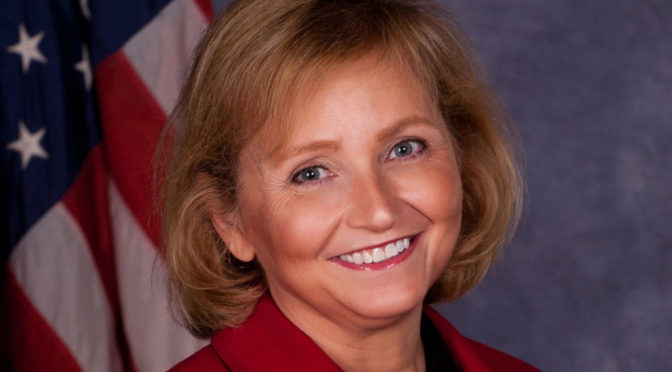
Legislative Update by State Senator Caryn Tyson
March 20, 2026
In the last week of regular session, the Senate debated too many bills to cover here. All the bills can be found at www.KSLegislature.gov. Here are some of the bills that may impact you:
Banks and other financial institutions would be allowed to establish a trusted contact that could be contacted if there is suspected fraud. HB 2591 would also allow suspicious transactions to be delayed for up to 10 business days when the institution has reported the suspected fraud to law enforcement or to the Kansas Department for Children and Families (DCF). There was a series fraud case in Linn County that involved cryptocurrency and we need this protection. It passed unanimously.
Cryptocurrency Automated Teller Machines (ATMs) would be required to warn users before a transaction occurs. The warning must be in bold letters, “WARNING: CONSUMER FRAUD OFTEN STARTS WITH CONTACT FROM A STRANGER…” Virtual currency kiosks, crypto ATMs, would also be limited on the transaction amount should HB 2515 became law. It passed unanimously.
Invasion of Privacy laws are strengthened in HB 2518 by making it clear that violations can involve any kind of image, video, or digital recording, including altered or AI-generated content. It significantly increases penalties when young victims are involved. It passed unanimously.
Property tax appeals at the Board of Tax Appeals (BOTA) would require county appraisers to use a single-property appraisal that evaluates the specific characteristics of an individual property, rather than relying on mass appraisals that assess groups of properties. It passed 38 to 2. I voted yes.
Kansas Law Enforcement and federal immigration authorities’ cooperation would be strengthened by Senate Substitute for HB 2372. Sheriffs would be able to detain individuals based on valid ICE detainer requests or warrants. It establishes procedures for detention and release and would help detain criminals who entered the country illegally. The bill passed the Senate on a partisan vote 31 to 9. I voted yes.
The Crush Transnational Repression in Kansas Act, created by SB 454, would protect individuals from foreign intimidation and coercion within the state. It targets transnational repression and extortion, where foreign governments attempt to threaten, surveil, or control people living in Kansas. The bill increases criminal penalties for offenses like harassment, stalking, or threats when tied to these efforts and requires training to help law enforcement better recognize and respond to such cases. It passed unanimously.
Alcoholic Beverages would be authorized for sale 23 hours a day, seven days a week, if a county opts in and SB 393 becomes law for the duration of the FIFA 2026 World Cup – another bill just for the World Cup. I voted no, but the bill passed on a vote of 21 to 19.
Property Tax Relief Efforts are ongoing as the House and Senate advanced different constitutional amendments. The House proposal would average property values starting in 2028, while the Senate supports a 3% annual assessment value cap beginning in 2027. Lawmakers will now negotiate a compromise, aiming to provide relief and predictability for taxpayers. It’s much needed reform, like in 1975 when Kansans passed a Constitutional Amendment to protect farmers and ranchers from rising taxes. Polls show strong support for a 3% cap. In fact, 75% of those polled want the cap.
It is an honor and a privilege to serve as your 12th District State Senator.
Caryn
KS Bill Banning Use of Personal Electronic Devices During School Day Is Signed
|
| Stay Connected with Kansas Office of the Governor: |
| |
Kansas Will Capitalize on Timber Production and Protect Communities from Devastating Wildfires
USDA Announces $115.2 Million in Nine States, $1.72 Million in Kansas, to Capitalize on Timber Production and Protect our Communities from Devastating Wildfires
(Topeka, Kansas, March 23, 2026) – U.S. Department of Agriculture Rural Development’s Rural Business Cooperative Service Administrator J.R. Claeys announced $115.2 Million across eight states through the Timber Production and Expansion Guaranteed Loan Program (TPEP), to ensure sawmills and other wood processing facilities have the necessary funding to establish, reopen, expand, or improve their operations. In Kansas, Berg Reinvigorations LLC is receiving $1,725,500 dollars.
“We cannot allow wildfires to devastate and destroy our rural communities,” said Claeys. “That’s why the USDA is taking this bold action to stop the destruction of our forestlands by investing in sawmills and wood processing facilities that support sustainable timber harvesting. Through the announcement made today, the Trump Administration is strengthening local businesses, driving rural prosperity, and supporting 485 jobs for hardworking Americans.”
“Wildfires have already been devastating for parts of Kansas, and prairie and range management is not enough for wildfire control,” said Gimmie Jo Jansonius, Director of Rural Development in Kansas. “This investment will assist in forestland management and create and keep jobs in Kansas.”
Berg Reinvigorations in Montgomery County will use the Timber Production Expansion Program Guaranteed Loan Program to make building improvements, purchase machinery and
equipment, refinance debt, and pay loan related costs.
Today’s announcement assists with projects in seven other states. The full details on the Kansas project are:
A $1,725,500 loan for Berg Reinvigorations will assist with building improvements, purchasing machinery and equipment, refinancing debt, and paying loan related costs. Berg Reinvigorations is an existing sawmill located in Montgomery County, Kansas. This project is expected
to create eight jobs and retain seven jobs.
These investments represent a commitment by the Trump Administration to expand American timber production by 25%, reduce wildfire risk, and save American lives and communities by strengthening domestic wood processing capacity.
“The value of National Forest Systems lands is demonstrated by providing various forest products, such as timber, lumber, paper, bioenergy, and other wood products,” said U.S. Forest Service Chief Tom Schultz. “The American forest products industry is critical to maintaining the health of the nation’s forests. The Timber Production and Expansion Guaranteed Loan Program is one of many ways the Forest Service partners with the timber industry to maintain rural jobs, processing facilities, and an outlet for wood that needs to be removed from national forests.”
The Timber Production Expansion Guaranteed Loan Program is made possible by a partnership between the USDA Rural Development and US Forest Service. The program helps address the wildfire crisis by investing in local sawmills that clear out dangerous fuel in our forestlands, helping to remove the most immediate threats to communities, critical infrastructure, and natural resources. This program is available to qualified lenders whose loan applicants want to establish, reopen, expand, or improve a sawmill or other wood processing facility that processes ecosystem restoration byproducts from USDA Forest Service National Forest System lands.
For more information on USDA Rural Development investments in rural America, visit the Rural Data Gateway. The Rural Data Gateway is an online tool that strengthens USDA Rural Development partnerships with rural people, entrepreneurs, government officials and Congress by making RD’s investment data accessible to the public.
If you’d like to subscribe to USDA Rural Development updates, visit GovDelivery subscriber page.
USDA is an equal opportunity provider, employer, and lender.
###
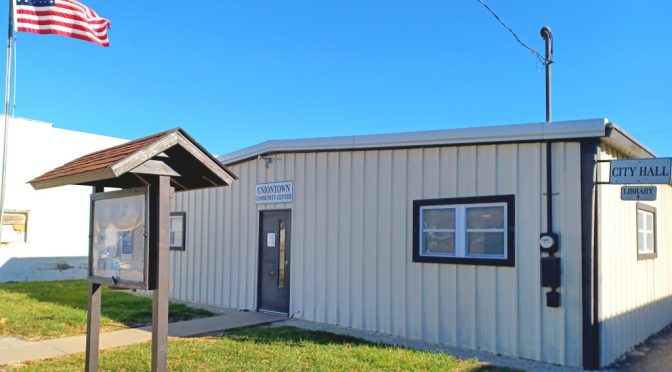
Draft Minutes of the Uniontown City Council on March 10
The Regular Council Meeting on March 10, 2026 at Uniontown Community Center was called to order at 7:00PM by Mayor Jurgensen. Council members present were Amber Kelly, Mary Pemberton, and Kyle Knight. Also in attendance for all or part of the meeting was City Superintendent Bobby Rich, City Treasurer Sally Johnson and City Clerk Haley Arnold.
SPECIAL CONSIDERATIONS/PROJECTS
CITIZENS REQUEST
FINANCIAL REPORT
Treasurer Johnson presented the February 2026 Treasurer’s Report. Beginning Checking Account Balance for all funds was $244,279.23, Receipts $30,427.36, Transfers Out $3,024.25, Expenditures $50,647.95, Checking Account Closing Balance $221,034.39. Bank Statement Balance $221,850.42, including Checking Account Interest of $45.56, Outstanding Deposits $0, Outstanding Checks $816.03, Reconciled Balance $221,034.39. Water Utilities Certificates of Deposit $43,432.35, Sewer Utilities Certificate of Deposit $24,422.45, Gas Utilities Certificates of Deposit $50,925.50, Total All Funds, including Certificates of Deposit $339,814.69. Year-to-Date Interest in Checking Acct is $92.47, and Utility CDs $633.31 for a Total Year-to-Date Interest of $725.78. Also included the status of the Projects Checking Account for the month of February 2026, Beginning Balance $0, Receipts $0, Expenditures $0, Ending Balance $0. February Transfers from Sewer Utility Fund to Sewer Revolving Loan $1,400.25; from Water Utility Fund to GO Water Bond & Interest $1,624.00, for Total Transfers of $3,024.25. Net loss for the month of February $23,244.84, Year-to-Date Net Income $20,288.93. Budget vs Actual Gas Fund YTD Revenue $41,872.97 (32.4%), Expenditures $16,034.84 (12.2%); Sewer Fund YTD Revenue $6,743.25 (18.7%), Expenditures $5,159.58 (12.1%); Water Fund YTD Revenue $22,994.33 (18.5%), Expenditures $12,604.35 (8.8%); General Fund YTD Revenue $33,972.85 (23.1%), Expenditures $17,454.62 (7.4%); and Special Highway YTD Revenue $2,010.48 (27.6%), Expenditures $1,422.03 (12.7%). The March 2026 payables to date in the amount of $23,075.39.
CONSENT AGENDA
Motion by Kelly, Second by Pemberton, Approved 3-0, to approve Consent Agenda:
- Minutes of February 10, 2026 Regular Meeting
- February Treasurer’s Report, Profit & Loss Report by Class & March Accounts Payables
DEPARTMENT REPORTS
Superintendent Rich informed the Council that the cost of Bio Mist used for mosquito fogging has increased to $111.00 per gallon, totaling approximately $278 per fogging session. The Council and Rich discussed the possibility of more affordable alternatives; however, Rich reported that he has been unsuccessful in identifying any cheaper effective options. The Council agreed to continue using the current product. Beginning in April, fogging will be scheduled every three weeks instead of every two weeks. As peak mosquito season approaches, the schedule will return to every two weeks. Rich also suggested including a paragraph in the city newsletter to remind residents that standing water in yards or around homes serves as a breeding ground for mosquitoes. The notice will include tips on how individuals can help reduce the mosquito population.
Clerk Arnold reminded the Council of upcoming City Hall closures on March 11–13 due to the CCMFOA Conference, and on March 26–27 due to the Municipal Court Clerk Conference. Arnold asked the Council to determine dates for the Spring and Fall citywide cleanups. The Council decided that two roll-off dumpsters would be provided for the 2026 cleanups, scheduled for April 27–30 and August 31–September 3. There was discussion regarding hosting a town-wide garage sale this year; however, the Council ultimately decided against it due to low community participation in previous years. Arnold also confirmed with the Council whether to order fish food again this year for the pond located by the school. The Council approved the purchase and requested that Arnold obtain pricing from multiple vendors.
COUNCIL REPORT
Councilman Knight – requested an update on when Marbery Concrete Inc. would begin work on the FEMA project at 2nd and Clay Streets. Mayor Jurgensen reported that a recent vehicle accident involving Marbery Concrete Inc. resulted in the loss of equipment, which put a delay on the start of the project. Weather permitting, work is expected to begin once conditions allow. Knight also asked if new culverts will be put in and Treasurer Johnson had confirmed they will replace with new culverts to help with water flow.
Councilwoman Kelly – none
Councilwoman Pemberton – inquired about who is responsible for unlocking the storm shelters during severe weather events. Superintendent Rich informed the Council that the shelters remain unlocked during this time of year due to the increased likelihood of inclement weather. Pemberton also asked whether it would be possible for someone not affiliated with the city to perform ditch cleanout and replace a culvert at 201 2nd St. Mayor Jurgensen responded that this is not allowed, as the city is responsible for ditch and culvert maintenance. Superintendent Rich added that he would inspect the area and address the ditch and culvert to the best of his ability.
Councilwoman Pritchett – absent
Councilman Stewart – absent
Mayor Jurgensen – none
OLD BUSINESS
FEMA Flooding– As previously discussed earlier in the meeting, Marbery Concrete Inc. will begin repairs when weather permits. Mayor Jurgensen and Treasurer Johnson informed the Council that a one-year extension on the project has been filed and approved.
Water and Sewer Rate Adjustments– Treasurer Johnson informed the Council that the City has not raised water rates since 2024 and sewer rates have not been increased since 2013. Johnson proposed new water and sewer rates to take effect in April 2026. The Council reviewed the figures provided and discussed the proposed adjustments.
Moved by Pemberton, seconded by Knight, and approved 3–0, to set the minimum monthly water rate for users within city limits at $28.66 for the first 1,000 gallons, with an additional $12.98 per 1,000 gallons thereafter. For users outside city limits, the minimum monthly rate will be $29.90 for the first 1,000 gallons, with a charge of $13.55 per 1,000 gallons thereafter. The motion also includes an additional 3% annual increase on the water rate.
Moved by Kelly, seconded by Pemberton, and approved 3–0, to set the minimum monthly sewer fee at $27.50 for the first 1,000 gallons of water usage, with an additional $0.31 per 1,000 gallons thereafter, per water meter. The motion also includes an additional 3% annual increase on the sewer rate.
Knight asked how the City’s rates compare to those of surrounding areas. A discussion followed regarding rates in neighboring communities and the differences in bulk water purchase rates compared to those areas.
NEW BUSINESS
Moved by Kelly, Second by Knight, Approved 3-0, to adjourn at 7:55PM
Updating Interstate Foster Care Compact
Governor Kelly Signs Bipartisan Bill
Updating Interstate Foster Care Compact
TOPEKA – Governor Laura Kelly has signed House Bill 2557, which enacts the revised Interstate Compact for the Placement of Children (ICPC).
“This bill builds upon my commitment to Kansas children and families by making necessary reforms to the child welfare system,” Governor Laura Kelly said. “In signing this legislation, we are ensuring that children who require out-of-state placement receive the same protections and services that would be provided if they remained in their home states.”
The ICPC governs the placement of children across state lines through foster care, and both public and private adoptions. Under this legislation, Kansas becomes the 21st state to join the updated version of the compact. By moving forward at this time, Kansas also becomes a member of the compact’s rulemaking body – ensuring the state continues to have a voice in protecting the interests of its children, families, and placement providers.
“First enacted in Kansas in 1976, the Interstate Compact on the Placement of Children has served an important role, but it has not kept pace with today’s child welfare system,” said Representative Cyndi Howerton, District 98. “HB 2557 is a practical and necessary update—modernizing outdated language, strengthening interstate collaboration, and ensuring Kansas children can safely access appropriate placements across state lines. By adopting the revised compact and engaging in rulemaking from day one, Kansas continues to lead in protecting children, supporting families, and ensuring accountability in every placement.”
HB 2557 expands upon the significant steps Governor Kelly has taken throughout her time in office to reform Kansas’ child welfare system. In January 2025, Governor Kelly signed Executive Order 25-01, a first of its kind executive order to reform the allocation of federal benefits to youth in foster care. In April 2023, Governor Kelly signed House Bill 2024, establishing Kansas’ Foster Care Bill of Rights and outlining the rights of foster youth, foster parents, and family care providers.
“By updating the Interstate Compact for the Placement of Children, we’re taking reasonable steps to connect children in our child welfare system to safe, reliable homes,” said Representative Jarrod Ousley, District 24. “This legislation is doing right by children and families.”
In addition to House Bill 2557, Governor Kelly also signed the following bipartisan bills:
House Bill 2711: Modifying and updating procedures for dissolution of cities of the third class, which have a population of less than 2,000 residents.
House Bill 2733: Requiring any person who is a candidate or who has been elected to certain offices shall be and must remain a resident of Kansas or the appropriate district.
House Bill 2433: Reaffirming the state’s authority over the transfer or appropriation of water by explicitly placing such authority, except for domestic use, with the chief engineer and the water transfer hearing panel.
House Bill 2478: Requiring that advanced practice registered nurses and registered nurse anesthetists submit to a criminal history check upon application for a nursing license.
Senate Bill 146: Requiring the secretary for aging and disability services and the City of Osawatomie to execute and record an amendment to the original deed for conveyance of certain real property in Miami County, extending the conveyance to July 1, 2046.
Senate Bill 299: Requiring the Supreme Court Nominating Commission to release certain records under the Kansas Open Records Act.
###
Support for Fallen Law Enforcement Officers and Their Families
Governor Kelly Signs Bipartisan Bill Strengthening Support for Fallen Law Enforcement Officers
and Their Families
TOPEKA – Governor Laura Kelly has signed Senate Bill 445, which requires the Kansas Highway Patrol and the Kansas Bureau of Investigation to provide support and assistance for fallen law enforcement officers’ funerals as well as to their families and agencies.
“Every day, Kansas law enforcement officers put their lives at risk in service to their state and to their fellow Kansans. This legislation is a solemn reminder that we must be prepared to provide support if officers make the ultimate sacrifice,” Governor Laura Kelly said. “Through Senate Bill 445, we are ensuring fallen officers’ agencies and families have the assistance and support they need when they have to face an unimaginable loss.”
Under Senate Bill 445, temporary personnel and other assistance will be available, upon a submitted request from the relevant Kansas law enforcement agency, to support funeral services in honor of officers who have died in the line of duty.
“Law enforcement families share the risks and weight of public service. When an officer is killed in the line of duty, their family should not shoulder the burden of this sacrifice on their own,” said Senator Ethan Corson, District 7. “Senate Bill 445 goes beyond words of gratitude and offers meaningful support for funeral and memorial ceremonies to ensure their loved one is properly honored. This bipartisan legislation, signed into law by Governor Kelly, guarantees these families receive the dignity and care they deserve.”
Senate Bill 445 will help agencies honor fallen officers, aid fallen officers’
“Senate Bill 445 helps ensure Kansas law enforcement agencies and families have steady support during incredibly difficult times, and it guarantees this support will be in place for future tragic events,” said Senator Elaine Bowers, District 36. “In 2025, we lost four brave officers — Deputy Brandon Gaede of Phillips County, Deputy Elijah Ming of Wyandotte County, Officer Hunter Simoncic of Kansas City, Kansas, and Sergeant Scott Heimann of Hays — and this bill honors their service by supporting those they left behind.”
In addition to Senate Bill 445, Governor Kelly also signed the following bipartisan bills:
House Bill 2332: Establishing a seal for the house of representatives and providing for its custody and use.
House Bill 2477: Requiring the Kansas Department of Agriculture to publish a map on its official website that shows the location of all applied-for diversions of water and requested changes of more than 300 feet.
House Bill 2624: Authorizing a board of county commissioners to disorganize a fire district at any time when the fire district contains no territory.
House Bill 2555: Provides legislative oversight of the Rural Health Transformation Program by requiring certain information pertaining to the program be regularly submitted to certain legislative committees.
House Bill 2540: Exempting contingent deferred annuities from the standard nonforfeiture law for individual deferred annuities.
###