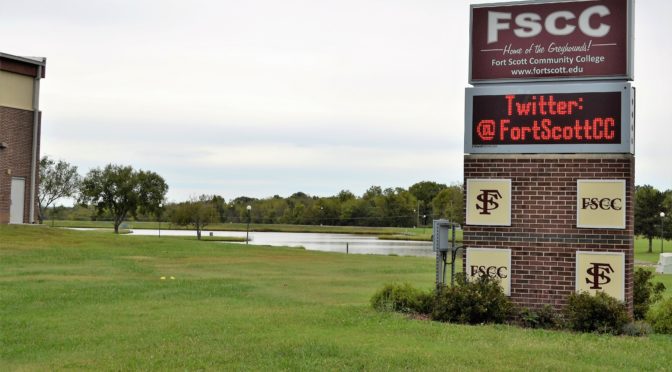
Fort Scott, KS – The Fort Scott Community College Board of Trustees met April 6 for a special session, addressing grant planning, operational efficiencies, and personnel matters during a late-evening meeting in the Ellis Building.
The board considered action to rescind a previously approved request for proposals (RFP) tied to the FRAME grant project with Bourbon County Revitalization, signaling a shift in approach as officials evaluate next steps. Trustees also discussed multiple options for the future of the FRAME grant, including issuing a new RFP, requesting a project extension pending approval from the Kansas Department of Commerce, or discontinuing the project and returning funds if an extension is not granted.
In other business, the board reviewed a proposal to dispose of several underutilized or costly fleet vehicles. The plan calls for selling the vehicles through an online auction platform, with the goal of reducing maintenance costs and generating revenue for future replacements.
FSCC Athletics presented a proposal to add a second full-time athletic trainer beginning in fall 2026. The addition is intended to support a growing student-athlete population, improve medical coverage, and enhance recruitment efforts. The item is expected to return for board action later in April.
College President Dr. Jack Welch provided an institutional update, highlighting ongoing organizational realignment efforts designed to better serve students and strengthen college operations.
Scam impersonating a court targets Kansans in multiple communities
TOPEKA—The Kansas judicial branch is raising awareness about a new scam that threatens court enforcement for an unpaid toll and encourages the person targeted to scan a QR code to make a payment.
The scam appears to be a message from the traffic division in a Kansas district court. It lists a fake case number and the name of a judge who does not exist.
If a traffic infraction exists on CaseSearch it will also generally show whether there are any unpaid fines or fees. The CaseSearch site links to the KSCourts Central Payment Center where payments can be made online.
Courts are encouraging the public to check the Spot the Scam webpage if they are contacted by someone who claims to be with a court. The page says to be alert for these signs that a contact they did not expect is a scam:
Scammer initiates contact. Scammers will call, text, or email you using phone numbers, email addresses, website links, and documents that look real but are fake.
Scammers ask for personal information. Never give a Social Security number, bank account details, or credit card information to someone you don’t contact on your own.
Scammers demand payment. Scammers will pressure you to pay now using gift cards or apps like PayPal, Venmo, or Cash App. They will tell you something bad will happen if you don’t pay now.
The page also gives guidance for reporting scams and a link to contact information for courts statewide.
Governor Kelly Signs Bipartisan Bill Establishing the Supported Decision-making Agreements Act
TOPEKA – Governor Laura Kelly today announced she has signed Senate Bill 84 (SB 84), establishing the Supported Decision-making Agreements Act, which will allow adults to enter into supported decision-making agreements to receive assistance with an adult’s affairs from one or more other adults. This bill provides individuals who need assistance with decision-making with the option to receive support from one or more adults while remaining as independent as possible.
“Senate Bill 84 is thoughtful legislation that empowers Kansans to receive support as they make key decisions about their lives, while preserving their independence,” Governor Laura Kelly said. “These voluntary agreements will equip those with intellectual and developmental disabilities, mental health needs, or other impairments, with assistance from trusted adults as they navigate decisions about health care, finances, housing, and more.”
SB 84 establishes the legal framework for a supportive adult to provide decision-making assistance to another adult (the principal), who could be an adult with developmental disabilities, brain injuries, mental health needs, or more, who wants support while maintaining control over decisions in their life. A supporter could provide the principal with aid in making and communicating decisions, and understanding information, options, responsibilities, and consequences related to those decisions. The supporter could also access and obtain information relevant to decisions necessary for managing the principal’s affairs; ascertain the wishes and decisions of the principal and help communicate those decisions to others; advocate to ensure those wishes and decisions are implemented; and accompany the principal, as well as participate in discussions with others, when the principal is making decisions.
“I’m pleased to support this commonsense legislation that establishes a legal framework to help Kansans receive voluntary support from other adults as they navigate their lives, while maintaining their control and independence,” said Representative Mari-Lynn Poskin, District 20. “Everyone has the right to agency in their own life, and this bill will enable more Kansans to make choices that are best for them with the comfort of knowing they have reliable assistance from others. Congratulations to disability advocates who have been working on this for years.”
The supportive adult would not be allowed to exert undue influence on the principal, make decisions for or on behalf of the principal, sign for the principal, obtain information not reasonably related to the matters the supporter is authorized to assist the principal with under the agreement without consent, and use information acquired for a purpose other than authorized under the agreement. Violations would be added to the crime of mistreatment of a dependent adult or an elder person, for which felony or misdemeanor penalties would apply, depending on the amount of financial resources involved.
“Through Senate Bill 84, we’re offering Kansans more avenues to be active participants not only in their own lives, but also in their communities across the state,” said Senator Rick Billinger, District 40. “This is strong, bipartisan legislation that will truly help more Kansans make life-changing decisions that will be in their best interests.”
In addition to Senate Bill 84, Governor Kelly also signed the following bipartisan bills:
House Substitute for Senate Bill 260: Establishing the born to invest act and requiring the office of vital statistics to provide data to the office of the state treasurer for distribution of informational materials regarding certain government-administered savings accounts
Senate Bill 398: Aligning a part of the Kansas Rules of Evidence dealing with Expert witnesses with the Federal Rules of Evidence by requiring a proponent to demonstrate that it is more likely than not that certain specialized knowledge will help the trier of fact to understand evidence before certain qualified witnesses may testify.
Senate Bill 418: Enacting the by-right housing development act to provide a streamlined permit approval process for by-right housing developments and allowing third-party review of new residential construction development documents and inspection of improvements, along with making other updates to zoning and regulations.
Senate Bill 459: Removing the prisoner review board from the supervision of the secretary of corrections, changing the appointing authority, creating qualifications for the members of the board, and requiring parole hearings to be postponed if proper notice of the public comment session is not made to the victim.
Senate Substitute for House Bill 2402: Requiring eligible boards of education to consider participation in the community eligibility provision, providing a financial hardship exception to such participation and requiring the state department of education to assist school districts seeking such participation.
House Bill 2739: Relating to housing code requirements, removing the definition of apartment houses from chapter 31 of the Kansas Statutes Annotated, providing requirements for adoption of the national fire protection association standards, 2024 edition, and providing that certain state accessibility standards are not applicable to moderate income housing program and Kansas investor tax credit housing act projects.
House Bill 2528: Requiring all state board of nursing actions related to certain nonpractice violations be void, allowing for late license renewal for professional, practical and advanced practice registered nurses, setting fees for late license renewal, limiting unprofessional conduct to acts related to the practice of nursing, prohibiting the board from taking retaliatory action against a licensee based on certain lawful actions and creating a civil cause of action for violation thereof, requiring termination of current board members on January 1, 2027 and requiring the governor to appoint interim board members subject to senate confirmation and requiring the board to issue refunds for overpayment or duplicate payment.
House Bill 2652: Requiring the clerk of the appellate courts to publish monthly a list of cases of the supreme court and court of appeals in which a decision has not been entered and filed within six months of submission and a list of cases in which a petition for review has not been granted or denied within six months of submission.
Welcome to “Kansas Common Sense.” Thanks for your continued interest in receiving my weekly newsletter. Please feel free to forward it on to your family and friends if it would interest them.
Blast off: Artemis II Successful Launch
On Wednesday, our nation watched as three American astronauts and one Canadian astronaut embarked on the Artemis II mission to orbit the Moon for the first time in more than 50 years and go deeper into space than ever before. I have the responsibility of leading funding decisions for NASA, and last year Congress made a $10 billion investment in NASA in the Reconciliation Bill to bolster the Artemis program and return to the Moon.
The successful launch of Artemis II would not be possible without the Kansas suppliers who contributed to the success of this mission. Congratulations to DJ Engineering in Augusta, MPM Inc. in Wichita, Perfekta Inc. in Wichita, Wesco Aircraft Hardware Corp in Wichita, Galaxy Technologies in Winfield and Vector Tooling Technologies in Winfield on their contributions to the construction of the Space Launch system and the Orion spacecraft. We are one step closer to returning American astronauts to the Moon’s surface and beating China back to the Moon because of Kansas’ contributions to our aerospace industry. I will continue to monitor the duration of the Artemis II mission and wish the astronauts a safe journey and return to Earth.
Sen. Moran with NASA astronauts Christina Koch, Victor Glover & Reid Wiseman, along with Canadian astronaut Jeremy Hansen, after their selection for the Artemis II mission in 2023.
Happy Easter Rejoice, Rejoice, O Christian, lift your voice and sing eternal Hallelujahs to Jesus Christ the King!
The hope of all who seek him, the help of all who find; none other is so loving, so good and kind.
Robba and I wish everyone a joyful Easter Sunday celebrating the resurrection of our Savior Jesus Christ.
Securing America’s Energy Dominance
Kansas has a long history as a leader in both agriculture and aviation with our farmers being the top producers of sorghum, wheat and cattle and our manufacturers producing 35% of all general aviation aircraft in the U.S. We are uniquely suited with the agricultural capacity and industrial infrastructure needed to strengthen American energy dominance, all that is missing is policy support to drive this forward. That is why I introduced the Securing America’s Fuels Act, legislation that would reinstate the bonus credit to the 45Z Clean Fuel Production Tax Credit for an emerging fuel called Sustainable Aviation Fuel (SAF). By strengthening SAF production, it would provide for the opening of new commodity markets, bolster our aviation industry and generate tens of thousands of new jobs for Kansas and states across the country. As a founding member of the Senate Sustainable Aviation Caucus, I am committed to making certain our farmers, manufacturers and rural communities have all they need to help power America’s skies.
You can read more from my opinion piece in Ag Week here.
Update on U.S. Military Operation in IranWith the war in Iran in its sixth week, President Trump addressed the nation on the war’s progress and asserted the campaign would last another two to three weeks. The President warned Iran to open the Strait of Hormuz to ship traffic or face devastating consequences. The potential for escalation, including the introduction of ground troops, increases the danger to our military men and women and our regional partners and the global economy. We saw this danger in the courageous rescue of two Air Force crew shot down over Iran. As the representatives of the American people, Congress needs answers on the objectives of this military campaign and what has transpired since this conflict began. Administration officials should testify before Congress and explain to the American people the threat posed by Iran and how achieving stated objectives, such as degrading Iran’s missile production, will be measured and accomplished. This is essential to sustain support for the war and make certain the fighting ends with a durable peace that leaves our country safer.
Watch my conversation with WIBW Channel 13 News here.
Happy Passover
Wishing a happy Passover to our Jewish neighbors in Kansas and around the world who are celebrating this week.
Honored to Serve You in Washington It is an honor to serve you in Washington, D.C. Thank you to the many Kansans who have been calling and writing in to share their thoughts and opinions on the issues our state and country face. I appreciate the words of Kansans, whether in the form of a form of letter, a Facebook comment or a phone call, who wish to make their voice heard.
Please let me know how I can be of assistance. You can contact me by email by clicking here. You can also click here to contact me through one of my Kansas offices or my Washington, D.C., office.
Very truly yours,
Jerry
To unsubscribe from this newsletter, please click here.
Hays
1200 Main St.,
Suite 402
P.O. Box 249
Hays, KS 67601
Phone: (785) 628-6401
TOPEKA – Governor Laura Kelly has vetoed eight bills.
The following veto message is from Governor Kelly regarding her veto of Senate Bill 254:
“America’s immigration system is broken, but this is not the way to fix it. This bill targets Kansans who were brought to the United States as children. To punish these kids for decisions their parents made years ago is not only cruel, but also not in the best interest of the state. Kansas needs these young people to be educated and trained so they can enter our workforce and contribute to our state’s economy.
“Therefore, under Article 2, Section 14(a) of the Constitution, I hereby veto Senate Bill 254.”
The following veto message is from Governor Kelly regarding her veto of House Bill 2468:
“After years of neglect and budget disasters before I took office, we’ve worked hard to make sure Kansas’ public schools are fully funded and back on track. We must prioritize meaningful increases in Special Education funding over expanding the private school tax credit program. I will continue to fight for the full funding of our public schools.
“Therefore, under Article 2, Section 14(a) of the Constitution, I hereby veto House Bill 2468.”
The following veto message is from Governor Kelly regarding her veto of House Bill 2727:
“Kansans have made it clear that they want the government to stay out of women’s private health care decisions. This bill is another attempt by politicians to involve themselves in these private decisions, this time by trying to intimidate health care providers. At some point, I hope the politicians in Topeka will recognize that Kansans want them out of their doctors’ offices, but until they do, I’ll continue to veto bills like this.
“Therefore, under Article 2, Section 14(a) of the Constitution, I hereby veto House Bill 2727.”
The following veto message is from Governor Kelly regarding her veto of House Bill 2729:
“This bill requires the state to put false medical information out that has no scientific basis and only serves to mislead women. Kansans have made it clear that they want the government to stay out of women’s private health care decisions. This bill does the opposite.
“Therefore, under Article 2, Section 14(a) of the Constitution, I hereby veto House Bill 2729.”
The following veto message is from Governor Kelly regarding her veto of House Bill 2603:
“I’ve always believed that local elected officials are best suited to make these types of policy decisions for their constituents. Local leaders and law enforcement officials, not the state government, should determine how these types of security fences are used in their communities.
“Therefore, under Article 2, Section 14(a) of the Constitution, I hereby veto House Bill 2603.”
The following veto message is from Governor Kelly regarding her veto of Senate Bill 30:
“This bill would require updates to existing occupational licenses or new licenses to be reviewed and approved by the legislature. This is another inappropriate power grab inserting legislators without the technical knowledge to appropriately judge. Not only do they lack the required expertise, but this process would simply add bureaucratic red tape and bloated administrative busy work. It is the role of the legislature to solve big problems only it can, not micromanage the state agencies with technical expertise for these professions.
“Therefore, under Article 2, Section 14(a) of the Constitution, I hereby veto Senate Bill 30.”
The following veto message is from Governor Kelly regarding her veto of Senate Bill 375:
“The process by which this bill came to my desk was one of political games. A bill of this magnitude needed much further vetting and a full debate in the House. Kansans expect their laws to be considered and written in a thoughtful manner that allow their elected officials in both chambers the opportunity to represent them. Not whatever this process was.
“Therefore, under Article 2, Section 14(a) of the Constitution, I hereby veto Senate Bill 375.”
The following veto message is from Governor Kelly regarding her veto of House Bill 2719:
“While I appreciate the Legislature’s efforts to clean up a bill that should have not been passed in the first place, this bill further confuses the rule-making process and makes state government less efficient and cost effective, not more. It is a blatant attempt by the Legislature to undermine the separate, but equal, authority of the executive branch by micro-managing state agency functions.
“Therefore, under Article 2, Section 14(a) of the Constitution, I hereby veto House Bill 2719.”
Governor Kelly Signs Caleb’s Law to Strengthen ProtectionsAgainst Sexual Extortion
TOPEKA – Governor Laura Kelly today announced she has signed House Bill 2537, known as Caleb’s Law, which expands and strengthens Kansas law to better combat sexual extortion and protect victims. The legislation is named after Caleb Moore, a 14-year-old from El Dorado, Kansas, who died by suicide after being targeted by an online sextortion scheme.
“Protecting Kansas children means staying ahead of the evolving threats they face, especially in an increasingly digital world where exploitation can happen in an instant,” Governor Laura Kelly said. “By prioritizing education and awareness, Caleb’s Law ensures that young people, families, and educators have the tools to recognize sexual extortion and seek help before it’s too late. By signing this bill, we’re honoring Caleb’s life by shining a light on this growing danger and taking meaningful action to prevent future tragedies.”
House Bill 2537 enhances criminal penalties and establishes new offenses to expand the types of exploitation that are covered by Kansas law. It also broadens the definition of sexual extortion and requires statewide education efforts to help students, parents, and educators recognize and prevent exploitation. The bill requires the attorney general to work with the Kansas State Board of Education and law enforcement agencies to prepare and provide educational materials and information regarding sexual extortion.
“Our kids are our future and protecting them from online predators, who are increasingly dangerous and sophisticated, must be a top legislative priority,” said Representative Bob Lewis, District 123. “I’m therefore pleased that the governor is signing Caleb’s Law, which I introduced and received unanimous, bipartisan support in both legislative chambers. What happened to Caleb is tragic and must be stopped. I look forward in the next legislative session to continuing to work across the aisle to protect our kids from online threats.”
House Bill 2537 strengthens existing Kansas statute by expanding the definition of sexual extortion to include threats involving explicit images, increasing penalties when an offender is 18 years of age or older and the victim is less than 18 years of age or a dependent adult.
“Sexual extortion in any form should never be tolerated, but children under the age of 18 are particularly vulnerable,” said Representative Dan Osman, District 48. “Thank you to the family and friends of Caleb Moore who championed this legislation. It’s because of your effort that Kansas can help protect our young people against future attacks.”
In addition toHouse Bill 2537, Governor Kelly also signed the following bipartisan bills:
House Bill 2574:Removing the expiration on certain cybersecurity requirements, modifying the duties of chief information security officers and cybersecurity programs, and requiring assessment of executive branch agency compliance with cybersecurity requirements.
House Bill 2602: Establishing requirements for a portable benefit plan for independent contractors, determining types of contributions to such plans, and providing a subtraction modification for Kansas income tax purposes.
House Bill 2618: Requiring the state board of education to report to the legislature on federal moneys received by the state, ending certain educational reporting requirements and applying expiration dates to other educational reporting requirements.
House Bill 2644:Requiring a county appraiser to adjust the value of residential and commercial property upon final determination or obtain a fee simple appraisal if the appraised value exceeds 5% increase over three years.
House Bill 2737: Enacting the taxpayer agreement act to provide for an alternative method of tax increment financing of municipal economic development projects through taxpayer agreements.
House Bill 2747: Specifying that courts shall consider certain factors in determining whether a prior violation of law is comparable to any act described in certain driving under the influence crimes when calculating a person’s criminal history score under the Kansas sentencing guidelines act.
House Bill 2769:Requiring members of governing bodies of subordinate service taxing areas to be residents of such taxing areas.
House Bill 2781: Authorizing the state historical society to acquire the junior officers’ quarters at Fort Dodge and provide for the use, preservation, improvement, control and maintenance thereof.
Governor Kelly Signs Bipartisan Bill Expanding Opportunities for Attorneys in Rural Areas
TOPEKA – Governor Laura Kelly has signed Substitute for House Bill 2595 (Sub for HB 2595), establishing the Attorney Training Program for Rural Kansas Act to encourage and expand opportunities and incentives for licensed attorneys or Kansas law students to practice in rural areas. The bill also establishes the Attorney Loan Repayment Program for Rural Kansas.
“Increasing access to attorneys in rural areas is key to ensuring that all Kansans have access to the well-qualified representation they are legally entitled to,” Governor Laura Kelly said. “By signing this commonsense bill, we are supporting law students and addressing our current shortage of attorneys in rural areas to build stronger, thriving Kansas communities.”
Sub for HB 2595 increases opportunities and incentives for licensed attorneys or those pursuing a law degree at the University of Kansas or Washburn University to practice law in rural Kansas, specifically in counties other than Douglas, Johnson, Sedgwick, Shawnee, and Wyandotte. The bill also establishes the Law Student Training and Stipend Program for Rural Kansas, which will be administered by the Department of Commerce in coordination with Washburn University and the University of Kansas for law students at those respective universities. Preference will be given to students who are Kansas residents.
“This bill takes meaningful, long-term steps to address the shortage of attorneys in Kansas’ rural areas, which has been decreasing as older attorneys retire,” said Representative Ken Rahjes, District 110. “Access to legal representation is a fundamental pillar of our justice system. Now more than ever, it is critical that we have qualified legal representation to preserve the economic and civic health of rural Kansas.”
The bill will provide a stipend of up to $3,000 per school year for up to three years to each student entering the Law Student Training and Stipend Program. The stipend can be used for tuition, books, supplies, or other school expenses. Students would be required to practice law in a rural area for a minimum of one year for each year they receive the stipend. Additionally, Sub for HB 2595 establishes the Attorney Training and Loan Repayment Program for Rural Kansas, providing loan repayment of $20,000 per year for attorneys who live and practice in a qualifying area for up to five years.
“Sub for HB 2595 is a good example of what the legislature can do when it sets aside partisanship and focuses on what is best for Kansans. The lack of attorneys in rural areas has put the state on the verge of a constitutional crisis,” said Representative Linda Featherston, District 16. “Sub for HB 2595 will help avert this crisis by encouraging legal practices in rural Kansas. This will help ensure justice for all Kansans.”
In addition to Sub for HB 2595, Governor Kelly also signed the following bipartisan bills:
House Bill 2444: Providing that jail credit when consecutive sentences are imposed shall not apply to more than one case and creating special sentencing rules and requiring certain minimum bonds when a felony is committed by certain offenders while on probation, parole, or post-release supervision.
House Bill 2467: Prohibiting past convictions or sanctions for failure to comply with a traffic citation that are more than five years old from being considered by courts and the division of vehicles in determining suspended or restricted driving privileges and eliminating certain notice requirements for the division of vehicles.
House Bill 2470: Providing that certain municipalities may designate the entire municipality within a neighborhood revitalization area under the Kansas neighborhood revitalization act.
House Bill 2487: Defining teacher and paraprofessional for purposes of eligibility for a scholarship under the Kansas education opportunity scholarship program.
House Bill 2520: Increasing the number of allowed residents in a home plus facility from 12 to 16.
House Bill 2539: Requiring that the members of the Eudora community library district board of directors be elected to such positions.
House Bill 2552: Requiring criminal presentence investigation reports and journal entries to be completed and submitted in the form and manner prescribed and approved by the Kansas Sentencing Commission.
House Bill 2562: Permitting the issuance of a special license plate or permanent or temporary placard for a person with a disability based on documentation of satisfactory proof of disability from a physical therapist.
Senate Substitute for House Bill 2571: Increasing the cost threshold for when a county shall use the public bidding process in awarding a construction contract.
2026 Session There were 237 bills introduced in the Senate and 507 in the House. Most of the bills didn’t get a hearing because there just wasn’t time. Since this session was compressed, even more than previous years, it was intense. Over 150 bills were sent to the Governor in the last week of session. So far, thirty-four of those were signed into law, three vetoed, and one became law without the Governor’s signature.
Nursing Instructors will only be required to have one degree higher than the students they are teaching. “Additional or more advanced credentials for faculty shall not be required by the board.” There is a shortage of healthcare providers, but how will lowering the requirements to be a teacher help? SB 344 passed 38 to 2. I voted no. The Governor let it become law without her signature.
Vetoed Bills so far this year include SB 244, requiring multi use showers, bathrooms, and other such facilities in public buildings be designated for use by only one sex; SB 368, enacting income tax deductions for participants of health care ministries; and HB 2635, an act to protect the ability of private pregnancy centers to provide life-affirming care. All three vetoes were overridden to become law. I voted for each override.
Moving or Disposing of Human Remains with the intent to conceal a death or crime is now explicitly a criminal offense as HB 2331 was signed into law. The original bill addressed unclaimed remains, allowing coroners to authorize burial after three years. I was able to offer an amendment on the Senate floor to also make it a crime to move or dispose of a body with the intent to conceal a death or crime. After Senators learned of the tragedy in Linn County, they unanimously supported adding this provision. The bill then went to conference committee, and following negotiations, it passed both chambers before being signed into law.
Vehicle Tags purchased at the County Treasurers office can be cumbersome and time-consuming in some counties. Most Treasurers have said they do not receive enough of this money to cover their costs, although there are billions collected that goes to fund other aspects of local government. CCR 325 creates a temporary group tasked with studying problems and recommending an updatedsystem. The task force report will be due January 2028. Meantime, a fee that is normally $5, will be allowed for the locals to increase to $10 for the next three years, until a new system can be implemented. These funds must be used only for vehicle-related staffing, equipment, and operations. County treasurers will also report back to the legislature on the increase in fees and how the money is being used. It passed the Senate 33 to 7. I voted yes as this has been a major issue in some counties and the process could be simplified for all Kansans. CCR 325 was sent to the Governor.
Chief’s Stadium in Kansas continues to move forward. There doesn’t appear to be any way to stop it. Especially after CCR 2466 establishes the Kansas Sports Facilities Authority, an 11-member board to oversee the development and operation of the new stadium for the Kansas City Chiefs. Most of the members are appointed by the Governor, Senate President, Speaker, Majority and Minority leaders. It doesn’t give me comfort that the appointees may not have experience in building a multi-billion-dollar facility. I didn’t vote for the STAR bond bill in 2024 that started this effort and I did not vote to continue it. If these STAR bonds projects were so helpful, why does Wyandotte have some of the highest property taxes? Maybe because these developments usually do not pay property taxes and sales tax goes to pay off the bonds for the project – can you say NASCAR? It will be the same for the Chiefs stadium.
Governor Kelly Allows Senate Bill 334 to Become Law Without Signature
TOPEKA – Governor Laura Kelly has allowed Senate Bill 334 to become law without her signature.
The following statement is from Governor Kelly regarding Senate Bill 334:
“I understand the urgent need to address the workforce shortage in skilled nursing and to have a sufficient number of educators to prepare future nurses. However, I have concerns that the lowered educational requirements for educators in Senate Bill 334 would result in a decreased level of rigorous academic training that would leave prospective nurses unprepared to deliver the standard of care Kansans trust nursing professionals to provide. Nurses are on the frontlines of caring for Kansans in medical situations ranging from simple preventive care to emergency trauma response, and we should honor the responsibility of these roles by ensuring they receive the highest quality education possible.
“For these reasons, I am letting Senate Bill 334 become law without my signature.”
Governor Kelly Signs Bipartisan Bill
Reducing Distracted Drivers in School and Construction Zones
TOPEKA – Governor Laura Kelly has signed House Substitute for Senate Bill 366, which prohibits the use of a cell phone while driving in a school or construction zone.
“House Substitute for Senate Bill 366 takes concrete steps to make our communities safer for all – and safe communities are vital to making Kansas a state where people want to put down roots and raise their families,” Governor Laura Kelly said. “I’m pleased to signsmart, commonsense legislation that will help ensure drivers are distraction-free and schoolchildren, pedestrians, and constructions workers are protected.”
Under Senate Bill 366, individuals who use a cell phone while driving in school or construction zones will be subject to a warning citation. After July 1, 2027, individuals will be subject to a citation with a $60 fine. Additionally, this law permits the display of certain lighting in road construction zones by vehicles and trailers being used for highway construction and maintenance operations.
“We need to keep our kids and workers safe on the road. Car crashes and fatalities caused by distracted driving are far too prevalent in our state, with tragedy touching too many families,” said Senator for District 7 Ethan Corson. “Prohibiting cell phones in school and construction zones is a commonsense action to curb the inattention that leads to accidents. With the signing of this legislation, we are delivering on the promise to enhance public safety and protect Kansans from harm.”
By prohibiting and authorizing penalties for drivers’ cell phone use in school and construction zones, Senate Bill 366 aims to reduce accidents, protect children and construction workers, and ensure drivers are alert, focused, and distraction-free.
“Distracted driving from cell phone usage is one of the biggest preventable causes of traffic fatalities, injuries, and accidents,” said Representative for District 125 Shannon Francis. “This bill helps protect construction workers and school children where they are most vulnerable. We must build a culture of safety among Kansas drivers.”
In addition toHouse Substitute for Senate Bill 366, Governor Kelly also signed the following bipartisan bills:
Senate Substitute for House Bill 2212: Authorizing the governor to make a declaration of need for enhanced public safety and security for an extraordinary event.
House Bill 2393: Authorizing the supreme court to impose a charge to fund the costs of non-judicial personnel through June 30, 2030.
House Bill 2511: Permitting money received from agricultural production on a state-owned property to be used for the management of all state-owned properties.
House Bill 2519: Continuing in existence certain exceptions to the disclosure of public records under the Kansas Open Records Act.
House Bill 2622: Modifying the municipal lease-purchase protest petition requirements.
House Bill 2702: Providing that applicants for a physician assistant license submit to a criminal record check, providing for the collaboration between physicians and physician assistants, and requiring the revocation of a physician assistant license under certain circumstances.
House Bill 2761: Enacting the speech-language pathology assistant act to provide for the licensure of speech-language pathology assistants.
Senate Bill 55: Providing additional protections from exploitative contractors by prohibiting the assignment of benefits under certain property and casualty insurance contracts.
Senate Bill 425: Increasing the maximum annual registration fee limit for seed retailers and wholesalers and authorizing a late fee for registrations renewed after the registration deadline.
This weekend, families across our district and around the world are gathering to observe Passover, Good Friday, and Easter Sunday. Whether you are commemorating the liberation of the Israelites or celebrating the joy of the Resurrection, I wish you and your loved ones a meaningful and blessed holiday.
As we gather in faith and community, please join me in keeping our brave service members in your prayers. We remain deeply mindful of those currently serving in the Middle East and stationed across the globe and of their families and friends at home. We are eternally grateful for their sacrifice and unwavering commitment to defending our freedoms, and we pray for their continued safety, success in their mission, and swift return home.





.png)