
Blood and Guts by Carolyn Tucker

Keys to the Kingdom
My Dad, Morris J. Hayward, served in Germany on the front lines in the 90th Infantry Division, Company B, under General George S. Patton’s Third Army. General Patton is the most famous and celebrated U.S. general of that era. He was an outstanding motivator and one of the best tacticians of the time. He was the most colorful general, known by the troops as “Blood and Guts” Patton. My Dad further defined that nickname by explaining, “Yeah, his guts and our blood.” With a mighty combination of blood and guts, the U. S. and our allies defeated the Nazis and won the victory in the European Theater.
It usually takes a combination of things working together like a well-oiled machine to achieve successful results. “For God sent Christ Jesus to take the punishment for our sins and to end all God’s anger against us. He used Christ’s blood and our faith as the means of saving us from His wrath” (Romans 3:25 TLB). Jesus died on the cross so that all might live victoriously and be saved from hell. But it takes faith to believe in Jesus, and the guts to stick with it, in order to achieve the abundant life here and eternal life in heaven.
When General Patton devised his incomparable battle plans, what would have happened if he hadn’t been able to find any soldiers with enough guts to carry it out? It takes guts for believers to take a stand for Christ — it always has. It takes guts to not go with the flow (any old dead fish can float downstream). It takes guts to love the ugly-hearted and extend forgiveness. It takes guts to live according to God’s Word when the world wants to live like the devil.
Even in the face of terrible odds, believers can choose to go with God and have victorious outcomes. I’m not talking about just going to heaven when we die, I’m referring to having victory right here, right now. “No, despite all these things, overwhelming victory is ours through Christ, who loved us” (Romans 8:37 NLT). The Son of God loved everyone so much that He was willing to shed His blood in order to save us from ourselves (a life of selfish misery). There’s more power in the blood of Jesus than a Sherman tank. There’s more power in Jesus’ blood to free a person’s soul than a B-24 Liberator.
We’d all be dead in the water if it weren’t for the blood of Jesus. “In fact, according to the law of Moses, nearly everything was purified with blood. For without the shedding of blood, there is no forgiveness” (Hebrews 9:22 NLT). Jesus has done His part once and for all and it’s up to everybody else to do their part. He provided the blood.
We are marching through a world that’s not our true home. “Dear friends, I warn you as ‘temporary residents and foreigners’ to keep away from worldly desires that wage war against your very souls. Be careful to live properly among your unbelieving neighbors…(1 Peter 2:11,12 NLT). Believers aren’t in a physical war like Patton’s Third Army, but we are in a spiritual war. We must be determined to hold our position and never give up or give in to the enemy of our souls. And that, brother and sister, takes guts.
The Key: With His blood and our guts, believers can be more than conquerors.
Poverty by Gregg Motley
Poverty
Economic development is not about the rich getting richer. It should be about lifting all sectors of our economy by giving everyone a chance to succeed. That includes supporting education, health care and charities that target short-term help to those in immediate need. As individuals, we should also look charitably on our neighbors in need and help as we can in safe and productive ways according to the resources we have been afforded. An economy cannot be considered successful that leaves a segment of the population behind.
There is good news on the poverty front. According to a 2019 article entitled “Global Extreme Poverty” by Max Roser and Esteban Ortiz-Ospina, 1.9 billion people worldwide lived in extreme poverty in 1990; by 2020, estimates are that the number was 479 million, a 74.8% drop over the last 30 years. Estimates are that the number will stabilize and be about the same in 2030.
Looking back further, the article observes that 94% of the world lived in extreme poverty in 1820; now, that number is 9.6%. The big winner has been Asia. The losers? Sub-Sahara Africa and the Middle East; both regions have lost ground to poverty. All other regions have improved their poverty percentage. There is no question that the wave of freedom initiated in the 18th century, including the American and French Revolutions, have had a positive, long-term economic impact on the world. For the first time in modern history, a high percentage of the world had the power of self-determination.
What about Bourbon County, Kansas? In 1990, the rate was 19.7%, well above the State number of 11.5% and higher than all surrounding counties. By 2010, the number had lowered to 15.9%, which was still above the State average of 13.2%, but below neighboring counties. Since then, the number has gone up and down significantly, cresting at 20.9% in 2012, and mitigating to 15.6% by 2019; that number leaves us below the surrounding counties to the South, but remains above the State percentage at 11.3% and Linn County at 12.0%.
What can we do about poverty in Bourbon County from an economic development perspective? First, we need to define the size and nature of the demographic. Who are they and where do they live? Only then can we make sure that all new development and investments in Bourbon County have elements that help the impoverished, not further isolate or marginalize them.
Additionally, we need to support charitable and governmental programs and outreaches to those below the poverty line, including health care and education, both public and private. Community development must consider all segments, geographies and entities within out county and encourage positive investments in the totality.
As we begin the process of a third party analysis of Bourbon County, we will be mindful of the whole county. We need everyone to come along with us if our community is to be the best that we can be.
Highly Pathogenic Avian Influenza Continues to Spread in Kansas
MANHATTAN, Kansas — The Kansas Department of Agriculture has now identified two new counties which have confirmed cases of highly pathogenic avian influenza (HPAI) as the disease outbreak continues in Kansas and nationwide. Samples from birds exhibiting HPAI symptoms in a non-commercial backyard mixed-species flock (poultry) in Dickinson County and also in a non-commercial backyard mixed-species flock (non-poultry) in rural Sedgwick County were confirmed today by the National Veterinary Services Laboratories in Ames, Iowa.
KDA is working closely with USDA–APHIS on a joint incident response in both of the new locations. KDA officials quarantined the affected premises, and birds on both properties will be depopulated to prevent the spread of the disease.
Anyone involved with poultry production from the small backyard chicken owner to the large commercial producer should review their biosecurity activities to assure the health of their birds. Find guidance on biosecurity on the KDA Division of Animal Health webpage at agriculture.ks.gov/AvianInfluenza. Going forward, any additional confirmed cases will be shared directly with local communities and announced on the KDA Avian Influenza webpage, rather than through a statewide news release.
Highly pathogenic avian influenza (HPAI) is a highly contagious viral disease that can infect chickens, turkeys and other birds and can cause severe illness and/or sudden death in infected birds. Attentively monitor your birds for symptoms of HPAI which include: coughing, sneezing, nasal discharge, and other signs of respiratory distress; lack of energy and appetite; decreased water consumption; decreased egg production and/or soft-shelled, misshapen eggs; incoordination; and diarrhea. Avian influenza can also cause sudden death in birds even if they aren’t showing other symptoms.
If these symptoms are observed in your birds, immediately contact your veterinarian. If you don’t have a regular veterinarian, contact KDA’s Division of Animal Health office toll-free at 833-765-2006.
According to the U.S. Centers for Disease Control and Prevention, the recent HPAI detections do not present an immediate public health concern. No human cases of these avian influenza viruses have been detected in the United States. Birds and eggs from the infected flock will not enter the food system. As a reminder, the proper handling and cooking of all poultry and eggs to an internal temperature of 165 ˚F is recommended as a general food safety precaution.
As part of existing avian influenza response plans, federal and state partners are working jointly on additional surveillance and testing in areas around the affected flocks. The United States has the strongest AI surveillance program in the world, and USDA is working with its partners to actively look for the disease in commercial poultry operations, live bird markets and in migratory wild bird populations.
For more information about HPAI, including current status of the confirmed cases in other states as well as more information about biosecurity for your flock, go to KDA’s avian influenza webpage at agriculture.ks.gov/AvianInfluenza or call KDA at 833-765-2006.

Bourbon County Commission Agenda For March 22
Agenda
Bourbon County Commission Room
1st Floor, County Courthouse
210 S. National Avenue
Fort Scott, KS 66701
Tuesdays starting at 9:00
Date: March 22, 2022
1st District-Lynne Oharah Minutes: Approved: _______________
2nd District-Jim Harris Corrected: _______________________
3rd District-Clifton Beth Adjourned at: _______________
County Clerk-Ashley Shelton
MEETING HELD IN THE COMMISSION ROOM
Call to Order
• Flag Salute
• Approval of Minutes from previous meeting
• Eric Bailey – Road and Bridge Report
• Resolution for Liquor Sales in the County
• County Counselor Comment
• Susan Bancroft, Finance Director Comment
o End of Year Report
• Public Comment
• Elected Officials Comment
• Commission Comment
Justifications for Executive Session: KSA 75-4319(b)(1) To discuss personnel matters of individual nonelected personnel to protect their privacy KSA 75-4319(b)(2) For consultation with an attorney for the public body or agency which would be deemed privileged in the attorney-client relationship KSA 75-4319(b)(3) To discuss matters relating to employer-employee negotiations whether or not in consultation with the representative(s) of the body or agency KSA 75-4319(b)(4) To discuss data relating to financial affairs or trade secrets of corporations, partnerships, trust, and individual proprietorships KSA 75-4319(b)(6) For the preliminary discussion of the acquisition of real property KSA 75-4319(b)(12) To discuss matters relating to security measures, if the discussion of such matters at an open meeting would jeopardize such security measures.
To view the Bourbon County Bank Reconciiation for the prior year:
What’s Happening In Fort Scott Newsletter
|
|

|
|
|
|
|
|
|

|
|
|
|
|
|

|
|
|
|
|
|
|
|
|
|
|
|
|
|
|
|
|
|

|
|
|
|
|
|

|

…
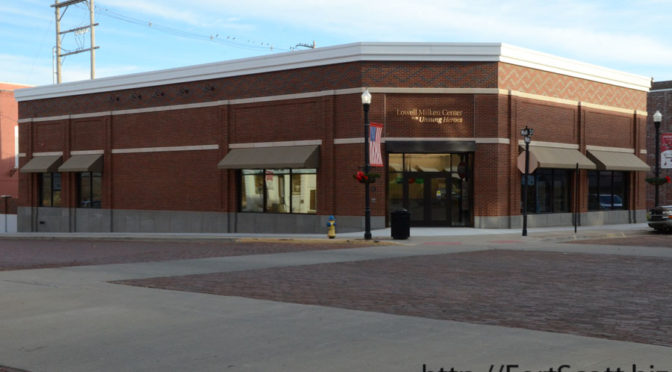
Send Encouragement to Ukraine Refugees: Lowell Milken Center Tomorrow

The Lowell Milken Center for Unsung Heroes in Fort Scott is organizing the encouragement of the Ukrainian refugees in Poland through letters.
At the center, 1 S. Main, from 10 a.m. to 2 p.m. tomorrow, Saturday, March 19 there will be letter-writing stations set up for both adults and children to write letters of support that will be taken to refugees being harbored in Poland.
“Marzanna Pogorzelska, who was an Irena Sendler Outstanding Teacher about 10 years ago, is in charge of this in Poland,” Executive Director Norm Conard said. The whole Pogorzelska family has taken time off of their jobs to help with the refugees, he said.
Ronda Hassig is in charge of the event in Fort Scott on March 19.

The following is from an email from Pogorzelska to Conard.
“We have been experiencing a horrible time,” Marzanna Pogorzelska, Lowell Milken Center in Europe (Poland) said.“The war in the Ukraine reminds us of the times we thought would never come back. Polish society is now one big network of support for our Ukrainian brothers and sisters.In this network there are thousands of organizations and people, but I think that one person with her network of supporters is missing now and here.I can only imagine Her, Irena Sendler, these days. Finding safe places for Ukrainians mothers. Organizing cars to take them from the border to somebody’s house. Collecting food for small babies. Making sure the sick ones get necessary medicine….And many, many other things.I also imagine Her determination and anger which she could always change in true care and support in her own, incredible way.”
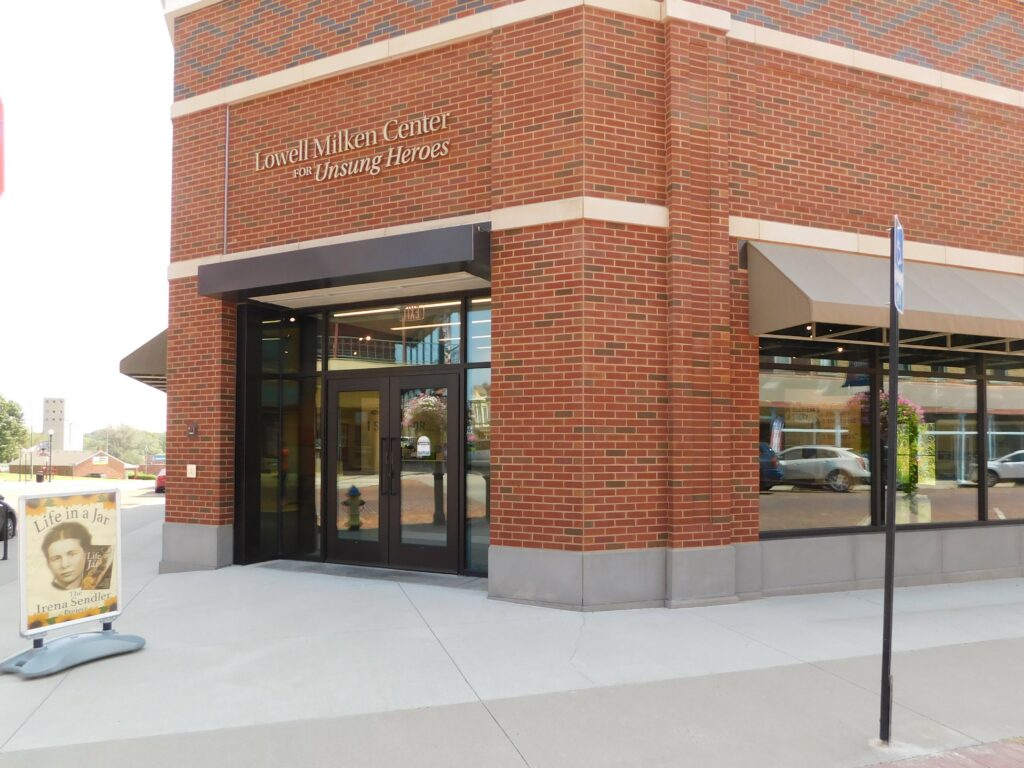
To learn more about Irena Sendler, view this prior publication:
The Bourbon County Sheriff’s Office Daily Reports March 18

Nothing Personal by Patty LaRoche

The world watches, abhorred that a bully is at work, not just a normal, schoolyard bully, but an evil bully who cares not about the sanctity of life. We applaud as other nations criticize Vladimir Putin’s actions because I’m afraid in many ways, we Americans have become desensitized to evil. Yesterday, a friend shared that his daughter-in-law’s parents are hunkered down in Ukraine. Another prayer list from Fort Scott listed a family member in the same boat. My son Adam is there, bringing humanitarian aid in and taking orphans and the wounded out to Romania. Once it becomes personal, this slaughter takes on a whole new meaning, doesn’t it? At some point, we need to be bothered. Prayerfully bothered. In Revelation 3:15-16, Jesus speaks through the apostle John to the church of Laodicea: I know your works, that you are neither cold nor hot. I could wish you were cold or hot. So then, because you are lukewarm, and neither cold nor hot, I will vomit you out of My mouth. What was going on there that angered the Lord? I’ll tell you what: The church members had become numb, lethargic, desensitized to evil, and Jesus clearly was displeased. Is there a chance that we are of the same mindset? Or are we zealous, abhorring evil, as God wants us to be? Christians, beware. When we turn on our televisions, do we…
- “Tsk-tsk, another slaughter of human life!”
- “Tsk-tsk, the Russians are raping the Ukrainian women.
- “Tsk-tsk, the statistics on abortion are alarming.”
- “Tsk-tsk, how many F-words can Yellowstone use before I opt to watch something else?”
- “Tsk-tsk, a few more Afghanistan rescues; too bad I can’t do something to help.”
- “Tsk-tsk, homeless people have taken over our cities. Glad I don’t live there!”
A few days ago, Peter and Melinda, the heads of The Gems of Mazatlán, a philanthropic organization that raises money for the five local orphanages, called to share that one of the orphanages had no working toilets. An underground pipe, once repaired with plastic bags, was leaking. I had told Peter that my Fort Scott friend had sent money with me, instructing me to use it at whichever orphanage needed it the most. Eenie-meenie-minie-mo. All are understaffed and underfunded. This need, however, was urgent. Peter called and asked if the money could be used for the pipe repair. It would cover only about 1/6 of the cost, but it was a start. I was frustrated. That particular orphanage is affiliated with one of the largest denominations in the world, yet there never is enough money. We volunteers have renovated, painted, sewn, repaired, pruned, and met all of its manual-labor needs for the past few years. The Gems of Mazatlán had even hired a teacher when Covid restrictions forbade the kids to go to school. How could such a large denomination become so desensitized to the needs of these youngsters and not step in to help? Oh, I don’t know, Patty. Probably the same way you didn’t go to the orphanage to work last week because you had a challenging tennis match. Or probably the same way you were in too big of a hurry after your pedicure to stop and give money to the man on the street with no feet. Or probably the way you… Yea, once it becomes personal, this takes on a whole new meaning.
Drought Emergency, Warnings and Watches for Kansas Counties
Governor Declares Drought Emergency, Warnings and Watches for Kansas Counties
The Governor’s Drought Team examines conditions; and recommends updates to the Governor
Today, Governor Kelly approved updated drought declarations for Kansas counties with Executive Order #22-03. This drought declaration places all 105 Kansas counties either in watch, warning or emergency status.
“The majority of the state of Kansas has experienced drought or abnormally dry conditions for the past several months,” said Governor Kelly. “Unfortunately, these conditions are forecast to persist or get worse, so I strongly encourage Kansans to be mindful of drought conditions and work to minimize the threat of fires across the state.”
The drought declaration placed 19 counties into an emergency status, 61 counties in a warning status and 25 into a watch status. This action was recommended by Connie Owen, Director of the Kansas Water Office and Chair of the Governor’s Drought Response Team. Kansas has continued to experience drier than normal conditions all across the state. Most areas have a departure from normal precipitation of more than three inches over the last six months.
“We have watched drought conditions continue to get worse since this past fall or longer in some areas, causing concern with groundwater supplies, reservoirs, stream flow, crop production, elevated wildfire risk and more,” said Owen. “The Governor’s Drought Response Team will continue to monitor the situation and make recommendations to the Governor as necessary, as future outlooks call for drought conditions to persist as we enter spring.”
Through an interagency agreement between the Kansas Water Office, Kansas Department of Wildlife and Parks and Kansas Division of Emergency Management, counties in emergency stage are eligible for emergency use of water from certain state fishing lakes. These counties also become eligible for water in some Federal reservoirs.
Individuals and communities need to contact the Kansas Water Office for a water supply request prior to any withdrawals from lakes. These requests will in turn be referred to the appropriate office to obtain necessary permits to withdraw requested water.
This Executive Order shall remain in effect for those counties so identified until rescinded by Executive Order or superseded by a subsequent Executive Order revising the drought stage status of the affected counties.
Effective immediately, Executive Order #22-03:
- Declares a Drought Emergency, Warning or Drought Watch for the counties as identified below;
- Authorizes and direct all agencies under the jurisdiction of the Governor to implement the appropriate watch, warning or emergency level-drought response actions assigned in the Operations Plan of the Governor’s Drought Response Team.
The Governor’s Drought Response Team will continue to watch the situation closely and work to minimize the effects drought has on Kansans.
For more detailed information about current conditions, see the Kansas Climate Summary and Drought Report on the Kansas Water Office website at kwo.ks.gov.
County Drought Stage Declarations:
Drought Emergency: Barber, Chautauqua, Clark, Comanche, Cowley, Finney, Grant, Gray, Hamilton, Harper, Haskell, Kearny, Meade, Montgomery, Morton, Seward, Stanton, Stevens, Sumner
Drought Warning: Barton, Butler, Cheyenne, Clay, Cloud, Decatur, Dickinson, Edwards, Elk, Ellis, Ellsworth, Ford, Geary, Gove, Graham, Greeley, Harvey, Hodgeman, Jewell, Kingman, Kiowa, Labette, Lane, Lincoln, Logan, Marion, Marshall, McPherson, Mitchell, Morris, Nemaha, Neosho, Ness, Norton, Osborne, Ottawa, Pawnee, Phillips, Pottawatomie, Pratt, Rawlins, Reno, Republic, Rice, Riley, Rooks, Rush, Russell, Saline, Scott, Sedgwick, Sheridan, Sherman, Smith, Stafford, Thomas, Trego, Wallace, Washington, Wichita, Wilson
Drought Watch: Allen, Anderson, Atchison, Bourbon, Brown, Chase, Cherokee, Coffey, Crawford, Doniphan, Douglas, Franklin, Greenwood, Jackson, Jefferson, Johnson, Leavenworth, Linn, Lyon, Miami, Osage, Shawnee, Wabaunsee, Woodson, Wyandotte
# # #
Evergy’s Transmission Delivery Charge increase takes effect April 1
|
USDA Updates Eligibility for Spot Market Hog Pandemic Program
WASHINGTON, March 17, 2022— The U.S. Department of Agriculture (USDA) has clarified the definition of a spot market sale and hog eligibility under the Spot Market Hog Pandemic Program (SMHPP), which assists producers who sold hogs through a spot market sale from April 16, 2020, through Sept. 1, 2020. Hog producers will also now be required to submit documentation to support information provided on their SMHPP application. USDA’s Farm Service Agency (FSA) will accept applications through April 29, 2022, which is an extension of the April 15, 2022, deadline previously set for the program.
USDA is offering the SMHPP in response to a reduction in packer production due to the COVID-19 pandemic, which resulted in fewer negotiated hogs being procured and subsequent lower market prices. The program is part of USDA’s broader Pandemic Assistance for Producers initiative and addresses gaps in previous assistance for hog producers.
“Since opening signup for the Spot Market Hog Pandemic Program, we have heard from stakeholders and interested parties who have expressed concern and confusion about eligibility criteria, particularly as they related to the definition of a spot market sale and the definition of an eligible hog,” said FSA Administrator Zach Ducheneaux. “We have clarified the intent and scope of this program to target assistance to hog producers who were hard-hit by the pandemic but have not been included in other forms of assistance. In updating the SMHPP, we are working to provide new, broader, and more equitable opportunities for farmers, ranchers and producers.”
SMHPP Program Updates
When the pandemic disrupted normal marketing channels, including access to packers, producers sold their hogs through cash sales to local processors or butchers, direct sales to individuals and third-party intermediaries, including sale barns or brokers. The use of third-party intermediaries was the only available marketing alternative for many producers and are now included in SMHPP. The only direct to packer sales that are eligible for SMHPP are those through a negotiated sale. Hogs sold through a contract that includes a premium above the spot-market price or other formula such as the wholesale cut-out price remain ineligible. Hogs must be suitable and intended for slaughter to be eligible. Immature swine (pigs) are ineligible.
FSA will now require documentation to support the accuracy of information provided on the FSA-940 Spot Market Hog Pandemic Program application, including the number of hogs reported on the application that were sold through a spot market sale and how the price was determined for the sale.
SMHPP payments will be calculated by multiplying the number of head of eligible hogs, not to exceed 10,000 head, by the payment rate of $54 per head. To ensure SMHPP funding availability is disbursed equitably to all eligible producers, FSA will now issue payments after the application period ends. If calculated payments exceed the amount of available funding, payments will be factored.
Applying for Assistance
Eligible hog producers can apply for SMHPP by April 29, 2022, by completing the FSA-940, Spot Market Hog Pandemic Program application, along with required supporting documentation. Producers can visit farmers.gov/smhpp for examples of supporting documentation, information on applicant eligibility and more information on how to apply.
Applications can be submitted to the FSA office at any USDA Service Center nationwide by mail, fax, hand delivery or via electronic means. To find their local FSA office, producers should visit farmers.gov/service-locator. Hog producers can also call 877-508-8364 to speak directly with a USDA employee ready to offer assistance.
USDA touches the lives of all Americans each day in so many positive ways. Under the Biden-Harris Administration, USDA is transforming America’s food system with a greater focus on more resilient local and regional food production, fairer markets for all producers, ensuring access to safe, healthy and nutritious food in all communities, building new markets and streams of income for farmers and producers using climate smart food and forestry practices, making historic investments in infrastructure and clean energy capabilities in rural America, and committing to equity across the Department by removing systemic barriers and building a workforce more representative of America. To learn more, visit usda.gov.
#
USDA is an equal opportunity provider, employer, and lender.