Drew Simpson speaks to attendees of the Downtown Meet and Greet on October 6. Lindsay Madison is in the center of the photo.
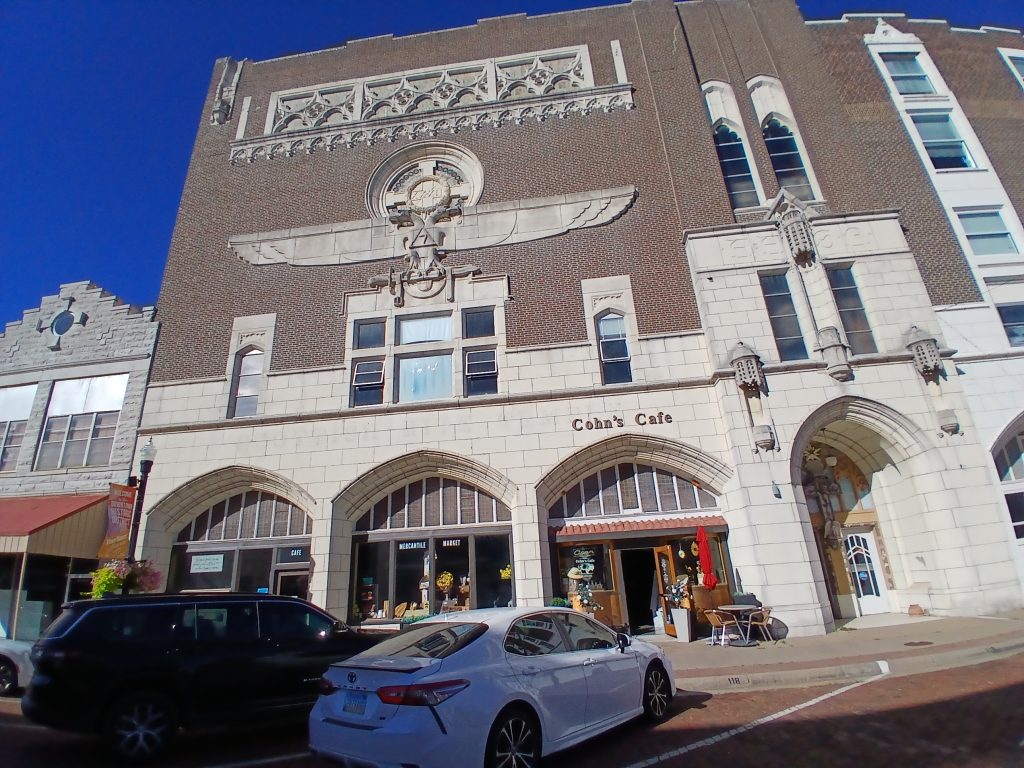
The quarterly Downtown Meet and Greet event was hosted by Cohn’s Cafe, 110 S. Main, on October 6.
A special welcome was given to Drew Simpson, Director of Kansas Main Street, a part of the Kansas Department of Commerce.
“Main Street is a self-help, technical assistance program that targets revitalization and preservation of downtown districts through the development of a comprehensive strategy.” -according to the website: http://www.KansasCommerce.gov/Main-Street
“You are a designated Main Street…you will see more traffic,” Simpson told the group of mostly business owners.
“Business owners, residents and property owners are…impacted.”
When a downtown is healthy, the benefits ripple outward, strengthening businesses, property, public revenues, community pride, quality of place, and future opportunity, according to a fact sheet provided by Kansas Main Street.
He outlined the long process to move forward on the Main Street Program, and commended the Chamber of Commerce CEO Lindsay Madison for “running the show; we are to provide the guardrails,” he said. “She is the face of Main Street in Fort Scott.”
There are a few grants available for businesses: ROOMS and HEAL. One can contact Madison at the Chamber office for more details.
The next Kansas Main Street Training is November 17-18 in Independence.
Other comments from attendees:
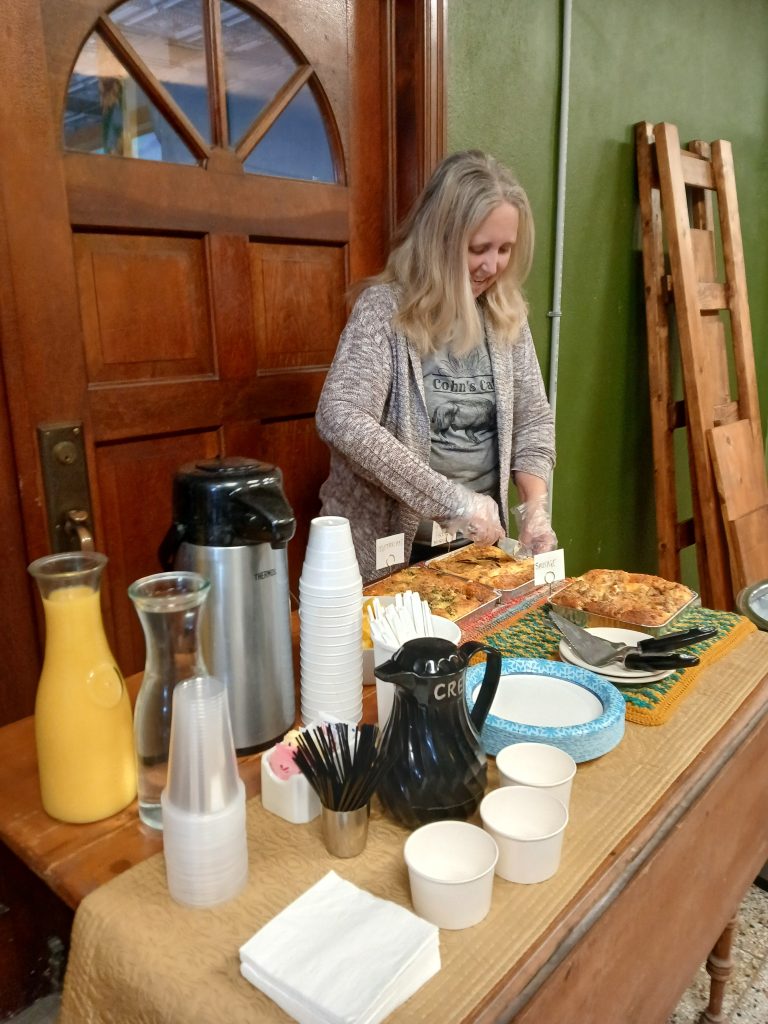
Kathy Dancer, owner of four downtown businesses cuts up quiche in preparation for the attendees of the Downtown Meet and Greet on October 6.
Kathy Dancer, owner of Cohn’s Cafe, 110 South Main Mercantile, Green Lantern Speakeasy and Bourbon County Handcrafted Spirits, all located at the former Scottish Rite Temple, gave a brief overview of all her businesses and provided a sampling of her quiches she makes daily in the cafe.
She also announced that the Old Fort Genealogical Society of Southeastern Kansas will be renting the southernmost storefront at 114 S. Main soon.
Jill Jaworski, Superintendent of Fort Scott National Historic Site, announced that the site is now open seven days a week, and some parts of the campus is undergoing remodeling. The Friends of FSNHS received a $10,000 grant to help with the 50th Anniversary celebration in 2028. The site is part of the Murder and Mayhem Tour for Halloween, and the annual candlelight tour is Dec. 4-5.
Mary Wyatt, business development with the City of Fort Scott, noted that many new businesses have opened, some businesses have expanded, and a few new businesses are on the horizon for the city. There will be a tax sale soon, she said.
Mid-Continental Restoration is currently working on Memorial Hall.
Rachel Carpenter, City of Fort Scott Human Resources person, introduced the new tourism contact Natalia Varzea. Varzea said she would “love to meet with businesses” in the community.
The October 6 Downtown Meet and Greet event met at Cohn’s Cafe.
She purchased the decade-long vacated 12,000-square-foot building in January 2022 at a Bourbon County Tax Sale.
The former Scottish Rite Temple has been transformed into four new businesses in Fort Scott’s Historic Downtown.
Since then, they have started four businesses after investing a lot of money in the infrastructure, said Kathy Dancer. They are Cohn’s Cafe, 110 South Main Mercantile, Green Lantern Speakeasy and Bourbon County Handcrafted Spirits.
In an interview about those businesses, Kathy said the Dancer’s drainage issue that has caused flooding in the building has been slow to be resolved.
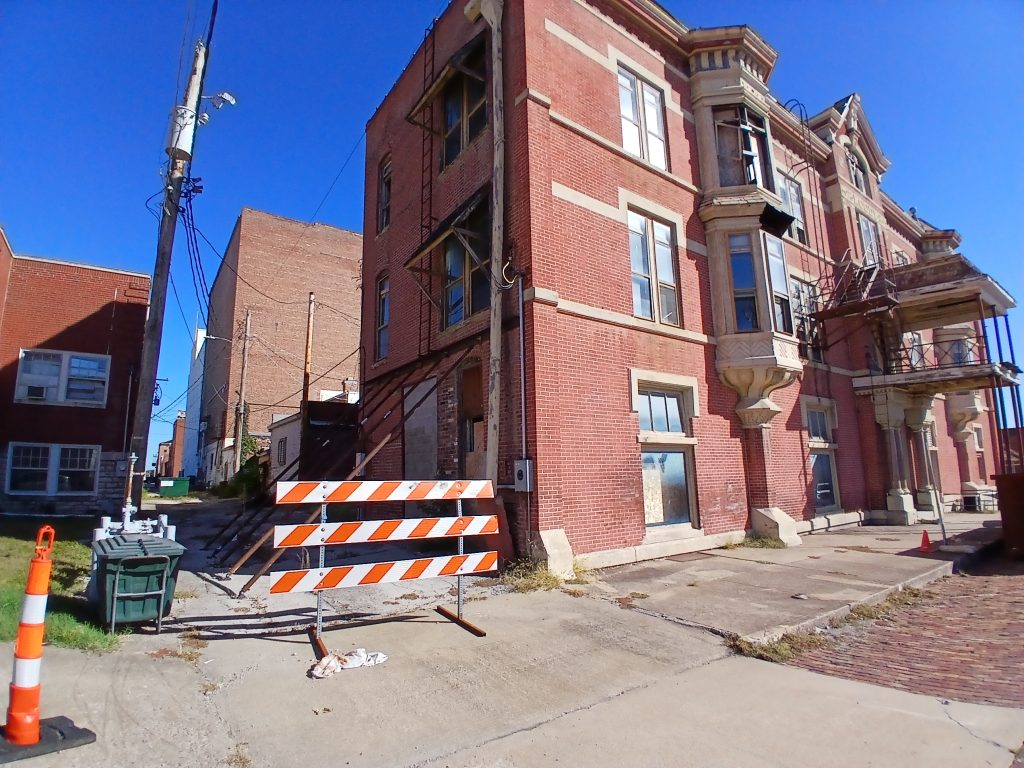
The City of Fort Scott directed the Dancers to do some repair work, and then the city would fill in the ditch at the base of the building in the alley on the west side of the building, she said.
“The trench is still there,” she said. “When it rains, it goes into the basement and the main floor.”
According to Dancer’s records, they hired someone to start digging out along the building’s foundation in the alley at the end of June.
“On July 13th we had an excavator come in so that we could get deeper to do additional repair work on the foundation. The city blocked off the alley on July 14th. We are approaching the three month mark on the alley being in disarray.”
“Their contractor has been in contact with the person who is going to install a curb for the city,” said Fort Scott City Manager Brad Matkin.
“This concrete contractor is working on another job and will get to that area as soon as they are done. We have tried to work with the Dancers on this for the past few years, but our engineers said there were things they had to do before the city would do any work.”
Kathy Dancer said she shared a video with the city commission showing the water flow from the city parking lot, northwest of their building. And also the water flow from the portion of the alley that is already concreted, in back of the apartment building north of 110 N. Main.
The apartment building, the Dancer property, and the former Moody Building on the 100 South Main block are the only buildings that have basements on that block, she said.
The ditch is the lowest place in the alley.
The apartment’s alley is concreted; their alley portion is not, she said.
“We had a contractor go in and seal it in (at the base of the building in the alley),” she said. “He had to go back in after the rains and did more.
“To be honest, the city is not responsible for the curb we are installing, but I agreed to do it,” Matkin said. “The water is not coming from the alley; it is coming from the building owner’s guttering and roof. Hopefully, that is taken care of as well.”
“We did a lot of gutter work already,” Mrs. Dancer said. “There is another spot that opened up.”
“When we had solar installed, some of the roof gravel moved into the guttering,” she said. “We can’t get in to fix the guttering problem because the alley is not accessible.”
Dancer said alley maintenance is “100 percent, the city’s job.”
She said at the moment, all four of the businesses remain open for business.
Moody Building
While taking photos of the alley, Al Niece, who is trying to purchase the Moody Building on Main Street, stopped by to look at the building.
He said the basement at that building also gets flooded.
Niece was looking at the property before the city meeting this evening, where the Moody Building will be discussed, he said.
Niece was frustrated at the slow process to acquire the building
The Moody Building is located across the street from Fort Scott City Hall on South Main.
“We cannot do anything extensively to the alley until the poles holding up the west side of the Moody Building are removed,” said Matkin.
“Our city attorney is working on the deed with the owner of the building, and we are really close to getting this done,” Matkin said. We have also worked with the IRS to remove the lien that is placed on the building so Mr. Niece will not have to worry about any of this.”
“Mr. Niece has permission to do whatever he wants with the building due to the city getting a letter from the owners for him to do so, Matkin said. “I for one, appreciate Al taking on this project and am working with him to get this building going in the right direction.”
From the time I was born until I was five years old, my family lived in California. We had an avocado tree in our back yard and my family enjoyed eating that fruit/veggie. My favorite way to eat an avocado is simply peeled, sliced, and salted. I make homemade guacamole simply by smashing it with a fork and adding salt. In 2008, we took a family vacation to Gulf Shores, Alabama, and on one of our outings we dined at a Japanese buffet. As I made my food choices, I spotted a big batch of guacamole and scooped a big pile onto my plate and joined my hubby and kids at the table. WOW! Did I get a surprise! This was not guacamole; it was wasabi, which is a Japanese word that means green, creamy FIRE! It instantly brought on a sharp mouth-burning and sinus-clearing heat that was unbelievable! My family found my stupidity to be quite humorous. I can’t remember if my tears were from laughing or pain – probably both.
Looks sure can be deceiving! If I’d used my brain, I would have known that this green creamy stuff would not be guacamole since I wasn’t in a Mexican restaurant. Not everything that glitters is gold.
In writing to the church of Galatia, apostle Paul packs a great punch of strong flavor to the Christ followers there.“Do not be deceived and deluded and misled; God will not allow Himself to be sneered at (scorned, disdained, or mocked by mere pretensions or professions, or by His precepts being set aside). [He inevitably deludes himself who attempts to delude God.] For whatever a man sows, that and that only is what he will reap” (Galatians 6:7 AMP). Believers are not to be fooled, mistaken, led astray, or tricked. No one mocks the justice/ways of God and gets by with it. Whatever you sow, that’s what you’ll get. You’ll reap exactly what you plant.
God’s Word declares what sin is, but our culture persists in being mislead by redefining the truth. And Christ followers must not be guilty of ignoring the holy scriptures either. I could have sat in that Japanese restaurant and beat my fist on the table and screamed that I was eating guacamole, but it wouldn’t have changed the truthful facts that I had been deceived. My mouth was painfully reaping what I had planted in it. We must be on high alert and remember that God’s love, mercy, grace, and divine forgiveness cannot alter His law of sowing and reaping.
God would not be God if we could sow evil and reap good. Believers can’t afford to be misled by thinking we can change God’s theology in the way He operates. There’s a rich payoff in prayerfully studying His Word. Everything that God declares can be taken to the bank. Since God cannot be outwitted, no one should be deceived in thinking that he/she can dodge the consequences of a dimwitted choice.
It’s been said: “A man is free to choose, but is not free to choose the consequences of his choice.” I was free to choose whatever I wanted from the buffet. I made one foolish mistake and suffered the consequences immediately. Could I have avoided making this wrong choice? Yes, by considering what ethnic restaurant I was in and then using common sense.
The Key: Carefully evaluate everything that seems to be too good to be true.
Fall and spring are my favorite seasons, and after a long, hot summer, the arrival of cooler temperatures makes it much easier to enjoy spending time outdoors. While you’re taking in the beauty of the season, consider tackling a few landscape projects now that will reward you with a healthier, more colorful landscape next spring.
Tackle Lawn Weeds This Fall
As the mowing season winds down, lawn weeds are probably the last thing on your mind. However, fall is actually the best time to control many common broadleaf weeds.
Cool-season weeds such as henbit, dandelions, and chickweed germinate during the cool, moist conditions of September and October. These weeds spend the winter as small, often unnoticed plants before growing rapidly and flowering in spring.
Fall herbicide applications are particularly effective because weeds are actively storing nutrients in their roots for winter. When a leaf-applied herbicide is absorbed during this period, it moves into the root system, providing more complete control. Since the weeds are also small and actively growing, they are easier to eliminate now than in the spring.
Several herbicides are effective for fall weed control. Products containing 2,4-D alone or in combination with MCPP and dicamba are commonly sold under trade names such as Trimec®, Weed-B-Gon®, and Weed-Out®. Weed Free Zone® is another option, containing those same active ingredients plus carfentrazone for enhanced control.
If you recently seeded a lawn, wait until the new grass has been mowed 2 or 3 times before applying herbicides, as directed by the product label. As always, carefully read and follow all label directions.
Plant Spring-Flowering Bulbs Now
Fall is also the ideal time to plant spring-flowering bulbs. Bulbs add vibrant color, varied bloom times, and interesting textures to the landscape, making them a valuable addition to almost any garden.
Bulbs can be planted in many locations, including around house foundations, beneath deciduous trees and shrubs, along borders, in perennial beds, rock gardens, containers, and even on slopes. When planted in groups of twelve or more, bulbs create a much greater visual impact than individual plants scattered throughout the landscape.
Foundation plantings are especially attractive. Evergreen shrubs provide an excellent backdrop, allowing the bright colors of tulips, daffodils, and other bulbs to stand out in early spring. Borders along lawns and flower beds can also benefit from the color and interest that bulbs provide.
Bulbs fit particularly well into perennial gardens because they bloom in March, April, and May before most perennials begin active growth. Just be sure to position them so their fading foliage can mature without becoming too noticeable.
Containers offer another versatile option. Spring-flowering bulbs can be moved out of sight after blooming while their foliage matures, while summer-flowering bulbs can provide color all season long on patios, decks, and other outdoor living spaces.
For the greatest visual impact, plant bulbs in masses of a single variety or color. Tulips and daffodils generally look best when planted in groups of at least twelve bulbs, while smaller bulbs may require groups of fifty or more to create a noticeable display.
A little effort this fall can make a big difference next spring. By controlling weeds now and planting bulbs before winter arrives, you can enjoy a healthier, weed-free lawn and a landscape bursting with color when warmer weather returns.
Krista Harding is a K-State Extension Horticulture Agent with the Southwind Extension District. She may be reached at kharding@ksu.edu or 620-244-3826.
By the time God got around to creating Adam and Eve, He must have been in a jolly good mood. Time to have some fun, He told Himself. Why else would He create a kajillion differences between the two genders? He factored in not just the DNA (reminder: women are XX, the more balanced of the two, while men are XY), but basically every conceivable variance.
Take, for instance, golfing. Dave and I now have a home with a backyard view of the golf course, and we have been fascinated by the difference in how the two sexes team up to play the game. If there are six men golfing, six carts will be used, but if six women are playing, they will sit on each other’s laps to share a cart. Okay, that’s an exaggeration, but at the most, for six women there will be two or three carts, not six.
Cart use is not the only difference. Women, unlike men, will visit about dozens of things other than their score while playing the game. That’s because women are all about relationships, not goals. Men? Nope. They will know who hit a birdie or an eagle, what the handicaps are, or who got a promotion, but nothing about who is getting married or who is in the hospital or how many grandchildren the other men have (unless, of course, those grandkids are scratch golfers).
Wives of golfers often discuss how little their husbands learn about their golfing buddies after spending hours with them on the course. “What did you learn today?” is a silly question to ask their husbands because the only thing on which Hubby focused was who golfed well and who did not. Women, on the other hand, will come home with news about everyone’s personal life, news their husbands do not care to hear.
To prove my point, a majority of Fortune 1000 CEOs said they did business with a golf partner. Correspondingly, 400 out of 500 Fortune 500 executives said that golf gave their careers a boost. For males, golf appears to be goal-oriented.
Perhaps that’s why golfer James Murray said, “Show me a man who is a good loser and I’ll show you a man who is playing golf with his boss.”
That’s not to say that golf cannot aid females in the work world. My daughter-in-law Kira recently applied to be a pilot for a private flying company. When the C.E.O. asked her what hobbies she has, Kira said that she has taken up golf.
“I hate golf,” the owner said. “Too much time spent trying to do something that can’t be done.” Kira was sharp. “Then we both have that in common because I hate it too.” Kira got the job.
When I asked my golfing sons about the six-cart issue, they said that it speeds up the game because each man drives his own cart to wherever his ball is. If two men share one cart, they have to drive to two different locations—which takes time (time women will use to discuss their families and build friendships).
I wonder if God just shakes His head when He watches His creation display their differences in something as simple as driving a golf cart. Or maybe He just smiles. Yes, I think I’ll go with that one.
FORT SCOTT — The Bourbon County Commission adopted its 2027 budget Monday night with 5% built in for an employee pay increase, after a push for much larger raises went nowhere and a motion to set raises aside until 2027 died without a second. Later in the meeting, a proposal to raise transfer-station rates for the first time in the station’s 10 years died without a second.
Chairman Gregg Motley presided, with Commissioners Joe Allen, David Beerbower, Mika Milburn-Kee and Samuel Tran, budget consultant Matt Lawn and County Clerk Ann Clarkson. The county’s recording of the meeting begins as the board returned from its first executive session at about 5:54 p.m. Coming out of that session, the commission voted to give Tran authority to ask Dr. Cohen of HR Solutions On Call, the county’s human resources contractor, to come handle personnel matters in person. It then went back into a 20-minute executive session to consult County Counselor Bob Johnson and an attorney for the county’s insurance carrier, both by phone, about pending litigation, and returned with no action.
Budget adopted at 56.678 mills
Lawn said his latest version brought the 2026 estimates closer to the budgeted amounts, which increases the carryover reserves in the general, employee benefit, and road and bridge funds. He also gave commissioners a sheet showing what raises of 5% up to 15% would cost. Milburn-Kee said the larger raises would take more than three and a half mills, and Lawn said they would deplete most of the county’s carryover reserves. “I still think your best plan to go forward is to do a real wage study and build a step system off that,” Lawn said.
Beerbower proposed a 15% raise for employees who are not directors or elected officials, which he estimated at about $500,000. He would pay for it with the roughly $200,000-plus difference between the revenue-neutral rate and the adopted rate plus cuts to each department’s commodities budget, and would put the remaining FEMA money and the Jayhawk Wind PILOT revenue into the general fund as a cash reserve. Milburn-Kee noted that commodities include fuel, which is already rising.
“The guy that comes to work every day and hasn’t seen a raise in 10 years, that’s the guy I’m talking about,” Beerbower said. “And it’s really easy to see. All you got to do is look at the payroll.”
Tran said the county still has no plan for who should be paid what. A pay study that human resources was supposed to produce this year never arrived, he said, and “if we didn’t follow up on them, that’s on us.” Beerbower said HR had promised him the study in 60 days back in March.
Motley agreed with Tran that the county needs “a program, not a no raises for three years and 15%” — one that rewards effort and performance and fits the market for each job. “Let’s do it right. Let’s just wait on big raises or anything like that until we can get this done correctly.” He said Standard & Poor’s has criticized the county for inconsistent pay changes and equipment reserves. Tran pointed to another issue on his radar: “Somewhere in this whole thing, we’ve got to come up with $22.5 million. We haven’t even talked about that.”
Allen said he has supported 5% from the beginning. “I think 5% is reasonable. It’s not excessive. And I think these employees deserve that 5%.”
Tran then moved to table all pay-raises until 2027, when he hoped the county would have a plan for step increases and employee benefits. The motion died for lack of a second.
Lawn said the budget as written keeps the 56.678-mill total and includes 5% for pay and 20% for rising insurance costs. Milburn-Kee objected that the budget has only four expenditure line items; Lawn said most operating funds are set up that way, which he called time consuming and “very problematic.” Milburn-Kee moved to adopt the budget as written, not to exceed 56.678 mills. It passed on a voice vote, with Beerbower voting no. Lawn said he would have it submitted by the end of the day Wednesday, the state’s Sept. 30 deadline.
Grant, fund transfer and other business
Emergency Manager Lou Howard asked the board to approve the Emergency Management Performance Grant application, a 50-50 federal and county cost share that can pay for salary, office supplies, technology, planning and required exercises. Commissioners authorized Motley to sign it. Howard said she will bring back the county’s Emergency Operations Plan once it is finished.
On behalf of Public Works Director Kenny Allen, the board approved moving $325,000 from the Road and Bridge Sales Tax Fund to the Road and Bridge Fund to cover payroll. Milburn-Kee asked that the record show the money was for work done on hard-surface roads.
The commission also approved $1,750 for the indigent cremation of William Watson, to be paid through accounts payable from the general fund.
Milburn-Kee invited representatives from Murphy Tractor to the table and thanked them for a detailed report on training and calibration work done for the county, which she said, citing figures Murphy gave her, helped raise the county crusher’s output from 400 tons a day to 3,600. “When we purchase this expensive equipment, the value isn’t just in the machinery,” she said. “The value is in our relationships with the vendors that are providing us those services as well.” Roland Hammond, Murphy Tractor’s regional product support manager, told commissioners that going forward, the company will communicate better before, during and after repairs. Motley suggested Hammond meet with Public Works Director Kenny Allen, the county’s main point of contact; Hammond said the two had not met.
In other action, the board:
approved having TEC reorder the county’s phone prompts at no charge, to correct the problem of too many overflow calls going to the clerk’s office;
approved sending Allen County a memorandum of understanding on the shared county appraiser, under which Bourbon County would pay its share of the appraiser’s health insurance monthly rather than yearly; Milburn-Kee said the shared insurance a big savings for the county;
gave Bourbon County Clay the board’s blessing to enter an ornament representing the county in the Kansas Association of Counties’ governor’s tree competition.
Purchasing policy goes back for input; no action on insurance
The draft purchasing policy calls for price comparisons under $2,500, three quotes from $2,500 to $9,999, three written quotes from $10,000 to $24,999, and a formal bid or request for proposals at $25,000 and up. Beerbower said those thresholds are too low, noting that a patrol car tops $55,000 and a dump truck $180,000. He suggested thresholds he said similar counties use: department authority up to $10,000, three documented quotes from $10,000 to $50,000, formal competitive quotes from $50,000 to $100,000, and a request for proposals with board approval above that, which he said lines up with a Kansas legislative move to raise county construction thresholds from $25,000 to $100,000. He also recommended using state contracts that let counties buy at the state’s bid price. Clarkson said most employees’ purchase cards have a $1,000 limit, and that at the sheriff’s office everyone carries one. Tran said department heads may need higher limits but not every cardholder should have them: “If you give them the limit, they’ll take it. I’m not saying everybody, but I’m saying somebody will sometimes.” Motley will send the versions of the policy to department heads and elected officials for their feedback.
Updating the purchasing policy of the county is intended to meet the goals of consistency and transparency, according to Milburn-Kee and Beerbower.
Milburn-Kee’s proposal to move to a flat county contribution toward employee health insurance, with a $2-an-hour premium payment for employees who have insurance elsewhere and decline county coverage, drew questions from Beerbower about workers’ compensation and KPERS. Motley said he has received “some pretty vitriolic replies” from elected officials and department heads who fear losing employees who came for the benefits if Milburn-Kee’s proposal is implemented. “We have single moms, people like that, that would lose a lot of money,” he said. Milburn-Kee said 64 employees are on employee-only coverage and 18 on employee-plus plans. No action was taken.
Beerbower said a contractor will look at the work for the courthouse move Wednesday, Sept. 30, and that an inspection is set for Tuesday.
Records-request fees
The commission adopted a resolution setting copy fees of 50 cents a page for Kansas Open Records Act (KORA) requests and assigning each county office responsibility for its own records rather than routing every request through the clerk’s office. Before the vote, commissioners Joe Allen and Beerbower discussed leaving the decision about fees for fulfilling requests to each elected officials’ offices, giving the Sheriff’s Office as an example of a county entity that sets its own fee schedule for records requests. “I think y’all need to take some time reading the statute,” Milburn-Kee said.
County Clerk Annie Clarkson reminded the commission that adding signed documents to the published agenda is a step towards the transparency needed to reduce the number of KORA requested records. She mentioned that some people don’t like to retrieve their own documents, “But, KORA request also says if they’re already available to the public, then we’re not required to fill that KORA request.”
Motley said Bob Johnson, the commission’s attorney, told him Allen County received three records requests last year, and that Bourbon County is “getting a lot of frivolous” ones. Tran agreed: “It’s KORA lawfare. They’ll file it just to do lawfare against whatever it is that they don’t like. And that’s fine. That’s their right to do that. But it is bogging down the mechanism.” Clarkson pointed out that Allen County charges more to fulfill requests than Bourbon County does.
Beerbower moved to adopt the resolution, and it passed on a voice vote, with Joe Allen voting no.
Transfer station: rates, hours and a profit-and-loss question
Beerbower answered concerns raised at earlier meetings by Kevin “Skitch” Allen, owner of Skitch’s Hauling & Excavation, who uses the transfer station. Allen had asked for the station to open for four hours on minor holidays because “the trash doesn’t stop.” Beerbower said the station has only three trained employees and already leaves one person alone on Saturdays, which he called a safety and liability problem. He said they could re-asses after the landfill is fully staffed. Kevin Allen pushed back saying that the landfill has historically been open on minor holidays until about a year ago when that service stopped. Allen also suggested opening the scales at 7 a.m. instead of 8, since the scale operator arrives at 7; Beerbower said the early staff are preparing the site for the day. Allen then suggested that some of the work done at the beginning of the day could be done at a later time.
Allen also asked how the county knows the station is breaking even before it raises rates. “How do you know you’re breaking even is my question,” he said. Beerbower said the transfer station is a service “not designed to make a profit,” that he could find no year in its 10 years of operation when it went over budget, and that its rates have not gone up since it opened while its costs have. Motley read the station’s results from the county audit: a $96,000 gain in 2025, a $3,000 loss in 2024, and gains of $68,000 in 2023 and $22,000 in 2022. He cautioned that government cash-basis accounting leaves out equipment depreciation. “That’s apples and oranges to the typical business, but it’s been within budget, and it’s operated well,” Motley said.
Allen and Beerbower also disagreed over the station’s backhoes and over Allen’s suggestion to buy a pressure washer, which Beerbower said would need a pad with environmental drainage to meet state rules. Beerbower said he would check with the Kansas Department of Health and Environment.
Beerbower then moved to raise rates effective Jan. 1, 2027: in-county construction and demolition waste from $35 to $40 a ton, in-county trash from $40 to $46, out-of-county construction and demolition from $40 to $51, and out-of-county trash from $50 to $56. He said the station handles about 12,925 tons a year, bringing in about $520,000, and that comparable facilities commonly charge $57 to $60 a ton for trash. The motion also included a 15% raise for the station’s four employees and restricted reserves of $35,000 a year for equipment and facilities, $15,000 for closure and post-closure costs and $15,000 for operating carryover. It died for lack of a second.
Backhoe bids were held until next week while Public Works confirms that the Foley quotes are still current. Future agenda items include the backhoe bids, possibly employee IT training once Stronghold sends its information, responses to the county’s request for proposals for human resources services, which Joe Allen said number three or four so far, and an update on the courthouse asbestos work and the court’s move.
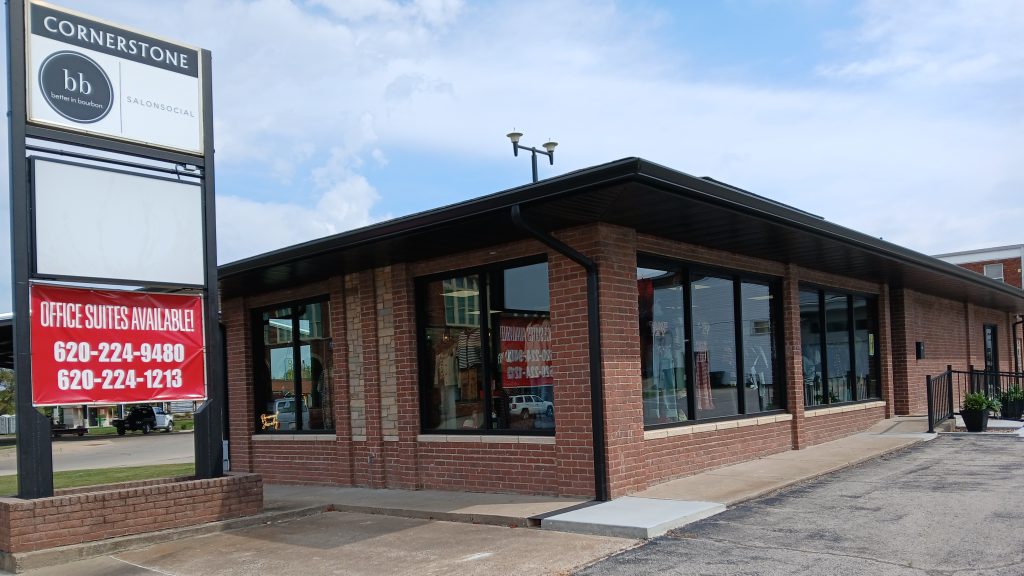
The entrance to Salon Social is located on the south side of the building that also houses Better in Bourbon boutique—submitted photo.
Brooklyn Holder, 22, a 2022 graduate of Fort Scott High School and 2023 graduate of Fort Scott Community College Cosmetology School, is having a grand opening at her salon at 2 Old Fort Boulevard today from 5-7 p.m.
Brooklyn Holder and her client, Brianna Davilla, a PIttsburg State University Student from Leawood on September 29 in the Salon Social shop.
Brooklyn’s services: hair coloring, hair extensions, hair blow-outs and haircuts. Contact her at 620.215.100 for an appointment.
Following cosmetology graduation, she did an apprenticeship in Kansas City. She then worked for two years at a salon in Joplin, MO.
She married Jet Holder on July 4 and they moved back to Fort Scott.
Her grandmother, Nancy Daniels Pruitt, and her dad, Chris Pruitt, own the recently remodeled building under their company, Pruitt Storage and Rental LLC.
Rachel Pruitt, her mom, owns the Better In Bourbon boutique on the west side of the building (formerly H & H Realty), and Brooklyn’s Salon Social shop is on the east side.
There are other office spaces to rent between the two businesses.
The door to enter her salon is on the south side of the building.
About the hair stylist
Brooklyn said the apprenticeship following cosmetology schoo helped her gain confidence and “trust in myself” and highly recommends it.
She will be having hair classes and “shadow days” for other beauty professionals. Her shop is envisioned as a place to socialize and have events to perfect the craft.
The best part of being a cosmetologist for her is:
“I love getting to help others be confident with their own beauty, and I believe client interactions are important.”
Her career started when she, without telling her parents, enrolled at FSCC’s Cosmetology School.
“I enrolled 20 minutes before the deadline,” she said. “The first day I realized, ‘this is for me’. It’s been a great career.”
Salon Social Shop is located at 2 Old Fort Boulevard, in the same building as Better In Bourbon Boutique.
Her husband is a Marine Corps reservist, and in her spare time she likes to hang out with her dog and her family, she said.
On November 3, 2026, an election for city, school and federal and state candidates will be held.
The ballot will also include the following constitutional amendment question about who is eligible to vote in Kansas. And for Uniontown’s School District citizens, a question on voting for at-large positions on the U.S.D. 235 School Board.
The following was submitted by Bourbon County Clerk Ann Clark, with information that tells who the candidates are, where you can vote, when advance voting starts and ends, when early voting begins and ends, and a special notice that some voting places have changed.
Please read the information and be prepared to let your vote count.
CONSTITUTIONAL AMENDMENT QUESTION
Explanatory statement. This amendment would clarify that only a person who is a citizen of the United States is eligible to vote in this state. “A vote for this proposition would clarify that only a person who is a citizen of the United States is eligible to vote in this state. “A vote against this proposition would make no change to the constitution of the state of Kansas, and the language concerning voter qualifications would remain the same. “Shall the following be adopted?“§ 1. Qualifications of electors.Every(a) No person shall be deemed a qualified elector unless such person:
(1) Is a citizen of the United States who;
(2) has attained the age of eighteen years; and who
(3) except as provided in subsection (b) or (c), resides in the voting area in which he or she such person seeks to vote shall be deemed a qualified elector.
(b) Laws of this state relating to voting for presidential electors and candidates for the office of president and vice-president of the United States shall comply with the laws of the United States relating thereto. A citizen of the United States, who is otherwise qualified to vote in Kansas for presidential electors and candidates for the offices of president and vice-president of the United States may vote for such officers either in person or by absentee ballot notwithstanding the fact that such person may have become a nonresident of this state if his or her such person’s removal from this state occurs during a period in accordance with federal law next preceding such election.
(c) A person who is otherwise a qualified elector may vote in the voting area of his or her such person’s former residence either in person or by absentee ballot notwithstanding the fact that such person may have become a nonresident of such voting area during a period prescribed by law next preceding the election at which he or she such person seeks to vote, if his such person’s new residence is in another voting area in the state of Kansas.”
The full list of candidates on the ballot is as follows:
UNITED STATES SENATE
Adam Hamilton, Democratic. Box 6, Stillwell, KS 66085
Roger Marshall, Republican,
David C Graham, Libertarian, Overland Park, KS
UNITED STATE HOUSE OF REPRESENTATIVES
Don Cover, Democratic, 9305 70th Road, Galesburg, KS 66740
Juan C. Luengo, Democratic,14904 S Summit St, Olathe, KS 66062
Steven Johnson, Republican,10197 S Hopkins Road, Asaria, KS 67416
Eric Lund, Libertarian, Paola, KS
COMMISSIONER OF INSURANCE
Dinah Sykes, Democratic
Daniel Hawkins, Republican, 9406 W Harvest Lane, Wichita, KS 67212
Rick Koehn, Libertarian, Cimarron, KS
KANSAS HOUSE OF REPRESENATIVES
Rick James, Republican, LaCygne, KS 66040
Robb Hodgkinson, Libertarian, Fort Scott, KS
MEMBER STATE BOARD OF EDUCATION
Heather Guernsey, Democratic, 18725 Ford Road, Chanute, KS 66720
Destry Brown, Republican, 2108 Jayhawk Rd, Fort Scott, KS 66701
SUPREME COURT JUSTICE
Eric S. Rosen,
Larkin E. Walsh
COURT OF APPEALS JUDGE
Lesley Ann Isherwood
Amy Fellows Cline
Kim R. Schroeder
Lori Ann Bolten Fleming
Jacy Hurst
DISTRICT COURT JUDGE
Amy L Harth
COUNTYCOMMISSIONER DISTRICT 1
Clint L. Walker (Democratic) 1999 105th St. Mapleton, KS 66754
Mike Hueston (Republican) 351 N Bourbon, Mapleton, KS 66754
COUNTYCOMMISSIONERDISTRICT 3
Joe Allen (Republican) 1025 260th Street, Fort Scott, KS 66701
COUNTYCOMMISSSIONER DISTRICT4
Gregg Motley, Republican 1904 Jayhawk Road, Fort Scott 66701, 66701
DRYWOOD TOWNSHIP CLERK
Laura Krom Republican, 2361 Fern Road, Fort Scott, KS 66701
FRANKLIN TOWNSHIP CLERK
No Candidate Filing
MARION TOWNSHIP CLERK
Brent M. Smit, Republican 763 95th Street, Redfield, Ks 66769
Michael Ramsey, Republican, 1270 Highway 3, Uniontown, Ks 66779
MARMATON TOWNSHIP CLERK]
No Candidate Filing
MILLCREEK TOWNSHIP CLERK
No Candidate Filing
OSAGE TOWNSHIP CLERK
No Candidate Filing
PAWNEE TOWNSHIP CLERK
No Candidate Filing
SCOTT TOWNSHIP CLERK
Donald Banwart, Republican, 982 Highway 69, Fort Scott, KS 66701
TIMBERHILL TOWNSHIP CLERK
Jennifer Epting Williams, Republican, 530 N Washington, Mapleton, KS 66754
WALNUT TOWNSHIP CLERK
No Candidate Filing
USD 235 QUESTION
CHANGE IN METHOD OF ELECTION TO ELECT AT-LARGE FOR MEMBER POSITIONS The Uniontown School District;
Unified School District No.235
Bourbon County, Kansas
Shall the following change in the Method of Election be adopted?
“Shall Unified School District No. 235, Bourbon County, Kansas change the method of election from the current three member district method under which the school district is divided into two member districts, in which three board members are elected from each member district is divided into two member districts, in which three members are elected from each member district and one board member is elected at-large, to the election at large for member positions method of electing school bord members under which:
The school district is not divided into any member districts, and all board members are elected at large.
“Shall a change in the method of election as described in the ballot title above, be approved?”
To vote in favor of the method of election change, make a cross or check mark in the square to the left of the word
Yes; to vote against it, make a cross or check mark in the square to the left of the word no.
VOTING PRECINCTS IN BOURBON COUNTY– PLEASE NOTE THAT THE POLLING PLACES HAVE CHANGED!!
It is hereby noted that the polls are open between the hours of 7:00 am to 7:00 pm at the following location:
1st,4th, 5th.and 6th Wards and Scott D1, D2 and D4 Townships at Community Christian Church, 1919 S Horton, Fort Scott
Freedom, Fulton, and Osage Townships at Fulton Community Building, 408 W. Osage, Fulton
2nd, 3rd, and 7th wards, Drywood Township, and Scott D3, and D5 Townships at Grace Baptist Church, 502 S. Margrave, Fort Scott
Franklin, Mapleton, Millcreek and Timberhill Townships and Mapleton City at Mapleton Community Building, 565 Eldora, Mapleton
East Marion, Marmaton, Pawnee, West Marion, and Walnut Townships and Bronson, Redfield, and Uniontown Cities at Uniontown City Hall, 206 Sherman, Uniontown
Voter Registration And Voting
You may register to vote at the office of the County Clerk during their regular business hours, or online
Deadline to Change Party: K.S.A. 25-3304(b) The deadline for party affiliation changes is October 14, 2026 at the end of the business day. Party affiliation changes will be accepted and processed after December 1, 2026. If you still desire to update or change your party affiliation, you may do so December 1, 2026, by filling out a new voter registration.
Closing of Registration Books: Pursuant to K.S.A. 25-2310 & K.A.R. 7-23-4 Notice is hereby given that on the 14th day of October 2026, registration books for the City/School General Election will close at the end of the business day. The books will remain closed until the day following the General Election.
Advance Voting by Mail; K.S.A. 25-1123 Any registered voter is eligible to vote by Advance Ballot, beginning Thursday, October 15, 2026. The last day to request an advance ballot by mail is Wednesday, October 28,2026
Apply for Advance Ballot: K.S.A. 25-1122 € (4). Applications for advance Ballots are available at the Bourbon County Clerk, Election Office or by calling 620-223-3800 Ext:100. A printable application for an Advance Ballot is available on the county website www.bourboncountyis.org or Kansas Secretary of State website www.kssos.org.
Returning Advance Ballots: K.S.A. 25-1132
In Person: ballots must be returned by 7:00 p.m. on Election Day to any polling location within the County or to the County Election Office, Courthouse, 210 S National Ave. Fort Scott, KS 66701.
By Mail: Ballot must be postmarked on or before Tuesday November 3, 2026 (Election Day) and received in the County Election office by Friday, November 6th, 2026.
Early Voting: Voters can vote in advance in the Commission Room at Bourbon County Courthouse beginning Monday, October 19th, 2026, through Monday, November 2, 2026, at 12:00 p.m. (Noon)
Important Note: Per K.S.A. 25-2908 All Voters must provide Valid Photo Identification (Drivers License, Military ID, Kansas College ID, Kansas ID or other qualifying ID card) to Vote. For a list of accepted identification and additional information go to www.gotvoterid.com or call 1-800. 262.vote (8683).
Public Demonstration: K.S.A. 25-4411(b) & 25-4610(b) A Public Demonstration of the Clear Ballot Election Software will be held Friday October 30th, 2026, at 9:00 a.m. in the Bourbon County Courthouse.
CANVASS: KSA 25-3101, 3104, 3107 Monday November 9th, 2026, at 10:00 a.m. in the Commission Room of the Bourbon County Courthouse.
Since opening in December 2025, Lu’s Ice Cream Shop has been adding more food items and space to eat those items.
Their dipping freezer now holds 16 flavors for customers to choose from, and typically there are 4-5 additional flavors in the back freezer.
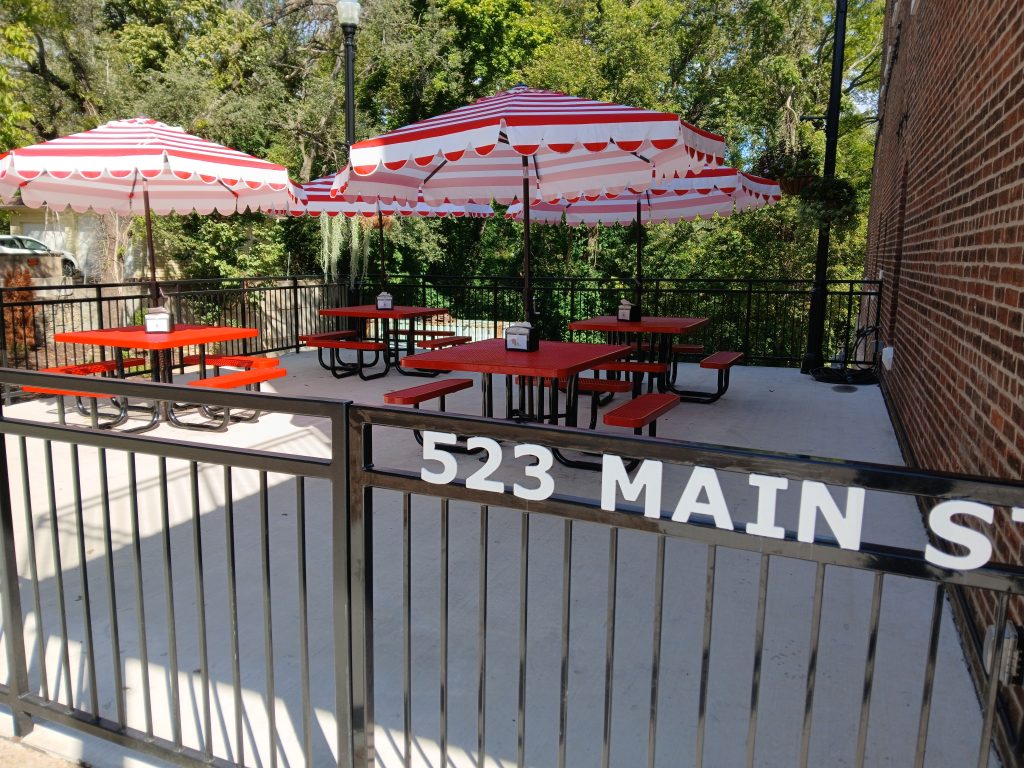
The outdoor seating is on the north side of Lu’s Ice Cream Shop.
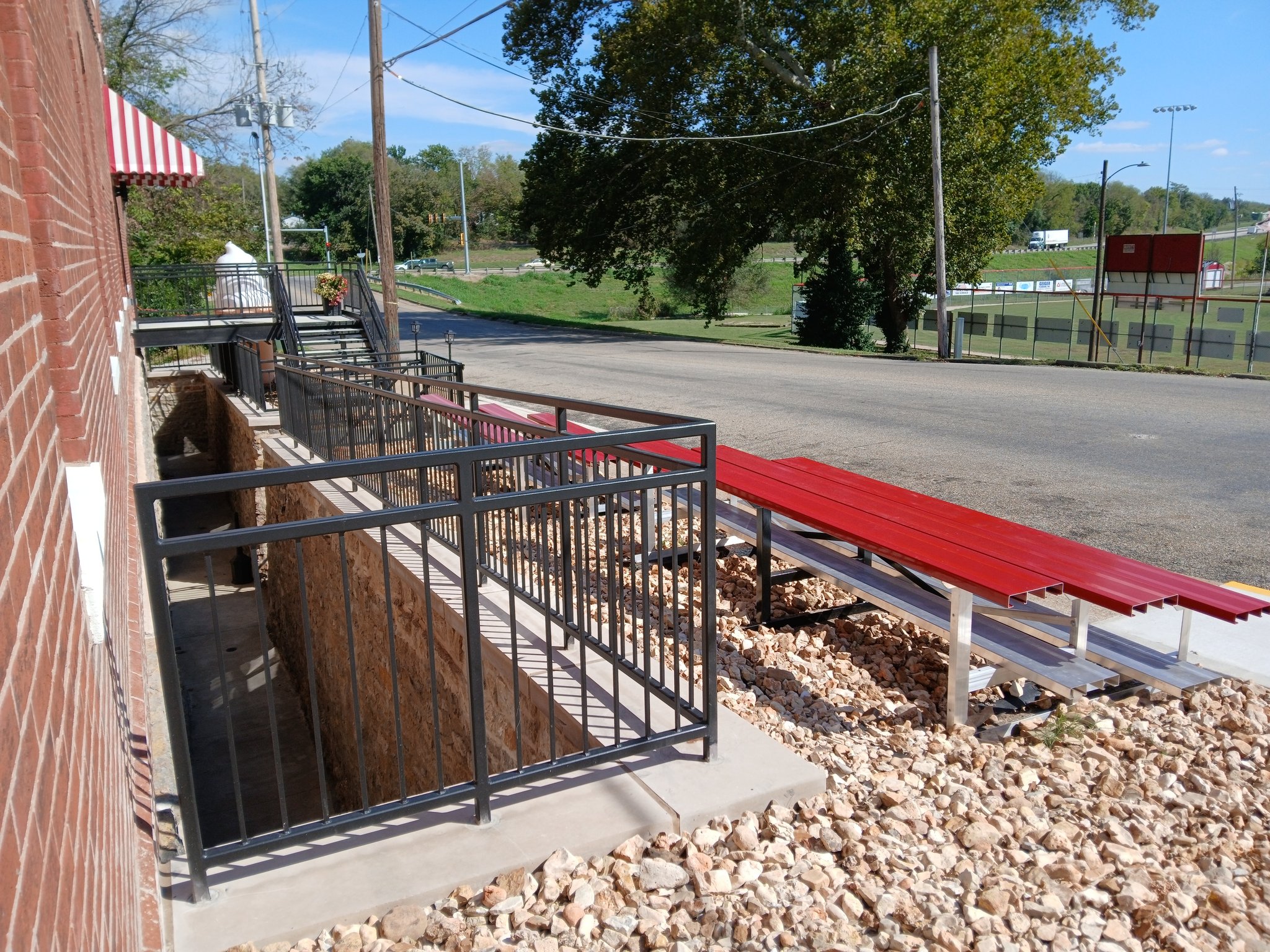
An outdoor eating area has been added, and on-site seating to watch a baseball/softball game across the street at Fisher Park, and starting in July, more variety of foods were added to the menu.
Bleachers on the south side of Lu’s Ice Cream Shop face the ball field at Fisher Park.
“It’s been a gradual process opening and adding more items to the menu, because I was teaching full time until May,” said Nikki Regan, the manager. Regan is a former special education teacher for Fort Scott School District.
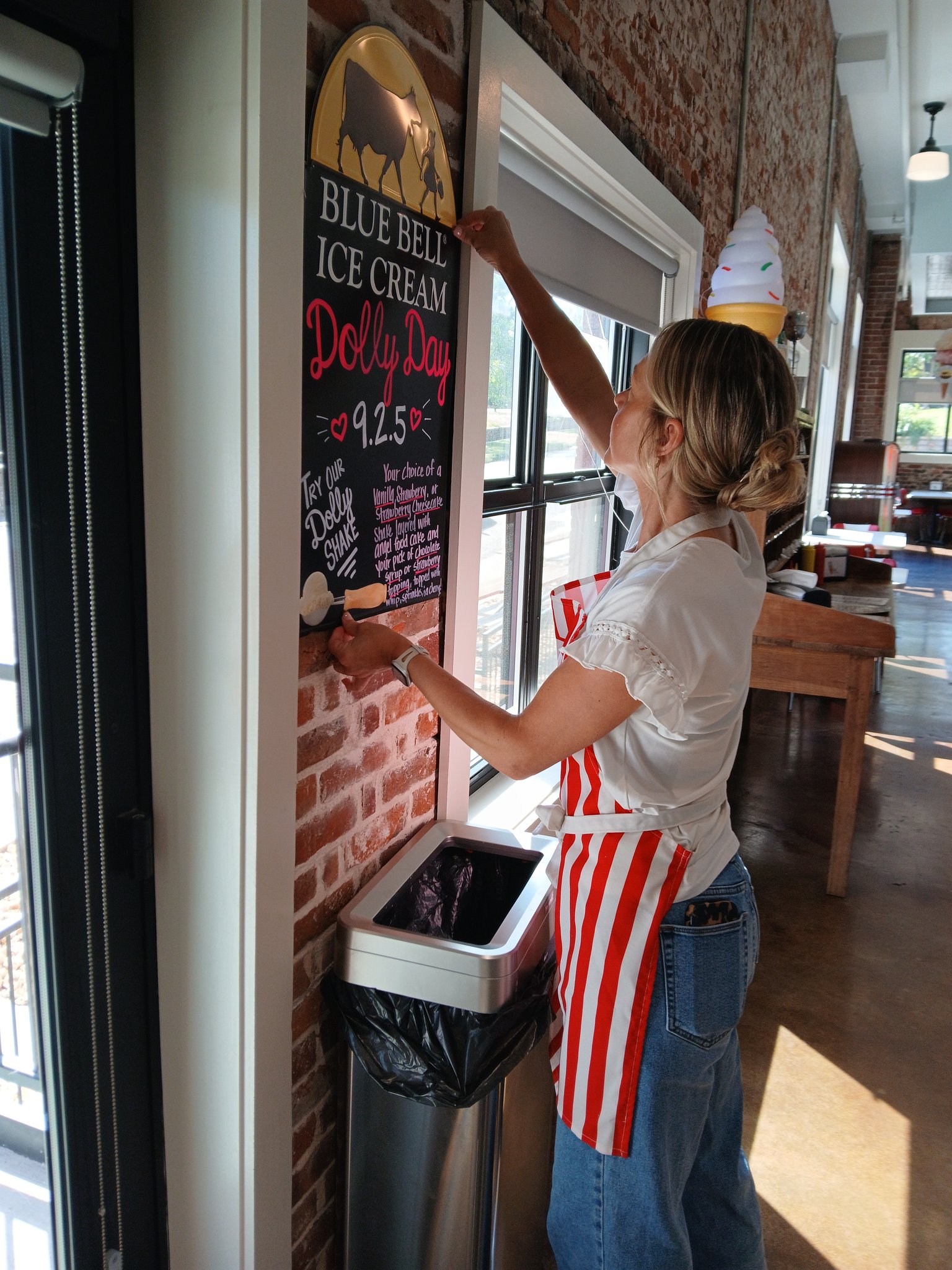
Manager Nikki Regan looks over an announcement about Dolly Day, which was on September 25,
The shop now offers sandwiches, nachos, loaded dogs, and paninis.
Now more food options are in the works.
“We are adding more quick lunch options with high schoolers in mind,” she said. “We’d love for Lu’s to become a regular lunch spot for them during open lunch. A place where they can grab something quick and good, enjoy a little ice cream if they want, and still have time to get back to school.”
“We are listening to what they want and continue to add items based on their feedback.”
Homemade soups, mac and cheese, loaded mac and cheese, along with pretzel bites are coming soon, she said.
Regen leads a crew of 20 employees-young adults and high school students, some with unique abilities.
At the heart of our mission is inclusion — we proudly employ individuals with disabilities, offering meaningful opportunities that build confidence, dignity, and purpose. Every scoop supports a place where everyone belongs, and every visit helps our team shine. Come enjoy great ice cream while making a difference right here at home!- From the shop’s Facebook page.
From the shop’s Facebook page.
The adult shift leader does most of the cooking and is helped by the others with food prep, bussing tables, cleaning the shop, and scooping Blue Bell Ice Cream.
The address is 523 S. Main, and the business can be contacted at 620.418.4288.
From the shop’s Facebook page.
Hours are Tuesday, Wednesday, and Thursday from 11 a.m. to 9 p.m.
Friday and Saturday from 11 a.m. to 10 p.m.; Sunday from 2-7 p.m. Closed on Mondays.
“When the weather gets cooler, we will close an hour earlier,” she said.
The Library Speakeasy
Food can also be delivered to another business in the building that owner’s, Lu and Al Niece, opened in July.
The Library is a 1920s-themed hidden speakeasy, tucked away in the basement beneath Lu’s Ice Cream.
A speakeasy bar, in essence, is an establishment inspired by the secretive drinking venues that proliferated across the United States during the Prohibition era. These bars typically feature a clandestine entrance, often concealed behind an unassuming facade—such as a wall of books, a telephone booth, or even blending seamlessly within a retail storefront, according to https://www.restaurantware.com/blogs/bar-management/what-is-a-speakeasy
Enter through the black door off the 6th Street stairs on the building’s south side. The first room resembles a quiet library filled with books, but walking past the bookshelves at the end reveals a hidden door that opens into a cozy, vintage-inspired cocktail lounge.
One of The Library’s alcoholic drink offerings. From its Facebook page.Lu’s Ice Cream Shop is at the corner of 6th and Main Street; enter through the 6th Street stairs entrance. The Nieces have an apartment and a rental on the second floor of the building. In the basement is The Library speakeasy. This photo was taken in January 2026.
I had given my seven-year-old granddaughter, Vivienne, a new pair of house shoes when she spent three days and nights with me. She liked the soft and colorful gift a lot more than I thought she would. She soon discovered she had a great talent for kicking one leg up high which made the house shoe come off and fly through the air. Vivienne loved doing this trick, and I didn’t mind because it was harmless. We never knew where the thing would land – it was anyone’s guess. As I was preparing a grilled-cheese sandwich for her lunch, she ran into the kitchen, stood on one side of the stove and quickly threw her leg up into the air. I could tell she was going to do this, but I couldn’t get the words out fast enough — “NOOO, don’t do it!” The house shoe went flying high into the air and landed perfectly on top of the sandwich in the skillet. The only thing we could do was laugh like crazy as I wiped the butter off the house shoe and then placed the grilled-cheese sandwich on her plate. And she ate it!
For the most part, I would say we all need to lighten up! Keep a watch out for the funny stuff that happens all around us. King Solomon stated that, “A joyful, cheerful heart brings healing to both body and soul” (Proverbs 17:22 TPT). Other translations refer to a “cheerful heart, joyful heart, glad heart, happy heart” as good medicine. And there’s no cost or side effects – what a delightful bargain!
“A glad heart makes a happy face…” (Proverbs 15:13 NLT). We can’t really hide what’s inside of us because our face takes its cue from our inside signal. Have you ever been asked, “What’s so funny?” Or “What’s wrong?” Our family and friends are looking at our face when asking either of these questions. Charles Swindoll writes, “A well-developed sense of humor reveals a well-balanced personality…The ability to get a laugh out of everyday situations is a safety valve. It rids us of tensions and worries that could otherwise damage our health.”
I remember a certain driving experience when I wasn’t late, but I had no time to spare. I was on my way to play piano at church, so I was on an important mission. The driver in front of me was probably going the speed limit of 40, but I felt like a ticking time bomb. I checked the straight road ahead and there was no oncoming traffic for a long way. So I put the pedal to the metal and passed the guy in his manly truck. He honked at me, and as I looked in my rear-view mirror I saw the finger! I got flipped off on my way to church! I didn’t endanger his life, so I guess I hurt his feelings because I was just a little gal driving a little SE car as I blew past him in his honkin’ truck. This incident didn’t make me angry; it struck me as funny! I started laughing and laughed all the way to church. Fortunately, we were not headed to the same church.
If we look for humor we’ll be more apt to notice the funny stuff in life. I realize it’s easier for some people to laugh than it is others. I come from a cheerful bunch on both my mom and dad’s side so I have a double portion. My mom used to say, “You might as well laugh as cry,” when something didn’t go as planned. I can still see my late brother laughing so hard that his face turned red and tears trickled down his cheeks. What a great way to take good medicine!
The Key: A smile is a facelift that everyone can afford and it prepares us for that belly laugh we so desperately need!
Patty LaRoche. 2023. Author: A Little Faith Lift…Finding Joy Beyond Rejection www.alittlefaithlift.com AWSA (Advanced Writers & Speakers Assoc.)
“I planted, Apollos watered, but God gave the growth. So neither he who plants nor he who waters is anything, but only God who gives the growth.” 1 Corinthians 3:6-7
I wouldn’t change my grandchildren for the world but sure wish I could change the world for my grandchildren, but since I can’t, I will do what I can do. “Salty Believer” recently posted this: “It isn’t your job to save your child. It isn’t your job to change their heart or make them believe. Your job is to faithfully point them to Jesus. God is the One who changes hearts. God is the One who gives faith. God is the One who saves. So keep praying. Keep loving. Keep opening God’s Word together. Keep planting seeds of truth, one conversation at a time, and trust God to do what only He can do.” Grandparents, substitute “grandchild” for “child,” and you find your mission.
As much as we wish our grandchildren could spend their youth tip-toeing through the tulips, this probably will not be their experience. They more than likely will be overwhelmed, frustrated with those impossible multiplication tables, perhaps not allowed on the swing set by the class bully, probably not even voted prom king or queen. On my six-year-old granddaughter’s first day of school, she sat next to a poker…you know, the kind who pokes your ribs nonstop. He refused to quit, even when she repeatedly asked him to.
Sometimes we just need to remind our grandkids that life seems unfair. We all must face difficulty and overcome it. Moses was overwhelmed, and he prayed, “Please kill me here and now.” Jeremiah was broken and he cried, “Cursed be the day I was born.” When Elijah was overcome with fear and exhaustion, he said, “I have had enough, Lord. Take my life.” And when Job was in deep anguish, he asked, “Why did I not die at birth?” And no, I probably would not share those stories with little ones, but they do need to know that God wants to hear from them when they are discouraged or frustrated. He will equip them to overcome.
The Bible is full of people who did not handle life well, but their story was not over. The same God who sustained them is still sustaining today. Our grandkids are in great hands.
Our goal, Grandparents, is to teach our children’s children that feeling inadequate is not the response God wants any of us to have. There always is hope. When they still can pray while bleeding, still worship while waiting or still believe while broken, they are not weak; they are a weapon. That kind of faith moves mountains and makes hell tremble. According to livingyourseniorlife.com, regular contact with grandparents reduces depression and anxiety in young people, fostering resilience during challenging situations. There probably has not been a time in history when grandparents did not grieve over the state of the culture into which these little ones were born. What loved one is not saddened that the young ones cannot ride their bikes or play a pickup game of baseball or attend a sleepover without fear of danger? So, what do we do? We pray. Every day. Multiple times a day. And we never give up. Even if our first reaction to “Poker Boy” is to meet him after school and stick our finger into his eyeballs as payback, we must refrain. And that may be the hardest test of all.
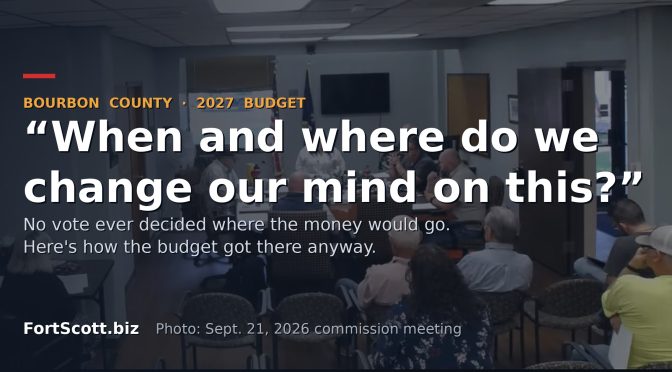
FORT SCOTT — Bourbon County commissioners spent part of their Sept. 21 meeting trying to work out when they had agreed to shift money between funds in the 2027 budget. They never voted on it, and they did not agree about what their earlier discussions had settled. Meeting video and the county’s own minutes show how the idea moved forward over four meetings without a vote.
Aug. 24: a stated goal, no vote
Commissioner Mika Milburn-Kee described what she wanted from the budget: “keep everybody exactly where they’re at, revenue neutral, but us take the assessed valuation increase of that two mil and put it in the reserves in the general fund” (video, 52:45). She put that growth at “approximately $300,000, a little bit less.” The only vote on the 2027 budget that night authorized publishing the hearing notice. The minutes, approved Sept. 9, record the idea as “the Commission’s overall objective.”
Aug. 31: a new recommendation, with Tran absent
A week later, budget consultant Matt Lawn of Baker Tilly recommended “lowering that mill levy” for Road and Bridge “by about four mills and then essentially pushing those mills back into general fund and the employee benefit fund,” using one-time FEMA reimbursement money in the road fund (video, 23:20). He said the plan was based on “some requests that I’ve got from you guys.”
Commissioner Samuel Tran was absent. The commission took no vote on the recommendation. County Treasurer Jennifer Hawkins cautioned that part of the road fund’s balance predates the FEMA reimbursements and that some is needed to match bridge grants. The minutes say the commission directed that her reconciliation of those funds “be completed before any mill reallocation is finalized.”
Sept. 14: the shift shows up in the numbers
After the revenue-neutral rate hearing, Lawn walked through how mills had been moved between funds while the total levy stayed flat: up 2.313 mills in the employee benefit fund and down 1.134 mills in Road and Bridge, among other changes. He said the Road and Bridge cut was smaller than first proposed because some of the FEMA money was “already spoken for” and some had to stay in its special project fund, and that the changes were made “based on council priorities.” The commission voted 5-0 to exceed the revenue-neutral rate but did not adopt the budget. Later that night, all five commissioners, Tran among them, voted to approve the Aug. 31 minutes describing Lawn’s recommendation.
Sept. 21: “When and where do we change our mind?”
When Lawn described moving Road and Bridge money into the employee benefit fund, Tran objected. “That’s the last thing I remember the five of us talking about,” he said of the general fund plan. “We agreed to that, all of us, unanimously” (video, 12:26). “I just want to know when and where do we change our mind on this.”
Milburn-Kee said she was “fine with general.” Lawn said he was “merely saying what Commissioner [Milburn-Kee] asked me to consider” and was open to whatever the board wanted. Tran asked who had directed the change. “Projections. Nobody directed,” Milburn-Kee said, explaining that Lawn had projected what Road and Bridge would overspend in 2026 and carried that forward (video, 13:20).
About 25 minutes later, Commissioner David Beerbower said he did not remember that discussion at the table. “Did we vote?” he asked. “No,” Tran said. “We never voted because we weren’t voting at the time. It was just a consensus like, hey, that’s a good idea” (video, 37:42). He said two commissioners had liked the idea, “so I kept it in the back of my head.”
“To be fair for Matt, we’re throwing him all over the place because we haven’t voted on a single thing,” Milburn-Kee said.
Tran then told Lawn that direction should come only from the full board. “Any marching orders that you get should come from the table,” he said. “It should always come from the table where there’s a consensus. … We rule as a body, not as a single person” (video, 38:35).
“To be fair to him again, we haven’t made any motion here,” Milburn-Kee said of Lawn. “He’s just listened to all the conversations and tried to build something.”
What’s next
The allocation also bears on raises: the draft includes a 5% wage increase across departments, and Milburn-Kee pressed Lawn on whether it rests on one-time money. Lawn agreed to bring about four versions of the budget. The budget must be adopted by Sept. 30, and the commission’s next regular meeting is Sept. 28. Full coverage of the Sept. 21 meeting is also available.