Tuesday, March 31st 📱 Google Business 101 This 1-hour Business Builder Workshop is a great fit for local businesses and retailers looking to improve visibility, local search results, and customer trust. Have you registered yet? Click the button below! Register HERE
🚎 Historic Trolley Tours are Back! Ride Dolly the Trolley and explore Fort Scott’s history with a narrated tour. Fridays & Saturdays – Now Boarding!
📻 Radio Auction on 103.9 FM – Every Wednesday & Thursday at 3PM.
🏛️ Fort Scott National Historic Site – Visitor Center and historic buildings open Friday–Tuesday, 8:30am–4:30pm. Grounds open daily from ½ hour before sunrise until ½ hour after sunset.
🎨 The Artificers – Classes for ALL ages!
🎯 BINGO – Hosted by American Legion Post 25 every 1st and 3rd Thursday (not on holidays). Doors open 6pm, Bingo starts 7pm at Memorial Hall.
💼 KANSASWORKS – Every Tuesday 9am–4pm at Healthy Bourbon County Action Team, 104 N. National Ave. Call 620-231-4250.
📚 FS Public Library: Wednesday Writers – Every Wednesday @ 1:30–3pm, 201 S. National Ave.
📊 Kansas Small Business Development Center – At the Chamber, 231 E. Wall St. Every 2nd and 4th Thursday, 9am–3pm.
🤝 Grief Share Support Group – Mondays 5–7pm, Mary Queen of Angels Church, Rm 203. Jan 2nd–March 30th.
There will be a meeting Saturday April 11 at Common Ground for a new group called Fort Scott Allies for Cats. This group will focus on supporting the cat communities in Fort Scott by initiating a strong Trap, Neuter, Return program, with the possibility of a new no-kill humane society and/or spay-and-neuter clinic down the road.
If anyone out there has grant writing experience and would be willing to help us to write a grant, your presence would be greatly appreciated.
We encourage all veterinarians in the area, cat groups and individuals to come to this meeting. If we all work together, we can do this. Questions? Email [email protected] or text 435-899-0321.
Governor Kelly Signs Bipartisan Bill
Updating Interstate Foster Care Compact
TOPEKA – Governor Laura Kelly has signed House Bill 2557, which enacts the revised Interstate Compact for the Placement of Children (ICPC).
“This bill builds upon my commitment to Kansas children and families by making necessary reforms to the child welfare system,” Governor Laura Kelly said. “In signing this legislation, we are ensuring that children who require out-of-state placement receive the same protections and services that would be provided if they remained in their home states.”
The ICPC governs the placement of children across state lines through foster care, and both public and private adoptions. Under this legislation, Kansas becomes the 21st state to join the updated version of the compact. By moving forward at this time, Kansas also becomes a member of the compact’s rulemaking body – ensuring the state continues to have a voice in protecting the interests of its children, families, and placement providers.
“First enacted in Kansas in 1976, the Interstate Compact on the Placement of Children has served an important role, but it has not kept pace with today’s child welfare system,” said Representative Cyndi Howerton, District 98. “HB 2557 is a practical and necessary update—modernizing outdated language, strengthening interstate collaboration, and ensuring Kansas children can safely access appropriate placements across state lines. By adopting the revised compact and engaging in rulemaking from day one, Kansas continues to lead in protecting children, supporting families, and ensuring accountability in every placement.”
HB 2557 expands upon the significant steps Governor Kelly has taken throughout her time in office to reform Kansas’ child welfare system. In January 2025, Governor Kelly signed Executive Order 25-01, a first of its kind executive order to reform the allocation of federal benefits to youth in foster care. In April 2023, Governor Kelly signed House Bill 2024, establishing Kansas’ Foster Care Bill of Rights and outlining the rights of foster youth, foster parents, and family care providers.
“By updating the Interstate Compact for the Placement of Children, we’re taking reasonable steps to connect children in our child welfare system to safe, reliable homes,” said Representative Jarrod Ousley, District 24. “This legislation is doing right by children and families.”
In addition to House Bill 2557, Governor Kelly also signed the following bipartisan bills:
House Bill 2711: Modifying and updating procedures for dissolution of cities of the third class, which have a population of less than 2,000 residents.
House Bill 2733: Requiring any person who is a candidate or who has been elected to certain offices shall be and must remain a resident of Kansas or the appropriate district.
House Bill 2433: Reaffirming the state’s authority over the transfer or appropriation of water by explicitly placing such authority, except for domestic use, with the chief engineer and the water transfer hearing panel.
House Bill 2478: Requiring that advanced practice registered nurses and registered nurse anesthetists submit to a criminal history check upon application for a nursing license.
Senate Bill 146: Requiring the secretary for aging and disability services and the City of Osawatomie to execute and record an amendment to the original deed for conveyance of certain real property in Miami County, extending the conveyance to July 1, 2046.
Senate Bill 299: Requiring the Supreme Court Nominating Commission to release certain records under the Kansas Open Records Act.
Governor Kelly Signs Bipartisan Bill Strengthening Support forFallen Law Enforcement Officers
and Their Families
TOPEKA – Governor Laura Kelly has signed Senate Bill 445, which requires the Kansas Highway Patrol and the Kansas Bureau of Investigation to provide support and assistance for fallen law enforcement officers’ funerals as well as to their families and agencies.
“Every day, Kansas law enforcement officers put their lives at risk in service to their state and to their fellow Kansans. This legislation is a solemn reminder that we must be prepared to provide support if officers make the ultimate sacrifice,” Governor Laura Kelly said. “Through Senate Bill 445, we are ensuring fallen officers’ agencies and families have the assistance and support they need when they have to face an unimaginable loss.”
Under Senate Bill 445, temporary personnel and other assistance will be available, upon a submitted request from the relevant Kansas law enforcement agency, to support funeral services in honor of officers who have died in the line of duty.
“Law enforcement families share the risks and weight of public service. When an officer is killed in the line of duty, their family should not shoulder the burden of this sacrifice on their own,” said Senator Ethan Corson, District 7. “Senate Bill 445 goes beyond words of gratitude and offers meaningful support for funeral and memorial ceremonies to ensure their loved one is properly honored. This bipartisan legislation, signed into law by Governor Kelly, guarantees these families receive the dignity and care they deserve.”
Senate Bill 445 will help agencies honor fallen officers, aid fallen officers’ families, and take proactive steps to provide key support during a tragic and difficult time for the law enforcement community, reinforcing Kansas’ commitment to stand by law enforcement officers across the state.
“Senate Bill 445 helps ensure Kansas law enforcement agencies and families have steady support during incredibly difficult times, and it guarantees this support will be in place for future tragic events,” said Senator Elaine Bowers, District 36. “In 2025, we lost four brave officers — Deputy Brandon Gaede of Phillips County, Deputy Elijah Ming of Wyandotte County, Officer Hunter Simoncic of Kansas City, Kansas, and Sergeant Scott Heimann of Hays — and this bill honors their service by supporting those they left behind.”
In addition toSenate Bill 445, Governor Kelly also signed the following bipartisan bills:
House Bill 2332:Establishing a seal for the house of representatives and providing for its custody and use.
House Bill 2477:Requiring the Kansas Department of Agriculture to publish a map on its official website that shows the location of all applied-for diversions of water and requested changes of more than 300 feet.
House Bill 2624: Authorizing a board of county commissioners to disorganize a fire district at any time when the fire district contains no territory.
House Bill 2555: Provides legislative oversight of the Rural Health Transformation Program by requiring certain information pertaining to the program be regularly submitted to certain legislative committees.
House Bill 2540: Exempting contingent deferred annuities from the standard nonforfeiture law for individual deferred annuities.
My oldest granddaughter is in sixth grade and loves to read. She’s developed a mature vocabulary, but I occasionally say some hillbilly words that throws her for a loop. One evening, my family was visiting in the living room and, I don’t remember what we were talking about, Lydia Mae joined in and said, “Instead of staring off into the vast obese”… and that’s when her dad and I burst out laughing. We knew she meant to say “abyss,” but we took advantage of the opportunity to laugh like we meant it. Obviously, both the younger and older generations have verbal malfunctions occasionally. And that makes me feel better about myself when I grope for a word.
Our words are important and so are God’s words. The Bible is chock full of promises to His children. In the Old Testament, Isaiah prophesied that Jesus would be born to save His people from their sins and an angel reiterated that same prophecy to Joseph. “Look! The virgin will conceive a child! She will give birth to a son, and they will call Him Immanuel, which means ‘God is with us’” (Matthew 1:23 NLT). In the next chapter we read that what God said came true – Jesus was born in Bethlehem.
I love the following anonymous quote: “God is everywhere we have ever been and everywhere we will ever go.” Isn’t that comforting? No matter what our circumstances are, God never leaves His followers. In the New Testament, Jesus was speaking to His disciples and said, “…Be sure of this: I am with you always, even to the end of the age” (Matthew 28:20 NLT). Jesus is always with His children, guiding and protecting us through all of life’s challenges. We all know that life isn’t always a rose garden.
An atheist had scribbled a note that read, “God is nowhere.” When a young boy, just learning to read found the note, he read it as, “God is now here.” I wholeheartedly agree that ‘God is with us.’ All we have to do is open our eyes and heart to see God’s fingerprints and footprints all over our lives. God is involved in everything that does and doesn’t happen to us. He is all-seeing, all-knowing, all-caring, and all-loving. Nothing escapes His view of our lives. “The eyes of the Lord watch over those who do right; His ears are open to their cries for help. The Lord hears His people when they call to Him for help. He rescues them from all their troubles” (Psalm 34:15,18 NLT).
God’s Word never falters, fails, or changes. Christ followers can always trust Him to be with us and help us. God knows exactly what He has said in His Word, and we’d be better off if we actually knew what He said! Whatever Jesus said when He walked the earth, He’s still saying it to us today. “Jesus Christ is the same yesterday, today, and forever” (Hebrews 13:8 NLT). Not personally knowing and believing what God’s promises are is like going hunting with an unloaded rifle. You’re simply going through the motions of being a great hunter (Christian) but when it’s time to pull the trigger, you don’t have what it takes to get the job done.
When we know and believe God’s promises are true for us, Christ followers have what it takes to “get ‘er done.” In the Old Testament, God said: “Don’t be afraid, for I am with you. Don’t be discouraged, for I am your God. I will strengthen you and help you. I will hold you up with my victorious right hand” (Isaiah 41:10 NLT).
The Key: God never uses wrong words. He says what He means and means what He says.
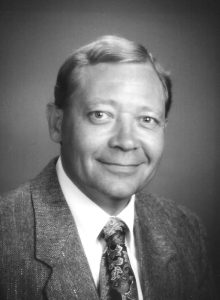
William George Province, 77, of Fort Scott, passed away at his home on March 16, 2026. He was born April 1, 1948, in Carthage, Missouri, the son of George and Barbara Province. He graduated from Fort Scott High School with the class of 1966. He married Penelope “Pennie” Sue Hudson on December 18, 1971, in Fort Scott, and she preceded him in death in 2014.
Bill was a First Lieutenant in the U.S. Army during the Vietnam Conflict.
Bill is survived by a son, Ryan and wife, Stacie Province of Shawnee, Kansas; a daughter, Brooke and husband, Mike Sebbert, of Olathe, Kansas; and 2 grandsons, Cael and Ian Province. In addition to his wife, Pennie, he was preceded in death by his parents and a sister, Cheryl Butler.
Bill will be buried in the Fort Scott National Cemetery with his wife Pennie. A private graveside service will be held for family. The family would like to offer a special thank you to the wonderful staff of Caring Hearts Home Health and Harry Hynes Hospice who provided kind and compassionate care to Bill in his final days.
In lieu of flowers, the family requests that memorial contributions be made to Harry Hynes Memorial Hospice, 3 Medical Center Circle, Pittsburg, KS 66762. Memorial contributions may also be left in the care of the Konantz-Cheney Funeral Home, 15 W. Wall Street, P.O. Box 309, Fort Scott, KS, 66701. Friends and family may sign the online guest book and share memories at www.konantzcheney.com.
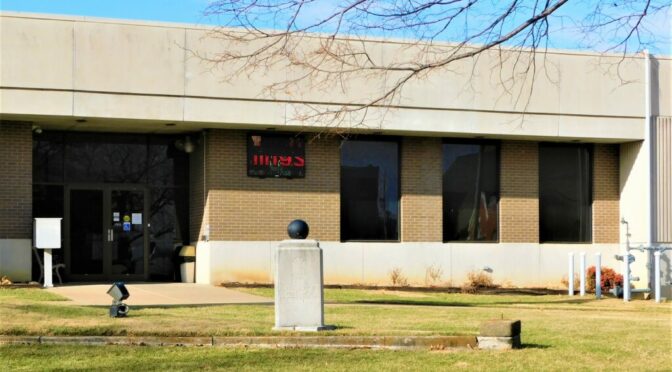
The north wing, east side of the Bourbon County Courthouse.
Bourbon County Commission Meeting Agenda
Date: March 23, 2026 | Time: 5:30 PM Location: 210 S National Avenue, Fort Scott, KS 66701
Meeting Agenda Outline
I. Call Meeting to Order (Page 1)
II. Pledge of Allegiance (Page 1)
III. Prayer (Page 1)
IV. Approval of Agenda (Page 1)
V. Approval of Minutes (March 16, 2026) (Page 1)
VI. Approval of Accounts Payable (March 20, 2026 – $500,393.76) (Page 1)
VII. Executive Session (K.S.A. 75-4319 (b)(1) – Teri Hulsey) (Page 1)
VIII. Public Comments (Page 1)
IX. Department Updates (Page 1)
a. EMS Update – Teri Hulsey
X. Old Business (Page 1)
a. Sewer issue
b. Audit RFP
c. Salary Resolution – Gregg Motley
d. CIC Hardware Support
XI. New Business (Page 1)
a. ADM Agreement
b. Culvert Application
c. Tax Corrections
d. Property Tax Relief – 1111 Beech
e. Title IV-E County Reimbursement Opportunity
XII. Future Agenda Topics (Page 1)
XIII. Commissioner Comments (Page 1)
XIV. Adjournment (Page 1)
Meeting Information Packet Summary
Previous Meeting Minutes (March 16, 2026)
The packet includes detailed minutes from the March 16 meeting. Key highlights include:
Accounts Payable Transparency: Discussions regarding the accurate labeling of settlement payments versus commissioner wages (Page 3).
Public Comments: Statements from County Clerk Susan Walker regarding office transparency and allegations of criminal conduct. Citizens also spoke on commissioner salary structures and audit plans (Pages 3-4).
Department Updates: Concerns were raised regarding the lack of a formal hard surface road plan for the 1% road tax (Page 4).
Salary Resolution: The commission voted (4-1, with one abstention) to maintain current commissioner compensation levels while establishing official salaries for the Road and Bridge, Appraiser, EMS, and County Counselor positions (Pages 4-5).
KORA and Operations: Discussion on centralizing Kansas Open Records Act requests through the Clerk’s office and switching emergency alert systems from Code Red to Genesis for significant cost savings (Pages 5-6).
Financial Reports (March 20, 2026)
The packet contains a comprehensive “Open Invoices By Department Summary” totaling over $500,000.
General Fund: Includes standard payroll clearing and insurance payments (Page 8).
Employee Benefit Fund: The largest single department total at $82,742.91, covering worker’s compensation and retirement contributions (Page 10).
Sheriff & Correctional: Expenditures totaling $77,505.65 for inmate transport, medical supplies, and facility maintenance (Pages 12-13).
Landfill and Road & Bridge: Detailed lists of commodity purchases including fuel, equipment repairs, and operational supplies (Pages 11, 13).
Contractual and Maintenance Agreements
Beneficial Reuse Agreement: Documentation regarding environmental non-feed use and amendments to existing reuse agreements (Page 47).
Environmental Permits: Information regarding the Bourbon County Transfer Station and waste management points of contact (Page 47).
Aging with Attitude Regional Expo Set for April 24th
It’s taking place every day, for everyone….aging that is, and it is an opportunity! Let’s come together to learn and ensure we can all thrive as we age, on Friday, April 24th, for the Aging with Attitude Regional Expo.
The expo aims to promote positive attitudes about aging and educate on issues that support physical, mental, and financial health. K-State Extension along with community partners invite you to connect with others for information and resources on April 24th. The event includes presentations, activities, prizes, a resource fair, and lunch from 9:00a.m.-1:00p.m. at ICC West, 2615 W. Main Street, Independence, KS. Registration fee is $15 per attendee. Register by calling 620-244-3826.
Keynote Presentations include:
Paying for Long-Term Care While Preserving The Family Inheritance
Gadgets That Get It Done: Everyday Tools to Make Life Easier
Make the most of your life by attending this year’s regional expo! For more information you may contact [email protected] or 620-244-3826.
For more information contact:
Tara Solomon-Smith
Family and Community Wellness Agent, Southwind Extension District [email protected], 620-244-3826
When Armyworms Attack: Evaluating Brome Fields After a Tough Year By Lonnie Mengarelli, Extension Agent – Crops and Natural Resources
This past year proved challenging once again for forage producers across eastern Kansas. In 2025, fall armyworms arrived in late July and overstayed their welcome through a long, warm fall. Many producers reported partial or complete loss of smooth brome stands, leaving fields that range from lightly affected to areas that appear completely dead.
The level of damage varied widely from field to field. In many cases, the hardest-hit areas were fields that had been harvested in mid-to-late July. Those freshly cut fields created the perfect environment for fall armyworm moths to lay their eggs. Armyworm moths are not particularly picky — they will lay eggs on nearly any foliar material available. Once the larvae hatch, they begin feeding and can quickly move in large numbers across a field in search of food.
Smooth brome is a cool-season grass, which means it does not perform well during hot summer conditions. When a field is cut in late July, the plant is already growing under stress from high temperatures that often reach into the 90s. After cutting, very little leaf material remains, leaving the crown only a few inches tall and exposed. When armyworm feeding occurs under those conditions—especially if rainfall is limited—the result can be rapid browning of the field.
Some fields showed signs of recovery after late-season rains, but others never fully greened back up. With the warmer temperatures we’ve experienced moving into this spring, many producers are asking the same questions: Are the brome plants still alive? Is there potential for regrowth?
Unfortunately, a quick drive-by assessment may not provide an accurate answer. Dormant perennial grasses can sometimes look similar to annual weeds that died over winter. The only reliable way to know is to examine the plants directly.
One method is to check for living rhizomes. Dig up a clod of grass and examine the underground stems. If the rhizomes are alive, new tillers should begin emerging as temperatures warm and precipitation returns. Signs of life include firm roots holding soil and green tissue beginning to develop near the crown.
Another useful method is what many call a “bag test.” Collect several plant samples from the field and rinse the soil from the roots. Trim the shoots to about an inch above the crown and remove most of the roots. Lightly moisten the crowns with tap water and place the samples in a sealed plastic bag. Leave the bag at room temperature, out of direct sunlight, for two to five days. Living plants will typically begin producing small shoots or roots. If there is no growth after about six days, the plant is likely dead.
If stands are severely damaged, producers will have several management options to consider.
In a typical year with stable input costs, the recommendation might be to prepare a seedbed and reseed brome at 10 to 15 pounds of pure live seed per acre. Poor seedbed conditions may require seeding rates closer to 20 pounds per acre. As always, soil sampling should guide fertility programs so that lime and nutrients such as nitrogen, phosphorus, and potassium are applied appropriately.
However, with rising costs for seed, fertilizer, and other inputs, spring reseeding may not always be the most economical option. Spring plantings also tend to face heavier weed pressure and typically cannot be harvested until the following year.
Some producers may instead consider alternative forage crops to help fill the gap. Summer annual forages such as pearl millet, sorghum-sudangrass, forage sorghum, or crabgrass can produce between 4,000 and 8,000 pounds of forage per acre under good conditions. Cool-season options like spring oats, triticale, or cereal rye may provide 1,500 to 4,000 pounds of forage and can be useful for early-season grazing or hay production.
Another option is patience. If immediate forage production is not essential, waiting a few weeks to monitor stand recovery may help producers make a more informed decision. This approach allows time to evaluate plant health, watch input costs, and observe market conditions. Of course, there is always some risk if the stand fails to recover and forage yields fall short.
For producers who depend heavily on brome hay sales and have fields that clearly did not survive the winter, reseeding may ultimately be the best path forward. When reseeding is necessary, determining the exact acreage affected and planning for seed, fertilizer, herbicide, and potential insect management will help reduce surprises later.
The important thing to remember is that every field will be different. A neighbor’s plan may not be the right solution for your operation. Taking time to evaluate each field, inspect the plants, and weigh the available options will help determine the best path forward for your forage system.
After a year like 2025, one thing is certain: careful field evaluation this spring will be the key to making sound management decisions for the season ahead
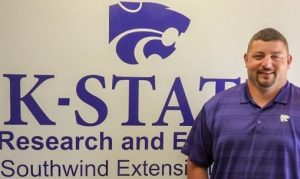
Lonnie Mengarelli is a K-State Research and Extension Agriculture agent assigned to Southwind District. He may be reached at [email protected] or 620-223-3720
Patty LaRoche. 2023. Author: A Little Faith Lift…Finding Joy Beyond Rejection www.alittlefaithlift.com AWSA (Advanced Writers & Speakers Assoc.)
Scripture tells me not to be angry. But I am. It’s spring break, Dave and I spent two days driving to Nevada (the state) to visit our grandkids and great grandkids, and I have spent much of my day, trying to contact Walmart here in Henderson, Nevada, to ask what time tomorrow I am to bring my vehicle in to have my tires checked. Twelve calls with no response. For the first five or six, I was fine. But now? I am upset.
This morning, I pulled up to the Automotive area at Walmart. Three bays were empty, and four employees were standing/sitting, doing nothing. A female employee turned me over to a male employee who announced that it was his time for a break. “Not until you service this woman,” she responded. Although pleasant, the young man was not happy. He checked my tires and said that nothing was wrong, but when I told him that one tire continues to go flat, he said that I would need to set up an appointment.
“What about now?” I asked (since there were no other vehicles being serviced). He said that they were full (i.e., it was time for his break) but set up an appointment tomorrow. He would send me the time via text. Which he did not do.
Twelve calls later (“Dial two for the automotive department”) to find out what time I am supposed to show up, my frustration is increasing. No one answers the phone, and when I call Walmart’s customer service representative, she tells me that there is nothing she can do except forward my call to the auto service area…the same area I have called twelve (now 13) times. I tell her that and she gives me a choice: “Either I forward your call, or I hang up.”
Each call to the automotive department is answered by a robot who says that they are “experiencing unusually high volumes of calls at this moment.” This does not happen in Fort Scott. There, someone answers the phone. I am used to Fort Scott. Am I asking too much?
As much as I hate to admit it, I need an attitude check. I find it much easier to say “If only…” “If only Walmart could get its act together.” “If only that customer service agent wasn’t so abrasive and actually showed a little compassion” (you know, what I did not show her).
For all I know, she was trying to keep food on her table for her five kids after her husband left her for another woman. Maybe she was working two jobs to help pay the medical bills for her ailing father. Possibly she had been yelled at by ten other customers, trying to contact the automotive department. Did I show her compassion? Tell her that I would pray for her? Even ask if she was okay?
We all know the answer to that. Actually, had I told her that I was a Christian, she probably would have started laughing. I demonstrated none of the qualities (fruits of the spirit) we are told to exhibit (love, joy, peace, patience, kindness, goodness, faithfulness, gentleness and self-control (Galations 5:22-23 NIV).
Yesterday evening, I received the text with the time of my appointment. By then, I had decided to go elsewhere for my service and tried to text back to cancel. A large “X” appeared on my screen. Under it were these words: “Sorry…We’re having technical issues, but we’ll be back in a flash. Try again.”
This time, I had to laugh. Clearly an improvement. I think that Jesus would be proud.