Grant Applications Open to Expand Rural Registered Apprenticeship Programs
TOPEKA – Lieutenant Governor and Secretary of Commerce David Toland today announced $500,000 in Rural Apprenticeship Innovation for a Strong Economy (RAISE) funding to support the expansion of Registered Apprenticeship programs across rural Kansas.
This new grant opportunity is administered through the Kansas Office of Registered Apprenticeship and is available to the state’s educational institutions, businesses, nonprofit organizations, joint apprenticeship training councils and workforce boards seeking to attract and retain skilled employees through registered apprenticeships in rural areas.
“We have been purposeful in attracting new businesses to all areas of the state to advance economic opportunities for all,” Lieutenant Governor and Secretary of Commerce David Toland said. “These grants will support further expanding Registered Apprenticeship programs in rural areas so we can continue to build our workforce, provide skill building and job opportunities for more Kansans and keep pace with our historic growth.”
Applicants can receive up to $100,000 in funding to support technical instruction, outreach, staffing, partnerships and administrative costs. A dollar-for-dollar match is required, and funded projects must be completed within a 12-month period.
“This grant ensures rural Kansas isn’t left behind,” Kansas Office of Registered Apprenticeship Director Shonda Anderson said. “By expanding high-wage, high-demand registered apprenticeships in rural communities, we’re creating strong workforce pathways and supporting long-term economic vitality close to home.”
Registered Apprenticeship programs interested in applying must meet the following criteria:
Must be a registered apprenticeship program in Kansas or commit to developing a new program within three months of receiving funding
Must demonstrate a plan to engage existing or potential employers and apprentices residing in counties with populations under 50,000
Must provide a 1:1 matching contribution
For more details and additional requirements, visit the webpage here.
Eligible Kansas Registered Apprenticeship programs are encouraged to apply. Applications will be accepted through April 17. To apply, click here.
About the Kansas Department of Commerce:
As the state’s lead economic development agency, the Kansas Department of Commerce strives to empower individuals, businesses and communities to achieve prosperity in Kansas. Commerce accomplishes its mission by developing relationships with corporations, site location consultants and stakeholders in Kansas, the nation and world. Our strong partnerships allow us to help create an environment for existing Kansas businesses to grow and foster an innovative, competitive landscape for new businesses. Through Commerce’s project successes, Kansas was awarded Area Development Magazine’s prestigious Gold Shovel award in 2021, 2022, 2023 and 2024, and was awarded the 2021 and 2022 Governor’s Cup by Site Selection Magazine.
About the Kansas Office of Registered Apprenticeship:
The Kansas Office of Registered Apprenticeship was established by Governor Laura Kelly on Sept. 6, 2022, through Executive Order #22-07. The Office supports apprenticeships across multiple industries to provide a highly skilled source of labor for employers and ensure occupational proficiency for career-seekers. The program incorporates on-the-job learning, technical instruction and mentorship to create long-term employment opportunities in Kansas.
Turnaround has happened in the Kansas Legislature so now a large part of our time is being spent by the two houses hearing and voting on the other houses bills. Because of that I am happy to report that the Senate has heard and approved Benny’s Bill (HB 2412) unanimously 40-0. It will now come back to the House for concurrence on a technical amendment before it goes to Governor Kelly’s desk for her approval. Again, for those who don’t know the background behind this legislation it strengthens the penalties for child endangerment and aggravated child endangerment when the victim is under the age of six. I am sponsoring it because of the case of Benny Cannon who suffered lifelong disabilities after a daycare incident when he was four months old. Two daycare workers were found responsible after pleading guilty in court but received light sentences in my opinion considering the damage that was inflicted.
HB 2368 is a bill that I mentioned before that would allow for the licensure of Anesthesiology Assistants (AA) in Kansas. I have repeatedly opposed this bill because Kansas is already served by Certified Registered Nurse Anesthetists who possess a higher degree of training than their AA counterparts. The bill was voted down once this year but it was revived to be shot down with a motion to return it to committee. The motion pretty much kills the bill because the last day for committees to meet has passed.
Another nursing related bill that we just voted on was SB 334 which lowers the minimum education level required to be an instructor in Kansas nursing schools. I have heard from people in the nursing profession who don’t like this bill because it doesn’t make for better trained nurses and that it could potentially jeopardize accreditation of their institutions. I was a no vote on that but it did pass by 81-43.
On to other news I am planning to hold some town hall meetings this spring with the first one being in Mulberry on April 13th at 6:30. More details will be coming but I hope to see you there or at another event. Until next time, Ad Astra Per Aspera.
Pilot Commerce Grant to Support Renovating Industrial, Manufacturing Buildings
TOPEKA – Lieutenant Governor and Secretary of Commerce David Toland today announced the launch of the Industrial Renovation for Opportunity and New Economic Development (IRONED) pilot program, a funding opportunity designed to help rural Kansas communities revitalize underused industrial and manufacturing buildings and prepare them for new or expanding businesses.
A total of $200,000 in funding is available through IRONED for Kansas communities with a population of 50,000 or less. Grants up to $100,000 will support projects already in the planning phase that preserve and bring new economic activity to underutilized, vacant or dilapidated industrial and manufacturing facilities. The grants are intended to close financing gaps.
“There are plenty of industrial buildings throughout Kansas with the potential to support new business ventures if they can be brought back to productive use,” Lieutenant Governor and Secretary of Commerce David Toland said, “By providing targeted support for renovation costs, Commerce can help rural communities move innovative projects across the finish line and start driving local economic growth.”
The IRONED program is administered by the Kansas Office of Rural Prosperity at the Department of Commerce. The application window opens March 18 and will close at 5:00 p.m. June 17. Awards will be announced in August.
For those interested in applying for funding, there will be a webinar at 4:00 p.m. Monday, March 23. Registration is required (click here).
The Office of Rural Prosperity will host virtual Office Hours from 10:00 to 11:00 a.m. April 16, May 14 and June 11. To sign up, click here.
For additional information about the IRONED program, click here.
About the Kansas Department of Commerce:
As the state’s lead economic development agency, the Kansas Department of Commerce strives to empower individuals, businesses and communities to achieve prosperity in Kansas. Commerce accomplishes its mission by developing relationships with corporations, site location consultants and stakeholders in Kansas, the nation and world. Our strong partnerships allow us to help create an environment for existing Kansas businesses to grow and foster an innovative, competitive landscape for new businesses. Through Commerce’s project successes, Kansas was awarded Area Development Magazine’s prestigious Gold Shovel award in 2021, 2022, 2023 and 2024, and was awarded the 2021 and 2022 Governor’s Cup by Site Selection Magazine.
TOPEKA – (March 18, 2026) – Six grant programs serving victims of crime across Kansas are open for application, Kansas Attorney General Kris Kobach announced today.
More than $2.3 million in grant funds were awarded last year from six state programs through the Office of the Attorney General. Funds are used to assist local and state crime victim assistance organizations across Kansas in providing direct services to crime victims, as well as in developing prevention programs to address violence.
Grant opportunities are open in the following programs:
Child Exchange and Visitation Center Program (CEVC) – This fund seeks to provide supervised child exchange and visitation to children and families at risk due to circumstances relating to domestic or family violence.
Human Trafficking Victim Assistance Fund (HTVAF) – This fund was established by the Legislature in 2013 (K.S.A. 75-758) to provide training regarding human trafficking for law enforcement agencies throughout Kansas, and to support the care, treatment and other services for victims of human trafficking and commercial sexual exploitation of a child.
Child Abuse and Neglect (CVAF-CA) – This fund seeks to provide for ongoing operating expenses of programs assisting child victims.
Crime Victims Assistance Fund (CVAF) – This fund seeks to provide for ongoing operating expenses of programs assisting crime victims and establishing and maintaining new programs providing services to the victims of crimes.
State Protection from Abuse Fund (PFA) – This fund seeks to provide temporary emergency shelter for adult victims of domestic violence or sexual assault and their dependent children, counseling and assistance to those victims and their children, or educational services directed at reducing the incidence of domestic violence or sexual assault and diminishing its impact on victims.
Child Advocacy Center Fund (CAC): This fund seeks to provide for ongoing operating expenses of Child Advocacy Centers.
More detailed information on the application process for each of the grant programs can be found at www.ag.ks.gov/divisions/victim-services/grant-programs. Applications will be accepted through the Grant Management System located on the website. The first step in the application process is due April 10, 2026.
Awards will be made this summer. These grant programs are administered by the attorney general’s Victim Services Division and the Victim Rights Coordinator.
Feeling Lucky? Spring into a New Career at Upcoming Weekend Virtual Job Fair
TOPEKA – Lieutenant Governor and Secretary of Commerce David Toland encourages jobseekers and employers searching for available talent to take part in this year’s first Weekend Virtual Statewide Job Fair, hosted by KANSASWORKS, starting from 8:00 a.m., Friday, March 27 through to 5:00 p.m., Sunday March 29.
“As spring starts to roll in, so are new career opportunities — and they’re showing up all across Kansas,” Lieutenant Governor and Secretary of Commerce David Toland said. “Whether you’re a company looking to expand your staff — or a jobseeker looking for a new career — we have something for you right here in the Sunflower State.”
The Virtual Job Fair format allows anyone searching for a new job to fill out applications, chat live and interview virtually with participating employers.
This month’s Virtual Statewide Job Fair portal features helpful information such as a jobseeker training video, a list of participating employers and channels for attendees to register and log in. Jobseekers are encouraged to dress professionally, as they might be asked to engage in an interview.
Candidates can participate through any digital device. Any individual with a disability may request accommodation by contacting their nearest workforce center at (877) 509-6757 prior to the event.
Registration is required to participate in virtual job fairs, regardless of previous participation. To register, click here.
About the Kansas Department of Commerce:
As the state’s lead economic development agency, the Kansas Department of Commerce strives to empower individuals, businesses and communities to achieve prosperity in Kansas. Commerce accomplishes its mission by developing relationships with corporations, site location consultants and stakeholders in Kansas, the nation and world. Our strong partnerships allow us to help create an environment for existing Kansas businesses to grow and foster an innovative, competitive landscape for new businesses. Through Commerce’s project successes, Kansas was awarded Area Development Magazine’s prestigious Gold Shovel award in 2021, 2022, 2023 and 2024, and was awarded the 2021 and 2022 Governor’s Cup by Site Selection Magazine.
About KANSASWORKS:
KANSASWORKS links businesses, job candidates and educational institutions to ensure that employers can find skilled workers. Services are provided to employers and job candidates through the state’s 27 workforce centers, online or virtual services KANSASWORKS is completely free for all Kansans to use. Learn more at KANSASWORKS.com. State employment opportunities can be found at jobs.ks.gov.
American College of Obstetricians and Gynecologists
Rana Aliani of Prairie Village
Tara Chettiar of Overland Park
Hannah Eckstein of Kansas City
Phoebe Fyffe of Overland Park
Christopher Graber of Salina
Melissa Hague of Wichita
Jessica Hyde of Wichita
Leah Kemble of Topeka
Abigail Proffer of Mission
Selina Sandoval of Leawood
Kimberly Swan of Shawnee
Laura Tatpati of Andover
Brianna Long of Lenexa
Kansas State Council of Firefighters
Matt Jackson of Junction City
Bob Wing of Kansas City
James Wing of Kansas City
Matt Schulte of Andover
National Humanities Alliance
Karin Westman of Manhattan
Pediatric and Family Dentists
Dr. Nick Rogers of Arkansas City
Dr. Andrew Medlin of Kansas City
Celiac Disease Foundation
Dave Stubler of Kansas City
Joint National Committee for Language
Katrina Carey of Olathe
Karen Gipson of Lawrence
Amanda Mendoza of Emporia
Heather Potter of Wichita
National Brain Injury Association
Heather Carbaugh of Lawrence
Heather Matty of Overland Park
New York Life Insurance
Shane Grau of Topeka
Ben Schlafer of Shawnee
National Association of Housing and Redevelopment Officials
Sheila Barnett of Goodland
Craig Leabo of Pittsburg
Ty Lewick of Liberal
Bradley Gamber of Winfield
National Oilseed Processors Assoc Board of Directors
Cody Nichols of Cherryvale
Ed Prosser of Goodland
Kansas Soybean Commission
Andy Winsor of Topeka
Dennis Hupe of Topeka
Kansas Restaurant & Hospitality Association
Chris Arnold of Wichita
Ron Oberg of Wichita
Chase Oberg of Wichita
Brad Ballou of Wichita
Hugh O’Reilly of Overland Park
Janez Lomshek of Overland Park
Kevin Raven of Lenexa
Scott Redler of Wichita
Tony Suellentrop of Wichita
Adam Mills of Wichita
Travis Sartain of Wichita
American Diabetes Association
Donald Feltham of Leawood
March 16
Hello,
Welcome to “Kansas Common Sense.” Thanks for your continued interest in receiving my weekly newsletter. Please feel free to forward it on to your family and friends if it would interest them.
Kansas Servicemembers on the Frontlines The Kansas Air National Guard’s 190th Air Refueling Wing, out of Forbes Field in Topeka, was deployed in early March in support of U.S. military operations in the Middle East, and the Kansas Army National Guard’s 130th Field Artillery Brigade, headquartered in Manhattan, was deployed last summer and is currently supporting operations in the Middle East.
The members of these units selflessly answered the call to protect and serve our country in uniform, and they represent the very best of Kansas. Both divisions have a long legacy of sacrifice and dedication, stretching back decades, helping to support our nation’s readiness. With roots dating to before World War II, the 190th Air Refueling Wing and 130th Field Artillery Brigade have been a critical part of the mission to serve, protect and defend our country for generations. We owe a lot to these men and women in uniform for their dedicated service and selflessness.
I am in contact with the acting Adjutant General, Brigadier General Paul Schneider, and the leadership of the Kansas National Guard regarding the deployment of the 190th Air Refueling Wing and 130th Field Artillery Brigade’s roles in supporting ongoing U.S. military action in the Middle East. Robba and I are praying for the safety of all our Kansas servicemembers deployed overseas across all branches of the military, as well as peace and comfort for their families and loved ones. May God bless our Kansas National Guard and bring them home safely.
Update on Military Operations in Iran Over the past week, the U.S. and Israel have continued to conduct military operations against Iran. U.S. forces have carried out strikes targeting missile systems, drone facilities, and naval assets used by the Iranian regime to threaten U.S. personnel in the region and Isreal. An Iranian strike on a U.S. logistics site in Kuwait killed several American servicemembers and additional military operations in the region have claimed the lives of even more servicemembers, underscoring the sacrifices and risks our servicemembers face in the Middle East and across the world every day. The conflict has also widened beyond Iran’s borders. Iranian backed groups and Hezbollah have attacked Israel and neighboring countries, further increasing the risk of broader escalation.
My focus remains on the safety of our Armed Forces serving in harm’s way; the impact this conflict is having on the global supply chain due to Iran’s pressure on shipping in the Strait of Hormuz where a significant portion of the world’s energy supply moves each day; and the consequences of sustained elevated energy prices that could benefit Russia and harm the Ukrainians’ ability to defend themselves against Putin’s invasion.
Urging Congress to Pass DHS Funding
With ongoing U.S. military action in Iran, the FBI’s counterterrorism and intelligence teams have been placed on heightened alert to monitor potential threats. This week I requested a briefing with the FBI to better understand what efforts are being taken here at home to keep Americans. I appreciate the FBI’s work to ascertain threats and keep our nation safe.
For more than three weeks, the Department of Homeland Security (DHS) has been operating under a partial government shutdown. The lapse in funding is impacting agencies like the TSA, FEMA and the U.S. Coast Guard. As a result, roughly 120,000 DHS employees are continuing to work without a paycheck, including the TSA officers responsible for screening passengers at airports across the country.
Nearly 95% of TSA employees remain on duty, but the financial strain has led to staffing shortages and longer wait times at many airports as spring break travel begins. The FY26 DHS appropriations bill already includes many of the reforms requested during negotiations, including $20 million to equip ICE and Border Patrol officers with body cameras, support for de-escalation training for officers interacting with the public and increased resources for the DHS Office of Inspector General to strengthen oversight and accountability.
These funding challenges come at a particularly sensitive time for national security, and Congress must act to pass legislation to fund these key agencies so they can continue their work of protecting American here at home.
PASSED: Legislation to Support Affordable Rural HousingThis week, the Senate unanimously passed the 21st Century ROAD to Housing Act, which included my bill, the Streamlining Rural Housing Act of 2025. My legislation would direct the U.S. Department of Housing and Urban Development (HUD) and the U.S. Department of Agriculture (USDA) to establish a memorandum of understanding to simplify the regulatory process for developers by aligning housing standards between the two agencies. The package also incorporates two additional bills I cosponsored to expand housing access in rural communities and reduce unnecessary bureaucracy within federal housing programs.
The 21st Century ROAD to Housing Act represents the most significant bipartisan housing reform effort in decades – focused on expanding housing availability, cutting red tape and lowering costs for families working to achieve the dream of homeownership. The legislation now moves to the U.S. House of Representatives for consideration.
Supporting Kansas TRIO Program On Wednesday, I attended the annual Kansas TRIO breakfast and met with students and alumni who have benefited from TRIO programs. Throughout my time in Congress, I have supported TRIO and other initiatives that expand access to education. The FY2026 Labor, Health and Human Services appropriations bill maintains robust funding for TRIO programs to support college access and success for low-income and first-generation students.
I am a first-generation college graduate and know firsthand that education can offer many opportunities. Programs like TRIO help open doors for students who may otherwise face barriers to higher education. It was inspiring to hear the success stories of TRIO students and alumni. Thank you for sharing your stories and for the work you are doing to help the next generation of students achieve their dreams.
Urging the Administration to Prioritize Farmers in Final 45Z Rule This week, I joined my colleagues in urging the administration to prioritize farmers, biofuel producers and the agricultural community in the finalized guidance for the 45Z Clean Fuel Production tax credit, in order to provide clarity, bolster consumer confidence and make certain farmers receive the intended benefits of the tax credit. In the FY26 reconciliation legislation, Congress extended the 45Z credit through 2029, allowing biofuels producers to receive up to $1 per gallon of fuel produced based on reductions in carbon intensity. A major component of achieving this reduction is through on-farm practices such as no-till planting and utilizing cover crops. The letter urges the administration to provide the agricultural industry with the tools needed to quantify these benefits, allowing for greater utilization of the credit. The 45Z tax credit can reward farmers for conservation and regenerative practices on their operations and help increase production of biofuels throughout the U.S., and I look forward to continuing to work with the administration to deliver these benefits for the agriculture and fuel industries.
Requesting an Update from BIA on Search for New President of Haskell University This week, Congressman Tracey Mann and I asked the Bureau of Indian Affairs (BIA) to provide an update on the nationwide search for a permanent president of Haskell Indian Nations University in Lawrence. Haskell holds a unique and historic role as the only four-year, federally operated postsecondary institution under the Bureau of Indian Education and has educated generations of Native students from Tribal Nations across the country. In recent years, Haskell has experienced significant leadership turnover, and the university is currently being led by interim leadership following the resignation of its most recent president in 2025. Establishing steady, permanent leadership is critical to providing the stability the university needs to continue fulfilling its important mission.
Last year, Congressman Mann and I also introduced legislation aimed at reforming Haskell and addressing long-standing challenges facing the university. I remain committed to working with Tribal leaders, students, faculty and federal officials to make certain Haskell has the leadership and resources necessary to succeed for generations to come.
You can read more about this from the Lawrence Journal-World here.
Applauding VA Community Care Scheduling Announcement This week, the Department of Veterans Affairs (VA) announced it would be making the external provider scheduling (EPS) program available at all VA medical facilities across the nation. EPS allows VA to view the schedules of health care providers in the community, making it easier and faster to schedule community care appointments for eligible veterans, reducing wait times and helping veterans access the care they need. In EPS’ testing stages, pilot sites found 65% improvement in the timeliness of community care scheduling and markedly increased productivity among VA schedulers who went from scheduling seven appointments a day to more than 20. One of those test sites was the Dole VA Medical Center in Wichita.
The success there and elsewhere is why I introduced legislation with my colleagues Sens. Deb Fischer (R-Neb.), John Boozman (R-Ark.) and Tedd Budd (R-N.C.) to permanently authorize and expand EPS so that veterans in Kansas and across the country continue to benefit from it. No veteran should have to wait weeks or months to obtain the care and services they have earned through their service, and I appreciate VA Secretary Doug Collins for taking the initiative to make certain EPS is available to veterans coast-to-coast.
You can learn more about EPS and my legislation here.
Meeting with Kansans KU Dole Institute of Politics
On Tuesday, I met with Audrey Coleman, Director of the Dole Institute of Politics at the University of Kansas. The institute plays an important role in preserving the legacy of Senator Bob Dole while promoting civic engagement and public service for future generations. Bob Dole was a true American hero whose life of service continues to inspire Kansans and Americans across the country. His commitment to Kansas values, leadership and dedication to public service set an example for those who follow in his footsteps.
In the FY2026 appropriations legislation, I secured more than $5 million for the Dole Institute to support efforts to preserve and digitize Sen. Dole’s extensive audiovisual collections. These resources will help make certain that future generations can learn from his life, leadership and lasting contributions to our state and nation. I appreciate the work Audrey and the team at the Dole Institute are doing to honor Sen. Dole’s legacy and inspire the next generation of leaders.
Kansas Bankers Association Later in the day, I met with members of the Kansas Bankers Association (KBA) to discuss ways we can strengthen our banking system and expand access to capital for individuals and businesses. The community bankers emphasized the need to revisit outdated regulatory thresholds that have limited their ability to lend effectively. We also talked about the growing challenge of financial fraud and how the federal government can better protect Kansans’ from increasingly sophisticated scams. Thank you to KBA President and CEO Doug Wareham, KBA Chairwoman Julie Hower, Vice Chairman Kyle Campbell, Chairman-elect Kendal Kay and Former Chairman D. Gene Dikeman and all the KBA members for taking the time to travel to Washington and share their insights with me.
Kansas Farm Bureau On Wednesday, I spoke to members of the Kansas Farm Bureau (KFB) as a part of their 2026 Leaders Engaged and Acting in D.C. trip. We discussed the economic conditions facing Kansas producers, and I provided an update on my work in the Senate, including efforts to permanently move the administration of Food for Peace to USDA to make certain the program fulfills its mission of feeding the hungry, creating important markets for farmers and bolstering our national security. I also spoke about the importance of securing year-round E15 to provide greater market access for corn growers, as well as my Securing America’s Fuels Act, which would provide a greater incentive to produce sustainable aviation fuel under the 45Z tax credit. Farm Bureau’s grassroots policy efforts allow its members to be actively engaged in policy at all levels, and I always appreciate conversations with Kansas farmers and ranchers on how we can improve the agriculture industry. Thank you to Kansas Farm Bureau President Joe Newland, Vice President Glenn Brunkow and all the KFB members who made the trip out to D.C.
Kansas Soybean Association This week, I met with Andy Winsor and Dennis Hupe from the Kansas Soybean Association (KSA) to discuss the state of the farm economy and the challenges producers are currently facing. We talked about the need for additional economic support for farmers as input costs continue to rise, as well as the importance of expanding market opportunities for soybeans through biofuels, animal feed and their role in our food supply. KSA also emphasized the critical role of renewing the United States–Mexico–Canada Agreement, given that these countries remain the largest importers of Kansas agricultural products. I appreciate the work Mr. Winsor does on behalf of the Kansas Soybean Association and in his role as a Board Director for the American Soybean Association.
National Oilseed Processors I met with the Board of Directors for the National Oilseed Processors Association, who visited my office this week to advocate on behalf of the soybean, canola, flaxseed, safflower seed and sunflower seed crushing industries. Our conversation focused on the importance of the EPA finalizing the Renewable Volume Obligations (RVO) rule for 2026–2027 and releasing timely, workable guidance for the 45Z tax credit. I also appreciated hearing updates on crushing facilities across Kansas and the critical role they play in creating local markets for Kansas commodities. Thank you to Cody Nichols of Cherryvale and Ed Prosser of Goodland for joining our conversation.
Kansas Restaurant and Hospitality Association On Thursday, I met with the Kansas Restaurant and Hospitality Association (KRHA) to discuss the challenges facing industry stakeholders. Our conversation focused on opportunities to reduce costs for Kansas businesses and strategies to streamline workforce recruitment. I remain committed to supporting local hospitality professionals so they can continue to thrive and play a vital role in the communities they serve. Thank you to KRHA Chair Tony Suellentrop, Chair-elect Janez Lomshek, Treasurer Chris Arnold, Ron Oberg, Chase Oberg, Brad Ballou, Hugh O’Reilly, Kevin Raven, Scott Redler, Adam Mills and Travis Sartain for taking the time to meet with me.
Kansas State Council of Firefighters
This week, I met with members of the Kansas State Council of Firefighters to discuss issues affecting firefighters across our state and the communities they serve. Firefighters put their lives on the line to protect Kansans, and it’s a priority of mine to make certain they have the resources and equipment necessary to do their jobs safely and effectively. During our conversation, we discussed growing concerns about harmful chemicals found in firefighting gear and the potential health risks associated with repeated exposure. Firefighters regularly face dangerous conditions, so it’s critical that the equipment designed to protect them does not pose additional long-term health risks. We also discussed ways Congress can support research to better understand these risks and help develop safer equipment for firefighters in Kansas and across the country. Thank you to Matt Jackson of Junction City, Bob and James Wing of Kansas City and Matt Schulte of Andover for the work they do to keep Kansans safe.
Devin, April and Ruby Wendt of Manhattan
On Thursday, I met with Devin, April and Ruby Wendt of Manhattan before their tour of the U.S. Capitol. I appreciated visiting with them and hearing about their time visiting our nation’s capital.
Visits Across Kansas Mitchell County Hospital Health Systems & Sheriff’s Office It was great to visit Mitchell County Hospital Health Systems to announce federal resources I helped secure for the hospital and for Mitchell County Sheriff’s Office. Through my role as a member of the Senate Committee on Appropriations, I helped secured federal resources for the sheriff’s department to purchase new equipment and resources to help Mitchell County Hospital Health Systems with the construction of a new emergency department and physical therapy and occupational therapy departments.
Special thank you Mitchell County Hospital Health Systems CEO Janelle Kircher for hosting me, and to Mitchell County Sheriff Tony Perez for his continued service to his community. Thank you to Beloit Mayor Tom Naasz, City Administrator Mandy Lomax, State Representative Dawn Wolf, Mitchell County Commissioners Tom Claussen, Mike Riemann and Cole Eberle, Dr. Craig Concannon and former State Representative Susan Concannon, Economic Development Director Emily Benedick, Curt Frasier and Mark Noah for joining us at the event.
Salina Area Technical College After my stop in my Mitchell County, I visited Salina Area Technical College to announce federal resources I helped secure for Salina Tech’s Industrial Maintenance and Automation Program. This investment will help to provide a trained workforce to meet the needs of Salina area manufacturing businesses, providing opportunities for Kansans to pursue successful careers right here in our state. Thank you to Salina Police Chief C.J. Wise, State Senator Scott Hill, State Representative Dawn Wolf, Saline County Treasurer Tony Newell, former Saline County Treasurer Jim DuBois and Saline County Economic Development Director Mitch Robinson for hosting me and for their efforts to support the next generation of Kansans.
CloudCorp This week, I made a stop at CloudCorp to learn about the current efforts to grow the communities in Cloud County. I appreciated meeting Tim Beims, Executive Director of CloudCorp, to discuss the various economic development opportunities CloudCorp is supporting to bolster local businesses and improve the quality of life for Kansans across the North Central Kansas Region. Thank you to Tim for hosting me and thank you to Concordia City Manager Amy Lange and Cloud County Commissioner Dannie Kearn for joining me on my visit.
Remembering Ron Rahjes
I am saddened by the passing of my friend Ron Rahjes, who I knew for more than 30 years. His life is an example of the difference one person can make in their community and in the lives of others. Born and raised in Kensington, Ron was passionate about preserving the rural way of life in Kansas, working on the family farm, supporting the agriculture community and graduating in the very first class of the Kansas Agriculture and Rural Leadership Program. He was a man of faith, a devoted member of his church and a beloved husband and father. Ron never met a stranger, and he treated everyone with respect and kindness. Robba and I are praying for his wife Cynthia and their children and grandchildren. He will be deeply missed.
National Agriculture Week
In Kansas, agriculture isn’t just an industry – it’s the cornerstone of our way of life. During National Agriculture Week, we extend our gratitude to the ag producers and communities in Kansas and across the nation who work tirelessly to keep agriculture thriving. Thank you for your commitment to feed, fuel and clothe the world.
Now Accepting Summer 2026 Page Applications
Applications are now open for the Summer 2026 Senate Page Program. High school students are afforded a unique opportunity to work in the Senate and learn about Congress and the legislative process. Summer Page eligibility is limited to students who have completed their sophomore year of high school and who will be 16 or 17 years old on or before the date of appointment. The deadline to apply is Sunday, March 22. You can learn more about the Senate Page program here.
Honored to Serve You in Washington It is an honor to serve you in Washington, D.C. Thank you to the many Kansans who have been calling and writing in to share their thoughts and opinions on the issues our state and country face. I appreciate the words of Kansans, whether in the form of a form of letter, a Facebook comment or a phone call, who wish to make their voice heard.
Please let me know how I can be of assistance. You can contact me by email by clicking here. You can also click here to contact me through one of my Kansas offices or my Washington, D.C., office.
Very truly yours,
Jerry
To unsubscribe from this newsletter, please click here.
Hays
1200 Main St.,
Suite 402
P.O. Box 249
Hays, KS 67601
Phone: (785) 628-6401
Luckert’s retirement triggers a merit-based nomination process that involves the Supreme Court Nominating Commission, which reviews nominees, and the governor, who makes the appointments.
Only applications submitted on the application form will be accepted. An original and one copy of the application and release must be received by the appellate clerk’s office by noon Friday, April 17.
The application and release with original signatures may be hand-delivered or submitted by mail to:
Douglas T. Shima
Clerk of the Appellate Courts
Kansas Judicial Center
301 SW 10th Ave., Room 107
Topeka KS 66612-1507
The application and release with original signatures may be emailed to scnc@kscourts.gov. Documents will not be accepted by fax.
Nominating commission
The Supreme Court Nominating Commission has nine members. There is one lawyer and one nonlawyer from each of the state’s four congressional districts, plus one lawyer who serves as chairperson.
Nonlawyers are appointed by the governor. Lawyers are elected by other lawyers within their congressional districts. The chairperson is elected by lawyers statewide.
Merit-based selection process
Justices are appointed to the Supreme Court through a merit-based nomination process Kansas voters added to the Kansas Constitution in 1958. The process involves the Supreme Court Nominating Commission, which reviews nominees, and the governor, who makes the appointments.
When there is a vacancy on the bench, the Supreme Court Nominating Commission reviews applications and conducts public interviews of nominees. The commission narrows the nominee pool to three names that it sends to the governor. The governor chooses one nominee to appoint.
Eligibility requirements
A nominee must be:
at least 30 years old; and
a lawyer admitted to practice in Kansas and engaged in the practice of law for at least 10 years, whether as a lawyer, judge, or full-time teacher at an accredited law school.
Selection criteria
When the Supreme Court Nominating Commission reviews nominees for justice, they look at the person’s:
legal and judicial experience;
educational background;
character and ethics;
temperament;
service to the community;
impartiality; and
respect of colleagues.
Judicial conduct
Justices must follow the law and not be influenced by politics, special interest groups, public opinion, or their own personal beliefs.
Justices demonstrate their accountability by following a Code of Judicial Conduct that establishes standards of ethical behavior. They also take an oath of office that includes swearing to support, protect, and defend the U.S. Constitution and Kansas Constitution.
Retention elections
After a new justice serves one year on the court, he or she must stand for a retention vote in the next general election to remain in the position. If retained, the justice serves a six-year term.
Accommodation
Any person with a disability who requires accommodation to access the nomination form should notify the judicial branch ADA coordinator as early as possible:
As we all are, I am mindful of the on-going conflict with Iran, and I continue to receive briefings on our progress and look for a successful and speedy conclusion. Kansans serving our country have my complete support.
This past week, it was great to meet with Kansans both in Washington and back home in the Second Congressional District.
Earlier in the week, the Department of Homeland Security cleared for release security-related funding for FIFA World Cup host cities, including Kansas City. I was pleased to join Congressman Mark Alford (MO-04) to urge the speedy release of these funds, and appreciate President Trump ensuring host cities receive the needed funding.
On Thursday, the Senate voted down another attempt to fully fund the Department of Homeland Security. There have been at least four attacks on U.S. soil in the past two weeks, each with indicia of radical Islamic terrorism: Texas, New York, Virginia, and Michigan. Americans dead, more injured. It is beyond irresponsible for Chuck Schumer, Hakeem Jeffries, and their followers to continue blocking funding for the Department of Homeland Security, which was created after 9/11 to keep our homeland safe. Congressional Democrats need to stop stalling, and fund DHS now.
ABC Announces Statewide Enforcement Action Against Alcoholic Beverages Sold at Unlicensed Premises
TOPEKA – The Kansas Department of Revenue’s Alcoholic Beverage Control Division (ABC) today announced the results of a multi‑county enforcement operation targeting the unlawful sale of alcoholic products disguised as kratom extract “shots” in retail stores across the state. The action underscores ABC’s commitment to protecting public health and safety, educating consumers, and ensuring businesses comply with Kansas law.
The investigation began in September 2025 following a formal complaint alleging that O.P.M.S. Kratom Extract liquid products—commonly marketed as “shots”—contained alcohol and were being sold without proper licensing. These products were available in small bottles, intended for human consumption, and sold in stores not authorized to sell alcoholic beverages.
ABC enforcement agents initiated a comprehensive investigation, locating the products in multiple Kansas retail locations and purchasing samples of O.P.M.S Black Kratom Extract liquid and O.P.M.S. Gold Kratom Extract liquid. The products underwent field testing and were submitted to a federal forensic laboratory for chemical analysis. Laboratory results confirmed that the products contained between 15.7% and 16.1% ethanol alcohol, classifying them as alcoholic beverages under Kansas law.
The investigation determined that these unlicensed alcoholic products were being sold primarily in vape shops and similar businesses lacking the required alcoholic beverage licenses.
Working in coordination with county attorneys, ABC agents obtained search warrants for 12 business locations across Kansas, including:
Cowley County: El Dorado, Arkansas City
Crawford County: Pittsburg
Ellis County: Hays
Geary County: Junction City
Johnson County: Lenexa, Olathe, Overland Park
Saline County: Salina
Shawnee County: Topeka
At 11:00 a.m. on March 11, 2026, ABC agents simultaneously executed the search warrants. A total of 1,006 bottles of the illegal alcoholic products were seized. All 12 businesses were found to be in possession of the unlawful beverages.
Criminal charges will be submitted to the respective county attorney’s offices for review and prosecution.
“Sales of unlawful alcoholic beverages by unlicensed businesses pose a clear risk to consumers and undermine the integrity of Kansas’ regulated marketplace,” said ABC Director Debbi Beavers. “This operation demonstrates our ongoing commitment to safeguarding the public and ensuring that all businesses follow state law.”
ABC encourages consumers to report suspected violations to help protect Kansas communities from unsafe or unlawfully sold products.
Property Tax Relief: A historic opportunity is in Topeka to provide real property tax reform and certainty, but the clock is ticking. While the Senate and House worked in good faith toward a comprehensive solution, a key piece of the puzzle, SCR 1616, the CAP Amendment, whichwould cap individual assessment increases at 3% per year, providing the predictability homeowners have been pleading for, stalled in the House and was sent back to the Tax Committee. The Senate passed the CAP Amendment with a strong bipartisan vote of 30 to 10. However, despite ongoing negotiations, the House has yet to pass the measure, favoring a revenue limit instead. We need both to truly “reign in” an out-of-control system.The Assessment Cap (The Senate Plan): Protects individual homeowners from “valuation shock” and ensures transparency by requiring local governments to explicitly raise the mill levy if they want more revenue. The Revenue Limit (The House Plan): Would help control overall government spending. While helpful for the big picture, it doesn’t protect the individual homeowner from being priced out of their home. Last year, a Constitutional Amendment was passed in the House using a rolling average, but that unfortunately locks us in at today’s record-high valuations. We need the CAP Amendment to provide a real ceiling. Because of how the Kansas tax code is structured, the CAP Amendment is a Constitutional change. Passing it doesn’t make it law—it simply puts it on the ballot, allowing the people of Kansas to vote on it.
We have a powerful precedent for this:In 1975, Kansas voters amended the Constitution to change how agricultural land is valued (moving from market value to “ag use” production value). This saved countless farmers and ranchers from losing their land to high taxes. Today, Kansas families are facing that same threat. Polls show that 75% of Kansans support a 3% assessment cap. While the House and Senate continue to negotiate, the goal remains clear: protect our homes and provide lasting relief. There is still time to pass both the assessment cap and the revenue limit. Let’s finish this and give Kansans the protection they deserve.
Ethanol Fuel Tax Credit would be established in SB 498, for the sale of E-15 or higher blends for three years. The bill was amended on the Senate floor to create a tax credit on the purchases of lockable gun and ammunition storage for tax years 2026 through 2028. It also repealed some unused tax credits. It passed 38 to 1. I voted yes.
Active Shooter Drills would be established in schools if SB 263 is law. It passed 38 to 1. I voted yes.
Mandatory Recess for K-8 grade students if SB 339 becomes law. It would prohibit withholding recess for disciplinary reasons. It’s one of those bills you can see both sides. After consideration, I voted yes. It passed 24 to 15.
Cattle, Horse, and Ag Equipment Theft would be become a level 5 nonperson felony and forfeiture of contraband property used in the theft. It would result in significant penalties, including imprisonment, depending on the thief’s previous record. HB 2413 passed unanimously.
Grain and Hay Theft penalties would become a level 6 nonperson felony if HB 2422 becomes law. Punishment will depend on the thief’s criminal history. It passed unanimously.
Wildlife and Parks would be allowed to set fees through rules and regulations if HB 2568 becomes law. It was controversial and only passed 23 to 16. I voted no.
Governor Emergency Powerswould be expanded during the World Cup (soccer) in Sen Sub for HB 2212. The state gave $28 million for infrastructure changes for the World Cup and now they want emergency powers to suspend our laws for security concerns. Where will it end? I voted no. It passed 38 to 2.
It is an honor and a privilege to serve as your 12th District State Senator.
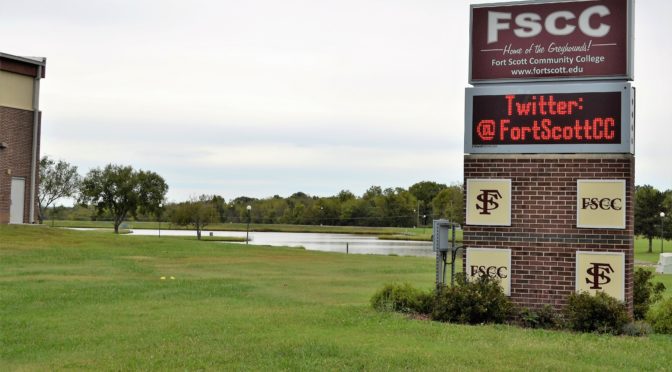
PRESS RELEASE – Fort Scott Community College Special Board Meeting
March 13, 2026
The Board of Trustees of Fort Scott Community College met in special session at 12:00 p.m. on Thursday, March 12, 2026, in Burris Hall.
Vice Chair Chad McKinnis opened the meeting.
Leadership reports were shared by the following:
Dr. Larry Guerrero, Vice President of Academic Affairs, presented information on academics, including Farm & Ranch Management certificates, the addition of an Equine Management & Production program, and adding a Pharmacy Technician Certificate.
Lindsay Hill, Dean of Advancement, provided updates on the facilities master plan; the fleet management plan, which includes the disposal of some vehicles; and Foundation updates, including fundraising for soccer field enhancements, Hall of Fame Alumni Weekend taking place May 1–2, the annual scholarship dinner, and a scholarship drive aimed at establishing new endowed funds.
Dave Wiemers, Athletic Director, celebrated that the men’s basketball team has advanced to the National Tournament, with its first game on Monday at 9:00 a.m. He also provided an update to the board on the 2026 Athletics Hall of Fame inductees, who will be honored at a ceremony on May 2 during Hall of Fame Weekend.
Gina Shelton, CFO/Vice President of Finance & Operations, updated the board on ongoing accounting work, audit progress, student refunds issued, and the upcoming rodeo weekend, noting the positive economic impact these activities have in the community.
Vanessa Poyner, Vice President of Student Affairs, presented an update on the Strategic Plan work being done through committee efforts. Mrs. Poyner reviewed the six goals established by the committee, as well as the work to be done on tactics and measurable outcomes. She also reviewed changes to the employee scholarship.
Dr. Jack Welch, President, shared an update on visits to school districts over the last few weeks and the feedback being received about FSCC through that outreach.
The board reviewed agenda items for the March 13, 2026, regular meeting. The remainder of the time was spent on board training on goal setting, guided by Dr. Michelle Hubbard with KASB.




.png "Blue_and_White_Veterans_Day_Instagram_Post_(1).png")
.png "legislation_website_graphics_(10).png")


.JPG "National_Oilseed_Processors_(2).JPG")