Category Archives: Government

FS City Commission Agenda for March 7

NOTICE OF AND AGENDA FOR REGULAR

MEETING OF FORT SCOTT CITY COMMISSION

To view entire packet:

DOC030423-03042023115447


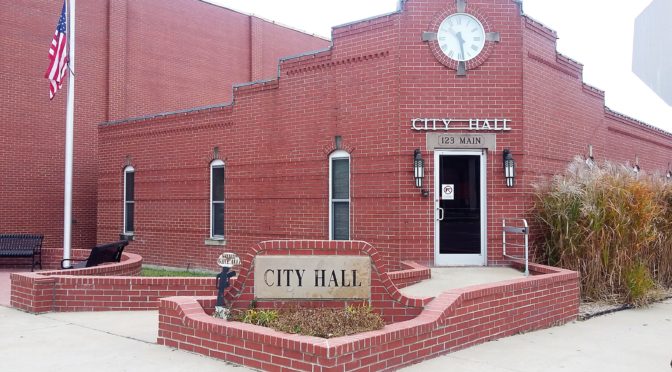
CITY HALL COMMISSION ROOM – 123 SOUTH MAIN ST.

March 7, 2023 – 6:00 P.M.


   Roll Call:

  1.       J. Jones     T. Van Hoecke     E. Woellhof     K. Harrington     M. Wells
  2.      Flag Salute:
  • Invocation: Regan Wells


  1. Approval of Agenda:
  2. Consent Agenda:
  3. Approval of minutes of the regular meeting of February 21, 2023


  1. Approval of Appropriation Ordinance 1331-A totaling $311,195.45


  1. Public Comment:

Sign up required. Comments on any topic not on agenda and limited to five (5)      minutes per person, at Commission discretion.


VII.      Old Business:  


  1.   Contract – City Manager, Brad Matkin


VIII.     Appearances:


  1. Mike Miles – Fire Department Retention presentation
  2. Bourbon County Casa – Requesting donation from the City


  1. 3. Healthy Bourbon County Action Team – Update on Center for Economic Growth – Jody Hoener, Rachel Carpenter, Dacia Clark


  1. Cory Bryars – Request to close Riverfront Park September 29th and 30th, 2023 for the Care to Share Event


  1. Update on status of 1107 W. 6th St. – Contract of Sale – James Malveaux


  1. Public Hearing: None
  2. New Business:
  3. Discussion of 10 N. National property
  4. Consideration of Utility Easement Adjustment on Purchased Lake Lot
  5. Consideration for purchase of Storm Siren – Walnut Hill – Chief Bruner
  6. Consideration for purchase of Body Cameras – Chief Pickert
  7. Consideration of Paint for Striping Machine – Tom Coffman
  8. Purchase of Attachment for Skid Loader – Tom Coffman
  9. Consideration of Annual Water Meter Changeout Program – Bill Lemke
  10. Consideration 1107 W. 6th Street Bids
  11. Consideration of Banking Service Bids
  12. Consideration of Ground Lease Bids
  13. Consideration of Fort Scott Pavilion Bids – J. Dickman
  14. Consideration of CDBG Sewer Project Bids – J. Dickman
  15. Consideration of RFQ for US 54-CCLIP Geometric Improvements – Phase I


  1. Reports and Comments:
  2. Interim City Manager Comments:
  3. Engineering Comments:
  4. Commissioners Comments:
  5. VanHoecke –
  6. Woellhof –
  7. Harrington –
  8. Jones –
  9. Wells –


  1. City Attorney Comments:


XII.        Executive Session – If requested, (please follow script in all motions for   Executive Sessions)


XIII.        Adjournment:


Ag Producers Safety Net Program

Agricultural Producers Have Until March 15 to Enroll in USDA’s Key Commodity Safety Net Programs 


Manhattan, Kansas, March 3, 2023 – Agricultural producers who have not yet enrolled in the Agriculture Risk Coverage (ARC) or Price Loss Coverage (PLC) programs for the 2023 crop year have until March 15, 2023, to elect and enroll a contract. The U.S. Department of Agriculture (USDA) offers these two safety net programs to provide vital income support to farmers experiencing substantial declines in crop prices or revenues.
“The Agriculture Risk Coverage and Price Loss Coverage programs provide critical protection to many American farmers. As producers across the country deal with market volatility and natural disasters, these programs offer much-needed stability,” said Dennis McKinney, State Executive Director for FSA in Kansas. “I am encouraging producers to reach out to their county offices to learn about program eligibility and election options today, so that they can begin the enrollment process as soon as possible.”


Producers can elect coverage and enroll in ARC-County or PLC, which are both commodity-by-commodity, or ARC-Individual, which covers the entire farm. Although election changes for 2023 are optional, producers must enroll through a signed contract each year. Additionally, if a producer has a multi-year contract on their farm and makes an election change for 2023, they will need to sign a new contract.


If producers do not submit an election by the March 15, 2023, deadline, the election remains the same as the 2022 election for commodities on the farm. Farm owners cannot enroll in either program unless they have a share interest in the commodity.


In Kansas, producers have completed 74,828 contracts to date, representing 72% of the more than 104,000 expected contracts.


Producers who do not complete enrollment by the deadline will not be enrolled in ARC or PLC for the 2023 year and will not receive a payment if triggered.


Producers are eligible to enroll farms with base acres for the following commodities:  barley, canola, large and small chickpeas, corn, crambe, flaxseed, grain sorghum, lentils, mustard seed, oats, peanuts, dry peas, rapeseed, long grain rice, medium and short grain rice, safflower seed, seed cotton, sesame, soybeans, sunflower seed and wheat.
Decision Tools


In partnership with USDA, two web-based decision tools are available to assist producers in making informed, educated decisions using crop data specific to their respective farming operations:

  • Gardner-farmdoc Payment Calculator, a tool available through the University of Illinois allows producers to estimate payments for farms and counties for ARC-CO and PLC.
  • ARC and PLC Decision Tool, a tool available through Texas A&M University that allows producers to estimate payments and yield updates and expected payments for 2023.


Crop Insurance Considerations and Decision Deadline


ARC and PLC are part of a broader safety net provided by USDA, which also includes crop insurance and marketing assistance loans.


Producers are reminded that ARC and PLC elections and enrollments can impact eligibility for some crop insurance products.


Producers on farms with a PLC election have the option of purchasing Supplemental Coverage Option (SCO) through their Approved Insurance Provider. However, producers on farms where ARC is the election are ineligible for SCO on their planted acres for that crop on that farm.


Unlike SCO, the Enhanced Coverage Option (ECO) is unaffected by an ARC election. Producers may add ECO regardless of the farm program election.


Upland cotton farmers who choose to enroll seed cotton base acres in ARC or PLC are ineligible for the stacked income protection plan (STAX) on their planted cotton acres for that farm.


Producers should contact their crop insurance agent to make certain that the election and enrollment made at FSA follows their intention to participate in STAX or SCO coverage. Producers have until March 15, 2023, to make the appropriate changes or cancel their ARC or PLC contract.


More Information


For more information on ARC and PLC, producers can visit the ARC and PLC webpage or contact their local USDA Service Center.


USDA touches the lives of all Americans each day in so many positive ways. In the Biden-Harris administration, USDA is transforming America’s food system with a greater focus on more resilient local and regional food production, fairer markets for all producers, ensuring access to healthy and nutritious food in all communities, building new markets and streams of income for farmers and producers using climate smart food and forestry practices, making historic investments in infrastructure and clean energy capabilities in rural America, and committing to equity across the Department by removing systemic barriers and building a workforce more representative of America. To learn more, visit www.usda.gov.


#

USDA is an equal opportunity provider, employer and lender.


Take Down Tobacco

Kansas Department of Health and Environment Resist Program, and the Tobacco Free Kansas Coalition host National Take Down Tobacco Day at the Capitol

TOPEKA – Today, members of the Kansas Department of Health and Environment’s Resist program and the Tobacco Free Kansas Coalition hosted Take Down Tobacco Day at the Capitol – a national day of activism where youth are encouraged to speak out against commercial tobacco companies and speak with policymakers about tobacco prevention.

“Take Down Tobacco Day is a great opportunity to unite communities and create a unified voice to stand up to commercial tobacco companies,” said Bryce Chitanavong, youth tobacco prevention coordinator. “Tobacco companies use deceitful marketing tactics to target the youth because they see them as future customers. We want them to know that we won’t allow it.”

For most people, tobacco use starts when they are young. Nearly 9 out of 10 adults who smoke cigarettes daily first try smoking by the age of 18. Young people are even more vulnerable to nicotine addiction as their brains develop. Commercial tobacco use is the leading cause of preventable disease, disability and death in the United States. The use of tobacco products in any form is unsafe, regardless of whether it is smoked or not.

Previously known as Kick Butts Day, Take Down Tobacco Day provides an opportunity to educate students about the importance of youth advocacy in tobacco prevention. The American Heart Association provided advocacy training on the evening of March 1 to prepare students to speak with their policymakers. Each group that registered will get a chance to meet with their local representative and discuss tobacco prevention with them.

Resist is a youth-led program focusing on peer-to-peer education, awareness and policies preventing tobacco and electronic cigarette/vaping use. Resist chapters are locally established and hold community awareness events to promote tobacco-free environments. Resist is made possible with the support of the Kansas Department of Health and Environment and the Tobacco Free Kansas Coalition.

Resources are available for people who want to quit smoking or vaping. Call 1-800-QUIT-NOW (784-8669) or visit ksquit.org.

###


KDADS Announces $66 Million in Facility and Workforce Training Expansion Grants


TOPEKA – The Kansas Department for Aging and Disability Services today announced $66 million has been made available through the Strengthening People and Revitalizing Kansas (SPARK) Executive Committee and State Finance Council to close service gaps in the continuum of care by addressing statewide shortages of health and behavioral health services and the state’s increasing demand for a well-trained healthcare workforce.

The funds, approved by the State Finance Council in December, are available to service providers, educational institutions, local units of government, and non-profit organizations to specifically address three program areas: expansion of health care facilities; expanding the reach of current service providers; and workforce training expansion.

“The $66 million in SPARK funding allocated to KDADS can make a significant difference in expanding access to services by funding new facilities, program expansions, and workforce training,” KDADS Deputy Secretary of Hospitals and Facilities Scott Brunner said. “KDADS is excited to put these funds to use in communities across Kansas to meet the needs of people with mental illness, disabilities, and long-term care needs.”

Applicants must specify which of the following three program areas their proposal addresses:

Program 1: Expansion of health care facilities.  KDADS seeks applications from service providers, local units of government, established partnerships of providers, or non-profit organizations to expand health care facilities.  The facility expansion must result in more services being delivered within a defined geographic area or clearly increase service capacity through more licensed bed space, expanded treatment facilities, or additional credentialed providers.  Expanded health care facilities must deliver more services in one or more of the following areas:

  • Behavioral health
  • Services for adults or children in acute psychiatric crisis
  • Forensic evaluation and restoration for criminal competency cases
  • Community based services for individuals with disabilities that would otherwise require nursing facility level of care

Program 2: Expand reach of current service providers.  KDADS seeks applications from Medicaid enrolled service providers to deliver Medicaid services through innovative delivery models using technology to expand the reach of current service providers or to reach additional Medicaid eligible beneficiaries.  Grantees must describe how their proposed intervention expands access to services for underserved individuals or communities.

Program 3: Workforce Training Expansion.  KDADS seeks applications from providers, local units of government, educational institutions, or non-profit organizations to expand workforce training.  Workforce training expansion must result in an increase in students being trained to serve in the medical field.  Grantees must document the number of trainees and how they will impact the future health care workforce.

KDADS’s application process is open now, with submissions closing March 17 at 5:00 p.m. and awards announced March 29.

Applicants and any questions regarding the funding opportunity should be submitted to [email protected]. More information about this funding opportunity and the complete Request for Application can be found on the KDADS website: https://kdads.ks.gov/funding-opportunities.

###

Governor Kelly Proclaims March Problem Gambling Awareness Month

Governor Kelly Proclaims March Problem Gambling Awareness Month

TOPEKA – Governor Laura Kelly has signed a proclamation designating March Problem Gambling Awareness Month (PGAM) in Kansas. The Kansas Department for Aging and Disability Serves (KDADS), in collaboration with the Kansas Coalition on Problem Gambling (KCPG), recognizes March as PGAM as part of the national campaign held annually. The 2023 campaign theme is “Celebrating 20 Years” (#PGAM2023).

Problem gambling is defined as all gambling behavior patterns that compromise, disrupt or damage personal, family or vocational pursuits. Approximately 2 million U.S. adults (1% of the population) are estimated to meet criteria for severe problem gambling. Another 4-6 million (2-3%) meet the criteria for mild or moderate problem gambling. Problem gambling affects thousands of Kansans of all ages, races and ethnic backgrounds and can have a significant societal and economic cost for individuals, families, businesses, and communities.

“The good news is problem gambling is treatable and treatment is effective in minimizing harm,” KDADS Problem Gambling Program Manager Carol Spiker, LAC, KCGC, said. “It’s vital to de-stigmatize issues around problem gambling so we can reach more people to let them know there are programs and information out there to address their problem head on.”

One intervention tool, or harm reduction strategy, that has seen success in recent years in Kansas is the self-exclusion program. Self-exclusion is a voluntary process where a person bans themselves from entering specific gambling venues, or from accessing online providers. All Kansas gambling providers are required to provide the option to customers to self-exclude from accessing their venue or their products. Individuals enter into an agreement that excludes them for an agreed minimum period of time. The agreements authorize venue management to take reasonable steps to remove individuals on the self-exclusion list from state-owned casino property or the online gaming app of a state-owned casino. For some, self-exclusion is a step taken when other methods of minimizing harm have been tried without much success. For others, self-exclusion can be the first step.

Problem Gambling Awareness Month is designed to help raise awareness of the prevention, treatment and recovery services, and harm reduction strategies available to those adversely affected by gambling.

To get help for a gambling problem for you or a loved one, please call the Kansas Problem Gambling Helpline at 1-800-522-4700 (or 1-800-GAMBLER). The call is free and confidential. No-cost treatment is available to problem gamblers and concerned others through the Problem Gambling and Addictions Grant Fund. For more information about problem gambling and the resources available in Kansas, go to ksgamblinghelp.com.

###

KS Tax Collections Exceed Estimates in February

Governor Kelly Announces February Total Tax Collections Exceed Estimates by Nearly $37 Million

TOPEKA – Governor Laura Kelly today announced that total tax-only collections for February were $549.8 million. That is $36.8 million, or 7.2%, more than the monthly estimate. Those collections were also $47.3 million, or 9.4%, more than in February 2022.

“Revenues have exceeded estimates for 30 out of the last 31 months – a clear sign that our efforts to make Kansas a place where businesses and families want to call home is paying off,” Governor Laura Kelly said. “These revenues will continue to grow our historic budget surplus, making it possible for our legislature to pass responsible tax cuts that help every Kansan, like my ‘Axing Your Taxes’ plan.”

Consistently strong revenues were one of the reasons S&P Global improved Kansas’ credit outlook, which the firm announced yesterday. In its report, S&P cited Governor Kelly’s recommended budgets for fiscal years 2023 and 2024 as indicators of continued fiscal responsibility that could lead to a credit rating upgrade and warned against irresponsible tax plans that could lead to a credit rating downgrade.

Individual income tax collections were $211.3 million in February. That is $6.3 million, or 3.1%, above the estimate and $27.9 million, or 15.2%, more than February 2022.

“The positive trend in tax receipts continues with all of the major tax types, individual income tax, corporate income tax, retailer’s sales tax, and compensating use tax, performing well,” Secretary of Revenue Mark Burghart said.

Corporate income tax collections were $15.3 million, which is $324,000, or 2.2%, more than the February 2023 estimate. Those collections are $8.1 million, or 34.5%, less than in February 2022. It should be noted that February 2022 corporate income tax receipts were greater than February 2023 because of the higher-than-expected collection of nonrecurring corporate audit assessments that occurred that month.

Retail sales tax collections were $203.8 million, which is $13.8 million, or 7.3%, more than the estimate. Those collections are also $8.5 million, or 4.4%, greater than February 2022. Compensating use tax collections were $64.2 million, which is $849,000, or 1.3%, less than the estimate. Those collections were $4.7 million, or 8.0%, more than in February 2022.

Click here to view the February 2023 revenue numbers.

###

KDADS Announces $66 Million in Facility and Workforce Training Expansion Grants


TOPEKA – The Kansas Department for Aging and Disability Services today announced $66 million has been made available through the Strengthening People and Revitalizing Kansas (SPARK) Executive Committee and State Finance Council to close service gaps in the continuum of care by addressing statewide shortages of health and behavioral health services and the state’s increasing demand for a well-trained healthcare workforce.

The funds, approved by the State Finance Council in December, are available to service providers, educational institutions, local units of government, and non-profit organizations to specifically address three program areas: expansion of health care facilities; expanding the reach of current service providers; and workforce training expansion.

“The $66 million in SPARK funding allocated to KDADS can make a significant difference in expanding access to services by funding new facilities, program expansions, and workforce training,” KDADS Deputy Secretary of Hospitals and Facilities Scott Brunner said. “KDADS is excited to put these funds to use in communities across Kansas to meet the needs of people with mental illness, disabilities, and long-term care needs.”

Applicants must specify which of the following three program areas their proposal addresses:

Program 1: Expansion of health care facilities.  KDADS seeks applications from service providers, local units of government, established partnerships of providers, or non-profit organizations to expand health care facilities.  The facility expansion must result in more services being delivered within a defined geographic area or clearly increase service capacity through more licensed bed space, expanded treatment facilities, or additional credentialed providers.  Expanded health care facilities must deliver more services in one or more of the following areas:

  • Behavioral health
  • Services for adults or children in acute psychiatric crisis
  • Forensic evaluation and restoration for criminal competency cases
  • Community based services for individuals with disabilities that would otherwise require nursing facility level of care

Program 2: Expand reach of current service providers.  KDADS seeks applications from Medicaid enrolled service providers to deliver Medicaid services through innovative delivery models using technology to expand the reach of current service providers or to reach additional Medicaid eligible beneficiaries.  Grantees must describe how their proposed intervention expands access to services for underserved individuals or communities.

Program 3: Workforce Training Expansion.  KDADS seeks applications from providers, local units of government, educational institutions, or non-profit organizations to expand workforce training.  Workforce training expansion must result in an increase in students being trained to serve in the medical field.  Grantees must document the number of trainees and how they will impact the future health care workforce.

KDADS’s application process is open now, with submissions closing March 17 at 5:00 p.m. and awards announced March 29.

Applicants and any questions regarding the funding opportunity should be submitted to [email protected]. More information about this funding opportunity and the complete Request for Application can be found on the KDADS website: https://kdads.ks.gov/funding-opportunities.

Mural, Public Art Funding Available from Department of Commerce


TOPEKA – The Kansas Department of Commerce today announced multiple opportunities to support the creation of murals and public art in the state though coordinated funding programs from the Kansas Creative Arts Industries Commission (KCAIC) and the Office of Rural Prosperity (ORP). The programs will provide funding for communities to use public spaces for the purposes of artistic use and creative endeavors.

“Public art is one of many factors that drives decisions about where people will stop for a meal, open a business or move their family,” Lieutenant Governor and Secretary of Commerce David Toland said. “Commerce looks forward to partnering with communities across Kansas on this important quality-of-life opportunity that supports economic growth and community pride.”

The programs are designed to utilize artists, creative interventions, and arts organizations to increase community vibrancy and provide space for artistic expression and public engagement.

KCAIC’s Mural and Public Art Program applications are open through March 13 to all 501c3 organizations, units of local government, and federally recognized tribes across Kansas. The maximum request is $10,000. A 100% match is required for the award which must be at least 25% cash match and up to 75% in-kind match. Projects must be completed by December 31, 2024. Applications may be found here.

“Public art projects provide an opportunity for communities to reflect on and celebrate their unique story,” KCAIC Interim Director Kate Van Steenhuyse said. “Whether large or small in scale, public art becomes part of community identity, and can have far-reaching benefits well beyond the installation itself.”

ORP’s Rural Mural Program will also be accepting new applications from March 13 to May 1. The maximum grant award will be $7,500. Only applicants from communities with a population fewer than 15,000 are eligible. A 100% match is required for the award which must be at least 25% cash match and up to 75% in-kind match. Projects must be completed by December 31, 2023. ORP will have a Rural Mural Planning Webinar at 2:00 p.m. Friday, March 3 (register here). Once the application window is open, applications will be available here.

“Last year, a total of 37 Rural Mural projects were completed in 14 different communities,” ORP Director Trisha Purdon said. “Our office looks forward to working with a whole new group of partners in 2023.”

The Kansas Department of Commerce is committed to helping communities through financial support, technical assistance and process guidance as they imagine new projects through the Mural Making initiative. As part of this effort, an online resource guide designed to put communities on a path for growth and prosperity through arts and culture and place-based community development is available here.

About the Kansas Department of Commerce:

As the state’s lead economic development agency, the Kansas Department of Commerce strives to empower individuals, businesses and communities to achieve prosperity in Kansas. Commerce accomplishes its mission by developing relationships with corporations, site location consultants and stakeholders in Kansas, the nation and world. Our strong partnerships allow us to help create an environment for existing Kansas businesses to grow and foster an innovative, competitive landscape for new businesses. Through Commerce’s project successes, Kansas was awarded Area Development Magazine’s prestigious Gold Shovel award in 2021 and 2022, and was awarded the 2021 Governor’s Cup by Site Selection Magazine.

###

U.S. Senator Jerry Moran Newsletter

Speaking at Grand Marshal’s Reception in Liberal
On Monday evening, I joined members of the Liberal community to celebrate the 74th year of the International Pancake Day Race. This friendly competition between Olney, England, and Liberal, Kansas, is an event I have attended since well before my time in Congress. These local festivities are great examples of the many things that make the places we call home special.

During this celebration, I was pleased to congratulate Charles Posl on his induction into the Pancake Hall of Fame, as well as to honor 2023 Grand Marshal Tim Fowler. Thank you to Gary Classen, Mike Brack, Sally Fuller and the entire Pancake Day Board. I also appreciated the opportunity to visit with State Treasurer Steven Johnson, Mayor Jose Lara, County Commissioner Scott Carr, City Manager Rusty Varnado, County Administrator April Warden, City Commissioners Janeth Vazques and Jeff Parsons, County Commissioner Presephoni Fuller, Chamber of Commerce Director Rozelle Webb and Joe Denoyer.

Continue reading U.S. Senator Jerry Moran Newsletter

Legislative Update by State Senator Caryn Tyson

February 24, 2023


What a difference a week makes?  In the two days before turnaround, the halfway point in session, 42 bills were scheduled for debate on the Senate floor, 3 of them were pulled for various reasons.  The list of bills is not made available to Senators or the public until the evening before debate.  On Tuesday evening, 27 bills were scheduled for debate Wednesday.  It makes for an intense environment.  Think of it this way.  In 7 weeks of session, 280 Senate bills have been introduced, 62 that passed out of committee were selected by leadership for debate on the senate floor and passed to the House.  Thirty-eight of the 62 were passed in two days.  Here are a few highlights.


Income Tax cuts passed the Senate in Senate Bill (SB) 33 and SB 169.  SB 33 would exempt Social Security from state income tax.  Some of the amendments that passed during debate include increasing standard deductions each year based on inflation, exempting all retirement accounts from state income tax, and increasing qualifying parameters for the property tax freeze for seniors and disabled veterans that became law last year.  The home valuation limit would go from $350,000 to $595,000.  The 50% exemption of Social Security from income would be 100%.  More Kansans will qualify for the program with these changes.  SB 33 bill passed 36 to 3.  I voted Yes.


SB 169 would create a single 4.75 state income tax rate without increasing taxes.  The bill exempts the first $10,450 for married filing jointly or $5,225 filing single.  This exemption is what keeps the 4.75 rate from being a tax increase on lower income earners.  Currently, individuals with taxable income of $2,500 or below are not taxed, $5,000 for married filing jointly.  But if a taxpayer makes $2501, there is a “cliff”, meaning that a dollar difference results in a taxpayer paying 3.1 percent on the entire income amount.  After a single filer reaches the $2,501 threshold, taxable income not over $15,000 is taxed at 3.1, income between $15,001 and $30,000 is taxed at 5.25, and income above $30,000 is taxed at 5.75.  For married filing jointly, the thresholds double.  It is obvious the 4.75 rate simplifies state income taxes and would get rid of the cliff for low-income filers.  It will allow Kansans to keep more of their hard-earned money, instead of growing government.  I voted yes.  The bill passed 22 to 17.


State Grocery Taxes are scheduled to go to zero in 2025, unless SB 248 becomes law.  In SB 248, all grocery taxes, state and local, would go to zero in 2024.  It is a big change.  Some local governments are against the bill, but it is tax relief that many Kansans need.  The bill passed 22 to 16.  I voted yes.


Secure Elections by prohibiting ballot drop boxes passed the Senate 21 to 19 in SB 208.  I voted yes.  Another attempt was made to make odd year elections partisan in SB 210.  I did not support this change.  The bill failed on a vote of 16 to 24.  Write-in candidates for certain elections would have to file an affidavit in SB 221.  The bill was brought by election officials that want to save time when counting ballots, so if a person writes in Micky Mouse it will not count unless there is a signed affidavit for Micky.  It’s your ballot and you should be able to write-in whomever you please.  I voted no, but the bill passed 29 to 7.


Women’s Bill of Rights, SB 180, would designate biological sex at birth, male or female.  It will protect women’s sports and stop situations such as males being housed in a female prison because it would require separate accommodations.  It should also stop this nonsense on school trips – Eudora girl forced to room with biological male on school-sponsored overseas trip. The Senate passed it on a vote of 26 to 10.  I supported the legislation.


It is an honor and a privilege to serve as your 12th District State Senator.

Caryn