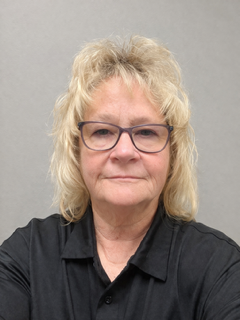
Fort Scott, KS – The Board of Trustees of Fort Scott Community College has voted to extend President Jack Welch’s contract through 2028. The decision was made following an executive session held in accordance with Kansas statute at the Board meeting on Monday, February 16.
Board members expressed continued confidence in President Welch’s leadership and commitment to advancing the college’s mission of serving students and the broader community.
“I want to sincerely thank the Fort Scott Community College Board of Trustees for their confidence in me and for extending my contract to continue serving as President,” said Welch. “I am grateful for their trust and for the opportunity to keep building on the progress we are making. Stabilizing and strengthening this institution is a process, and I appreciate a Board that understands the importance of steady, focused leadership. Together, with an outstanding faculty and staff, we are committed to serving our students and community with integrity and purpose. I look forward to continuing this important work on behalf of Fort Scott Community College.”
The contract extension ensures continuity in leadership as the college continues efforts to strengthen academic programs, expand workforce development opportunities, and support strategic growth initiatives across its campuses.
I have been waiting to write an update until I had some progress to report on Benny’s Bill (HB 2412) which as many of you know is legislation that I am sponsoring to strengthen penalties for child endangerment to a child under the age of six years old. The bill passed final action in the house with a vote of 124-0 which was unanimous of all representatives present. The bill now goes to the Senate where it has been assigned to the Senate Judiciary Committee to repeat the same process that it did in the House of Representatives then hopefully to Governor Kelly.
Another bill that I feel is of interest is HB 2736 which deals with hospitals who offer financial assistance programs to patients in need. The bill calls for unnecessary reporting of a patient’s financial situation even if that patient isn’t interested in receiving assistance. I voted against the bill because of that and other reasons. Apparently many of my colleagues agreed with me because it was voted down 102-20.
HB 2368 which provided for the licensure of anesthesiologist assistants is another bill that was voted down. Kansas currently does not have people of that occupation working in the state but we currently have CRNAs (Certified Registered Nurse Anesthetists) who operate with more autonomy than their AA counterparts and are a better fit for the more rural areas. I have received much feedback from both sides of that debate but most of what I have heard from our district has been in opposition to HB 2368.
I keep hearing from constituents about property tax relief and there are a number of proposals out there to address that topic. When any of them come to the House floor in the form of a bill I will take them into consideration and decide on their merits.
That’s it for now but as I always say, feel free to reach out with concerns and if you are ever in Topeka during the session I would love to have you drop by the Capitol. Ad Astra Per Aspera.
The Kansas Senate has passed historic reform to cut through red tape and make building single-family homes faster and easier across our state, unlocking the potential of the American dream in Kansas.
At its core, SB 418 requires local governments to approve single-family homes, speeding up new construction to help ease housing shortages and make homes more affordable. It also allows more practical and affordable building options and treats all residentially-zoned land in cities as suitable for single-family use.
Senator TJ Rose, who carried the bill on the floor, said, “Kansas families have been asking us to help revive the American dream of homeownership, and this bill advances that effort by reducing red tape, allowing more practical and affordable building options, and opening more land for single-family homes. This bill particularly gives younger Kansans hope for the future, knowing that owning a home is now more attainable in our state.”
President Ty Masterson thanked Senator Rose for his work on the historic bill.
“Senator Rose worked for months with cities, builders, realtors, and key advocacy groups to craft this bill and ensure it would pass this session, as evidenced by the bi-partisan vote for the bill. As the father of six and the grandfather of seven, I want young Kansans to know that homeownership is possible. This bill helps fortify single-family homes as the bedrock of the American dream.”
###
Kansas Senate President Ty Masterson | 300 SW 10th St. 332-E | Topeka, KS 66612 US
Commerce Reopens Tax Credit Opportunities for Nonprofits, Healthcare Entities
TOPEKA – Lieutenant Governor and Secretary of Commerce David Toland today announced the latest round of the Community Service Program (CSP) Tax Credits, making $4.14 million in state tax credits available for donors to qualified projects.
CSP Tax Credits provide an opportunity for private, non-profit organizations and public healthcare entities to incentivize private donations for one-time, transformational projects that expand access to essential services and result in lasting benefits for their respective communities.
“Making Kansas the best place for all to call home takes strategic collaboration and innovative thinking,” Lieutenant Governor and Secretary of Commerce David Toland said. “CSP Tax Credits are a powerful tool our Kansas-based nonprofits and healthcare organizations can leverage to create or improve critical community assets — especially in our rural communities.”
Under the program, the state authorizes nonprofit organizations to offer tax credits to donors that make contributions toward approved projects. Organizations are chosen through a competitive selection process.
Approved projects include capital campaigns, major renovations, significant equipment purchases or capacity-building initiatives. Projects must fall within one or more eligible categories:
Community services (including childcare)
Non-governmental crime prevention
Youth job and technical training
Healthcare services
Applications will be open March 1 through April 30, 2026. Those applying may request up to $200,000 in tax credits. Applicants in rural communities with populations less than 15,000 are eligible for a 70% credit. Applicants not located in rural areas are eligible for a 50% credit. Awards will be announced by June 1 and the tax credits will activate July 1.
If your organization is interested in applying for CSP, the Kansas Department of Commerce will host an introductory webinar at 1:00 p.m. Thursday, February 26. To register for the webinar, visit here.
For more information regarding CSP, including program guidelines and application materials, click here. Interested parties may also contact Program Manager Kerri Falletti at [email protected].
About the Quality Places Division:
Established in 2024, the Quality Places Division at the Kansas Department of Commerce exists to improve quality of life in communities across the state through various programs and services. The Kansas Department of Commerce understands the immense role played by strong communities in economic development and prioritizes investments in people and communities as major contributors to the overall strength of the Kansas economy. To learn more, click here.
About the Kansas Department of Commerce:
As the state’s lead economic development agency, the Kansas Department of Commerce strives to empower individuals, businesses and communities to achieve prosperity in Kansas. Commerce accomplishes its mission by developing relationships with corporations, site location consultants and stakeholders in Kansas, the nation and world. Our strong partnerships allow us to help create an environment for existing Kansas businesses to grow and foster an innovative, competitive landscape for new businesses. Through Commerce’s project successes, Kansas was awarded Area Development Magazine’s prestigious Gold Shovel award in 2021, 2022, 2023 and 2024, and was awarded the 2021 and 2022 Governor’s Cup by Site Selection Magazine.
Governor Kelly Announces $3M to Develop Unmanned Aerial Systems Technology for Agricultural Research
~Grant Builds on Kansas’ Strengths in Agriculture and Aviation Research~
TOPEKA – Governor Laura Kelly and The Kansas Department of Agriculture today announced that Kelly Hills Unmanned Systems has been awarded $3 million to develop Beyond Visual Line of Sight (BVLOS) Unmanned Aerial Systems (UAS) technology for agricultural use. This technology can be used by farmers, ranchers, and agriculture business retailers to improve yields, cut input costs, manage livestock, and expand opportunities for precision agriculture development in the state of Kansas.
“Through investments into cutting-edge precision agriculture technology, we are giving Kansas farmers and ranchers a leg up,” Governor Laura Kelly said. “Kansas’ vast cropland and grassland acreage, as well as our diversified agriculture industry, make us the ideal location for these developments.”
The funding was approved by the Kansas Legislature and Governor Kelly during the 2025 legislative session to accelerate the development of agricultural and aviation technology in Kansas given the state’s workforce, strong manufacturing base, and role as a leader in precision agriculture and aviation technology.
“Kelly Hills is building on a storied history of agriculture and aviation innovation in the state of Kansas,” said Kansas Department of Agriculture Secretary Mike Beam. “This investment will ensure that Kansas farmers and ranchers remain at the forefront of the industry.”
“In applying for this funding, Kelly Hills worked with all our major aviation research institutions in Kansas, including Wichita State,” said Representative Avery Anderson, Chair of the House Committee on Transportation and Public Safety Budget. “This grant shows that there is no better place for businesses interested in innovative aviation and agriculture technology than right here in Kansas.”
“My district is full of some of the best farmers and ranchers in the state,” said Senator Craig Bowser, 1st District. “It only makes sense that companies like Kelly Hills would want to do research here on new and emerging technologies to benefit our farmers and ranchers.”
“This proposal draws from partnerships from around the state, including in Johnson County, to provide the next generation of technology for two of our states’ largest industries: aviation and agriculture,” said Representative Jo Ella Hoye, Ranking Minority Member on the House Committee on Transportation and Public Safety Budget. “This research will help create opportunities for small businesses to bring new products to market that benefit the entire state’s economy. My family has three generations of ag pilots, so I am looking forward to the potential for safety improvements while simultaneously preserving the bountiful contributions from aerial applicators.”
Kelly Hills Unmanned Systems was established in 2024 by Heinen Brothers Agra Services to bring advanced Unmanned Aerial Vehicles (UAVs) and autonomous ground vehicles into the agricultural sector. Kelly Hills’ mission is to enhance farming operations by integrating cutting-edge technology that improves precision, efficiency, and safety.
“This investment in Beyond Visual Line of Sight radar technology is a critical step toward establishing Kansas as a national leader in unmanned aviation. The support from Governor Kelly, Representative Anderson, Senator Bowser, and other key legislators sends a clear signal that Kansas intends to lead in both advanced aviation and precision agriculture,” said Lukas Koch, CEO of Kelly Hills Unmanned Systems. “Kelly Hills is focused on commercializing UAS technology and strengthening an internationally recognized testing environment that attracts federal partnerships, private investment, and next generation jobs.”
Kelly Hills works closely with leading UAV manufacturers and collaborates with the FAA, the Kansas Department of Transportation, and the University of Alaska at Fairbanks to ensure operations meet the highest safety and regulatory standards. In 2024, Kelly Hills earned an FAA license to operate a 49,000 sq mile UAV test range. The BVLOS technology will support and enhance the capabilities of the Kelly Hills range.
Work will begin the week of Feb. 16 to replace the Little Osage River bridge on K-3 about two miles south of the Linn County line, according to the Kansas Department of Transportation.
The 36-mile official detour (see map) will be in place later that week, conditions permitting. KDOT uses state highways for official detour routes for safety, weight and maintenance concerns.
Southbound K-3 traffic should follow the signed detour west on K-31 to U.S. 59, south on U.S. 59 to U.S. 54 and east on U.S. 54. Northbound traffic should follow the detour route in the opposite direction.
The project is expected to be completed by December, conditions permitting.
The new bridge will be 313 feet long and 32 feet wide with 12-foot driving lanes and 4-foot shoulders.
KDOT awarded the $4.19 million construction contract to Bridges Inc., of Newton. The project is funded through KDOT’s 10-year, nearly $10 billion Eisenhower Legacy Transportation Program (IKE), which is focusing on preserving, modernizing and expanding Kansas’ transportation system.
Check KDOT’s www.kandrive.gov for updated highway conditions and construction details. Persons with questions may contact KDOT Public Information Officer Ray Nolting at (620) 902-6433.
AG Kris Kobach: New Kansas VINE features assist victims of crime
TOPEKA – (February 19, 2026) – The Office of Attorney General is excited to announce that Kansas VINE now includes a searchable “Service Provider Directory” and an “I Need Guidance” feature.
VINE is the automated victim notification service for custody status on adult offenders held in county jail facilities in Kansas. VINE is a safety resource often used by crime victims needing immediate notification when an offender is released from jail or changes custody status.
The new “Service Provider Directory” and the “I Need Guidance” features provide access to resources from a central place, making it easier for a person to locate assistance. VINE users can search for state-approved local and national service providers by organization name, services they offer, and/or the type of crime. The providers in the directory can help with needs such as crisis services, counseling, housing, and financial resources, and victim advocacy.
“Our division’s experience talking to people across the state confirms that it can be overwhelming for victims of crime to locate and connect with services and support immediately after a crime occurred; and even months later when longer-term impacts emerge,” says Arica Roland, Associate Division Chief, Victim Services Division. “We are currently working with service providers across the state to build the directory to best serve victims of crime. During the beginning stages of building the directory, search requests will return with limited results. As more service providers are added to the directory, search requests will display additional resources available.”
Kansas Service Providers: We Need Your Help
The Office of the Attorney General and Kansas VINE are asking for Service Providers’ assistance. Please consider submitting your agency’s information to join the Kansas VINE Service Provider Directory. To join the Kansas VINE Service Provider Directory, go to the National Service Provider website, select Kansas, review the State Guidelines, select “Join” directory, and complete the survey. https://vine.equifax.com/service-provider-directory
Kansas VINE is free, confidential, and is accessible through the internet, telephone, and mobile App. VINE’s automated notifications are delivered via telephone, email, text message, and in-app. TTY (hearing impaired) service is also available. VINE information is available in English and Spanish. Kansas VINE is available-24/7/365 and can be reached by calling toll-free 1-866-574-8463, visiting www.vinelink.com, or via the VINELink mobile app.
Submitted photo. Governor Laura Kelly is second from right. The scene behind is a Hwy 69 Project poster.
Governor Kelly Celebrates Completion of 69Express Project in Overland Park
TOPEKA – Governor Laura Kelly was joined by Representative Sharice Davids (KS-03), the Kansas Department of Transportation (KDOT), local leaders, and state and local officials today in Overland Park to cut a ceremonial ribbon marking the opening of Kansas’ first express lanes on the U.S. 69 Express corridor. The project was among the first selected for funding under the Eisenhower Legacy Transportation Program (IKE), a 10-year bipartisan initiative to modernize and expand Kansas’ transportation infrastructure.
KDOT’s $572 million design-build project, known as 69Express, included reconstruction of U.S. 69 in Overland Park, widening the highway with added express lanes – one northbound and one southbound between 103rd and 151st Streets – and interchange improvements at U.S. 69/167th Street.
The express lanes are scheduled to open to traffic on Saturday, Feb. 21, 2026, at 8:00 a.m.
“The launch of Kansas’ first express lanes is a huge win for infrastructure in our state,” Governor Laura Kelly said. “This project represents a forward-thinking approach to reducing congestion immediately while building a foundation for Johnson County’s future economic growth.’’
More than 80,000 vehicles use the 69Express corridor each day, with traffic volume expecting to increase by more than 30% by 2050. The express lanes will allow KDOT to manage congestion using tolls that vary based on traffic levels and time of day to keep express lane trips congestion-free. When drivers choose to pay the toll and move into the express lanes, traffic is then reduced in the non-tolled general-purpose lanes as well.
“This is a big day for our community,” said Representative Sharice Davids (KS-03). “Anyone who lives, works, or drives through Johnson County knows the frustration of sitting in traffic on U.S. 69. Too many families have also felt the pain of crashes on the highway. These new lanes will ease congestion, make travel safer, and give thousands of Kansans a more predictable, reliable commute every day. I’m proud of this team effort.”
Drivers will be able to enter and exit the express lanes at three points along U.S. 69: 103rd Street, Blue Valley Pkwy, and 151st Street. Dynamic messaging signs at these entry points will show the current toll rate to the driver’s destination. The rates shown on the sign are for drivers with two-axle vehicles and a KTAG or compatible transponder. These drivers will pay the lowest toll rate on 69Express – 50% lower than vehicles without a KTAG.
“69Express is the result of successful collaboration between our federal, state, and local partners,” said Kansas Department of Transportation Secretary Calvin Reed. “Together, we’re implementing express lanes as a sustainable congestion-management solution to provide drivers with reliable travel times today and as traffic grows in the future.”
The Kansas Turnpike Authority is KDOT’s tolling partner for 69Express. Drivers are encouraged to visit DriveKS.com, Kansas’ toll payment system, to set up their accounts and order a free KTAG for use on 69Express and all other Kansas toll facilities, as well as on compatible systems in Colorado, Oklahoma, Texas, and Florida.
69Express was funded by federal, state, and local sources and completed as part of Kansas’ IKE Program. Additional project information is available on the 69Express project website, www.69express.org.
Guests should enter through the main east doors; the meeting room is located down the hallway on the right.
We hope to see you there!
Chamber members and the community are invited to attend a Capitol Update Over Coffee hosted by the Fort Scott Area Chamber of Commerce on Saturday, February 28th, from 9:00 to 10:00 a.m.
The event will take place at Kansas Renewal Institute (KRI), 401 Woodland Hills Blvd., in the McAuley Center. Guests should enter through the main east doors; the meeting room is located down the hallway on the right. KRI will sponsor coffee and light refreshments provided by Common Ground Coffee Co. Tours of the KRI facility will be offered immediately following the event.
Kansas Senator Tim Shallenburger and State Representative Rick James are confirmed to attend. The legislators will provide an update on the current legislative session, share information about the committees on which they serve, and address questions and issues presented by attendees. Bryan Holt will serve as moderator for the event.
Events such as this reflect the Chamber’s ongoing commitment to supporting commerce, building community, and promoting spirit throughout Fort Scott, Bourbon County, and the surrounding area.
For more information, please contact the Fort Scott Area Chamber of Commerce at (620) 223-3566.
Association of Community Mental Health Centers of Kansas
Kyle Kessler of Topeka
Colby Community College
Seth Macon Carter of Colby
Arlen Leiker of Colby
Community Care Network of Kansas
Neil Dean of Emporia
Aaron Dunkel of Topeka
Danielle Hallgren of Junction City
Renee Hively of Emporia
Robert Kraft of Salina
Teresa Lovelady of Wichita
Matthew Schmidt of Newton
Robert Stiles of Topeka
Competitive Carries Association
Daron Jamison of Kansas
Habitat for Humanity
Danielle Johnson of Wichita
Quang Nguyen of Wichita
Ann Patterson of Wichita
Valerie White of Wichita
Shawna Williams of Wichita
ITC Great Plains
Patrick Woods of Topeka
Johnson County Community College
Kate Allen of Overland Park
Chad Carroll of Olathe
Geoff Holton of Lenexa
Valerie Jennings of Shawnee
Tony Miksa of Overland Park
Greg Mitchell of Overland Park
Dawn Rattan of Shawnee
Kansas Agricultural Aviation Association
Rebecca Burns of Wichita
Steve Hitchcock of Lawrence
Kansas City Kansas Community College
Donald Ash of Kansas City
Linda Hoskins Sutton of Kansas City
Greg Mosier of Kansas City
Nathan Solano of Kansas City
Kansas City Regional Clean Cities
Djessicka Saintil of Kansas City
Garden City Community College
Merilyn Douglass of Garden City
Steve Douglass of Garden City
Ryan Ruda of Garden City
Shanda Smith of Garden City
Kansas Principals Association
Heath Henderson of El Dorado
Cara Ledy of Topeka
Eric Sacco of Clifton
Kurt Seiler of Independence
Kelly Whittaker of Ottawa
Main Street America
Casey Woods of Emporia
National Association of Student Financial Air Administrators
Lacey Ledwich of Wichita
Vanessa Rodriguez of Garden City
Patricia Runion of Manhattan
National Sustainable Agriculture Coalition
Brien Darby of Kansas City
Jen Mayer of Salina
Kelsey Whitting of Salina
Salina Regional Health Center
Rob Freelove of Salina
Ashley Hutchinson of Concordia
Diane Mahoney of Olathe
Joel Phelps of Salina
Alan Wheat of Kansas City
SHAPE America
Jennifer Bechard of Kansas City
Michelle Grimes of Pittsburg
Kim Morrissey of Pittsburg
Special Olympics Kansas
Keith Hartner of Manhattan
John Lais of Mission
Connor Lee of Kansas City
Jacob Micka of Wichita
Susan Micka of Lawrence
Ryan Warren of Mission
Swope Health
Jeron Ravin of Kansas City
United Nations Foundation United to Beat Malaria
Gerald Briscoe of Gardner
Nipam Ravel of Overland Park
University of Kansas Engineering
Kyle Christian of Overland Park
Mary Rezac of Lawrence
February 17
Hello,
Welcome to “Kansas Common Sense.” Thanks for your continued interest in receiving my weekly newsletter. Please feel free to forward it on to your family and friends if it would interest them.
Questioning NTSB Chair on Investigation into DCA Midair Collision
On Thursday, during a Senate Committee on Commerce, Science and Transportation hearing, I questioned National Transportation Safety Board (NTSB) Chair Jennifer Homendy following the conclusion of the NTSB’s year-long investigation into the deadly midair collision at Reagan National Airport (DCA) that claimed 67 lives on January 29, 2025. During the hearing, I questioned Chair Homendy about the Federal Aviation Administration’s (FAA) lack of a standardized definition for near misses, the circumstances that kept the safety concerns of air traffic controllers and other FAA employees from being relayed to FAA leadership and the status of aviation safety improvements near DCA since the collision.
In December, the Senate unanimously passed the ROTOR Act, which I introduced with Sen. Ted Cruz (R-Texas) to improve aviation safety, particularly in congested airspace like that of DCA. The NTSB has again affirmed that passing and implementing the ROTOR Act would have saved lives on January 29. Congress must not delay in turning the recommendations of the NTSB’s investigation into action. I look forward to working with my colleagues to make certain that a tragedy like the January 29 midair collision never occurs again.
You can watch my opening remarks and questioning of NTSB Chair Homendy here and here.
Government Funding Update
The Department of Homeland Security (DHS) FY2026 funding bill, which funds critical agencies like the Transportation Security Administration (TSA), the Coast Guard, the Federal Emergency Management Agency (FEMA) and federal law enforcement, advanced out of the Appropriations Committee with bipartisan support. This week, the full Senate failed to pass the bill, resulting in a partial lapse in funding. While the reconciliation bill enacted last year included supplemental resources to continue supporting some of DHS’s functions during a shutdown, the Senate must continue working in a bipartisan fashion to reach an agreement and restore full funding to the federal government as quickly as possible.
Questioning the Secretary of Commerce on Broadband Deployment
On Tuesday, I led a Senate Appropriations Subcommittee on Commerce, Justice, Science and Related Agencies hearing with Secretary of Commerce Howard Lutnick to conduct oversight of the Department of Commerce’s broadband deployment efforts.
During the hearing, I questioned Secretary Lutnick on implementation of the Broadband Equity, Access, and Deployment (BEAD) program by the Department of Commerce and National Telecommunications and Information Administration (NTIA). I emphasized to Secretary Lutnick the importance of successfully delivering all of the resources authorized under the BEAD program to states in order to achieve the objective of the program: connecting unserved and underserved Americans to reliable internet service.
In December, I called on the NTIA to preserve the ability of states to use broadband infrastructure funds as intended by Congress, and I appreciated Secretary Lutnick’s commitment during the hearing to uphold congressional intent in implementing the BEAD program. I look forward to working with him and NTIA to make certain that Kansans and Americans receive the access to broadband promised by BEAD.
You can watch my opening remarks here, and questions for Secretary Lutnick here and here.
Leading Hearing to Review VA Community Care Network Modernization
This week, I led a Senate Committee on Veterans’ Affairs hearing with Department of Veterans Affairs (VA) and the VA Office of Inspector General (OIG) to discuss proposed changes to VA’s community care program. In December, VA issued a Request for Proposals for a new Community Care Network contract, which aims to improve the delivery of care in the community, increase competition and innovation and deliver higher quality care to veterans.
There are many things I find encouraging about how the VA is approaching these new contracts, including its focus on innovation, competition, accountability and addressing persistent challenges in the current community care program that I hear about from Kansans every day. However, these contracts must do more than look good on paper. Instead, they must deliver real results for veterans, VA staff, community care providers and taxpayers by leading to real, measurable improvements in access, choice, outcomes and costs. The conversation at this week’s hearing was productive, and I look forward to learning more about how the VA plans to utilize and implement these changes moving forward.
You can watch my opening remarks here. You can watch my questioning of the witnesses here and here.
Questioning Witnesses on Modernizing Broadcast Ownership Rules On Tuesday, during a Senate Committee on Commerce, Science and Transportation hearing, I questioned representatives of the broadcast and news media industries about the importance of modernizing outdated Federal Communications Commission (FCC) regulations currently governing broadcast ownership. I discussed the complex regulatory framework that broadcasters must navigate to compete in a rapidly evolving media landscape, including a rule preventing broadcasters from reaching more than 39% of U.S. television households.
Last May, I led my colleagues in encouraging FCC Chairman Brendan Carr to modernize outdated broadcast ownership rules to empower local news and broadcasters to compete with today’s multimedia giants. I urge the FCC to act to modernize these rules to better equip broadcasters to serve their communities, support local journalism and benefit the public interest.
You can watch my full questioning of the witnesses here.
Receiving Updates from NATO Allies Italian Ambassador to U.S.
This week, I met with the recently appointed Italian Ambassador to the United States, Marco Peronaci, to discuss the important role the U.S.-Italy relationship plays in advancing American interests abroad. Italy remains one of our closest allies in Europe and a critical partner in NATO, supporting regional security and economic cooperation. As the U.S. continues to navigate complex geopolitical challenges, including Russia’s ongoing aggression in Ukraine and the instability in the Middle East, strong coordination with allies like Italy is critical.
During our conversation, we discussed energy security, defense cooperation and the importance of maintaining strong transatlantic relationships. As a member of the Senate Appropriations subcommittee that funds the State Department, I remain committed to making certain our diplomatic missions are well-resourced and focused on advancing American security. Thank you to Ambassador Peronaci and his team for visiting my office and taking the time to learn more about Kansas.
Greek Ambassador to U.S.
On Monday, I met with Ambassador Antonis Alexandris, the new Greek Ambassador to the U.S. The transatlantic partnership between America and Greece is significant to preserving our nation’s security both at home and abroad. I thank Ambassador Alexandris for meeting with me and look forward to working together to bolster efforts to maintain peace and security in America and abroad.
Announcing Federal Support for Freeman Field Airport in Junction City On Friday, I visited Freeman Field in Junction City to announce that it is receiving $4 million in federal resources for safety improvements and repairs to the runway. The airport plays an important role in the Geary County community and economy, and I helped secure these resources for its safe operation for years to come.
Special thank you to Junction City Public Works Director Ray Ibarra, Junction City Mayor Terry Butler, City Clerk Ariana Lorenzo De Barreto, City Parks and Recreation Director Josh Gray, City Finance Director Jamel Wilcox, City Commissioner Pat Landes, City Attorney Britian Stites, City Assistant Police Chief Cory O’Dell, City IT Director Andrew Darrow, VP of Benesch Engineering Brad Waller, as well as Terry Heldstab and Richard Schmidt for joining me during my visit.
You can read more from the Manhattan Mercury here.
Good News: Food for Peace Provision Included in House Farm Bill On Friday, I was pleased to see the House Agriculture Committee’s draft Farm Bill text included legislation that I led with Representative Tracey Mann to permanently move administration of the Food for Peace program to the Department of Agriculture (USDA). Rep. Mann and I introduced this bill last year, and I am committed to working with my colleagues to move this provision forward in the Senate. This move will help to reduce waste, support U.S. and Kansas agriculture and bolster the fight against world hunger.
Celebrating Presidents’ Day On Presidents’ Day, we recognize the service of our nation’s presidents. This year, I’m reflecting on the life and legacy of Kansas’ own President Dwight D. Eisenhower. His service to our country as a five-star general in the U.S. Army and as the 34th President exemplifies the best of Kansas and the United States of America. I encourage everyone in Kansas to visit the Eisenhower Presidential Library in Abilene, and if you are visiting Washington, D.C., I recommend visiting the President Dwight D. Eisenhower Memorial.
Monitoring Western Kansas Wildfires
Strong winds have created dangerous conditions across Kansas and fires are forcing evacuations in western Kansas. I’m tracking the current conditions and am in contact with local officials. Please stay updated on wildfire conditions through the Kansas Division of Emergency Management and local weather channels. Thank you to the first responders and all the Kansas emergency departments working to keep everyone safe.
Now Accepting Summer 2026 Internship Applications
My own interest in public service was sparked by an internship for Kansas First District Congressman Keith Sebelius in 1974. As an intern, I had the chance to learn firsthand how a Congressional office operates and how the legislative process works. I am glad to be able to offer this same opportunity in my Senate office today, where I have interns year-round working closely with my staff to serve Kansans.
Applications for internships in my Washington, D.C. and Kansas offices for the Summer 2026 session are due Sunday, March 8. Congressional internships are open to qualified undergraduate and graduate students who have an interest in public service and have achieved academic excellence.
Now Accepting Summer 2026 Page Applications
Applications are now open for the Summer 2026 Senate Page Program. High school students are afforded a unique opportunity to work in the Senate and learn about Congress and the legislative process. Summer Page eligibility is limited to students who have completed their sophomore year of high school and who will be 16 or 17 years old on or before the date of appointment. The deadline to apply is Sunday, March 22. You can learn more about the Senate Page program here.
Honored to Serve You in Washington It is an honor to serve you in Washington, D.C. Thank you to the many Kansans who have been calling and writing in to share their thoughts and opinions on the issues our state and country face. I appreciate the words of Kansans, whether in the form of a form of letter, a Facebook comment or a phone call, who wish to make their voice heard.
Please let me know how I can be of assistance. You can contact me by email by clicking here. You can also click here to contact me through one of my Kansas offices or my Washington, D.C., office.
Very truly yours,
Jerry
To unsubscribe from this newsletter, please click here.
Hays
1200 Main St.,
Suite 402
P.O. Box 249
Hays, KS 67601
Phone: (785) 628-6401
School Funding has been a long-standing important issue, and with the current formula set to expire, it will remain a key topic for this session and next. One issue that would be addressed by SB 387 is requiring income verification for the at-risk program that uses free or reduced lunch counts to calculate funding amounts. It addresses concerns raised in a nonpartisan Legislative Post Audit, which found that the free or reduced lunch count is overstating the poverty counts and funding. SB 387 would require income verification, with districts being reimbursed for accurate verification of costs. Parents not willing to answer income verification may not be eligible for reduced costs. Families already verified through programs like SNAP would be eligible without additional verification. The Legislative Post Audit (https://kslegislature.gov/li/b2025_26/committees/ctte_s_government_efficiency_1/documents/testimony/20260128_01.pdf) confirms that the free lunch count no longer accurately reflects poverty levels in Kansas schools and recommends that the Legislature reconsider how at-risk funding is allocated. SB 387 addresses some of the concerns. It passed the Senate 22-18 and was sent to the House. I voted yes.
Victim Protection from convicted felons who committed serious crimes would increase if SB 358 is passed into law. SB 358 would require those felons be held in jail without bond until they are sentenced. The bill passed the Senate unanimously and was sent to the House.
K‑TRACS is Kansas’s prescription‑monitoring database. Under current law, only a narrowly defined group of users may access it, helping protect your prescription information. The Kansas Board of Pharmacy, however, is granted authority to broaden that access through the rules and regulations process. SB 322, introduced at the request of the Joint Committee on Rules and Regulations after hearing proposed expansion by the board, would strip the Board of that authority, keeping K‑TRACS limited to its present user class. The bill sailed through the Senate unanimously and awaits consideration in the House.
Golf Carts could be allowed on city sidewalks if SB 367 would become law and if local governments approve. There was debate about requiring carts only to go to and from a golf course, but it just makes sense to let the locals decide. They may want to allow people to drive a golf cart on a sidewalk to go to the store, church, or elsewhere in town. Current state law prohibits golf carts from being driven on sidewalks. It passed unanimously and was sent to the House.
Director of the Office of Early Childhood, lives in Missouri and has indicated she does not plan to relocate to Kansas while serving in the role. She was confirmed by a narrow vote, 21 to 19. Elected officials are required to reside in the district they represent, but apparently this appointment does not have to live in Kansas. It raises several concerns. This Director will shape policies that impact Kansans, so what happens when a personal, business, or financial conflict arises? Where will her primary allegiance be to Kansas or to her home state of Missouri? To top it off, some senators – who have expressed frustration over the lack of appointments from their regions – nonetheless defended this nomination and voted to confirm a Missouri resident. I voted no.
It is an honor and a privilege to serve as your 12th District State Senator.
Topeka, KS – Senate President Ty Masterson issued the following statement in response to Governor Laura Kelly’s veto of SB 244, the bill strengthening and clarifying the Women’s Bill of Rights.
“I never thought I’d see the day when our state’s own governor would turn her back on women by forcing them to use bathrooms in public buildings with biological men. Sadly, our governor has decided she will side with they/them over simple, scientific truth,” Masterson said. “Kansans need not worry – the Kansas Senate will restore sanity, and override her veto.”
###
Kansas Senate President Ty Masterson | 300 SW 10th St. 332-E | Topeka, KS 66612 US