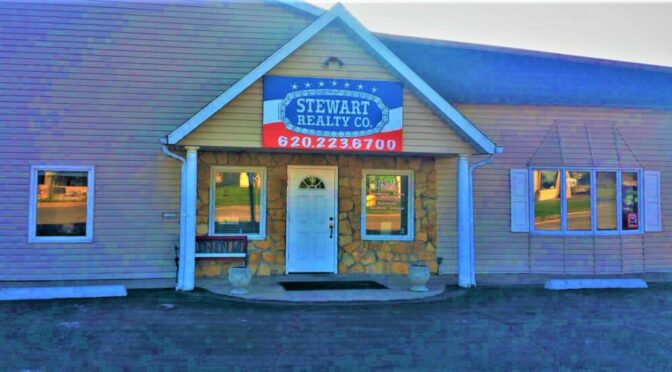
Union Station is located just west of Uniontown in western Bourbon County.
Union Station Convenience Store, 684 Maple Road, Uniontown, is ready to receive staple grocery items to provide western Bourbon County residents with an option for food closer to home.
“We had already purchased the shed that we intended to eventually turn into climate-controlled storage, prior in the year,” said Ronni Clayton, who along with her husband, Dane, are the owners. “Our goal was to make one purchase at a time as the funds became available.”
Ronni and Dane Clayton are the owners of Union Station, Uniontown. The store will stock some groceries soon.
But then the COVID-19 Pandemic hit, and the federal government gave funds to each state government and the Kansas government distributed funds to local entities. In Bourbon County, it was the county commission. The Clayton’s applied for a SPARK grant through the county.
“Once we received the SPARK funds in September we were able to really get things moving,” Clayton said.
The couple created another cold storage unit to accommodate the food that will be coming.
Aryn Jefferis, an employee of Union Station, opens the cold storage unit that was added to the store.The inside of the cold storage unit at Union Station.
“We plan to sell staple grocery items such as bread, cheese, eggs, lunchmeat, hamburger, etc,” Clayton said.
The Claytons created climate-controlled storage outside of the main building, to free up space for additional coolers and shelving inside the convenience store, she said in a previous interview.
Coolers inside Union Station stand empty in preparation for the grocery items that will be coming, according to Aryn Jefferis, an employee.
”The increased product space will be used for discounted grocery items as well as locally produced meats,” she said.
“Everything is done except getting the groceries in the store,” Clayton said. ” We are still working out some details on that, but hope to start regular grocery deliveries soon. The holidays slowed everything a bit.”
” We are working with Nichols Hitching Post and Bronson Locker so far, with some other local businesses possibly in the works as well,” she said.
Learn more about Nichols Hitching Post from their Facebook page:
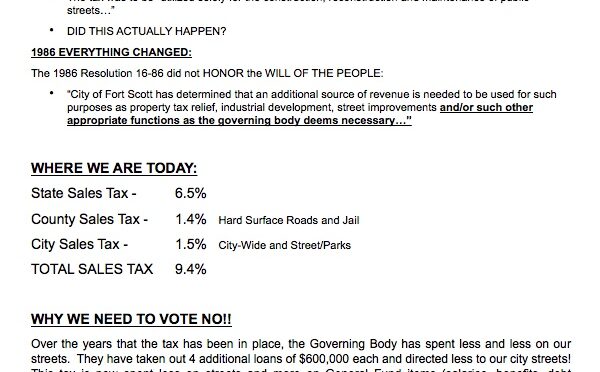
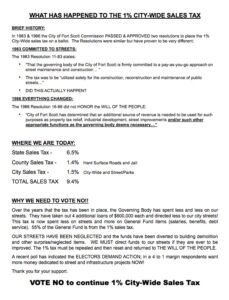
In the election question of shall charter ordinance No. 31 take effect, the no’s have it.
A CHARTER ORDINANCE EXEMPTING THE CITY OF FORT SCOTT, KANSAS FROM THE PROVISIONS OF K.S.A. 12-631p RELATING TO THE DISPOSITION OF SEWER AND STORM SEWER RESERVE FUNDS had 396 no votes to 139 yes votes.
See the Bourbon County Clerks report on the election here:
USD235 Superintendent Brett Howard. From the district website.
The COVID-19 pandemic mitigation policies of the Uniontown school district were approved by the board of education on November 24, 2020.
“We will not be changing any of our policies/regulations regarding COVID-19 for the second semester,” USD 235 Superintendent Bret Howard said. “Masks are required. We are still doing temp checks at the doors and will be social distancing as much as we can. “
USD 235 returned to in-person classes today, January 5.
The following is the policy the board approved:
USD 235 Board of Education Reopening Plan
(Approved November 24, 2020)
This is a working document and a fluid situation that can change with little warning or notice. For that reason, adjustments to the model of instruction, the requirements for personal protective equipment, and the suggestions listed within this document may change.
Winter Activities Students who choose the Remote Learning option will not be eligible to participate in KSHSAA or School-sponsored
extra-curricular activities.
USD #235 is planning on having all students who feel comfortable using the in-person model.
For those who feel concerned about that context, we are offering the Remote Partnership.
Students in this partnership would be able to transition to the In-Person model with ease.
The Hybrid model will only be used as deemed necessary by the Bourbon County Health Department.
Furthermore, using the Remote Partnership for all students will only be used in extreme cases where students are not allowed to come to the buildings. We hope to be able to provide some advanced warning of the need to transition, but we have not received a clarification on how much notice we can expect.
IN-PERSON
HEALTH
● Visitors-
○ In general, visitors will not be permitted to enter the building. The speaker connected to our door system will be utilized or someone will come to the door to address any situation needing attention from an outside party.
○ Students being picked up from school will be taken to their party at the main entry instead of the visitor entering the facility.
○ IEP meeting attendees will be required to complete the adult screening process and wearing a mask is required while in the building. Failure to pass the screening process by key stakeholders will result in a rescheduling of that meeting.
○ School Parties – At this time we will not allow outside visitors.
○ Lunch Visitors – No lunch visitors allowed.
○ TeamMates Mentoring- No mentors will be allowed.
● Masks-
○ All students and staff are required to wear a mask except when meeting the criteria listed in the executive order (20-68).
■ a. Persons age five years or under—children age two years and under in particular should not wear a face-covering because of the risk of suffocation;
■ b. Persons with a medical condition, mental health condition, or disability that prevents wearing a face-covering—this includes persons with a medical condition for whom wearing a face-covering could obstruct breathing or who are unconscious, incapacitated, or otherwise unable to remove a face- covering without assistance;
■ c. Persons who are deaf or hard of hearing, or communicating with a person who is deaf or hard of hearing, where the ability to see the mouth is essential for communication;
■ d. Persons for whom wearing a face covering would create a risk to the person related to their work, as determined by local, state, or federal regulators or workplace safety guidelines;
■ e. Persons who are obtaining a service involving the nose or face for which temporary removal of the face-covering is necessary to perform the service;
■ f. Persons who are seated at a restaurant or other establishment thatoffers food or beverage service, while they are eating or drinking,provided they maintain a 6-foor distance between individuals (not including individuals who reside together) with only infrequent or incidental moments of closer proximity;
■ g. Athletes who are engaged in an organized sports activity that allows athletes to maintain a 6-foot distance from others ;
■ h. Persons engaged in any lawful activity during which wearing a mask or other face-covering is prohibited by law.
○ Mask Definition-
■ a. “Face covering” means a covering of the nose and mouth that is
secured to the head with ties, straps, or loops over the ears or is simply wrapped around the lower face. A face covering can be made of a variety of synthetic and nature fabrics, including cotton, silk, or linen. Ideally, a face covering has two or more layers.
○ A face shield may be worn in conjunction with a mask, but does not meet the requirements in and of itself.
● Hand-washing or Hand-sanitizing
○ Students must complete one or the other at an interval no less than 1 hour. (20-59)
● Screening- To be completed once per day before entering the building.
○ Adults
■ Affirmation that they have not been in close contact with anyone who has COVID-19.
■ Questionnaire of symptoms – Must exhibit fewer than 2.
■ Has a temperature of less than 100.4 degrees Fahrenheit
3
○ Students
■ We would ask parents to check for symptoms and/or temperature while still at home.
● Please error on the side of caution when possible.
■ Has a temperature of less than 100.4 degrees Fahrenheit
● Students with a temperature between 99 and 100.4 degrees will be sent to the School Nurse for additional screening
● Social Distancing
○ All individuals are required to maintain 6 ft. of social distancing except for while during in-person instruction in a classroom or while a mask is being worn.
● Isolation of Symptomatic Students
○ Any student who is exhibiting symptoms will be sent to a specific isolation room to be held there until someone arrives to take them home.
○ Staff supervising the student/s will:
■ Maintain 6 ft of social distancing unless emergency medical attention is needed.
■ Wear gloves while touching the student or his/her belongings
■ A mask is highly recommended.
○ COVID 19 Symptoms Screening List
■ Fever (100.4 or higher)
■ Chills
■ Rigors
■ Body or Muscle Ache
■ Fatigue
■ Head-Ache
■ Sore Throat
■ Lower Respiratory Illness (cough, shortness of breath or difficulty breathing)
■ New loss of taste or smell
■ Diarrhea
● Exclusion from school
○ Students exhibiting 2 or more symptoms without other obvious explanations, will be sent home.
○ Symptomatic and untested
● 10 calendar days have passed since the first date of symptoms AND
● Fever-free for 72 hours without fever-reducing medication
○ Symptomatic and tested
■ Confirmed COVID Negative
● May return to school
■ Confirmed COVID Positive
● 10 calendar days have passed since the first date of symptoms AND
● Fever-free for 72 hours without fever-reducing medication AND
● Released to return to school by the Multi-County Health Department.
○ Asymptomatic close-contact and untested (within 6 ft for 10 or more minutes)● 14-day required quarantine starting at last contact regardless of symptoms.
○ Asymptomatic close-contact and tested
■ Confirmed COVID Positive
● Released to return to school by the Multi-County Health Department. AND
● No less than 10 days from the date of testing.
■ Confirmed COVID Negative
● Must complete 14-day quarantine since last date of contact regardless of symptoms
○ Travel Related Quarantine- Students or staff that have traveled to a location listed on the KDHE Travel Related Quarantine List are required to quarantine for 14 days.
■ List can be found at the following link
● https://www.coronavirus.kdheks.gov/175/Travel-Exposure-Related-Isolation-Quaran
● School Response to Isolation or Quarantine
○ Block off the area until cleaning is complete.
○ Immediately clean all desks, lockers, and workspaces of the person with disinfectant.
○ Immediately identify close contacts (within 6 ft for 10 or more minutes) and collect the following information where applicable.
■ Names
■ Email Addresses
■ Phone Numbers
○ Immediately notify guardians (the individual with COVID must not be explicitly or implicitly identified)
○ 14-day quarantine starts the day after the last contact (next calendar day)
○ Share a list of close contacts with the local health dept. (Rebecca Johnson/ Alice Maffett)
CLASSROOMS
● Use Hand-sanitizer at the beginning of class.
○ Teachers will distribute sanitizer.
● Furniture – Remove excess furniture or items of a nature that makes cleaning/disinfecting difficult.
● Arrangement-
○ Space students with as much social distancing as possible.
○ All students should face the same direction.
○ All students should have assigned seating
● Hygiene
○ Teach and model the following
■ Hand-washing
■ Mask usage and disposal
■ Coughing or sneezing into the elbow
■ No-touch celebrations (instead of high fives or handshakes)
5
○ Disinfect after shared usage of spaces or items
● Breaks – We hope to be able to offer opportunities for students to go outside and remove their mask while social distancing. We hope to be mindful and empathetic to the need for students to have a break from wearing their mask.
COMMON SPACES
● Commons Area
○ All staff and students will be required to enter the building at the designated entrances for screening
○ If no screening adult is available, staff will report to the screening station at 7:30
● Hallways
○ Hand-sanitizing should be done prior to leaving.
○ Students will move through the hallways directionally in accordance with posted signs to access other spaces and limit bidirectional traffic.
○ Students will travel down the center of the hallway to limit touching of the wall/ lockers or interaction with other students.
○ Social Distancing should be maintained
● Lockers
○ Locker access will be limited as determined by the administration.
● Restrooms
○ Hand-sanitizing should be done prior to leaving the room.
○ Social distancing should be maintained
○ Students waiting to enter should not lean against the wall.
○ Custodial Staff will frequently clean handles, faucets, partition latches
● Cafeteria
○ Breakfast
■ Grab-and-go format available as students enter for those interested in participation.
■ Students will take their grab-and-go breakfast items to their homeroom/1st-hour class as they enter the building
■ Regular pricing per the Free and Reduced Lunch Application form will be applied.
○ Lunch
■ Hand-sanitizing should be done prior to entering the cafeteria.
■ Social distancing should be maintained. Students are only allowed to sit in designated seats.
■ Space in the cafeteria and commons area will be utilized.
■ Students will be served by kitchen staff instead of serving themselves.
■ Masks are not required while eating.
■ Tables should be thoroughly disinfected after each group of seated students
■ Regular pricing per the Free and Reduced Lunch Application form will be applied
● Playground-WBE
○ Hand-sanitizing should be done prior to leaving the room.
○ The playground will be divided into 4 quadrants. Students will play in their designated space during their recess.
○ Quadrants will rotate on a weekly basis.
○ Limited playground equipment will be available and be cleaned after recess sessions.
○ Hand-sanitizing should be done prior to entering the building for lunch
● Library-WBE
○ Hand-sanitizing should be done prior to entering the library and also before leaving.
○ Books must remain at school.
● Specials-WBE
○ Art, Music, Guidance
■ Staff will travel to the students or use an outside space.
■ Supplies cleaned between uses.
○ PE
■ Outside when possible, inside the gym as needed.
■ Supplies must be cleaned between uses.
TRANSITIONS
● Arrival
○ Buses and parent drop-offs will not be allowed prior to 7:40
○ Temperature screening of all students and staff
○ Must be less than 100.4 degree Fahrenheit
■ Isolation to the conference room if needed.
○ Students will go directly to class
■ Grab-and-Go Breakfast available to be consumed in the classroom
● During the day
○ Teachers will open and close the classroom doors to:
■ Aide in the supervision during transitions
■ Monitor directional hallway traffic and social distancing
■ Minimize contact spread opportunity on door knobs/handles
○ Social distancing should be employed
○ Travel directionally in hallways per posted signage
○ Hand-sanitizer upon entry of each new space
● Dismissal
○ Staggered release by cohort
FACILITIES
● Hand Sanitizing Stations
○ Main Entrances
○ Office Spaces
○ Cafeterias
● Signage
○ Directional Signs in Hallway
○ Social Distancing Markers
■ Cafeteria
■ Main Entrance
● Trash
○ Bags replaced daily by custodians wearing both gloves and a mask is highly recommended.
● Ventilation
○ Full-time use of ERV to constantly introduce outside air.
○ Ion scrubbers in HVAC systems
● Water Fountains
○ Water-bottle filling station utilized
○ Drinking fountain will be turned off and not be available
● Custodial Disinfecting
○ Fogging Disinfectant Daily
○ Touchpoint Cleaning- Daily
■ Doors/ Handles
■ Restroom Fixtures
■ Water Fountains
● Grounds and Exterior Surfaces
○ Playground Equipment (limited)- cleaning daily
○ Touchpoint cleaning on high-touch surfaces of playground structures
● Building Access/Use by Outside Group or Individuals – By Administrative Approval Only
FOOD SERVICE
● Breakfast
○ Grab-and-Go
○ Students eat in the classroom
○ Waste retrieved at 8:30 am by custodial staff
● Lunch
○ Hand-sanitizing before entering the cafeteria
○ Served lunches by the kitchen staff
○ Assigned seating that is social distanced
○ Disinfect tables/ seats between uses
● Vendors
○ All vendors must complete the screening requirements before entry.
TRANSPORTATION- BUS
● Sanitization- after each route
○ High touchpoint areas (rails, seat tops, etc.)
○ Vacuum seats
● Students
○ Assigned Seating
○ Hand-sanitizer for students entering buses
○ Social distance to the greatest extent possible
○ Masks are required.
● Drivers
○ Complete employee health screener prior to the 1st route of the day.
○ Masks are required.
● Screening
○ Daily temperature screening will be conducted when the bus arrives at school.
○ Students exhibiting symptoms of a fever of greater than 100.4 degrees will be sent home.
● Parent Drop-off/ Pick-up
○ WBE
■ Entry
● Students/ staff will enter through the East gym entrance
● Parents or other visitors will not be allowed entry unless for a pre-approved meeting.
● Staff will complete temperature screening upon entry.
● Guardians are asked to not pull away until this screening has taken place.
● Grab-and-go breakfast available
■ Exit/ Release
● All parent pickups will happen through the East gym doors.
○ UHS
■ Entry
● Students arriving who have not been transported by the bus will need to enter the East entrance (JH/ Board Office Entry).
● Temperature screening will be taken at the entry doors.
● If the student is being dropped off, please do not pull away until screening is complete.
■ Release
● Students will be released in a staggered format to limit hallway congestion.
● Students will need to abide by directional hallway rules during release.
MEETING WILL BE HELD IN COMMISSION ROOM. ANYONE ATTENDING THE MEETING WILL BE REQUIRED TO WEAR A MASK PROVIDED BY THE COUNTY. MUST MAINTAIN SOCIAL DISTANCING.
Barbara Stockebrand. K-State Extension Agent. Submitted photo.
Program to be Offered to Support Family Caregivers
A couple of months ago I wrote an article on supporting family caregivers. You might remember that I mentioned family caregivers, often referred to as informal caregivers, provide 90% of the long-term care offered in America. The value of the unpaid care they provide runs into the hundreds of billions of dollars.
Caregivers frequently experience the need to ‘do it all’. ‘Doing it all,’ from the caregiver’s perspective, may not include caring for themselves so they can thrive, and not just survive during their caregiving experience.
The Southwind Extension District is joining the Wildcat Extension District and also Sedgwick County Extension in offering Powerful Tools for Caregivers. This educational program is designed to support family caregivers in taking better care of themselves while caring for a relative or a friend. The program can benefit participants who are helping a parent, spouse, child, friend or someone who lives at home, in a nursing home, or across the country.
The 6-session course will be offered virtually on Thursdays, January 14 – February 18, 2021, from 1:30-3:00 p.m. A $5.00 registration fee covers the postage for sending out the Caregiver Helpbook. The helpbook includes topics on: Hiring in-home help, helping memory impaired elders, making legal, financial, and care decisions, understanding depression, and making decisions about driving.
Caregiver tools provided as part of the sessions include: Helping the caregiver reduce stress; communicating effectively; encouraging ways for the caregiver to take care of themselves; reducing caregiver guilt, anger and depression; helping the caregiver to relax; making tough decisions; setting goals and problem solving.
Register online by going to https://bit.ly/tools4care or call the Yates Center Southwind office at 620-625-8620. Class size will be limited. Registering early will allow staff to help participants be able to participate virtually and to receive the Caregiver Helpbook prior to sessions beginning.
The program is being offered at a reduced cost thanks to partial funding by the K-State Research and Extension Adult Development and Aging Program Focus Team and the Community Foundation of Southeast Kansas.
K-State Research and Extension is an equal opportunity provider and employer.
“We will be having a Zoom meeting at noon on Wednesday, January 6, thanks to Robin and Allen County Thrive,” Billie Jo Drake, the chairwoman, said in an email.
Bourbon County Inter-Agency Coalition
General Membership Meeting Agenda
January 6, 2021
Welcome:
Member Introductions and Announcements:
Program (no programs for Zoom meetings)
Open Forum:
Adjournment: Next General Membership meeting will be February 3, 2021.
With 2022 on the horizon, you may be thinking about setting goals for the new year. However, research indicates that most Americans fail to achieve their New Year’s resolutions. So, how can you set yourself up for success? Be SMART about your goals for 2022 by setting set goals which are Specific, Measurable, Achievable, Relevant, and Time-framed.
Specific goals include exactly what you want to achieve. For example, “I will make half my grains whole grains” is a more specific goal than “I will eat healthier.” This sample goal also has the added benefit of aligning with MyPlate recommendations!
Measurable goals state how you will determine your success. To make your goals measurable, ask yourself: How will I know if my goal has been achieved? Let’s say you want to be more active in the upcoming year. The Physical Activity Guidelines for Americans recommend that adults do muscle-strengthening activities on at least two days per week. This includes activities such as bodyweight exercises, lifting weights, shoveling snow, mowing the lawn with a push mower, and even gardening and weeding! “I will do muscle-strengthening activities on two days each week” is an example of a measurable goal which aligns with this physical activity recommendation.
It is also crucial to make your goals achievable. Achievable goals are realistic for you personally. Take into consideration all internal and external factors, including your skills, resources, and time. When making health-related goals, recognize that small steps add up over time. If completing moderate-intensity physical activity for 150 minutes each week (as recommended by the Physical Activity Guidelines for Americans) isn’t realistically achievable for you right now, then start smaller and set a goal which you can accomplish!
Next, make your goals relevant. Setting goals which match what really matters to you will increase your motivation to achieve them. If you have children and enjoy cooking, one example of a relevant goal may be to cook a meal together at least once each week.
Finally, your goals should be time-framed. Creating a timeline or setting a deadline encourages you to stay on track. “I will increase my physical activity by participating in Walk Kansas from March to May in 2022” is just one example of a time-framed goal!
SMART goals are a well-established tool which can be used to help you set and achieve objectives. As an extension agent, I seek to provide research-based educational programs which help people improve their lives, livelihoods, businesses, and communities. These programs, as well as those provided by my fellow agents, may help you achieve your SMART goals! To learn more about the programs we offer or to get more information about setting SMART goals, contact me at [email protected] or by calling 620-365-2242.
Helen and Chubb Bolling, owners of Bronson Locker. Submitted photo.
The Bronson Locker is USDA inspected meat. From their Facebook page.
Bronson Locker, 504 Clay Street, Bronson, KS has been expanding during the COVID 19 pandemic.
“We have had an overflow of work,” said Helen Bolling, who along with her husband, Raymond, known as Chubb, owns the meat locker. “We have had to put on more employees. We expanded our business. A new cooler, a new processing room.”
“People are buying local meat,” Bolling said. “People are wanting farm-raised meat. We are USDA inspected.”
Several Bourbon County meat producers provide meat to the locker, she said. J.D. Russell and Kevin Gleason from the Redfield area; Ryan Tuchscherer, Fort Scott; Henry and John Ericson, Hiattville all provide meat to Bronson Locker, to name a few, Bolling said.
They have spent a large amount of money to expand their meat locker business that processes beef, swine, sheep, and goats, Helen said. During deer season they add deer processing too.
From their Facebook page.
The waiting list to process beef is up to Dec. 2021, Helen said.
“We are accepting deer anytime,” Mandie Ericson, wife of Helen’s grandson Garret, said.
Mandie and Garret hope to buy the family business from Chubb and Helen someday, Mandie said.
They do not sell deer meat, they merely process it.
Currently, Mandie is the supervisor, Helen said.
Mandie Ericson, Helen and Chubb Bolling and Garret Ericson at the Fort Scott Chamber of Commerce Forks and Corks Event 2019 at the Riverfront Event Center. The Bronson Locker has won the Taster’s Choice Award at the event for two years in a row. Submitted photo.
From the Bronson Locker Facebook page:
“For people discouraged about the waiting list for beef appointments…
“It is always a good idea to… call and check regularly. We want your business as much as you want to sell your beef or stock your freezers.
This week we were able to work seven people up off the waiting list. This week alone. Don’t feel discouraged we will make sure we take care of as many of you as we possibly can without sacrificing quality.
“Thank you to the farmers and families for all of your continued support.”
They are currently selling beef bundles at 25 pounds for $100.
“They average $4 a pound for this farm-raised beef,” Helen said.
The locker is open 8 a.m. to 5 p.m. and can be contacted at 620-939-4575.
Family Owned and Run
They have twelve full-time and two part-time employees, all from Bourbon County, she said.
This is a family-owned and family-run business and 10 of the employees are family.
Besides Chubb and Helen, their son Mike is a butcher. In addition, Amber Ericson, their daughter, works at the locker when she is not teaching school at West Bourbon Elementary School in Uniontown. Helen’s nephews Jesse, Robert and Jim Kuns, the Bolling grandchildren Mandy and Garrett Ericson, and another grand-daughter in-law, Tyler Ericson, all work at the locker.
In addition, they have a long-term employee, Tom Bradbury, technician, “who keeps us up and going,” Mandie said.
The family has purchased some of the buildings adjacent to the locker and have opened an antique store on the main street of Bronson as well.
The Bollings own several adjacent buildings to their locker business. Submitted photo.Chubb and Helen Bolling added an antique shop in an adjacent building. The shop is named THAM Antiques after Tyler, Helen, Amber and Mandie. Submitted photos.
The Uniontown 4H Club met on Sunday, December 13th for their monthly meeting. During the meeting, members were recognized for their 2019-2020 4H achievements in three main categories: MIG (Member in Good Standing – 4H participation summary), Membership Pins, and KAP (project based Kansas Award Portfolio). Below are members and achievements recognized during the ceremony.
Kendyl Bloessser: Junior purple MIG, 3rd year clover pin, 1st junior foods KAP and 2nd junior fiber arts KAP
MaKinlee Bloesser: Junior purple MIG, 2nd year bronze pin, 1st junior fiber arts KAP and 2nd junior foods KAP
Jack Endicott: Cloverbud pin
Bareigh Farrell: Senior blue MIG and 3rd year clover pin
Austin Maycumber: Junior purple MIG, 2nd year bronze pin and 1st junior space tech KAP.
Will Maycumber: Intermediete purple MIG, 2nd year bronze pin, and 1st intermediate space tech KAP
Hunter Minor: Intermediate red MIG
Lane Minor: Intermediate red MIG and 1st year membership pin
Hailey Shadden: Intermediate blue MIG and 2nd year bronze pin
Seth Shadden: Intermediate purple MIG and 2nd year bronze pin
Bane Stone: Junior blue MIG and 1st year membership pin
Marley Sutton: Junior purple MIG, 3rd year clover pin, 1st junior swine KAP and 2nd junior sheep KAP
McKinley Sutton: Junior purple MIG, 3rd year clover pin, 1st junior sheep KAP and 2nd junior swine KAP
Tucker Sutton: Cloverbud membership pin
Calvin Walker: Intermediate blue MIG and 2nd year bronze pin
Additional awards recognized were: Club Seal – Purple, Community Leaders, Project Leaders and Teen Leaders. Melanie Bloesser: 6th year community leader, Laura George: 30th year rabbits, Deidra Maycumber: 1st year comunity leader, and Sara Sutton: 3rd year community leader.
The Craw-Kan Cooperative space is seen on the backside of the Bourbon County Courthouse. The county commission has leased Craw-Kan two cells from the former jail. September 2018 photo.
Craw-Kan Telephone Cooperative Inc., Girard, is working on multiple projects in Bourbon County to provide fiber-optic lines for internet services.
Craw-Kan Telephone serves Kansas, Missouri, and Oklahoma, offering high-speed fiber optic internet, cable TV, and telephone service in its’ service area, according to its’ Facebook page.
Work began on a new hub for Craw-Kan Telephone Cooperative on South Judson Street in late 2018.
“We are continuing to build fiber to non-cooperative member areas in the southeast side of the city of Fort Scott,” Zach Adams, Craw-Kan Marketing Manager said. “These are homes and businesses where we have not been able to provide services in the past.”
“The goal of our Fort Scott project is to provide 100% fiber-optic coverage in the city limits,” he said. ” The west side of US 69 HWY is complete and we are currently working on the southeast quadrant of the city. We will also connect some residences outside but adjacent to the city.”
“We are subcontracting Jim Radell Construction, Pittsburg, for construction on the southeast quadrant of the City of Fort Scott,” Adams said. “They have multiple crews working in the area. We also use multiple Craw-Kan employees in the construction and installation process. There are two or more repair and installation technicians assigned to the Fort Scott territory at any given time.”
Craw-Kan began the Fort Scott overbuild in 2017 and completion is estimated to be in 2021-2022, Adams said.
Uniontown Project
Conduit for the Craw-Kan Fiber Optic project. in March 2020 in Uniontown.
“The other large project in Bourbon County is the upgrade to the Uniontown (756) phone exchange,” he said. “This project will be replacing copper phone and DSL lines with fiber-optic lines that will bring maximum reliability and gigabit internet speeds to 100% of Craw-Kan Telephone Cooperative members in the Uniontown exchange…The project will upgrade 100% of existing Craw-Kan members to fiber-optic connections to the home.”
“For the Uniontown project, Bob Hull Inc – BHI was with bid winning contractor doing the fiber upgrade construction,” Adams said. “They will be using multiple crews to complete the work.”
The Uniontown project was started in 2020 and is expected to be completed in 2021, he said.
Cost of the project
“Craw-Kan has invested several million dollars over the last four years into upgrading the connections of our cooperative members in Bourbon County as well as bringing new fiber optic services to the City of Fort Scott and surrounding areas,” Adams said.
MEETING WILL BE HELD IN COMMISSION ROOM. ANYONE ATTENDING THE MEETING WILL BE REQUIRED TO WEAR A MASK PROVIDED BY THE COUNTY. MUST MAINTAIN SOCIAL DISTANCING.
2:00 Executive Session – Confidential data relating to financial affairs or trade secrets of corporations, partnerships, trusts and individual proprietorships