|
|
|
|
|
|
People for the Ethical Treatment of Animals sent this press release on August 7 to fortscott.biz.
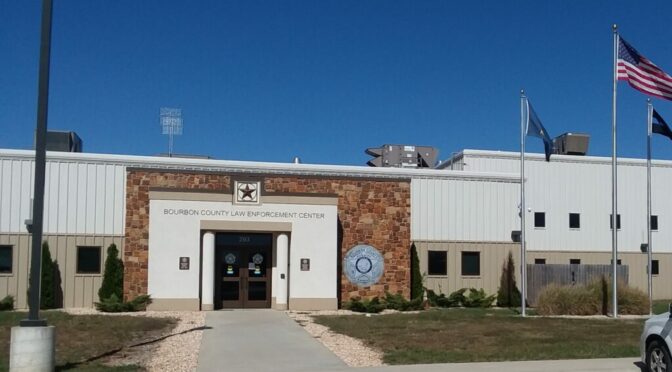
The release was sent to Bourbon County Attorney Tiana McElroy and McElroy answered a request for verification with this statement:
“This is an ongoing investigation so I am unable to comment on either email you have included below,” McElroy said.
PETA has received damning U.S. Department of Agriculture (USDA) reports documenting that dogs’ fur was matted with feces, dogs were left panting inside a sweltering building, and some were painfully disfigured at Mary’s Precious Puppies, a local puppy mill operated by Mary Moore. In response, PETA sent a letter today to Bourbon County Attorney Tiana McElroy asking her to investigate and file applicable charges against those responsible for the animals’ suffering and neglect.
According to the reports, on May 2, Moore admitted to a USDA veterinarian that she had wrapped bands around the tails of three puppies in order to cause the appendages to fall off—“a painful” mutilation, according to the veterinarian, who also found that more than a dozen dogs’ coats were “heavily matted,” including with dried and fresh feces. Another dog, Keeshond, was “not bearing any weight on his left front leg,” which is “a significant indicator of pain.” Weeks later, Keeshond was found to be lame in his right front leg and Moore failed to immediately consult a veterinarian, despite being ordered to do so. And on May 30, up to 20 dogs were found panting in a building where the temperature had reached 93.2 degrees.
“This breeding hellhole has treated dogs like cheap equipment and left them to languish in squalor,” says PETA Vice President of Evidence Analysis Daniel Paden. “PETA urges Bourbon County authorities to prosecute those responsible for these dogs’ suffering and encourages everyone never to buy animals from pet stores or breeders and to adopt from shelters instead.”
PETA is pursuing charges under state law because the USDA does not render relief or aid to animals during its inspections and these violations carry no federal criminal or civil penalties.
PETA—whose motto reads, in part, that “animals are not ours to abuse in any way”—opposes speciesism, a human-supremacist worldview. For more information, please visit PETA.org, listen to The PETA Podcast, or follow the group on Twitter, Facebook, or Instagram.
I can be reached at 682-395-1238 or [email protected]. Please don’t hesitate to contact me if you have any questions.
PETA’s letter to McElroy follows.
August 7, 2023
The Honorable Tiana McElroy
Bourbon County Attorney
Dear Ms. McElroy:
I hope this letter finds you well. I’m writing to request that your office (and the proper law-enforcement agency, as you deem appropriate) investigate and, as suitable, file criminal charges against those responsible for neglecting dogs at Mary’s Precious Puppies, a breeding facility operated by Mary Moore at 1567 75th St. near Uniontown. PETA hopes investigators will visit the facility with a veterinarian who has expertise in canine health and welfare so that they can identify any animals in need of care and opine on the conditions of and for the approximately 28 animals there.
U.S. Department of Agriculture (USDA) veterinarians documented neglect at the facility in the attached reports. On May 2, Moore reportedly admitted to a veterinarian that she had wrapped bands around the tails of three puppies in order to cause the appendages to fall off, which is “a painful process,” according to the veterinarian. The veterinarian also found that 13 dogs’ coats were “heavily matted,” including with dried and fresh feces. Another dog, Keeshond, was “not bearing any weight on his left front leg,” which is “a significant indicator of pain.” Moore was ordered to resolve the issue of the 13 dogs’ matted coats by May 3.
But on May 3, USDA officials found that Moore had “not groomed any of the dogs.” They found five more dogs who were “seriously matted.” When four USDA officials arrived at Moore’s facility on May 4, they found brown debris—consistent with ear infections and other ailments—in the ear of one dog, who had evidently not received veterinary care for the condition. On May 30, up to 20 dogs were found panting in a building where the temperature had reached 93.2 degrees. The same day, Keeshond was found to be lame in his right front leg. Moore was ordered to have him examined by a veterinarian, but as of May 31, she “still [had] not consulted a veterinarian about” his latest ailment.
These findings may violate Kansas’ anti-cruelty statute, K.S.A. 21-6411. The USDA renders no aid or relief whatsoever to animals on site, and these reports carry no criminal or civil penalties and don’t preempt criminal liability under state law for neglecting animals. If you’d like to learn more about the USDA’s findings, please see the contact information for its office in Riverdale, Maryland, here. Thank you for your time and consideration.
Sincerely,
Daniel Paden
Vice President of Evidence Analysis
PETA
Brittney Williams
PR Coordinator, Media Relations
P: 682-395-1238 | M-F 9am- 5:30pm EST
People for the Ethical Treatment of Animals (PETA)
If you ever have an animal emergency and local authorities are unresponsive, please email [email protected]. For after-hours emergencies, please call 757-622-PETA (757-622-7382) and listen to the prompts. Thank you!
 ALL are invited and welcome to attend the Poverty Paradigm event this Saturday, August 12 at 4 p.m. at Fort Scott Middle School.
The cost is $10 to participate.
If individuals want to participate, but cannot afford the $10, contact Jennifer Michaud: phone: 785-230-7010 or email
[email protected]
The speaker is Rebecca Lewis-Pankratz.
To get a ticket, see the flyer below.
Rebecca Lewis-Pankratz works with both communities and schools across the US to truly solve poverty and heal trauma, according to a press release. She does this by helping caring leaders create sustainable ecosystems of resilience through building better relationships.
Rebecca fought her way out of poverty and the trailer park in 2011 with three young sons. A local poverty resolution project found Rebecca and activated her journey. She later went to work for that non-profit and then went on to build multiple projects like it to help more families. In 2015 She started working with public education and ignited a trauma-informed schools movement in her state and beyond.
Rebecca experienced a lifetime of trauma and poverty and through access to buffering relationships she healed from both and continues to light the path for others.
Rebecca is a Co-Founder of the ESSDACK Resilience Team. Rebecca and her team have walked alongside well over 100 Kindergarten through12th grade schools, equipping their staff as they journey toward becoming trauma-informed. The Resilience Team’s core value is that in order to create more positive outcomes for children, we must focus on transforming the adults who are important in these kids’ lives.
Additionally, Rebecca and her team have partnered with Youth Core Ministries out of Greensburg Kansas to establish and sustain poverty resolution projects across Kansas and Illinois. Currently they are working with over 200 families who are systematically building their paths out of poverty.
Rebecca is widely known in Kansas and across the United States for her extensive work building trauma-informed schools. She is a captivating presenter and her lived experience of escaping poverty when she was 40 years old, with three young children, invites people into her undeniable experience of healing, hope and restoration.
Rebecca has 8 ACEs (Adverse Childhood Experiences) which she lived out as an adult with addiction, domestic violence, poverty and pain. She captivates audiences with her ability to weave concepts in with stories and helps people understand what is typically getting in the way of adopting the movement of trauma-informed schools. More importantly, Rebecca helps participants identify where they are, where they want to go, and how they want to get there. She is a master facilitator, a generous storyteller, and has an uncanny way of helping people boil down and absorb deep concepts around the brain, behavior, and healing.
Rebecca has shown the light for hundreds of schools and thousands of teachers on the path of equipping trauma-informed cultures and frameworks. She is well known for her carefully crafted work on:
Rebecca coined the popular Resilience phrase “I see you, I hear you, I am with you.” This is the foundation for building resilience in ALL kids and staff.

|
|
|
|
|||||||||||||||||||
|
|
|||||||||||||||||||
 |
|||||||||||||||||||
 |
|||||||||||||||||||
 |
|||||||||||||||||||
 |
|||||||||||||||||||
|
|
|||||||||||||||||||
|
|||||||||||||||||||
|
|||||||||||||||||||
KDOT stopping work on U.S. 69 Crawford County Corridor western alignment; starting new corridor study later this year
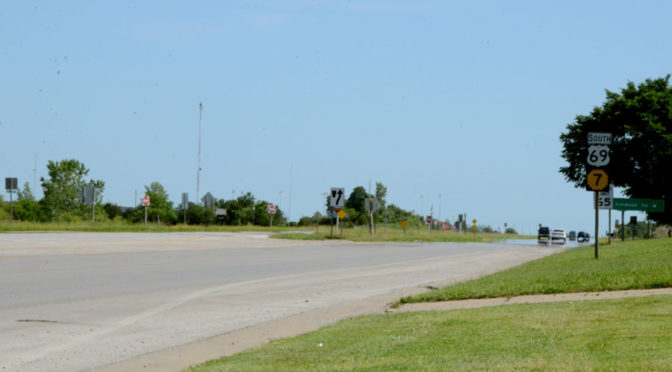
In response to feedback from communities and residents along U.S. 69 in Crawford County, the Kansas Department of Transportation (KDOT) is stopping any further progress on developing the western alignment of the Crawford County Corridor (also known as the Pittsburg Bypass). This includes stopping design work and planned construction of the U.S. 160 improvements (Phase 3) of the Crawford County Corridor. That project would have extended U.S. 160 to the west along 590th Avenue.
Discussions about improving the U.S. 69 corridor have been happening for decades. The project would expand an 18-mile corridor of U.S. 69 to a four-lane freeway, starting at the Cherokee-Crawford county line and continuing north of the City of Arma.
Over time, KDOT has done preliminary engineering and environmental reviews, working with cities and counties along the U.S. 69 corridor. The last study on the project was completed in 2012, and at that time, the western alignment was presented as the preferred alternative. While there have been ongoing conversations through KDOT’s Local Consult process and individual project meetings, until this spring, KDOT had not had a dedicated conversation with communities along the corridor about the project in more than 10 years.
In May, more than 350 people attended city council and county commission meetings where KDOT presented about the U.S. 69 Crawford County Corridor. The overwhelming majority of people KDOT heard from were opposed to the western alignment of the U.S. Crawford County Corridor. The most common reasons included:
“We heard loud and clear the U.S. 69 corridor is a top priority for southeast Kansas,” said Greg Schieber, KDOT State Transportation Engineer. “We also heard things have changed since decisions were made more than a decade ago, and we need to step back and work with communities to find the right solution for the future of U.S. 69. Infrastructure improvements are expensive, and we want to invest in projects that not only improve the state highway system, but also align with the needs and visions of Kansas communities.”
Later this year, KDOT will start a new corridor study to re-evaluate the current highway and identify the current and future needs of the communities along U.S. 69 in Crawford County. The study will include an updated traffic and safety analysis to help determine viable options to improve the Crawford County Corridor.
To help inform the study, KDOT will establish a stakeholder group composed of representatives of the cities, county, and businesses along the corridor to hear a variety of perspectives on the priorities in the region. The study will include a robust public outreach effort and multiple opportunities for public input. It will take 12-18 months to complete the new study.
At this year’s Local Consult meetings in October, KDOT will not list a specific U.S. 69 Crawford County Corridor project for discussion. At the last two rounds of Local Consult, KDOT heard from southeast Kansans that improvements to U.S. 69 in Crawford County are a priority. KDOT is actively taking steps, like this new corridor study, to address that priority. The study needs to be done so that KDOT can have projects for consideration at the next round of Local Consult meetings in 2025.
As more information about the study schedule and opportunities for input are available, KDOT will post information online at: https://www.ksdot.gov/us69crawfordcountycorridor.asp.
###
|
|
|
|
|
|
|
|
|
|
|
|
|
|
|
|
||||||||||
|
|
|
|
|
|
|
|
|
|
|
|
|
|
|
|
|
|
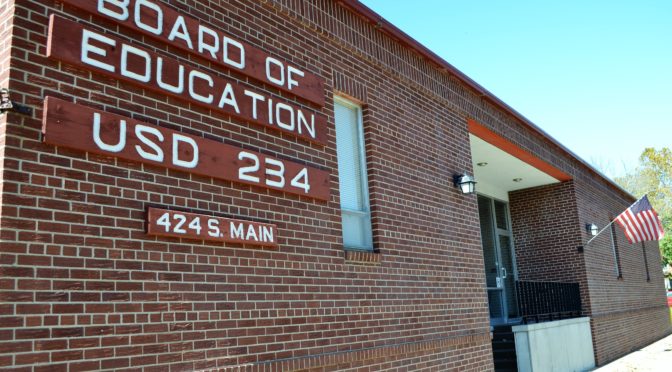
Unified School District 234
424 South Main
Fort Scott, KS 66701-2697
620-223-0800 Fax 620-223-2760
DESTRY BROWN
Superintendent
BOARD OF EDUCATION REGULAR MEETING
NEWS RELEASE
Monday, August 7, 2023
Members of the USD 234 Board of Education met at 5:30 p.m. on Monday, August 7, 2023, for a special board meeting at the board office.
Vice-President James Wood opened the meeting.
Tonya Barnes, Special Education Director, presented an updated contract with No Limits Rehabilitation Inc., for physical therapy services. The board heard from building administrators regarding school handbooks.
Superintendent Destry Brown and Gina Shelton, Finance Director, presented the 2023-24 budget. Dalaina Smith, Assistant Superintendent, presented the Building Needs Assessment as part of the budget process.
The board approved the following items:
The board went into two executive sessions for personnel matters.
Vice-President Wood adjourned the meeting.
PERSONNEL REPORT – APPROVED EMPLOYMENT
August 7, 2023
RESIGNATIONS/TERMINATIONS/RETIREMENTS:
TRANSFERS/REASSIGNMENTS:
For the 2023-24 school year:
Certified:
EMPLOYMENT:
Certified Recommendations for the 2023-24 school year:
Classified Recommendations for the 2023-24 school year:
Supplemental Recommendations for the 2023-24 school year: