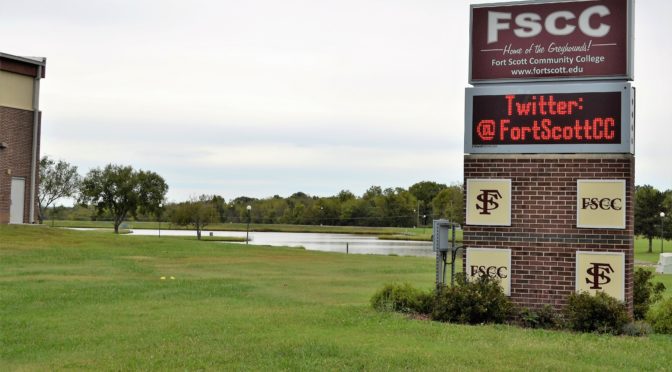
The Fort Scott Community College Board of Trustees will hold a board workshop on Friday, August 22 at 12:00 pm in Cleaver-Burris-Boileau Agriculture Building to prepare for the regular board meeting to be held on August 25.
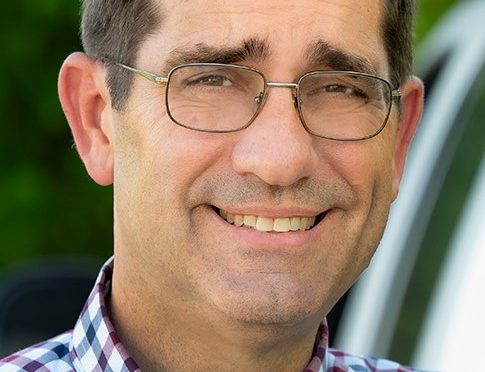
Our extended District Work Period is in full swing. I was home in Kansas last week, speaking with the folks I’m blessed to represent across the Second District.
Removing Big Government from Kansans’ Lives
I’ve repeatedly cited the Congressional Review Act (CRA) as an incredibly important tool to remove the intrusion of big government from Kansans’ lives. The CRA allows Congress to remove any federal rule within 60 legislative days of its enactment, a period known as the “CRA lookback window.” After a disapproval resolution is introduced, it must be approved by both chambers of Congress before being signed by the President.
Earlier this year, I introduced the Congressional Review Reform Act (CRRA). My legislation would eliminate the CRA’s 60 legislative day lookback period, allowing Congress to disapprove of any federal agency rule, regardless of when it was implemented.
Last week, Nick Clifford of the Pacific Legal Foundation – a group who “defends Americans’ liberties against government overreach and abuse” – penned an excellent op-ed in support of my legislation.
As Mr. Clifford aptly points out, there are several major issues with the CRA in its current form. First, it’s confusing: “experts struggle to pinpoint exactly when it opens and closes, since it’s determined by congressional parliamentarians.” The Biden Administration issued a staggering 1,406 federal agency rules from August 16, 2024-January 20, 2025. Moving the start of the looback period up or back by just one day could have MASSIVE implications on Congress’s ability to provide an important check on the Executive’s power.
Second, using the CRA is often difficult because it requires a Presidential signature to take effect. If Congress holds differing beliefs from the President, it “can only effectively disapprove of executive actions with a veto-proof majority.” In today’s political climate, achieving a 2/3 majority in both chambers is incredibly difficult, if not impossible. Congress should have lawmaking power regardless of who lives in the White House.
Since its creation in 1996, the CRA has only been used to overturn 36 rules. In that time period, the number of pages in the Federal Register has increased by roughly 40,000. Congress has Article I power and obligation to make federal laws; it should not be this difficult for us to overturn regulations imposed by unelected bureaucrats. My legislation would provide an important fix for these issues and return lawmaking power to where it belongs: the people.
The Wall is a solemn reminder that freedom isn’t free. It’s also a call to action for those in government to ensure our nation is honoring its promises to those who’ve served. We remain committed to keeping those promises; in fact, the House recently advanced the annual appropriations bill that provides funding for the Department of Veterans Affairs. Our legislation makes historic investments in veterans’ care by increasing funding levels from fiscal year 2025, ensuring former servicemembers have access to the full scope of benefits they’ve earned.
Thank you to all those in Kansas and across our great country who have answered the call to defend our nation. We owe you a debt of gratitude we will never be able to repay.
Supporting Kansas Farmers & Ranchers
The “One, Big, Beautiful Bill” contains huge wins for farmers and ranchers across Kansas. The version of the bill signed into law by President Trump improves crop insurance affordability, strengthens farm safety net programs, protects America’s farmers from foreign competition, and roots out waste, fraud, and abuse throughout the Supplemental Nutrition Assistance Program.
I truly believe there’s a large appetite for a bipartisan farm bill on Capitol Hill. Everyone recognizes how important it is to provide long-term stability to our nation’s agricultural producers. As my colleagues and I work to provide our farmers and ranchers with increased foreign market access, we must ensure they have the resources they need to succeed at home. Simply kicking the can down the road – which Congress has done for years – doesn’t cut it. I’m committed to passing a comprehensive package that ensures those who feed, clothe, and fuel our country can achieve both short- and long-term success.
Summer Interns
Thank you to Jackson, Fayaz, and Halle, who recently completed their internships with my office!
All three of these Kansans worked hard to provide the people of the Second District with excellent service all summer. I’m truly grateful for their dedication; they certainly have bright futures ahead of them!
If you or someone you know is interested in applying for an internship in my office, please click here.
Though it often seems like there’s a lot going on – and there is – I’d ask you to remember this: your representatives in government – including myself – are working hard to enact the changes you expect us to. Progress can seem slow at times, but I truly feel we’re well on our way to righting the ship and restoring our nation’s greatness.
As always, my office is here to serve you. Please do not hesitate to contact me with any questions or concerns you may have. Be sure to also follow me on social media at the links below for timely updates from my office.
It’s an incredible honor to represent our Second Congressional District in Congress!
A meeting to form and formalize a stamp club will take place at the Fort Scott Library , 201 S. National, on Sept. 13 from 10 a.m. to 12:30 p.m.
The challenge this month is to locate and or display your favorite foreign stamp. The meeting allows discussion of the bylaws and membership in the club. Free, previously used, postage stamps will be available for all persons wishing to start or continue a collection. There is no charge for attendance and a special membership drive will waive the first year dues. Dues cover only the operating costs of the club.
Fort Scott Public Library Lower Floor Conference Room 201 S National Ave., Fort Scott, KS 66701
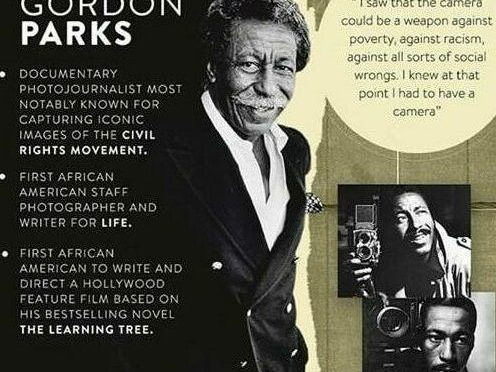
Thursday, October 2nd: 3:00 p.m. – 4:00 p.m. — Guided Trolley Tour of Gordon Parks’ Fort Scott & The Learning Tree Film Scene Locations
Meet at the entrance of the Fort Scott Community College Ellis Fine Arts Center, 2801 S. Horton.
Saturday, October 4th: 3:45 p.m. – 4:45 p.m. — Guided Trolley Tour of Gordon Parks’ Fort Scott & The Learning Tree Film Scene Locations. Meet at the entrance of the FSCC Ellis Fine Arts Center
Many years ago, I mailed a check to someone and it was never cashed. So I wrote another check and asked a family member to give it to her. The second check never cleared the bank either, so I finally gave up. I didn’t owe this gal any money, I simply wanted to bless her with a monetary gift. I was willing to give, but there was some hindrance to her receiving it.
Jesus wanted to give His disciples an important gift before He ascended to His Father. He said, “My own peace I give to you” (John 14:27 Weymouth). Notice that Jesus gave His own peace, which demonstrated that He wasn’t selfish or stingy. Today, Jesus continues to offer Christ followers His own Name-Brand peace. This precious peace isn’t a knock off — it‘s the real deal and it will last as long as you breathe and believe. It’s one thing to have head knowledge regarding this scripture, but it’s another thing to believe it for yourself with all your heart, soul, mind, and strength. Peace is a gift from Jesus but you have to accept it and put it into practice. In other words, cash the check!
“I leave the gift of peace with you — My peace. Not the kind of fragile peace given by the world, but My perfect peace. Don’t yield to fear or be troubled in your hearts — instead, be courageous!” (TPT). We’re living in a world that offers pseudo peace. I encourage you to pour some time, study, and meditation into John 14:27. Find a translation of this verse that hits you square between the eyes and lands solidly in your heart and mind. Know what you believe and why you believe it. Here’s an uncomplicated motto that’s been around for awhile: Jesus said it, I believe it, and that settles it!
John 14:27 in the Amplified Bible states: “Peace I leave with you; My own peace I now give and bequeath to you. Not as the world gives do I give to you. Do not let your hearts be troubled, neither let them be afraid. [Stop allowing yourselves to be agitated and disturbed; and do not permit yourselves to be fearful and intimidated and cowardly and unsettled]. We certainly have an active part to play in receiving and keeping our peace.
Sometimes we’re tempted to lose our peace; and sometimes we just flat-out lose it. I hate it when that happens. But at least I know where to go (God’s Word) and what to do (pray). Believers should always look at our difficulties, stresses, and heartaches from God’s perspective. He never scratches His head or wrings His hands wondering how to fix our problems. And that’s why we ought to keep our peace and trust Him. When you feel your peace slipping away, pray immediately. “I have courage in God’s presence, because I am sure that He hears me if I ask Him for anything that is according to His will” (1 John 5:14 GNT). It’s definitely God’s will for us to have peace, so boldly ask for your peace to be restored. Your life depends on it, so don’t try to get by without it!
The following scripture reminds me to get my act together when life gets turbulent: “The Lord goes before me; He will march with me; He will not fail me or let me go or forsake me; I will fear not, neither become broken in spirit — depressed, dismayed, and unnerved with alarm (Deuteronomy 31:8 AMP). When the stormy waves are over your head, there’s a deepening and enriching comfort when you can experience the peace of Christ in your innermost soul.
The Key: Believers have been given the gift of peace and we are expected to cash it in.
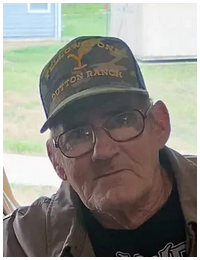
Howard Russell Franklin, a treasured soul known to his loved ones as Rusty or Russ, passed away peacefully on August 13, 2025, in Webb City, Missouri. Born on October 4, 1958, in Kansas City, Missouri, Howard’s life was a testament to the power of kindness and the warmth of a close-knit family.
Howard’s journey through life was marked by an unwavering devotion to his family. His children, William and Christie Franklin, were the pride of his life, and he beamed with joy at the mention of his grandchildren—Christopher, Cory, Corbyn, Liam Franklin, Bryson Hall, and Blakelynn Gray. Howard’s sister, Linda Longley, and his late siblings, Robert Franklin and Judy Beasley, shared in the richness of his love and the laughter that filled their gatherings.
Throughout his years, Howard’s kindhearted nature was his hallmark. Friends and family alike will remember him for his gentle spirit and his unassuming way of making everyone feel welcome and valued. His comforting presence was a beacon of light that guided many through their darkest times.
Howard found his greatest joy in the simple pleasures of life. He cherished every moment spent with family and friends, recognizing that these were the threads that wove the fabric of his life’s tapestry. His laughter was infectious, his counsel sought after, and his home always open to those he held dear.
In the hearts of those who knew him, Howard leaves behind a legacy of kindness that will continue to inspire and guide. His memory will be a source of strength and comfort as his loved ones recall the countless cherished moments they shared. Howard Russell Franklin’s story is one of love, generosity, and the enduring bonds of family—a narrative that will be recounted with fondness and gratitude for generations to come.
As the sun sets on a life well-lived, we bid farewell to a man who embodied the very essence of compassion. Howard’s memory will be cherished, his lessons remembered, and his influence felt long after his departure from this world. Though he may have left us in body, his spirit remains an indelible part of the lives he touched.
There was cremation. A celebration of like will be held at a later date. Memorials are suggested to the Howard Franklin Memorial Fund and may be left in care of the Cheney Witt Chapel, 201 S. Main, P.O. Box 347, Fort Scott, KS 66701. Words of remembrance may be submitted to the online guestbook at cheneywitt.com.
Stephanie H. Johnson, 82, of Fort Scott, Kansas, passed away August 5, 2025. She was born February 12, 1943, in Fort Scott, Kansas, the daughter of Glenn R. Maupin and Helen M. (Huffine) Maupin. She married Charlie Johnson and he preceded her in death in December of 1982.
Stephanie received her Bachelor’s degree from PSU in teaching. She later went back to school and received her Nursing Degree from FSCC, becoming a registered nurse. Prior to her nursing career, Stephanie worked at the Tribune as the Circulation Manager, and also at the Farmer’s Co-Op. She worked at the old Newman Young Clinic doing data entry. She then worked at Medicalodge as Activity Director. After receiving her nursing degree, went back to Medicalodge as Director of Nursing. She became Kansas State Surveyor of Nursing Homes. She retired to take care of her elderly parents.
Stephanie loved music and loved singing with the Sweet Adaline’s, a local group that sang at competitions and performances. She loved to travel, but her greatest love was her family.
Survivors include her son, Kevin Asbury, of Fort Scott, granddaughter Kyra Tollen, married to Dustin Tollen, and great-grandson, Biron Tollen, and two nieces, Jennifer and Hillary. Stephanie was preceded in death by her parents, her husband Charlie, and her sister, Penny Berry.
Following cremation, Pastor Christopher Eshelman will officiate graveside services on Friday afternoon, August 22, 2025, at 1:30 p.m. at the Fort Scott National Cemetery under the direction of the Konantz-Cheney Funeral Home. There will be a visitation Thursday evening August 21, 2025, 6:00-7:00 p.m. at the funeral home. Friends and family may sign the online guest book and share memories at www.konantzcheney.com.
As we continue to engage in outdoor activities as the weather cools and hunting season begins, it’s important to protect yourself from tick bites. The Lone Star tick has been linked to causing the Alpha-Gal allergy in individuals who eat red meat. Symptoms include rash, hives, difficulty breathing, drop in blood pressure, dizziness, fainting, nausea, and severe stomach pain. These symptoms can occur in 3-8 hours after eating red meat. Seek medical attention if this occurs.
The Lone Star tick is a vector that can spread disease. The Alpha-Gal molecule is carried in the saliva of Lone Star ticks. People bitten by this tick can become sensitive and produce the immunoglobulin E (IgE) antibody. Unlike typical food allergies, which are a reaction to protein, this is a reaction to the carbohydrate galactose-α-1,3-galactose. This carbohydrate is found in most mammals, such as those found in red meat. It can also be in products made from mammals. It is not found in poultry or fish.
As to the number of Kansans affected by Alpha-Gal Syndrome, there are no accurate reporting systems in place, so to get a general idea, Kansas State University asked 144 Extension professionals how many had heard of AGS or knew people affected by it, and the majority of agents who had heard of AGS or that knew those affected by it – were in southeast Kansas. This should not come as a surprise to those of us living in southeast Kansas, as many of us could most likely name at least five people with AGS. A few agents in northwest Kansas had not even heard of Alpha-Gal. Overall, 86% had heard of AGS, 84% knew AGS is related to tick bites, 61% thought there is not enough information about AGS for the public, and 31% were not sure.
Nutrition considerations for people living with AGS include treating it like any other allergy by avoiding foods that trigger symptoms, avoiding cross-contamination, and reading nutrition labels.
Foods that may trigger AGS symptoms include meat such as beef, pork, lamb, deer, organ meat like kidney, heart, liver, muscle tissue, animal fat (lard and tallow), dairy products, gelatin, carrageenan, and cross-contamination.
If making jam and jelly, please note that commercial pectin is not made with any gelatin or other meat ingredients. Commercial pectin is made from citrus fruit peel or apple pomace. It also usually contains dextrose and citric acid. Always read package labels.
To ensure that you are getting enough nutrients, consider for protein and iron: lentils, chickpeas, black beans, kidney beans, tofu, spinach, quinoa, pumpkin seeds, and fortified cereals; and for calcium, Vitamin D, and Vitamin B12: fortified plant milks, cereals, and nutritional yeast.
It’s important to take precautions to avoid tick bites, which may lead to AGS, but if you do have this allergy, there are local support groups. More businesses are becoming aware of this allergy, as noted recently in southeast Kansas, where there is a local food truck that advertises its AGS-friendly menu items. For more information on Alpha-Gal Syndrome, reach out to Sandy Haggard, Nutrition, Food Safety, and Health Agent, Southwind Extension District, SJHaggard@ksu.edu or 620.365.2242.
# # #
Kansas State University Agricultural Experiment Station and
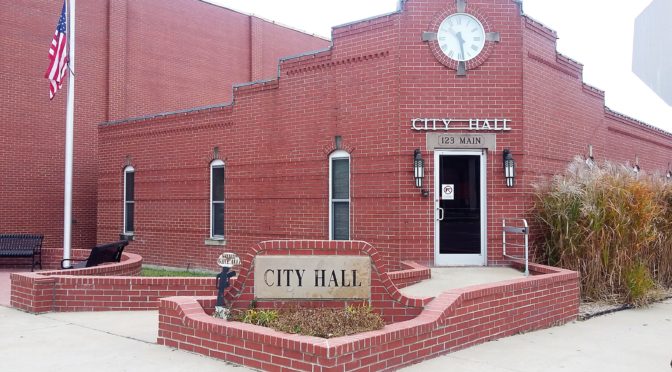
City Hall Commission Room – 123 S. Main Street, Fort Scott, KS 66701
August 19, 2025 – 6:00 P.M.
Call to Order/Roll Call
Pledge of Allegiance
III. Invocation
Approval of Agenda
Consent Agenda
Approval of Appropriation Ordinance 1390-A – Expense Approval Report – Payment Dates of July 23, 2025 – August 12, 2025 – $662,802.14
Approval of Minutes: Special Meeting of July 30, 2025; Special Meeting of August 4, 2025; and Regular Meeting of August 5, 2025.
Request to Pay – Earles Engineering & Inspection, Inc. – Invoice No. 18159 – 21-303 – Davis Lift Station – Addendum No. 4 ($11,600.00) and Addendum No. 5 ($18,600.00) – Total $30,3200.00
Request to Pay – Earles Engineering & Inspection, Inc. – Invoice No. 18141 – EEI No. 25-12 – East National Project Phase I – Survey 100% ($6,400.00) and Preliminary Design 12.5% ($12,937.50) – Total $19,337.50
Request to Pay – Cardinal Sitework – Application for Payment No. 2 (FINAL) – Charles Street Lift Station EEI No. 24-003B – $3,587.45
July Financials
Public Comment
VII. Appearances
Rachel Carpenter– Tourism Report
Thomas Metcalf Jr. – 3rd Annual Sons of American Legion Car Show – August 30, 2025 – Request for Temporary Street Closure – National Ave. between Oak St. and Pine St.
VIII. Unfinished Business
Public Hearing:
Planning Commission Case No. 1052 – Conditional Use Permit– 2400 S. Main – Amazon Storage Unit – Recommended by Planning Commission on July 9, 2025 – Tabled from August 5, 2025
Vacation of Alley – Lewis Nihiser – Revisit requested by City Commission
Action Items:
A. Consideration of Appointment of (1) Member for FSHPRC – Tabled from August 5,
2025 – L. Dillon
Consideration of Resolution No. 9-2025 RESOLUTION AND NOTICE OF HEARING WITH REFERENCE TO ALLEGED UNSAFE AND DANGEROUS STRUCTURE AT 121 S. MARGRAVE – Tabled from April 15, 2025
New Business
Consideration of Certificate of Appropriateness – Gordon Parks Mural at Main &Wall (Wilder House Building) – Approved by Design Review Board – L. Dillon
Consideration of Fort Scott Developer Partnership Incentive Package 2026– L. Dillon
Consideration of Sales Tax Ballot Question – B. Matkin
Discussion with Earles Engineering & Inspection, Inc. – Requested by M. Wells