All posts by Staff

No Hearing and No New Case: State Has Yet to Refile Charges Against Commissioner Milburn-Kee

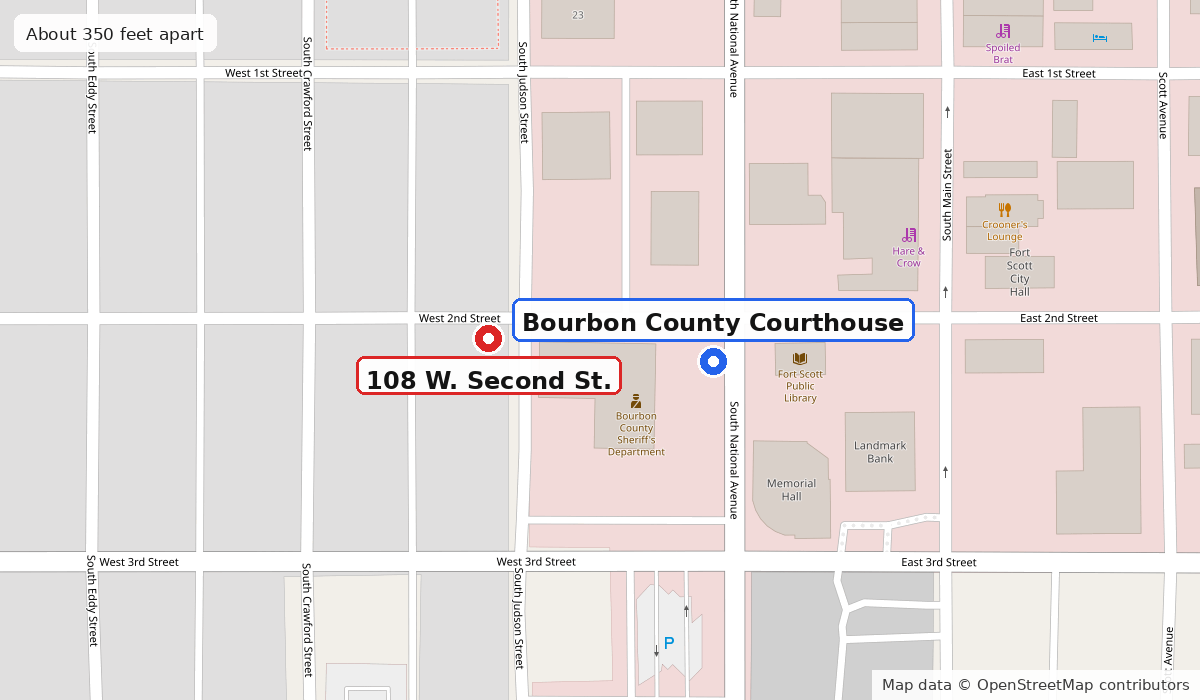
When the State dismissed its misdemeanor case against Bourbon County Commissioner Mika Milburn-Kee in late June, Senior Judge Merlin G. Wheeler’s order set Monday at 1 p.m. in Fort Scott for a first appearance and preliminary examination in the case the Kansas Attorney General’s office told the court it would refile. Five weeks later, no new case has been filed, and the Monday hearing, with no case to attach it to, never made it onto the court’s schedule.

Asked whether the hearing was going forward, the Bourbon County District Court clerk’s office replied by email Monday: “There is no hearing today. The case was dismissed.” Court staff confirmed by phone that nothing has been refiled and “there was nothing scheduled for today.”

At a June 26 pretrial conference, Senior Judge Merlin G. Wheeler denied the State’s eve-of-trial motion to add a felony Intimidation of Voters count to the two misdemeanors Milburn-Kee had faced since March. The State then dismissed the case without prejudice, telling the court it intended to refile all three charges together under a new case number. The judge’s written order, filed June 27, set the Aug. 3 date for the anticipated new case.

That case has not appeared. In Kansas district court records pulled Monday morning, a party search — run both for Bourbon County and statewide — shows no new case against Milburn-Kee. Nothing has been docketed in the dismissed case since the June 27 order. The Attorney General’s office, where Assistant Attorney General Olivia R. Higdon is prosecuting the case, has not publicly explained the delay. When FortScott.biz called the office July 27, a staff member said the only thing the office could share was that the matter was under “prosecutorial review.”

Whether and when the State will refile are open questions. One constraint is the calendar: Wheeler ordered that dismissing and refiling does not restart the speedy-trial clock, which he dated to April 15. Under Kansas’s speedy-trial law, K.S.A. 22-3402, a defendant who is out on bond must be brought to trial within 180 days of arraignment, not counting delays the defense causes — by that measure, roughly mid-October.

All of the charges stem from an Oct. 25, 2025 incident at the county commission room while it was being used as an early-voting polling place. The dismissed case charged interference with the conduct of public business, a Class A misdemeanor, and disorderly election conduct, a Class B misdemeanor that on conviction would mean forfeiture of office under K.S.A. 25-2432. The proposed third count, Intimidation of Voters, is a severity level 7 nonperson felony.

A charge is an accusation, not a finding of guilt, and Milburn-Kee, who has pleaded not guilty, is presumed innocent unless and until a jury decides otherwise. FortScott.biz will report when a new case is filed or a new hearing is set.

The Virus Named for Bourbon County

Late in the spring of 2014, a Bourbon County man was working outdoors on his property. He picked up several tick bites and found one tick on his shoulder swollen with blood.

Within a few days he felt sick to his stomach and weak, with diarrhea. A fever came the next day. On the third day he saw his primary care doctor, who prescribed doxycycline, the standard antibiotic for a suspected tick-borne illness.

The next morning his wife found him barely conscious. An ambulance took him to a local hospital, where doctors started intravenous fluids and intravenous doxycycline and kept testing him. Rocky Mountain spotted fever, Lyme disease, ehrlichiosis: they were all negative. He kept getting worse, and on the eighth day they moved him again, this time to the University of Kansas Medical Center in Kansas City (Mitchell et al., Case Reports in Infectious Diseases, 2026), for what the 2015 report calls further evaluation and management. Two days after that he was in intensive care.

Nobody ignored his symptoms. As he failed to improve, his doctors escalated at every step: from a clinic to a local hospital to a tertiary care center in five days. They ruled out the treatable causes before transferring him.

Every test for the tick-borne illnesses anyone knew about came back negative. Two days before he died, doctors sent a sample of his blood to a Centers for Disease Control and Prevention lab in Fort Collins, Colorado.

Eleven days after his first symptom, he died of septic shock. His blood pressure had fallen past what three separate drugs could hold up, and his organs were shutting down (Kosoy et al., Emerging Infectious Diseases, 2015). Scientists at that CDC lab went on to find a virus never before seen in a sick person in this country.

They named it for the county the man came from. Bourbon virus.

Why the antibiotic did not work

Here is the part worth remembering. Doxycycline is an antibiotic, and antibiotics kill bacteria. They do nothing at all to a virus.

Kansas has numerous bacterial tick diseases, including Rocky Mountain spotted fever, ehrlichiosis, and tularemia. Doxycycline is the standard first-line treatment for a suspected bacterial tick illness. Bourbon virus is not bacterial, and that one difference explains most of what makes this disease dangerous.

When the CDC announced the discovery in February 2015, it said this was the first virus of its kind ever shown to make a person sick in the United States.

It comes from the lone star tick

Bourbon virus is believed to spread through the bite of an infected tick, and every known case has followed one. The only species ever confirmed to carry it is the lone star tick, identifiable by the small white dot on the female’s back. A 2023 review of the research notes that in the five cases known at that point, the species of the tick that bit each patient was never identified.

This is not a rare or exotic tick. In a 2024 advisory, the Kansas Department of Health and Environment called the lone star tick the most common tick in Kansas, living across at least the eastern two-thirds of the state and biting people aggressively.

Scientists have also found the virus in ticks collected in the wild. A CDC team tested more than 39,000 ticks collected in northwestern Missouri in 2013 and found live Bourbon virus in three batches, all of them lone star ticks (Savage et al., 2017).

The second death, also in Bourbon County

In the spring of 2024, a 63-year-old man with well-controlled diabetes was preparing hunting ground in the woods of Bourbon County. He pulled two small ticks off himself that day and found a third on his lower back two days later. None of them were swollen with blood.

A week later he nearly fainted while standing, and went to an urgent care clinic with a headache, sore muscles, no appetite, and swollen legs. His blood pressure was 67 over 54.

He reached intensive care already in multi-organ failure. Within four hours he was on maximum doses of four separate drugs to hold his blood pressure up. His kidneys gave out and he went on continuous dialysis, then onto a machine that takes over the work of the heart and lungs. They gave him doxycycline early, in case this was bacterial. It was not. CDC testing came back positive for Bourbon virus.

Late in his stay he developed a fungal pneumonia, which his doctors linked to the steroids used to fight the shock. He died on his 21st day in the hospital. The report lists that infection alongside the virus as what killed him.

His case was written up by KU Medical Center doctors and published in January 2026 (Mitchell et al., Case Reports in Infectious Diseases). The same report notes that the 2014 patient died at that hospital too. In a June 2024 advisory, state health officials wrote: “This year alone, KDHE has investigated several tickborne disease cases with severe health outcomes, including hospitalizations due to Rocky Mountain Spotted Fever and Tularemia, and a fatal case of Bourbon virus.”

A search of the FortScott.Biz archive found no local news coverage of this death at the time.

Two men have died of this virus after picking up ticks in Bourbon County. Their deaths were ten years apart, both at the University of Kansas Medical Center in Kansas City.

The virus is in ticks here

After his diagnosis, the state health department surveyed the man’s land.

They collected 1,253 ticks, and every single one was a lone star tick. Tested in batches, one batch came back positive for Bourbon virus, and eleven came back positive for Heartland virus, an unrelated tick-borne virus spread by the same tick, which causes a similar illness and also has no cure.

That is a finding from 2024, not a footnote from 2014. The virus remains uncommon, though. Earlier CDC surveys near Bourbon County estimated roughly 0.25 to 0.32 infections per 1,000 adult ticks, and a 2016 survey found none at all.

Map of states where Bourbon virus has been found.
Where Bourbon virus has turned up. Map: FortScott.Biz. Case data as of August 1, 2026.

How rare is it, really

Six human cases have been reported in the medical literature since 2014, in four states: Kansas, Oklahoma, Missouri, and New York. That count comes from the January 2026 case report. The CDC’s own page, updated in June 2026, gives no running total at all.

One of the Missouri cases was a state park official whose death was linked to Bourbon virus in a March 2018 report by The Missourian, a Franklin County newspaper. That case is documented in news coverage rather than in the medical journals, and the 2023 scientific review of the virus cites the newspaper account rather than a case report.

The researchers who study it say the real number is higher. There is no commercial test for Bourbon virus, so a doctor who suspects it has to send samples through the state and then to the CDC. The Stony Brook team notes that many clinicians are unfamiliar with the virus, which raises the chance of a missed diagnosis.

When researchers went looking in stored blood samples in North Carolina, they found four people out of 518 carrying antibodies showing they had been infected at some point (Zychowski et al., 2024). That state has never had a confirmed case.

That does not mean those people got seriously ill, and some infections are probably mild. It does mean the virus reaches more people than the case count shows.

Long Island doctors reported the same kind of finding this summer. They rechecked blood from 107 patients who had a fever after a tick bite between 2019 and 2024, and two carried Bourbon virus antibodies (Bateman et al., American Journal of Tropical Medicine and Hygiene, 2026). One of them was New York’s first confirmed case, identified in April, a patient who had been hospitalized and assumed to have Lyme disease (Stony Brook Medicine, July 2026). Fox Weather reported that the patient recovered.

What to do about it

There is no vaccine and no drug that treats Bourbon virus. Hospitals can give fluids and treat the pain and fever, but they cannot kill the virus.

Since there is no treatment, not getting bitten is the only defense. The advice is the same as for every other tick illness. Treat clothes and boots with permethrin. Use a repellent with DEET, picaridin, oil of lemon eucalyptus, or IR3535. Tuck your pants into your socks. Shower soon after you come in. Then do a real tick check: waistband, armpits, around the ears, belly button, behind the knees, and in your hair. Check the dog too. Pull an attached tick straight out with fine-tipped tweezers, gripping close to the skin.

If you are being treated for a tick bite and not improving, tell your healthcare provider. That failure to improve is the specific clue Kansas health officials tell doctors to watch for.

Kansas health officials tell doctors to consider testing for Bourbon and Heartland viruses when a patient has a fever, a possible tick bite in the last three weeks, certain abnormal blood counts, and an illness that is not responding to doxycycline. Both Bourbon County men were given it. So was the New York patient, who was first thought to have Lyme disease.

The state also says to watch for symptoms for 30 days after a tick bite, and to tell your doctor about the bite. Kansas doctors who want testing help can call the state Epi Hotline at 877-427-7317, option 5.


Sources

Top photo: Sam Droege, USGS Bee Inventory and Monitoring Lab (public domain). Map by FortScott.Biz.

The city bought the golf course with donated money. Is it self sufficient?

Fort Scott’s budget consultant told commissioners at last week’s work session that the city’s golf course does not cover its own costs, and questioned whether the way the city runs it now is sustainable.

“The revenues that we’re generating is not going to cover the expenses,” Baker Tilly financial advisor Ben Hart told commissioners on July 27, suggesting Woodland Hills might belong back inside the general fund. (watch)

The city’s own monthly reports put numbers to it. Twice last year the general fund transferred money into the golf fund to cover its losses: $142,135.64 in September 2025 and $59,630.23 in December, $201,765.87 together. Strip those transfers out and Woodland Hills ran roughly $77,400 in the red over the eight months from May through December 2025. Through June 2026, the latest month the city has reported, the fund is down about another $44,100, with no transfer so far this year. June was its best month in a year, a $16,299 surplus.

In April, Hart told commissioners the general fund ran a deficit of roughly $987,000 in 2025, driven largely by about $476,000 in transfers out to the golf course, economic development, and parks and recreation. Of those three, the golf course took the most. Over the same eight months the city’s reports show $201,766 going to golf, $147,179 to economic development and $35,566 to recreation.

Grouped bar chart comparing what Fort Scott's Woodland Hills golf course earned against what it cost to run, by month, May 2025 through June 2026. Cost exceeds earnings in 11 of the 14 months. Earnings peak near 82,000 dollars in May 2025 and fall to about 4,700 dollars in January 2026. Annotations mark two general fund transfers, 142,000 dollars in September 2025 and 60,000 dollars in December 2025.
The gap between the bars is the loss. Cost ran ahead of income in 11 of these 14 months. Source: City of Fort Scott Monthly Activity Reports, Fund 219, filed with the May 19 and July 21, 2026 agendas.

How Fort Scott ended up owning a golf course

The city didn’t set out to be in the golf business.

When Dave Martin became city manager in 2010, people started telling him the city should buy the course before it fell apart. Others told him to stay well clear of it. The owners could no longer keep it up, and nobody else stepped forward.

Martin’s answer was to put it to the town: if residents thought the city should own it, residents should help pay for it. They did. The community raised about $350,000 toward buying and fixing up the course.

“This is what a community can do when they set their sights to work together to make something nice and better in Fort Scott,” Martin said in 2016.

The years that followed brought steady investment. The city hired PGA professional Shannon O’Neil as clubhouse manager and a superintendent, Jon Kindlesparger, to rebuild grounds Martin admitted were “in disrepair.” A new clubhouse opened in February 2016. A $65,000 cart barn went up in 2018, again paid for largely by donations. In 2019 the city’s community development director, Robert Uhler, told a chamber coffee that a bestthingsks.com list had put Woodland Hills among the top ten public golf courses in Kansas.

The course became more than a place to golf. Fort Scott High School, Uniontown High School and Fort Scott Community College teams all played there, and in FSCC’s first year with a golf program two players qualified for nationals. By 2018 the course carried 127 memberships, hosted 25 tournaments a year and logged 9,100 rounds. In 2024 the clubhouse was renamed “The Clubhouse” by public vote, got new carts and furniture, and the city floated a Fort Scott-themed miniature golf course to pull families in.

So does it make money?

Two of the city’s own officials say they had heard for years that it did. That assumption is exactly what the city set out to test, by pulling the course out of the general fund and into a fund of its own, so its revenue and costs could be seen on their own.

Mayor Kathryn Salsbury told the July 27 work session she wants it kept that way. She said she had always heard the “golf course is the only place where we make money. And then we pulled out and found out that’s not true. So I’d kind of like to keep watching it.” (watch)

City Manager Brad Matkin backed her up, saying the old claim never had evidence behind it: “when I first started, it was like we made money. And that was a statement. You didn’t have any, there’s no proof to that.” (watch) Breaking it out, he said, was the only way to find out: “because other than that, you’re just saying things.”

Commissioner Julie Buchta raised a complication worth remembering: when the course did appear to turn a profit, it may have been because maintenance was being deferred. “Didn’t we show a profit, but it’s because basically they were cutting all the fertilizer and everything out?” (watch) A golf course that stops buying fertilizer looks cheaper for a season and worse for years, which is roughly the condition the city bought it in.

The shape of the problem

The chart above shows why this is hard to fix. Woodland Hills earns real money, about $351,000 from May to December 2025, but it earns almost all of it in five months: May alone brought in $82,000 and January brought in $4,748. The cost of running the course does not follow that curve. It ran between $34,000 and $82,000 every single month, summer and winter alike, and over those same eight months the city’s own reports put the cost of running the course at $428,804 against $351,385 of income. The fund’s expense lines run from salaries, health insurance and KPERS through electricity, equipment and irrigation maintenance to fertilizer, chemicals, sand and gravel. The 2026 budget had to add money for fertilizer and chemicals as prices rose.

The city has kept putting money in, and has looked for more out. In February commissioners raised what tournaments pay. Groups booking an event are charged per player, and the city caps what any single event pays for the day: the per-player fee went from $30 to $35, and the cap on one day’s tournament from $4,500 to $7,000. Those terms sit on the city’s golf event application rather than the published green-fee rates, so most golfers never see them; the change falls on the large charity and fundraiser tournaments the course hosts; as of 2018 it held about 25 a year. On July 21 they took $31,000 out of general fund reserves for a used 2021 Ventrac mower, after the 2012 machine failed and its parts were discontinued.

And the 2027 budget now in front of the commission sets aside nothing to cover golf course losses — only the annual golf cart lease. “There’s nothing budgeted here to transfer over for any kind of losses in the golf course,” Hart said. (watch)

Which leaves an unanswered question on the table as budget hearings approach: if the course again spends more than it takes in during 2027, where does that money come from? Hart said he and a Baker Tilly colleague would start producing a running profit-and-loss statement for the course so commissioners can follow it line by line.

The next budget work session is August 18. The public hearing and adoption are set for September 15.

Reporting from the city’s published recordings of its July 21 and July 27, 2026 commission meetings, the 2027 budget presentation filed with the July 27 agenda, the city’s Monthly Activity Reports for Fund 219 filed with the May 19 and July 21, 2026 agendas, and fortscott.biz coverage from 2016 to 2024.

Fort Scott’s 2027 budget: flat tax rate, but a one-time land sale props up the balance

Fort Scott’s city commission spent about 35 minutes on Monday, July 27, on a proposed 2027 budget that closes a projected shortfall: on paper, it balances. How it balances is what commissioners kept circling back to.

According to the budget presentation filed with the meeting agenda, the plan holds the general fund levy flat at 35.023 mills — the largest piece of a city property tax rate that totalled 43.382 mills in the 2026 budget and moves the general fund from a projected $231,000 deficit to a $40,000 surplus. It gets there partly through belt-tightening — holding two police positions and one fire position vacant, and limiting capital purchases — and partly by applying $500,000 it hopes to raise from selling lake lots to debt — which the city scores as $134,733 of recurring relief a year, not as $500,000 of operating money. It also funds a 3% wage increase and absorbs a 15% jump in health insurance.

City of Fort Scott Budget Highlights slide listing 2027 budget development highlights: maintain 35.023 mill levy; improve General Fund from a 231 thousand dollar deficit to a 40 thousand dollar surplus; apply 500 thousand dollars of lake lot sale proceeds to debt reduction; hold 2 police and 1 fire position vacant; limit capital purchases and focus on core services; fund a 3 percent wage adjustment and absorb a 15 percent health insurance increase.
The plan in the city’s own words. Source: City of Fort Scott 2027 budget presentation, filed with the July 27 agenda.

That $500,000 is money the city only gets once, and Baker Tilly financial advisor Ben Hart, who presented the budget, was direct about why he wants it spent on debt rather than daily operations.

The thinking behind the lake lots, he told commissioners, is that the money has to go to retiring debt — it cannot pay for day-to-day operations. “It’s also a one-time revenue source. And that’s it. You only get it once. You match that up with a one-time expense that would benefit the general fund, what that does is eliminate $134,000 in debt service payments out of the general fund.” (watch)

City Manager Brad Matkin said the lots are already surveyed: “The lake lots that he’s talking about are the five that have already been staked out. … It’s on the east side at the very end, be the north end.” (watch)

City of Fort Scott slide titled One-Time Financial Actions showing a four-step flow: 500 thousand dollars from lake lot sales, used to retire fire pumper and ladder truck debt, producing 134,733 dollars of estimated annual debt service reduction, described as recurring relief that turns one-time revenue into ongoing budget capacity.
The city’s own diagram of the plan: a one-time $500,000 land sale retires fire truck debt, which the city says cuts debt service by $134,733 every year. Source: City of Fort Scott 2027 budget presentation.

What if the lots don’t sell

Mayor Kathryn Salsbury asked the obvious question: “What if we don’t sell any lots like that?” (watch)

Hart said the city would fall back on money coming from Bourbon County for dispatch services — using part of that payment to cover the shortfall. Earlier he had said that would have to “take place for the next three or four years” (watch) (watch), for as long as the debt is outstanding.

That county payment isn’t in the budget at all. “Keep in mind, what we try to do is keep the dispatch payment from the county out of the general fund entirely,” Hart said. “Right now it’s not accounted for anywhere in the 27 budget.” (watch)

It also isn’t spare change. Hart described it as “reserved for future, well, really economic development,” pointing to the rodeo initiative the commission had announced as the sort of thing that might offset falling sales tax. (watch) So if the lake lots don’t sell, the trade-off isn’t free: money the city has been holding for possible future economic-development priorities would go to old debt instead.

Commissioner Julie Buchta pushed on whether early payoff actually saves anything. “What are we paying in interest? I mean, if we pay off those debts, are we trying to remember what our interest rate is?” she asked. (watch) Hart said the two trucks involved — a fire pumper and a ladder truck, according to the presentation — are near the end of their payment schedules, so the interest avoided would be roughly $75,000 in total over the remaining term. That is a separate figure from the recurring saving: the city puts the annual debt service reduction at $134,733 a year.

The other flashpoint was the municipal golf course, which the city pulled into its own fund to see whether it makes money. It doesn’t, and the 2027 budget sets aside nothing to cover its losses — only the annual golf cart lease (watch). We will look at the golf course, and how Fort Scott came to own it, in a separate story.

City of Fort Scott General Fund Snapshot slide with two pie charts. Revenues: property taxes 33 percent, sales taxes 30 percent, franchise taxes 14 percent, all other 23 percent. Expenses: personnel services 69 percent, contractual services 17 percent, debt service 7 percent, commodities 6 percent, capital outlay 1 percent, miscellaneous 0 percent.
Where general fund money comes from, and where it goes. Source: City of Fort Scott 2027 budget presentation.

Where the money comes from

Per the presentation, about 33% of general fund revenue is property tax and about 30% is sales tax, with franchise taxes at 14%. Personnel is roughly 69% of general fund spending — Fort Scott is, as Hart described it, a “service driven industry.” The plan assumes sales tax falls about $118,930 and franchise taxes about $134,944, including roughly $75,000 less in electric franchise tax.

The general fund should end the year with about $1.2 million in reserve — around 17.7% of spending, or about 65 days of operating money. “That’s if all revenue stopped and ceased to exist,” Hart said, “you’d have 65 days operating reserve to continue to maintain services.” (watch)

What’s next

Commissioners asked for a 2026 year-end forecast, a list of contractual services above about $10,000, and a clearer comparison of paying cash versus borrowing. Hart reminded them the choices are theirs. “This is the city administrator’s budget. You come up with what priorities look like. Our job is to set them up for you and give you the data necessary to make that decision.” (watch)

The budget calendar filed with the agenda sets the next work session for August 18, with the public hearing and adoption on September 15.

Based on the city’s published recording of the July 27, 2026 budget work session and the budget presentation filed with that meeting’s agenda. 

Clerk Drops Recall Lawsuit, Waives Any Future Challenge to the Petition

Bourbon County Clerk Susan Walker has dropped the lawsuit she filed in May to invalidate the petition seeking her recall, ending the case hours before a hearing that had been scheduled for Tuesday afternoon.

A Stipulation of Dismissal was electronically filed at 9:48 a.m. on July 28 in Bourbon County District Court, and District Judge Richard M. Fisher Jr. signed it the same morning. The case, Walker v. Crux (BB-2026-CV-000048), is dismissed with prejudice, meaning Walker cannot bring it again.

A motion hearing had been set for 1:30 p.m. that same day. Court records now show it canceled.

Walker sued on May 22, arguing the recall petition circulated against her was invalid because County Attorney James Crux never issued the written legal-sufficiency determination that K.S.A. 25-4322(b) requires. Her position was that Crux reviewed and rejected an earlier draft but never independently reviewed the amended version that was actually circulated for signatures. She asked the court to declare the petition invalid and to block any recall election based on it.

She originally named Crux along with three recall committee members, Kyle R. Parks, Kevin Wagner and Lyle K. Owenby, then narrowed the case to Crux alone. The three members were dismissed on May 29 and spent June asking the court to let them rejoin.

By July the case had three fully briefed motions waiting on the judge: the committee members’ motion to intervene, Wagner’s motion to set aside the order dismissing the committee, and Crux’s motion for judgment on the pleadings, which asked the court to rule the petition legally sufficient and let it go to the voters. Walker had filed her response to that motion on July 8.

The stipulation was filed under K.S.A. 60-241 by all parties who had appeared in the case. It sets out four terms:

  • Walker agrees to pay the proposed intervenors eight hundred dollars.
  • Walker waives all future legal claims challenging the Petition to Recall Susan E. Walker or process related to it.
  • The proposed intervenors agree to withdraw their motion to intervene.
  • The proposed intervenors waive all claims against Walker for attorney’s fees.

The document is signed by Jonathan L. Ehrlich for Walker, Jacob D. Bielenberg for Crux, and Patrick B. Hughes for the three committee members, who are represented by both Patrick B. Hughes and Quinn M. Hughes.

None of the three contested motions was ever decided.

That distinction matters. Crux’s motion for judgment on the pleadings asked the court to hold that the recall petition was legally sufficient, which was the central legal question in the case. The court never reached it. A judge did not uphold the petition; the challenge to it was withdrawn and waived by the person who brought it.

The motion to intervene was likewise never granted or denied. The committee members withdrew it themselves as part of the agreement. Wagner’s motion to set aside was never decided either.

One note for readers who look the case up themselves: the state’s public case-search portal lists the July 28 disposition as “Dismissed for Lack of Prosecution.” That label does not match the signed order, which is a stipulated dismissal agreed to by every party and entered while the case was actively briefed and set for hearing. The filed document is the authoritative record.

Timeline and documents

For readers who want the fuller history, here are the key filings and our prior coverage, in order:

Background: the recall petition and the clerk’s public statement on the recall.

Read the newest filing: Stipulation of Dismissal (PDF), filed and signed July 28, 2026 in Bourbon County District Court, Case No. BB-2026-CV-000048.

Being named in a lawsuit is not a finding of wrongdoing, and the filings described here reflect each party’s arguments, not the court’s conclusions. FortScott.biz will continue to follow the recall.

Fort Scott backs a $4 million rodeo arena — what was approved

FORT SCOTT, Kan. — City commissioners voted 5-0 Tuesday to authorize City Manager Brad Matkin to begin developing plans for a covered, 2,000-seat rodeo and event arena at the Bourbon County Fairgrounds, a project his own estimate puts at $3,999,000.

What the commission did not do is approve the arena. The motion directs Matkin to bring back firm cost numbers, work with the city’s bond counsel on financing, assemble a task force and seek sponsorships. No bond has been authorized, no lease has been signed, and no construction contract exists.

Rendering of the proposed covered Fort Scott rodeo arena showing grandstand seating, party and VIP decks, and a full roof over the arena.
A rendering of the proposed covered rodeo and event arena at the Bourbon County Fairgrounds, from City Manager Brad Matkin’s July 21 presentation to the Fort Scott City Commission. (City of Fort Scott)

“I would make a motion that we direct Brad to get real numbers, get with Garth on what he needs, set up the task force, set up the sponsorships, and whatever else he feels is needed to make the Fort Scott Rodeo Arena a reality,” Commissioner Matthew Wells said. The motion was seconded, and all five commissioners voted yes.

The “Garth” in the motion is Garth Herrmann of Gilmore & Bell, the city’s bond counsel. The arena was a new-business action item on Tuesday’s agenda.

Matkin’s plan builds on the fairgrounds’ existing 180-by-350-foot dirt arena rather than starting from bare ground. The existing bleachers would come down, replaced with 2,000 stadium seats. The design adds six professional bull chutes, three on each side; roping chutes; a party deck and a VIP deck; a food court for local restaurants; and an announcer stand equipped for electronic scoring.

A roof would cover the arena and both decks. The ends would stay open.

“It would not be totally enclosed because heating and AC would be a big expense for that,” Matkin told commissioners. He said Coach Cross from Fort Scott Community College and other rodeo experts told him the roof alone is what they care about.

Speaking Thursday on the weekly “What’s Up Fort Scott” radio program, Matkin added more: livestock holding facilities, concession areas, 250 outdoor stalls for rent, vendor and trade-show space, extra parking and RV hookups, and a sound system. A removable floor over the arena dirt would let the building host concerts, trade shows and conferences. The city would hire a coordinator to book events.

“We’re not just going to use it once a week. We’re not going to use it twice a week,” he said on the air. “We’re planning on using this thing a lot.”

The land would be leased from the Bourbon County Fair Board, which Matkin said has voted to give the city the opportunity. No lease has been drawn up or executed; he told commissioners he had not yet worked it through with the city attorney and would bring an agreement back before signing.

Matkin framed the arena as a revenue problem, not a rodeo one. City sales tax collections are on pace to fall $155,000 from 2025 to 2026, he said, and $302,000 since 2024. Sales tax, he argued, is what keeps property taxes down and pays for police, fire, parks and streets.

His proof of concept is a rodeo the city does not own. Fort Scott Community College’s three-day spring rodeo drew more than 3,900 spectators this year into Arnold Arena, which seats just over 500. Using Placer AI, a foot-traffic service the city subscribes to, Matkin tracked where they went afterward: 772 to Sharky’s Pub and Grub, 770 to McDonald’s, 673 to Casey’s, and several hundred more across Pete’s, the retail center and three local hotels.

He also pointed to a much smaller Kansas town.

“Population of Pretty Prairie, Kansas, 650 people. They put on a four-day rodeo event. Their attendance, 26,500 people,” Matkin said. “I’ve said this for four years. Why not us? Why not Fort Scott?”

The crowding costs the city visitors outright, he argued, describing a barrel racer whose own family skipped her college rodeos here because they could not get seats.

“You are literally just squeezed in there like sardines,” Buchta said, adding that she is grateful the college hosts the events at all.

Matkin’s presentation totals the project at $3,999,000, led by the roof at $1.8 million, lights and electrical at $981,000, and seating at $800,000. Smaller pieces include $85,000 for bathrooms, $68,000 for large fans and $60,000 for bull chutes. Speaking to commissioners he rounded it off: “I’m just going to say, $4 million.”

He said state officials pointed him first at STAR bonds, which use sales tax revenue generated inside a project district to repay the debt. He does not want that.

“To do what this is supposed to do, we don’t want to stop our sales tax from growing,” Matkin said. “So a star bond to me is an option, but not the best when you’re wanting to increase sales tax.”

Buchta asked him to clarify that for the public: he meant sales tax revenues, not the rate. “We will not increase sales tax,” Matkin said.

His preferred mix is a conventional bond paid from the city budget, plus grants, property sales, sponsorships and an annual rodeo gala. He said he has a verbal commitment of $20,000 for the party deck, which he described as a three-year commitment that would then need renewing.

Commissioner Tim Van Hoecke asked whether the city would take a cut of ticket sales or concessions, since it would be paying for the building. Matkin said a portion would come back, though part of any gate goes to prize money. Commissioner Tracy Dancer asked whether the site could handle livestock waste; Matkin said it could, noting a 12-inch water line serves the grounds.

Wells said an earlier feasibility study showed a Fort Scott arena would draw from Oklahoma, Arkansas and Missouri, and warned that at least five communities within 40 minutes are eyeing similar projects.

“If we’re going to strike, we should strike while the iron’s hot,” he said.

Buchta tied it to the budget. “I feel like we really have to focus on revenue creators,” she said. “I don’t want us to have to cut services.”

Earlier in the meeting, resident Michael Hoyt used public comment to flag a new state law that could bear on how a project like this gets financed. House Bill 2622, which took effect July 1, tightens protest-petition requirements on municipal lease-purchase agreements.

“Anything over $100,000 is subject now to a protest petition by the voters if they do not agree with the lease purchase agreement,” Hoyt said. By his count it would take 186 signatures to force the question onto a special election ballot, and he told commissioners past special elections had cost the city roughly $5,000 apiece.

Hoyt raised the law about city budgeting generally, not the arena, and the arena’s preferred financing is a traditional bond rather than a lease-purchase. But the city has not settled on a structure.

Approved July 21: authority for the city manager to pursue the project: firm cost estimates, bond-counsel work on financing options, a task force, and sponsorships.

Not approved, and not yet done: firm costs. A financing or bond decision. An executed lease with the Bourbon County Fair Board. Sponsorships or the proposed annual gala. Hiring an events coordinator. And a decision to build.

Matkin wants the project moving in 2027. “Work just begun, I have a feeling,” he told commissioners after the vote.

Read the full proposal: City Manager Brad Matkin’s 15-slide rodeo arena presentation to the Fort Scott City Commission, July 21, 2026 (PDF).

Official minutes from the July 21 meeting have not been posted. This account is drawn from the meeting and the agenda packet.

Bourbon County Budget Town Hall: A Growth Debate, Three Fixes and a $625,000 Dispute

All five Bourbon County commissioners spent two and a half hours at Fort Scott Community College on Wednesday, July 22, taking open-floor questions on the 2027 budget, the county counselor’s contract, the comprehensive plan, outsourcing, staffing and property taxes. The town hall was the most detailed public back and forth with constituents and highlighted the challenges facing Bourbon County.

District 1 Commissioner Samuel Tran, who chairs the board, opened with what he called rules of engagement. “Rule number one, very paramount, is be civil,” Tran said. “Be passionate. But please be civil.” He was joined by David Beerbower (District 2), Joe Allen (District 3), Gregg Motley (District 4) and Mika Milburn Kee (District 5).

Who did the talking

Billed as a chance for residents to be heard, the evening spent about 42% of the time hearing from the audience with commissioners holding the floor approximately 58% of the time. Tran spoke the most, at approximately 29% of the total, followed by Milburn Kee at approximately 11%, Beerbower at approximately 9%, Motley at approximately 8% and Allen at approximately 2%.

Tran argues growth is driving up taxes

A point of numerical and tax distribution disagreement surfaced early: whether Bourbon County is growing at all and whether more homes would raise or lower taxes.

Defending zoning and the comprehensive plan as protective tools, Tran argued the county needs rules in place before development arrives. “People are moving here. People are moving out of the city.” The county doesn’t track how much is being built, he said: “I drive up and down some of these roads and I’m like, wow, that’s a really nice mansion.”

Asked directly whether the county’s population has been growing, Tran conceded, “Right now, I don’t think it’s growing,” arguing instead that rising property values in Miami and Linn counties signal a wave moving toward Bourbon County, and that people who balk at a 30-minute commute today will eventually drive two hours. Pressed that he seemed to be describing the growth of inflation rather than population growth, Tran answered, “It’s both.” He returned to the tax consequence: “Now, can you imagine 500, 600 people moved into Fort Scott and start building these big homes? You don’t think that those taxes, your taxes are going to go up?”

Motley cut in before the topic moved on, with numbers. “Between the 2010 and the 2020 census, Bourbon County lost 810 people, about 81 people per year,” he said. “That rate of decline has slowed down a little bit.” He added that the total mill levy in the county runs about 168 mills, and county government accounts for only about 30% of it — the rest set by schools, cities, townships, fire districts and cemeteries.

Motley’s prescription: bring the work home & fix pay

Asked near the end of the night what he would do with the 2027 budget to move the county toward fiscal stability and a reserve fund, Motley, a retired banker,  made three points.

First, stop outsourcing. Motley noted there were 15,300 banks in the United States when he started in 1979 and fewer than 4,000 when he retired in 2024, with survivors buying scale to escape the outsourcing trap. “It’s 20% more expensive in the long term to outsource functions, especially when we have qualified people within the county,” he said.

Second, the hidden cost of sending money out of town. “Every county has a measured statistic they call pull factor. What percentage of money earned by Bourbon County citizens are spent in Bourbon County? And our pull factor is about 77%,” Motley said. Paying vendors outside the county — or outside the state — drives that number down. “Money spent in the county is spent over and over and over again until it exits somehow. So that’s a hidden cost to us that we don’t see.”

Third, change how the county pays people. Bourbon County has leaned on benefits rather than salary to attract employees, Motley said, and benefits are the part the county cannot control. At Landmark, “we paid in the top one-third of salaries for our employees … but our benefits were in the lower range. And we did that intentionally because we can control this number, but … we can’t control that benefits number. And those benefits are accelerating dramatically.” He had hoped for a salary survey this year and did not get one, and warned against an abrupt switch: “These are human beings … we can’t just pull the rug out from underneath them.”

A $625,000 dispute

Michael Hoyt argued in a prepared analysis that the current commission spends roughly $625,303 more than the last one, about $344,000 of it recurring — citing a county counselor at about $96,000 against a predecessor at $58,000, $114,200 in outside legal fees and outsourced human resources at $56,000. Former commissioners Clifton Beth, Jim Harris and Brandon Whisenhunt may be owed an apology, Hoyt said, arguing they were criticized as irresponsible with money but managed the county’s core functions for less.

Commissioners Milburn disputed the numbers saying the  counselor’s salary is about $2,000 more, closer to $98,000, but he takes neither insurance nor KPERS. The commissioners said that much of the outside legal spending defended the county against inherited litigation, and that all three outsourced contractors submitted flat budgets for next year. Mike Wunderly noted that $116,500 of Hoyt’s total is the comprehensive plan, which Beerbower had already moved on Monday, July 20, to freeze this year, “so that changes that number considerably.” Hoyt later said that his overall numbers did not include the comprehensive plan cost.

What residents asked for

Heather Etheridge, president of the West Plains and Centerville cemeteries, described driving to Linn County to get help creating her cemetery budget. Told an increase amounted to pennies, she pushed back: “How much is it going to cost my people? Because these are my people.”

Jackie Brown, a lifelong resident, said the county is “taxing people out of their homes,” called for a forensic audit, and asked commissioners to end the public bickering among elected officials. “We have to stop voting popularity contests. We have to start voting in people who are capable of doing the job.” Anne Dare backed an audit too — “if you’re going to audit one, you need to audit all” — and called for a return to basics: law enforcement, ambulance service and roads, questioning whether the sheriff’s request of up to $2 million for radios and towers qualifies. Clint Walker said the county leaves FEMA and grant money on the table and has no maintenance program: “We don’t hire diesel mechanics. We farm it all out.”

Beerbower mentioned the theme he says he has pressed all year. “Doing the same thing over and over again, expecting different results is just insane,” he said. “Reset. We need to reset.”

Were Milburn-Kee’s Defense Donations Illegal? What the State Says

As Bourbon County Commissioner Mika Milburn-Kee fights criminal charges brought by the Kansas Attorney General, some residents have asked whether the money being donated to help pay her legal bills should it count as campaign contributions.

FortScott.biz filed an open-records request with the state agency that oversees campaign finance in Kansas, and the records show it took up that exact question earlier this year. An investigator for the agency told Milburn-Kee that money given specifically to cover her legal defense is not a campaign contribution as defined by the Kansas Campaign Finance Act, and does not have to be reported as one.

The situation stems from charges related to an Oct. 25, 2025 incident when the county commission room while it was being used for early-voting. For the full history, see State of Kansas vs. Mika Milburn-Kee and Judge Rejects Late Felony Charge; State Will Refile All Counts. Lawyers to defend against the charges costs money. As supporters discussed raising funds to help, questions circulated about whether those donations should have been reported as campaign contributions.

The records show that on April 13, Milburn-Kee emailed the agency herself “to request guidance regarding transparency and reporting requirements.” She asked whether “financial assistance for personal legal defense from family members or friends” is “subject to reporting requirements under Kansas ethics or campaign finance,” and said she wanted to “remain fully transparent and compliant with all legal and ethical obligations.”

Two days later, investigator Scott Smith responded with the agency’s written guidance:

“Funds donated or gifted to you for the purpose of paying for your legal defense of the criminal charges against you are not campaign contributions as defined by the Kansas Campaign Finance Act (CFA) and therefore do not need to be reported on any report required by the CFA.”

Smith added two points. First, Milburn-Kee cannot use her commissioner campaign contributions to pay for this defense. Second, he wrote that the donor’s intent for the money is what matters, and suggested she and anyone helping her raise funds make that purpose clear:

“It is the donator’s intent for the use of the funds that is key. Accordingly, I suggest that you, and anybody assisting you with raising funds for your legal defense, make it clear that you are not soliciting or accepting the funds as campaign contributions and that the funds will be used for your legal defense costs.”

The same guidance applies regardless of how the money is collected: “The foregoing applies to funds raised on the GoFundMe platform or by any other means.”

The agency is the Kansas Public Disclosure Commission (KPDC), formerly the Kansas Governmental Ethics Commission. It enforces the Kansas Campaign Finance Act along with state lobbying laws and conflict-of-interest and financial-disclosure laws for state-level officials. It is important to note that the KPDC oversees state-level campaign finance, not every ethics question about local officials. When a resident’s complaint about the fundraising reached the agency, it said so plainly:

“We do not enforce any ethics / conflicts of interest laws applicable to local political officers, including county commissioners. You may wish to consult with your county attorney or county counselor to determine if there are any local ethics / conflicts of interest laws that may be implicated.”

So the guidance answers the campaign-finance question she raised, but the commission was clear it does not decide whether any local county rule might apply.

The records also show the concern was formally raised when a resident sent a complaint about the fundraising to the Attorney General’s office, which forwarded it to the KPDC. Responding, investigator Smith gave the agency’s bottom line:

“Based on the information and allegations in your complaint, there is no apparent violation of any of the laws enforced by our office. However, if you have specific, verifiable information that may constitute a violation of the Kansas Campaign Finance Act, such as the commissioner using her campaign funds for her legal defense, then please let us know.”

The question behind the rumor was whether Milburn-Kee should have reported these donations as campaign contributions. Since the state says the donations for her defense are not campaign contributions, the Campaign Finance Act doesn’t specify any reporting requirement for them. However, that guidance only considers the relevance of Kansas campaign contributions laws.  The commission specifically noted it does not decide any separate local ethics or legal questions regarding such donations.

FortScott.biz obtained these documents through a Kansas Open Records Act request. The commission released four responsive records and withheld one internal staff email chain under a KORA exemption for agency deliberations. The released records are posted in full below.

KPDC records on legal-defense donations for Commissioner Milburn-Kee (KORA response)

Related coverage

Commissioner Milburn-Kee was contacted for comment but had not replied by the time this story was scheduled.

Clerk Asks Judge to Deny County Attorney’s Motion, Send Recall Lawsuit to Trial

Bourbon County Clerk Susan Walker has filed her written response to County Attorney James Crux’s request to end her recall lawsuit without a trial — and she is asking the judge to reject that request and let the case proceed.

The response, filed July 8 in Bourbon County District Court, is the latest step in Walker v. Crux (BB-2026-CV-000048), the suit Walker brought in May to challenge a recall petition being circulated against her.

In late June, Crux — the defendant in the case — asked the court for a “judgment on the pleadings,” a request to decide the case on the written filings alone, without a trial. In that motion, Crux argued the recall petition is legally sufficient and should be allowed to go to the voters, and he asked the court to bring the three recall committee members back into the case.

Walker’s July 8 filing asks the court to deny that motion. Notably, she is not asking the court to rule in her favor now. She is asking it to let her two claims move forward “to trial so it may fully examine the facts and law.”

Walker makes two main arguments, both drawn from her amended petition.

First, she says the county attorney did not do what the law requires. Under K.S.A. 25-4322(b), the county attorney must review a proposed recall petition and determine whether it is legally sufficient. Walker contends Crux reviewed and rejected an earlier draft but never independently reviewed the second, amended version that was actually circulated for signatures. She argues Crux effectively concedes this in his own motion, and that he cannot rely on “substantial compliance” with the statute because, if he never reviewed the petition, he met none of its requirements. Reading the recall law generously in favor of voters, she writes, “does not erase” the county attorney’s duty to follow the procedure.

Second, she says the petition itself is too vague to be valid. The petition cites no statutes, which Walker argues leaves her unable to respond meaningfully within the roughly 200-word rebuttal the law allows a targeted official — pointing to the Kansas appellate cases Reynolds v. Figge and Baker v. Gibson. She also argues the petition still implies “misconduct” and “disenfranchisement,” accusations she says a reasonable signer could read as claims that she broke the law.

Walker asks the court to deny Crux’s motion and allow her petition to proceed to trial. Her underlying suit seeks a court declaration that the recall petition is invalid and an order blocking any recall election based on it. In the same filing, she also opposes a separate bid by recall organizers Kyle Parks, Kevin Wagner and Lyle Owenby to join the case as parties. You can read Walker’s full response here.

How the case got here:

  • May 22: Walker sues to block the recall petition, naming Crux and three committee members (original report).
  • Late May: Walker narrows the suit to name only Crux; a judge dismisses the committee members, and one member asks to undo that (update).
  • June 23: Crux answers the suit and files his motion for judgment on the pleadings.
  • July 8: Walker files the response described here.

A case management conference — where the judge is expected to take up the recall organizers’ motion to intervene and a related motion — is set for July 14 at the Bourbon County Courthouse in Fort Scott.

Being named in a lawsuit is not a finding of wrongdoing, and the filings described here reflect each party’s arguments, not the court’s conclusions. FortScott.biz will continue to follow the case.


Bourbon County Commission Tackles Budget, Tables Comprehensive-Plan Contract Again — July 6, 2026


Bourbon County Commission meeting

The Bourbon County Commission met Monday, July 6, 2026, for a meeting dominated by budget season — a possible new ambulance, requested raises in the county attorney’s office, and whether to hold the line on the revenue-neutral property-tax rate. The board also fielded pointed public comment, including an asbestos-safety claim from a former employee and a pre-suit legal notice served on the chairman, and once again put off signing the county’s comprehensive-plan contract while it works out how to pay for it.

At the top of the meeting the board revised its agenda, moving financial consultant Matt Lawn’s budget presentation earlier to accommodate his schedule, removing a Murphy Tractor training-dispute update, and dropping a statement item from Commissioner Joe Allen.

The commission approved the July 2 accounts-payable batch of $144,022.62 and, in a separate vote, approved a postage charge that had been tabled from the June 29 meeting — the courthouse “postage overage” Commissioner Mika Milburn-Kee had questioned two weeks earlier.

Redemption House roof funded from opioid settlement

Don Tucker, appearing with Redemption House live-in manager Jennifer Simhiser, returned to ask the county to help replace the aging roof on the recovery home, which has been patched repeatedly but is failing. The lowest bid the group received was about $24,000.

Milburn-Kee moved to approve $25,000 from the county’s opioid settlement fund for the roof, noting the settlement dollars are restricted and that a roof over a recovery house fits their allowed use. The motion passed unanimously.

Public comment: an asbestos claim and a legal notice

Three residents addressed the board.

Kevin Allen urged the commission to look hard at the Bourbon County Transfer Station’s finances before raising gate fees or leaning on the mill levy, arguing the operation has shed major costs — a building payment that has been retired, a fourth employee who is gone, and a lost bean contract. Because the transfer station is self-funded, he said, “rather than say, raise the gate fees … you get the money, but” the underlying costs still need scrutiny, and he pushed the board to weigh equipment financing instead.

William Jackson, the county’s former maintenance director, told the commission he had found “deteriorating insulation and damaged building materials that warranted asbestos testing” in the courthouse while on the job, and that he was terminated “within hours after raising these concerns.” He asked the county to release inspection and testing records: “If there is no hazard, prove it. Release the inspection records, show the testing, let the facts speak. … No government should ever punish anyone for asking whether a public building is safe.” (Later in the meeting, Chairman Samuel Tran said the Kansas Department of Health and Environment had inspected the building and given it a clean bill of health.)

Michael Hoyt served Chairman Tran with a notice under K.S.A. 12-105B — a required precursor to a lawsuit against a governmental official — saying Tran had declined to recognize him during the June 15 discussion of the Hidden Valley roads. At that June 15 meeting the board had adopted Resolution 23-26, reaffirming that the Hidden Valley roads in the Mound City/Mapleton area are designated for law-enforcement access only and not for county maintenance. Hoyt said the notice named Tran “in your capacity as chairman and individually” and that he would file a stamped copy with the clerk.

Budget: a possible new ambulance, attorney raises, and the revenue-neutral question

Matt Lawn of Baker Tilly, the county’s outside financial consultant, walked the board through the EMS and county attorney budgets.

On EMS, Director Teri Hulsey is holding a position vacant and projecting essentially flat wages, but the department is weighing the replacement of a 2018 ambulance (EMS-3) that is nearing the end of its service life. Commissioners discussed financing a new unit over a multi-year lease rather than buying outright, and Hulsey noted the county would have to absorb the full cost: “There’s no grants out there to purchase an ambulance. There is for equipment, but there’s not for an ambulance.”

County Attorney James Crux requested salary increases to keep his office competitive with surrounding counties, centered on raising the pay for his full-time assistant county attorney position, along with raises for legal support staff. He also asked to move the county’s SANE-kit line item (sexual-assault forensic exams) off his office budget and into the general fund.

Lawn recommended the board formally notify the county clerk of its intent to exceed the revenue-neutral rate, which preserves flexibility during budget-setting; the board can always adopt a lower rate later. Lawn cautioned that holding to revenue-neutral year after year, with rising health-insurance costs and cost-of-living adjustments, becomes “death by a thousand cuts.” A public hearing on any rate above revenue-neutral cannot occur until after the state’s notice deadline in late August.

Comprehensive-plan contract still waiting on funding

The board again declined to sign its contract with Confluence, the firm the Planning Commission — represented by Brian Ashworth II and Pete Owenby — recommended on June 15 to write the county’s first comprehensive plan and an updated zoning code. That work is tied to the development moratorium the commission adopted the same night. Confluence’s original proposal was $105,500 for the comprehensive plan plus an optional $46,500 zoning-code update; at the June 29 meeting the firm brought a “best and final” of about $116,500 by combining phases and trimming outside costs. Commissioners have said they want a funding source settled before signing.

Commissioner David Beerbower, who carries the item, said he had no funding update. With the paperwork in hand, Tran said, “this is the contract for Confluence. We need to sign it,” but agreed with colleagues that signing without the money in place was premature: “No, we don’t want to sign it yet.” The board tabled the contract for two weeks, to its July 20 meeting.

Hospital donation agreement: commission split on pressing forward

The board revisited its decision to have MSB Law examine the donation agreement and lease tied to the former county hospital building, now operated under an arrangement involving the Kansas Renewal Institute (KRI) and Freeman. Commissioner Milburn-Kee said she would prefer to pull the county’s involvement: “I would personally like to pull our involvement in this.”

Commissioners Gregg Motley, Beerbower and Allen wanted to continue. Motley argued the county has an obligation to protect local health care: “We have two entities that are losing money out there every month. … We owe it to this community to explore all options.” He pushed back on the framing that the county was headed to court: “We are not entering litigation. … What we are doing is exploring options.” Allen put it simply: “I don’t want to lose a hospital.”

Tran, while agreeing the community needs a hospital, cautioned about the county’s odds if a dispute went to court: “Historically, courts and judges don’t like it when government get involved in private entities.” Separately, Chairman Tran said he would bring the county’s forensic-audit RFP — the bids received and the firms’ scope of work — to the board on July 20.

Old business: minutes, warrant checks, audit and software

After a month of disputes over errors in the county’s minutes, the board voted to adopt the short version of its minutes going forward, which Beerbower said “provides just what is necessary by law.”

The commission approved Resolution 25-26, canceling a batch of stale, uncashed warrant checks. It tabled the Jarred Gilmore Phillips 2026 audit engagement so commissioners could compare firms, and tabled the CIC software renewal — a roughly $55,465 IT-budget item — until unused payroll and time-clock modules can be identified and stripped out.

Commissioner comments

Tran reported that KDHE had inspected the courthouse and, despite the building’s age, given it a clean bill of health. He also floated a town-hall meeting at Fort Scott Community College on July 22 at 6 p.m. to talk with residents about taxes and the budget ahead of the county’s rate decisions.

Beerbower distributed a draft policy-and-procedure manual resolution for discussion on July 20. The meeting adjourned.

Walker v. Crux Update: Recall Committee Files Reply, Presses to Rejoin Clerk’s Lawsuit

On June 29, the three members of the committee seeking to recall Bourbon County Clerk Susan Walker filed a reply urging the judge to let them rejoin the lawsuit they had previously been dismissed from, so they can defend the petition they started. The lawsuit is one Walker brought to block the recall.

The filing (from Kyle R. Parks, Kevin Wagner, and Lyle K. Owenby, represented by Wichita attorney Patrick B. Hughes) answers Walker’s objection to their request to “intervene,” or formally join the case. Their core argument: Walker’s own response “confirms, rather than defeats, the basis for intervention.”

The members’ filing makes several points:

  • They are joining as individuals, not as a “recall committee,” so Walker’s argument that a committee cannot sue or be sued does not apply. Walker, they note, concedes that “as individuals, they have that capacity.”
  • Even though Walker’s amended lawsuit no longer names them, it still asks the court to declare their petition invalid and to block any recall election — which, as a practical matter, affects them under K.S.A. 60-224, the state law on joining a lawsuit.
  • As the people who signed and filed the petition, they have a specific interest “no other Bourbon County resident” shares — a role K.S.A. 25-4322 assigns to the recall committee.
  • County Attorney James Crux, the official Walker sued, cannot stand in for them, because he cannot raise their own free-speech and petition defense under the Kansas Public Speech Protection Act (K.S.A. 60-5320).

As a practical matter, the fact that they are no longer a party to the lawsuit prevents the committee members from trying to get Walker to pay for their legal fees, something they had previously requested. The anti-SLAPP fee provision (K.S.A. 60-5320(g)) they invoked would require them to be a party to the lawsuit from which they were dismissed on May 29.

The judge has not ruled on the request to rejoin or on the petition’s validity. The case is in its scheduling stage, and organizers have until July 26 to gather the roughly 2,374 signatures required to put the recall on a ballot.

Being named in a lawsuit is not a finding of wrongdoing, and the filings described here reflect each party’s arguments, not the court’s conclusions. FortScott.biz will continue to follow the case.

Timeline and documents

For readers who want the fuller history, here are the key filings and our prior coverage, in order:

Background: the recall petition and the clerk’s public statement on the recall.

Read the newest filing: Kyle R. Parks, Kevin Wagner and Lyle K. Owenby’s Reply in Support of Motion to Intervene (PDF), filed June 29, 2026 in Bourbon County District Court, Case No. BB-2026-CV-000048.

Judge Rejects Late Felony Charge Against Commissioner Milburn-Kee; State Will Refile All Counts

A judge has rejected the Kansas Attorney General’s bid to add a felony charge against Bourbon County Commissioner Mika Milburn-Kee on the eve of her trial, and the State responded by dismissing the case so it can refile all of the charges together.

At a June 26 pretrial conference, Senior Judge Merlin G. Wheeler denied the State’s motion to amend the complaint to add a third count, Intimidation of Voters, a severity level 7 nonperson felony. The State had filed that motion, with several others, the afternoon before the hearing. Milburn-Kee has faced only two misdemeanors since March. FortScott.biz reported the felony motion when it was filed June 25.

Assistant Attorney General Olivia Higdon said the State has evidence beyond a reasonable doubt to support the felony, and that the person it alleges was intimidated is,a witness (who is already on the witness list), Brandi Ross. The State said the charge rests on the original probable-cause affidavit filed when the case began, which already referenced voter intimidation. All of the counts stem from an Oct. 25, 2025 incident at the county commission room while it was being used as an early-voting polling place.

Milburn-Kee’s attorneys, Tricia and Thomas Bath, objected that the motion arrived too late to answer, that a substantive charge should be argued in person rather than over Zoom, and that adding a felony now would prejudice her rights. They cast the move as pressure tied to her decision to demand a jury trial.

Wheeler said this was not the first time the Attorney General’s office had brought last-minute charges in his courtroom, and he made clear he did not blame Higdon personally but the principals in her office. Because a felony would entitle the defense to a preliminary hearing that could not be held before the scheduled July trial, he denied the amendment.

Rather than go to trial on the misdemeanors alone, the State moved to dismiss the case and refile all three counts together, which Wheeler allowed. The July 6 through 8 jury trial is off. The case will restart under a new case number, and a first appearance and preliminary examination is set for Aug. 3 at 1 p.m. in Fort Scott, where the State must show probable cause for each count.

Speedy-trial clock

Wheeler was careful to lock in one point. Dismissing and refiling does not buy the State a fresh clock. Under Kansas’s speedy-trial law, K.S.A. 22-3402, a defendant who is out on bond must be brought to trial within 180 days of arraignment, not counting delays the defense causes. Wheeler ordered that the time already elapsed, which he dated to April 15, keeps running in the refiled case rather than starting over at zero. By that measure the State has until roughly mid-October to bring Milburn-Kee to trial.

Why no plea deal has materialized.

The Attorney General’s office does not make the first plea offer, so it would be up to Milburn-Kee’s lawyers to approach the State with a proposed plea or to apply for diversion, a stance Judge Wheeler called consistent with the standards for prosecutors. The Attorney General stated that the defense had not pursued any type of plea deal or diversion and indicated that, since it looked like the case was going to go to a jury trial, the state wanted to bring all the charges it believes it has enough evidence to convict on, including the felony it hadn’t filed previously.

Higdon cast the timing as an effort to give Milburn-Kee a way to resolve the case without losing her position. The State, she said, had hoped Milburn-Kee’s defense would bring a plea that would let her keep her seat rather than take the case to a jury.

“Our intention with the filing was hopefully to be able to give her a plea offer where she would not have to leave office, with the Class A misdemeanor moving forward and dismissing the Class B,” Higdon said. “However, if this case was going to receive a trial, we wanted to be able to try the whole thing.”

Judge Wheeler also noted that the courthouse elevator is broken and not expected to be fixed in time, that he had been arranging an accessible location, and that he expected a large turnout given the political tension between the county commission and the county clerk.

A charge is an accusation, not a finding of guilt, and Milburn-Kee is presumed innocent unless and until a jury decides otherwise. FortScott.biz will report on the Aug. 3 hearing.