
Tag Archives: featured

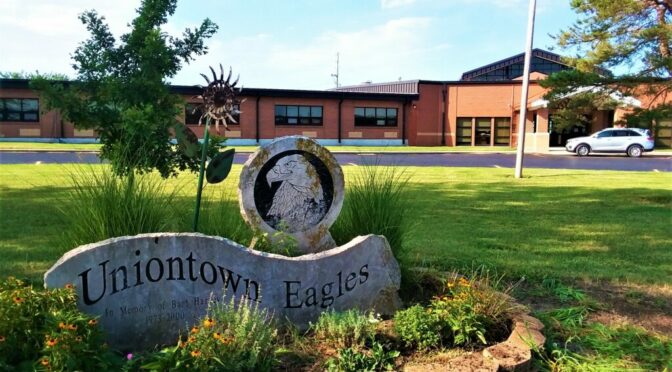
USD 235: COVID-19 Policy Remains For Second Semester

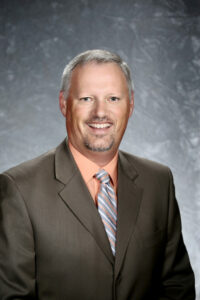
USD235 Superintendent Brett Howard. From the district website.
The  COVID-19 pandemic mitigation policies of the Uniontown school district were approved by the board of education on November 24, 2020.
“We will not be changing any of our policies/regulations regarding COVID-19 for the second semester,” USD 235 Superintendent Bret Howard said.  “Masks are required.  We are still doing temp checks at the doors and will be social distancing as much as we can. “
USD 235 returned to in-person classes today, January 5.
The following is the policy the board approved:

USD 235 Board of Education Reopening Plan
(Approved November 24, 2020)

This is a working document and a fluid situation that can change with little warning or notice. For that reason, adjustments to the model of instruction, the requirements for personal protective equipment, and the suggestions listed within this document may change.

Learning Models- In-Person, Hybrid, Remote Partnership

Masks- Masks are Required

Winter Activities Students who choose the Remote Learning option will not be eligible to participate in KSHSAA or School-sponsored
extra-curricular activities.

USD #235 is planning on having all students who feel comfortable using the in-person model.

For those who feel concerned about that context, we are offering the Remote Partnership.

Students in this partnership would be able to transition to the In-Person model with ease.

The Hybrid model will only be used as deemed necessary by the Bourbon County Health Department.

Furthermore, using the Remote Partnership for all students will only be used in extreme cases where students are not allowed to come to the buildings. We hope to be able to provide some advanced warning of the need to transition, but we have not received a clarification on how much notice we can expect.

IN-PERSON

HEALTH

● Visitors-
○ In general, visitors will not be permitted to enter the building. The speaker connected to our door system will be utilized or someone will come to the door to address any situation needing attention from an outside party.
○ Students being picked up from school will be taken to their party at the main entry instead of the visitor entering the facility.
○ IEP meeting attendees will be required to complete the adult screening process and wearing a mask is required while in the building. Failure to pass the screening process by key stakeholders will result in a rescheduling of that meeting.
○ School Parties – At this time we will not allow outside visitors.
○ Lunch Visitors – No lunch visitors allowed.
○ TeamMates Mentoring- No mentors will be allowed.

● Masks-

○ All students and staff are required to wear a mask except when meeting the criteria listed in the executive order (20-68).
■ a. Persons age five years or under—children age two years and under in particular should not wear a face-covering because of the risk of suffocation;
■ b. Persons with a medical condition, mental health condition, or disability that prevents wearing a face-covering—this includes persons with a medical condition for whom wearing a face-covering could obstruct breathing or who are unconscious, incapacitated, or otherwise unable to remove a face- covering without assistance;
■ c. Persons who are deaf or hard of hearing, or communicating with a person who is deaf or hard of hearing, where the ability to see the mouth is essential for communication;
■ d. Persons for whom wearing a face covering would create a risk to the person related to their work, as determined by local, state, or federal regulators or workplace safety guidelines;
■ e. Persons who are obtaining a service involving the nose or face for which temporary removal of the face-covering is necessary to perform the service;
■ f. Persons who are seated at a restaurant or other establishment thatoffers food or beverage service, while they are eating or drinking,provided they maintain a 6-foor distance between individuals (not including individuals who reside together) with only infrequent or incidental moments of closer proximity;
■ g. Athletes who are engaged in an organized sports activity that allows athletes to maintain a 6-foot distance from others ;
■ h. Persons engaged in any lawful activity during which wearing a mask or other face-covering is prohibited by law.

○ Mask Definition-

■ a. “Face covering” means a covering of the nose and mouth that is
secured to the head with ties, straps, or loops over the ears or is simply wrapped around the lower face. A face covering can be made of a variety of synthetic and nature fabrics, including cotton, silk, or linen. Ideally, a face covering has two or more layers.
○ A face shield may be worn in conjunction with a mask, but does not meet the requirements in and of itself.
● Hand-washing or Hand-sanitizing
○ Students must complete one or the other at an interval no less than 1 hour. (20-59)
● Screening- To be completed once per day before entering the building.

○ Adults
■ Affirmation that they have not been in close contact with anyone who has COVID-19.
■ Questionnaire of symptoms – Must exhibit fewer than 2.
■ Has a temperature of less than 100.4 degrees Fahrenheit
3
○ Students
■ We would ask parents to check for symptoms and/or temperature while still at home.
● Please error on the side of caution when possible.
■ Has a temperature of less than 100.4 degrees Fahrenheit
● Students with a temperature between 99 and 100.4 degrees will be sent to the School Nurse for additional screening

● Social Distancing
○ All individuals are required to maintain 6 ft. of social distancing except for while during in-person instruction in a classroom or while a mask is being worn.
● Isolation of Symptomatic Students
○ Any student who is exhibiting symptoms will be sent to a specific isolation room to be held there until someone arrives to take them home.

○ Staff supervising the student/s will:
■ Maintain 6 ft of social distancing unless emergency medical attention is needed.
■ Wear gloves while touching the student or his/her belongings
■ A mask is highly recommended.

○ COVID 19 Symptoms Screening List
■ Fever (100.4 or higher)
■ Chills
■ Rigors
■ Body or Muscle Ache
■ Fatigue
■ Head-Ache
■ Sore Throat
■ Lower Respiratory Illness (cough, shortness of breath or difficulty breathing)
■ New loss of taste or smell
■ Diarrhea

● Exclusion from school
○ Students exhibiting 2 or more symptoms without other obvious explanations, will be sent home.
○ Symptomatic and untested
● 10 calendar days have passed since the first date of symptoms AND
● Fever-free for 72 hours without fever-reducing medication
○ Symptomatic and tested
■ Confirmed COVID Negative
● May return to school
■ Confirmed COVID Positive
● 10 calendar days have passed since the first date of symptoms AND
● Fever-free for 72 hours without fever-reducing medication AND
● Released to return to school by the Multi-County Health Department.

○ Asymptomatic close-contact and untested (within 6 ft for 10 or more minutes)● 14-day required quarantine starting at last contact regardless of symptoms.

○ Asymptomatic close-contact and tested
■ Confirmed COVID Positive
● Released to return to school by the Multi-County Health Department. AND
● No less than 10 days from the date of testing.

■ Confirmed COVID Negative
● Must complete 14-day quarantine since last date of contact regardless of symptoms

○ Travel Related Quarantine- Students or staff that have traveled to a location listed on the KDHE Travel Related Quarantine List are required to quarantine for 14 days.
■ List can be found at the following link
● https://www.coronavirus.kdheks.gov/175/Travel-Exposure-Related-Isolation-Quaran

● School Response to Isolation or Quarantine
○ Block off the area until cleaning is complete.
○ Immediately clean all desks, lockers, and workspaces of the person with disinfectant.
○ Immediately identify close contacts (within 6 ft for 10 or more minutes) and collect the following information where applicable.
■ Names
■ Email Addresses
■ Phone Numbers
○ Immediately notify guardians (the individual with COVID must not be explicitly or implicitly identified)
○ 14-day quarantine starts the day after the last contact (next calendar day)
○ Share a list of close contacts with the local health dept. (Rebecca Johnson/ Alice Maffett)


CLASSROOMS
● Use Hand-sanitizer at the beginning of class.
○ Teachers will distribute sanitizer.
● Furniture – Remove excess furniture or items of a nature that makes cleaning/disinfecting difficult.
● Arrangement-
○ Space students with as much social distancing as possible.
○ All students should face the same direction.
○ All students should have assigned seating

● Hygiene
○ Teach and model the following
■ Hand-washing
■ Mask usage and disposal
■ Coughing or sneezing into the elbow
■ No-touch celebrations (instead of high fives or handshakes)
5
○ Disinfect after shared usage of spaces or items

● Breaks – We hope to be able to offer opportunities for students to go outside and remove their mask while social distancing. We hope to be mindful and empathetic to the need for students to have a break from wearing their mask.


COMMON SPACES

● Commons Area
○ All staff and students will be required to enter the building at the designated entrances for screening
○ If no screening adult is available, staff will report to the screening station at 7:30
● Hallways
○ Hand-sanitizing should be done prior to leaving.
○ Students will move through the hallways directionally in accordance with posted signs to access other spaces and limit bidirectional traffic.
○ Students will travel down the center of the hallway to limit touching of the wall/ lockers or interaction with other students.
○ Social Distancing should be maintained
● Lockers
○ Locker access will be limited as determined by the administration.
● Restrooms
○ Hand-sanitizing should be done prior to leaving the room.
○ Social distancing should be maintained
○ Students waiting to enter should not lean against the wall.
○ Custodial Staff will frequently clean handles, faucets, partition latches

● Cafeteria
○ Breakfast
■ Grab-and-go format available as students enter for those interested in participation.
■ Students will take their grab-and-go breakfast items to their homeroom/1st-hour class as they enter the building
■ Regular pricing per the Free and Reduced Lunch Application form will be applied.

○ Lunch
■ Hand-sanitizing should be done prior to entering the cafeteria.
■ Social distancing should be maintained. Students are only allowed to sit in designated seats.
■ Space in the cafeteria and commons area will be utilized.
■ Students will be served by kitchen staff instead of serving themselves.
■ Masks are not required while eating.
■ Tables should be thoroughly disinfected after each group of seated students
■ Regular pricing per the Free and Reduced Lunch Application form will be applied

● Playground-WBE
○ Hand-sanitizing should be done prior to leaving the room.
○ The playground will be divided into 4 quadrants. Students will play in their designated space during their recess.
○ Quadrants will rotate on a weekly basis.
○ Limited playground equipment will be available and be cleaned after recess sessions.
○ Hand-sanitizing should be done prior to entering the building for lunch

● Library-WBE
○ Hand-sanitizing should be done prior to entering the library and also before leaving.
○ Books must remain at school.

● Specials-WBE
○ Art, Music, Guidance
■ Staff will travel to the students or use an outside space.
■ Supplies cleaned between uses.

○ PE
■ Outside when possible, inside the gym as needed.
■ Supplies must be cleaned between uses.

TRANSITIONS
● Arrival
○ Buses and parent drop-offs will not be allowed prior to 7:40
○ Temperature screening of all students and staff
○ Must be less than 100.4 degree Fahrenheit
■ Isolation to the conference room if needed.
○ Students will go directly to class
■ Grab-and-Go Breakfast available to be consumed in the classroom

● During the day
○ Teachers will open and close the classroom doors to:
■ Aide in the supervision during transitions
■ Monitor directional hallway traffic and social distancing
■ Minimize contact spread opportunity on door knobs/handles

○ Social distancing should be employed
○ Travel directionally in hallways per posted signage
○ Hand-sanitizer upon entry of each new space

● Dismissal
○ Staggered release by cohort

FACILITIES
● Hand Sanitizing Stations
○ Main Entrances
○ Office Spaces
○ Cafeterias
● Signage
○ Directional Signs in Hallway
○ Social Distancing Markers
■ Cafeteria
■ Main Entrance

● Trash
○ Bags replaced daily by custodians wearing both gloves and a mask is highly recommended.

● Ventilation
○ Full-time use of ERV to constantly introduce outside air.
○ Ion scrubbers in HVAC systems

● Water Fountains
○ Water-bottle filling station utilized
○ Drinking fountain will be turned off and not be available

● Custodial Disinfecting
○ Fogging Disinfectant Daily
○ Touchpoint Cleaning- Daily
■ Doors/ Handles
■ Restroom Fixtures
■ Water Fountains
● Grounds and Exterior Surfaces
○ Playground Equipment (limited)- cleaning daily
○ Touchpoint cleaning on high-touch surfaces of playground structures

● Building Access/Use by Outside Group or Individuals – By Administrative Approval Only

FOOD SERVICE
● Breakfast
○ Grab-and-Go
○ Students eat in the classroom
○ Waste retrieved at 8:30 am by custodial staff
● Lunch
○ Hand-sanitizing before entering the cafeteria
○ Served lunches by the kitchen staff
○ Assigned seating that is social distanced
○ Disinfect tables/ seats between uses

● Vendors
○ All vendors must complete the screening requirements before entry.

TRANSPORTATION- BUS
● Sanitization- after each route
○ High touchpoint areas (rails, seat tops, etc.)
○ Vacuum seats
● Students
○ Assigned Seating
○ Hand-sanitizer for students entering buses
○ Social distance to the greatest extent possible
○ Masks are required.
● Drivers
○ Complete employee health screener prior to the 1st route of the day.
○ Masks are required.
● Screening
○ Daily temperature screening will be conducted when the bus arrives at school.
○ Students exhibiting symptoms of a fever of greater than 100.4 degrees will be sent home.
● Parent Drop-off/ Pick-up

○ WBE
■ Entry
● Students/ staff will enter through the East gym entrance
● Parents or other visitors will not be allowed entry unless for a pre-approved meeting.
● Staff will complete temperature screening upon entry.
● Guardians are asked to not pull away until this screening has taken place.
● Grab-and-go breakfast available
■ Exit/ Release
● All parent pickups will happen through the East gym doors.

○ UHS
■ Entry
● Students arriving who have not been transported by the bus will need to enter the East entrance (JH/ Board Office Entry).
● Temperature screening will be taken at the entry doors.
● If the student is being dropped off, please do not pull away until screening is complete.
■ Release
● Students will be released in a staggered format to limit hallway congestion.
● Students will need to abide by directional hallway rules during release.

Ninety-one Year Old Former Fort Scottian Fulfills Lifelong Dream

The book Russell Wilson co-authored with William Hedlund. Submitted photo.
One 91-year-old man is not letting age stop him from fulfilling a life-long dream.
A  former Fort Scottian has published a book, In His Own Words: The Harold Hughes Story.
 

“The book is co-authored by my father, Russell Wilson,” said Connie Wilson. “He is a robust 91-years-old and he and my 91-year-old mother live in the house they have lived in since 1964 in Des Moines, Iowa.”


“It was a lifelong dream to write a book so that others could know the man he knew so well,” his daughter said in an email.


Russell Wilson. Submitted photo.
Wilson was friends with and then worked for Iowa Governor and U.S. Senator Harold Hughes for years, he said.
“Hughes evolved from a troubled alcoholic to become one of the most respected, effective, and humane political leaders in the United States,” Wilson said.
 
“I write to you because I think some folks in my hometown who remember me or know about Hughes’ legacy might
be interested in knowing about the book,” Russell Wilson said in an email.
“During my time as a pastor at the Church of God in Ida Grove, Iowa, in the 1950s, I met Harold Hughes and we began a lifelong friendship.”
In 1964 Wilson was asked by then-Governor Hughes to work on the Iowa Board of Control for State Institutions.
“I worked with him for four years in that capacity and we remained friends until his death,” Wilson said.
“It has been my longtime dream to write a book revealing the character of this man as I knew him.”
Russell Wilson’s Remembrances of Fort Scott

Russell Wilson sent memories of his life in Fort Scott.


His parents were George and Ina Wilson, and they lived at 124 North Broadway.


“I went to Eugene Ware Grade School and graduated from Fort Scott High School in 1947, as well as attending a few classes at the community college,” Russell Wilson said in an email.  “My
contemporaries would know me as ‘Guss’ Wilson.”


His parents were born and raised in Fort Scott, and Russell and his sister, Jeanette, were raised here as well.
“My maternal grandparents, Chick and Sadie Riley, were also born and raised in Fort Scott, as was my paternal grandmother, Clara Wilson.
“Chick (also called Jessie) ran the barbershop on the main street. My father’s sister, Gladys Wilson, also lived in Fort Scott and was married to District Judge Harry Fisher when she died.
“My dad was a pressman at Standard Advertising and also worked for the local Heraldette newspaper.
“My mom also worked for those businesses and ran a letterpress that imprinted fans and other advertising products.
“My oldest daughter is a graphic designer and inherited their love of printing. When my mom was almost 100 years old Connie would take her to the printer just so she could smell the ink on the presses. Mom said it brought back wonderful memories of her days in the print shops in Fort Scott.
“For a few years, my mom ran the Country Kitchen Restaurant on the east end of town. She made the best curly french fries! Some folks might remember the restaurant and the fireworks stand and carousel that were next to it in the summer.
“My folks were lifelong members of the Church of God. 
“Growing up I remember a lot about the Frisco Railroad and it was a big part of my life. We lived at 125 North Broadway, about a block from the roundhouse. As a junior in high school, I worked as a crew caller on the railroad. From 10 pm to 6 am it was my job to wake the crews and let them know when their trains were scheduled to arrive or leave. I also sold magazines and candy bars to the soldiers on the troop trains during WWII.
“I went to Fort Scott High School. Some of my contemporaries might remember me as Guss Wilson. I had a dance band called the Guss Wilson Band and I played football during my senior year. And I remember spending a lot of time in the summer at the local swimming pool.
“I remember the Fort. In fact, a photo that my mother gave to the current museum of my great grandfather as a soldier on horseback provided the dimension reference needed to determine the correct measurements for the horse barn. I believe that photo hangs in the museum today and was made into a postcard that the Fort hand out.
“I left Fort Scott after graduating from high school and went to Findlay College in Findlay, Ohio where I met my wife, June. After we were married in Fort Scott in 1949, we moved to Shambaugh, Iowa, where I served as a pastor at the Church of God and where our first child, Connie, was born in 1952.
“June and I have been married for 71 years and have raised our 4 children—Connie, Bruce, Clarice, and Kristin—in a number of towns in Iowa. We currently live in our home in Des Moines. My mother, Ina, lived here in Des Moines until her death at 100 years.  We have three grandchildren and 2 great-grandchildren.”


Russell Wilson’s email is
[email protected]

Bronson Locker Expands Due To Demand During Pandemic

Helen and Chubb Bolling, owners of Bronson Locker. Submitted photo.


The Bronson Locker is USDA inspected meat. From their Facebook page.

Bronson Locker, 504 Clay Street, Bronson, KS has been expanding during the COVID 19 pandemic.

“We have had an overflow of work,” said Helen Bolling, who along with her husband, Raymond, known as Chubb, owns the meat locker. “We have had to put on more employees. We expanded our business.  A new cooler, a new processing room.”

“People are buying local meat,” Bolling said. “People are wanting farm-raised meat. We are USDA inspected.”

Several Bourbon County meat producers provide meat to the locker, she said. J.D. Russell and Kevin Gleason from the Redfield area; Ryan Tuchscherer, Fort Scott; Henry and John Ericson, Hiattville all provide meat to Bronson Locker, to name a few, Bolling said.

They have spent a large amount of money to expand their meat locker business that processes beef, swine, sheep, and goats, Helen said. During deer season they add deer processing too.

From their Facebook page.
The waiting list to process beef is up to Dec. 2021, Helen said.
“We are accepting deer anytime,” Mandie Ericson, wife of Helen’s grandson Garret, said.
Mandie and Garret hope to buy the family business from Chubb and Helen someday, Mandie said.
They do not sell deer meat, they merely process it.
Currently, Mandie is the supervisor, Helen said.
Mandie Ericson, Helen and Chubb Bolling and Garret Ericson at the Fort Scott Chamber of Commerce Forks and Corks Event 2019 at the Riverfront Event Center. The Bronson Locker has won the Taster’s Choice Award at the event for two years in a row. Submitted photo.

From the Bronson Locker Facebook page:

“For people discouraged about the waiting list for beef appointments…
“It is always a good idea to… call and check regularly. We want your business as much as you want to sell your beef or stock your freezers.
This week we were able to work seven people up off the waiting list. This week alone. Don’t feel discouraged we will make sure we take care of as many of you as we possibly can without sacrificing quality.
“Thank you to the farmers and families for all of your continued support.”
They are currently selling beef bundles at 25 pounds for $100.
“They average $4 a pound for this farm-raised beef,” Helen said.
The locker is open 8 a.m. to 5 p.m. and can be contacted at 620-939-4575.


Family Owned and Run

They have twelve full-time and two part-time employees, all from Bourbon County, she said.

This is a family-owned and family-run business and 10 of the employees are family.

Besides Chubb and Helen, their son Mike is a butcher. In addition, Amber Ericson, their daughter, works at the locker when she is not teaching school at West Bourbon Elementary School in Uniontown. Helen’s nephews Jesse, Robert and Jim Kuns, the Bolling grandchildren Mandy and Garrett Ericson,  and another grand-daughter in-law, Tyler Ericson, all work at the locker.


In addition, they have a long-term employee, Tom Bradbury, technician, “who keeps us up and going,” Mandie said.


The family has purchased some of the buildings adjacent to the locker and have opened an antique store on the main street of Bronson as well.


The Bollings own several adjacent buildings to their locker business. Submitted photo.
Chubb and Helen Bolling added an antique shop in an adjacent building. The shop is named THAM Antiques after Tyler, Helen, Amber and Mandie. Submitted photos.


Union Lofts Apartments Open For Rental In Downtown Fort Scott

A view from the window of a Union Loft apartment. Submitted photos.
Union Lofts Apartments, 20 S. Main in downtown Fort Scott, will be available to move into in mid-January 2021.
The building has been under demolition then reconstruction since 2018, at the corner of 1st and Main Streets.
Tony Krsnich, Flint Hills Holdings, (located at 7301 Mission Rd, 326 Prairie Village Campus, Prairie Village) is the developer.
Twenty-five apartments fill the three-story historic building, and eight have already been leased.
Some of the perks for living in them?
“The tenants will be living in a newly renovated historic building,” said Mandy Maples, Flint Hills Holdings Vice President of Operations. “There will be a courtyard area with seating and a BBQ grill, indoor workout facility, every apartment is uniquely designed.
 ​No two apartments are the same. Every apartment is unique and holds its own personality.”
Residents may move in the middle of January and there are apartments available for leasing now, she said.
Applications can be picked up at 8 East First Street, at the apartment building across the street.
For questions, call 620-223-1718.
Following are prior stories on the building:
Flint Hills Holding
 ​Flint Hills Holdings Group was established in early 2014. FHHG specializes in historic preservation and multifamily developments. FHHG has developed over $100MM of real estate in Kansas and Missouri since its inception in early 2014 and currently works in Kansas, Missouri, Oklahoma, Nebraska, and Iowa.

Progress on Fiber Optic Projects In Bourbon County Continues

The Craw-Kan Cooperative space is seen on the backside of the  Bourbon County Courthouse. The county commission has leased Craw-Kan two cells from the former jail. September 2018 photo.
Craw-Kan Telephone Cooperative Inc., Girard, is working on multiple projects in Bourbon County to provide fiber-optic lines for internet services.
Craw-Kan Telephone serves Kansas, Missouri, and Oklahoma, offering high-speed fiber optic internet, cable TV, and telephone service in its’ service area, according to its’ Facebook page.
Zach Adams, Craw-Kan Telephone Cooperative Marketing Manager.
Fort Scott Project
Work began on a new hub for Craw-Kan Telephone Cooperative on South Judson Street in late 2018.
“We are continuing to build fiber to non-cooperative member areas in the southeast side of the city of Fort Scott,” Zach Adams, Craw-Kan Marketing Manager said.   “These are homes and businesses where we have not been able to provide services in the past.”
“The goal of our Fort Scott project is to provide 100% fiber-optic coverage in the city limits,” he said.  ” The west side of US 69 HWY is complete and we are currently working on the southeast quadrant of the city.  We will also connect some residences outside but adjacent to the city.”
“We are subcontracting Jim Radell Construction, Pittsburg, for construction on the southeast quadrant of the City of Fort Scott,” Adams said.  “They have multiple crews working in the area.  We also use multiple Craw-Kan employees in the construction and installation process.  There are two or more repair and installation technicians assigned to the Fort Scott territory at any given time.”
Craw-Kan began the Fort Scott overbuild in 2017 and completion is estimated to be in 2021-2022, Adams said.
Uniontown Project
Conduit for the Craw-Kan Fiber Optic project. in March 2020 in Uniontown.
  “The other large project in Bourbon County is the upgrade to the Uniontown (756) phone exchange,” he said.   “This project will be replacing copper phone and DSL lines with fiber-optic lines that will bring maximum reliability and gigabit internet speeds to 100% of Craw-Kan Telephone Cooperative members in the Uniontown exchange…The project will upgrade 100% of existing Craw-Kan members to fiber-optic connections to the home.”
“For the Uniontown project, Bob Hull Inc – BHI was with bid winning contractor doing the fiber upgrade construction,” Adams said.  “They will be using multiple crews to complete the work.”
The Uniontown project was started in 2020 and is expected to be completed in 2021, he said.
Cost of the project
“Craw-Kan has invested several million dollars over the last four years into upgrading the connections of our cooperative members in Bourbon County as well as bringing new fiber optic services to the City of Fort Scott and surrounding areas,” Adams said.

New Furnished Apartments Open As Vacation Rentals

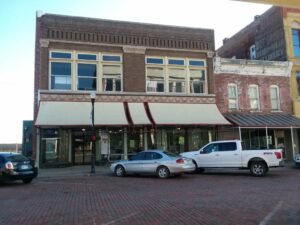
The Hole in the Wall Liquor Store, at Wall and Scott Street September 2018. The new apartments are above the retail store.

Roy and Jody Hoener have opened a new business in the historic Fort Scott downtown area.

“The name of the new apartments are called ‘H Bar Suites,'”, Jody Hoener said.  “This was Roy’s cattle brand when he had cattle.”


Submitted photos of the H Bar Suites vacation rental’s interior construction.

The apartments are located in historic downtown Fort Scott, directly above Hole in the Wall Liquor, another business the couple own,  and across from the Fort Scott National Historic Site, she said.

The physical address is 8 North Scott Street.

They are fully furnished apartments.

The Hoeners have used Ruddick’s Furniture,  and local contractors: Casper Enterprises, Stoughton Plumbing, KTK Electric, and Perry Cannon to name a few. The cabinets were made by Kirby’s Cabinets.

“There are two apartments.  The two-bedroom apartment is currently available, click on the link,” she said.

https://www.vrbo.com/2121361?unitId=2685895&noDates=true&utm_source=direct&utm_medium=social&utm_campaign=earned:vrbo:sharecopylink:USA&utm_content=2121361&oc=fXSJaTIjDS9f5Xk0maRRj

The furnished 2 bedroom apartment is finished. Submitted photos.

The couple hopes to have the one bedroom available at the end of this week, Hoener said.


“There were a few issues with furniture and appliances being back-ordered that has delayed the opening,” she said.


Construction on the Hole in the Wall Liquor Store at Wall and State streets  began in 2018.

History of the Hoener businesses at the site

“Our project started in 2016 when we started looking for a place to move Hole in the Wall Liquor.  (https://holeinthewallliquor.com/) ,” she said.  “One stipulation we had to move as we wanted to remain downtown.  As business owners with a vested interest in our community, we wanted to make a larger impact beyond a retail store.  Downtown revitalization’s direct impact is well documented and has shown to spur local economies.”


“When we took on this old and condemned building downtown, it literally had poles coming from the middle of the street, up to the side of the building, holding up the wall, for almost a decade,” Hoener said.  “This was quite the eyesore to one of the main entrances of our downtown.”


“Heather Smith, the city’s then Economic Development Director, showed us several downtown buildings,” she said. “It was a hard sale. All of the buildings were in such disrepair that it would be impossible for us to come up with the capital to make the needed improvements. The cost of replacing the roof was much more than the value of the whole building.  In short, we discovered what many already knew: it would be impossible to obtain a loan on a worthless building.  We learned first-hand why these buildings are sitting empty but also a few tricks, tips, and solutions to the problem.”

” Smith, through the City of Fort Scott, was able to offer us the State of Kansas Community Development Block Grant (CDBG) for historic districts,” Hoener said.  “This is a state-wide grant program, highly competitive, to help cities provide financial incentives to bring these condemned buildings back to life.   After much thought and planning, working through the risks and unknowns of old buildings, and working with Smith and Dave Martin, we decided to take a leap of faith. ”

“Working with Smith (even after she took on a new job in Wisconsin!) and Susan Galemore at the Southeast Kansas Regional Planning Commission we wrote and submitted a winning CDBG grant,” she said.  “The grant, paired with creative financing from Gregg Motley at Landmark National Bank, and lots of sweat equity, brought new life into the building, encouraging foot traffic downtown, and being a part of the momentum to spur economic growth.”

They had a plan and worked it.

“Our business plan was developed and written in phases,” she said. “The first phase was to move Hole in the Wall Liquor to the new location and open the retail liquor store.”


” The second phase was to then take advantage of the opportunity in the space upstairs and develop housing.  We are now, four years later, almost to the end of that final phase,” Hoener said.

“Our initial plans were to use the space as market-rate apartments,” she said.  “We have since decided to try marketing the space on VRBO as short term or vacation rental space.  We have decided we can always offer them as apartments later if that does not work out.”


SPARK Recipients Working To Complete Spending

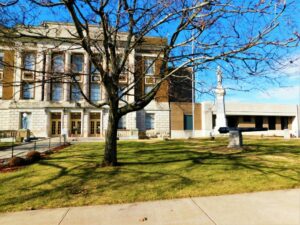
The north wing of the Bourbon County Courthouse houses the county clerk, treasurer and commission offices.

The SPARK recipients are working to complete COVID-19 related projects by the end of 2020, as required by the grant program.

SPARK is responsible for the statewide distribution of the U.S. Coronavirus Relief Fund.

The total amount of grants disbursed in Bourbon County to over 100 entities was $2,835,212.86 on October 21, 2020, according to Bourbon County Economic Director Jody Hoener.

To see the list of recipients:

https://fortscott.biz/news/spark-projects-in-bourbon-county

The Strengthening People and Revitalizing Kansas (SPARK) taskforce is leading the state through recovery from the far-reaching effects of the COVID-19 Pandemic, according to its’ website. https://covid.ks.gov/spark-recovery-office/


“Congress recently passed the new COVID bill that gave an extension to states and cities on spending this money for a year,” said Jody Hoener, the Bourbon County Economic Development Director. “The State of Kansas Recovery Office indicated there will be an extension on our spending plans, but unknown at this time how much of an extension we will receive.”


Jody Hoenor, Bourbon County Economic Development Director. Submitted photo.


Locally, SPARK recipients have been balancing and reconciling expenses.


“At the county level we gathered the department heads who have been awarded funds for programs,” Hoener said. ” We went through every single dollar amount from the department and made sure it matched exactly what the County Clerks Office cut for a check and what Greenbush have in their reports.  Any errors are caught and quickly corrected.  From there, we subtract the total amount spent from the total amount allocated and have a final amount left to spend.”


The other recipients are also required to submit receipts and invoices of SPARK money, she said.


“For the community’s grant/award expenses( they) need to submit receipts and invoices to show dollars spent,” she said. “Greenbush is going through every single receipt and invoice with a fine-tooth comb.  It is very time-consuming as you can imagine.  From this, we have a very clear understanding of the amount spent and how much is left to be spent.”


The Southeast Kansas Educational Service Center (also known as Greenbush) was hired by the county commission to administer the SPARK distribution and oversight.


“Greenbush was contracted to administer the county SPARK funds,” Hoener said.


Sunbeam Preschool Receives SPARK Funds To Keep Doors Open

As with life in America at all levels, the COVID-19 Pandemic has affected schools.

Sunbeam Christian Preschool received SPARK funds to help them continue to teach young children, said owner Lindsay Hill.

“We are very thankful for the SPARK grant as it helped keep our doors open for another year,” she said. ” We are a private preschool, so we rely on tuition to pay bills and staff. We did not collect tuition after March but continued to provide online services for our preschoolers. This grant allowed us to continue to pay our staff and bills.”


“Although enrollment is down this fall because of COVID, Sunbeam Christian Preschool continues to provide a Christian learning experience for all their Sunbeamers,” she said.


“Sunbeam Christian Preschool has taken extra precautions to make sure their students can continue in-person learning, with extra cleaning, temperature checks at the door of children entering the building, no parents or adults allowed in the building, and much more,” Hill said.


History of Sunshine Christian Preschool

Sunbeam has been in operation since 1985,  30 years under the direction of Marilyn Barker.

Sunbeam Christian Preschool is now owned by Lindsay Hill and directed by Tonya Defebaugh.

The preschool has 3-5-year-olds and offers three different class times:

Monday, Wednesday, Friday from 8 a.m. to 10:30 a.m.; Monday, Wednesday, Friday from 12-1:30 p.m. and Tuesday and Thursday from 8 a.m. to 10:30 a.m.


“We are extremely blessed to be apart of the Fort Scott community and thankful for First Baptist Church, where our classroom is located,” she said. The church is located in downtown Fort Scott at the corner and Second and State Streets.


SPARK, The Strengthening People and Revitalizing Kansas program, is federal COVID-19 Pandemic recovery money that was given to the states and then to local entities.

CHC/SEK Collaborates With Ft. Scott Business and State

Krista Postai. Submitted photo.

President and CEO of Community Health Center of Southeast Kansas Krista Postai gave an update on some recent collaborations.

Food Storage With New Ft. Scott Grocery Store

One collaboration is with the Star Emporium Downtown General Store, owned by Bill Michaud of BAJA Investments.

Michaud reached an agreement with the Community Health Center of Southeast Kansas to provide food storage space to expand the food distribution and delivery programs CHC/SEK is currently offering in Crawford County into Fort Scott, with services beginning in January, he said. The store will provide the food storage piece.

To learn more about this new downtown venture:

Star Emporium Downtown General Store To Open Early Next Year

“With the pandemic, we’re finding more and more people are struggling and challenged to find food, so we’re going to be adding food distribution to our list of services,” Postai said.  “The folks in Ft. Scott are providing our freezer and refrigerator space within the basement of the grocery store for any donated food or purchased food from Kansas Food Bank or other local partners.”

“This will not be used as a distribution point for community members, just a place for us to store it,” she said. “Our long-term plan is to create a Food Rx program for chronically ill and food-insecure patients and to offer grocery delivery to homebound patients throughout our region. It’s always great to find partners willing to help and this is a great example.”


Part of Kansas Distribution Plan For COVID-19 Vaccine

“We are part of the state’s overall plan for (COVID-19 vaccine) distribution and are anxiously awaiting its arrival,” Postai said.  “We just learned that we may be receiving one of the ‘super’ freezers from the state which would make the vaccine more accessible. Once available, we will be following state guidelines on priority immunizations which I believe will be front-line medical personnel first. For the latest information on the state’s plan, go to https://www.coronavirus.kdheks.gov/284/COVID-19-Vaccine.”

FS Commission Discusses Charter Ordinance This Evening

Susan Bancroft is the Fort Scott Finance Director. Submitted photo.

The Fort Scott City Commission is discussing a charter ordinance that will be voted on in a special election on Jan. 5, 2021.

“The purpose of Charter Ordinance 31 is to clean up language to our local ordinance that is in direct conflict with Kansas Law and to prevent property tax increases during difficult budget years,” Susan Bancroft, Fort Scott’s Financial Director.
Also to discuss is the issue that money transfers are an accounting mechanism to reimburse other funds or departments for work performed on behalf of a utility, she said.

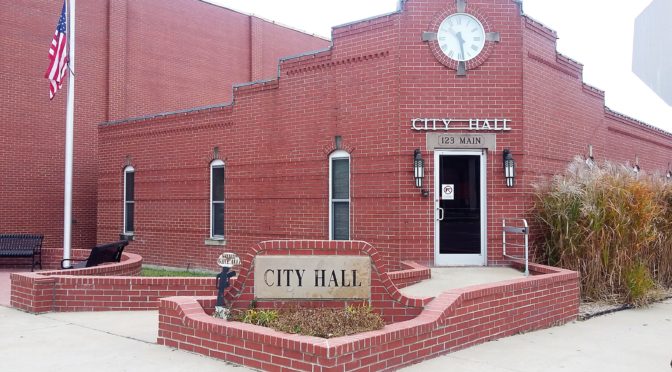
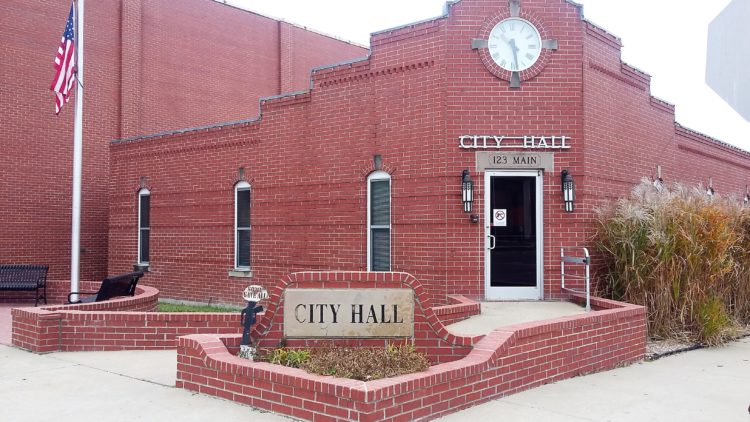
The Fort Scott City Commission will meet at 6 p.m. today, Monday, December 21, in the City Hall Commission Meeting Room at 123 S. Main Street, to discuss Charter Ordinance No. 31 and in addition, some insurance issues: Supplemental Extended Reporting Law Enforcement Liability, Public Officials Liability, and Employee Benefits Liability coverage for the city, according to a city press release.

This meeting is open to the public, but no action will be taken.

The work session will also be available on the city’s YouTube channel.https://www.youtube.com/channel/UC6DcVf4t2fxjdKCwa0Ufzjw


“Early in the year, Commissioner Pete Allen pointed out that past administrations had been illegally making transfers to the General Fund based on City Ordinance 2842 adopted in 1982,” Bancroft said.


Bancroft followed up during a regular commission meeting agreeing that the local ordinance essentially states all funds ‘shall’ stay in the sewer fund. Research done also showed that transfers from the sewer fund to the general fund had been made dating back to 1980 according to audited financial statements, she said.


“Prior to 1978, the City of Fort Scott had a combined ‘water and sewage system’  under K.S.A. 12-856,” Bancroft said.  “Ordinary Home Rule Ordinance 2692 of May 1978 separated these systems and created various utility funds for each utility. The city now has separate funds for water, sewer, and stormwater.”


“Precedence of the law is as follows: 1. the  Federal Constitution and laws, 2.the  Kansas Constitution, including valid charter ordinances, 3. state statutes, and 4. local ordinances and laws,” she said.


Bancroft gives a history of the precedence:


“In 1973, K.S.A. 12-631p passed which governs sewer reserve funds,” Bancroft said. “The statute allows cities to deposit funds in a reserve fund or funds for ‘construction, reconstruction, expansion, operation and maintenance’  of municipal sewer systems. The statute also allows transfers from these reserve funds back to the originating fund. K.S.A. 12-852d amended in 1977 give certain powers to cities that own waterworks. Cities may use monies ‘derived from the sale and consumption of water’ for the purposes set out in K.S.A. 12-825d. Sewer monies are derived from the sale and consumption of water. The statute later also allows the governing body ‘in judgment’ to authorize transfers to other funds. K.S.A. 12-631p gave all cities powers and limitations and later K.S.A. 12-852d allows governing bodies additional power.”


“In 1982, the city passed ordinance 2842 that conflicts with K.S.A. 12-825d,” she said. “Because this is an ordinary home rule ordinance, not a charter ordinance, the favor would be given to K.S.A. 12-825d. Because the current state law is in conflict as well as our own ordinary ordinance, charter ordinance 31 was presented to make the language clear, giving the governing body the ability ‘in judgment’, to authorize transfers.”


“During the August 18, 2020 commission meeting, the commission voted 4-1 to approve Charter Ordinance 31 which would allow for transfers to other funds,” Bancroft said. “A petition was filed on October 5th with the County Clerk to call an election so that the voters can decide whether the ordinance shall take effect. The commission had 30 days (November 5th) to decide whether to have an election or rescind the ordinance. The commission chose to move forward with the election. The election is required to be held within 90 days of October 5th and is scheduled for January 5, 2021.”


The following are questions that Bancroft answered regarding the ordinance:

“Why was Charter Ordinance 31 presented?

  • “Currently, the governing body has the cash available to transfer $200-400K each year into the sewer reserve fund. The ability to sell wastewater to a commercial industry allows the utility to generate additional revenue on top of regular service fees.
  • “Over time as the utility improves infrastructure, systems will improve and should become more efficient and reduce operational costs which will keep rates stable and possibly generate excess funds.
  • “No transfers are scheduled in the sewer fund for 2020 or 2021 with the budget changes presented to the commission on October 20, 2020. These changes required a 10-13% reduction in the general fund budget across all departments which results in $300,000 less to operate. The budget is tight, and any emergency or annual inflation costs could affect quality of life amenities or public safety services.
  • “”The funds being transferred are not property tax dollars but could prevent a property tax increase.
  • “Charter Ordinance 31 was an option presented to allow the governing body the ability to make financial decisions when appropriate or during times of need. Good financial practice would be to limit the amount of funds that can be transferred and noted in the governing body’s financial policies. The suggested maximum amount of transfer would be 5% of gross revenues which is similar to normal utility franchise fees for the use of right of way and street oversight, maintenance, street cuts etc.
  • “The movement of funds allows for reimbursement of costs incurred when the utility is making infrastructure changes in the cities right of way. Furthermore, it covers the cost of permitting, inspections, equipment, and material for the utility cuts made and legal fees.
  • “Transfers are an accounting mechanism to improve efficiencies in all departments to not have to track each detailed expenditure supported by General Fund departments.

How is the city ensuring sewer infrastructure is being addressed?

“City administration continues to develop plans on how, when, and where to rehabilitate the city’s sewer system. Inspections of the condition of the city’s sewer infrastructure, rating the condition, and then mapping these findings through GIS will ensure customers that plans are developed methodically. In addition, through a five-year capital plan, the utility resources will be managed prudently.

Are city sewer rates sufficient to support the failing infrastructure?

“City administration will be seeking governing body approval in 2021 to pursue a professional rate analysis to see if any changes are needed to the current declining rate structure.”

Bourbon County Treasurer’s Office Closed Until Dec. 28

Patty Love. Submitted photo.
The Bourbon County Treasurer’s Office in the courthouse closed Monday afternoon  Dec. 14, because employees were COVID-19  quarantined.
The office will remain closed until Monday, Dec. 28.
Residents who need to do business with the office have some options.
Taxes
“We cannot extend the due date for taxes, they are still due Dec. 21 which is Monday,” Bourbon County Treasurer Patty Love said.   “People can pay online by going to the bourboncountyks.org clicking on government, then treasurers, there is a link on that page.”
Another option is bringing the taxes to the courthouse entrance.
“There is a dropbox that people can put payment in, on the right wall by the double glass doors coming into the courthouse entrance,” she said.
They can also be mailed but time is of the essence.


“They can also mail them in, we are accepting postmark of December 21, 2020 to process them as on time,” Love said.
Vehicle Tag Renewals
“Renewals for tags can be dropped in the same dropbox along with payment and proof of insurance and we will mail out the sticker,” Love said.  “
“If you need to register and title a vehicle we have a title-work-by- mail-form that is in a box next to our dropbox they can fill it out and put it in dropbox along with their paperwork, title and proof of insurance,” Love said.  “We will call them when we get a total.  Once we receive payment we will mail the tag to them. “
“They can also call our office at 223-3800 x 803 and we will email or mail forms to them,” she said.
“We realize this couldn’t happen at a worse time for our office,” Love said.  “We appreciate everyone’s patience and are sorry for the inconvenience.”

Heartland Electric Adds Solar Project

The Heartland Rural Electric Cooperative Service area is in the white. From its’ website, https://www.heartland-rec.com/content/service-area.  It serves the western half of  Bourbon County.

Heartland Rural Electric Cooperative is adding solar power to its business.


“All of Heartland’s consumer-members will benefit from the two solar arrays that we are building,” Ron Graber, Heartland’s Director of Member Service andCommunication said.


The electric cooperative is joining with 11 other Kansas rural electric cooperatives to invest in 20 Megawatts of solar power to be built across the state, and power 80,000 homes across rural Kansas, according to a press release from Heartland.


“Even though the solar arrays will directly feed only two of our 17 substations, the arrays will provide affordable power that helps us keep power costs low for everyone,” Graber said.  “In addition, the arrays are being designed to produce power during peak hours late in the day. That peak usage plays a big part in the price the co-op pays for power. So lowering that peak use will help us manage overall power costs for everyone.”


The solar panels will reduce the business’s amount of greenhouse gases and specifically carbon dioxide emitted.


“Because solar power is renewable and carbon-free, building these two arrays helps us reduce our carbon footprint, and that helps everyone,” Graber said.


Heartland’s portion of the project consists of two solar arrays of 1 Megawatt each, according to the press release. Preliminary work has already begun on the two tracts of land purchased by Heartland for the project. Groundbreaking was held on Tuesday, December 8. Construction should be completed by June of 2021.


One Heartland 1-MW array will be located in Crawford County, just west of Girard near Greenbush along Highway 47, according to the press release. The second Heartland 1-MW solar array will be built in Neosho County between Erie and Chanute along 160th Road (Shaw Road.)


The two Heartland solar arrays, and the 18 other arrays in Kansas, will all be built and owned by Today’s Power Inc, a North Little Rock-based company established by rural electric cooperatives in Arkansas, according to the press release. Today’s Power Inc. has successfully installed more than 25 solar projects totaling more than 40 Megawatts over the last five years in Arkansas, Oklahoma and Tennessee. Heartland has signed a purchased-power-agreement with Today’s Power Inc. to buy the solar energy produced by the two arrays for the next 25 years.


This opportunity began when the wholesale power contract between all participating cooperatives and their forward-thinking generation and transmission cooperative, Kansas Electric Power Cooperative, was recently modified to provide Kansas electric cooperatives with the ability to self-procure up to 15 percent of peak demand – with 5 percent of that amount specifically allowing for the addition of solar, according to the press release.


By joining together in the Kansas Cooperative Sun Power Program, all of the participating Kansas rural electric cooperatives were able to negotiate very competitive long-term pricing, according to the press release.  In addition, the solar arrays will be customized in the design process to maximize output during the cooperative’s peak demand hours, when power is most expensive. These factors will all help Heartland control power costs and keep power affordable for those served at the cooperative’s 11,200 service locations.


Heartland currently has more than 60 members with almost 700KW of solar panels installed on their own property, according to the press release.


Heartland Rural Electric Cooperative provides power to more than 11,000 locations in Southeast and Central Eastern Kansas, according to the press release. Heartland’s service area includes consumer-members in 12 counties, including Allen, Anderson, Bourbon, Cherokee, Coffey, Crawford, Labette, Linn, Miami, Neosho, Wilson, and Woodson counties. Heartland REC traces its roots back to three original rural electric cooperatives, Cooperative Electric Power & Light Company, Sugar Valley Electric Cooperative Association, (which came together to form United Electric Cooperative in 1975) and Sekan Electric Cooperative Association (which combined to become Heartland in 1996.)