Category Archives: Government

Animal Virus Confirmed in Bourbon County

KDA Update on Vesicular Stomatitis Virus 7-31-2020


MANHATTAN, Kansas — Updated situation report on the ongoing outbreak of Vesicular Stomatitis Virus (VSV) in Kansas:

  • Total premises which have tested positive for VSV in Kansas: 97
  • Premises currently under quarantine: 51
  • Premises that have been released from quarantine: 157
  • Total counties in Kansas that have had positive cases of VSV: 24
  • Counties: Allen, Bourbon, Butler, Chase, Cherokee, Coffey, Cowley, Crawford, Elk, Franklin, Greenwood, Labette, Linn, Lyon, Marion, Miami, Montgomery, Morris, Neosho, Riley, Sedgwick, Sumner, Wilson and Woodson counties.


KDA’s Division of Animal Health continues to respond to the outbreak that began in south central Kansas in mid-June and has now expanded its reach to the north and east. In addition, KDA is awaiting laboratory results from symptomatic animals in other counties as the outbreak continues to spread. All premises with confirmed cases of VSV in horses and cattle have been quarantined; in addition, any premises with animals showing clinical signs consistent with VSV are placed on quarantine. A quarantine for VSV lasts for at least 14 days from the onset of symptoms in the last animal on the premises. Quarantines are not lifted until a veterinarian has examined all susceptible animals on the premises.


What is VSV:

VSV is a viral disease which primarily affects horses, but can also affect cattle, sheep, goats, swine, llamas and alpacas. At this time, the vast majority of confirmed cases of VSV in Kansas have been horses, although some cattle have also been diagnosed. KDA has advised the beef industry to be vigilant in monitoring their cattle for symptoms.


In horses, VSV is typically characterized by lesions which appear as crusting scabs on the muzzle, lips, ears, coronary bands, or ventral abdomen. Other clinical signs of the disease include fever and the formation of blister-like lesions in the mouth and on the dental pad, tongue, lips, nostrils, ears, hooves and teats. Infected animals may refuse to eat and drink, which can lead to weight loss. Vesicular stomatitis can be painful for infected animals and costly to their owners. Although it is rare, humans can also become infected with the disease when handling affected animals and can develop flu-like symptoms. VSV is considered a reportable disease in Kansas. If you observe clinical signs among your animals, contact your veterinarian right away. Accredited veterinarians across Kansas have played a critical role by reporting and responding to animals affected by VSV.


Disease prevention:

The primary way the virus is transmitted is from biting insects like black flies, sand flies and midges. Owners should institute robust measures to reduce flies and other insects where animals are housed. VSV can also be spread by nose-to-nose contact between animals. The virus itself usually runs its course in five to seven days, and it can take up to an additional seven days for the infected animal to recover from the symptoms. There are no approved vaccines for VSV.


KDA has developed guidelines to assist organizations which are hosting shows and fairs across the state, and have worked with many of them to consider how they can protect the health and safety of animals attending their events.


VSV in the U.S.:

VSV has also been confirmed in Arizona, Arkansas, Missouri, Nebraska, New Mexico, Oklahoma and Texas. Because of the confirmed cases in Kansas, other states and Canada are likely to increase restrictions on livestock imports. Animal health officials strongly encourage all livestock owners and veterinarians to call the animal health authority in the destination location for the most current import requirements prior to travel.


More information:

Information about VSV can be found by contacting the KDA Division of Animal Health at 785-564-6601 or on the KDA website at www.agriculture.ks.gov/VSV, with info about:

  • Documents describing symptoms of VSV
  • Recommendations for fly control practices
  • Guidelines for shows and fairs
  • Informational webinars about VSV
  • Current state and national situation reports


Wind Energy Project Is Advancing In Bourbon County

Standing at the bottom of a wind turbine looking up at the clear Kansas sky.

The Bourbon County Commission voted on March 13, 2020,  to approve a wind energy project submitted by Apex Clean Energy, Charlottesville, Virginia. There was some community protest, but the commission moved forward with the project that will produce energy from wind turbines.


The development of the Jayhawk Wind Project continues to advance, according to Helen Humphreys, Public Engagement Manager for Apex Clean Energy, the parent company of Jayhawk Wind.
The land is currently being inspected on proposed sites.

“We are in process of conducting (and) completing micro siting efforts, a process which involves a physical inspection to verify that the site meets all requirements,” she said in an email interview. “Once micro siting is complete,  engineering studies will be conducted to further evaluate the sites on which facilities might be located.”


“Once this work is complete, we will share the locations of the planned facilities with landowners and collect their feedback, before a map is finalized,” she said.


“There are 74 participating landowners in the Jayhawk Wind Project,” Humphreys said. As things stand now, construction will begin in late 2020 and the project will be operational in 2021.


The Apex Clean Energy company has been building connections in Bourbon County, as well.


“Finally, and importantly, the Jayhawk team has continued to build connections in the community,” Humphrey’s said. “Guided by community leaders, Jayhawk has provided grants to a number of community organizations, including The Beacon food pantry and Feeding Families in His Name.”


Julianna Pianelli, Apex Development Manager, explained that “early in the pandemic response, Jayhawk connected with community non-profits and church leaders to identify the organizations positioned to meet community needs. We are humbled by the commitment of so many to their neighbors and community and are very pleased to support their work.”
For more background on Jayhawk Wind in Bourbon County:

FS Design Review Board Meets Aug. 5

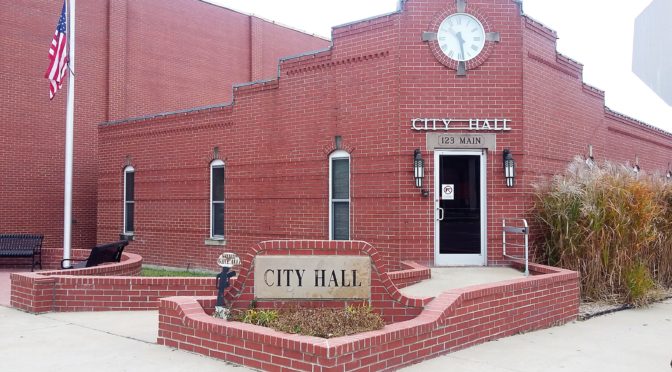
The Design Review Board will meet on Wednesday, August 5th, 2020 at 4:00 p.m. at the City Hall Commission Meeting room at 123 S. Main Street, Fort Scott, Kansas. This meeting will be held to discuss a Certificate of Appropriateness for a sign at 19 S. National and a Certificate of Appropriateness for signage in the downtown area for the walking trail and any others matters to be brought before the Board. This meeting is open to the public.

This meeting will be made available via the City’s you tube channel at City of Fort Scott.

KDA Releases Custom Rates Survey


MANHATTAN, Kansas — The Kansas Department of Agriculture in cooperation with the Kansas State University Land Use Survey Program has published the 2020 Custom Rates Survey, a summary of rates paid for custom work. The survey and report are released on a biennial basis.


The report details the average rates paid by Kansas farmers and ranchers for custom work performed on their operation in 2020. Rates reflect fair market value for custom services either rendered or hired and can be used by Kansas farmers and ranchers as they make decisions about rate charges.


“We view the Kansas Custom Rates Survey as a very valuable tool for farmers, ranchers and agribusinesses to access as they enter into new and negotiate existing contracts and agriculture service arrangements,” said Secretary Mike Beam. “KDA works to provide support and assistance to help make Kansas agriculture more successful, and we are pleased to partner with K-State to publish this biennial survey.”


Last published in 2018, the new report indicates average custom rates have increased; it also includes historical tables and graphs which show results from previous surveys. Prices in the report should not be regarded as official or established rates.


For more complete information and access to the report, please visit the KDA website at www.agriculture.ks.gov/AgStatistics or contact KDA economist Peter Oppelt at 785-564-6726 or [email protected].


Jeff Fischer: Candidate for Bourbon County Commissioner, Advance Voting Has Begun

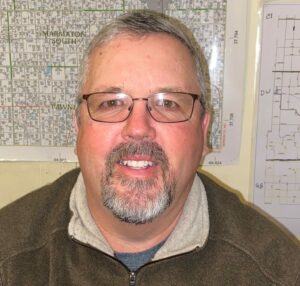
Jeff Fischer. Submitted photo.

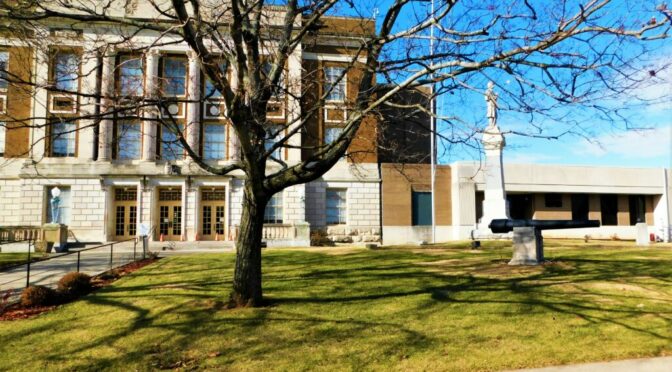
Advance voting at the Bourbon County Courthouse, 210 S. National Avenue continues until noon, August 3.

The hours of the county clerk’s office are 8:30 a.m.-4:30 pm.  There is a plexiglass barrier between the voter and poll worker and employees are sanitizing after each voter, Bourbon County Clerk Kendell Mason said.

“Masks are not required, but we strongly encourage people to wear them to help keep everyone safe,” Mason said.” Masks and hand sanitizer will be available at all polling places.”

To view the Chamber of Commerce Candidate Forum on July 20, click here: https://fortscott.biz/news/view-the-candidate-forum-last-night-here


This is part of a series of features on the candidates running for offices in Bourbon County.  The Bourbon County Primary Election will be held, Tuesday, August 4, 2020.

Name:

Jeff Fischer

What position you are running for:

County Commissioner 2nd District

Age:

59 Years

Education:

Bachelors of Science in Civil Engineering

Masters of Science Civil Engineering

Post Graduate Studies Civil Engineering

Experience:

3.5 years of experience in the role of Commissioner

10 years of leading corporate and collegiate learning experiences

20 years of construction engineering experience

What skills do you bring to the position if elected or re-elected?

If my constituents re-elect me to serve again as their commissioner I bring the skills from the past as outlined in my educational background: Professional Civil Engineer, Experience with heavy construction, Experience speaking to large audiences on a wide range of topics from the medical service sector to roads and bridge rehabilitation. I am a skilled researcher and seek to understand complex issues by drawing from a broad band of knowledge, before narrowing down to reaching a decision for the good of the present with a look to future growth and development. I have the skills of a pastor who nurtures the flock in my pastoral duties in my church. As a leader in the ministerial community I have gained the skill of listening and the skill of humbling myself. I learn from my mistakes. I seek input from others and try to make amends for wrongs foolishly committed. I have a genuine love for the future growth of Fort Scott and Bourbon County. My public speaking skills at local, regional, state and national levels are a valued asset to our community. I can represent Bourbon County in the Committee meetings across the globe, if necessary, to gain access to outsiders planning to locate their businesses in rural America. I am skilled at financial planning and can assist in helping department heads when they seek guidance in yearly budgets. I have a unique skill in historical memories of Fort Scott, remembering what our great-grand parents envisioned for us and dreamed for our children. My skills are varied, yes, through years of formal education and also life experiences. My constituents afforded me an opportunity to serve Bourbon County four years ago. Thank you for your vote of confidence in 2016. Please review what the commission as a body has accomplished. I humbly ask your forgiveness for my stumbles. I seek the chance to continue in service to the community we all love.

What is your priority on day one?

  1. Listen carefully.
  2. Secure additional anchor tenants to realize the capacity and benefits of the Medical Mall concept.
  3. Develop and implement a strategic plan for county infrastructure.


Coronavirus Relief Fund Approved

State Finance Council Approves $254 Million of the Coronavirus Relief Fund


TOPEKA – Today, the State Finance Council (SFC) unanimously approved the public health, education and economic development proposals recommended by the Executive Committee of the Strengthening People and Revitalizing Kansas (SPARK) Taskforce for a total of $254,444,911.


“I want to thank the State Finance Council for approving these funds that will provide aid to Kansans who need it the most, help mitigate the spread of COVID-19 and accelerate our economic recovery,” said Governor Laura Kelly. “Both rural and urban areas of our state will benefit from these dollars.”


Executive Committee Chair Lyle Butler presented the round 2 proposals, which were crafted by the SPARK Taskforce with help from state agency working groups for the following amounts:

Public Health $100,909,138
Economic Development $78,600,000
Education $74,935,773
Connectivity $60,000,000


“SPARK identified public health, education, economic development, and connectivity as the top priorities for supporting the recovery of the state,” said Lyle Butler. “I want to thank SFC for their support addressing our most pressing needs.”


The SFC will reconsider the Connectivity proposals following the Legislative Budget Committee meeting on August 3, where stakeholders will have the opportunity to provide more input on the proposals.


“We’re committed to making the best investments possible, being accountable to Kansans and operating with the urgency necessary to utilize these funds by the December 30 deadline,” said Recovery Office Executive Director Julie Lorenz.  “We look forward to working with SPARK members, legislators and Kansans to ensure that happens.”


This is the second major allocation of the $1,034,052,049 the State received through the Coronavirus Relief Fund.  Previously, $400 million was allocated to Kansas counties.


KDHE receives grant for suicide care


TOPEKA – The Kansas Department of Health and Environment (KDHE) has been awarded a grant to support safer suicide care in behavioral health and healthcare systems in Kansas. The grant, from the Substance Abuse and Mental Health Services Administration, a branch of the U.S. Department of Health and Human Services, is for implementation of Zero Suicide in Health Systems.

Zero Suicide is a model and framework that believes suicide deaths for individuals under the care of health and behavioral health systems are preventable. For systems dedicated to improving patient safety, Zero Suicide presents a framework for system-wide transformation toward safer suicide care.

KDHE will work with key partners across the state, including Veterans Affairs and the 26 licensed Community Mental Health Care Systems that have more than 4,500 staff providing mental health services in every county (120+ locations) to more than 140,000 Kansans annually. Besides the policies, protocols and practices the Zero Suicide model supports, objectives include providing evidence-based trainings and practices to support a prepared, competent and confident mental health workforce and coordinated suicide prevention efforts across the state. This award will bring $700,000 per year for five years.

Suicide is a serious public health problem that has far reaching medical, economical and psychosocial implications for Kansas. Between 1999 and 2018, the rate of suicide deaths in Kansas increased 70% from 11.3 to 19.2 per 100,000 persons. The 2018 suicide rate was the highest in the last 20 years & is higher than the national rate (14.2 per 100,000 persons) which increased 35% during the same time period. In 2018, suicide was the 9th leading cause of death among all ages and the second leading cause of death following unintentional injuries for those age 15-34 years in Kansas. From 2016 to 2018, emergency department visit and hospitalization rates increased for suicide ideation-related injuries.

Interviews For KDA Executive Director/Division of Conservation Aug. 6-7

Division of Conservation Director Candidates to Share Public Presentations


MANHATTAN, Kansas — The Kansas Department of Agriculture will hold interviews for the position of Executive Director of the Division of Conservation on August 6 and 7, and the selection process will include an opportunity for public participation. The public portion will consist of a presentation and questions, which will be available to watch live online.


The public presentations for the six candidates will take place in three separate online meetings: August 6 from 11:15 a.m.–12:00 noon, August 6 from 1:00 p.m.–1:45 p.m., and August 7 from 8:15 a.m.–9:00 a.m. Individuals who would like to observe and provide input for the public presentations should contact Brittney Grother at 785-564-6797 or [email protected].


Kansas Water Authority Virtual Meeting July 30


The Kansas Water Authority (KWA) will have their meeting by Webinar on Thursday, July 30 starting at 9 a.m.


For additional meeting information or how to access the meeting, visit the Kansas Water Office website, www.kwo.ks.gov or call (785) 296-3185.

The KWA is responsible for advising the Governor, Legislature and Director of the Kansas Water Office on water policy issues. They also ensure that water policies and programs address the needs of all Kansans as well as serve as advisors of the Kansas Water Vision and Kansas Water Plan. The KWA was established in 1981 and consists of 13 voting members who are appointed by the Governor or Legislative leadership. State agency directors serve as ex-officio members.

Note to Editor: The Americans with Disabilities Act, (42 U.S.C. 12101), requires the Kansas Water Office to print the reasonable accommodations messages.


KDHE amends travel quarantine list


TOPEKA – The Kansas Department of Health and Environment (KDHE) has amended its travel quarantine list. Florida as well as those countries with a CDC Level 3 Travel Health Notice with restrictions remain, but Arizona, Bahrain and French Guiana are removed effective today. Those traveling internationally are subject to CDC re-entry guidance and protocols.


This list is effective for all persons returning to or entering Kansas on the effective dates. The state will review/update this list every two weeks. A comprehensive list of those individuals needing to quarantine for 14 days includes visitors and Kansans who have:


Traveled to:

  • Florida on or after June 29.
  • Arizona between June 17 – July 27.
  • Been on a cruise ship or river cruise on or after March 15.
  • International travel to Bahrain or French Guiana July 14 – July 26.
  • International travel on or after July 14 to countries with a CDC Level 3 Travel Health Notice, including China, Iran, European Schengen area, United Kingdom, Republic of Ireland and Brazil. International travelers must follow CDC guidance and protocols.


Others needing to continue quarantining:

  • Anyone subject to a travel-related quarantine for a state or country previously on the travel-related quarantine list must complete their 14-day quarantine period.
  • Received notification from public health officials (state or local) that you are a close contact of a laboratory-confirmed case of COVID-19.


“It’s important to remember that traveling comes with risks,” Dr. Lee Norman, KDHE Secretary said. “We encourage those thinking about traveling to review their options, determine its necessity and if choosing to go, remember to still take precautions: wear a mask, socially distance and avoid mass gatherings.”


States added to this list are determined by evaluating new cases in states over a two-week period, then adjusting for population size, giving a case per 100,000 population which can then be compared to the rate in Kansas. States with significantly higher rates (approximately three times higher) are added to the list. Kansas’ rate was 223 cases per 100,000 population; whereas Florida’s is currently 717 cases per 100,000 population.


Travel quarantines do not prohibit travel through Kansas. People from these locations may still travel through Kansas. If this is done, KDHE recommends limited stops, wearing a mask at rest stops or when getting gas and being six feet from others when doing so. If the destination is Kansas, they would be required to quarantine upon arrival to their destination.


Critical infrastructure sector employees who have travelled to these destinations should contact their local health department regarding instructions for application of these quarantine orders while working. Critical infrastructure employees, such as public health, law enforcement, food supply, etc., need to have the staffing resources to continue serving Kansans so the local health department may allow a modified quarantine. Please note the only exemption for these quarantine mandates for critical infrastructure sector employees is work – they are not to go any other locations outside of work.


For more information on COVID-19, please visit the KDHE website at www.kdhe.ks.gov/coronavirus.

Bourbon County: 65 COVID-19 Cases

“This doesn’t affect most of you but in case you saw the numbers and wondered why the difference, I wanted to let you know,” Rebecca Johnson, SEK Multi-County Health Departments Administrator, said.

The local health office is at 524 S. Lowman,Ft. Scott, KS 66701

Contact info: (620)223-4464 work, (620)223-1686 fax, [email protected]

“Yesterday Bourbon County had a new case and it was listed as active and under the total positives,” she said.  “After the investigation, it was found that the individual doesn’t actually live in Bourbon County. They hadn’t visited recently either. So, this case was sent to the county where they reside.”


“Also, in Bourbon County, they have a new hospitalization as of yesterday evening. So, their total in hospital at this time is 2.”


SEK Multi-County Health Departments

Allen, Anderson, Bourbon, and Woodson Counties

Coronavirus (COVID-19) Update

July 28, 2020

Allen County

Current Positive Cases 6
Total Hospitalizations 2-1 remaining in hospital
Current Recovered Cases 8
Total Positives Since Testing 14-1 removed-out of state and to remain there
Deaths 0

Anderson County

Current Positive Cases 2
Total Hospitalizations 0
Current Recovered Cases 24
Total Positives Since Testing 26
Deaths 0

Bourbon County

Current Positive Cases 5
Presumptive Cases 3-1 listed on KDHE website, tested negative
Positive Out of State/County-staying in Bourbon 11
Total Hospitalizations 5-2 currently, with 1 of the 2 being new admit
Current Recovered Cases 60-includes presumptive cases
Total Positives Since Testing 65
Deaths 1

Woodson County

Current Positive Cases 0
Total Hospitalizations 1-0 remaining in hospital
Current Recovered Cases 11
Total Positives Since Testing 11
Deaths 0

Recovered cases are based on dates of onset of symptoms, not on day testing results are received.