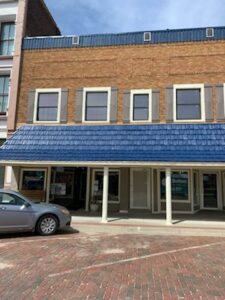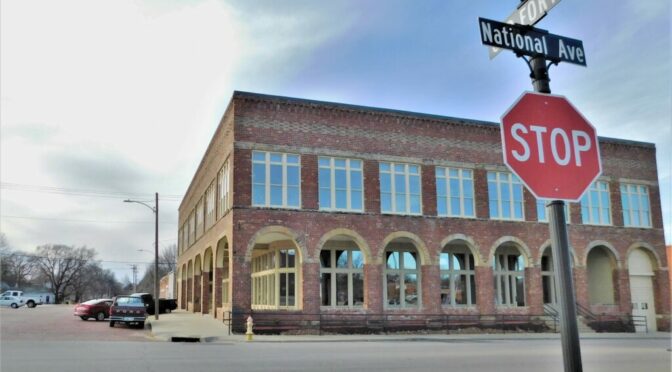

Union Lofts Apartments Open For Rental In Downtown Fort Scott


The family of Arla Hartman is requesting a surprise card shower for her on Jan. 5 in celebration of her 90th birthday.
Her address is 2152 Irish Road, Fort Scott, KS, 66701.
She and husband, Leo, celebrated their 70th wedding anniversary in May, 2020.
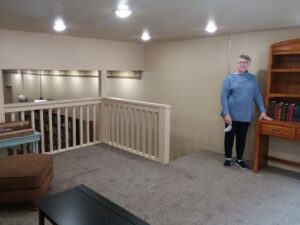
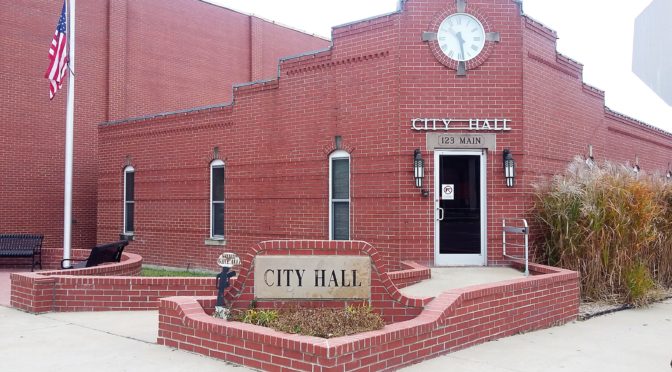
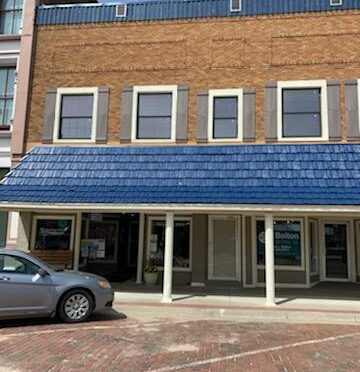
The City Commission will meet for a special meeting at 9:30 a.m. on Tuesday, December 29th, 2020 at City Hall in the City Commission meeting room at 123 South Main Street, Fort Scott, Kansas. The City Commission will consider to accept two Quit Claim Deeds from Flint Hills Holdings to the City of Fort Scott for the Union Lofts Project and pass a resolution of acceptance and recording for these deeds.
This meeting will be broadcast on the City’s You tube channel. This meeting is open to the public.

Roy and Jody Hoener have opened a new business in the historic Fort Scott downtown area.
“The name of the new apartments are called ‘H Bar Suites,'”, Jody Hoener said. “This was Roy’s cattle brand when he had cattle.”

The apartments are located in historic downtown Fort Scott, directly above Hole in the Wall Liquor, another business the couple own, and across from the Fort Scott National Historic Site, she said.
The physical address is 8 North Scott Street.
They are fully furnished apartments.
The Hoeners have used Ruddick’s Furniture, and local contractors: Casper Enterprises, Stoughton Plumbing, KTK Electric, and Perry Cannon to name a few. The cabinets were made by Kirby’s Cabinets.
“There are two apartments. The two-bedroom apartment is currently available, click on the link,” she said.

The couple hopes to have the one bedroom available at the end of this week, Hoener said.

“There were a few issues with furniture and appliances being back-ordered that has delayed the opening,” she said.

History of the Hoener businesses at the site
“Our project started in 2016 when we started looking for a place to move Hole in the Wall Liquor. (https://holeinthewallliquor.com/) ,” she said. “One stipulation we had to move as we wanted to remain downtown. As business owners with a vested interest in our community, we wanted to make a larger impact beyond a retail store. Downtown revitalization’s direct impact is well documented and has shown to spur local economies.”
“When we took on this old and condemned building downtown, it literally had poles coming from the middle of the street, up to the side of the building, holding up the wall, for almost a decade,” Hoener said. “This was quite the eyesore to one of the main entrances of our downtown.”
“Heather Smith, the city’s then Economic Development Director, showed us several downtown buildings,” she said. “It was a hard sale. All of the buildings were in such disrepair that it would be impossible for us to come up with the capital to make the needed improvements. The cost of replacing the roof was much more than the value of the whole building. In short, we discovered what many already knew: it would be impossible to obtain a loan on a worthless building. We learned first-hand why these buildings are sitting empty but also a few tricks, tips, and solutions to the problem.”
” Smith, through the City of Fort Scott, was able to offer us the State of Kansas Community Development Block Grant (CDBG) for historic districts,” Hoener said. “This is a state-wide grant program, highly competitive, to help cities provide financial incentives to bring these condemned buildings back to life. After much thought and planning, working through the risks and unknowns of old buildings, and working with Smith and Dave Martin, we decided to take a leap of faith. ”
“Working with Smith (even after she took on a new job in Wisconsin!) and Susan Galemore at the Southeast Kansas Regional Planning Commission we wrote and submitted a winning CDBG grant,” she said. “The grant, paired with creative financing from Gregg Motley at Landmark National Bank, and lots of sweat equity, brought new life into the building, encouraging foot traffic downtown, and being a part of the momentum to spur economic growth.”
They had a plan and worked it.
“Our business plan was developed and written in phases,” she said. “The first phase was to move Hole in the Wall Liquor to the new location and open the retail liquor store.”
” The second phase was to then take advantage of the opportunity in the space upstairs and develop housing. We are now, four years later, almost to the end of that final phase,” Hoener said.
“Our initial plans were to use the space as market-rate apartments,” she said. “We have since decided to try marketing the space on VRBO as short term or vacation rental space. We have decided we can always offer them as apartments later if that does not work out.”
Evergy recently awarded $1,500 to the Lowell Milken Center for Unsung Heroes in support of the “Unsung Heroes of the Environment (Role Models for America’s Youth)” museum display. Ronda Hassig serves as project director. Norm Conard, Executive Director of the Lowell Milken Center for Unsung Heroes, said “Jacob Valentine II was an unsung hero that worked his whole life as an advocate for the environment and the species that live in it. Exhibiting Jacob Valentine II in our museum serves as a powerful role model for everyone who sees it. We are excited to share his story!”
About Evergy
Evergy wants to be a good neighbor, civic leader, and community partner in the communities they serve. They want communities to understand that the commitment they have to powering the lives of their customers goes beyond simply providing safe, clean, reliable energy. Evergy supports programs designed to invest in the education of tomorrow’s workforce to the skills and knowledge required are available to enable Evergy to thrive in the future.
About the Lowell Milken Center for Unsung Heroes
The Lowell Milken Center for Unsung Heroes works to transform classrooms and communities through student-driven projects that discover Unsung Heroes from history and teach the power of one to create positive change. Everyone, especially our young people deserve role models who demonstrate courage, compassion and respect. Jacob Valentine II was just such a hero!
The City of Fort Scott Administrative offices will be closed on Friday, January 1st, 2021 in observance of the New Year’s Day Holiday. The regular offices will reopen on Monday, January 4th, 2021.
The City’s tree and brush dump site located on North Hill will also be closed on Thursday, December 31st, 2020, and Saturday, January 2nd, 2021 for the New Year’s holiday. It will be open again on Tuesday, January 5th, 2021 from 4:00 p.m. to 6:00 p.m.

The SPARK recipients are working to complete COVID-19 related projects by the end of 2020, as required by the grant program.
SPARK is responsible for the statewide distribution of the U.S. Coronavirus Relief Fund.
The total amount of grants disbursed in Bourbon County to over 100 entities was $2,835,212.86 on October 21, 2020, according to Bourbon County Economic Director Jody Hoener.
To see the list of recipients:
https://fortscott.biz/news/spark-projects-in-bourbon-county
The Strengthening People and Revitalizing Kansas (SPARK) taskforce is leading the state through recovery from the far-reaching effects of the COVID-19 Pandemic, according to its’ website. https://covid.ks.gov/spark-recovery-office/
“Congress recently passed the new COVID bill that gave an extension to states and cities on spending this money for a year,” said Jody Hoener, the Bourbon County Economic Development Director. “The State of Kansas Recovery Office indicated there will be an extension on our spending plans, but unknown at this time how much of an extension we will receive.”

Locally, SPARK recipients have been balancing and reconciling expenses.
“At the county level we gathered the department heads who have been awarded funds for programs,” Hoener said. ” We went through every single dollar amount from the department and made sure it matched exactly what the County Clerks Office cut for a check and what Greenbush have in their reports. Any errors are caught and quickly corrected. From there, we subtract the total amount spent from the total amount allocated and have a final amount left to spend.”
The other recipients are also required to submit receipts and invoices of SPARK money, she said.
“For the community’s grant/award expenses( they) need to submit receipts and invoices to show dollars spent,” she said. “Greenbush is going through every single receipt and invoice with a fine-tooth comb. It is very time-consuming as you can imagine. From this, we have a very clear understanding of the amount spent and how much is left to be spent.”
The Southeast Kansas Educational Service Center (also known as Greenbush) was hired by the county commission to administer the SPARK distribution and oversight.
“Greenbush was contracted to administer the county SPARK funds,” Hoener said.
|
|
|
|
|
|
|
|
|
|
|
|
|

As with life in America at all levels, the COVID-19 Pandemic has affected schools.
Sunbeam Christian Preschool received SPARK funds to help them continue to teach young children, said owner Lindsay Hill.
“We are very thankful for the SPARK grant as it helped keep our doors open for another year,” she said. ” We are a private preschool, so we rely on tuition to pay bills and staff. We did not collect tuition after March but continued to provide online services for our preschoolers. This grant allowed us to continue to pay our staff and bills.”
“Although enrollment is down this fall because of COVID, Sunbeam Christian Preschool continues to provide a Christian learning experience for all their Sunbeamers,” she said.
“Sunbeam Christian Preschool has taken extra precautions to make sure their students can continue in-person learning, with extra cleaning, temperature checks at the door of children entering the building, no parents or adults allowed in the building, and much more,” Hill said.
History of Sunshine Christian Preschool
Sunbeam has been in operation since 1985, 30 years under the direction of Marilyn Barker.
Sunbeam Christian Preschool is now owned by Lindsay Hill and directed by Tonya Defebaugh.
The preschool has 3-5-year-olds and offers three different class times:
Monday, Wednesday, Friday from 8 a.m. to 10:30 a.m.; Monday, Wednesday, Friday from 12-1:30 p.m. and Tuesday and Thursday from 8 a.m. to 10:30 a.m.
“We are extremely blessed to be apart of the Fort Scott community and thankful for First Baptist Church, where our classroom is located,” she said. The church is located in downtown Fort Scott at the corner and Second and State Streets.

SPARK, The Strengthening People and Revitalizing Kansas program, is federal COVID-19 Pandemic recovery money that was given to the states and then to local entities.

The Fort Scott City Commission is discussing a charter ordinance that will be voted on in a special election on Jan. 5, 2021.
The Fort Scott City Commission will meet at 6 p.m. today, Monday, December 21, in the City Hall Commission Meeting Room at 123 S. Main Street, to discuss Charter Ordinance No. 31 and in addition, some insurance issues: Supplemental Extended Reporting Law Enforcement Liability, Public Officials Liability, and Employee Benefits Liability coverage for the city, according to a city press release.
This meeting is open to the public, but no action will be taken.
The work session will also be available on the city’s YouTube channel.https://www.youtube.com/channel/UC6DcVf4t2fxjdKCwa0Ufzjw
“Early in the year, Commissioner Pete Allen pointed out that past administrations had been illegally making transfers to the General Fund based on City Ordinance 2842 adopted in 1982,” Bancroft said.
Bancroft followed up during a regular commission meeting agreeing that the local ordinance essentially states all funds ‘shall’ stay in the sewer fund. Research done also showed that transfers from the sewer fund to the general fund had been made dating back to 1980 according to audited financial statements, she said.
“Prior to 1978, the City of Fort Scott had a combined ‘water and sewage system’ under K.S.A. 12-856,” Bancroft said. “Ordinary Home Rule Ordinance 2692 of May 1978 separated these systems and created various utility funds for each utility. The city now has separate funds for water, sewer, and stormwater.”
“Precedence of the law is as follows: 1. the Federal Constitution and laws, 2.the Kansas Constitution, including valid charter ordinances, 3. state statutes, and 4. local ordinances and laws,” she said.
Bancroft gives a history of the precedence:
“In 1973, K.S.A. 12-631p passed which governs sewer reserve funds,” Bancroft said. “The statute allows cities to deposit funds in a reserve fund or funds for ‘construction, reconstruction, expansion, operation and maintenance’ of municipal sewer systems. The statute also allows transfers from these reserve funds back to the originating fund. K.S.A. 12-852d amended in 1977 give certain powers to cities that own waterworks. Cities may use monies ‘derived from the sale and consumption of water’ for the purposes set out in K.S.A. 12-825d. Sewer monies are derived from the sale and consumption of water. The statute later also allows the governing body ‘in judgment’ to authorize transfers to other funds. K.S.A. 12-631p gave all cities powers and limitations and later K.S.A. 12-852d allows governing bodies additional power.”
“In 1982, the city passed ordinance 2842 that conflicts with K.S.A. 12-825d,” she said. “Because this is an ordinary home rule ordinance, not a charter ordinance, the favor would be given to K.S.A. 12-825d. Because the current state law is in conflict as well as our own ordinary ordinance, charter ordinance 31 was presented to make the language clear, giving the governing body the ability ‘in judgment’, to authorize transfers.”
“During the August 18, 2020 commission meeting, the commission voted 4-1 to approve Charter Ordinance 31 which would allow for transfers to other funds,” Bancroft said. “A petition was filed on October 5th with the County Clerk to call an election so that the voters can decide whether the ordinance shall take effect. The commission had 30 days (November 5th) to decide whether to have an election or rescind the ordinance. The commission chose to move forward with the election. The election is required to be held within 90 days of October 5th and is scheduled for January 5, 2021.”
The following are questions that Bancroft answered regarding the ordinance:
“Why was Charter Ordinance 31 presented?
- “Currently, the governing body has the cash available to transfer $200-400K each year into the sewer reserve fund. The ability to sell wastewater to a commercial industry allows the utility to generate additional revenue on top of regular service fees.
- “Over time as the utility improves infrastructure, systems will improve and should become more efficient and reduce operational costs which will keep rates stable and possibly generate excess funds.
- “No transfers are scheduled in the sewer fund for 2020 or 2021 with the budget changes presented to the commission on October 20, 2020. These changes required a 10-13% reduction in the general fund budget across all departments which results in $300,000 less to operate. The budget is tight, and any emergency or annual inflation costs could affect quality of life amenities or public safety services.
- “”The funds being transferred are not property tax dollars but could prevent a property tax increase.
- “Charter Ordinance 31 was an option presented to allow the governing body the ability to make financial decisions when appropriate or during times of need. Good financial practice would be to limit the amount of funds that can be transferred and noted in the governing body’s financial policies. The suggested maximum amount of transfer would be 5% of gross revenues which is similar to normal utility franchise fees for the use of right of way and street oversight, maintenance, street cuts etc.
- “The movement of funds allows for reimbursement of costs incurred when the utility is making infrastructure changes in the cities right of way. Furthermore, it covers the cost of permitting, inspections, equipment, and material for the utility cuts made and legal fees.
- “Transfers are an accounting mechanism to improve efficiencies in all departments to not have to track each detailed expenditure supported by General Fund departments.
How is the city ensuring sewer infrastructure is being addressed?
“City administration continues to develop plans on how, when, and where to rehabilitate the city’s sewer system. Inspections of the condition of the city’s sewer infrastructure, rating the condition, and then mapping these findings through GIS will ensure customers that plans are developed methodically. In addition, through a five-year capital plan, the utility resources will be managed prudently.
Are city sewer rates sufficient to support the failing infrastructure?
“City administration will be seeking governing body approval in 2021 to pursue a professional rate analysis to see if any changes are needed to the current declining rate structure.”

Congratulations to our Fort Scott High School 2020-2021 4A State Qualifiers in 4-Speaker debate!
Trent Toth and Sam Deloney on the Affirmative with Regen Wells as alternate and Kinsley Davis and Lillian Collins on the Negative with Anna Hall as the alternate.
Fort Scott placed 3rd at regionals with a 5-5 record and 14 ballots!