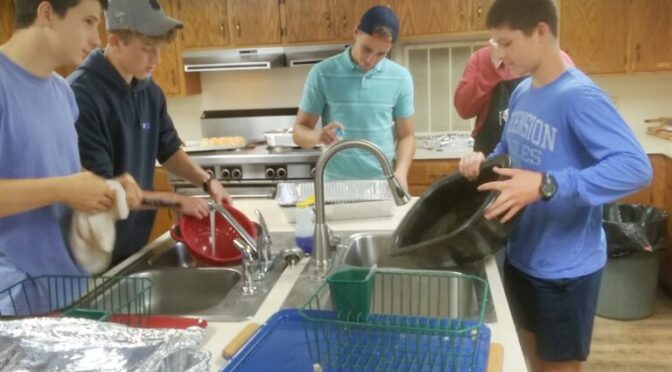
The Fort Scott Kiwanis Club has decided to postpone the annual pancake feed scheduled for next Tuesday.
The 100th Annual Fort Scott Kiwanis Pancake Feed will be on Feb. 23.
Submitted by Phil Gorman
The Fort Scott Kiwanis Club has decided to postpone the annual pancake feed scheduled for next Tuesday.
The 100th Annual Fort Scott Kiwanis Pancake Feed will be on Feb. 23.
Submitted by Phil Gorman

Local business owner, Marsha Lancaster, has been in the hospital for over a month, according to her sister Debbie Baxley.
“She went into the hospital at Pittsburg for two to three days, then they took her to Arkansas,” Baxley said.
“Her kidneys were shutting down and they couldn’t find a hospital to take her with COVID (the pandemic virus plaguing the nation and the world),” she said. “They found one in Arkansas and we said just take her to wherever she can get help.”
They have tested Lancaster three times for COVID-19 and each was negative, her sister said.
Lancaster is currently on dialysis every other day and oxygen.
“Her kidneys’ aren’t functioning yet, the doctor said they could kick in any day,” she said. “They have been trying to get her off of oxygen. That’s been going well.”
“We can see her on our cellphone and she looks good when we talk to her,” Baxley said.
Cards can be sent to Marsha at
Regional Springdale NW Medical Center,
609 W. Maple Avenue, 6th floor, attn: Marsha Lancaster
Springdale, Arkansas 72764
Her business is running with the help of others.

Her well-known restaurant, Marsha’s Deli, is continuing with the help of staff and family. The restaurant is located at 6 W. 18th in Fort Scott.
Baxley and her daughter, Shelly Rowe, along with Carla Hemrick, and Lisa Bradley “are taking care of the business for her,” Baxley said.
Monday and Tuesday the restaurant was closed due to the ice roads and arctic weather conditions.
A fundraiser has been started for Lancaster.
Meanwhile, a fundraiser has been started for Lancaster.
“We thought being self-employed, there was no way she wouldn’t need help,” Linda Findley who is spearheading the fundraiser said.
The fundraiser is Friday, Feb. 19 from 11 a.m. to 6 p.m. at the Elk’s Building at 111 W. 19th. People are asked to drive to the east door of the building and orders will be taken by helpers. Then the meals will be brought out to the buyer.
It’s a chicken and noodles dinner with mashed potatoes, green beans, and bread for $10 cash or check only.
Pre-ordering is encouraged. Call 620-215-2036 or 816-797-4884.

Findley said she is anticipating serving 500 meals, with over 200 already ordered.

“Numerous people have sent big donations,” Findley said. “Marrone’s of Pittsburg and G & W Foods of Fort Scott has helped with food.”
Helping the day of the fundraiser will be Nancy Maze, Brenda Collinge, Debbie Myers, JoLynne Mitchell, and Adina Findley, Findley said.
Saint Martin’s Academy joins a growing list of community organizations and churches that are contributing to the success of Feeding Families in His Name.
Feeding Families in His Name started Ten years ago on May 11, 2011, at the First United Methodist Church serving a free weekly meal to the community in the Fellowship Hall to about forty people.
The meal currently serves an average of three hundred meals a week. Only to-go meals have been served since the first of March 2020 because of Covid-19 restrictions.
Each year the number of people who volunteer for the project has grown until now it encompasses more of the community.
The Bourbon County Network which includes United Methodist Churches of Fulton, Hammond, Uniontown, Redfield, Hiatville, West Liberty and St. John’s congregations have all supported Feeding Families.
Community Christian Church cooks and serves the Wednesday every other month; a small group of the Nazarene Church cooks and serves every third Wednesday; a group from First Presbyterian Church cooks and serves every fourth Wednesday; and Pioneer Kiwanis cooks and serves the fifth Wednesday of the month. Many volunteers bake desserts for the meal every week.
Feeding Families in His Name is supported by private donations from churches and individuals, commodities from USDA through the Kansas Department of Children and Families, and a grant from the Fort Scott Community Foundation.
Submitted by Jean Tucker, Coordinator of Feeding Families in His Name.

Dining with Diabetes program to help cut diabetes risks
Imagine a gathering with 10 of your friends and family members. Now imagine that at least one of you has a disease that can lead to blindness…or amputation…or a stroke. The prospect is not at all far-fetched.
About one in 10 Kansans has been diagnosed with diabetes, a chronic disease characterized by elevated blood sugar (blood glucose). High levels of blood glucose are a result of inadequate production of insulin or a resistance to the effects of insulin, a hormone produced by the pancreas.
Diabetes increases the risk of stroke, heart disease, kidney disease, or retinopathy that can cause blindness and neuropathy leading to lower limb amputation.
The vast majority of adults who are diagnosed with diabetes – 90 to 95 percent – have Type 2 diabetes which occurs when cells in the body become resistant to the effects of insulin. Prediabetes is a condition in which the blood sugar levels are higher than normal but not high enough to be diagnosed as type 2 diabetes. Unlike Type 1, which occurs when the body cannot produce insulin and cannot be prevented, the onset of Type 2 can be prevented.
Risk factors for prediabetes and Type 2 Diabetes include being overweight, age 45 or older, and low levels of physical activity (less than three times per week). Other risk factors include having a family member (parent, brother, or sister) with type 2 diabetes, or having gestational diabetes (diabetes during pregnancy). To a small degree, race, ethnicity, and gender contribute to overall risk, too.
Some risk factors cannot be changed such as age and family history, but others can be modified. This includes managing your weight, being active, eat healthier, and if you smoke, quit. A quick assessment of your risk can be done at the American Diabetes Association website www.diabetes.org/dibetes-risk/tools-know-your-risk, takes less than a minute,.
Adults with type 2 diabetes, prediabetes, and their family members, caregivers, and support persons may be interested in K-State Research and Extension Dining with Diabetes online course beginning March 1. Individuals will learn strategies to manage diabetes through menu planning, carbohydrate counting, portion control, and label reading. The five week course is self-paced and participants can choose the level of interaction with the instructor and other participants.
Cost is $25, class size limited, and registration required by February 18th at southwind.ksu.edu/events. For more information or questions, contact Joy Miller at 620-223-3720 or e-mail [email protected].
TOPEKA, Kan. — The Kansas Department of Health and Environment (KDHE) and the Kansas Department of Wildlife, Parks and Tourism (KDWPT) are issuing fish consumption advisories for 2021. The advisories identify types of fish or other aquatic animals that should be eaten in limited quantities or, in some cases, avoided altogether because of contamination. General advice and Internet resources are also provided to aid the public in making informed decisions regarding the benefits as well as the risks associated with eating locally caught fish from Kansas waters.
Definitions:
Bottom-feeding fish: buffalos, carp, carpsuckers, bullhead and channel catfish, sturgeons, and suckers.
Predatory fish: blue catfish, crappies, drum, flathead catfish, largemouth, smallmouth, and spotted bass, perches, sunfish, white bass, wiper, striper, walleye, saugeye, and sauger.
Shellfish: mussels, clams, and crayfish.
Serving size (skinless fish fillets before cooking):
Adults and Children age 13 and older = 8 ounces
Children age 6 to 12 = 4 ounces
Children younger than 6 = 2 ounces
Statewide advice for consuming locally-caught fish because of Mercury
The eating guideline tables below contain recommended consumption limits (based on mercury levels) for different kinds of fish and sizes (given in inches) caught in Kansas. The limits are protective of sensitive populations which includes women who are pregnant, nursing, or may become pregnant, and children younger than 17 years old. Kansas encourages anyone who regularly consumes fish to carefully consider the types and amounts they eat, including store-bought fish. For specific questions or concerns about mercury in Kansas fish please contact KDHE. For information about fish caught in other states, store-bought fish, and other seafood please visit (https://www.epa.gov/choose-fish-and-shellfish-wisely). By making informed choices consumers can enjoy the health benefits associated with eating fish without ingesting unhealthy amounts of mercury.
*Eating Guideline Charts
| Bottom-Feeding Fish | Size/Inches | Servings/Month | |||
| Bullheads | All Sizes | 4 | |||
| Channel Catfish | < 20 | 8 | |||
| > 20 | 4 | ||||
| Common Carp | All Sizes | 6 |
| Predatory Fish | Size/Inches | Servings/Month | |||
| Crappie | All Sizes | 8 | |||
| Flathead Catfish | < 20 | 4 | |||
| > 20 | 2 | ||||
| Freshwater Drum | All Sizes | 4 | |||
| Largemouth, Smallmouth and Spotted Bass | All Sizes | 2 | |||
| Sunfish (Bluegill, Green, Redear, etc.) | All Sizes | 4 | |||
| White Bass, White Perch, Wiper, Stripped Bass | < 20 | 8 | |||
| > 20 | 4 | ||||
| Walleye, Sauger, Saugeye | < 20 | 8 | |||
| > 20 | 4 | ||||
*KDHE and KDWPT will provide advice for other commonly-eaten fish such as buffaloes, blue catfish, and suckers as more data become available. For species not listed Kansas recommends a limit of 4 servings per month.
How to Use the Eating Guideline Charts
Example: Crappie have a recommended limit of 8 servings per month. Within a months’ time, if you eat 4 servings of crappie, then eat no more than ½ the recommended monthly limit of any other type of fish.
| Type of Fish | Number of Servings | Proportion of Monthly Limit |
| Crappie | 4 | 1/2 |
| Channel Catfish > 20 inches | 2 | 1/2 |
Waterbody specific advisories for all consumers
Kansas recommends restricting consumption of bottom-feeding fish and catfishes to 4 servings per month from the following location because of polychlorinated biphenyls (PCBs):
Kansas recommends restricting consumption of bottom-feeding fish and catfishes to 1 serving per month from the following location because of PCBs:
Kansas recommends not eating specified fish or aquatic life from the following locations:
General advice for eating locally caught fish in Kansas
Internet resources from KDHE, KDWPT, EPA, FDA, and the American Heart Association
To view the advisories online and for information about KDHE’s Fish Tissue Contaminant Monitoring Program please visit our website at: http://www.kdheks.gov/befs/fish_tissue_monitoring.htm
For information about harmful algal blooms, including current watches and warnings, visit this KDHE website: http://www.kdheks.gov/algae-illness/index.htm
For information about fishing in Kansas including licensing, regulations, fishing reports and fishing forecasts please visit the KDWPT fishing website: http://ksoutdoors.com/Fishing
For general information about mercury in fish, national advisories, and advisories in other states please visit this EPA website: http://www2.epa.gov/choose-fish-and-shellfish-wisely
For information about the health benefits vs. the risks of including fish in your diet please visit this American Heart Association website: https://www.heart.org/en/news/2018/05/25/eating-fish-twice-a-week-reduces-heart-stroke-risk
For technical information regarding the EPA risk assessment methods used to determine advisory consumption limits please visit: http://www2.epa.gov/fish-tech
KDA Offers Food Safety Webinar Series in 2021
MANHATTAN, Kansas — The Kansas Department of Agriculture’s food safety and lodging program will offer monthly online webinars on food safety issues beginning Monday, January 25, 2021. The free webinar series will cover a variety of food safety issues that are of interest to food business operators, managers and workers.
Each 30-minute webinar will consist of a presentation by food safety and lodging inspectors from across the state, followed by an opportunity for participants to ask questions of the presenters and other KDA-FSL staff. These webinars are an outreach of the Food Protection Task Force, which serves to expand the knowledge base of the food and feed industry in Kansas. The FPTF creates connections and relationships which foster collaboration when developing materials and strategies for intervention, prevention and response to foodborne illness.
The first six months of the webinar series have been scheduled. Each presentation will take place at 3:00 p.m. CST.
January 25 Remote Food Safety Inspections During COVID-19
February 22 Choosing the Right Practice: Cooling and Reheating of Foods
March 29 Food Safety on the Go: Food Trucks, Trailers, Tents and Carts
April 26 Staying Ahead of the Game: What Food Service Managers Need to Know
May 24 Dealing With Pests in a Food Establishment
June 28 Limiting the Spread of Germs: How Employees Can Make a Difference
Registration for the January and February online webinars is now open. Register on the KDA Food Protection Task Force page at www.agriculture.ks.gov/FPTF. There is no cost to participate, but you must register to receive the login access information.
For more information about the webinar series or about food safety in Kansas, contact the KDA food safety and lodging program at 785-564-6767 or [email protected].
This webinar series serves to support KDA’s mission, which includes a commitment to providing an environment that enhances and encourages economic growth and helping to ensure a safe food supply, promoting public health and safety, and providing consumer protection.
###
|
|
|
|
|
|
|
|
|
|
|
|
|
|
|
|
|
|
|
|
|
|
|
|
|
|
|
|
|
|
|
|
Kansas Households Receiving Food Assistance Will Receive Added Benefit
Beneficiaries to see 15 percent increase starting in January
Kansas Department for Children and Families Secretary Laura Howard announced today that benefits through the food assistance program, or Supplemental Nutrition Assistance Program (SNAP), will increase temporarily.
The maximum allotments for food assistance will increase 15 percent for each household in January and will continue through June 2021. For the six-month period, the maximum allowable allotment for a family of four has been temporarily increased to $782.
“The Consolidated Appropriations Act of 2021 allows states to provide this additional assistance,” Howard said. “These added funds are imperative to ensure Kansas families have access to food in these uncertain times of the COVID-19 pandemic.”
Those that already receive food assistance don’t have to take any action to receive the increased benefit.
In January, funds will come in three issuances: The regular benefit was issued between Jan. 1 – 10 ; the 15 percent temporary increase will be available to each household as a supplement on Jan. 21; and the emergency food assistance allotment will be issued Jan. 22 – 30.
The February through June temporary maximum benefit will be issued on the regular issuance dates of the 1st through 10th of the month. In July, benefits will return to the regular benefit amount.
The temporary increase in maximum allotments are:
| Household Size | January 2021 – June 2021 Maximum Benefits |
| 1 | $234 |
| 2 | $430 |
| 3 | $616 |
| 4 | $782 |
| 5 | $929 |
| 6 | $1114 |
| 7 | $1232 |
| 8 | $1408 |
| Each additional person | + $176 |
The temporary minimum allotment for household size 1 to 2 is $19.
All food assistance benefits are based on household size, household income and allowable deductions.
Those interested in applying for food assistance can visit the DCF website at www.dcf.ks.gov or contact their local service center.

|

The Star Emporium Downtown General Store, 17 S. Main, a new grocery store offering specialty and private label products, will open on January 18 at 7:30 a.m., according to Bill Michaud with BAJA Investments.

Michaud is the owner of the business.
“One week is left before we introduce ourselves to the public,” Michaud said. “We’re excited too, although it’s tough to tell because we’re all growing tired due to the long hours and many tasks that we see still between us and being ready to open.”
The hours of the store will be 7:30 a.m. – 8 p.m. Monday through Saturday, on Sunday hours are from 9 a.m. – 6 p.m.

“We are going to try to carry as many products as feasible to give shoppers as much variety as we can,” Michaud said.
“We are going to open with about 2/3 as many items as we expect to have down the road,” he said. “We will grow our offering in the next several months to meet the needs of our regular customers.”
The store will feature a salad bar and deli that utilizes many fresh local ingredients, he said.
“The salad bar and deli will also open on the 18th,” he said. “The deli will offer build-your-own deli sandwiches with our unique selection of deli meats and cheeses and a variety of bread alternatives. The salad bar will have about 30 salad topping and ingredient options including signature house ranch and vinaigrette dressings.”
Currently, the store has 62 feet of freezer space, a basic selection of dairy and cheese items, produce, along with both fresh and frozen meats,” Michaud said.

The store general manager is Travis Patrick. He said 10 employees are needed and eight have been hired currently.

The phone number of the store is (620) 644-4414. For more information see its’ Facebook page.
BAJA Investments was granted SPARK funds in the amount of $450,000 for the project. SPARK grants were a part of the monies given Kansas from the federal government to help with the on-going effects of COVID-19.


Union Station Convenience Store, 684 Maple Road, Uniontown, is ready to receive staple grocery items to provide western Bourbon County residents with an option for food closer to home.
“We had already purchased the shed that we intended to eventually turn into climate-controlled storage, prior in the year,” said Ronni Clayton, who along with her husband, Dane, are the owners. “Our goal was to make one purchase at a time as the funds became available.”

But then the COVID-19 Pandemic hit, and the federal government gave funds to each state government and the Kansas government distributed funds to local entities. In Bourbon County, it was the county commission. The Clayton’s applied for a SPARK grant through the county.
To find out more about the Strengthening People and Revitalizing Kansas (SPARK)program, click here. https://covid.ks.gov/spark-recovery-office
“Once we received the SPARK funds in September we were able to really get things moving,” Clayton said.
The couple created another cold storage unit to accommodate the food that will be coming.


“We plan to sell staple grocery items such as bread, cheese, eggs, lunchmeat, hamburger, etc,” Clayton said.
The Claytons created climate-controlled storage outside of the main building, to free up space for additional coolers and shelving inside the convenience store, she said in a previous interview.

”The increased product space will be used for discounted grocery items as well as locally produced meats,” she said.
To see the previous interview: Union Station: Affordable Groceries Are Coming to Uniontown
“Everything is done except getting the groceries in the store,” Clayton said. ” We are still working out some details on that, but hope to start regular grocery deliveries soon. The holidays slowed everything a bit.”
” We are working with Nichols Hitching Post and Bronson Locker so far, with some other local businesses possibly in the works as well,” she said.
Learn more about Nichols Hitching Post from their Facebook page:
https://www.facebook.com/groups/879444012103113/
Learn more about the Bronson Locker from here:
Bronson Locker Expands Due To Demand During Pandemic
The Clayton’s employ 12 people at their store.
They have some new things on the horizon as well.
” We have a lot of new ideas slowly taking form, so stay tuned,” Clayton said.