The Bourbon County Sheriff’s Office daily reports can best be viewed on a computer.
Click below, then click on the image to enlarge:
WIC Benefits Now Available by Electronic Benefit Transfer Statewide
Kansas 26th state to implement federally-mandated EBT system, following Shawnee Co. pilot
TOPEKA – The federal Women, Infants, and Children (WIC) program, administered by the Kansas Department of Health and Environment serves 30,800 families across the state. Historically, food available through the program could only be acquired at grocery stores utilizing paper checks. However, the federal government now requires states to issue an Electronic Benefits Transfer (EBT) card to recipients to purchase food benefits.
The pilot to test the use of the card launched in September 2017 in Shawnee County. The $3.2 million conversions to eWIC were funded by the United States Department of Agriculture. All states are required to implement EBT WIC programs by Oct. 1, 2020.
“This technology project came in on time and within budget,” David Thomason, Kansas WIC Director said. “The alternative to paper checks has been well received by our clients and merchants.”
WIC provides participant-centered nutrition education, healthy food and breastfeeding support to low-income families. Once a family qualifies for WIC, they are allotted foods to meet their nutrition needs, through grocery stores, using the EBT card. At the register, the family will first swipe their eWIC card to deduct the cost of approved items. They will then pay for any remaining items with another form of payment. As a fraud deterrent, the EBT card requires a PIN to access benefits.
WIC provides services at more than 100 clinic sites throughout Kansas and currently serves approximately 50,200 women, infants, and children under five.
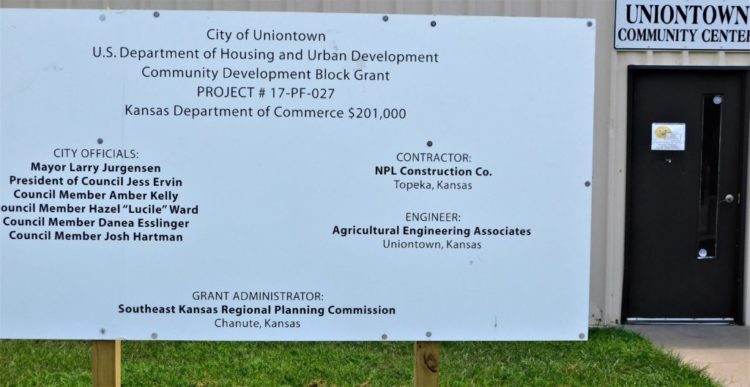
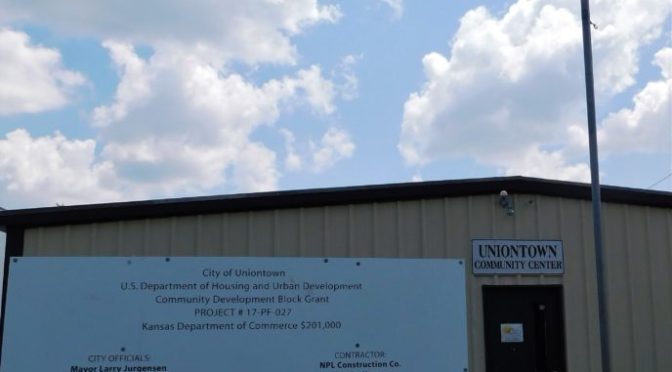
The Uniontown City Council has been active in recent years to improve the town’s infrastructure.
A project to widen and deepen the town’s ditches to keep water going where it should, a water line replacement project and this year a natural gas line replacement project has been initiated by the council. Uniontown’s population is 272.
The city of Uniontown was awarded $201,000 in 2017 with Community Development Block Grant funds to replace a natural gas transmission line, according to kansascommerce.gov/CivicAlerts.
The city will contribute $201,000 in matching funds for this project.
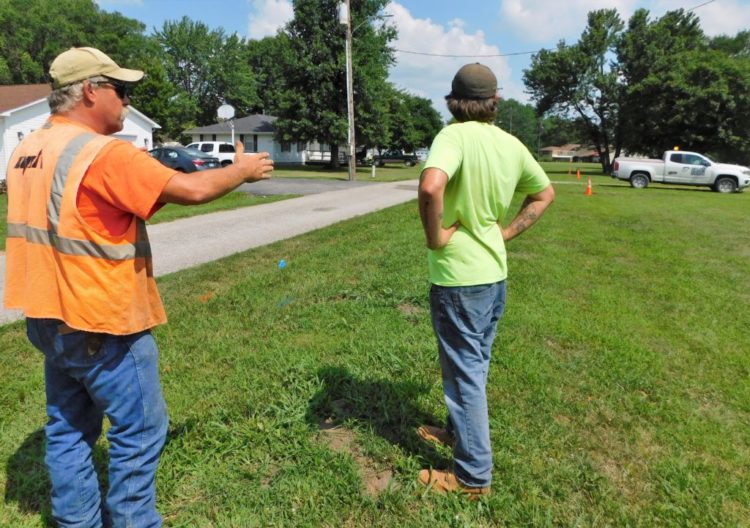
The Uniontown project started June 12.
“We are trying to get it done by September 1,” NPL(Northern Pipe Line) Foreman Pat Wier, said. “So far, we are up to date, but we have a lot of work to be done.”
The two-man crew is replacing PVC pipe with PE pipe. The crew is comprised of Wier and Edmundo Rodriguez, Lenexa.
“PE is a federal requirement,” Wier said. “PVC is not recognized anymore. We are laying new pipe in portions of the city where the PVC is.”
The crew worked late into the night on Thursday to get resident Bill Griffith hooked back on to gas after a day spent laying pipe on the town’s southeast side.
“Once started, we couldn’t quit,” Wier said. “There are a few late nights.”
The usual hours for the crew is 7 a.m to 5:30 p.m. Monday through Friday, Wier said.
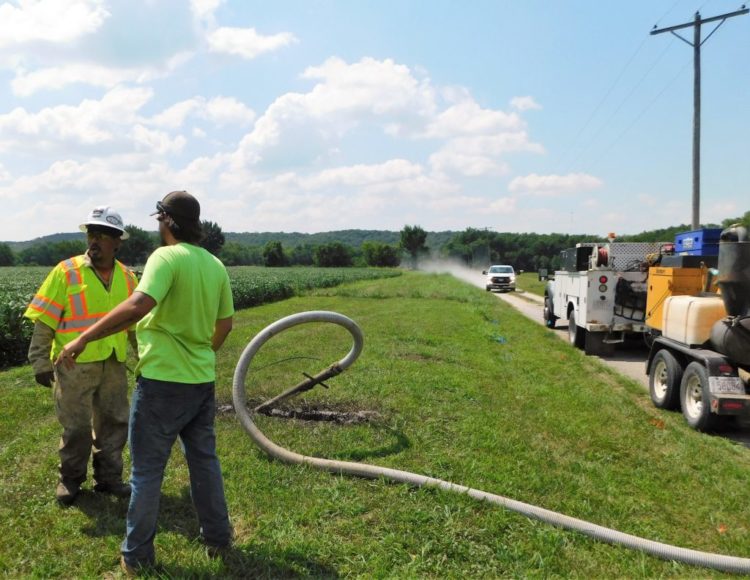
Next for the crew is replacing 3,700 feet of two-inch steel pipe south of town.
“That is exposed,” Wier said. “We’ll be replacing and putting pipe underground for safety.”
Recently, a brush mower in this area ran over the steel riser and “caused a pretty good (gas)leak,” Wier said. “That’s why we are doing all this.”
During the FortScott.Biz interview a Kansas Corporation Commission Inspector, Jon Bolinder, turned up at the work site.
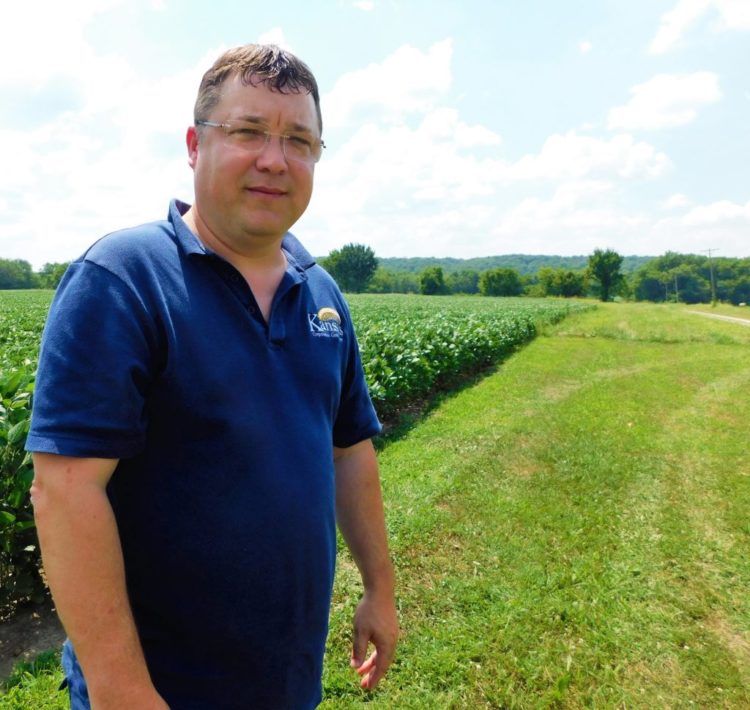
Bolinder is with the Office of Pipeline Safety for the KCC, he said.
Bolinder said all projects submit a construction notice to KCC. He was on his way to the Coffeyville area and made a stop in Uniontown to view the project.
“We come out and make sure they are following code when installing,” Bolinder said. He also said it helps him “in my head, when I am doing the paperwork on the project.”
The Small Cities Community Development Block Grant (CDBG) Program allows the Kansas Department of Commerce to distribute federal funds to Kansas cities and counties looking to improve their community.
To receive CDBG funds, a project must meet at least one of the following federally mandated criteria, according to the website:

Presbyterian Village hosted a barn wood sign art class at Fort Scott Presbyterian Village on Tuesday, July 24.
Instructor, Jennifer Cox, demonstrated how to create charming barn wood style signs, using reclaimed weathered wood.

Participants were able to take home their creations at the end of the class.

Jennifer Cox is owner of Funky Junktiques and can be reached at 620-215-4646.

The following is submitted by Daryl Roller
Veterans living in Southeast Kansas are thankful for Fort Scott National Cemetery. We appreciate the generous investments made in the (Fort Scott National) cemetery the past twenty-plus years. It is comforting for us, as well as our families, to know when our time comes; we will be buried in a dignified, peaceful place, with grounds attended to with exceptional care.
We are raising funds for a commemorative works granite monument, complete with U.S. Navy stockless anchor and chain to be placed in the Monument Circle at Fort Scott National Cemetery, to honor the service and sacrifice of the many sailors and Navy airmen buried there, as well as those to be interred in future years.
To accomplish this project, we need your help. Fundraising will be conducted by Olson-Frary-Burkhart Post 1165 of the Veterans of Foreign Wars, Fort Scott, KS. We plan to have a dedication once the monument is installed. Please send your donation to VFW Post 1165, PO Box 85, Fort Scott, KS 66701. Your name will be listed in a log of contributors to be kept at the post.
We thank you for your donation to honor the past, present, and future Navy Veterans from Southeast Kansas.
00050196_Ft Scott Donation_letter to donor (1)
Agenda
Bourbon County Commission Room
2nd Floor, County Courthouse
210 S. National Avenue
Fort Scott, KS 66701
Tuesdays starting at 9:00
Date: July 24th, 2018
1st District-Lynne Oharah Minutes: Approved: _______________
2nd District-Jeff Fischer Corrected: _______________
3rd District-Nick Ruhl Adjourned at: _______________
County Clerk-Kendell Mason
9:00-9:45-Jim Harris
10:00-Shane Walker-Bids
11:00-12:00-Justin Meeks
NRP Update
Walking Trail Update
City of Fort Scott-Public Hearing for Airport-Monday, July 30th at 4:30 pm
Executive Session-Privileged in the Attorney-Client Relationship
Justifications for Executive Session:
Personnel matters of individual non-elected personnel
Consultation with an attorney for the body or agency which would be deemed privileged in the attorney-client relationship
Matters relating to employer-employee negotiations whether or not in consultation with the representative(s) of the body or agency
Confidential data relating to financial affairs or trade secrets of corporations, partnerships, trusts and individual proprietorships
Preliminary discussions relating to the acquisition of real property
Matters relating to the security of a public body or agency, public building or facility or the information system of a public body or agency, if the discussion of such matters at an open meeting would jeopardize the security of such public body, agency, building, facility or information system
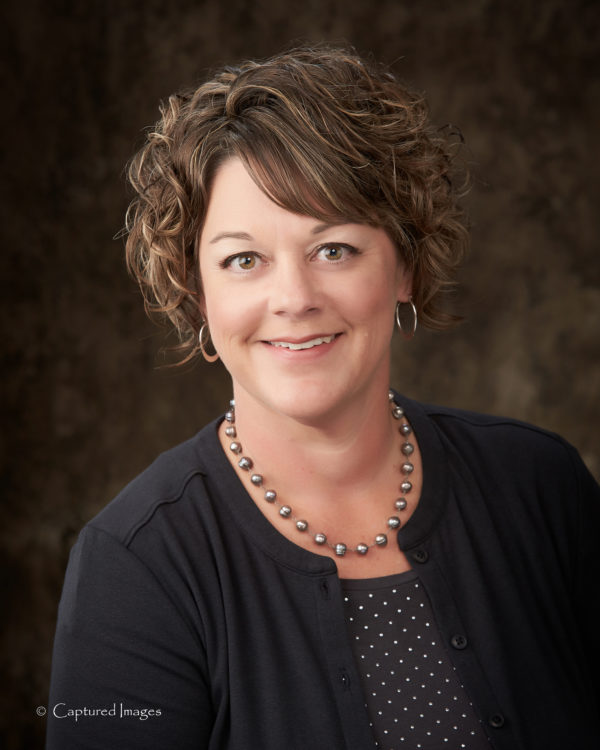
Area plant lovers will have a great opportunity this fall to participate in an outstanding horticulture program!
The Master Gardener training will be held in Chanute starting September 10th and will conclude on October 15th. The training is held during the day from 9 am to 4 pm. The Master Gardener program is a volunteer program in which K-State Research and Extension “trades” classroom training for volunteer time.
Master Gardener training consists of 40 to 50 hours of instruction in all aspects of horticulture.
Instructors include state specialists from Kansas State University, local extension agents and local experts. After training is completed, volunteers donate an equivalent number of hours of service as was received in instruction.
Topics that will be covered in the training include:
Although the Master Gardener program is a volunteer activity, there are some requirements that must be met prior to the selection process. Each individual wishing to participate in the Master Gardener training must meet the following requirements:
The Southwind Extension District currently has an active Master Gardener program consisting of 25 individuals. The Master Gardeners have completed volunteer projects such as demonstration flower beds, vegetable research trials and various other projects in Erie, Chanute, Iola, Humboldt, Moran and Fort Scott. In addition, educational tours and activities are also planned.
Applications are available now and are due to the Southwind Extension District by August 27th. Applications can be picked up at any of our four Extension office locations, e-mailed or mailed to you. The fee for the course is $85 which covers the cost of the Master Gardener resource notebook. For more information about the Master Gardener training, please contact the Extension office.
Krista Harding is a K-State Research and Extension Agricultural agent assigned to Southwind District. She may be reached at kharding@ksu.edu or 620-244-3826.
K-State Research and Extension is an equal opportunity provider and employer.
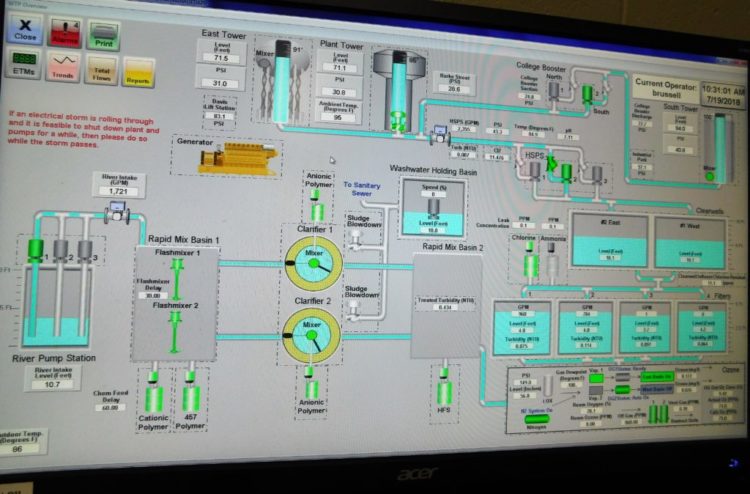
The Marmaton River is the source of drinking water for almost all of Bourbon County, except for the most extreme western portion, which has a private reservoir.
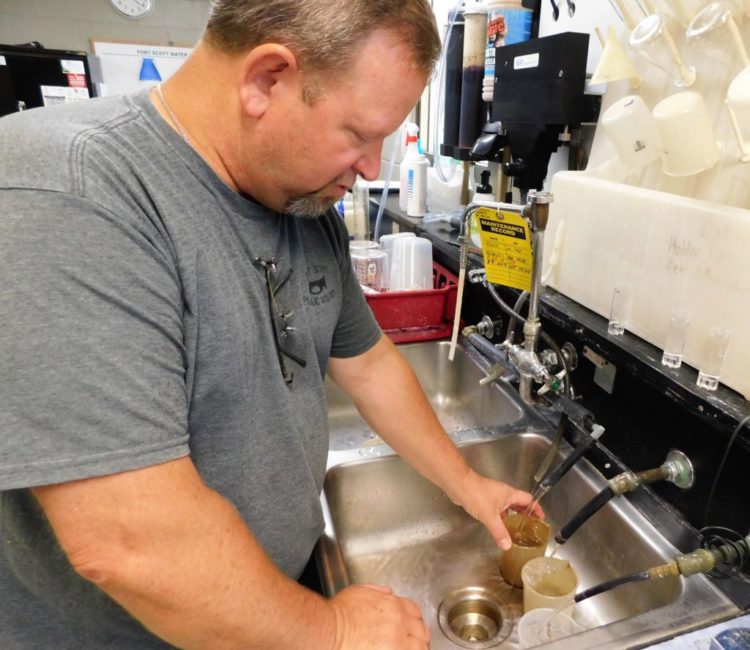
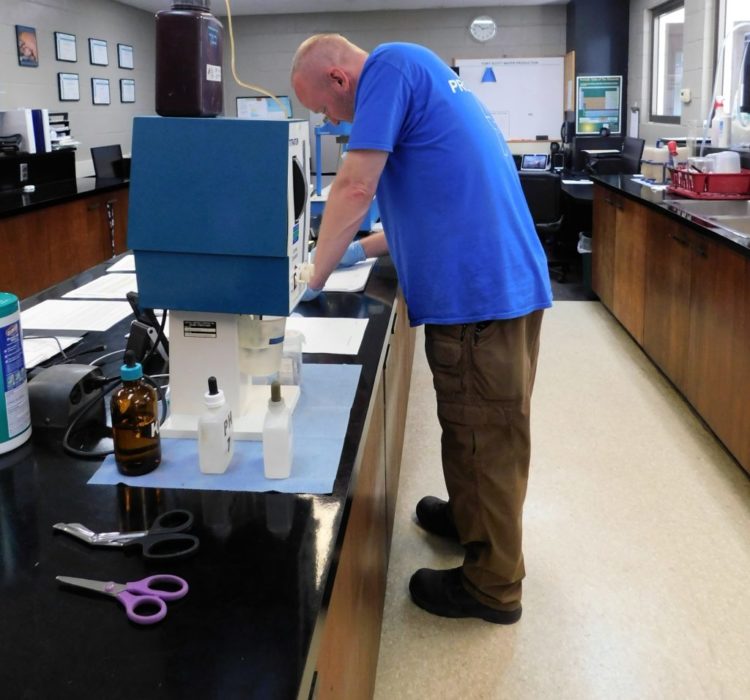
Scott Flater is the superintendent of the City of Fort Scott Water Production Department, who is tasked with providing clean, safe water from the Marmaton River to all of Fort Scott and Consolidated Rural Water District # 2 residents.
“We make water for the city,” Flater said. “But our number one customer is Rural Water #2.”
Over two million gallons of water a day is processed and sent out to the city and the county, he said.
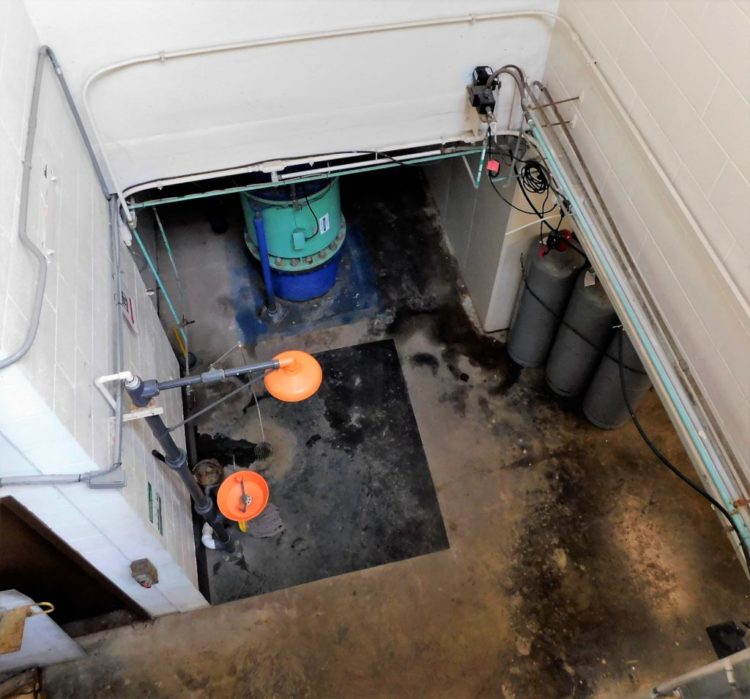
“Everything comes through this building,” Flater said. “We have a river intake on 5th and Short Streets.”
The rural water district then sells and distributes the water from Fort Scott to the small towns in Bourbon County.
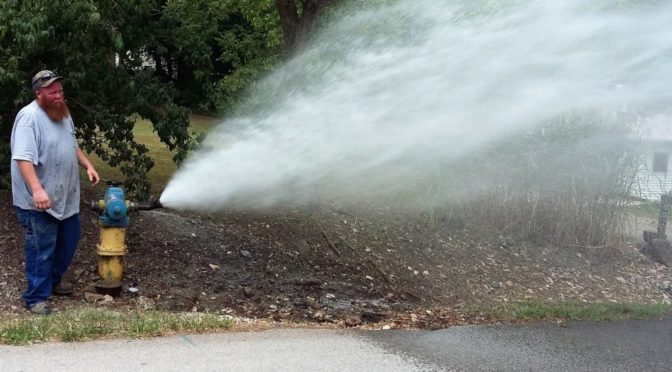
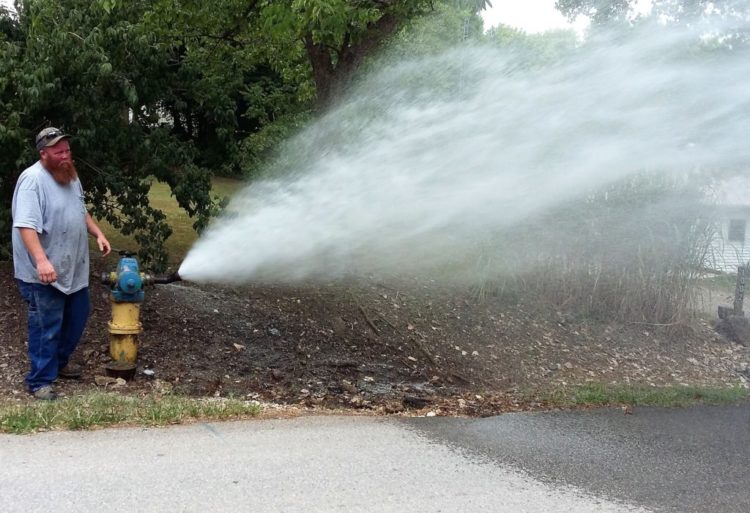
The city’s water production employees are in the middle of a cleanout process. It’s called burn out/flushing, and it’s an annual event.
“The water is safe during the rest of the year or during this burnout (cleaning out), it’s safe,” Flater said. “We are sending it out to our family and our community. It’s the highest quality.”
The cleaning out of the system is a maintenance practice for the distribution system, Flater said.
They started July 16, and if all goes as planned the water cleaning process should be completed by the end of next week, Flater said.
“The burnout won’t reach outside of Fort Scott until today (July 20),” Flater said.
Flater commended a small town in Bourbon County for being far-thinking in their water supply.
Flater said Uniontown, in the western part of the county, has been “pro-active to rebuild their water infrastructure” in the last few years. “They’ve done a great job.”