Topic: Bourbon County Coalition Meeting
Time: Mar 3, 2021 12:00 PM Central Time (US and Canada)
Every month on the First Wed, until Jun 2, 2021, 4 occurrence(s)
Mar 3, 2021 12:00 PM
PPA for Full Capacity Represents Facebook’s Fourth Power Purchase from Apex
Apex Clean Energy today announced that WEC Energy Group (NYSE: WEC) and Invenergy purchased the Jayhawk Wind project, including a renewable power purchase agreement with Facebook. The more than 190 MW project, located in Crawford and Bourbon Counties, Kansas, will help support the tech company’s operations in the region.

“Establishing and growing strong relationships with the nation’s pre-eminent clean energy investors and power purchasers is fundamental to Apex’s core mission and to our ability to bring best-in-class renewable energy assets like Jayhawk Wind to life,” said Mark Goodwin, Apex Clean Energy president and CEO. “Because of these agreements with Facebook—a valued Apex customer—and new partners WEC Energy Group and Invenergy, Jayhawk Wind will advance the new energy economy in Kansas and generate significant long-term economic benefits for the local community.”
The deal marks Apex’s fourth renewable transaction with Facebook, following a 61.6 MW PPA with Altavista Solar; a 200 MW PPA with Aviator Wind East, part of the largest single-phase, single-site wind project in the United States; and, most recently, a 175 MW PPA with Lincoln Land Wind in Illinois.
“We are excited to help bring this new wind project—our first in Kansas—to the grid in support of our operations in the region,” said Urvi Parekh, head of renewable energy at Facebook. “At Facebook, we are committed to supporting our global operations with 100% renewable energy and helping accelerate the transition to renewable energy around the world.”
Jayhawk Wind will help Facebook meet its goal to support its operations in the region with 100% renewable energy and reach net-zero carbon emissions. The tech company stepped in as the project’s offtaker after a previous power purchase agreement was mutually dissolved.
The purchase of the Jayhawk Wind project is part of WEC Energy Group’s $16 billion ESG Progress Plan—the largest five-year capital plan in the company’s history.
“Our commitment to the Jayhawk project is the next step forward in our comprehensive plan to build a bright, sustainable future, serve strong vibrant customers, and continue to grow earnings from our portfolio of renewable energy assets,” said Gale Klappa, WEC Energy Group executive chairman.
The Jayhawk facility, which breaks ground this week and is expected to be operational later this year, will consist of 70 GE wind turbines totaling an installed capacity of more than 190 MW. The project will provide significant economic benefits for the local and state economies—including the creation of more than 115 construction jobs and 7 long-term operations positions—and will generate over $20 million in landowner payments and $27.2 million in tax revenue.
About Apex Clean Energy
Apex Clean Energy develops, constructs, and operates utility-scale wind and solar power facilities across North America. Our mission-driven team of more than 200 renewable energy experts uses a data-focused approach and an unrivaled portfolio of projects to create solutions for the world’s most innovative and forward-thinking customers. For more information on how Apex is leading the transition to a clean energy future, visit apexcleanenergy.com or follow us on Facebook, Twitter, and LinkedIn.About WEC Energy Group
WEC Energy Group (NYSE: WEC), based in Milwaukee, is one of the nation’s premier energy companies, serving 4.6 million customers in Wisconsin, Illinois, Michigan and Minnesota.The company’s principal utilities are We Energies, Wisconsin Public Service, Peoples Gas, North Shore Gas, Michigan Gas Utilities, Minnesota Energy Resources and Upper Michigan Energy Resources. Another major subsidiary, We Power, designs, builds and owns electric generating plants. In addition, WEC Infrastructure LLC owns a growing fleet of renewable generation facilities in the Midwest.
WEC Energy Group is a Fortune 500 company and a component of the S&P 500. The company has approximately 42,000 stockholders of record, 7,300 employees and $37 billion of assets.
Community Health Center of Southeast Kansas is now offering COVID-19 vaccine appointments as part of Phase 2 of the Kansas Vaccine Prioritization Plan.
The list can be found on the Kansas Department of Health and Environment website:
There is no out-of-pocket cost to receive a COVID-19 vaccine. Vaccinations will be available at all CHC/SEK clinic locations.
The vaccine appointment telephone number to call is 866-888-8650, which will be answered 7 a.m. -7 p.m. seven days a week. There is an additional line for Spanish speakers, available at 620-240-8940, answered from 7 a.m. – 5 p.m., Monday through Friday.
CHC/SEK is one of 250 health centers nationally selected to receive a direct supply of COVID-19 vaccine to ensure underserved communities are equitably vaccinated, according to a recent announcement from Health Resources and Services Administration (HRSA) and CDC. A shipment of 4,000 doses of Moderna vaccine is expected to arrive the week of March 1.
CHC/SEK will follow the state priorities for what populations are eligible to receive the vaccine, however vaccine recipients will not be restricted by county residency, nor do they have to be a patient of CHC/SEK.
“This is a gift to the people of Southeast Kansas, the least healthy and most economically challenged region of the state,” said Krista Postai, President & CEO of CHC/SEK. “With almost 20 percent of our population over 65, the ability to reach out to provide this potentially life-saving vaccine is probably one of the most important initiatives in our history.”
Vaccine appointments will be available at CHC/SEK locations.
In Pittsburg, CHC/SEK has established a vaccine center at 924 N. Broadway, with extended and weekend hours to make receiving a COVID-19 vaccination as convenient as possible. The health center has also formed special vaccination outreach teams to target special populations by taking the vaccine to them.
“Based on the calls we’ve been receiving, we know many people are eager to get vaccinated and so afraid they’ll be overlooked because they live in rural Kansas,” Postai said. “It is so wonderful to tell them they’ve actually been prioritized nationally.”
CHC/SEK and Grace Med Topeka/Wichita were the two Kansas health centers chosen for this program. Both serve a large population of individuals experiencing homelessness, public housing residents, migratory and seasonal agricultural workers, patients with limited English proficiency and serve a significant population of patients age 65 years and older.
“We know these vaccines are safe and highly effective against a very serious disease,” Postai said. “Now that they have become available to us, CHC/SEK is ready to get them delivered into the arms of our communities.”
The February meeting of the Starlite FCE was held at the Yeager building at the Fairgrounds. President Glenda Miller called the meeting to order and Joyce Allen led the members in reciting the Pledge of Allegiance and the Club Collect. Nine members were in attendance, they reported that they had volunteered for four hours and had recycled sixty pounds of cardboard.
The minutes of the previous meeting were read and approved. Doris Ericson presented the treasurer report. Glenda Miller passed out the new membership roll and informed us Sekan will accept cardboard on Mondays.
Jackie Warren reported that as of now we are planning to have an Open Class at the Fair this year and asked for a show of hands of those who would be able to help.
New Business consisted of planning an Easter party for Tri-Valley. It was decided to make bunny bags and fill with treats and to has an egg hunt. Everyone is to bring wrapped candy to place in eggs and bags.
Deb Lust moved that the meeting be adjourned, Doris Ericson seconded the motion, motion carried, meeting adjourned. After the meeting, Deb Lust presented a program on Character Counts- Responsibility. Doris Ericson and Deb Lust provided refreshments of cake, M&M, and water, which were enjoyed by all.
MANHATTAN, Kansas — A public hearing will be conducted at 1:00 p.m. on Tuesday, March 9, 2021, to consider the revision of a regulation related to conservation practices. Due to public health concerns posed by the COVID-19 pandemic, the hearing proceedings will be held via a video conferencing system to provide the opportunity for virtual participation online.
The Kansas Department of Agriculture Division of Conservation is proposing a revision to K.A.R. 11-9-5 which will provide for a one-time early payout of existing long-term state incentive contracts for landowners already enrolled in Conservation Reserve Program conservation practices under the Kansas Water Quality Buffer Initiative.
A copy of the proposed regulation, as well as an expanded notice of public hearing, may be accessed on the KDA website at agriculture.ks.gov/PublicComment. Anyone desiring to participate via video conference must pre-register and be provided with a video link. Written comments can be submitted on the public comment web page prior to the hearing or sent to the Kansas Department of Agriculture, attn. Ronda Hutton, 1320 Research Park Drive, Manhattan, KS, 66502.
Any individual with a disability may request accommodations in order to participate in the public hearing and may request a copy of the regulations in an accessible format. Persons who require special accommodations must make their needs known at least five working days prior to the hearing. For more information, including special accommodations or a copy of the regulations, please contact Ronda Hutton at 785-564-6715 or [email protected].
###
WHAT: Public hearing on proposed conservation regulation
Community Health Center of Southeast Kansas, 403 Woodland Hills Blvd.
Community Health Center of Southeast Kansas is now offering COVID-19 vaccine appointments for individuals aged 65 and older as part of Phase 2 of the Kansas Vaccine Prioritization Plan. There is no out-of-pocket cost to receive a COVID-19 vaccine. Vaccinations will be available at all CHC/SEK clinic locations.
The vaccine appointment telephone number to call is 866-888-8650, which will be answered 7 a.m. -7 p.m. seven days a week. There is an additional line for Spanish speakers, available at 620-240-8940, answered from 7 a.m. – 5 p.m., Monday through Friday.
CHC/SEK is one of 250 health centers nationally selected to receive a direct supply of COVID-19 vaccine to ensure underserved communities are equitably vaccinated, according to a recent announcement from Health Resources and Services Administration (HRSA) and CDC. A shipment of 4,000 doses of Moderna vaccine is expected to arrive the week of March 1.
CHC/SEK will follow the state priorities for what populations are eligible to receive the vaccine, however vaccine recipients will not be restricted by county residency, nor do they have to be a patient of CHC/SEK.
“This is a gift to the people of Southeast Kansas, the least healthy and most economically challenged region of the state,” said Krista Postai, President & CEO of CHC/SEK. “With almost 20 percent of our population over 65, the ability to reach out to provide this potentially life-saving vaccine is probably one of the most important initiatives in our history.”
Vaccine appointments will be available at CHC/SEK locations.
In Pittsburg, CHC/SEK has established a vaccine center at 924 N. Broadway, with extended and weekend hours to make receiving a COVID-19 vaccination as convenient as possible. The health center has also formed special vaccination outreach teams to target special populations by taking the vaccine to them.
“Based on the calls we’ve been receiving, we know many people are eager to get vaccinated and so afraid they’ll be overlooked because they live in rural Kansas,” Postai said. “It is so wonderful to tell them they’ve actually been prioritized nationally.”
CHC/SEK and Grace Med Topeka/Wichita were the two Kansas health centers chosen for this program. Both serve a large population of individuals experiencing homelessness, public housing residents, migratory and seasonal agricultural workers, patients with limited English proficiency and serve a significant population of patients age 65 years and older.
“We know these vaccines are safe and highly effective against a very serious disease,” Postai said. “Now that they have become available to us, CHC/SEK is ready to get them delivered into the arms of our communities.”
About CHC/SEK
The Community Health Center of Southeast Kansas is a not-for-profit Federally Qualified Health Center dedicated to providing quality health care to everyone regardless of income or insurance status. CHC/SEK serves more than 50,000 children and adults annually and employs more than 400 professionals and support staff at 18 locations throughout Crawford, Cherokee, Labette, Linn, Montgomery and Allen counties, and Ottawa County in Oklahoma. CHC/SEK is governed by a 14-member Board of Directors, which includes patients from the communities it serves.
In the beef project, youth will learn all aspects of the beef industry by raising a market steer or building your own herd by raising heifers and cows.
There is 4-H Curriculum that can be purchased for anyone interested in the beef project. Here is a breakdown of what youth can learn at different levels:
Things to Learn/Do in the Project
Age 7-9
Identify breeds of beef cattle
Learn the parts of a calf
Compare animal differences
Halter break a calf
Age 10-13
Learn about cattle feeds and how they are digested
Judge beef cattle and present oral reasons
Show a calf and learn showing techniques
Age 14 and Older
Use performance data to make breeding decisions
Evaluate beef carcasses and identify meat products
Explore impact of technology and career opportunities in the beef industry
In addition to the curriculum, youth are also offered the opportunity to attend project meetings held by volunteers. Each year, youth are able to demonstrate their hard work locally at the county fair and depending on age and placing, the Kansas State Fair. There are other local and state shows available to youth as well.
The beef project is a great opportunity for youth to learn important life skills. For more information about this project or the workshop, contact Jennifer K. Terrell, 4-H Youth Development for K-State Research and Extension – Southwind District at [email protected] or 620-244-3826.
MEETING WILL BE HELD IN COMMISSION ROOM AT CITY HALL. ANYONE ATTENDING THE MEETING WILL BE REQUIRED TO WEAR A MASK. MUST MAINTAIN SOCIAL DISTANCING.
PLEASE NOTE THE MEETING WILL BE HELD AT CITY HALL BEGINNING AT 9AM
Call to Order
Flag Salute
Approval of Minutes from previous meeting
Eric Bailey – Road and Bridge Report
Eric Bailey – Executive Session, KSA 75-4319(b)(1) To discuss personnel matters of individual nonelected personnel to protect their privacy
Discuss Unlocking Front Door During Business Hours
County Counselor Comment
Public Comment
Commission Comment
Justifications for Executive Session:
KSA 75-4319(b)(1) To discuss personnel matters of individual nonelected personnel to protect their privacy
KSA 75-4319(b)(2) For consultation with an attorney for the public body or agency which would be deemed privileged in the attorney-client relationship
KSA 75-4319(b)(3) To discuss matters relating to employer-employee negotiations whether or not in consultation with the representative(s) of the body or agency
KSA 75-4319(b)(4) To discuss data relating to financial affairs or trade secrets of corporations, partnerships, trust, and individual proprietorships
KSA 75-4319(b)(6) For the preliminary discussion of the acquisition of real property
KSA 75-4319(b)(12) To discuss matters relating to security measures, if the discussion of such matters at an open meeting would jeopardize such security measures.
Health in all policies matters because health happens outside the doctor’s office. Communities reflect their populations—the people and systems that comprise them. Weaving health throughout all policy decisions is critical to community and economic development. We speak the same language as economic developers in terms of measuring key indicators to establish where we are and set goals for the vision of where we’d like to be. Building wealth, increasing average and median household wages, access to food, unemployment, housing, education: a healthy workforce is a prerequisite for economic success in any industry and in all cities.
The social determinants of health clearly identify the conditions that effect health outcomes. Healthy People 2020 list the five key domains as (1.) Economic Stability (2.) Education (3.) Health and Health Care (4.) Neighborhood and Built Environment and (5.) Social and Community Context. Through the Blue Cross Blue Shield Pathways to Healthy Kansas Grant, the Healthy Bourbon County Action Team (HBCAT) is addressing each of these determinants through “pathways,” with the addition of a 6th food pathway.
Social and economic factors impact health. Factors such as quality of education and safe neighborhoods are paramount. Our work at the community level is to improve environments where we live, create accessible support systems, encourage community engagement, and to make the healthy choice the default choice.
Equity means that everyone has a fair and just opportunity to access what they need to thrive. This requires removing obstacles to good health such as poverty, discrimination, and their consequences, including: powerlessness and lack of access to well-paying jobs, quality education and housing, safe environments, and health care (Braveman et al., 2017).
Policies continue to create differences in home ownership, small business development, and other wealth building strategies. Structural inequities create disparities in people’s ability to participate and have a voice in policy and political decision making.
The HBCAT has always defined our target population as Bourbon County, including the six incorporated cities it encompasses. This was defined in 2016 with the completion of the first community health needs assessment. The HBCAT recognizes we are only as strong as our weakest link. Impacts of decisions made by City of Fort Scott officials are often felt throughout the county and policy decisions made through the county are often felt in each of the cities. Regardless of where your home is located, we are all connected and intertwined. Every corner of the county is working toward the same goals in terms of access to safe walkable neighborhoods, healthcare, jobs, income, education, or safe affordable housing.
Policy makers are often juggling competing priorities. Including a Health in all Policy (HiAP) approach will allow policy makers to recognize the health impacts of decisions early on. The strategy is to use the Kansas Health Institute’s Health Impact Checklist (HI-C) tool. The tool asks a series of questions with check boxes and written responses to connect potential changes in social, economic, and environmental conditions with potential health impacts.
Policy decisions can shape what our community looks like and have implications on the health and quality of life for all residents. Research has shown that it is not lack of personal responsibility, low motivation or culture of poverty but deeply entrenched societal factors that cause disparities. The HBCAT looks forward to working with city government on the HiAP checklist to inform decision-making for proposals that appear to be unrelated to health such as housing, transportation, and land use.
Background of the Healthy Bourbon County Action Team:
The Healthy Bourbon County Action Team, inc. is registered through the State of Kansas as a non-profit organization. The action team strives to increase access to healthy food and physical activity, promote commercial tobacco cessation, enhance quality of life and encourage economic growth. The problems of health inequity and social injustice are complex in nature and inextricably linked to key economic indicators. The Healthy Bourbon County Action Team aims to improve health outcomes, promote economic inclusion, and address inequities through direct action in the local community and by nurturing relationships with other helping organizations throughout Kansas.
The is an image of the proposed micro-meat processing plant. Submitted.
The Fort Scott Planning Commission is meeting at 4 p.m. March 1 at city hall, 123 S. Main, to consider a conditional use permit for property south of the town for a micro-meat processing plant.
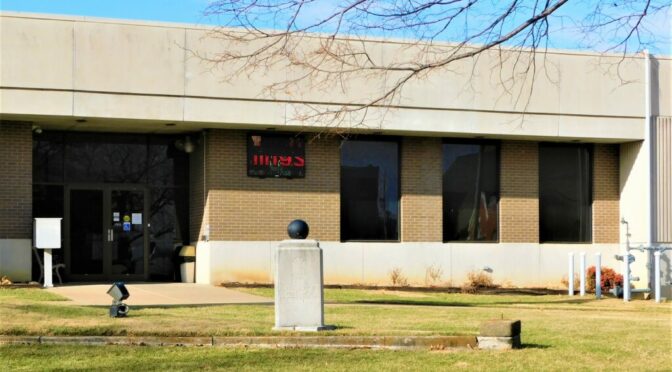
The property being considered is south of the Kansas Department of Transportation property, according to the press release from the City of Fort Scott. The K.D.O.T property is south of the LaRoche Baseball Park.
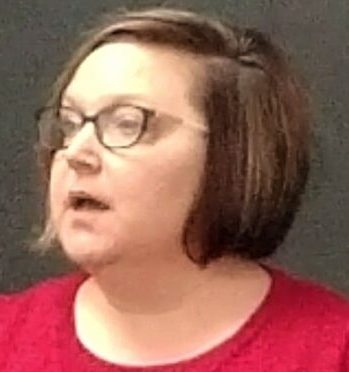
Jody Hoenor, Bourbon County Economic Development Director. Submitted photo.
The Bourbon County Economic Director Jody Hoenor sent the following information on the proposed plant.
“Billy Madison, the owner of W Diamond M Meats, will be seeking the approval of a conditional use permit from City of Fort Scott Commission,” Hoenor said. “He plans to return to his hometown and build a $2.7million micro meat processing plant located approximately two miles outside the city limits of Fort Scott and south of the Fort Scott Industrial Park.”
“The processing plant will add to our efforts in building resilient and self-sustaining food systems,” Hoenor said. “The COVID-19 pandemic highlighted the need for these smaller-scale processing plants, and we are very fortunate to be considered for this expansion. This proposal has potential to help farmers and ranchers with extra supplemental income act as a stimulus for other sectors such as retail trade and services.”
“The site is currently zoned correctly as heavy industrial for use,” she said. “The City of Fort Scott codes requires an additional conditional use permit approval for a meat processing plant to be built.”
The City of Fort Scott Water Department and Codes Enforcment were consulted on sewer and wastewater issues, she said.
“The codes department let us know we would need a conditional use permit to build on the selected site,” Hoener said.
Since July 2020, Madison has been working with Hoener and Bourbon County Economic Development Council Chairs, Steve Buerge (previous), and more recently Gregg Motley, she said.
“It is Madison’s goal is to be a good neighbor, bring above-average wage jobs, and provide value in under-developed land,” Hoenor said. “Financing of the project and acquisition of land is pending approval of the conditional use permit.”
“All impacts on social, economic, and environmental conditions were investigated thoroughly including air and water quality, crime rate, property valuation, wage growth, employment growth, occupational health, and odor,” she said.
“State of the art wastewater system is used to remove suspended matter such as oils and solids,” Hoenor said. “This is measured through biochemical oxygen demand (BOD). The equipment skims any leftover matter and is sold. Bacteria growth is what creates an offensive odor,” she said.”The requirements in cleaning are incredibly stringent and does not allow time for bacteria to grow. As a result, there is no offensive odor in the processing plant.”
“This is a highly regulated industry with a USDA inspector office on sight,” she said. ” It is a requirement in building plans that the USDA inspector has a separate office with his/her own shower. This inspector is on-site at all times while in operation. There are 3-4 additional inspections per month, in order to keep our food safe to consume.”
“There will be no outdoor pens or holding areas for animals, mitigating smell downwind or in the vicinity,” Hoenor said. “Animals are delivered in the very early morning hours and several hours later slaughtered and processed.”
“Letters of support from residential houses in Johnson County and commercial businesses have confirmed the business is a conscientious neighbor,” she said.
In addition, the product can be sold in other states and will bring new jobs.
“W Diamond M Meats is FSIS approved, allowing the meat to be sold across state lines, injecting capital into our economy,” Hoenor said. “This business will bring 30 full-time jobs that pay higher than Bourbon County average. The new construction increases overall county valuation in property and affords the opportunity to reduce the overall tax burden.”
The Kansas Department of Transportation (KDOT) plans on Monday, March 1, to start a resurfacing project on U.S. 69 in Bourbon County. The project begins 2.1 miles north of the Bourbon-Crawford county line and continues north for 3.8 miles.
Project activity includes concrete patching, placement of a one-inch reflective crack interlayer, and a three-inch asphalt overlay. KDOT awarded the construction contract of $3.5 million to Bettis Asphalt & Construction, Inc., of Topeka.
Traffic will be reduced to one lane at the work zone. Work on the project should be completed by mid-August, weather permitting. KDOT reminds drivers to obey the signs and traffic control devices, and to slow down. Persons with questions may contact Public Affairs Manager Priscilla Petersen, (620) 902-6433.