Inside the Bourbon County Election Process: A Step-By-Step Walkthrough

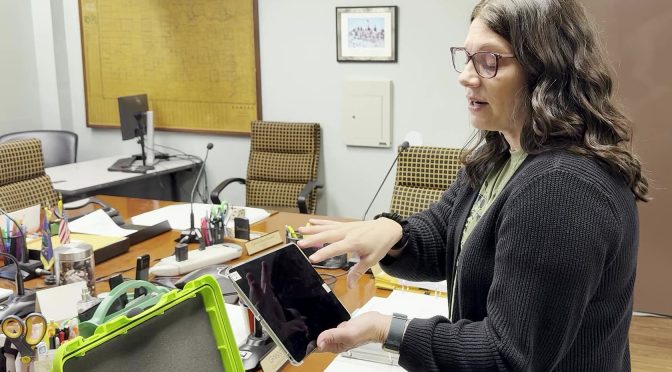
The County Clerk and Election Officer Susan Walker and Deputy Clerk Amber Page walked FortScott.biz through the election process showing the procedures their office uses to take in, track, and reconcile every ballot cast in a Bourbon County election.

This article shows the order that an election unfolds, starting with building the ballot weeks before Election Day and ending with the canvass after Election Day.

Important Terms:

KNOWiNK Poll Pad: The electronic tablet voters sign in on at the polling place. KNOWiNK is the vendor; Poll Pad is the device.

ePolls: The Clerk’s office shorthand for the electronic pollbook export from the Poll Pads. The data feeds into ELVIS after the election.

ELVIS: Election Voter Information System. The Kansas Secretary of State’s statewide voter registration and credit system.

Clear Ballot: The scanner system voters insert marked ballots into at the polling place.

ClearDesign: Clear Ballot’s ballot-design software. Used by the Clerk’s office to build each election’s ballot manually, race by race and precinct by precinct.

UOCAVA: Uniformed and Overseas Citizens Absentee Voting Act. Federal law governing absentee ballots for military and overseas voters.

Manual pollbook: Paper backup pollbook used when Poll Pads fail. Voters sign by hand and are credited in ELVIS afterward.

Provisional ballot: A ballot cast under questioned circumstances (e.g., wrong polling place). Whether it counts is decided later, at the canvass.

Chain-of-custody sheet: Daily log signed by both Walker and Page when retrieving and validating mail-in advance ballots from the office mailbox.

Canvass / Board of Canvassers: Post-election review by the Board of Canvassers (typically the county commissioners) that decides which provisional ballots count and finalizes results.

Supervising judge: The election worker overseeing a specific polling place on Election Day. They serve once a year.

Precinct part: A sub-unit of a precinct that votes on slightly different combinations of races, created by redistricting.

1. Building the ballot

Designing a Bourbon County ballot is a weeks-long process, handled primarily by Page. She uses Clear Ballot’s design software, called ClearDesign. Every piece of information has to be typed in manually: the name of the election, the date, every race, every district, every precinct, which races appear on each precinct’s ballot, which voter groups can vote on each race, and which polling places each precinct’s ballot is available at.

Primary elections add another layer. Every contest has to be mapped to the parties that will appear in it, and every candidate has to be linked to the correct party, so they show up on the right party’s ballot.

Recent redistricting in Bourbon County added significantly to that complexity by creating more precincts and what Page called precinct parts. These are sub-units that vote on slightly different combinations of races. The Clerk’s office relies heavily on the district map to determine which precinct or precinct split a given voter belongs to.

Walker said that last year, after an issue discovered with the early voting ballots forced Page to rebuild an entire election configuration, work that would normally have taken several weeks, in hours to have them ready in time for voting day.

The Clerk’s office uses multiple internal and external reviewers to look at the ballot before it goes live, including people outside the office checking for spelling and other errors. Walker said the goal is to keep iterating on the process, “we keep trying to do everything better. We keep doing new processes to make it simpler.”

2. Preparing ballots for the polls

Once the ballot is finalized and printed, every ballot the Clerk’s office sends to a polling place is sealed with a numbered seal. The supervising judge at each polling place is required to keep those seals and return them. If a seal has to be broken, a new seal goes on and is logged. All seals are audited against the equipment they were applied to.

The Clerk’s office also manually counts every ballot before sending it out. On the morning of Election Day, the polling-place staff recount what was delivered and validate the count with the Clerk’s office. At the end of the day, the polling-place staff recount the unused ballots before sending everything back.

3. Voter check-in at the polling place

When a voter walks in to vote, they sign in on a Poll Pad — an electronic check-in tablet running software from a company called KNOWiNK on an iPad. The Poll Pad captures the voter’s signature and identifying information.

If the Poll Pad system goes down, there is a paper backup with the manual pollbook. Voters sign the manual pollbook, and the Clerk’s office later enters those records into the state voter system by hand. Walker described one recent example: on the first day of early voting before the November 2025 election, the Poll Pads malfunctioned, and 29 voters signed the manual pollbook. All 29 were later manually credited with voting in the state system.

If a voter shows up at the wrong polling place, they sign a separate provisional pollbook and fill out additional provisional paperwork. Whether that ballot ends up counting is decided later, at the canvass described below.

4. Mail-in and advance ballots

Some voters cast their ballots by mail rather than in person. Mail-in advance ballots are checked every single day during the advance-voting window. Walker and Page personally retrieve ballots from the mailbox together, count and validate them, log them on a chain-of-custody sheet, and both sign off. The log records how many ballots came in that day but not the voters’ names.

The office tracks who was mailed an advance ballot and who has returned it. If something is wrong — for example, a voter and their spouse have signed each other’s envelopes — the office returns the ballot for correction. Some ballots come back from the post office because of bad addresses. Those, too, are handled manually.

Kansas recently changed the law on advance-ballot returns. Previously, ballots could arrive up to three days after Election Day and still count. Under the new rule, advance ballots must be in by 7 p.m. on Election Day to count. Walker noted the new deadline is currently the subject of litigation, but the Kansas Secretary of State has directed county election officials to plan as though the 7 p.m. deadline is final.

Military voters and overseas voters are tracked separately under federal UOCAVA (Uniformed and Overseas Citizens Absentee Voting Act) rules. Walker said Bourbon County typically sees about two UOCAVA ballots a year.

5. Casting the ballot: the scanner

When a voter inserts a filled out ballot into the voting machine at the polling place, they’re using a system called Clear Ballot. At the end of the day, the Clear Ballot machine produces a report listing how many ballots passed through it.

Occasionally there are anomalies. Walker described one example: a voter who was issued a provisional ballot can sometimes tear the ballot off and run it through the regular scanner instead of returning it to the supervising judge. Those anomalies are noted at the end of the day.

6. Reconciling the count

After Election Day, the Clerk’s office reconciles every election against three independent systems:

  1. The Poll Pad / ePolls export — the electronic check-in log that captures every voter who signed in on a Poll Pad and, after the election, gets imported into the state’s voter system.
  2. ELVIS — short for Election Voter Information System, the Kansas Secretary of State’s statewide voter registration and credit system. ELVIS receives both the automatic Poll Pad import and any manual entries (provisional ballots, manual pollbook entries, etc.).
  3. Clear Ballot — the scanner-side count of ballots that physically went through the machines on Election Day.

Walker said all three numbers are expected to tie out. If they don’t, the office investigates. In her experience, when the numbers don’t match, the discrepancy is almost always in advance ballots or provisionals — what she called “the most room for human error.”

As a concrete example, in last year’s election the office processed 36 provisional ballots, of which 12 didn’t count, and 13 advance ballots.

7. The canvass

After the initial reconciliation, a Board of Canvassers — typically the county commissioners themselves, though they can appoint someone else to do it on their behalf, which Walker said has happened on many occasions — meets to go through every provisional ballot and decide which ones count.

Provisional ballots are evaluated against specific statutory standards. Ahead of the canvass, Page goes through each provisional and identifies which statute applies and whether the ballot likely qualifies, in order to speed up the commissioners’ review. The commissioners make the final call. Once the canvass is complete, the results are entered into ELVIS.


Voters interested in verify their own voting history can go to the Kansas Secretary of State website and enter their name and birthdate. That lookup queries ELVIS.

Walker described cases of voters who had voted but couldn’t find a record on the state site. The cause was usually a name-entry error from years earlier — for example, an entry that placed a voter’s first name into the middle-name field, so the lookup didn’t return a match. The Clerk’s office can fix those records once notified. Walker said voters who can’t find their record on the state site should call the office. (620-223-3800 ext. 100)

Each polling place is overseen by a supervising judge — election workers who are on duty only once a year. Walker said training has historically been short for that reason. The Clerk’s office is planning longer training this year to walk supervising judges through specific responsibilities and procedures.

The Clerk’s office was recently awarded an $8,500 election-security grant from the state.

Walker said the office plans to use the grant to:

  • Buy five carts to securely hold ballots in transit. Currently, supervising judges — many of whom are elderly volunteers — have to move ballots to the polling places the night before Election Day. With the carts, ballots can stay sealed in the carts and be delivered for them.
  • Add additional security cameras. Walker mentioned that the office had previously had a camera missing from the election room; the grant will pay to address that as well.

Walker said the grant had been approved just the week before the May 22 walkthrough.

This article is based on a May 22, 2026 demonstration at the Bourbon County Courthouse. The videos of the walk through of the process are shown below.

—–
Obituary of Michael Wayne Meanor

Michael Wayne Meanor, 49, passed away on Sunday, June 7, 2026 at the Freeman West Hospital in Joplin, Missouri.

Mike was born January 16, 1977, in Niskayuna, New York, to Linda Lee DeLapp Meanor and Martin Wayne Meanor. The family later moved to the Uniontown, Kansas, area where he grew up and graduated from Uniontown High School with the Class of 1996.

On July 30, 1999, Mike married April Dawn Peck, in Fort Scott, Kansas. Together they raised their two children, Bryce and Marissa.

Following high school, Mike attended Butler County Community College, where he earned a degree in Fire Science. He served his community as a firefighter in the Wichita area and later with the Fort Scott Fire Department. Throughout his working years, he was employed by Bourbon County, Dayco, and Mid-Continental Restoration. However, the work he loved most was farming. Mike found great satisfaction working as a farm hand for both G3 and Cloverdale Farms, where he enjoyed being outdoors and caring for the land and livestock.

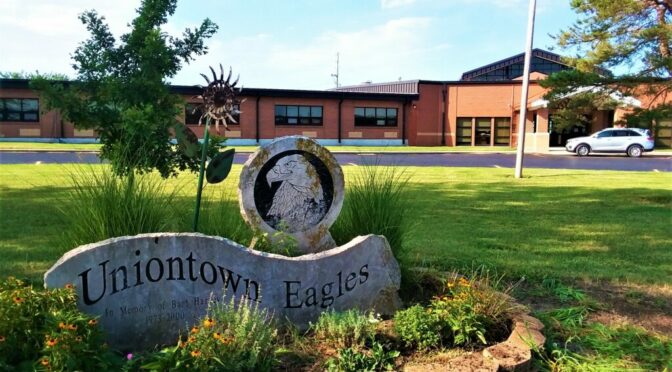
Uniontown USD 235 to Hold Board Retreat, Superintendent Search

Uniontown High School.

The Special Board of Education Meeting – Board Retreat for Uniontown USD 235 will be held June 10 from 10AM to 5PM at Greenbush, Girard, KS.

Agenda

I. Call to Order

  • Approve the Agenda

II. Superintendent Search

III. Strategic Plan – Identify 2026-2027 Goals

IV. Capital Outlay Plan

V. Board Survey

  • Superintendent Related Questions
  • Strategic Plan – Related Questions
  • Evaluation – Related Questions

VI. Adjournment

USD 234 Board of Education, June 8 Meeting Minutes

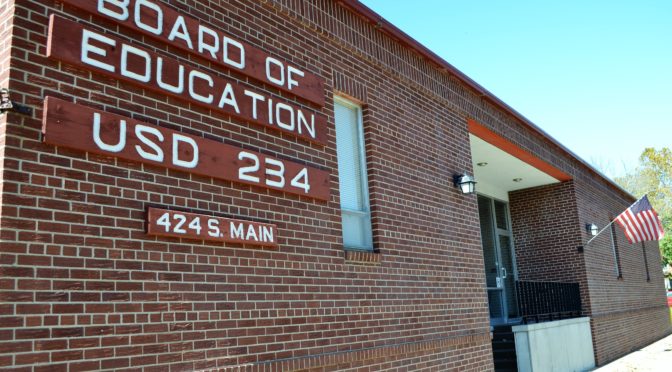
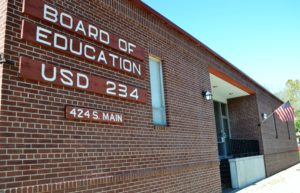
USD 234 Board of Education Building, 424 S. Main

BOARD OF EDUCATION REGULAR MEETING
NEWS RELEASE
Monday, June 08, 2026

Members of the USD 234 Board of Education met at 5:30 p.m. on Monday, June 08, 2026, for their regular monthly meeting at 424 S Main St.

President David Stewart opened the meeting.
The board approved the official agenda.
The board approved the consent agenda.

Board Minutes
05-11-26
Financials – Cash Flow Report
Check Register
Payroll – May 20, 2026 – $1,847,447.95
Activity Funds Accounts
USD 234 Gifts
KASB Policy Updates
Extended Trip Application – Brent Cavin
High School Lunch Increase

There was one present for Public Forum.

Coach Jon Barnes, Assistant Coach Karlie Chipman, and Caleb Hall were present to discuss the Boys’ golf season. As a team they were able to attend the second day of state with many of them scoring the best they had all season. Coach Barnes said he was immensely proud of the team and how they represented Fort Scott High School.

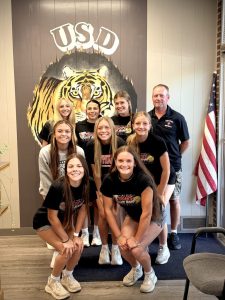
Coach Kent Aikin was present with a few of the girls from the 4A State Champion Softball team. They finished the season 28-3. He also said he was proud of the team and how they managed this season.

Coach Tracy Bogina and Coach Myers along with two seniors, Claire McElroy and Daymeion Anderson, praised the team for their accomplishments this season. They had thirteen qualify in seven events for state. Coach Bogina said they were a young team but proud of the way they finished.

Assistant Superintendent Terry Mayfield provided a shared document and updated on several grants that the district is applying for to help offset some costs of projects. This month will start the budget closeout and start up for next school year’s budget. There are many summer projects underway, and things are busy around the district.

Assistant Superintendent Zach Johnson updated the Board on the HB2299 that will include cell phones not being allowed from start of the school until the end of the school day. This also include two-way
communication between staff and students. There was discussion on where the phones that are in the building will be stored during the day, but no action was taken. During the July board meeting there will be policies that will be discussed and adopted regarding this bill. More information will be available soon.

Special Education Director Tonya Barnes shared an update on the 6B grant. The district has 112 ESY students with forty staff, the summer is going well.

The Board approved the following:
• Demolition & Parking Lot Construction Bids – Skitch’s Hauling & Excavation
• KASB Policy Plus Agreement
• 2026-27 KASB Worker’s Compensation Renewal
• KICS Property & Casualty Insurance Renewal 2026-27
• Iready Subscription Renewal 2026-27
• Winfield Scott Technology Purchase
• Middle School Staff Laptop Purchase
• Student Chromebook Purchase

The Board went into executive session for negotiations.
The Board went into executive session for personnel matters.
The Board went into executive session for contracts.
The Board approved Certified, Classified, Administrative, and Director Salary Schedule.

President David Stewart adjourned the meeting.

Freeman Acquires Pinamonti Wellness Center

Freeman Health System Announces Acquisition of Pinamonti Wellness Center  


JOPLIN, Mo. — Freeman Health System is pleased to announce the acquisition of Pinamonti Wellness Center, a respected community-focused fitness and wellness facility known for its commitment to performance, longevity, and whole-person health.

The center is located at 1014 Mt. Carmel Way, Pittsburg, KS.


This strategic investment represents a significant step forward in Freeman’s ongoing commitment to expand access to high-quality orthopedic care, rehabilitation, and preventive wellness services across the region. By integrating Pinamonti Wellness Center into its care network, Freeman is strengthening its ability to support patients across the full continuum of musculoskeletal health, from injury prevention and recovery to long-term performance and well-being.


“This is a meaningful opportunity to bring together two strong programs with a shared focus on patient outcomes and whole-person health,” said Mick Ward, Director of Professional Support for Freeman Health System. “Together, we are enhancing access to services that help patients stay active, recover more fully, and live healthier lives, close to home.”


Located in a modern, state-of-the-art facility, Pinamonti Wellness Center will complement Freeman’s growing Orthopedic Medicine program by offering expanded programming, stronger integration between clinical care and wellness services, and access to leading physicians and care teams.


Freeman Health System also looks forward to supporting the Center’s long-term growth by investing in resources and programming that strengthens community health and empowers individuals to lead more active, healthier lives.


“At Freeman, we believe care should extend beyond the walls of a hospital,” Renee Denton, MO/KS Market President for Freeman Health System added. “This partnership allows us to meet people where they are, supporting movement, recovery, and wellness in ways that improve outcomes and enhance quality of life.”


The acquisition reflects Freeman’s continued focus on expanding access, strengthening communities, and delivering high-quality care where patients need it most.


###


About Freeman Health System
Locally owned and nationally recognized, Freeman Health System is a not-for-profit health system serving communities across Missouri, Arkansas, Oklahoma, and Kansas through a network of hospitals, physician clinics, outpatient locations, and specialty services. The system includes Freeman Hospital West, Freeman Hospital East, Freeman Neosho Hospital, and the Freeman Health System facilities in Bentonville, Springdale, Willow Creek, and Siloam Springs. Freeman Health System also operates Ozark Center—the region’s largest provider of behavioral health services, and offers comprehensive cancer, cardiology, neurology and neurosurgery, orthopedics, and women’s and children’s services. The system is supported by more than 7,000 employees and is the only Children’s Miracle Network Hospital in a 70-mile radius. For more information, visit Freeman Health System.


#YourHealthIsWhyWeCare


KS Attorney General Opposes Clemency Requests For Death Row Inmates

Kobach strongly opposes clemency for Kansas death row inmates, urges Gov. Kelly to reject requests and uphold jury verdicts

WICHITA – (June 9, 2026) – Kansas Attorney General Kris Kobach today voiced strong opposition to clemency requests filed by nearly all of Kansas’s death row inmates. At a press conference today flanked by law enforcement, Sedgwick County District Attorney Marc Bennett and victim family members, Kobach called on Governor Laura Kelly to reject the petitions and respect the jury verdicts that imposed the ultimate punishment for these heinous crimes.

“These clemency requests are an outrage to the victims of these killers and all Kansans. A jury sentenced them to death. I urge Gov. Kelly to reject clemency and deliver long-overdue justice for the families. As attorney general, I support the death penalty and oppose any effort to set aside the jurors’ decisions to impose this penalty,” Kobach said.

Between May 1 and May 30, eight of the nine individuals on Kansas’s death row initiated formal clemency proceedings. There is a limited window for the public to provide comment.

Kansas employs one of the highest standards in the nation for imposing a capital sentence. Every death row inmate seeking clemency was convicted and sentenced by a jury, upheld by a judge, and affirmed through multiple layers of appellate review. The state has not carried out an execution since 1965, underscoring the deliberate and painstaking nature of the process.

These cases represent some of the most brutal crimes in Kansas history, claiming the lives of students, law enforcement officers, mothers, fathers, teachers, and children including:

·       Carrie Williams, a 20-year-old Pittsburg State University student

·       Miki Martinez, a 19-year-old mother from Great Bend

·       Darren Wornkey, a 24-year-old father from Great Bend

·       Matt Samuels, a hero and the Sheriff of Greenwood County, Kansas

·       Jason Befort, originally from Pratt, a teacher and coach from Augusta

·       Brad Heyka, 27, originally from Dodge City, he worked at Koch Industries

·       Heather Muller, a preschool teacher at St. Thomas Aquinas Catholic School

·       Aaron Sander, a 29-year-old who was studying to become a priest

·       Ann Walenta, a gifted cellist and member of the Wichita Symphony Orchestra

·       Dorothy Wight, a mother and grandmother from Burlingame

·       Karen Kahler, a mother and homemaker from Burlingame

·       Emily Kahler, an 18-year-old freshman studying at St. Louis College of Pharmacy

·       Lauren Kahler, a 16-year-old who played tennis and bass guitar in a rock band

·       Jodi Sanderholm, a 19-year-old dancer from Arkansas City

·       Kaylie Bailey, a 21-year-old mother from Ottawa

·       Lana Bailey, an 18-month-old toddler beloved by her family

·       Andrew Stout, a 30-year-old who loved frisbee golf and Mario Brothers

·       Steven White, a 31-year-old

·       Suzette Trouten, a 27-year-old nursing student

·       Izabela Lewicka, a 20-year-old born in Poland, studying at Purdue University

·       Lisa Stasi, a 20-year-old mother originally from Alabama

·       Beverly Bonner, a 49-year-old prison librarian

·       Sheila Faith, a 45-year-old mother

·       Debbie Lynn Faith, a 15-year-old daughter

“Granting clemency to multiple death row inmates — particularly in the final weeks of a gubernatorial term and based on personal opposition to the death penalty — would substitute one person’s policy preference for the considered judgment of juries, judges, and appellate courts,” Kobach emphasized. “Kansas law enforcement asks Governor Kelly to honor the verdicts of the juries, the families of the victims who have waited decades for finality, and the men and women in law enforcement whose safety depends on the strong message this state sends about the consequences of the most serious crimes. As the maxim holds: mercy to the guilty is cruelty to the innocent. The victims and their families deserve justice.”

Letters opposing clemency may be sent to the Prison Review Board at 714 SW Jackson, Ste. 300, Topeka, KS 66603, or emailed to KDOC_Victim_Notification@ks.gov (mailto:_Victim_Notification@ks.gov). Comments may also be directed to Governor Laura Kelly at the Kansas Statehouse, 300 SW 10th Ave., Ste. 241S, Topeka, KS 66612, or by phone at 785-296-3232 or 785-368-8500.

###


Official US Flag Disposal Ceremony 

Fort Scott National Historic Site

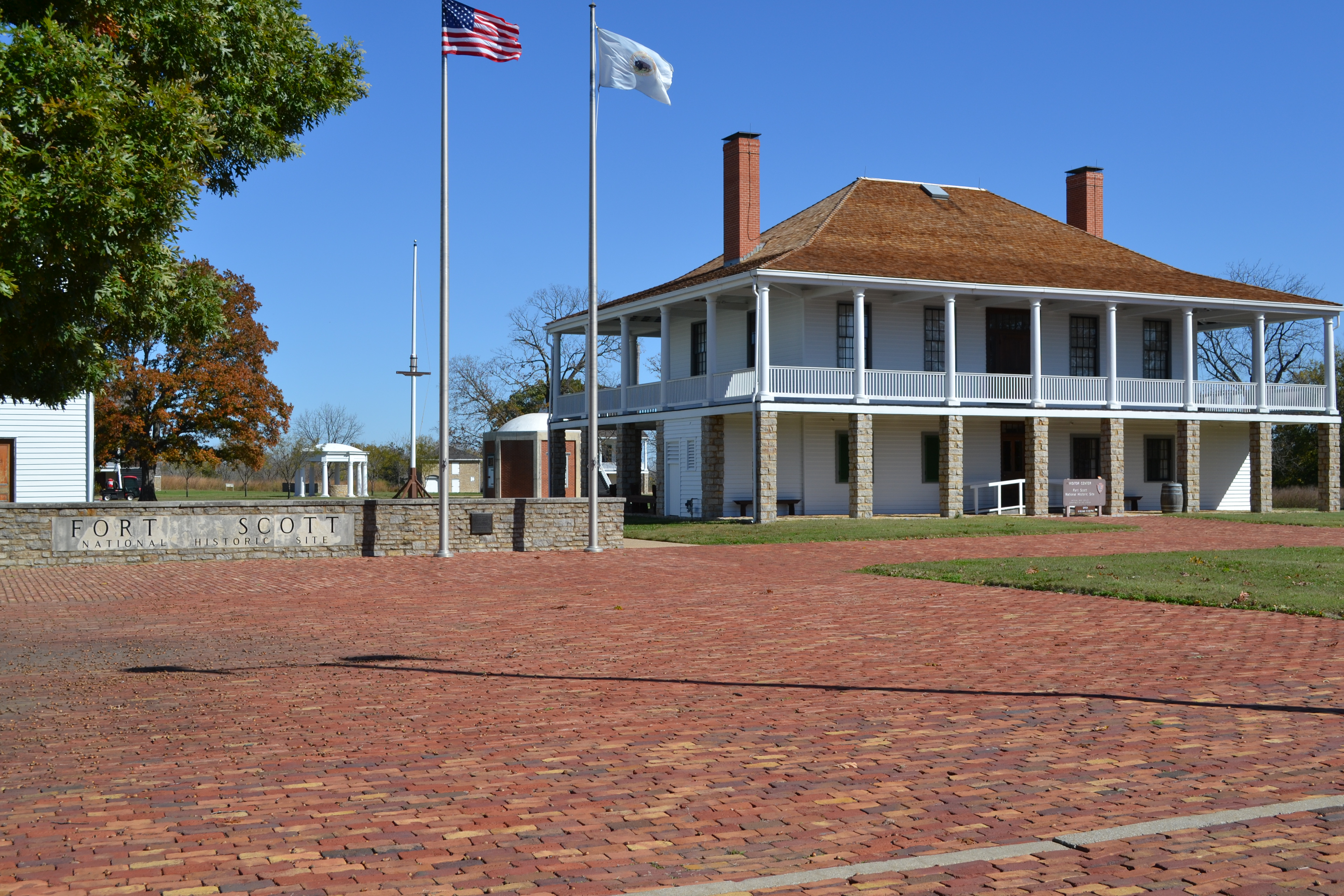
Fort Scott, Kan. – Saturday, June 13, 2026, at 3:30 p.m., Fort Scott National Historic Site, American Legion Post 25, and Fort Scott Fire Department will be hosting an official US Flag Disposal Ceremony. Bring your: United States, POW/MIA, State, and Service (U.S. Army, U.S. Marine Corps, U.S. Navy, U.S. Air Force, U.S. Coast Guard) flags to the fort between now and 3:30 p.m. Saturday and we will properly and respectfully dispose of them. Just as there’s etiquette for displaying Old Glory, there’s also etiquette for disposing of flags in a dignified manner.

4 U.S. Code § 8k (Respect for flag) states that: The flag, when it is in such condition that it is no longer a fitting emblem for display, should be destroyed in a dignified way, preferably by burning. “As with celebrating this country’s newest citizens at our Naturalization Ceremony and honoring those who have made the ultimate sacrifice for our freedom through the ‘Field of Honor’ during Symbols of Sacrifice, we are proud to be a part in honoring this country’s flag by hosting this ceremony,” said Jill Jaworski, Superintendent, Fort Scott National Historic Site.

Fort Scott National Historic Site, a unit of the National Park Service, is open Friday through Tuesday from 8:30 a.m. to 4:30 p.m. Park grounds are open daily from one-half hour before sunrise to one-half hour after sunset. For more information or to learn how to get involved, call 620-223-0310 or visit www.nps.gov/fosc.

###

Credit Photo as: NPS Photo

Submitted by

Carl Brenner
Program Manager for Interpretation and Resource Management
Fort Scott National Historic Site (www.nps.gov/fosc)

National Park Service, DOI Region 5

Office – 620-223-0310

www.facebook.com/FortScottNPS

www.instagram.com/FortScottNPS

Bourbon County Sheriff’s Office Daily Reports June 9

Bourbon County Sheriff’s Office
Daily Reports — June 9, 2026

Arrests — June 8–9, 2026

SAWYER, EMILY A (Age 41) — Arrested by Fort Scott Police Department on 6/8/2026 at 9:04 PM.
Charge: Criminal Threat; Unknown Circumstance — No Bond ($0.00)

LITCHFIELD, LESLIE LEE (Age 62) — Arrested by Fort Scott Police Department on 6/8/2026 at 11:13 PM.
Charge: Warrant – Fort Scott Municipal (Warrant No. E0012596) — Cash Bond $150.00

Released — June 8–9, 2026

GIER, CHRISTIAN LEE — Booked 05/25/2026. Released 6/8/26 at 11:17 AM. Release Type: Time Served.

MATTHEWS, EVAN ANDREA — Booked 06/07/2026. Released 6/8/26 at 3:30 PM. Release Type: Surety Bond (A+ Bail Bonds).

STATEN, MADISON JANE — Booked 05/07/2026. Released 6/8/26 at 3:30 PM. Release Type: Time Served.

Total Inmates Released: 3

Documents:

Obituary of Mark Leon Christy

Mark Leon Christy, who was born on February 18, 1962, in Fort Scott, Kansas, and passed away on June 5, 2026, in Joplin, Missouri, will be remembered with deep love and lasting respect by all who knew him. He carried himself with quiet strength and a thoughtful spirit, and he touched the lives of family, friends, and coworkers through his steady presence and kind heart. Those who knew him best will remember his warm sense of humor, his practical wisdom, and the genuine care he showed in everyday moments.

Mark was a graduate of Pittsburg State University, where he earned a Bachelor of Science degree in history and psychology. He valued learning, thoughtful conversation, and understanding the world around him, and he brought those qualities into both his personal and professional life.

He devoted almost 40 years of service to Ward/Kraft, where he built a long and respected career. His dedication, reliability, and strong work ethic earned the admiration of his colleagues and the trust of those who worked beside him. He was known as someone who could be counted on, and his years with the company stand as a testament to his loyalty and commitment.

Outside of work, Mark found joy in simple and meaningful pursuits. He enjoyed fishing, where he could appreciate the quiet outdoors and the patience the sport required. He also loved cooking, and he took pleasure in preparing meals and sharing them with others. These interests reflected his appreciation for both solitude and connection, as well as his ability to find happiness in life’s ordinary but treasured moments.

Mark is survived by his wife, Angela, and daughter, Anastasia. He is also survived by daughter Allie Bloomquist and husband, Darin, and by his grandchildren, Brady and Isla Bloomquist, who brought him great pride and joy. He leaves behind his parents, Gene and June Christy, his sister, Gina Christy, and his sister, Samantha Christy-Dangermond and husband Tom. In addition, Mark is survived by his nephews, Colby Sisson and wife Rachel, Wil Sisson and wife Kristen, and Gerrit Dangermond, nieces MacKenzy Neal and husband Taylor, and Margot Dangermond, great-nephews Wyatt and Wade Sisson, Colter Neal, and great-nieces Estella and Maddie Sisson, and Quinlee Neal. His family was central to his life, and he cherished the bonds they shared. He will be deeply missed by all who were fortunate enough to know and love him.

His life was one of quiet accomplishment, devotion to family, and enduring integrity. He leaves behind a legacy of love, intelligence, and hard work that will continue to be remembered by those closest to him. Though his passing leaves a profound sadness, his memory will remain a source of comfort and strength to his family and friends in the days ahead.

Mark Leon Christy will be remembered with gratitude for the life he lived and the example he set. His presence enriched the lives of others, and his memory will be held close with affection and respect.

There was cremation. Pastor Tom Lewis will conduct memorial services at 10:30 AM Friday, June 12th, at the Cheney Witt Chapel. Interment will follow in the Marmaton Cemetery, Redfield, KS. The family will receive friends from 5:00 until 7:00 PM Thursday, June 11th, at the funeral home. Memorials are suggested to the Hammond Community Building Fund and may be left in care of the Cheney Witt Chapel, PO Box 347, 201 S. Main St., Fort Scott, KS 66701. Words of remembrance may be submitted online at cheneywitt.com.

City of Fort Scott Celebrates Independence Day on June 27 with Family Fun and Fireworks at Dusk

Submitted graphic.

The Fourth of July is coming early this year in Fort Scott.

On June 27, the City of Fort Scott is hosting its annual community event.

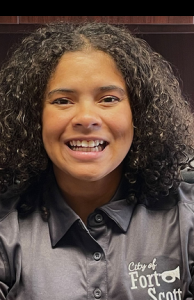
“We wanted to avoid family activities/traditions on the Fourth of July,” said Rachel Carpenter, Fort Scott’s Director of Community Development. “There will not be anything happening from the city on the 4th.”

Rachel Carpenter from the City of Fort Scott Employee Directory.

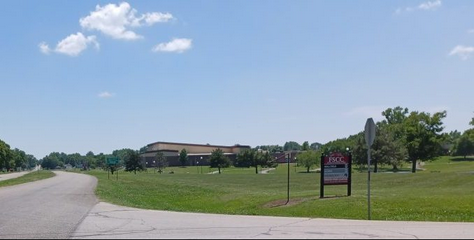
The City of Fort Scott and community partners do invite residents and visitors to celebrate Independence Day at the annual Fort Scott Independence Day Celebration on Saturday, June 27, 2026, at Fort Scott Community College, Carpenter said.

“The family-friendly event will feature an afternoon and evening filled with food, live music, competitions, games, and fireworks, offering something for all ages.”

The churches near Fort Scott Community College are opening their parking lots for the afternoon activities,  and there is  ADA parking near the cosmetology department on the south central side of the campus.

June 27 city-sponsored activities begin at 3:00 p.m. and include:

  • Golf cart obstacle course and decoration contest
  • Slip N Slide Kickball Tournament
  • Water Wars featuring water inflatables and splash-filled fun
  • A variety of food trucks offering food and refreshments

Participants are needed for the above activities and the BBQ contest, according to the City of Fort Scott’s monthly newsletter.

Participants can register through the event QR codes available on promotional materials in this publication.

The People’s Choice judging for the Butcher Block BBQ Contest will begin at 5:00 p.m., allowing attendees to help crown the community’s favorite pitmaster.

Live entertainment will be provided throughout the evening with free concerts featuring:

  • Riker at 5:00 p.m.
  • The Flatland Band at 7:00 p.m.

Attendees are encouraged to bring lawn chairs and enjoy an evening of great music, food, and community fellowship before the fireworks display.

“This celebration is a great opportunity for families, friends, and neighbors to come together and celebrate our nation’s independence while enjoying everything that makes Fort Scott a special place to live and visit,” organizers said

Residents and visitors are encouraged to wear their red, white, and blue and join in a day of community pride, family fun, and patriotic celebration, according to Carpenter.

For additional event information, follow City of Fort Scott announcements and event updates on social media.

The annual city-sponsored fireworks display will start at 9:30 p.m., Carpenter said. Cars can line up on South Horton Street as in prior years to view the show.

The show will be launched at the Fort Scott Community College campus, at 1801 S. Horton, with lead pyrotechnician Shaunn Pytlowany and his crew from Premier Pyrotechnics handling the setup and shooting.

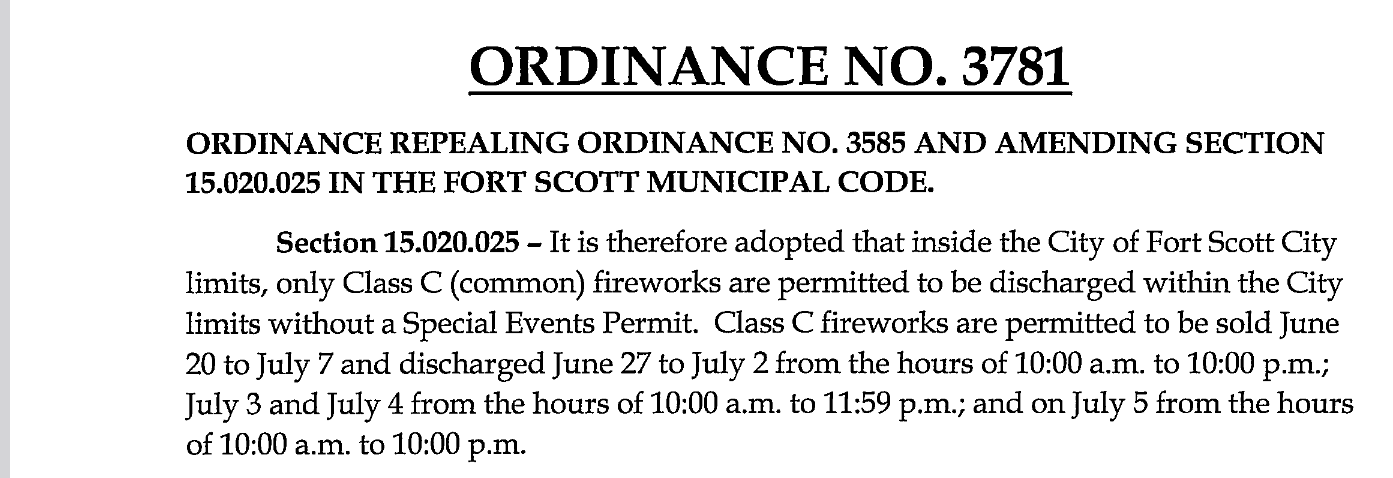
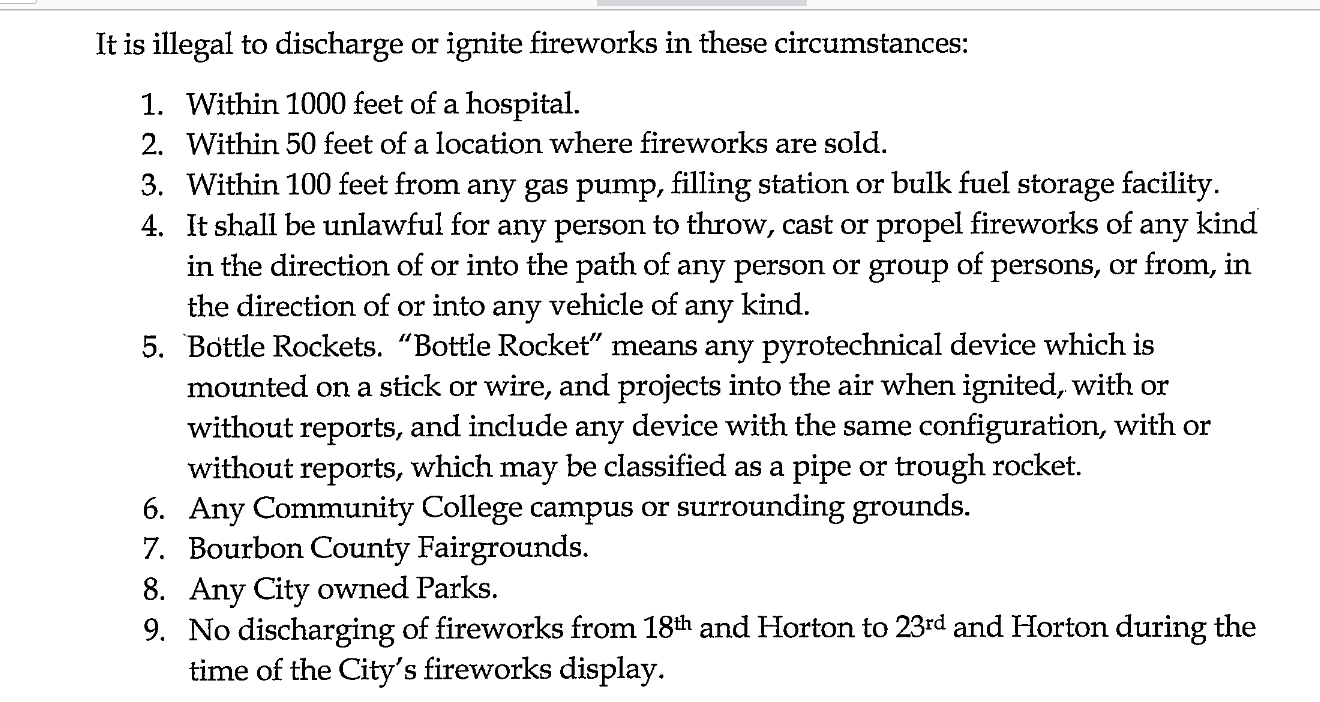
Fire works 2026 Rules

Between 18th and 23rd Streets on Horton Street,  cars will be lined up on June 27 for the fireworks display launch at Fort Scott Community College.

From The City of Fort Scott ordinances:


From the Bleachers by Dr. Jack Welch

It’s Not Experience, It’s the Person

One of the most common debates in leadership revolves around hiring and promotion decisions. Should an organization select the individual with years of experience, or invest in someone with less experience but tremendous potential? After more than four decades in coaching, education, and administration, I have come to a simple conclusion: it is not experience that determines success. It is the person.

Experience certainly has value. Individuals who have spent years in a profession have faced challenges, learned lessons, and developed wisdom that can benefit an organization. However, experience alone does not guarantee success. I have seen highly experienced leaders struggle because they became resistant to change, stopped learning, or relied too heavily on what worked in the past.

On the other hand, I have watched organizations hire young leaders with limited experience who accomplished remarkable things. They brought energy, vision, work ethic, and a willingness to learn. Some built championship programs and transformed organizations. Others struggled because they lacked the personal qualities necessary to lead effectively.

What I have learned is that experience and age are not the same thing. There are individuals in their retirement years who step into leadership opportunities and thrive because they possess humility, character, and a desire to continue growing. There are others with the same amount of life experience who struggle. Likewise, some young professionals excel beyond expectations while others do not.

The determining factor is rarely age or experience. It is the person. Do they have integrity? Are they willing to work hard? Can they build relationships? Are they teachable? Can they adapt when circumstances change? Do they place the mission and people they serve above their own interests?

Scripture reinforces this principle. When the prophet Samuel was sent to anoint a new king, he assumed God would choose one of Jesse’s older, stronger, and more experienced sons. Instead, God selected David, a young shepherd boy. The Lord reminded Samuel, “People look at the outward appearance, but the Lord looks at the heart” (1 Samuel 16:7).

Jesus followed the same pattern. He did not choose the most educated religious leaders of His day. He chose fishermen, tax collectors, and ordinary men. What made them extraordinary was not their credentials; it was their willingness to follow Him and allow God to work through them.

Too often, organizations become fixated on years of experience while overlooking the qualities that truly drive success. Experience, training, and mentorship can help, but none can replace character, passion, commitment, and a servant’s heart.

When making leadership decisions, look beyond age and experience. Find the right person. If you find the right person, they will often find a way to succeed regardless of how much experience they have or do not have.

Thought for the Week, “Experience can teach you many things, but character determines what you do with what you’ve learned.” Jack Welch.

Dr. Jack Welch serves as President of Fort Scott Community College. With a career spanning professional sports, public education, and rural community development, he brings a servant-leader mindset and a passion for building trust-driven cultures that empower people to thrive in the classroom, on the field, and in life. He is also the author of Foundations of Coaching: The Total Coaching Manual.