Kansas Supersonic Flight Corridor Agreement

Governor Laura Kelly Announces Kansas, FAA Sign Deal for Supersonic Flight Corridor

~Testing area for supersonic flight brings fresh innovation to Kansas~

TOPEKA – Governor Laura Kelly and Kansas Department of Transportation Secretary Julie Lorenz announced today that KDOT and the Federal Aviation Administration (FAA) have finalized an agreement to establish the Kansas Supersonic Transportation Corridor (SSTC) for use in testing non-military aircraft that fly faster than the speed of sound (“mach” speed).

“To be able to deliver this new opportunity for our country is yet another example of Kansas cementing its reputation as a national leader in the aviation industry,” Governor Kelly said. “This high-altitude flight corridor gives Kansas a strategic advantage in attracting companies involved in the development of supersonic aircraft, and will play a significant role in our state’s ability to encourage economic development as we recover from the COVID-19 pandemic.”

KDOT Secretary Lorenz, who chairs the Aviation Committee for AASHTO (American Association of State Highway and Transportation Officials), commended the collaborative efforts resulting in Kansas securing the SSTC. She acknowledged Kansas Senator Jerry Moran’s involvement in the process in coordination with the FAA, NASA, the Air Route Traffic Control Center and the National Institute of Aviation Research at Wichita State University.

Senator Moran said industry forecasts show a market for as many as 300 sophisticated supersonic aircraft over a 10-year period, representing as much as $40 billion in revenue and requiring a “deep bench of skilled manufacturing talent.”

“This year marks 73 years since Chuck Yeager broke the sound barrier, and with this supersonic flight corridor Kansas will have a unique role in the next generation of supersonic transportation,” Senator Moran said.

The Kansas SSTC is a 770-nautical-mile racetrack-shaped corridor at or above an altitude of 39,000 feet. The FAA’s Kansas City Air Route Traffic Control Center assessed this route to protect the safety and efficiency of the National Airspace system. This corridor is entirely in federal airspace above Kansas, running the length of the state, just north of the Kansas-Oklahoma border. The route will support sustained flight up to Mach 3 and is within reach of numerous airports equipped to provide fuel, ground and technical support.

Bob Brock, KDOT Director of Aviation, said the SSTC gives innovators like Boeing, Lockheed Martin, Aerion, Spike and Boom Aerospace the airspace necessary to test aircraft designs that reduce the impact of sound on nearby communities. Brock said the Kansas supersonic corridor also offers logistical advantages by being the first and only such commercial supersonic flight test route in the nation’s interior.

Lowering the boom

“I’m really excited about quiet supersonic technology and its ability to be transformative for flight and our economy,” said Jim Bridenstine, Administrator of NASA.

Bridenstine said NASA is working with industry to build supersonic aircraft with “low-boom” or “no boom” flight characteristics.

To provide safety margins for these operations, the KDOT Division of Aviation, FAA Central Region, Air Route Traffic Control Center and Lemasters Group Consulting wrote new procedures for operators. Aircraft will only enter the SSTC at specific points and will be required to clear flight routes prior to takeoff. The SSTC is located in generally low-volume airspace, which will minimize any effect on existing flight routes and airports.

KDOT has partnered with Wichita State University’s National Institute of Aviation Research (NIAR) to collect noise data and live telemetry from the aircraft that will be used by both the FAA and aircraft manufacturers to evaluate performance.

“We help manufacturers refine aircraft designs every day and flight tests are one of our core strengths,” said Dr. John Tomblin, WSU Senior Vice President for Industry and Defense Programs and NIAR Executive Director. “This partnership with KDOT provides a sophisticated and cost-effective flight test capability within reach of every major aircraft manufacturer in the country.”

The FAA recently proposed a new rule that modernizes the procedure for requesting special flight authorizations to operate at supersonic speeds over the United States. Kansas state officials are hopeful data from the Kansas corridor will help policymakers and the FAA make informed rulings on issues that will drive the future of the aviation industry.

Kansas has consistently served in a leadership role for the aviation industry. Research efforts such as these may shape the future of air travel in ways that both reduce impact on the environment and facilitate global travel in a far more efficient and affordable manner.
View a visual representation of the SSTC here.

Health Dept. Reducing Active COVID-19 Case Count During the Holidays

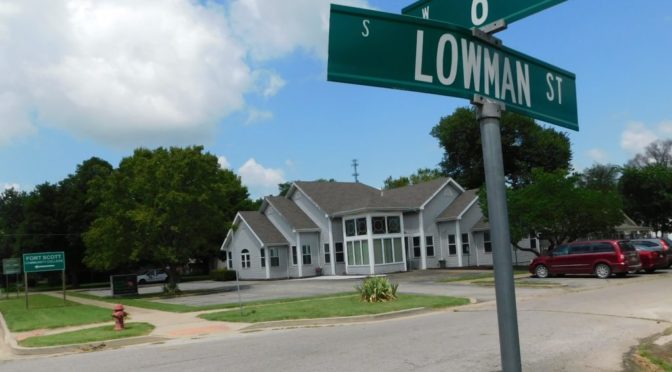
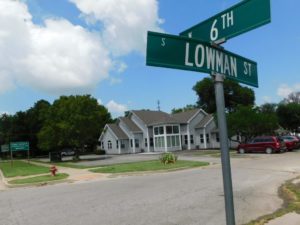
The Southeast Kansas Multi-County Health Department is located between 6th and Lowman Streets and 6th and Horton Streets.

The SEK Multi-County Health Department will only be reporting our COVID-19 active case count once per week on Wednesdays starting next week (12/23) and going through January 6th, to allow our staff to take time with their families during the holidays. We will resume reporting our active case counts Monday-Thursday starting on January 11th.


We will still have staff working on disease investigations and contact tracing during this time when new COVID-19 positive lab results are sent to us, but will not be working with a full crew during the next few weeks.


We appreciate our resident’s patience with their county health department during these trying times and hope you understand the needed time off.


We would like to remind residents to stay home when possible, wear a mask over your mouth AND nose, avoid crowds-stay 6 foot away from others and wash your hands often!


If you are sick, stay home.

If you are experiencing COVID-19 symptoms, we recommend you get tested. While waiting for test results, please isolate yourself in your home and have your household members self-quarantine.

If you test positive, continue to isolate for 10 days from symptom onset. You must be symptom/fever free for 72 hours prior to release from isolation.

Tell your household members to self-quarantine-they should be released back to normal activities 10 days after you are released, as long as they are and have remained symptom/fever free and have not tested positive.

Tell your other close contacts (friends, family, co-workers, etc.) to self-quarantine for 10 days from last day of exposure-they may be released after 10 days as long as they are and have remained symptom/fever free and have not tested positive.

Please also notify your employer of your positive test and your child’s school if your child tests positive or is a close contact of a positive COVID-19 case.

Thank you for all of your continued support. We wish everyone a Merry Christmas and a safe, happy and healthy New Year.

Heartland Electric Adds Solar Project

The Heartland Rural Electric Cooperative Service area is in the white. From its’ website, https://www.heartland-rec.com/content/service-area.  It serves the western half of  Bourbon County.

Heartland Rural Electric Cooperative is adding solar power to its business.


“All of Heartland’s consumer-members will benefit from the two solar arrays that we are building,” Ron Graber, Heartland’s Director of Member Service andCommunication said.


The electric cooperative is joining with 11 other Kansas rural electric cooperatives to invest in 20 Megawatts of solar power to be built across the state, and power 80,000 homes across rural Kansas, according to a press release from Heartland.


“Even though the solar arrays will directly feed only two of our 17 substations, the arrays will provide affordable power that helps us keep power costs low for everyone,” Graber said.  “In addition, the arrays are being designed to produce power during peak hours late in the day. That peak usage plays a big part in the price the co-op pays for power. So lowering that peak use will help us manage overall power costs for everyone.”


The solar panels will reduce the business’s amount of greenhouse gases and specifically carbon dioxide emitted.


“Because solar power is renewable and carbon-free, building these two arrays helps us reduce our carbon footprint, and that helps everyone,” Graber said.


Heartland’s portion of the project consists of two solar arrays of 1 Megawatt each, according to the press release. Preliminary work has already begun on the two tracts of land purchased by Heartland for the project. Groundbreaking was held on Tuesday, December 8. Construction should be completed by June of 2021.


One Heartland 1-MW array will be located in Crawford County, just west of Girard near Greenbush along Highway 47, according to the press release. The second Heartland 1-MW solar array will be built in Neosho County between Erie and Chanute along 160th Road (Shaw Road.)


The two Heartland solar arrays, and the 18 other arrays in Kansas, will all be built and owned by Today’s Power Inc, a North Little Rock-based company established by rural electric cooperatives in Arkansas, according to the press release. Today’s Power Inc. has successfully installed more than 25 solar projects totaling more than 40 Megawatts over the last five years in Arkansas, Oklahoma and Tennessee. Heartland has signed a purchased-power-agreement with Today’s Power Inc. to buy the solar energy produced by the two arrays for the next 25 years.


This opportunity began when the wholesale power contract between all participating cooperatives and their forward-thinking generation and transmission cooperative, Kansas Electric Power Cooperative, was recently modified to provide Kansas electric cooperatives with the ability to self-procure up to 15 percent of peak demand – with 5 percent of that amount specifically allowing for the addition of solar, according to the press release.


By joining together in the Kansas Cooperative Sun Power Program, all of the participating Kansas rural electric cooperatives were able to negotiate very competitive long-term pricing, according to the press release.  In addition, the solar arrays will be customized in the design process to maximize output during the cooperative’s peak demand hours, when power is most expensive. These factors will all help Heartland control power costs and keep power affordable for those served at the cooperative’s 11,200 service locations.


Heartland currently has more than 60 members with almost 700KW of solar panels installed on their own property, according to the press release.


Heartland Rural Electric Cooperative provides power to more than 11,000 locations in Southeast and Central Eastern Kansas, according to the press release. Heartland’s service area includes consumer-members in 12 counties, including Allen, Anderson, Bourbon, Cherokee, Coffey, Crawford, Labette, Linn, Miami, Neosho, Wilson, and Woodson counties. Heartland REC traces its roots back to three original rural electric cooperatives, Cooperative Electric Power & Light Company, Sugar Valley Electric Cooperative Association, (which came together to form United Electric Cooperative in 1975) and Sekan Electric Cooperative Association (which combined to become Heartland in 1996.)


Obituary of Marjorie Stringer

Marjorie Dee Stringer, 85, of Fort Scott passed away Tuesday, December 15, 2020, at the Presbyterian Village. She was born August 17, 1935, in Chanute, Kansas, the daughter of Joel Emmett and Irma Joy (Woodell) VanMeter. She married Wayne Stringer December 30, 1954, in Thayer, Kansas. He preceded her in death September 15, 2013.

Marjorie was a secretary and treasurer for Fort Scott High School for many years. She was a member of the First Southern Baptist Church, and she was also a member of the Iza Stompers and the City Hand Bell Choir. Marjorie was active in Starlight FCE, the Camping Club, and the Garden Club.

Marjorie is survived by her children, James Wesley Stringer of Rogers, Arkansas, Rhonda Sue Allen and husband Jim of Fort Scott, and Randall Wayne Stringer and wife Valerie of Bartlesville, Oklahoma; a brother, Dale VanMeter and wife Iris, of Post Falls, Idaho, Phyllis Johnson and husband Howard, of Bartlesville, Oklahoma; sister-in-law Maude Burns of Iola, Kansas; seven grandchildren, Chris Stringer and wife AnnDee, Elizabeth Kinnaman and husband Ryan, Jennifer Barngrover and husband Dan, Matthew Stringer and wife Kelly, Hilary Randolph and husband Preston, Scott Allen, and Marliss Allen; a step-granddaughter, Stephanie Sherrick; nine great-grandchildren, and two step-great-grandchildren.

In addition to her husband Wayne, she was also preceded in death by her parents, twin sister Marian Carson, another sister Shirley Powers, a brother Wayne VanMeter, and daughter-in-law Cynthia Stringer.

Rev. Ken Ansell will conduct private family funeral services Monday December 21, 2020, at the Konantz-Cheney Funeral Home with burial following at the Fort Scott National Cemetery. The family will receive friends Sunday evening from 4:00 until 6:00 p.m. at the funeral home. Memorial contributions may be made to the Good Samaritan Fund at Presbyterian Village or Gideons and may be left in the care of the Konantz-Cheney Funeral Home, 15 W. Wall Street, P.O. Box 309, Fort Scott, Kansas, 66701. Condolences may be submitted to the online guestbook at konantz-cheney.com.

Obituary of Margaret Lewis

Margaret Ann Lewis

Margaret Ann Lewis, age 73, resident of Ft. Scott, KS, died Wednesday, December 16, 2020, at Via Christi Hospital in Pittsburg, KS.

She was born September 3, 1947, in Ft. Scott, the daughter of John Byron “Jack” Hagood and Christina Gertrude Peters Hagood.

She graduated from FSHS. Margaret married Timmy Lewis on September 15, 1973, in Mapleton, KS. He preceded her in death on April 16, 2008.

Margaret worked much of her 30-year career in home health as a CNA for Community Care Connection. She formed many lasting relationships with the individuals she cared for.

She enjoyed playing mobile games and spending time with her family. She was a regular at Pete’s on Wall St., drinking coffee and visiting with friends early each weekday. She would go to Max’s on the weekend mornings and NuGrille daily for dinner.

She loved dogs and would always reference her son’s dogs by asking “how’s my babies doing?”

Survivors include her son, John Cauthon and wife Beth, Ft. Scott; two brothers, John Hagood and wife Barbara, Medicine Lodge, KS, and Mike Hagood, Ft. Scott; and several nieces, nephews, and in-laws. Besides her husband Timmy, she was preceded in death by both parents.

Rev. Dr. Jared Witt will conduct services will at 9:00 AM Monday, December 21st, at the Cheney Witt Chapel.

Private family burial will follow in the U. S. National Cemetery. The family will receive friends from 5:00 until 7:00 PM Sunday evening at the Cheney Witt Chapel.

Memorials are suggested to the Margaret Lewis Memorial Fund and may be left in care of the Cheney Witt Chapel, PO Box 347, 201 S. Main St., Ft. Scott, KS 66701. Words of remembrance may be submitted to the online guestbook at cheneywitt.com.

Fictional tale inspired by Southeast Kansas fried chicken 


Submitted by the Crawford County Convention & Visitors Bureau (Pittsburg, Kansas)

An author with ties to Southeast Kansas just had her debut novel named Reese Witherspoon’s Book Club pick for the month of December. KJ Dell’Antonia’s fictional tale “The Chicken Sisters” was inspired by the fried chicken houses in the towns where her parents grew up.

Less than two hours south of Kansas City, and several miles away from the closest town, yet less than 600 feet apart, are Chicken Annie’s and Chicken Mary’s. Dell’Antonia’s parents are from the area, and frequently took her dining at Chicken Annie’s. Unaware of the real story of these and the other four chicken houses in the county, Dell’Antonia made up her own story.

“I always wondered why were there two chicken restaurants that were clearly completely unrelated, but obviously completely related because one is ‘Chicken Annie’s’ and one is ‘Chicken Mary’s’”, Dell’Antonia told her Facebook followers in a video posted December 2, 2020 (@KJDellAntoniaAuthor). “It stuck in my head for ages and I really wanted to find a story that I could ‘put around’ that idea of two fried chicken restaurants. Maybe because I love fried chicken. Possibly because I love Kansas. I don’t know. It just stuck with me.”

“I created Chicken Mimi’s and Chicken Frannie’s which are absolutely not Chicken Mary’s and Chicken Annie’s,” Dell’Antonia said in her video. “After I got started on the book my mom said ‘do you want me to tell you the real story of Chicken Annie’s and Chicken Mary’s?’ and I was like ‘No! No, please don’t do that! That would ruin everything.’ So, she totally didn’t and I still don’t know them. I will find out eventually, someday.”

“When we learned about Dell’Antonia’s book, we were stunned,” said Chris Wilson, Communications Manager with the Crawford County Convention & Visitors Bureau. “Here is someone who clearly loves the area and was so intrigued by all of the number of fried chicken houses in such a small area that she was inspired to make up her own story about it.”

The real story of the Crawford County fried chicken houses has attracted The New Yorker, the Travel Channel’s “Food Wars”, and BBC Travel, among others.

“A hundred years ago our population was fifty-percent more than it is now due to the need for workers in the old coal mines,” Wilson said. “There were camps scattered along the coalfields through both Crawford County and Cherokee County. Some of these camps grew enough to become towns, and an old street line connected many of these.”

“You have to remember, these mines opened just after the Civil War, and operated during the eras of Prohibition, the Dust Bowl, the Great Depression, and two World Wars. Many were unemployed or earning very little.”

Camp 13, also known as Yale, never grew much population-wise. But its location was a short walk from several active mines. After her husband was injured in a mining accident, Ann Pichler began selling sandwiches in 1934 out of their home there. A year later, she began selling pan-fried chicken and eventually became known as “Chicken Annie.” Just down the road, in 1945, Mary Zerngast first served customers from her kitchen table after her husband’s ill health forced him to quit working in the mines.

“These chicken dinners provided more than just an affordable and delicious meal,” Wilson said. “They provided a chance to socialize and a comforting escape from real hardship. They also created jobs, and not just at their own restaurants. As they grew, they used local bakeries. All six chicken houses still use Frontenac Bakery.”

“They also inspired hope. Thousands of those who came to work the mines were immigrants escaping war-torn Europe. Annie’s family immigrated to the U.S. from Hungary when she was five. Mary’s husband was an immigrant from Germany. And, of course, today, for a lot of us, it’s nostalgic going out to these beloved restaurants. It’s a time to remember lost loved ones in a good way.”

While Chicken Annie’s and Chicken Mary’s started the fried chicken craze in Southeast Kansas, they were followed by others. Still open today are Gebhardt’s Chicken Dinners, which opened in 1946 a little more than a mile to the northeast; Barto’s Idle Hour opened in Frontenac in 1951; Pichler’s Chicken Annie’s opened south of Pittsburg in 1970; and, Chicken Annie’s Girard opened in 1971. All are still owned by local families.

Pichler and Zerngast were not related, but their families were connected when Pichler’s grandson married Zerngast’s granddaughter – the owners of Pichler’s Chicken Annie’s.

“It’s kind of amusing that that is a plotline Dell’Antonia uses,” Wilson said.

“This is the story of two sisters,” Dell’Antonia continued in her video. “They were both raised by a mom who runs one fried chicken restaurant that she inherited in this small town in Kansas, and it’s a small town I totally made up – Merinac. It is not Pittsburg or Frontenac although you can see their names in that a little bit.”

“(Sisters) Mae and Amanda are raised by Barbara, and when they get older Amanda marries the son of the rival fried chicken restaurant, while Mae gets the heck out of Dodge, because that’s all she ever wanted to do, was just get out of the small town and never see it again.”

Having married into the other family, since her wedding day, Amanda had not been allowed into her mother’s home or fried chicken restaurant. Despite this, Amanda goes to see her mother because a reality TV competition wants to do a story on the restaurant’s rivalry – “Food Wars”.

“I grew up as a kid traveling to Frontenac, we would drive, or we would fly into Joplin, and we would go for every holiday and every summer,” Dell’Antonia said. “We would eat at Chicken Annie’s, because we didn’t eat at Chicken Mary’s. I can’t tell you why. I do not know why. I have eaten once at Chicken Mary’s – I think that’s like a super-duper secret – I don’t think I’m supposed to eat at Chicken Mary’s.”

“While I’m not old enough to remember the real rivalry of all these chicken houses, I think it’s safe to say that most customers today bounce between each of these restaurants,” Wilson said. “Some prefer chicken from one location, but spaghetti or chicken noodles from another. If you want to get locals really worked up, don’t ask them about the chicken – ask them about the best coleslaw or potato salad.”

To visit or learn more about the Crawford County, Kansas chicken houses, go to VisitCrawfordCounty.com/friedchicken

To learn more about KJ Dell’Antonia’s book, go to your favorite bookstore and ask for “The Chicken Sisters”.

KS Vaccine Distribution Framework Announced

Governor Laura Kelly Announces Expected COVID-19 Vaccine Distribution Framework to Prioritize Health Care Workers, Long Term Care Facilities

TOPEKA – Governor Laura Kelly today announced when the COVID-19 vaccine is expected to become available for population groups across the state. The framework begins this winter with high-risk Kansans such as health care personnel and long term care facility staff and residents, eventually reaching the general public in the summer of 2021.

“Through this framework, my administration upholds our commitment to maximizing benefits, minimizing harm, and striving for equity, justice, and fairness when it comes to when the vaccine will be made available to which Kansans,” Governor Kelly said. “We are committed to protecting the greatest number of Kansans, fostering economic recovery, and getting our kids back into school buildings as quickly and safely as possible.”

An outline of the expected availability is as follows:

  • The COVID-19 vaccine will be available in the winter, on a very limited basis, for health care personnel, long term care facility staff, long term care residents, and EMS/frontline public health workers;
  • The vaccine will become available in late winter, on a limited basis, for first responders, some public facing workers in essential and critical infrastructure, teachers, school staff, child care workers, and individuals at high risk for adverse health consequences;
  • The vaccine will become available in the spring, at an increased availability, for all other adults;
  • And finally, the vaccine will become generally available in the summer for all Kansans, including children.

Adherence to this expected framework will be dependent on receipt of COVID-19 vaccine doses from the companies distributing them.

View a visual representation of the distribution order here.

UNIONTOWN HS BASKETBALL RESULTS GAME 4 vs Yates Center

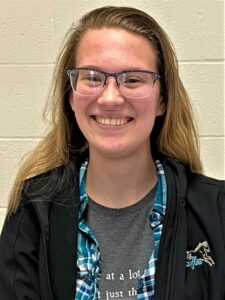
Adelay Martin. Submitted photo.

Tuesday was a successful night for the Uniontown Eagles. Both Varsity teams, as well as the girls’ JV, were victorious against the Yates Center Wildcats.

The Varsity Lady Eagles won their match against the Wildcats 57-25. Karleigh Schoenberger scored 21 points and had 4 boards. Danielle Howard followed with 14 points, 3 rebounds, 5 assists, and 8 steals. Laney Covey, Gwenyth Fry, Sammie Hampton, and Kaydra Woods each scored 4 points, and Fry had 5 rebounds. The JV girls won 37-24, with Rylee Coulter leading the team with 14 points.

“Proud of the effort, attitude, and toughness that was displayed by the team tonight. Both the Varsity and Junior Varsity took care of business!” says Coach Miller. “We will get back to work tomorrow on those fundamental skills that make the game of basketball fun to play.”

The Varsity boys won their game 63-45. Jake Harvey scored 32 points and had 8 boards and 3 assists. Clay Sutterby followed with 20 points and 6 rebounds. Luke Perry also had 6 rebounds, as well as 4 assists. Drew Perry had 4 assists and 4 steals.

“The boys put together a complete game tonight. They got after it on the defensive end and played well together on offense. This was a great way to start league play,” said Coach Hays.

-Adelay Martin, UHS Sports Media Reporter

Bourbon County Local News