Kansas Lakes Blue-Green Algae Advisories
Public Health Advisories for Kansas Lakes Due to Blue-Green Algae
TOPEKA – The Kansas Department of Health and Environment (KDHE) and the Kansas Department of Wildlife and Parks (KDWP) has issued several public health advisories for Kansas lakes due to blue-green algae.
Active Advisories
Warning
Gathering Pond at Milford, Geary County
Milford Lake Zone C, Geary County
Harvey County East Lake, Harvey County
Altamont City Lake “Idle Hour” Main Lake, Labette County
Big Hill Lake, Labette County
Parsons Lake, Labette County (new)
Marion County Lake, Marion County (upgraded 7/22)
Melvern Outlet Pond, Osage County (upgraded 7/22)
Webster Reservoir, Rooks County
Jerry Ivey Pond, Saline County
Hargis Lake, Sumner County (new)
Big Eleven Lake, Wyandotte County
Watch
Brown State Fishing Lake, Brown County
Mission Lake Horton, Brown County
Milford Lake Zones A and B, Geary County
South Lake, Johnson County
Altamont City Lake “Idle Hour” North Lake, Labette County
Marion Reservoir, Marion County (downgraded 7/22)
Overbook City Lake, Osage County
Agra City Lake, Phillips County
Atwood Township Lake, Rawlins County
Advisories Lifted 7/22/21
Herington Reservoir (New City Lake), Dickinson County
Herington City Lake (Old Lake), Dickinson County
Geary State Fishing Lake, Geary County
Horsethief Reservoir, Hodgeman County
Linn Valley Lake, Linn County
River Pond below Tuttle Reservoir, Riley County
When a warning is issued, KDHE recommends the following precautions be taken:
- Lake water is not safe to drink for pets or livestock.
- Lake water, regardless of blue-green algae status, should never be consumed by humans.
- Water contact should be avoided.
- Fish may be eaten if they are rinsed with clean water and only the fillet portion is consumed, while all other parts are discarded.
- Do not allow pets to eat dried algae.
- If lake water contacts skin, wash with clean water as soon as possible.
- Avoid areas of visible algae accumulation.
A watch means that blue-green algae have been detected and a harmful algal bloom is present or likely to develop. People are encouraged to avoid areas of algae accumulation and keep pets and livestock away from the water.
During the watch status, KDHE recommends the following precautions be taken:
- Signage will be posted at all public access locations.
- Water may be unsafe for humans/animals.
- Avoid areas of algae accumulation and do not let people/pets eat dried algae or drink contaminated water.
- Swimming, wading, skiing and jet skiing are discouraged near visible blooms.
- Boating and fishing are safe. However, inhalation of the spray may affect some individuals. Avoid
direct contact with water, and wash with clean water after any contact.
- Clean fish well with potable water and eat fillet portion only.
KDHE investigates publicly-accessible bodies of water for blue-green algae when the agency receives reports of potential algae blooms in Kansas lakes. Based on credible field observation and sampling results, KDHE reports on potentially harmful conditions.
Signs of a possible bloom include if there is scum, a paint-like surface or the water is bright green, avoid contact and keep pets away. These are indications that a harmful bloom may be present. Pet owners should be aware that animals that swim in or drink water affected by a harmful algal bloom or eat dried algae along the shore may become seriously ill or die.
For information on blue-green algae and reporting potential harmful algal blooms, please visit www.kdheks.gov/algae-illness/index.htm.Public
Heirs Property Relending Program: Resolving Ownership/Succession Issues
Biden Administration to Invest $67 Million to Help Heirs Resolve Land Ownership and Succession Issues
MANHATTAN, KANSAS, July 29, 2021– The U.S. Department of Agriculture (USDA) is providing $67 million in competitive loans through the new Heirs’ Property Relending Program (HPRP), which aims to help agricultural producers and landowners resolve heirs’ land ownership and succession issues. Intermediary lenders — cooperatives, credit unions, and nonprofit organizations – can apply for loans up to $5 million at 1% interest once the Farm Service Agency (FSA) opens the two-month signup window in late August.
After FSA selects lenders, heirs can apply directly to those lenders for loans and assistance. Heirs’ property issues have long been a barrier for many producers and landowners to access USDA programs and services, and this relending program provides access to capital to help producers find a resolution to these issues.
“While those affected are in all geographic and cultural areas, many Black farmers and other groups who have experienced historic discrimination have inherited heirs’ property,” said Charles Pettijohn Acting State Executive Director for FSA in Kansas. “USDA is committed to revising policies to be more equitable and examining barriers faced by heirs’ property owners is part of that effort. This helps ensure that we protect the legacy of these family farms for generations to come.”
The Heirs’ Property Relending Program is another example of how USDA is working to rebuild trust with America’s farmers and ranchers. HPRP is a loan and will need to be repaid as directed by the 2018 Farm Bill.
The program’s benefits go far beyond its participants. It will also keep farmland in farming, protect family farm legacies and support economic viability.
Eligible Lenders
To be eligible, intermediary lenders must be certified as a community development financial institution and have experience and capability in making and servicing agricultural and commercial loans that are similar in nature.
If applications exceed the amount of available funds, those applicants with at least 10 years or more of experience with socially disadvantaged farmers that are located in states that have adopted a statute consisting of enactment or adoption of the Uniform Partition of Heirs Property Act (UPHPA) will receive first preference. A list of these states is available at farmers.gov/heirs/relending. A secondary preference tier is established for those that have applications from ultimate recipients already in process, or that have a history of successfully relending previous HPRP funds. When multiple applicants are in the same tier, or there are no applicants in tier 1 or 2, applications will be funded in order of the date the application was received.
Selected intermediary lenders will determine the rates, terms, and payment structure for loans to heirs. Interest rates will be the lowest rate sufficient for intermediaries to cover cost of operating and sustaining the loan.
Additional information for lenders, including how to apply for funding, can be found in the HPRP final rule (PDF, 387 KB). A webinar will be held Tuesday, August 3, 2021 regarding applying for funding. Interested re-lenders should register through the FSA Outreach and Education webpage.
Relending to Heirs
Heirs may use the loans to resolve title issues by financing the purchase or consolidation of property interests and financing costs associated with a succession plan. This may also include costs and fees associated with buying out fractional interests of other heirs in jointly-owned property to clear the title, as well as closing costs, appraisals, title searches, surveys, preparing documents, mediation, and legal services.
Heirs may not use loans for any land improvement, development purpose, acquisition or repair of buildings, acquisition of personal property, payment of operating costs, payment of finders’ fees, or similar costs.
Intermediary lenders will make loans to heirs who:
· Are individuals or legal entities with authority to incur the debt and to resolve ownership and succession of a farm owned by multiple owners;
· Are a family member or heir-at-law related by blood or marriage to the previous owner of the property;
· Agree to complete a succession plan.
More information on how heirs can borrow from lenders under HPRP will be available in the coming months.
More Information
Heirs’ property is a legal term that refers to family land inherited without a will or legal documentation of ownership. It has historically been challenging for heirs to benefit from USDA programs because of the belief that they cannot get a farm number without proof of ownership or control of land. However, FSA provides alternative options that allow an heir to obtain a farm number. In states that have adopted the UPHPA, producers may provide specific documents to receive a farm number. To learn more about heirs property, HPRP, or UPHPA, visit farmers.gov/heirs/relending.
USDA touches the lives of all Americans each day in so many positive ways. In the Biden-Harris Administration, USDA is transforming America’s food system with a greater focus on more resilient local and regional food production, fairer markets for all producers, ensuring access to safe, healthy and nutritious food in all communities, building new markets and streams of income for farmers and producers using climate smart food and forestry practices, making historic investments in infrastructure and clean energy capabilities in rural America, and committing to equity across the Department by removing systemic barriers and building a workforce more representative of America. To learn more, visit www.usda.gov.
#
USDA is an equal opportunity provider, employer and lender.
KDHE amends travel quarantine list
TOPEKA – The Kansas Department of Health and Environment (KDHE) has amended its travel quarantine list to include the countries of the Botswana, Cuba, Gibraltar, Isle of Man and Martinique. The countries of Argentina, Colombia, Kuwait, Mongolia, Namibia, Seychelles and Tunisia have been removed. These changes are effective today, July 29.
- Traveled on or after July 29 to Botswana, Cuba, Gibraltar, Isle of Man or Martinique.
- Traveled on or after July 15 to British Virgin Islands, Cyprus, Fiji, Jersey or The United Kingdom.
- Traveled between July 15 and July 29 to Tunisia.
- Traveled between July 1 – July 29 to Namibia.
- Traveled between June 17 – July 29 to Kuwait or Mongolia.
- Traveled between June 3 – July 29 to
- Traveled between May 6 – July 29 to Seychelles.
- Traveled between April 22 – July 29 to Argentina.
- Attendance at any out-of-state mass gatherings of 500 or more where individuals do not socially distance (6 feet) and wear a mask.
- Been on a cruise ship or river cruise on or after March 15, 2020.
The travel quarantine period is seven days with a negative test result or 10 days without testing, with release from quarantine on Day 8 and Day 11, respectively. Further information on quarantine periods can be found on KDHE’s website.
For those traveling internationally, the Centers for Disease Control and Prevention (CDC) is requiring testing within three days of flights into the U.S. For further information on this and other requirements, visit their website.
For those who are fully vaccinated (meaning it has been greater than two weeks since they completed their vaccinations) they are not required to quarantine regarding travel if they meet all of the following criteria:
- Are fully vaccinated (i.e., ≥2 weeks following receipt of the second dose in a 2- dose series, or ≥2 weeks following receipt of one dose of a single-dose vaccine).
- Have remained asymptomatic since the travel.
Persons who do not meet the above criteria should continue to follow current quarantine guidance for travel.
Additionally, people with previous COVID-19 disease are not required to quarantine following travel if they meet all of the following criteria:
- Have evidence of a previous infection supported by a positive PCR or antigen test
- Are within 6 months following infection. If an investigation was done documenting the date that symptoms resolved, or the date isolation measures were discontinued for asymptomatic patients, then the 6-month period can start from that end date. If those dates are not available, then the period will start from the date of the positive laboratory test. A serology or antibody test may not be substituted for a laboratory report of a viral diagnostic test.
- Have remained asymptomatic since the travel
Persons who do not meet all three of the above criteria should continue to follow current quarantine guidance for travel.
The travel quarantine list is determined using a formula to evaluate new cases over a two-week period, then adjusted for population size to provide a case rate per 100,000 population. This provides a number that can then be compared to the rate in Kansas. Locations with significantly higher rates — approximately 3x higher — are added to the list.
For more information on COVID-19, please visit the KDHE website at www.kdhe.ks.gov/coronavirus.
Rental, utility assistance available when eviction moratorium expires
|
Statewide program granting Kansas tenants, landlords $3 million per week
TOPEKA, Kan.— Kansas Housing Resources Corporation (KHRC), the state’s housing finance agency, has provided $21,670,326.79 in emergency rental and utility assistance to 4,054 Kansas households experiencing financial hardship as a result of the COVID pandemic. The funds, made available through the Kansas Emergency Rental Assistance (KERA)program, were allocated to the state through the federal Coronavirus Response and Relief Supplemental Appropriations Act of 2021.
The Centers for Disease Control and Prevention (CDC) previously issued a temporary nationwide halt in residential evictions to prevent the further spread of COVID-19. That moratorium is set to expire on July 31, 2021. Kansans who may be facing eviction due to financial hardship incurred as a result of the COVID pandemic are encouraged to apply for KERA assistance.
“It’s so gratifying to know our team is getting these funds out the door and into our communities where they are so desperately needed,” said Ryan Vincent, KHRC’s Executive Director. “We recognize that the need is vast, and we look forward to providing this crucial assistance to Kansas tenants, landlords, and service providers as the program continues.”
KERA funds helped Gary Evert and his wife Sheryl, a couple in their 70s, remain in their Olathe home. “To anyone else out there who has applied for KERA I would say, ‘Don’t get discouraged. We’re all nervous, but when a customer service representative can calm you down and give you a sense of hope, it’s quite comforting,’” Evert said.
The KERA program previously served Kansans across the state except Wichita residents, who were served by the city’s rental assistance program. Recognizing the importance of serving tenants and landlords in our state’s most populous city, Wichita residents are now eligible to apply for the KERA program, though duplication of benefits is prohibited.
To be eligible to receive KERA assistance, tenants must rent their homes and must have experienced a documented financial hardship as a result of the COVID-19 pandemic. Examples of hardship may include qualifying for unemployment benefits, experiencing a reduction of household income, or incurring significant costs due to the pandemic. Additionally, the tenant’s household’s income may not exceed 80 percent of the area median income.
Nyrica Hall of Topeka was facing eviction when she applied for KERA assistance. Her request resulted in funding for rental and utility assistance, as well as a $600 lump sum payment to cover internet service. “When the customer service manager called me back to say my application had been approved, I cried,” Hall said.
KERA applicants must provide the following documentation:
Approved KERA applicants are eligible to receive a maximum of 12 months of rental and utility assistance, in addition to reasonable fees and security deposits. Qualified applicants are also eligible to receive a lump sum of $600 in credit to their internet providers to cover past-due or future internet costs, at a rate of $50 per month for 12 months. Tenants may apply for three months of prospective assistance at a time. Program guidelines require tenants and landlords to apply jointly, with payments made directly to the landlord or service provider.
The KERA program builds on KHRC’s success administering the Kansas Eviction Prevention Program, a statewide rental assistance initiative funded by the federal CARES Act in 2020. In the roughly 60 days that program was in statewide operation, KHRC processed 10,138 applications for more than $25.8 million in requested funding, ultimately serving 27,200 Kansans with $17,007,614 in rental assistance.
To learn more, to locate a community partner to assist with the application process, and to apply, visit kshousingcorp.org/emergency-rental-assistance.
###
Kansas Housing Resources Corporation (KHRC) is a self-supporting, nonprofit, public corporation committed to helping Kansans access the safe, affordable housing they need and the dignity they deserve. KHRC serves as the state’s housing finance agency (HFA), administering essential housing and community programs to serve Kansans.
|
|
Questions? Contact us at [email protected].
|

Obituary of Sondra Dell’Antonia
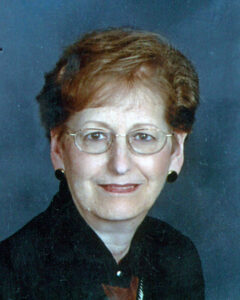
Sondra Elaine Dell’Antonia, age 81, a resident of Ft. Scott, Kansas, passed away unexpectedly Tuesday, July 27, 2021, at her home.
She was born September 12, 1939, in Mulberry, Kansas, the daughter of Vincent Fornaciari and Gertrude Hall Fornaciari.
Sondra’s grandparents immigrated from Italy to Crawford County (Foxtown) where they owned and operated a meatpacking and general store known as The White Star. Her parents later converted the facility into a Private Club known as The Country Cove. When Sondra was a teenager, her mother passed away and her Aunt Lena became a mother figure in her life. Her Aunt Lena held a special place in her heart and holidays spent at Aunt Lena’s house will be remembered by the entire family.
Sondra attended Frontenac public schools and graduated with the Class of 1958.
Sondra married Angelo Dell’Antonia on June 24, 1961, in Frontenac, Kansas, and recently celebrated their 60th wedding anniversary.
Sondra was a devoted wife, mother, and grandmother. She took great pride in her family and went above and beyond to meet her family’s needs and will be missed by many.
Survivors include her husband, Angelo, of the home; a daughter, Melissa Dell’Antonia Renard (Jim), of Dallas, Texas, and a son, Jody Dell’Antonia (Rachael), of Ft. Scott and a granddaughter, Lily Dell’Antonia also of Ft. Scott. Also surviving is a sister, Terry Ives Meinke, of Dallas, Texas, a cousin, Richard Coleman (Faith), of Pittsburg, KS, and two grand dogs, Zeta and Cletus.
She was preceded in death by her parents.
Reverend Rhonda Dunn will conduct graveside services at 11:00 A.M. Monday, August 2nd at the U. S. National Cemetery.
The family will receive friends on Monday at the Cheney Witt Chapel from 9:30 A.M. until leaving for the cemetery at 10:45 A.M.
Memorials are suggested to Fort Scott Area Community Foundation or Fort Scott Paws and Claws and may be left in the care of the Cheney Witt Chapel, 201 S. Main, P.O. Box 347, Ft. Scott, KS 66701. Words of remembrance may be submitted to the online guestbook at cheneywitt.com.
Center Honors Fort Scott’s Frontline Workers
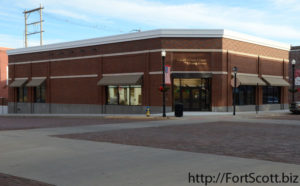
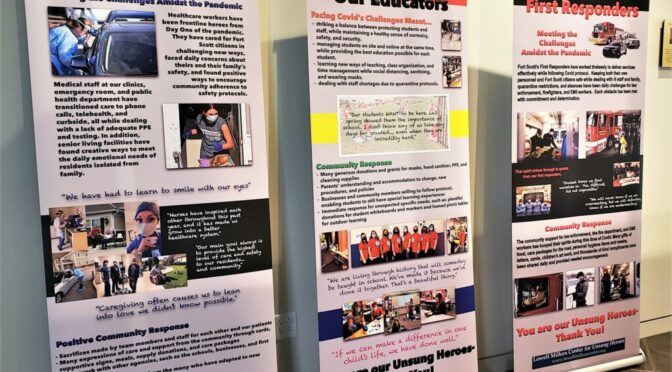
On July 28, the Lowell Milken Center for Unsung Heroes began a new exhibit entitled”Fort Scott’s Frontline Workers”, highlighting groups of local COVID-19 workers.
Hours at the center, located on Main Street at Wall Street in downtown Fort Scott are Monday through Friday from 10 a.m. to 5 p.m. and Saturdays from 10 a.m. to 4 p.m.
The exhibition is pictorial with text that honors first responders from four local agencies, health care workers from five local agencies, and educators in five local public and private schools.

“Contacts were made to all the different agencies, we received input from several administrators and staff,” Cathy Werling, spokesperson for LMC said.
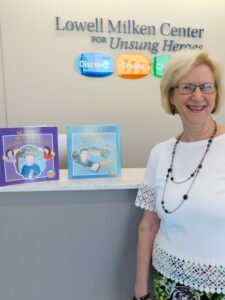
This new exhibit has been made possible with funds received from a Fort Scott Area Community Foundation grant, according to an LMC press release.
“Work began on plans for the project in October of 2020 after we knew we received the Fort Scott Area Community Foundation grant,” Werling said. “Contacting and interviewing all of the various frontline worker’s staff began in January of 2021.”
“The Lowell Milken Center’s Fort Scott’s Frontline Heroes project highlights frontline professions within our community who have been directly dealing with pandemic issues in order to provide safe and direct action for our citizens,” according to the press release.
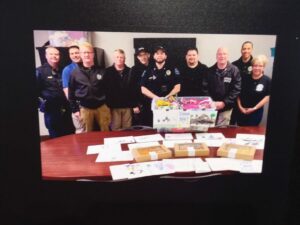
The following are recognized: firefighters, law enforcement officers, emergency medical services workers, health care workers from Community Health Center of Southeast Kansas, Ascension Via Christi Emergency Department, Southeast Kansas Multi-County Health Department, and long-term care facilities, assisted/independent living facilities, and local teachers/administrators at schools.

“The LMC believes these groups of workers are truly Fort Scott’s unsung heroes, as they have given so much of themselves to our community’s citizens during the pandemic and continue to do so,” according to the press release. “We encourage all Fort Scott area citizens to support these heroes by viewing the new exhibits at the Lowell Milken Center, sharing words of gratitude and support in the LMC guest book and through the LMC’s social media pages on Facebook – www.facebook.com/LowellMilkenCenter, Twitter – https://twitter.com/LowellMilkenCtr, and Instagram – www.instagram.com/LowellMilkenCtr.”

About the Lowell Milken Center: The Lowell Milken Center is a non-profit 501 © (3) that works with students and educators within a range of diverse academic disciplines, to develop projects focused on unsung heroes. Once their projects are finished, the student’s unsung heroes are shared in the Hall of Unsung Heroes or on the website, encouraging people all over the world to discover their individual influence and obligation to take actions that improve the lives of others. The Hall of Unsung Heroes is proudly located in Southeast Kansas and showcases some of the top projects developed in collaboration with the Center.
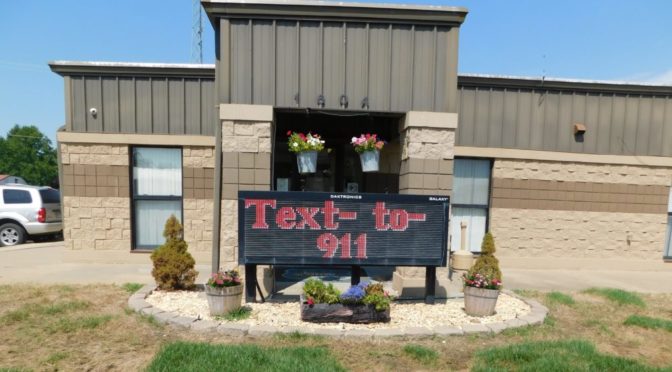
The Fort Scott Police Department Daily Reports July 27-28
Obituary of Gail Bryant
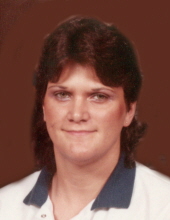
Gail Sue Bryant, age 66, a resident of Ft. Scott, Kansas, passed away Tuesday, July 27, 2021, at the Via Christi Village in Pittsburg, Kansas. She was born May 16, 1955, in Oklahoma City, Oklahoma, the daughter of Leo Stephen Edwards and Marjorie Lorane Lowry Edwards. Gail operated her own daycare business out of her home. She enjoyed sewing, quilting and working in her garden. She also liked doing various crafts.
Survivors include her children, Stephanie Laver (Shawn), of Redfield, Kansas, Michael Bryant (Dawn), of Ft. Scott, Kansas and Andrea Bryant also of Ft. Scott; eight grandchildren, Bryant, Brittany, Draven, Andy, Aubrey, Mia, Sterrett and Gavin and five great-grandchildren. Also surviving are a brother, Robert Compton and a sister, Lora Kopp, both of Yukon, Oklahoma.
She was preceded in death by her parents and a granddaughter, Cheyenne.
There was cremation and no services are planned at this time.
Arrangements are under the direction of the Cheney Witt Chapel, 201 S. Main, Ft. Scott, Kansas. Words of remembrance may be submitted to the online guestbook at cheneywitt.com.
The Bourbon County Sheriff’s Office Daily Reports July 29
Obituary of Leanne Pollreis

Leanne Denise Pollreis, age 53, resident of Walnut, KS, died Monday, July 26, 2021, at the Ascension Via Christy Hospital in Pittsburg, KS. She was born on January 13, 1968, in Lakeland, FL. The daughter of Donald Voss and Joyce Gilland Voss.
She graduated from Silom Springs high school with the class of 1986.
She married Randy Pollreis in June of 1994.
Leanne graduated from Pittsburg State University with a Master’s Degree in Education. She enjoyed crocheting, gardening, and being a teacher. Her favorite times were spent with her family.
Survivors include her husband, Randy of the home; four sons, Gavin Pollries, Dominic Pollreis, Coby Pollreis, and Arthur Pollreis, all of the home; her mother, Joyce Voss; one brother Kurt Voss, of Zuni, New Mexico, one sister, Leslie Lafoy, and husband David, of Peabody, KS.; and nieces and nephews.
She was preceded in death by her, dad Donald Voss.
There was cremation. Rev. Marty DeWitt will conduct a memorial service at 10:30 AM Saturday, August 7, 2021, at the First Missionary Baptist Church in Uniontown.
Services are under the direction of the Cheney Witt Chapel, 201 S. Main St., Ft. Scott, KS. Words of remembrance may be submitted to the online guestbook at cheneywitt.com.
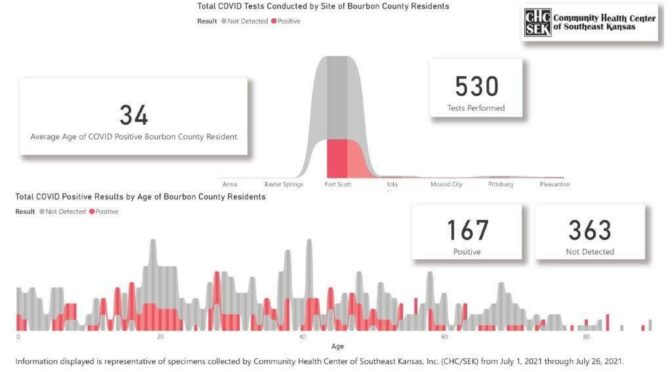
Bourbon County COVID-19 Since July 1: Positive Tests Up, Average Age Is 34

COVID-19 is having a resurgence nationwide that includes Bourbon County.
“At this time, I would recommend that if Bourbon County residents vaccinated or unvaccinated cannot socially distance themselves from others in public settings, that they wear a mask,” said Rebecca Johnson, Southeast Kansas Multi-County Health Department Administrator said. “When I left work yesterday evening our active COVID-19 case count was up to 97.”
“This surge compares closest with the surge we had around Thanksgiving time last year,” she said.
“There have been breakthrough cases where fully vaccinated people have contracted COVID-19,” she said. “We have had several cases of the Delta variant, but according to KDHE’s last report, have not had any from the tests they’ve received, in the last three weeks.”
“The Delta variant is a highly contagious strain of the COVID-19 virus that has been detected in the states that surround us as well as many counties that surround Bourbon,” Johnson said.
“I also recommend getting vaccinated if you are able. Bourbon County has four COVID-19 providers: Bourbon County Health Department, Walmart, CHC-SEK, and Walgreens. Practice social distancing, use good hygiene, and stay home when sick!” she said.
Mondays are walk-in days, call for an appointment (620)223-4464.
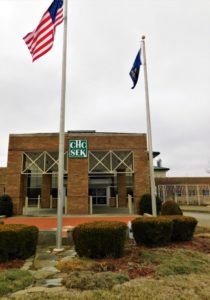
CHC
Since July 1, 2021, the Community Health Center of Southeast Kansas has tested 530 Bourbon County residents for COVID-19, Robert Poole, Communication and Marketing Director at CHC/SEK said.
“Of those, 167 tested positive for COVID-19,” he said. “The average age of a COVID-19 positive patient in Bourbon County, for the current month, is currently 34 years old.”
“These are CHC/SEK internal tracking numbers, and do not include the efforts and statistics of the Bourbon County Health Department, Via Christi ER, or other testers in Bourbon County,” Poole said.
According to information provided by CHC/SEK, if one tests positive for COVID-19, they should talk to their healthcare provider about monoclonal antibody treatment, which has been granted emergency use authorization from the U.S. Food and Drug Administration for patients with mild or moderate COVID-19, who are at high risk of developing severe symptoms. This treatment may reduce COVID-19 hospitalizations if given from 10 days from the onset of symptoms.
It is given by infusion at an infusion site with a provider’s order.
This treatment is for those who test positive for the disease, are 12 years and older, and within 10 days of onset of symptoms.
It is also for those over 65 years old, are obese/overweight based on CDC charts, pregnant, have chronic kidney disease, diabetes, immunosuppressive disease, chronic lung disease, Sickle Cell disease, neurodevelopmental disorders or have medical-related technology dependence: tracheostomy, gastrostomy, positive pressure ventilation, not related to COVID-19.
To get tested or get a vaccine contact CHC at 620-231-9873.
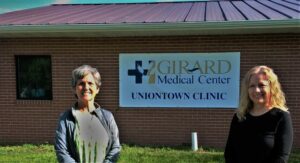
Girard Medical Center of Uniontown Clinic also has rapid testing of COVID-19 available and can schedule a vaccine as well. The clinic phone number is 620-756-4111.
CDC
The following is information taken from the Center of Disease Control website.
CDC COVID Data Tracker
Vaccinations in Bourbon County, Kansas
Percent of Kansas’s fully vaccinated recipients with valid county of residence: 93.4%
States with lower percentages for valid county of residence should be interpreted with caution.
People Vaccinated
Total
4,407 at least one dose
3,971 fully vaccinated
% of Total Population
30.3% at least one dose
27.3% fully vaccinated
Population ≥ 12 Years of Age
4,407 at least one dose
3,971 fully vaccinated
% of Population ≥ 12 Years of Age
36.4% at least one dose
32.8% fully vaccinated
Population ≥ 18 Years of Age
4,251 at least one dose
3,867 fully vaccinated
% of Population ≥ 18 Years of Age
39.3% at least one dose
35.7% fully vaccinated
Population ≥ 65 Years of Age
1,809 at least one dose
1,712 fully vaccinated
% of Population ≥ 65 Years of Age
61.5% at least one dose
58.2% fully vaccinated
CDC | Data as of July 26, 2021, 6:00am ET. Posted: