AD: Armstrong Pressure Washing Offers Professional Cleaning

Armstrong Pressure Washing LLC offers exterior residential and commercial pressure washing and soft washing in Fort Scott and the surrounding area. Owner, Jeff Armstrong, started the business in 2020.

Photos submitted by Armstrong Pressure Washing of before and after their cleaning service work was completed.

Services include house washing, roof washing, concrete
surface cleaning, fence and deck washing, and other surfaces such as stone, brick, and metal.

“Exterior washing is much more than throwing pressure on something,” Armstrong, said. “There is a science behind professionally cleaning different surfaces”.

Armstrong Pressure Washing uses not only professional equipment and cleaning solutions but also professional techniques to safely wash.

“A big part of the business is studying to learn how to improve your craft and to be able to educate clients about the process, so they are confident their property will be taken care of,” he said.

Contact Armstrong to set up an appointment at:

Phone: 620-224-3036
Email: [email protected]
Facebook: @armstrongpressurewash
Web:  www.armstrongpressurewash.com

Promote Empathy and Kindness in Kids

Cassidy Lutz
K-State Research and Extension 
Family and Consumer Science Agent 
Southwind District 
211 W. Butler 
Yates Center, KS 66783
620-625-8620


Over the past several weeks, I have offered a program called Gray for a Day to several Family and Consumer Science high school classes across the Southwind District.

The main goal of this program is to teach participants how to have empathy and show kindness to those that struggle with sensory and functional challenges due to aging. At the beginning of the first session, one participant asked me why empathy is so important. I paused to think about that answer as opposed to stating the obvious.

The most notable reason would be that all individuals seek kindness, comfort, love, and support. If you were struggling to reach the top shelf at the grocery store, you would hope that a passer-by would notice and offer to help you. But it goes much deeper than that surface-level answer.

Empathy is the ability to notice, share, understand, and consider how others feel. It is a large part of social behavior and establishing healthy relationships. Being able to empathize creates stronger social connections as it drives you to help others. There are ways to establish this skill throughout a lifespan, but it is extremely critical to start at a young age.

For young children, this is a complex set of emotions they begin to learn and develop while sharing toys and spaces and reacting to others’ feelings. One important thing to note is that children are impressionable and will model the behavior of those around them. By providing a good example for them to mimic, adults can help establish a behavioral pattern in young children.

To help support the development of empathy in children, adults can make examples out of others as they see them displaying positive behaviors. If they see unkind interactions, point that out to them and share how that might feel to others. Use verbal affirmations when you see a child do something kind and avoid giving treats or toys as a reward. This will diminish their motivation to engage in such acts. Let them make mistakes and learn from them. Help them understand how to correct their behavior so they can be better in future situations.

Empathy and kindness are critical skills for human development and healthy relationships at all ages. We can all work on enhancing this valuable skill. For more information, contact Cassidy Lutz at [email protected] or by calling 620-625-8620.

Herb Workshop Set for April 6

Krista Harding
District Extension Agent, Horticulture
Southwind Extension District
111 S. Butler
Erie, KS 66733
Office: 620-244-3826
Cell: 620-496-8786


Whether for culinary or medicinal purposes, herbs are a versatile plant. Are you interested in learning how to grow herbs and utilize them as natural seasoning? If so, plan to attend an herb workshop set for Thursday, April 6 at 12:00 Noon at the Buck Run Community Center in Fort Scott. The workshop will cover growing herbs indoors, care and maintenance, the health benefits of cooking with herbs, utilizing them in the kitchen, and herb preservation. In addition, participants will get to taste test a few recipes. For more information, call the Southwind Extension District at 620-244-3826.

Adding Residual Herbicides to Your Corn-Herbicide Programs

Chad Guthrie
District Extension Agent, Crop production and Forage Management
Southwind District
210 S. National
Fort Scott, Kansas 66701
Office: 620-223-3720
Cell: 308-991-8415
[email protected]

Corn planting is right around the corner for the Southwind District. It is time to consider adding a residual herbicide to your corn, weed management plan.

Residual herbicides that kill weed seeds/seedlings as they germinate or emerge are an important component of herbicide applications at or before the time of corn planting. These herbicides can control weeds for several weeks, which prevents yield loss due to early-season weed competition and can greatly improve the effectiveness of a post-emergence herbicide application and give more flexibility for post-application timing. Residual herbicides are also an important component of sequential herbicide applications later in the growing season. In general, preventing the emergence of weeds, especially herbicide resistant weeds, is preferable to controlling them after they emerge

Many cases of herbicide-resistant weeds have resulted from over-reliance on post-emergence herbicide applications, thus it is essential to include one or more residual herbicides available for corn. However, it is also important to remember to change residual herbicides to prevent selection of tolerant or resistant weeds. The importance of this is reflected in the recent confirmation of waterhemp and Palmer amaranth that are resistant to S-metolachlor (Dual).

The specific herbicide you use is important, but it is usually less important than making the decision to use a residual herbicide program that includes at least two effective herbicides. But, it is important to know the strengths and weaknesses of each product in terms of the spectrum of weeds controlled. A table summarizing weed species response to various corn herbicides can be found on pages 24-26 of 2023 Chemical Weed Control for Field Crops, Pastures, Rangeland, and Noncropland (SRP 1162).


Categories of residual herbicides for corn

Photosystem II Inhibitors (Group 5). Atrazine is the most widely used PS II inhibitor in corn. It controls a wide variety of broadleaf weeds, including pigweeds, ragweeds, morningglories, and mustards, as well as some grass species. However, atrazine resistance has been reported for many weed species. Atrazine use rates are influenced by soil type, soil pH, and organic matter, and use is prohibited in instances where water contamination is likely. Unless your situation prohibits atrazine use, it is recommended to include atrazine when you apply HPPD-inhibitor and acetamide herbicides.

Very Long Chain Fatty Acid Inhibitors (Group 15). The main VLCFA products used in corn include acetochlor, S-metolachlor, metolachlor, dimethamid-P, and pyroxasulfone In general, these products are very effective in controlling most annual grasses (except shattercane) and small-seeded broadleaf weeds such as pigweeds. They are much less effective in controlling kochia or large-seeded broadleaf weeds such as cocklebur, devilsclaw, morningglory, sunflower, and velvetleaf. An exception are those products containing pyroxasulfone. Though resistance to Group 15 herbicides have been reported in corn/soybean rotations in Illinois, there have been no cases of weed populations in Kansas developing resistance to the Group 15 herbicides to date.

Group 15 herbicides are most effective when applied with atrazine. In past years, often because of cost, reduced rates of these products were applied to help manage heavy summer annual grass pressure, then followed up with a good post-emergence herbicide program. With the increased occurrence of glyphosate- and other herbicide-resistant weeds, it is essential to use the full rates of these products in conjunction with a POST program.

HPPD-inhibitors (Group 27). Examples of HPPD-inhibitors are isoxaflutole (e.g. Balance Flexx) and mesotrione (e.g. Callisto and many generics). These products should be applied with atrazine. HPPD-inhibitors provide excellent for control of kochia, pigweeds, velvetleaf, and many other broadleaf weeds, as well as grasses. Corvus (thiencarbazone + isoxaflutole) will control shattercane and common sunflower better than Balance Flexx, provided the sunflower is not ALS-resistant. Keep in mind, products containing Balance should not be applied to coarse-textured soils when the water table is less than 25 feet below the soil surface. Balance Flexx does not provide adequate control of sunflower.

PPO-inhibitors (Group 14). Examples of PPO-inhibitors include flumioxazin (e.g. Valor) and saflufenacil (Sharpen). Herbicides containing flumiozaxin must be applied 7 to 30 days before corn planting. These herbicides provide excellent control of pigweeds; however, they are marginal on kochia. Fierce (flumioxazin + pyroxasulfone) will provide improved control of velvetleaf and kochia compared to Valor. The addition of atrazine will enhance kochia, pigweed, velvetleaf, and morningglory control, provided the populations are not triazine-resistant. Sharpen and Verdict (saflufenacil + dimethenamid-P) have excellent activity on pigweeds, kochia, and large-seeded broadleaf weeds. However, the length of residual activity can be shorter than other pre-emergence products when all are compared at full rates. Approximately 7 to 10 days of residual can be expected per 1 oz of Sharpen and 5 oz of Verdict.

ALS-inhibitors (Group 2). One example of a pre-emergence ALS-inhibitor used in corn is flumetsulam (Python), which only has broadleaf activity and provides good control of large-seeded broadleaf weeds such as cocklebur, sunflower, and velvetleaf, or the small-seeded common lambsquarters. Flumetsulam is also a component of Hornet, Stanza, SureStart II, and TripleFlex II. These products are especially effective for control of sunflower, along with cocklebur and velvetleaf, but less effective for morningglory control.

Rimsulfuron is another ALS-inhibiting herbicide that is a component of Basis Blend, Instigate, Prequel, Realm Q and Steadfast Q. Products with rimsulfuron will provide short residual control of grass and broadleaf weeds and should be used as a setup herbicide with a good post-emergence weed control program. If ALS-resistant broadleaf weeds are present, these ALS-containing herbicides often will be less effective.

The use of trade names is for clarity to readers and does not imply endorsement of a particular product, nor does exclusion imply non-approval. Always consult the herbicide label for the most current use requirements.

Adding a residual herbicide to your program could be a key piece to a successful corn-herbicide program this growing season. Choosing the correct residual herbicide for your operation can be difficult, so it is important to consider all of the options available. The Southwind Extension District offices have free 2023 Chemical Weed Control books available for producers and landowners. You can also contact Chad Guthrie, crop production and forage management agent, at any Southwind District office for more information.

Drought Damage Showing Up in Landscapes

Krista Harding
District Extension Agent, Horticulture
Southwind Extension District
111 S. Butler
Erie, KS 66733
Office: 620-244-3826
Cell: 620-496-8786


Spring has sprung, but we still haven’t received adequate moisture to pull the area out of a drought situation. According to the most recent U.S. Drought Monitor, all of the Southwind District counties remain in the moderate to severe drought classification. The drought is predicted to remain, but will improve. Unfortunately, the drought has caused permanent damage to some of our landscape plants – mainly fescue lawns and ornamental shrubs.

The fescue lawns in the area are not looking very good. I’ve noticed that some have areas of green-up and others have definite dead spots. In my own yard, the drought damage is very visible! Part of my yard is near an old hedge row and the grass located 20 feet or so out is completely dead. The hedge row successfully robbed all of the moisture and intensified the drought on the grass.

As much as I would like to overseed this spring, I’m going to refrain and wait until fall. You might be wondering why? Spring is not the ideal time to overseed fescue lawns because of the shorter time frame between seeding and when the hot summer conditions arrive. It is best to overseed in the fall when the temperatures are cooler and the plant can get a root system established before the brutal summer conditions.

That’s not to say that there aren’t times when a spring seeding can be successful. However, it requires committed watering and care from the time of seeding through the summer. The best time to attempt a spring seeding is mid-March through early April. We are near to closing the window of opportunity for this year. If you think scattering some seed out on the ground will suffice, you will be disappointed! It is definitely take more effort than that.

Soil preparation will be important and the use of verticutter is recommend. Verticutting slices grooves in the soil which will allow for good seed to soil contact for germination. Once the soil is prepared, the seed can be broadcast.

The ground must have moisture through germination and into early establishment in the form of light, frequent waterings. On average, it will take two weeks for the grass to emerge. After the seed is up, reduce the watering frequency. How often should you water? The grass will show you signs when it needs water. This will be evident by it wilting or it showing a bluish color to the blades.

The turf will need an application of fertilizer. At seeding, use a starter type fertilizer. About five or six weeks later, use a high nitrogen – slow release source of fertilizer at the rate suggested on the bag. As for crabgrass control, there is a product recommended for use on spring seedings. The active ingredient in the product is Dithiopyr. This product can actually be applied a little later in the growing season than other crabgrass preventing products and yet still provide season long control.

Have you noticed brown shrubs in area landscapes? Damage from the 2022 drought and winter injury is being seen on various woody plants, especially euonymus, boxwood and yew. Many that are brown have most likely died. However, the best time to assess the extent of the damage and the potential for recovery is May. By that time, new growth should have developed and it will be clear if the buds are going to put on some new growth and the shrub is still alive.

If you have questions about lawn care, gardens, trees or shrubs, please don’t hesitate to contact me at the Extension office. Most Extension services are free of charge.

Krista Harding is a K-State Research and Extension Horticulture agent assigned to Southwind District. She may be reached at [email protected] or 620-244-3826.


K-State Research and Extension is an equal opportunity provider and employer.


What’s Happening in Fort Scott

What’s Happening in Fort Scott!

March 24th Weekly Newsletter

UPCOMING CALENDAR OF EVENTS

________________

Fort Scott National Historic Site

Daily Tours: 10am & 1pm

Trolley Tours of Fort Scott

50-minute narrated historical tour

Every Friday & Saturday on the hour

Fridays 11am, 12pm, 1pm, 2pm

Saturdays 10am, 11am, 12pm, 1pm, 2pm

$6 adults, $4 12 & under, leaves from the Chamber

Click this link: The Artificers

Upcoming pottery class/workshop

schedule, something for all ages!

Click here for all the FUN activities at the

Museum of Creativity, something for all ages!

March Special at Hedgehog.INK! Bookstore

Buy 2 Children’s Books, Get 1 free

Gardening Books 25% off!

3/24 ~ FSCC Aggie Days at Fort Scott Community College, 8am-3pm

3/24 ~ Knights of Columbus Lenten Fish Fry, Kennedy Gym, 705 S. Horton, click here for

more info.

3/24 ~ Annual FSHS Talent Show & Miss(ter) Pageant, admission is $5, doors open at 6:30pm, show starts at 8pm, click here for more info.

3/24 ~ CJ Serenade performing at Common Ground, starts at 7pm.

3/24-25 ~ Spring Open House ~ Find the Golden Egg Shopping Event, Downtown & Around, shop at participating retailers for savings!, click here for more info.

3/25 ~ A Slave, A Nurse, and A Soldier Spy, Fort Scott National Historic Site, 11am-12pm, click here for more info.

3/25 ~ Visit the Easter Bunny at Bids & Dibs, they have the backdrop; you bring the camera, 12-3pm, click here for more info.

3/25 ~ Mary Queen of Angels Benefit

Golf Tournament, 4 person scramble $60 per person ($240 per team) 8:00 Registration, 9:00 Tee off, click here for more info.

3/25 ~ Unique Fundraiser at Museum of Creativity, $15/person, starts at 9am, click here for more info.

3/26 ~ DIY Wine Bottle Bouquet Class at Sunshine Boutique, 1pm, click here for info.

3/30 ~ Chamber Coffee hosted by Friends of Fort Scott National Historic Site at the Fort, 8am.

3/31 and 4/1 ~ Home, Sport, Farm, & Garden Show, Friday 5-8pm, Saturday 9am-3pm, Arnold Arena at FSCC, 2108 S. Horton St., hosted by KOMB FM 103.9 and 98.3 FM Radio

4/1 ~ Eggstravaganza @ Buck Run Community Center, pre-k – 5th Grade, pre-register by March 30th, 9-10:30am, click here for more info.

4/1 ~ Floral Easter Basket Class at Sunshine Boutique, $25/person, 10am-12pm, click here for more info.

4/1 ~ First Saturday Story Time at Hedgehog.INK! Bookstore, guest reader and an activity, 2:30pm, click here for more info.

4/1 ~ Annual Kiwanis Easter Egg Hunt at Gunn Park Shelter house #2, starts at 11am.

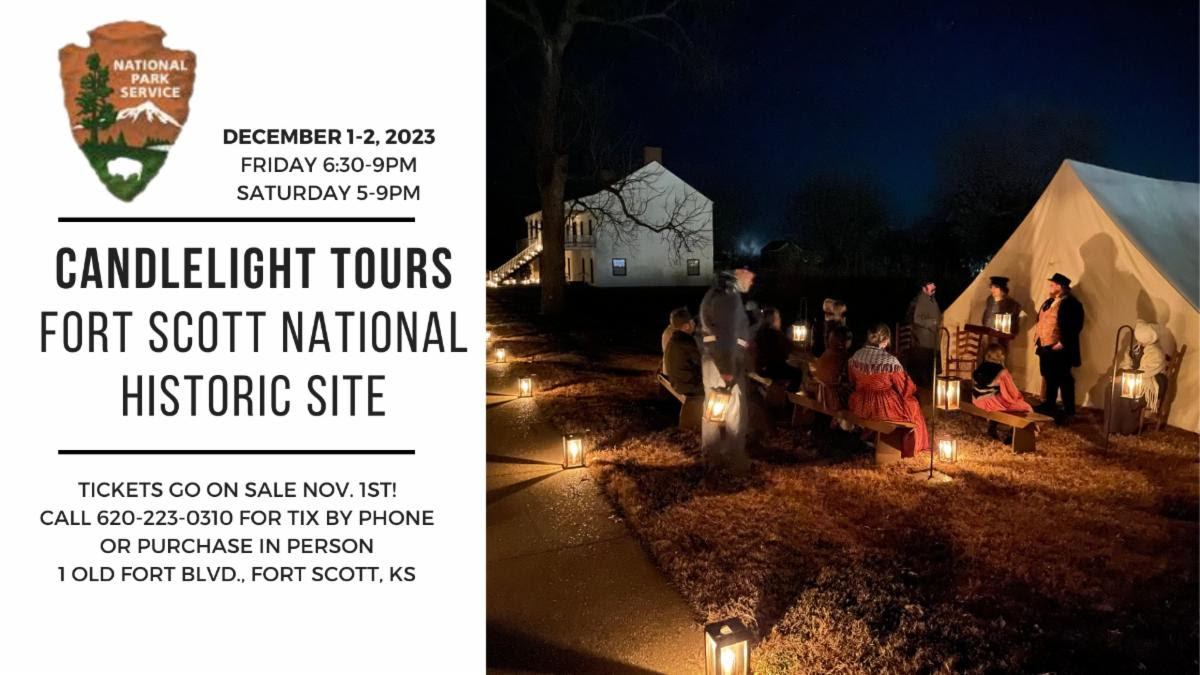
4/1 ~ Star Party at the Fort Scott National Historic Site, join Park Rangers and the Kansas Astronomical Observers for a deep look into space at stars, galaxies, and nebulae, dress in layers, comfortable shoes, bring a red covering for your flashlight, 7:30-9:30pm, click here for more info.

4/4 ~ Quarterly Downtown Meet & Greet at City State Bank, 202 Scott Ave, 8-9am

4/5 ~ FSHS 2023 Career Fair, Fort Scott High School Auxiliary Gym, 8am-12pm, click here for more info.

4/5 ~ Community Connection Event, public invited 11:45am to 1pm, Empress Event Center, panelist updates from City of FS, Bourbon County, USD234, USD235, BB County REDI. Click here to register & purchase lunch (if desired).

4/5 ~ Dare to Dream Women’s Entrepreneurship Event, Healthy Bourbon County Action Team Office, 5:30pm

4/6 ~ Chamber Coffee hosted by Woodland Hills Golf Course, 2414 Horton St, 8am

4/6 ~ BINGO at Memorial Hall by the American Legion, doors open 6pm, starts 7pm

4/8 ~ Floral Easter Basket Class at Sunshine Boutique, $25/person

Save the Date!

4/13 ~ JOB FAIR hosted by the Fort Scott Area Chamber of Commerce, 3-6pm, click here to register for an employer booth.

4/15 ~ America’s Got Talent Semi-Finalist Greg Morton Comedy Show, Memorial Hall, 7-10pm, click here for tickets!

4/15-16 ~ Civil War Encampment at Fort Scott National Historic Site National Park, this event is free and open to the public, 9am-5pm, click here for more info.

4/26 ~ Women’s Appreciation Luncheon at FSCC Ellis Fine Arts Center, $5/per person,

11am-1:30pm, click here for more info.

_________

SHOPPING ~ SUPPORT LOCAL!

Boutiques-Antiques-Flea Markets & more!

Click here for Chamber member

specialty shopping & other retail in

Downtown & other areas of the community.

Fort Scott Area
Chamber of Commerce
620-223-3566
In This Issue

Calendar of Events

Special Event Features

THANK YOU Chamber Champion members!!

Chamber Highlights
Click here for our
Membership Directory.
We THANK our members for their support! Interested in joining the Chamber?
Click here for info.
Thinking of doing business in or relocating to Fort Scott?
Contact us for a relocation packet, information on grants & incentives, and more!
Seeking a job/career?
We post a Job of the Day daily on our Facebook page, distribute a monthly job openings flyer, and post jobs on our website.
Many opportunities available!
Housing needs?
Click here for a listing of our Chamber member realtors.
Click here for our rental listing.

March Into Savings at

Hedgehog.INK! Bookstore!

Spring Open House, Find the Golden Egg Shopping Event ~ March 24th-25th!

Star Party at the Fort ~ March 29th!

Job Fair hosted by the Chamber

April 13th, 3-6pm, employers register here!

Upcoming Movie Schedule @ Fort Cinema

THANK YOU TO OUR CHAMBER CHAMPION MEMBERS!
Fort Scott Area Chamber of Commerce
231 E. Wall Street
Fort Scott, KS 66701
Facebook Share This Email
Twitter Share This Email
LinkedIn Share This Email
Fort Scott Area Chamber of Commerce | 231 E. Wall Street, Fort Scott, KS 66701

Fort Scott Livestock Market: Online Sales As An Option

From the Fort Scott Livestock Market Facebook page.
Photo from the Fort Scott Livestock website.

Fort Scott Livestock Market has been a Martin family business since 1994, and marketed over 104,000 animals a year for Kansas and Missouri producers. They are the third largest agricultural auction in Kansas.

Located at 2131 Maple Road, the auction service sells agricultural livestock each weekend.

The Fort Scott Livestock Market Sale Barn, admin offices and cafe are housed in this building taken from the business website.

The auction features clear, fast-talking  auctioneers, and includes multiple televisions throughout the facility for participants to keep an eye on the action in the ring.

Jim Martin, 89, one of the owners, still is an auctioneer.

The auction is often a family event for the buyers and sellers as well.

“Cattle buyers and sellers are often joined by a spouse, child or grandchild who enjoy a clear view of each animal coming through the ring,” according to the press release.

For those people who want home raised beef for their family freezer, the auction will have five butcher steers that start selling today,  March 24, according to their Facebook page.

The business also sell paddles and flag whips for working with cattle on farms and also have apparel for sale: tee shirts, hoodies and vests.


Sale Times and Options

They start receiving cattle on Thursdays, according to their website,http://www.fslivestock.com/

The Friday sale is for cows, pairs, baby calves and big bulls, the Saturday sale, which starts at 10 a.m., starts with feeder and stocker calves and ends with cows and big bulls that came to the sale later.

Their cattle buyers are in person, or send a representative to help get “top-dollar” for the sellers livestock, according to a press release from FSLM.

In February 2023 they have added online purchasing of cattle on Fridays to the list of services. Fridays  at 10 a.m.the  sale features cows and bulls and Saturdays at 10 a.m. feature mostly calves, but also some cows and bulls.  In 2012, the Saturday sale was put online.

Saturdays are the biggest sales.

“We are now broadcasting our sales real-time, the cattle auction is live on the internet …at  WWW.DVAUCTION.COM,” according to the press release.   “You must be registered through DV Auction and be approved through our office to bid. If you have not been approved through our office, please have your DV Auction # ready when you call us. 620-223-4600.”

For the latest information go to Facebook,  at Fort Scott Livestock Market.

Family Owned

The market  is owned and operated by four generations of the Martin family.

“Whether you’re selling one cow or a trailer load, they strive to give you the same quality enjoyable experience,” according to a press release. “Jim, Larry, Kyle and Tyler Martin are happy to discuss your cattle with you. Their phones light up all day, every day and each call gets a response.”

The fourth generation of Martins works as yard help.

Submitted photo of the Martins. Kyle, Larry, Jim and Tyler. Three generations of Martins.

Jim, Larry’s dad, Larry Martin, along with Tyler and Kyle, Larry’s sons, are the owners and managers of the business.

They regularly give back to various community clubs and organizations through various county fairs, FFA organizations, the Hepler Rodeo, the Vernon County Cattleman’s Association and various schools, churches and clubs.

The business employs over one hundred “hard-working individuals, from check-in to load-out, it’s a hands on, one-on-one experience,” according to the press release. “Behind the scenes there is a quality crew, in the front and back that are experts at sorting the cattle, joined by cowboys on horses penning the animals.”

The cafe at the livestock market is also a multi-generational family  business. Bobbi Miller and her daughter Thabena Bower run the cafe.

“With fresh mouthwatering Friday and Saturday specials and homemade blue-ribbon quality pies,” it is a great place to eat, according to the press release.

They regularly give back to various community clubs and organizations through county fairs, FFA organizations, the Hepler Rodeo, the Vernon County Cattleman’s Association, schools, churches and clubs.


Another Story on Noble Health Corp Following Hospital Closures In Rural Missouri

Editors Note: This story from Kaiser Health News features a story on Noble Health that the Fort Scott City Commission and the Bourbon County Commission signed a contract with in July 2021 to facilitate Noble Health Corp’s feasibility study of reopening the former Mercy Hospital building as an acute care hospital.
In June 2022, Journalist Sarah Jane Tribble wrote an article on Noble Health:

Noble Health: History of Failed Health Care For Patients

Noble Health did not reopen the hospital in Fort Scott and the Bourbon Country Commission transferred ownership of the former Mercy Hospital Building at 401 Woodland Hills on November 17, 2022 to Legacy Health Foundation.

To view that contract:

View the Bourbon County/ Legacy Health Foundation Agreement


Yesterday, Tribble published another article on Noble Health failure aftermath and here it is.


Legal Questions, Inquiries Intensify Around Noble Health’s Rural Missouri Hospital Closures

Audrain Community Hospital in Mexico, Missouri, is one of two rural hospitals in the state that Noble Health shuttered in March 2022. A year later, both remain closed. (Matt Kile for KHN)

A year after private equity-backed Noble Health shuttered two rural Missouri hospitals, patients and former employees grapple with a broken local health system or missing out on millions in unpaid wages and benefits.

The hospitals in Audrain and Callaway counties remain closed as a slew of lawsuits and state and federal investigations grind forward.

In March, Missouri Attorney General Andrew Bailey confirmed a civil investigation. He had previously told local talk radio that there was an “ongoing” investigation into “the hospital issue.”

Bailey’s comment came weeks after the U.S. Department of Labor’s Employee Benefits Security Administration notified executives tied to Noble Health, a startup, that they had violated federal laws and asked them to pay $5.4 million to cover unpaid employee health insurance claims, according to a 13-page letter detailing “interim findings” that was obtained by KHN.

The January letter confirms KHN’s previous reporting, which was informed by employees and patients who described missing paychecks; receiving unexpected, high-dollar medical bills; and going without care, including cancer treatment. According to the letter from federal investigators, the Noble hospitals and their corporate owners collected employee contributions for medical, dental, and vision insurance in 2021 and 2022 but then failed to fund the insurance plans.

The owners and executives were “aware of the harm to participants and, in some cases, were attempting to resolve individual participant complaints,” the letter states, adding that “despite the volume and gravity of complaints and bills received,” they failed to respond.

A photo of a two-year-old boy with spina bifida in a walker.
Ryder Hagedorn was born with spina bifida. His parents have struggled to pay for specialty care since claims were denied by a health plan his mother, Marissa, was offered through her employer. She is one of several former employees of Noble Health who say they were left with substantial medical bills after the company shuttered its two rural Missouri hospitals.(Marissa Hagedorn)

‘Tomfoolery’ and Doing ‘Everybody Dirty’

Marissa Hagedorn, who worked as a hospital laboratory technician, has spent much of the past year starting a new job, caring for her 2-year-old son who was born with spina bifida, and haggling over unpaid medical bills. She told KHN the family owes at least $8,000 for son Ryder’s specialty care in St. Louis, with $6,000 of that in collections. As a Noble employee, Hagedorn said, she was told repeatedly that her employee health insurance would cover Ryder’s care. It didn’t.

Noble has “done everybody dirty,” she said. “We just would like for some responsibility to be taken by this company that didn’t feel the need to get their act together.” Hagedorn’s story of unpaid bills, which was first reported by the local newspaper, the Mexico Ledger, is common among former Noble employees a year after the hospitals closed.

A former employee of the Fulton hospital has filed a class-action lawsuit intended to represent hundreds of employees from both hospitals.

The Jan. 13 letter from federal officials called for responses by Jan. 27 from Noble corporate and hospital executives as well as Platinum Neighbors, which last April bought the hospitals and assumed all liabilities. The letter instructs executives to contact the agency “to discuss how you intend to correct these violations, fund participant claims, and achieve compliance.”

Former employees say their claims have not yet been paid. A Labor Department spokesperson, Grant Vaught, said the agency could not comment on an ongoing investigation.

Separately, the Kansas Department of Labor is reviewing Noble and Platinum’s failure to pay wages and severance to corporate employees. Agency spokesperson Becky Shaffer confirmed that hearings took place in early February on a half-dozen cases totaling more than $1 million in claims for unpaid wages and severance.

Dave Kitchens was among those who filed claims against Noble Health. Kitchens worked briefly as a contract employee and then was hired in October 2021 as a corporate controller, an accounting role in which he was responsible for financial reporting and data analytics. Kitchens provided an audio recording of his hearing to KHN and hopes to eventually get paid more than $90,000 in lost wages, benefits, and severance pay. During the hearing, Kitchens told the administrative judge: “I would just like to be paid what I’m owed.”

Kitchens, who is also named as a fiduciary on the federal investigation, said he was not on Noble’s executive team. When asked by Kansas Administrative Law Judge James Ward whether he expected Noble or the secondary buyer Platinum to pay his wages, Kitchens responded he had “no idea who was in charge.”

“I believe there was some tomfoolery,” Kitchens said.

A ‘Rabbit Hole’ of Responsibility

Noble launched in December 2019 with executives who had never run a hospital, including Donald R. Peterson, a co-founder who prior to joining Noble had been accused of Medicare fraud. Peterson settled that case without admitting wrongdoing and in August 2019 agreed to be excluded for five years from Medicare, Medicaid, and all other taxpayer-funded federal health programs, according to the Health and Human Services Office of Inspector General.

By March 2022, the hospitals had closed and Noble offered explanations on social media, including “a technology issue” and a need to “restructure their operations” to keep the hospitals financially viable. In April, Texas-based Platinum Neighbors paid $2 for the properties and all liabilities, according to the stock purchase agreement.

Despite receiving approval for nearly $20 million in federal covid-19 relief money before it closed the hospitals — funds whose use is still not fully accounted for — Noble had stopped paying its bills, according to court records. Contractors, including nursing agencies, a lab that ran covid tests and landscapers, have filed lawsuits seeking millions.

In Audrain County, where community members still hope to reopen the hospital or build a new one, county leaders filed suit for the repayment of a $1.8 million loan they made to Noble. Former Missouri state senator Jay Wasson also filed suit in September, asking for repayment of a $500,000 loan.

Two Noble Health real estate entities filed bankruptcy petitions this year. One Chapter 11 bankruptcy filing names the Fulton hospital property in Callaway County as an asset and lists nearly $4.9 million in liabilities. A third bankruptcy filing by FMC Clinic includes Noble Health as a codebtor.

In the U.S. District Court of Kansas, Central Bank of the Midwest is suing Nueterra Capital over a $9.6 million loan Noble used to buy the Audrain hospital. The bank alleges Nueterra, a private equity and venture capital firm that in 2022 included Noble as part of its portfolio, signed off as the guarantor of the loan.

Federal investigators listed nearly a dozen people or entities connected to Noble Health as fiduciaries who they say are personally responsible for paying back millions in unpaid medical claims. The letter also detailed Noble Health’s ownership for the first time. The owners included William A. Solomon with a 16.82% share, Thomas W. Carter with a 16.82% share, The Peterson Trust with a 19.63%, and NC Holdings Inc. with 46.72%.

NC Holdings is also listed on the stock sale agreement with Platinum along with several signatures including Jeremy Tasset, chief executive of Nueterra Capital.

Tasset did not respond to a request for comment for this article. In an email to KHN in March 2022, the Nueterra Capital CEO wrote, “We are a minority investor in the real estate and have nothing to do with the operations of the hospitals.” In May 2022, Tasset wrote in an email to KHN that “everything was sold (real estate included) to Platinum Neighbors, a subsidiary of Platinum Team Management.”

It is unclear who owns and controls The Peterson Trust, which federal investigators identified. Peterson, who is listed on Noble’s state registration papers as a director and in other roles, didn’t respond to requests for comment for this article. He previously told KHN that his involvement in Noble didn’t violate his exclusion, in his reading of the law.

He said he owned 3% of the company, citing guidance from the Office of Inspector General for the U.S. Department of Health and Human Services. Federal regulators may exclude companies if someone who is banned has ownership of 5% or more.

In March 2022, Peterson created Noble Health Services, which federal investigators note in their letter was “established to restructure the ownership of multiple Noble entities.” Peterson dissolved that company in July 2022, according to a Missouri business filing.

In September, Peterson posted on LinkedIn that he was “sitting in the Emirates Air lounge in Dubai” to finish up due diligence on “launching a new business.”

A 2013 OIG advisory states that “an excluded individual may not serve in an executive or leadership role” and “may not provide other types of administrative and management services … unless wholly unrelated to federal health care programs.”

KHN examined the federal system meant to stop health care business owners and executives from repeatedly bilking government health programs and found that it failed to do so.

The OIG keeps a public list of people and businesses it has banned from all federal health care programs, such as Medicare and Medicaid. KHN’s review found a system devoid of oversight and rife with legal gray areas.

In the wake of KHN’s reporting, Oregon Sen. Ron Wyden, a Democrat who is the chair of the powerful Senate Finance Committee, said “it’s imperative that federal watchdogs can ensure bad actors are kept out of Medicare.” Sen. Chuck Grassley (R-Iowa) said the government needs to do more and “it’s also up to private-sector entities to do a better job checking against the exclusions list.”

“We can’t just depend on one or the other to do everything,” Grassley said.

In recent months, the Missouri hospitals appear to have been sold twice more, according to public records. Oregon-based Saint Pio of Pietrelcina notified state officials of a change of ownership in December and requested an extension of the hospital licenses, which was denied. In January, Audrain County officials, in its lawsuit, revealed another owner named Pasture Medical, which registered as a Wyoming company on Dec. 27, 2022.

“We haven’t come out of the rabbit hole on this one,” said Steve Bollin, director of the division of regulation and licensure for the Missouri Department of Health and Senior Services. Bollin’s agency, which conducts inspections and approves hospital changes in ownership, said he would support his agency doing financial reviews.

“It’s probably not a bad idea that someone takes a little bit deeper dive. We don’t have that many changes of ownership, but we would need appropriate staffing to do that, including some really good CPAs [certified public accountants].”

Letter to the Editor: Deb McCoy

We do have a Comprehensive Plan!


I have asked numerous times if the City had a 5 year or 10 years Comprehensive Plan for the City of Fort Scott. I never received an answer from any City Official, City employee, or City Manager stating YES WE DO! While researching the Fort Scott City Commissioners Agendas and Minutes of the Meetings I came across a City of Fort Scott Comprehensive Plan with survey results that was put together by the Planning Commission Board and presented on March 20th, 2018 at the City Commissioners Meeting. In reviewing the meeting agendas after that meeting, this comprehensive plan was never discussed or implemented. Look at the amount of tax dollars that we have spent on surveys and studies over the past 5 years when we had a comprehensive plan that was completed and introduced by the Planning Commission Board in 2018. Why was this Comprehensive Plan not implemented?

 Let me share some of the characteristics of this Plan:

  1. It is a physical plan that reflects social and economic values and is a guide for the physical development of the community. It translates values into a scheme that describes how, why, when, and where to build, rebuild, or preserve the community.
  2. It has a long range design, covering a period greater than one year to 5 years that expresses current policies that will shape the future rather than show a rigid image of the future itself.
  3. It is comprehensive and covers the entire city geographically, not merely one or more sections, and it covers areas outside of the City, referred to as the Growth Area.
  4. The plan is a state of policy covering community desires as quantity, character, location and rate of growth and how these desires can be achieved.
  5. Finally the plan is a guide to decision making by the Planning Commission, the City Governing body, City Manager and City Staff.

The Chapters in the Comprehensive Plan Include:

  1. Introduction
  2. Community Character
  3. Housing
  4. Economic Development
  5. Recreation and Natural & Historical Resources
  6. Infrastructure and Transportation
  7. Downtown and Fort Scott National Historic Site
  8. Code Enforcement
  9. Land Use/Growth Management


–  A quote from Chapter 4 states – “Without funding for economic development initiatives, without the ability to actively recruit business to Fort Scott, and without the means to extend the infrastructures necessary to accommodate new business growth, the community is vulnerable to economic stagnation and decline.” We also need to ensure that the City’s zoning and related regulations that promote good site design and protect business and commercial development from inappropriate development on neighboring properties. A long term goal would be to attract new industries that complement Fort Scott’s economy and utilize its labor force. This would also include the need to plan for future employment growth by having sites “shovel ready” to develop.

– One of the goals mentioned was to work with Fort Scott Community College to develop trade and labor apprenticeship programs that include heating/air, plumbing, electrical, carpenter and building trades, street and infrastructure maintenance, etc. that would provide qualified employees for local positions. Having a job to sustain a household, and affordable housing to accommodate the employee is another important factor.

– Another Goal from Chapter 4 states – that retaining existing businesses and industries and supporting their expansion is the foundation of our economy and is the source of the greatest percentage of jobs grown in the community. This means we need to develop the means to identify when a local company may be considering relocating or closing, and provide services to address the firm’s business needs and keep it in Fort Scott. Think about the loss of businesses over the past 5 years. Winery, Beaux Art Center, Peerless expanded their production to Iola and Nevada, Mercy Hospital, Dialysis Center, Price Choppers, Shoe Department, and Goody’s, just to name a few.

– Chapter 8 covers Code Enforcement, “which is the City’s use of its legal authority, often referred to as the “police power” to help ensure that the health and safety of residents is not adversely affected by property conditions. This includes poor yard maintenance, storage of items that can be hazardous, and lack of care resulting in property deterioration which directly impacts quality of life in a community. Property values as well as community self image are affected by blight and lack of maintenance. ‘Property Rights’ implies responsibility. No property should be used or maintained in a manner which downgrades its or another’s value, use, enjoyment or safety. This coupled with lack of investment in infrastructure such as improved streets or sidewalks, breeds, an aura of negativism which impeded a desirable ‘community spirit’”


It makes me wonder why this Comprehensive Plan was never implemented. It is obvious that a lot of time and effort was made in putting this plan together. The Plan was built on the past to create the vision for the future and could have easily been implemented into an active plan that would certainly be applicable today.


Why do we keep spending money on all of these studies when we had the Blueprint to a Comprehensive Plan presented 5 years ago just sitting in our files waiting to be implemented? Isn’t it about time we took some action towards a plan well thought out, well written and community oriented so that we as citizens could also participate in?


To get a copy of this Comprehensive Plan to the Fort Scott City website under Government and click on Agenda & Minutes. Pull up the March 20th, 2018 Commissioner Meeting notes. Go to page 57 thru 126.

Sincerely,

Deb McCoy

3/23/23

Bourbon County Local News