The Pioneer Harvest Fiesta Offers New Fiber Arts Show
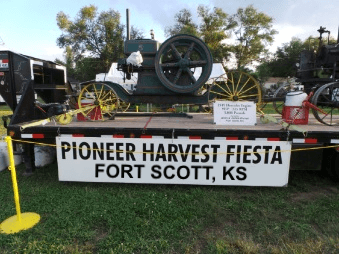
The Pioneer Harvest Fiesta (PHF) is an annual Bourbon County event that takes place this year from October 3-5 at the Bourbon County Fairgrounds on South Horton Street in Fort Scott.
The event showcases rural American culture in an earlier time period.
To learn more: https://pioneerharvestfiesta.com/
New Craft Added
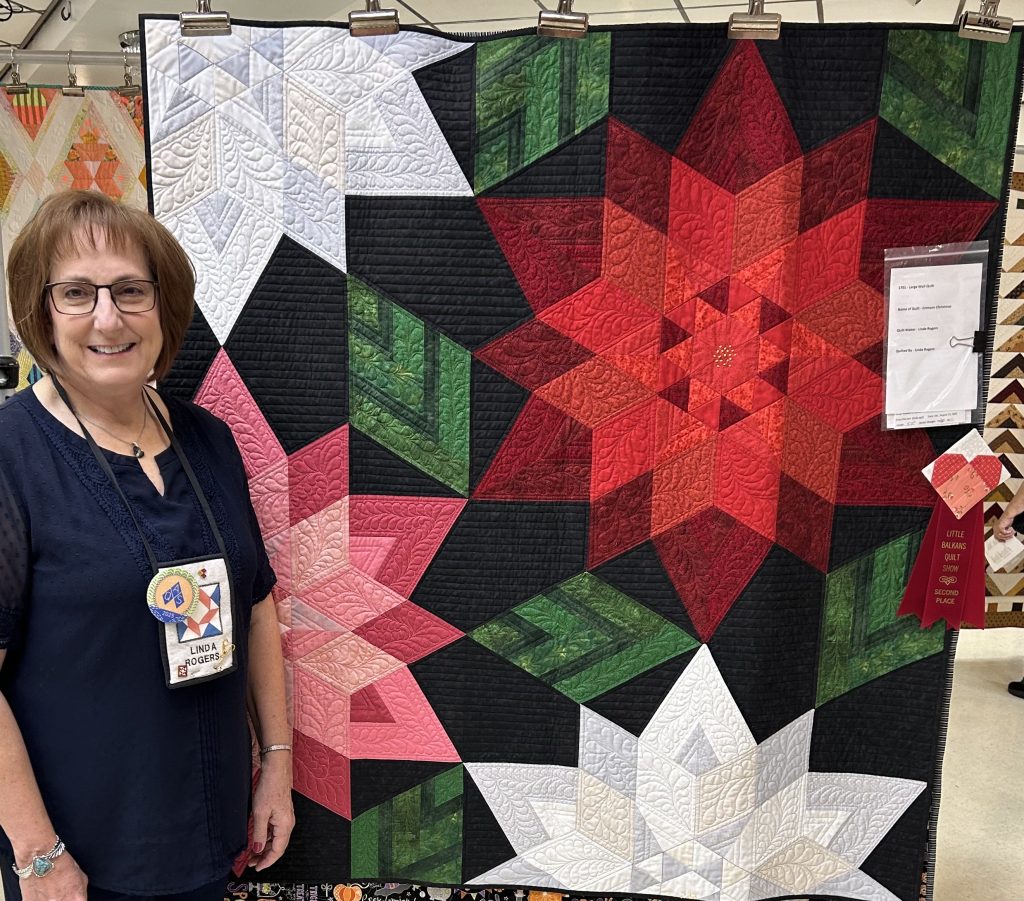
The PHF quilt show has a new name this year and a new direction. The Quilt and Fiber Arts Show will feature beautiful quilts as usual, and will also showcase examples of various fiber arts, according to a press release from Linda Rogers, a local quilter.
Fiber art is work done with thread, yarn, fiber, or fabric, according to Rogers. Examples of fiber art include weaving, rug hooking, spinning, knitting, crocheting, embroidery, needlepoint, cross-stitching, tatting, needle felting, macramé, and more.
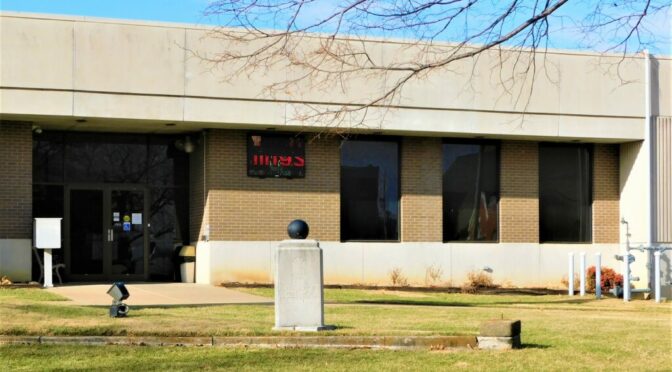
Area quilters and fiber artists are invited to enter items for the show to be held October 3-5 at the Myers Building at the Bourbon County Fairground during the annual Pioneer Harvest Fiesta. This event is free to the public.
“Anyone may enter items not previously shown at this show, no limit on the number of items, and the public is invited to view the entries at NO COST! (There is an entry fee for the machinery show.)” said Linda Rogers, this year’s quilt and fiber arts organizer at the annual event.
In addition to the exhibits, fiber artists will be present at various times during the show, working on their current projects. The public is invited to drop in, view the exhibits, talk to the artists, and bring their needlework projects to work on, according to Rogers.
“Generations ago, quilting and needlework were necessary skills,” she said. “These traditional crafts continued to be kept alive by many of our grandmothers and mothers who, although they no longer needed to make things, nevertheless enjoyed filling their spare time with creative pursuits.”
Recently, quilting and traditional crafts have been “rediscovered” by new generations of enthusiastic fans and are sometimes referred to as “granny crafts” or “Grandma Core”, she said.
“In our hyper-connected, technology-driven world, both adults and youth are finding the simple joy and calm that comes from working with colors and textures to create something tangible with their own hands, according to the press release.”
“A quilt and fiber arts show is a wonderful place to come be inspired, encouraged, and tempted,” said Rogers.“You will see some fantastic quilts, some showcasing new techniques and contemporary colors, as well as more traditional quilts. And if you are thinking about taking up a new craft, or if you are in the middle of a needlework project and have hit a roadblock, maybe one of our quilters or artisans can make suggestions to help you.”
The “take-in” time to enter quilts and items for exhibit is Thursday, October 2, 11:00 a.m. to 1:00 p.m. There is no fee to exhibit items. The only award that will take place is a “People’s Choice Award”. Items can be picked up on Sunday, October 5, from 2:30 to 3:00.
The Quilt and Fiber Arts Show will be open for public viewing from 9 a.m. to 4 p.m. on Friday, October 3, and Saturday, October 4, and on Sunday, October 5, from noon to 2:00. Admittance to the quilt show is free. For more information, contact Rogers at 620-215-4905.
Rogers is entering a quilt that was pieced by an ancestor of hers, and gives the details:
History of Linda Ramsey Roger’s Family Vintage Quilt
Quilts often become heirlooms, taken care of and handed down to generations after their creation. Such is the case with Linda Ramsey Roger’s quilt, which was created in 1864.

“Information below is taken from a handwritten note, written by my great-grandmother, Alice Ann (Hinton) Konantz, concerning the quilt, other death dates of my family, and an email sent to me from my 1st cousin, who gifted the quilt to me.
*1864 – Charlotte (Hinton) Hinton (great-great-grandmother), age 23, pieced and appliqued the quilt while living in Iowa. Her daughter, Alice Ann, recalls in a note remembering her mother working on it when she was 7 years old. Charlotte died later that year, and shortly after, she and her dad moved to Bourbon County, Kansas.
*1923 – Alice Ann (Hinton) Konantz (great-grandmother), age 66, had it hand quilted by the Methodist Episcopal Ladies Aid, which Rogers reckons is the United Methodist Church of Uniontown.
1933 – Alice Konantz wrote the *note telling the above information.
1940 – Alice Konantz died at 83 years old. “Most likely the quilt passed to my grandmother, Grace Miriam (Konantz) Griffith.”
1982 – Grace Miriam Griffith died at age 84. “Most likely the quilt passed to her oldest living daughter, my aunt, Betty Jane (Griffith) Perry, while living in Montana.”
1999 -Her Aunt Betty gifted the quilt to her oldest daughter, Kathleen (Perry) Martinell, Roger’s first cousin, who still resides in Montana.
2024 – Kathleen gifted the quilt to Rogers, who lives in Bourbon County, Kansas.
Opinion: How Big of Government Do You Want?
I was recently in another state visiting a county, not all that different from Bourbon, and looked at their taxes. Property taxes were double what I pay in Bourbon County for a house with a similar appraised value. As high as taxes seem locally, there are places that have grown the size of their government to where they are much higher.
When confronted with the fact that other people are paying twice as much in property taxes, you probably had one of two reactions. If you like bigger government, you might think, “Wow, think how much more our county could spend if we could double property taxes!” If you like smaller government, you probably think, “Wow, how do we keep our county from becoming like that?”
A few months before George Washington took office, Jefferson wrote, “The natural progress of things is for liberty to yield, and government to gain ground.” Whether you fall into the “bigger government is better” camp, or you are aligned with “smaller is better,” Jefferson’s quote gives you a blueprint. If you want a bigger, more powerful government, you simply have to let government take its natural course and undermine efforts by anyone who wants to prioritize liberty that would constrain government growth and spending.
On the other hand, if you want a small government, you have a much harder job. Why is it so much harder? You have to be willing to give up having control of some things that you consider good, in exchange for keeping government small.
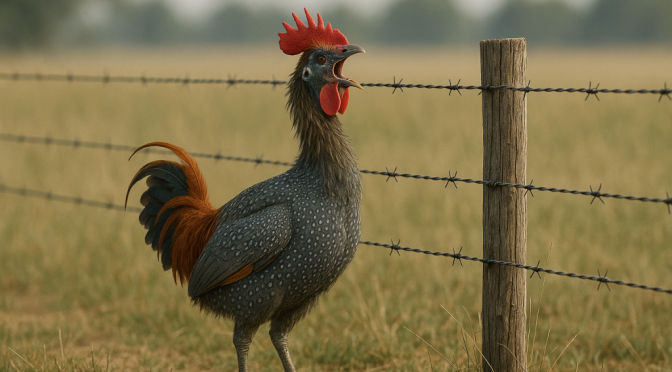
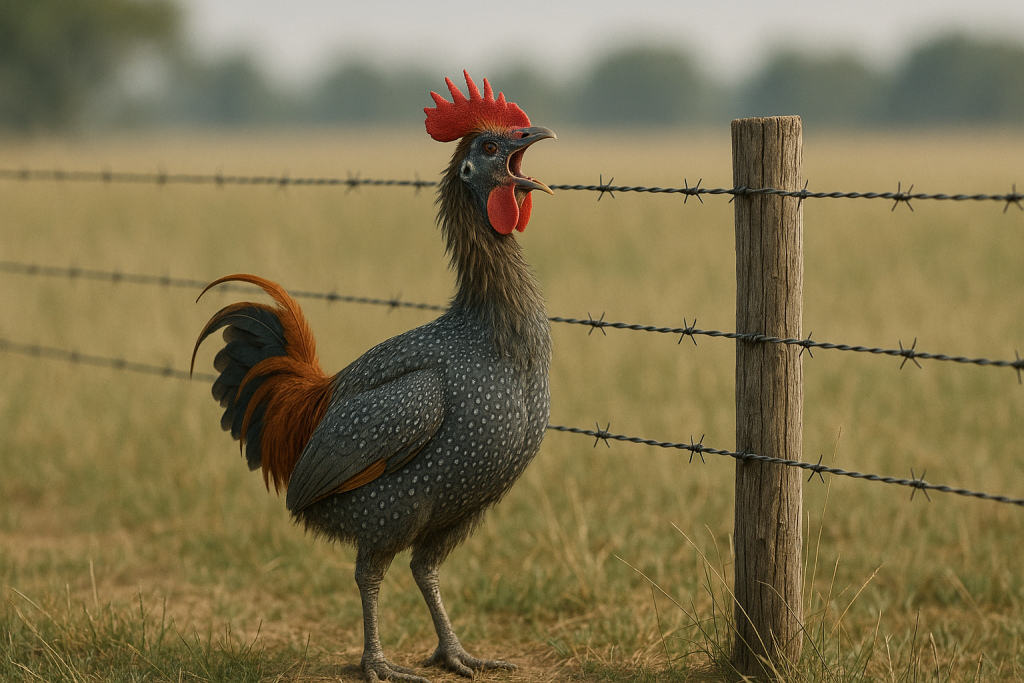
For example, if Bob built his house right next to his neighbor’s property line and the neighbor decides his life goal is crossing roosters, guineas, and emus to try to set a world record for the world’s loudest bird, Bob might be inclined to support some type of county-wide noise ordinance.
If Jane really wants a county-run indoor skydiving facility, she might be inclined to support a new sales tax so she can get other people to pay for it. If John feels that the ~$20,000 spent on his little Johnny in the public school is half as much as he’d like to see spent, he might support dramatic increases in property taxes to drive it up to $40,000—especially if John doesn’t own much property and thinks the burden will fall more on his neighbors.
While those may seem like silly examples (though I have heard people supporting the school spending one), they illustrate the fact that everyone has things they would like to see the government demand of or take from their neighbor.
This is the natural progression that Jefferson describes. Citizens that think controlling or taking money from their neighbor is more important than keeping government small will end up with a very large government and a large tax bill. Citizens that feel that their neighbor’s liberty is more important than their own personal convenience have a shot at keeping government small and their tax bill constrained.
This is one of the reasons I am opposed to Bourbon County exceeding the revenue-neutral rate. Spending has grown by 11.2% over the last two years. If we start by asking “What do we want to pay for?” the budget will always go up. If we start by saying, “Here is how much we have to spend,” then careful prioritization will make sure we retain the most important functions while constraining the growth of government.
This is also one of the reasons I’m opposed to the commissioners’ current efforts to implement zoning in Bourbon County. While I can see some ways that zoning might be beneficial, even some things that would benefit me personally, making the county government even bigger in our current situation comes with a cost, both in dollars and loss of freedom, that far outweighs any benefit.
Mark Shead
Note: FortScott.biz publishes opinion pieces with a variety of perspectives. If you would like to share your opinion, please send a letter to [email protected].
FortFest 25 Is September 26-27 at Riverfront Park
|
|
|

|
|
|

|
|

|
|
|
|
|
 Admission is FREE, and all donations go directly to support the Care to Share Cancer Support Group. Help us celebrate community, music, and giving back at this special 25th anniversary event.
 Friday Night – Sept 26
 Saturday – Sept 27: Packed with Events!
 Please note: No pets are allowed at the event.
|
|
|
|

|
|
|

|
|
|

|
|
|
|

|
|||||||||
|
Sept. 15 Bourbon County Commission Meeting Agenda
Agenda for the Bourbon County Commission Meeting, September 15, 2025
Location: Bourbon County Commission Chambers, 210 S National Ave.
- Call Meeting to Order
- Roll Call
- Pledge of Allegiance
- Prayer
- Approval of Agenda
- Approval of Minutes 09/08/25
- Consent Agenda
- Approval of 09.12.25 Accounts Payable Totaling $380,626.82
- Approval of Culverts as of 08.31.25
- Tax corrections
- Budget Hearing 5:35 PM
- Mapleton City Council – Redfield Road
- Misty Adams – Fulton City Council
- Lynne Oharah – Road Concern
- Executive Session: To discuss personnel matters of individual nonelected personnel to protect their privacy with Lora Holdridge & Witness.
- Public Comments for Items Not on The Agenda
- Old Business
- Budget Discussion & Approval of Final Budget – Tran
- Liaison Procedures & Assignments – Beerbower & Milburn
- Planning Commission Selection – Beerbower
- Resolution Review – Beerbower
- Commission Meetings & Commissioner Conduct
- 108 W 2nd Street – Beerbower
- Mid-Year Valuation with Appraiser – Milburn
- Credit Card Discussion – Milburn
- New Business
- Application for Road Closure 140th between Cavalry Road & Birch Rd
- Network Real Estate, LLC – Approval of Letter
- Claim for Windshield Damage $381.57
- Department Updates
- Sheriff
- TUSA- Radios
- Crawkan – Phone & Internet
- Vehicles
- County Clerk
- CIC Payroll Conversion & Pay Entry
- Road Records
- Sheriff
- Build Agenda for following meeting
- Commission Comments
- Adjournment
Detailed Summary of Information Packet
- Executive Session Information: The document provides a form for motions to enter into an executive session, detailing the Kansas statutes (KSA 75-4319) that allow for discussions on personnel matters, attorney consultations, employer/employee negotiations, financial affairs, real estate acquisition, and security measures. The form includes spaces to specify the subject, attendees, and time of resumption of open session (page 2).
- Open Invoices by Department Summary: The packet includes a detailed breakdown of invoices paid by various departments, with a total of $304,970.17 for non-departmental invoices (page 3-9).
- Appraisers: Total invoices of $2,464.94, including items like an appraiser laptop, mechanical pencils, and blinds (page 3).
- County Treasurer Motor Fund: Total invoices of $387.87, including computer supplies and a ‘for deposit only’ stamp (page 3).
- Diversion Application Fee Fund: Total invoices of $306.74 for an office luncheon and snacks for witnesses (page 3).
- Election: Total invoices of $286.09 for postage (page 4).
- Landfill: Total invoices of $4,901.04, including charges for waste, drug and alcohol tests, and equipment maintenance (page 4).
- County Sheriff/Correctional: Total invoices of $9,765.24, covering various expenses like vehicle repairs, fuel, uniforms, and security services (pages 4-6).
- Road and Bridge: Total invoices of $10,724.58 for a variety of items and services, including auto parts, equipment repairs, and septic tank cleaning (pages 6-8).
- Road & Bridge Sales Tax Fund: Total invoices of $54,672.71, with a large portion going towards asphalt products and equipment repairs (pages 8-9).
- Addiction Settlement Fund: Total invoices of $279.75 for mileage reimbursement (page 9).
- Offender Registration: Total invoices of $245.02 for waffle shirts, zip pullover, and a jacket (page 9).
- Emergency Services Sales Tax: A single invoice of $120,936.19 for the August 2025 allocation to Freeman Fort Scott Hospital Inc. (page 9).
- County Commission: Total invoices of $827.07 for publications and copies (page 10).
- County Clerk: Total invoices of $1,755.75, including a phone recording retrieval and tax document corrections (page 11).
- County Treasurer: Total invoices of $16.26 for copies (page 12).
- County Attorney: Total invoices of $1,483.78 for services like computer/printer labor, information retrieval, and a transcript (page 13).
- County Register of Deeds: Total invoices of $745.06 for death cards, tape, and pen refills (page 13).
- Courthouse Maintenance: Total invoices of $404.71 for cleaning supplies (page 13).
- District Court: Total invoices of $33.86 for Adobe subscriptions and additional storage on a judge’s iPad (page 14).
- Emergency Preparedness: Total invoices of $108.21 for a receptacle, and a meal (page 15).
- IT: Total invoices of $84.88 for replacement batteries (page 15).
- Dispatch: A single invoice of $50,000 for dispatching services for 2025 (page 17).
- TUSA Presentation/Proposal: The packet includes a presentation and proposal from TUSA, a company that designs radio systems.
- Experience: TUSA has been in the industry for over 30 years and has worked on projects in various locations, including Kansas City and Georgia. They claim their systems are designed to withstand major weather events like hurricanes and tornados (page 4, 5, 14, 15).
- Core Principles: TUSA emphasizes coverage, cost, and reliability as the most important aspects of a new radio system (page 5).
- Scope of Work: Their proposed scope of work includes investigating neighboring radio systems, conducting interviews with project staff and departments, inspecting current infrastructure, and delivering a comprehensive needs assessment report (pages 7-8). The report would include an analysis of current needs, coverage, and system condition, as well as proposed solutions and cost estimates (page 8).
- Procurement Support: TUSA also offers to assist with the procurement process by developing technical specifications and statements of work (page 9).
- Timeline and Pricing: The needs assessment would be completed within 90 days of a notice to proceed. Their hourly rate is $165, and they invoice all expenses at cost with no markup (page 9, 16).
I Wanna Talk About Me by Carolyn Tucker

Keys to the Kingdom By Carolyn Tucker
“I Wanna Talk About Me”
In 2001, country music artist Toby Keith released a comical music video perfectly illustrating selfishness. The song, “I Wanna Talk About Me,” is about a man’s huge frustration in his inability to pleasantly converse with his girlfriend/wife who only wants to talk about herself. Being selfish is natural — just watch a two-year-old pitch a fit to try and get his/her way. Little people learn this all on their own; no one has to teach them how to throw a tantrum. With both of my kids, I discovered what the parenting books called the “terrible twos.” My son was probably the best worst example of the “TT” simply because his fits were thrown in public and my daughter’s were hurled at home. Aaron wasn’t too bad to shop with until we got to the checkout counter where the candy was displayed. Of course he wanted all of it, and of course he couldn’t have any of it. So the selfish fit began and all I could do was pretend to be deaf while he continued on and on even as we exited the building. However, his life took a different direction once we got home. He finally learned that he didn’t like what happened when we got home.
Selfishness is a real problem in our culture today. Many people seem to have little regard for other individual’s feelings. The entire push in the world today is “self.” But being selfish is not all it’s cracked up to be! Jesus was a lot of things and selfishness was never anything He exemplified. Christ followers say we want to be like Jesus, walk like Jesus, love like Jesus, and think like Jesus. And that’s exactly right — He’s our example. So can we put our money where our mouth is?
To be a follower of Jesus, we have to dethrone ourselves and enthrone Christ. God can’t do all He desires with us if we’re still calling the shots. If we’re still pitching fits and wanting our own way, we really need to grow up spiritually. One day Jesus called the crowd to join His disciples and said, “If any of you wants to be My follower, you must turn from your selfish ways, take up your cross, and follow Me” (Mark 8:34 NLT). Jesus made it plain that we must follow Him, smash selfishness to smithereens, shoulder our own cross, and humbly follow His leading.
Those who live a life of self-indulgence are basically wasting their life away. “Don’t think only of yourself. Try to think of the other fellow, too, and what is best for him” (1 Corinthians 10:24 TLB). It’s simply not possible to have yourself on your mind all the time and be happy. Happiness comes from being good to others — it’s a ricochet effect.
“Be devoted to tenderly loving your fellow believers as members of one family. Try to outdo yourselves in respect and honor of one another” (Romans 12:10 TPT). Competition often brings the worst out in people, but this scripture would be an exception to that thought. Getting caught red-handed in doing loving acts of kindness would be something to celebrate!
Selfishness has been a huge problem since Adam and Eve. God warned them not to eat from the tree of the knowledge of good and evil, but they disobeyed and ate it anyway. Their selfishness brought sin into the world, introduced suffering and death, and severed their close and beautiful relationship with God.
The Key: It’s time for believers to pitch a final fit and smash selfishness once and for all.
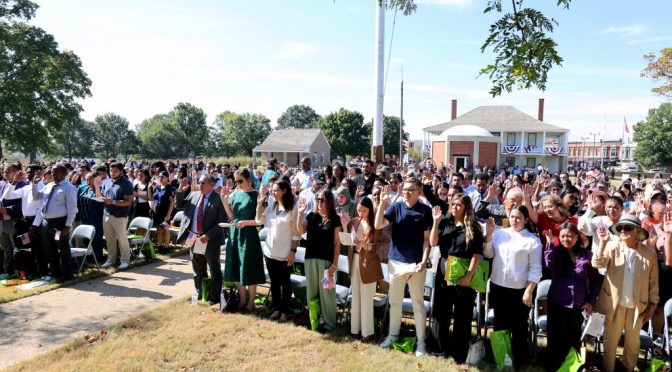
Naturalization Ceremony at FSNHS on Sept. 17, Constitution/Citizenship Day
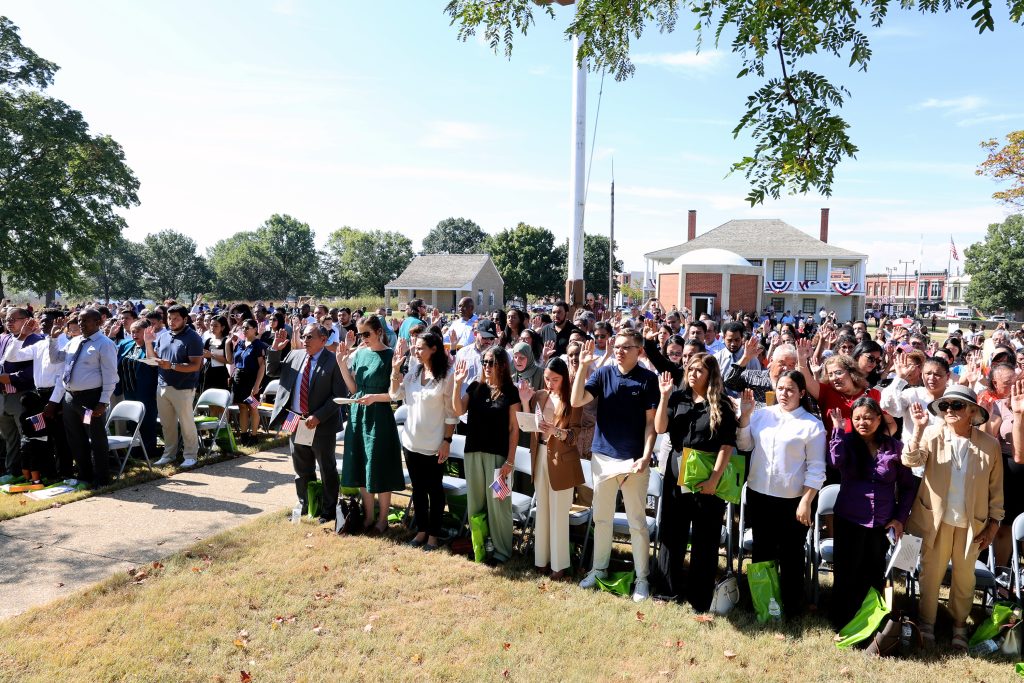
Fort Scott National Historic Site to Host Special Naturalization Ceremony on Constitution/Citizenship Day Sept. 17
Fort Scott, Kan. – Media outlets and the general public are invited to Fort Scott National Historic Site on Wednesday, September 17, 2025, for a Special Naturalization Ceremony at the parade ground here.
Check-in for ceremony participants begins at 9 a.m. and the ceremony begins at 10:30 a.m. The Honorable Holly L. Teeter, United States Magistrate Judge for the District of Kansas, is scheduled to preside.
Fort Scott National Historic Site Superintendent Jill Jaworski and Fort Scott Mayor Tim Van Hoecke plan to provide opening remarks. John K. Burchill, Emeriti Professor of Criminal Justice, is scheduled to provide the keynote address. The Fort Scott High School Orchestra is scheduled to perform.
Seating will be provided for ceremony participants. Friends, family, guests, and the public are encouraged to bring lawn chairs or picnic blankets for seating. In case of rain or inclement weather, the ceremony will be moved to Fort Scott’s Memorial Hall.
Media attending the ceremony are requested to RSVP and be in place by 10 a.m. at Fort Scott National Historic Site, 1 Old Fort Blvd., Fort Scott, Kansas, 66701.
Fort Scott National Historic Site’s exhibit areas and visitor center are open Friday through Thursday from 8:30 a.m. – 4:30 p.m. The park grounds are open daily from a half hour before sunrise until a half hour after sunset. Fort Scott National Historic Site is a free park that offers a glimpse into the growth of our nation. A walk through the fort reveals the significant role it played in the opening of the West, as well as the Civil War and the strife in the State of Kansas that preceded it. To find out more or become involved in activities at the Fort, please contact the park at 620-223-0310 or visit our website at www.nps.gov/fosc, on Facebook www.facebook.com/FortScottNPS and Instagram www.instagram.com/fortscottnps
-NPS-
What’s Happening in Fort Scott Sept. 12 Edition
|
|
|
|
|
|
|

|

|
|

|
|
|
|
|
|

|
|

|
|

|
|

|
|
|

|
|

|
|

|
|

|
|
|

|
|

|
|
|

|
|

|
|
|
|
|

|
|
|
|
|

|
|
|
|


Homestead: A Buzzword with Roots—and a Future
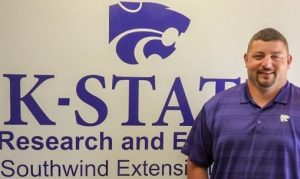
Homestead: A Buzzword with Roots—and a Future
By Lonnie Mengarelli- Extension Agent
I have been the Crops and Natural Resources agent now for going on 16 months, and I have been to 15 plus farms where families are leaving the “city life” behind to try to live the self-sustainable farm life. As most of you have probably heard the term “homestead” or “homesteading” in American vocabulary—not as a dusty relic of pioneer days, but as a modern buzzword symbolizing a movement toward self-sufficiency, sustainability, and reconnection with the land.
What was once a necessity for survival on the frontier is now a lifestyle choice for many who crave something simpler, something real. From urban backyard chicken coops to rural mini-farms, people are planting, preserving, and planning in ways that echo their ancestors—albeit with a little more Wi-Fi.
The idea of homesteading is no longer just about acreage and off-grid living. It’s about intentional living, understanding where your food comes from, and having the skills to provide for yourself, even in small ways. And that’s where programs like Back to the Land: Traditions & Innovations in Small-Scale Farming step in to help.
Offered by the Southwind Extension District in partnership with Kansas State University, this free educational series is more than a class—it’s a call to cultivate resilience, knowledge, and community. Starting October 1st through December 10th at the Fort Scott Community College Ag Building, the 7 stand-alone programs all about farming basics covers a wide range of hands-on, practical topics designed to help anyone—regardless of experience—get back to the basics.
Want to plan a more productive garden? There’s a session for that. Thinking about raising chickens or goats? We’ve got you covered. Curious about preserving your harvest, or even processing your own deer? They’re diving into it all—with experienced agents and specialists leading the way.
What makes this series special is its accessibility. It’s not just for the already-committed homesteader with a five-acre spread and a root cellar, the 1,000-acre farmer, or the backyard garden enthusiast. It’s for the curious, the cautious, the DIY dreamers who want to dip their toe into self-reliant living. It’s for the family who wants to teach their kids where eggs come from, the retiree eyeing a new backyard project, or the young couple trying to stretch their grocery budget with a fall garden.
There’s a reason homesteading has made its way back into the headlines and hashtags. In uncertain times, people are rediscovering the value of real skills, real food, and real community. The Back to the Land series embraces both the tradition and the innovation that make modern homesteading possible—and rewarding.
- October 1 – Plot Perfect: Garden Planning for Abundant Harvests
- October 8 – Pest, Predators, and Protection
- October 15- Backyard to Barnyard: Small Farm Poultry Essentials
- October 29 – Deep Roots: Soil and Forage Strategies for Resilient Farms
- November 5 – Homestead Herds: Practical Livestock for Everyday Farmers
- November 12 – Pantry Power: Food Preservation for Self-Reliant Living
- December 10 – Harvest and Butcher: A Whitetail Processing Program
Sessions start at 6:00 p.m. each Wednesday, and the final program on December 10th will be held at the Bourbon County Fairgrounds. You can attend one or all—no cost, just a willingness to learn.
To register (or RSVP for the meal count), call 620-223-3720.
The modern homestead may look different than it did a hundred years ago—but the heart of it hasn’t changed. It’s still about making something meaningful from the land, however big or small your patch may be.
Lonnie Mengarelli is a K-State Research and Extension Agriculture agent assigned to Southwind District. He may be reached at [email protected] or 620-223-3720
Healthy and Easy Family Meal Preparation by Sandy Haggard
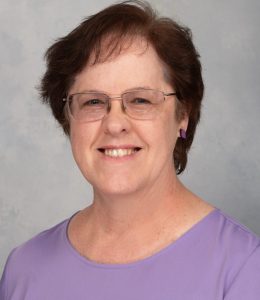
Healthy and Easy Family Meal Preparation
In today’s fast-paced world, finding time to prepare and enjoy home-cooked meals can be challenging. Hectic schedules and after-school activities can lead to families scrambling to find something to eat. However, having some meals prepared ahead of time or cooking at home offers numerous benefits. It promotes better nutrition, saves money, reduces stress, and strengthens family bonds. With a little planning, practice, and strategy, preparing healthy meals at home can become a manageable and enjoyable experience.
Research shows that eating at home results in increased intake of fruits and vegetables and a decreased rate of depression and violence in adolescents. Overall, there is an increase in well-
being for adolescents.
Planning healthy meals doesn’t have to be overwhelming; taking small steps can lead to manageable changes that improve the health and well-being of family members. Creating a meal plan for the week can assist in this process. Slow cooker meals, healthy grab-and-go options (such as homemade freezer burritos), or planning a night for leftovers can significantly reduce cooking time each night.
Keeping a well-stocked pantry increases the likelihood of cooking as the items will already be on hand. Consider keeping these foods stocked: fruits and vegetables (fresh, frozen, or canned), protein like canned salmon, chicken, fresh or frozen meat, and grains such as brown rice or whole wheat pasta.
Grocery shopping with a plan can save time and money. Creating a meal plan based on the store sales that week and writing a shopping list in order of the store layout can prove helpful.
Meal prepping: Consider cooking a large batch of protein such as chicken, beef or fish or other staples like rice or beans. Preparing the main meal ingredients ahead of time to utilize throughout the week will save time each night. Also, chopping vegetables and fruit ahead of time to store in the refrigerator and freezer to utilize throughout the week can reduce time prepping evening meals.
One pot and sheet pan meals are an excellent way to reduce time and the number of dishes to wash. Many families use slow cookers, rice cookers or electric pressure cookers to save time in the kitchen.
Being able to share a warm, healthy meal with family members and sit down at the table together can help strengthen relationships. Parents might want to ask open-ended questions such as “What
made you happy at school today?” or “Did you notice anyone helping someone today?” instead of “How was school”?
For those interested in more tips, K-State Extension has a new program entitled “Healthy Connections: Family Meals in a Snap” that can be presented to groups in the Southwind Extension District (Allen, Bourbon, Neosho, Woodson Counties) by Sandy Haggard, Nutrition, Food Safety, and Health Agent. Contact her at [email protected] or 620.365.2242.
U.S. Congressman Derek Schmidt’s Weekly Newsletter
|
|


|
.png "Rep. Schmidt speaks to the Kansas Independent Oil and Gas Association.")
.png "Rep. Schmidt at the Topeka Mars facility")
|


Obituary of Roy Gene Colum
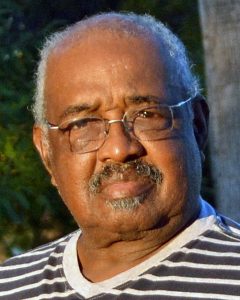
Roy Gene Colum, Sr., age 91, a resident of Ft. Scott, Kansas, passed away Wednesday, September 10, 2025, at the Freeman West Hospital in Joplin, Missouri. He was born August 6, 1934, in Ft. Scott, Kansas, the son of Elbert Alexander Colum, Sr. and Melinda Amanda Mae Smith Pigford. Roy graduated from the Ft. Scott High School and then went on to serve with the United States Navy from 1952-1956.
Roy was united in marriage to Kathleen Young on December 12, 1952. He was stationed in San Diego and upon completing his military service, he decided to remain in that area. He took a job with the City of San Diego where he worked for the City of San Diego Park and Recreation and Street Division. After many years, he retired from the City and began working for both Avis and Hertz rental car companies.
Roy enjoyed watching the news, keeping up with current events. Following retirement, he took a “part-time” position with the San Diego Voice & Viewpoint, a San Diego newspaper. In earlier years, he enjoyed bowling and playing softball. He enjoyed sports of all kinds and was a great fan of the Los Angeles Dodgers and the Kansas City Chiefs.
Roy and Kathleen later returned to Ft. Scott where they have made their home for the last several years. While living in Ft. Scott, Roy took an active role in sharing studying Ft. Scott history and family genealogy. In preparation for the annual Gordon Parks Celebration, he was often called upon to identify people and places surrounding Ft. Scott’s African American community. Roy loved life and his family. He worked hard to provide for his family and faithfully cared for his wife as their health declined. Roy has left a legacy of hard work and perseverance and a strong family who will carry on in the days ahead.
Survivors include his wife, Kathleen, of the home in Ft. Scott and five children, Roy Gene Colum, Jr., Kimberly Joyce Colum-Wright, Byron Arthur Colum, Larren Scott Colum and April G. Davis. Also surviving are a host of grandchildren, great-grandchildren and Great Great Grandchildren. He was preceded in death by his father, Elbert A. Colum, Sr., his mother, Melinda Amanda Mae Pigford and his brother, Elbert A. Colum, Jr.
There was cremation, and he will eventually be laid to rest at the Ft. Rosecrans National Cemetery in San Diego, California. Arrangements were under the direction of the Cheney Witt Chapel, 201 S. Main, Ft. Scott, Kansas. Words of remembrance may be submitted to the online guestbook at cheneywitt.com.