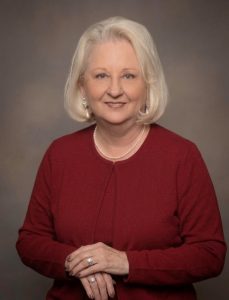
The Lowell Milken Center (LMC) for Unsung Heroes in Fort Scott, Kansas, an international educational non-profit, has awarded its prestigious Fellowship to Heather Hurt, a fifth-grade teacher at Vestavia Hills Elementary Central in Alabama. Heather will arrive in Fort Scott on June 21st for a week of collaboration with LMC staff and the other members of the Fellowship.
The LMC Fellowship is a merit-based award for educators of all disciplines who value the importance of teaching respect and understanding through project-based learning. The Center selects exemplary teachers from the United States and around the world who will collaborate on projects that discover, develop, and communicate the stories of Unsung Heroes in history.
Heather Hurt, a fifth-grade teacher at Vestavia Hills Elementary Central in Alabama, was honored in 2018 as an Alabama Milken Educator. She is known for her engaging creativity, exceptional relationships with students and parents, and her passion for preparing students for success beyond the standards. Her interdisciplinary, creative, and tech-savvy lessons encourage students to think outside the box while fostering collaboration, curiosity, and confidence in the classroom.
Within her school community, Hurt is recognized for creating meaningful learning experiences that inspire students to become innovative thinkers and lifelong learners. Her commitment to student growth and creative education reflects the mission and values of the Lowell Milken Center.
LMC Executive Director Norm Conard says, “Heather’s collaborative spirit and innovative approach to education make her an excellent fit for our Fellowship program. Her interdisciplinary and creative lessons encourage students to think beyond the classroom, and her work with the 2026 Fellows team will undoubtedly yield many great projects and ideas.”
While in Fort Scott, LMC Fellows gain knowledge, educational resources, and support in helping students cultivate a passion for learning by creating projects that initiate positive change. Fellows will be equipped to develop Unsung Heroes projects with their students, applying and evaluating the stories of these role models who have changed the world throughout history.
This is an opinion column. It is one person’s read of a pending criminal case, not legal advice or a prediction of any outcome. Mika Milburn-Kee is presumed innocent and has the right to contest the charges in court.
The jury trial for Bourbon County Commissioner Mika Milburn-Kee is scheduled to begin July 6, 2026 and to last three days, with a pre-trial conference set for June 26. She is being prosecuted not by the local county attorney but by the Kansas Attorney General’s office, on two misdemeanor counts stemming from an October 25, 2025 incident in the commission meeting room while it was in use as an early-voting site:
Count 1 — Interference with the Conduct of Public Business in a Public Building, K.S.A. 21-5922(a)(5). A Class A nonperson misdemeanor carrying up to 12 months in jail and a $2,500 fine.
Count 2 — Disorderly Election Conduct, K.S.A. 25-2413(c) — the polling-place “three-foot rule,” which makes it an offense to come within three feet of an election-board table without authority. A Class B nonperson misdemeanor carrying up to 6 months and a $1,000 fine. Under K.S.A. 25-2432, a conviction on this count would force her to forfeit her office.
The fascinating thing about this case is how hard it is to find an example that tells you how it might go. In nearly every comparable situation, the accused takes a deal of some kind. By the time the Attorney General is confident enough in an election case to bring charges, I can’t find a single Kansas example of someone who decided that fighting it in front of a jury was worth the risk of losing and possibly going to jail. As FortScott.biz has documented in a review of similar prosecutions, every comparable case that could be found ended in a plea or a diversion. None went to a jury verdict. That makes Milburn-Kee’s decision to demand a jury trial genuinely unusual.
The diversion that probably isn’t coming
The best possible outcome for Commissioner Milburn-Kee would likely have been a diversion — the kind offered to Meghan Blubaugh in her 2024 Sedgwick County case, where she refused to turn a campaign T-shirt inside out while voting. Blubaugh’s deal required about $160 in court costs and completion of a county election-worker training. A diversion is a deferred-prosecution agreement that ends in dismissal rather than a conviction if it’s completed successfully. It would not have triggered the forfeiture-of-office statute. In other words, a diversion might have let Milburn-Kee keep her commission seat.
The catch is timing. Diversions are typically offered early. In the Blubaugh case, the diversion order was filed the day after her arraignment. We are well past that point in Milburn-Kee’s case, which makes a diversion now highly unlikely. A plea deal, on the other hand, often comes together late in the process, so that option may genuinely still be on the table.
What a plea might actually look like
Because no comparable Kansas case has gone all the way to a verdict, it’s hard to say what sentence the Attorney General would push for if Milburn-Kee lost at trial. As a rule, prosecutors ask for harsher penalties when a defendant forces a full trial, while the penalties attached to negotiated pleas tend to be relatively light.
The most useful data point is the recent case of Joe Ceballos-Armendariz, the former mayor of Coldwater, who in April 2026 pled guilty to three counts of the very same statute charged in Milburn-Kee’s Count 2 — K.S.A. 25-2413. In exchange, the state dismissed six felony counts. His sentence: a $2,000 fine plus costs, six months in jail per count (suspended), and a year of probation. His case is not a clean parallel — he was negotiating down from felonies, and non-citizen-voting issues raised stakes that don’t apply here — but it is the clearest recent example of how this particular election statute gets resolved in practice: with a plea, and with jail time suspended.
Why going to trial looks risky
Having watched the actual video evidence in this case, taking it all the way to a jury without some kind of deal looks like an extraordinarily risky move. Unless Milburn-Kee’s attorneys (the Leawood criminal-defense firm of Bath & Edmonds) see a nuance in the election law they believe will virtually guarantee a not-guilty verdict, it is hard to imagine a plea isn’t high on the list of options they are weighing with her.
My best guess is that the defense is using the cost and uncertainty of a three-day jury trial as leverage to negotiate the most favorable plea possible. But that theory weakens the closer we get to July 6. Plea agreements let the state conserve resources — accepting a lighter sentence from someone who admits guilt so prosecutors can spend their effort on the defendants who insist they did nothing wrong that the Attorney General wants to make an example out of. The closer a case gets to trial, the more work the Attorney General has already sunk into it, and the smaller the resource-saving benefit of offering a lenient deal becomes. At some point the calculation stops being about conserving effort and comes down to one question: how confident is the state that it can win in front of a jury?
What the record shows right now
Jury trials are unpredictable, but they still turn on the facts and the law. The defense requested and received the state’s roughly 161-page discovery file on May 28, and the original complaint listed 15 witnesses for the prosecution. Requesting that discovery triggers a limited reciprocal obligation: the defense must let the state inspect any documents or objects it intends to introduce as evidence at trial. So far, nothing of that sort has appeared on the public docket.
If other similar cases are any guide, this case will be settled with some sort of plea deal before the jury, but anything is possible. Milburn-Kee may become the rare Kansas defendant who bets on a jury in an election case.
Being charged with a crime is not the same as being found guilty. The defendant is presumed innocent unless and until proven otherwise.
FortScott.biz publishes opinion pieces with a wide variety of different views. Letters can be submitted to [email protected] for potential publication.
If you haven’t scouted for bagworms yet, trust me – they are out and about! They are a recurring pest in our area and can cause significant damage to landscape plants. Unfortunately, many homeowners do not become concerned about bagworms until they notice the large bags hanging from trees and shrubs. By that point, the damage has often already been done. Fortunately, the ideal window for control is approaching.
Bagworms overwinter as eggs inside the protective bags left by female moths. From mid-May through mid-June, larvae hatch and emerge through the bottom opening of the old bag. They immediately begin constructing their own miniature silk-lined bags, incorporating bits of foliage into the structure for camouflage. Once the bags are completed, the young larvae begin feeding. As the larvae grow, their bags expand.
By mid- to late August, feeding is complete. The mature larvae firmly attach their bags to twigs and branches, where they remain protected as they complete their life cycle.
Bagworms are most commonly found on eastern redcedar and juniper, but they also attack arborvitae, spruce, and pine. In addition, many broadleaf trees, shrubs, and ornamental plants can serve as hosts. After defoliating a plant, bagworms may migrate in search of additional food sources, attacking either the same species or entirely different plants.
The extent of damage can range from minor to severe. As larvae grow larger, their appetite increases dramatically. In some cases, what appears to be a healthy tree can become heavily defoliated in a very short period of time. Several consecutive years of severe feeding can weaken and eventually kill trees, especially conifers.
There are two primary methods of bagworm control: cultural and chemical.
For those who prefer not to use insecticides, handpicking bags from infested plants can be an effective management strategy. This is often easiest during the winter months when the bags are more visible against dormant foliage and branches. However, it is important to remember that a single overlooked bag may contain hundreds to more than a thousand eggs. Handpicking also becomes impractical when plants are heavily infested or too large to reach safely.
Chemical control is most effective when larvae are young and actively feeding. In most years, bagworm larvae begin emerging from overwintering bags in mid- to late May. Because egg hatch occurs over 4 to 5 weeks, treatment timing is important. Insecticide applications made in late summer are often ineffective because the larvae are larger, more resistant, and may have already stopped feeding.
The third week of June is generally the ideal time to apply insecticides for bagworm control. Products containing spinosad, acephate, cyfluthrin, or permethrin are commonly used and are available under a variety of trade names. Always read and follow label directions, and check the active ingredients to ensure the product is labeled for bagworm control.
For more information on managing bagworms, please get in touch with me at your local K-State Extension, Southwind District office in Iola, Erie, Fort Scott, and Yates Center.
Krista Harding is a K-State Research and Extension Horticulture agent assigned to the Southwind District. She may be reached at [email protected] or 620-244-3826.
K-State Extension is an equal opportunity provider and employer.
The Lowell Milken Center (LMC) for Unsung Heroes in Fort Scott, Kansas, an international educational non-profit, has awarded its prestigious Fellowship to James Lawlor, a social studies teacher at Jericho Middle School in Jericho, NY. James will arrive in Fort Scott on June 21st for a week of collaboration with LMC staff and the other members of the Fellowship.
The LMC Fellowship is a merit-based award for educators of all disciplines who value the importance of teaching respect and understanding through project-based learning. The Center selects exemplary teachers from the United States and around the world who will collaborate on projects that discover, develop, and communicate the stories of Unsung Heroes in history.
James Lawlor, a dedicated middle and high school social studies teacher with 27 years of experience, fosters student engagement and strengthens critical thinking skills through dynamic project-based learning. His classroom emphasizes inquiry, collaboration, and real-world connections, empowering students to take ownership of their learning. By guiding students to explore complex historical and civic issues, James cultivates thoughtful analysis, creativity, and a deeper understanding of the world around them.
James’s students regularly participate in the Lowell Milken Center for Unsung Heroes National Discovery Award competition, where multiple projects have earned national recognition—highlighting their dedication to research, storytelling, and bringing Unsung Heroes to light. He is also an LMC ARTEFFECT Ambassador whose students submit entries to the competition annually.
LMC Executive Director Norm Conard says, “James’ methods for implementing project-based learning, promoting critical thinking, and creating a supportive learning environment will add tremendous value to the 2026 Fellowship.”
While in Fort Scott, LMC Fellows gain knowledge, educational resources, and support in helping students cultivate a passion for learning by creating projects that initiate positive change. Fellows will be equipped to develop Unsung Heroes projects with their students, applying and evaluating the stories of these role models who have changed the world throughout history.
To help producers make informed feeding decisions, K-State Extension – Southwind District has been awarded funding through the Bill House Ag Grant from the Community Foundation of Southeast Kansas. Through this grant, we are offering a $20 cost-share on full nutrient forage analysis tests to producers of the Southwind District. A typical total nutrient analysis test costs $22 plus shipping, while a full nutrient analysis plus nitrate test costs $35 plus shipping. The program is available on a first-come, first-served basis and is limited to 100 total samples. Producers may receive cost-share assistance on up to two forage samples.
Though the feeding season is a few months away, we are beginning to start the summer haying season. As producers bale hay, many of them are beginning to evaluate hay inventories and maybe even plan winter supplementation. One of the most overlooked management tools is also among the most economical: forage testing.
A common assumption is that all hay is relatively similar, especially when it looks good from the outside. Unfortunately, appearances can be deceiving. Two hay bales harvested from neighboring fields can vary significantly in protein, energy, digestibility, and even nitrate content. Without knowing the nutritional value of your forage, developing an effective feeding program becomes little more than an educated guess.
This year, forage testing may be more important than ever. Across southeast Kansas, weather conditions and harvest timing have created significant differences in forage quality. Hay baling has been significantly delayed due to rain or other environmental factors, such as flooding. As a result, nutrient values ARE going to vary widely this year, especially on cool-season forages still not harvested in June.
Knowing the quality of your forage can provide several benefits:
Stretch feed dollars by matching supplements to actual forage needs.
Avoid overfeeding expensive protein and energy supplements.
Identify lower-quality hay that should be fed to cows with lower nutrient requirements.
Reduce the risk of nutritional deficiencies that can affect reproduction, body condition, and calf performance.
Detect potential issues such as nitrate accumulation or other feed quality concerns.
For many operations, the cost of a forage test can be recovered quickly through more precise supplementation decisions. Feeding even one pound of unnecessary supplement per cow per day can add up to substantial costs over the course of a winter-feeding season.
A full nutrient analysis provides valuable information, including crude protein, total digestible nutrients (TDN), fiber levels, energy, and other important nutritional measurements that can be used to balance rations more effectively.
Collecting a representative sample is critical. Producers are encouraged to use a hay probe and sample multiple bales from each lot of hay. Samples can then be submitted through the Extension office for laboratory analysis.
The information gained from a forage test allows producers to make data-driven feeding decisions rather than relying on visual estimates or assumptions. In a time when feed costs remain one of the largest expenses in an operation, understanding the quality of your forage can be one of the best investments you make.
For more information about the forage testing cost-share program or assistance with collecting samples, contact Hunter Nickell, Livestock Production Agent at any K-State Extension – Southwind District office or by email [email protected].
Mary Kathleen (Matney) Davis, 83, passed away peacefully, surrounded by her children, on June 17, 2026, at Mercy Hospital in Pittsburg, Kansas, following complications from surgery.
Mary was born on March 25, 1943, in Albuquerque, New Mexico, to William and Vera (Shine) Matney. On June 17, 1961, she married Gerald Joseph Davis, beginning a marriage filled with great memories and family. They would have celebrated their 68th wedding anniversary on the day of her passing.
Mary’s greatest joy was her family. She poured her heart into raising her children and creating a home filled with laughter, and lasting memories. Whether waterskiing, fishing with loved ones, or riding horses, Mary cherished every moment spent with her family. She taught her children the value of hard work, determination, and seeing every task through to completion—lessons that continue to guide them today.
Mary dedicated 25 years of service to Tri-Valley. Beginning her career as the bus driver and rose through the organization to become Director of Operations. Her leadership and commitment earned her numerous awards and the respect of colleagues and friends. After retirement, she continued to serve on the Tri-Valley Board for several years, reflecting on her dedication to helping others.
In her quieter moments, Mary enjoyed reading, watching television, playing pinochle, and challenging family and friends to a game of Scrabble.
Mary is survived by her children: Mark James (Connie) Davis of Gravette, Arkansas; William Edward (Andy Trinh) Davis of Wichita, Kansas; Elizabeth Ann (Ronnie) Swezey of Franklin, Kansas; and Teresa Kathleen (Jerry) Davenport of Fort Scott, Kansas. She was a proud and loving grandmother to Jenni (Brandon) Edge, Jacob (LeAnn) Davis, Mary Swezey, Brianne (Joe) Sheridan, Dehn Davenport, Davis (Courtney) Davenport, and Jeremy (Alex) Swezey. She also leaves behind several beloved great-grandchildren and great-great-grandchildren, along with numerous nieces, nephews, sisters-in-law, and a brother-in-law.
She was preceded in death by her husband, Jerry; her son, Michael; her granddaughter, Amanda Davis; her brothers, Michael and Patrick Matney; her sister, Theresa Shaw; and her parents.
Patty LaRoche. 2023. Author: A Little Faith Lift…Finding Joy Beyond Rejection www.alittlefaithlift.com AWSA (Advanced Writers & Speakers Assoc.)
The story is told of a little girl who developed the bad habit of lying. On her birthday she received a Saint Bernard puppy but told all of her friends she’d been given a lion. When her mother heard this story, she was not happy. “I told you not to lie. Honesty is very important. Now go upstairs and tell God you’re sorry. Promise Him you’ll never lie again.”
The little girl slowly climbed the stairs to her room, said her prayers, and then came back down to play. Her mother was waiting. “Well, did you tell God you’re sorry?” she asked. “Yes, I did,” her daughter quickly responded. “And God said that sometimes He thinks it’s hard to tell a Saint Bernard from a lion, too.”
If there is any sin more prevalent than the lie, I’m not sure what it is. The book The Day America Told the Truth reports that 91 percent of those surveyed lie routinely about matters they consider trivial, and 36 percent lie about important matters; 86 percent lie regularly to parents, 75 percent to friends, 73 percent to siblings, and 69 percent to spouses.
As surprising as those numbers are, who of us hasn’t been guilty? We download illegal songs. Cheat on our tax returns. Embellish our accomplishments. Permanently “borrow” the stapler from the office. Tell our friends we will “pray for them” but don’t. And then… we justify. Not the way to make God happy. After all, He watched the downfall of man begin with lies.
Think about it. Satan introduces himself to mankind by lying about God to Eve– “You shall not die.” In other words, “God fibbed when He warned you of the consequence of eating from the tree of life.” Eve and Adam learn quickly that God means business as they are banished from the Garden of Eden one itty bitty bite later.
In the book of Job, Satan lies to God. “The only reason Job obeys you is because you’re so good to him.” At Jesus’ crucifixion, the same liar convinces the masses to support the Romans and religious zealots who have sabotaged Jesus’ ministry. In the book of Revelation, Satan embodies the antichrist, who tells a lie so believable it brings about the end of the world.
As one author put it, in Genesis he uses a lie to corrupt a godly man. In Job, he uses a lie to criticize a good man. In the New Testament, he uses a lie to crucify the God Man. It’s no wonder John 4:4 warns us: When men are deliberate liars, they prove their kinship to the devil, for Jesus said: “The devil … he is a liar, and the father of it.”
I know someone who lies to make himself feel important and then gets angry when confronted. Repentance is not part of his vocabulary. In fact, typically more lies follow in the cover-up. I wish he could have the same outcome as the store manager who heard his rookie clerk tell a customer, “No, ma’am, we haven’t had any for a while, and it doesn’t look as if we’ll be getting any soon.” Horrified, the manager came running over to the customer and said, “Of course we’ll have some soon. We placed an order last week.” Then the manager drew the clerk aside. “Never,” he snarled, “Never, never, never say we’re out of anything- say we’ve got it on order and it’s coming. Now, what was it she wanted anyway?”
The clerk answered, “Rain!”
For many, deceit holds the key to money, fame, revenge or power. I’d rather hold the key to truth and integrity.
One will keep me in bondage. The other will set me free.
The Lowell Milken Center for Unsung Heroes’ special summer exhibition honoring Unsung Hero Mary Anning is now open!
Long before paleontology became a recognized field, Mary Anning was making groundbreaking fossil discoveries along the cliffs of England’s Jurassic Coast. Her findings helped shape our understanding of prehistoric life and inspired generations of scientists.
Visitors to the exhibition can explore fascinating fossils, life-sized replicas, dinosaur teeth and claws, and learn how one determined young woman changed science forever. Watch the KOAM-TV News segment featuring the exhibition, and plan your visit today!
Discovery Award Deadline Approaching
Over the years, the Lowell Milken Center Discovery Award competition has grown, as more teachers and students embrace project-based learning and the opportunity to bring overlooked stories to light. The quality, creativity, and depth of research in these projects continue to impress our judges and inspire everyone involved.
We are looking forward to receiving this year’s submissions and seeing the remarkable stories students have discovered. If you are a teacher or student currently working on a project and have questions about the submission process, we are always happy to help—please feel free to reach out.
Do you know an educator or student who would love this opportunity? Please help us spread the word! Share the Discovery Award with teachers, students, and schools in your circle and invite them to discover a hero, create a project, and make an impact.
Welcoming the 2026 LMC Fellows
On June 21, we will welcome our first group of national award-winning educators from across North America to Fort Scott for the 2026 Lowell Milken Center Fellowship.
Katie Botello: 2019 California Milken Educator, Fresno, CA
Heather Hurt: 2018 Alabama Milken Educator, Vestavia Hills, AL
James Lawlor: Discovery Award Winner / ARTEFFECT Ambassador, Jericho, NY
Johnna Stoffregen: 2019 NAEA Kansas Art Educator and ARTEFFECT Ambassador, Andover, KS
Magali Turner: 2023 New Mexico Milken Educator, Deming, NM
Week 2 Fellows (June 28–July 3)
Liz Anstine: 2025 Kansas Teacher of the Year, Olathe, KS
Elizabeth Hutton: Life in a Jar Original Cast / Project Member, Lebanon, MO
Jennifer McMunn: Finalist for National History Day Teacher of the Year, Mansfield, CT
Elizabeth Metts: 2025 Massachusetts Milken Educator, Boston, MA
Danyel Smith: 2024 California Milken Educator, Rancho Cucamonga, CA
Kelly Steffen: 2019 Gilder Lehrman Award, Vinton, IA
These outstanding teachers will spend the week exploring Unsung Hero stories, collaborating with fellow educators, and developing innovative classroom projects that inspire students to make a difference in their communities. The impact of the Fellowship extends far beyond one week, reaching thousands of students for years to come through meaningful, project-based learning experiences.
Celebrating Joyce’s Service
As Administrative Assistant and Docent, Joyce plays an important role in supporting staff, welcoming visitors, and sharing the stories of Unsung Heroes through tours of the Hall of Unsung Heroes. Her dedication, knowledge, and friendly presence have made a lasting impact on the Center, its visitors, and the educators and students we serve around the world.
Thank you, Joyce, for eight years of service to the LMC mission!
Source: Lowell Milken Center for Unsung Heroes newsletter, June 18, 2026. The center is located at 1 South Main St., Fort Scott, KS 66701.
County Clerk Susan Walker’s routine June 15 request to use the commission room for early voting, election nights and election school touched off a heated exchange over a room that is at the center of a criminal case.
The commission room has doubled as election space for years: voting booths line the courthouse hallway while the room itself is used to check in voters and handle provisional ballots. It was that arrangement, on October 25, 2025, that put Commissioner Mika Milburn-Kee in legal jeopardy. Security-camera footage reviewed by FortScott.biz showed Milburn-Kee seated at the commission table, beside a stack of what the clerk said were unverified provisional ballots, reading a newspaper and waving to a voter while early voting was underway. Walker twice told her election law barred her from the polling area; Milburn-Kee objected that it was her office before moving out about twelve minutes later. In March 2026 the Kansas Attorney General charged her with two misdemeanors, including the polling-place “three-foot rule,” a count that would force her from office if she is convicted. Her jury trial is set to begin July 6, 2026, with a pre-trial conference June 26.
Against that backdrop, Milburn-Kee moved June 15 to deny Walker’s request to use the room, citing its many uses and noting it is the only workspace she has. Walker pushed back saying she has nowhere else, no budget to rent space, and the room is her most secure option. Chairman Samuel Tran disputed that it is “secure,” and the two talked over each other until Walker asked Tran “please don’t be disrespectful to me” and he replied that she was “coming to the table asking for a favor,” and finally telling her to “do what you have to do, madam.” Tran alluded to a past “issue” he didn’t want to “resurface.” Milburn-Kee’s motion failed. Milburn-Kee and Tran were the only ones who voted for it with the rest of the commission against. Commissioner Gregg Motley’s motion to grant Walker’s full request passed with Tran and Milburn-Kee voting against.
The dispute turned on whether the clerk had a workable alternative. Tran proposed moving early voting to the courthouse’s main atrium and using County Appraiser Matt Quick’s office and conference room. Walker rejected that as neither secure nor convenient for her election judges, calling the commission room “the securest” space available; she said she has no other location and no budget to rent one. Milburn-Kee argued the room is needed for its “multi-use purpose,” she said it is her only workspace and that she comes in early and on weekends to set it up, and noted her motion would still lend Walker the county’s Public Works and maintenance crews to move and set up election equipment. Commissioner David Beerbower was skeptical, noting the county would not ask the appraiser or other courthouse officeholders to give up their offices: “I’m baffled.” Commissioner Joe Allen framed the conflict as narrow, “four Mondays, four meetings,” the handful of Monday commission meetings that fall within the voting window, which Walker said she had already worked around so the board could still meet.
PRICE, SHANNON LEVI, 46
Arrested: 6/17/2026 4:20 PM
Agency: Bourbon County Sheriff’s Office
Charge: Warrant Bourbon County (Failure to Appear)
Bond: $0.00
MCDANIEL, NICOLLE SELENE, 29
Arrested: 6/17/2026 4:08 PM
Agency: Fort Scott PD
Charges:
– Interference with LEO; Obstruct/Resist Misd
– Theft by Deception; Value Unknown
– Warrant – Out of County (Warrant No. CRG-2026-CR-000015)
Bond: $5,000.00 Cash/Surety
Inmate Released List
BECKLEY, JAMES A, 53
Booked: 06/16/2026
Released: 6/17/2026 at 4:16 PM
Type: Surety Bond
Released to: A+ Bail Bonds
Writer’s Note: I know what you’re thinking – “Nick, don’t you have your own website now?” Yes, yes I do, (check out bourboncountymonitor.com). However, the seed that grew into the Monitor started right here at fortscott.biz, with an article I wrote two years ago about…the hospital. More importantly, this is something I believe every Bourbon County citizen should be aware of, so as far as I’m concerned, the more eyeballs, the better.
This is the first in a two-part series that will be published on both sites.
FORT SCOTT, Kan. — An internal memo posted in a local Facebook group last week confirmed weeks of rumors that Bourbon County commissioners are considering legal action to reclaim the former Mercy Hospital building. Until now, commissioners have discussed the matter almost exclusively in executive session.
The memo, authored by Commissioner Gregg Motley, details financial difficulties for building owner Kansas Renewal Institute (KRI) and its primary tenant, Freeman Fort Scott Hospital. It warns that Freeman’s Fort Scott operations are under significant financial strain and face unsustainable losses unless the county implements a plan that involves taking legal action to reclaim the building from owners KRI and Legacy Health.
An Early Warning Sign
Several of the memo’s claims were corroborated by KRI CEO T.J. Denning at a “Capital Update Over Coffee” event hosted by the Fort Scott Chamber of Commerce in late February, weeks before Motley wrote the memo.
Denning told attendees the state had cut KRI’s daily Medicaid reimbursement rate “from about $815 a day to $572,” leaving the organization “losing about $104,000 a month.”
“That’s a big shock to an organization,” he said.
Denning also described KRI’s difficulties getting a 10-bed license from the Kansas Department of Aging and Disability Services (KDADS), saying KRI had tried without success for a year and a half. At the time, he expressed hope of receiving the license within 90 days.
He also spoke about the building’s long history of maintenance issues, saying KRI had bought “a building that had lots of maintenance issues over the years” and was still contending with failing systems.
“We have boiler issues each and every day,” Denning said. “We have chillers that are falling apart with all these things that we put the money back into because I care about the community.”
The Origin of the Memo
In an interview with the Bourbon County Monitor, Motley expanded on the financial issues facing both KRI and Freeman, and why he believes legal action is the commission’s best hope of keeping ER and hospital services in Bourbon County.
Motley said he first learned of KRI’s financial problems at a Feb. 12 meeting of local leaders convened by KRI management to discuss recent difficulties and layoffs.
“(In) February, KRI called prominent citizens of Fort Scott, assembled a group, and assembled the key staff members of KRI,” Motley said. “The topic was KRI needs your help because we are having trouble with the state getting fully licensed…”
KRI management also outlined financial problems Denning would discuss publicly later that month, Motley said.
“They said, ‘We need you to get in touch with anybody you have contacts with and contact the state,’” Motley said.
In response, Motley contacted state Sen. Tim Shallenburger, a longtime friend. He said Shallenburger called back a few days later and told him, “You got problems there. I’m not sure that KRI will ever get fully licensed for the 10 beds.”
“$1.4 Million Is a Big Hole”
Motley said KRI’s inability to license the 10 beds has left both KRI and Freeman in an unsustainable position. He said KRI’s lease with Freeman called for KRI to pay Freeman about $120,000 a month — roughly $1.4 million a year — to manage the beds.
“You do an intake, and generally that’s precipitated by a crisis,” Motley said. “A lot of times, it’s a medical crisis. And so they had an arrangement, an agreement with Freeman to manage those 10 beds for them at a cost to KRI of $1.4 million a year.”
After consulting state agencies, Motley said, both Shallenburger and state Rep. Rick James believe KRI has “no chance” of getting the license, though they have not disclosed why. Without that revenue stream, Motley says Freeman Fort Scott’s chances of achieving financial sustainability are poor. Motley said Shallenburger’s assessment, combined with his own understanding of Freeman’s finances from his time as vice chairman of the hospital’s board, prompted him to ask how to keep Freeman in Fort Scott long term.
“$1.4 million is a big hole,” Motley said. “Having been on the board previously and knowing the numbers, it was, ‘Oh boy, this is bad.’ And then he looped me in with Freeman’s attorney.”
“You Can’t Have a Roof Leak in a Hospital”
That attorney was Pamela Lanier, Freeman Health System’s Director of Government Relations. Motley said he learned from Lanier and other Freeman staff that the hospital had been dealing with roof leaks, HVAC failures and other maintenance problems disrupting operations.
“You can’t have a roof leak in a hospital,” Motley said. “The state will shut you down.”
Motley believes KRI’s difficulty maintaining the building is tied directly to their financial struggles, struggles that have been exacerbated by a large, high-interest mortgage on the building.
A Seven-Figure Mortgage at 13% Interest
Motley’s concerns prompted him to pull all public records on the building’s sale at the Bourbon County Register of Deeds office. There, he found not one but two mortgage agreements.
The first, dated Dec. 20, 2024, was a mortgage for Lots 1 and 2 of the former Mercy Hospital property between Kansas RE Investment Group, representing KRI, and California-based Legacy Health LLC, which shares leadership with the Legacy Healthcare Foundation.
The entire former Mercy Hospital property, along with $2 million in American Rescue Plan Act funds, was donated to Legacy Healthcare Foundation on Nov. 17, 2022, by then-county commissioners Clifton Beth, Jim Harris and Nelson Blythe.
The second agreement, dated Dec. 27, 2024, shows Legacy Health LLC then “flipped” the $2.5 million mortgage with KRI to a California-based company called Pasadena Private Lending.
“Legacy immediately turned around and I would say monetized it. They sold that mortgage, that two and a half million dollar mortgage to Pasadena Private Lending, which is a private equity firm out of California,” Motley said.
In the financial industry, such transactions are often done for cash, Motley said, with the buyer accepting a smaller principal in exchange for a higher interest rate.
“Oftentimes those mortgages are sold at a discount,” he said. “Let’s say the mortgage is $2.5 million and the rate was 5%. They’ll discount it to $2 million and you make the same payments, so the yield goes to 13%.”
After reviewing the documents, Motley said he met with Denning, who told him KRI was making payments on the Pasadena mortgage at a 13% interest rate and had paid Legacy $8.5 million in total for the building — though he did not account for the additional $6 million.
No public records account for the additional $6 million, but Legacy Health Foundation’s 2024 IRS filing reports the building was transferred for $7.5 million — leaving a $1 million gap between the purported purchase price and what was reported to the IRS.
The Memo Is Sent, And The Leaks Begin
What he did not anticipate was that the memo’s contents would be shared with private citizens — including a former elected official with public ties to Legacy Health — before the March 9 meeting even began.
Part 2 will be published on Monday on the Bourbon County Monitor, and Tuesday on FortScott.biz
KRI management was contacted for comment on this series, but did not respond before publication.
Legacy Health management and legal counsel was contacted for comment on this series, but did not respond before publication.
Freeman Health Systems was contacted for this series, and sent a statement that will be included in Part 2.
Public Documents
The public documents referenced in this article are linked below.