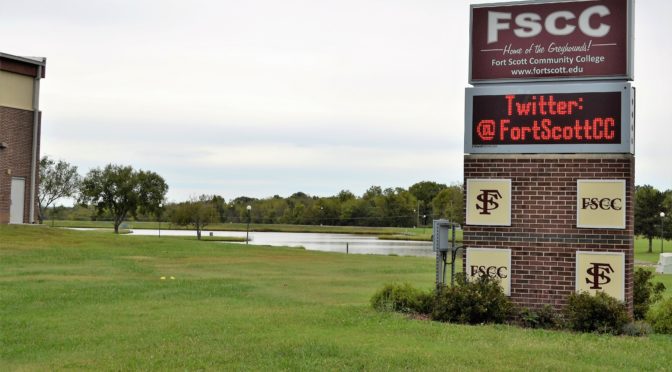
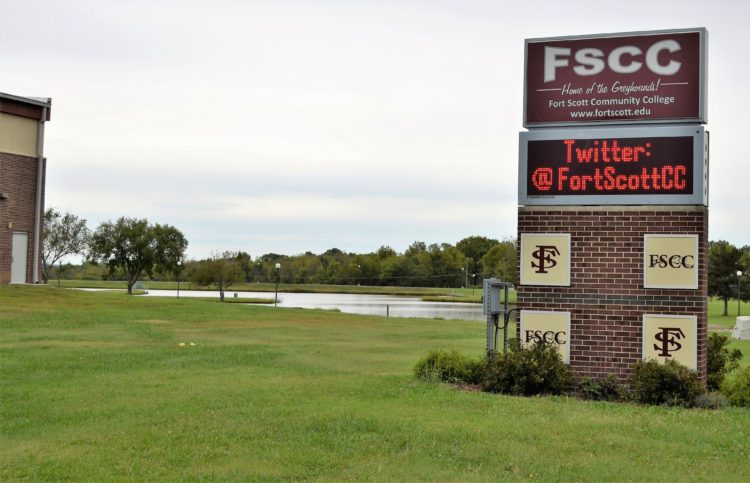
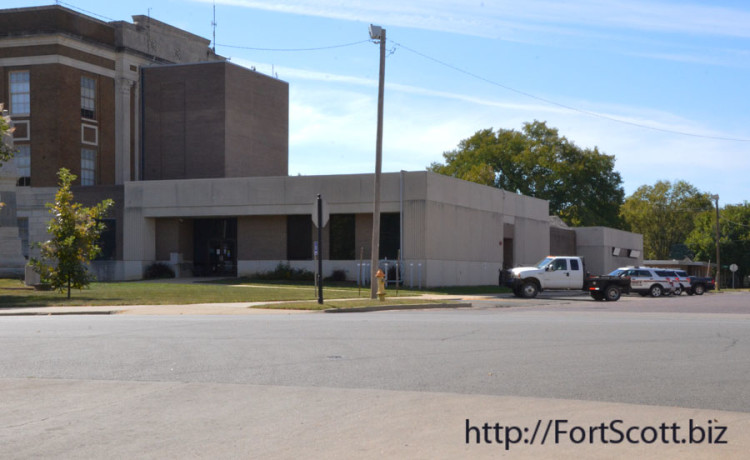
Fort Scott Community College offers the Ed2Go Program.
“This program allows anyone to take classes (non-credit, but can receive a certificate) from the comfort of their home,” DeAnn Welch, Student Success Center Director Tutoring and Testing Administrator at FSCC, said. “They are eight weeks, with two assignments per week.”
According to the FSCC website:
Self-Paced Tutorials are used, with these features:
Build skills or earn continuing education credits
Start Anytime
Most tutorials completed in a few hours
Quick self-study on demand
Supported independent study
Certificate of completion awarded with passing score
Kari, my friend here in Mazatlan, was checking out the silent auction items at the annual Hospice Dinner/Dance when a woman approached her to make small talk–not atypical at these events. My friend shared that the lady was decked out with jewels dripping from every uncovered area of skin. The lady asked if Kari had been to Mexico before. When Kari answered “for 30 years,” the lady’s tone changed.
“I’m going to get to the point,” she declared. “I noticed you are dressed very nicely, but your husband has on shorts. That is entirely inappropriate for an event like this. If you look around, the men here have on slacks which is the custom in Mexico.”
Kari was speechless. There were close to 1000 people at this fundraiser, and the stranger had appointed herself the Sergeant-at-Arms for evening attire. “I just thought you should know for the future,” she said before disappearing into the crowd.
Kari returned to her table and shared what happened with our friends who immediately offered to take the woman to the parking lot and beat her up. (We’re close like that.)
Dave and I heard the story the following morning when we drove Kari to church. What my friend did next was a brave move. She sought out the stranger and confronted her, sharing that Rob, her husband, had on “nice” shorts (not the cargo ones he was wearing before Kari asked him to change) and a nice shirt, that there were a few other men there in shorts, that she doubted the Hospice leadership recognized a difference between the way people were dressed when it came to accepting their monetary donations, and that if it were that big of a deal, the tickets should indicate so. The stranger did not back down.
I told my friend what she should have said. “Thank you for letting me know that. Rob and I will take back our $10,000 donation since Hospice is so embarrassed by the way he is dressed.” ( Clever, right?) But since we were on our way to church, I offered a nicer counter. “I’m wondering why you are putting so much emphasis on how people are dressed. One day we will all stand before God and be judged on what’s in our hearts. He won’t care how many jewels we own or how we look to other people.”
Of course, then the meddlesome woman probably would have taken me to the parking lot and beaten me up.
What the stranger didn’t know—and maybe wouldn’t have cared to know–is that Kari is a Christian but her husband is an atheist. It has not been easy. She and I are in a Bible study together in which last week’s Philippians’ study guide asked a question about what we could do that week to be more Christlike. Kari had shared with her husband that her goal that week was to complain less (Chapter 2, vs. 14: Do all things without complaining or disputing.) His response? “We’ll see how long that will last.” I couldn’t help but groan.
And here is a busybody who wants Kari to be sure Rob understands the wardrobe rules of Mexico! An argument my friend chose not to have.
Here’s how I see it. Should Rob have worn slacks? Probably. (He doesn’t even own a pair.) But not at the expense of Kari nagging or driving a wedge in their relationship.
Perhaps Nosey-Nelly was trying to be helpful. Seriously, perhaps she was. Or perhaps her self-worth came from the gems she wore while her heart remained under-dressed and critical, which in my opinion is far more destructive than her prying personality.
And then again, whatever the case, perhaps none of it is any of my business.
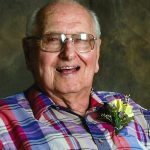
Richard Cowen, 92, of Fort Scott, Kansas passed away Wednesday evening, February 28, 2018, at the Medicalodge Nursing Home.
He was born December 31, 1925, in Fort Scott, Kansas, the son of John Harold and Gladys (Emmerson) Cowen. He married Freda Elaine Bentley July 31, 1948, in Fort Scott, Kansas, and she preceded him in death October 2, 2012.
Richard graduated from Fort Scott High School with the class of 1944.
He served in the US Army, Private First Class, and served in the Special Services Army Band.
He worked as a Manor Bread Delivery Driver, the Frisco Railroad, as well as the family dairy business, Cold Spring Guernsey Dairy, located on the Cowen farm on Stringtown (Native) Road. He also worked for Kansas Gas Service for 28 years before his retirement.
Richard and Freda were members of the Iza Stompers Square Dance Club and the Old Forters Camping Club. He was a member of the First Presbyterian Church, having served as a Deacon and Elder.
Richard is survived by his sons, Wayne Cowen and wife Beverly, Kenton Cowen, Bradley Cowen and wife Joyce, and Larry Cowen and wife Sondra, all of Fort Scott; sister-in-law Phyllis Ward and husband Harold, of Wichita, Kansas; sister-in-law Jolene Clark of Belton, Missouri; fifteen grandchildren; twenty-seven great-grandchildren, and three great-great-grandchildren. In addition to his wife Freda, he was also preceded in death by his parents.
Dr. Rev. Jared Witt will conduct funeral services 10:00 a.m. Tuesday, March 6, 2018, at the First Presbyterian church, under the direction of the Konantz-Cheney Funeral Home.
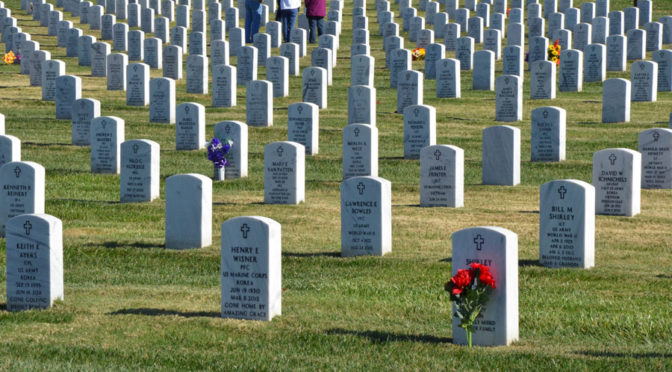
Burial will follow in the Fort Scott National Cemetery.
The family will receive friends at the funeral home Monday evening, March 5, 2018, from 6:00-7:00 p.m. Memorial contributions may be made to the First Presbyterian Church or Mercy Hospice, and may be left in the care of the Konantz-Cheney Funeral Home, 15 W. Wall Street, PO Box 309, Fort Scott, KS 66701. Condolences may be submitted to the online guestbook at konantz-cheney.com.
#HaveTheConversation about problem gambling to raise awareness for this often-hidden disease
TOPEKA, Kan. – The Kansas Department for Aging and Disability Services in collaboration with the National Council on Problem Gambling is dedicating the month of March to helping people “Have the Conversation” about problem gambling. Approximately two million (one percent) of U.S. adults are estimated to meet the criteria for pathological gambling, another four to six million (two to three percent) would be considered problem gamblers. Yet gambling remains a hidden addiction for many.
Problem Gambling Awareness Month is designed to help raise awareness of the prevention, treatment and recovery services available for those adversely affected by gambling. The grassroots campaign brings together a wide range of stakeholders – public health organizations, advocacy groups and gambling operators – who work collaboratively to let people know that hope and help exist.
Across Kansas, groups including four state-funded regional task forces and a statewide coalition hold events, mount media campaigns, promote Gambling Disorder Screening Day on March 13 and conduct outreach to people who can make a difference ensuring that problem gambling services are promoted and the public is educated regarding problem gambling.
As March Madness reaches a crescendo with an estimated $10 billion in bets placed on NCAA basketball championship games, calls to the National Problem Gambling Helpline spike an average of 30 percent during this month.
To get help for a gambling problem for you or a loved one, Kansas residents can call the Kansas problem gambling helpline at 1-800-522-4700 or can visit ksgamblinghelp.com for more information. The call is free and confidential. No out-of-pocket cost treatment is available for problem gamblers and concerned others with revenues collected from state-owned casinos. The program is administered by the Kansas Department for Aging and Disability Services.
TOPEKA, Kan. – The Kansas Department for Aging and Disability Services (KDADS) has begun to notify individual consumers about a recent incident in which personal or protected health information was disseminated to a specific group of KDADS business associates.
On February 23, 2018, KDADS became aware of a potential breach of personal or protected health information after an employee sent an unauthorized email containing personal or protected health information to a group of current KDADS business associates.
When notified, KDADS immediately began to reach out to the business associates and to affected consumers. Additionally, KDADS is actively investigating this matter to determine how the incident occurred, and the agency has put in place additional safeguards to ensure that an incident like this does not occur again.
To date, KDADS has verified that the personal or protected health information was only disclosed to the agency’s business associates. Contracts/business associate agreements protect this information from further dissemination, inappropriate or unauthorized use, and/or disclosure. Currently, KDADS has no evidence to indicate that the information has been misused or disclosed publicly.
The email contained an attachment which included consumer names, addresses, dates of birth, Social Security numbers, gender, in-home services program participation information and Medicaid identification numbers. No banking, credit card or driver license information was included.
All involved consumers identified by KDADS will be sent an individual letter explaining the situation. Please check the KDADS website at http://www.kdads.ks.gov for any additional information, which will be posted as it becomes available. Consumers and other interested persons may contact KDADS by telephone without incurring charges at 1-800-432-3535. Please leave a message for Kahlea Porter requesting a return call.
KDADS apologizes sincerely to the consumers affected for any distress or inconvenience this may cause. KDADS is undertaking an immediate review of policies and procedures relevant to preventing a similar situation from occurring.
Options for consumers who want to take additional action to protect themselves:
Some state laws allow you to place a security freeze on your credit reports. This would prohibit a credit reporting agency from releasing any information from your credit report without your written permission.
You may order a copy of your credit report free of charge. You are entitled to receive one free credit report per year from each of the three major credit bureaus listed below.
You may place a fraud alert on your credit report. This can help prevent someone from opening additional accounts in your name or changing your existing accounts. You can call any of the three major credit bureaus listed below to place the fraud alert request.
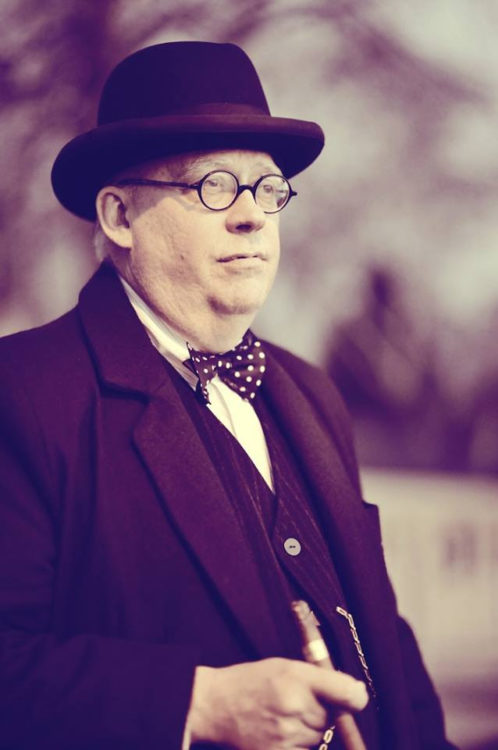
“Winston Churchill” is coming to Fort Scott. For those who enjoyed “Teddy Roosevelt” in 2016, the Friends of Fort Scott National Historic Site are bringing “Winston Churchill” to the Liberty Theatre on Saturday, March 31, 2018, for their Annual Friends Fest.
Randy Otto is Winston and he is the only Winston Churchill impersonator endorsed by the Churchill family. He is a nationally acclaimed “Winston” and the Friends group wanted to bring another impersonator to Fort Scott on the caliber with Teddy Roosevelt who performed at the 2016 Friends Fest.
Randy Otto’s recitation’s genesis was a simple encouragement from Otto’s University British History Professor in 1973. He encouraged Otto not only to study Churchill’s life academically but to emulate the great man on stage.
An alumnus of the Milwaukee Repertory Theatre and numerous theatrical roles, Otto over the past 43 years has been a Churchill scholar, motivational speaker, and performance artist who has honed the concept into a one-man show designed to entertain and electrify.
The event on March 31 will feature Otto’s performance with an appetizer buffet prior to the performance. Tickets are $35 and are available this week at the Fort Scott Area Chamber of Commerce.
For more information, contact Martha Scott, Chairman, 2018 Friends Fest, at 620-224-9924.
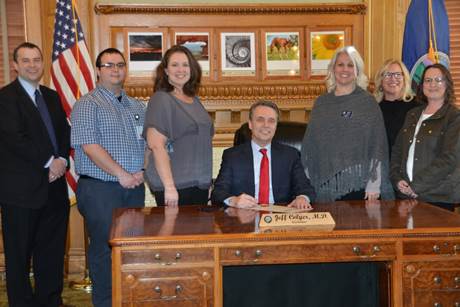
Governor Jeff Colyer signs a proclamation designating March as Social Work Month. Those in attendance from left to right: Steven Greene II, DCF Legislative and Policy Director; Levi Jenkins, DCF Child Protection Specialist; Ann Goodall, DCF Child Protection Specialist; Governor Colyer, State of Kansas; Rachel Marsh, Saint Francis Community Services (SFCS) Executive Director of Government and Community Relations; DCF Secretary Gina Meier-Hummel; Patricia Long, DCF Director of Prevention and Protection Services.
Governor Jeff Colyer signs proclamation declaring March Social Work Month
TOPEKA – Kansas Department for Children and Families (DCF) social workers are often one of the first lines of defense against abuse and neglect for children and vulnerable adults. They work in collaboration with law enforcement, the courts, contractors, families and others to ensure the safety and well-being of those who cannot protect themselves. Due to the high demands of the job, Kansas, like other states across the nations, is experiencing a shortage of social workers.
To call attention to this need, today, Secretary Gina Meier-Hummel and DCF staff joined Governor Jeff Colyer, M.D., as he designated March as Social Work Month at the State Capitol Building, Topeka.
“Social workers perform an essential duty for Kansas families, and I am happy to recognize their dedication in a field that is so challenging,” said Governor Jeff Colyer. “Recruiting and retaining social workers is difficult, so I fully support the efforts of DCF to incentivize social workers to consider State service.”
DCF, along with its contracted providers, employ more than 1,000 social workers statewide. DCF has taken the following steps to attract social workers.
Increased the starting salary for social workers to $40,000, and supervisors to $44,000
Increased DCF attendance at career fairs, including out-of-state
Started posting open positions on Handshake, Indeed and DCF’s Facebook page
Worked with the Kansas Department of Commerce to recruit
Partnered with a headhunter organization to fill positions
Started accepting social workers on a part-time basis and as temporary positions. (These part-time social worker positions have increased dramatically since 2010.)
Increased the number of social work practicum students we take per region.
Hosted on-site career fairs at our DCF service centers.
“We should recognize and support our social workers, because their work is tough and essential,” said Secretary Meier-Hummel, a social worker. “I have the upmost respect for those who come to work each day with the goal of changing and saving lives.”
DCF Social Worker Ann Goodall, Topeka, discusses the challenges and rewards of her job.
“People don’t really understand the day in, day out duties because our work is so confidential. We protect families from harm, but we also protect their privacy,” Goodall said. “I’ve been a social worker in child welfare for 20 years, it is my passion. Getting to be one-one-one with children, talking with them about their lives, it makes a difference, and it is what I love doing.”
To become a social worker, individuals must graduate from an accredited university with at least a bachelor’s degree in social welfare. They must also pass a licensure exam and maintain the license with 40 hours of continuing education, every two years.
DCF is always looking for people who have a heart for serving vulnerable adults and children in Kansas. To learn more about becoming a social worker, and to view available positions, visit www.jobs.ks.gov.
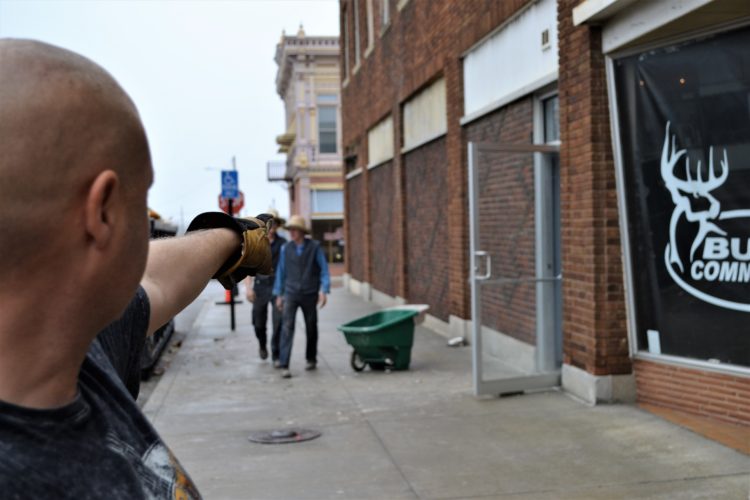
Michael Barnard, working for Walker Construction and Demolition, points to the brick sections on the building at Wall Street and National Avenue, that will be converted back to the original storefronts, he said.
Workers were doing demolition on the building located at 9 S. National Avenue Wednesday, known as the old Tribune building.
Michael Barnard and members of the Yoder family were”gutting” down to the floor and wall, Barnard said.
The crew was hired by Walker Construction and Demolition, Barnard said.
Jennifer LaRoche is the owner of the building, since early 2017.
In a later interview, LaRoche said the demolition is part of the “cleaning up” of the historic building at Wall Street and National Avenue, “so we can see what we got”.
“We still have lots of ideas,” for the building, she said.
A member of the Yoder family works on the demolition of the building at 9 S. National Avenue that most recently housed the Fort Scott Community College Cosmetology School. The school was a section of the Tribune building.
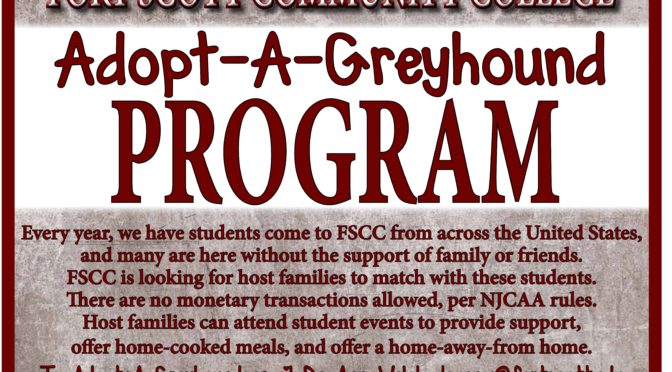
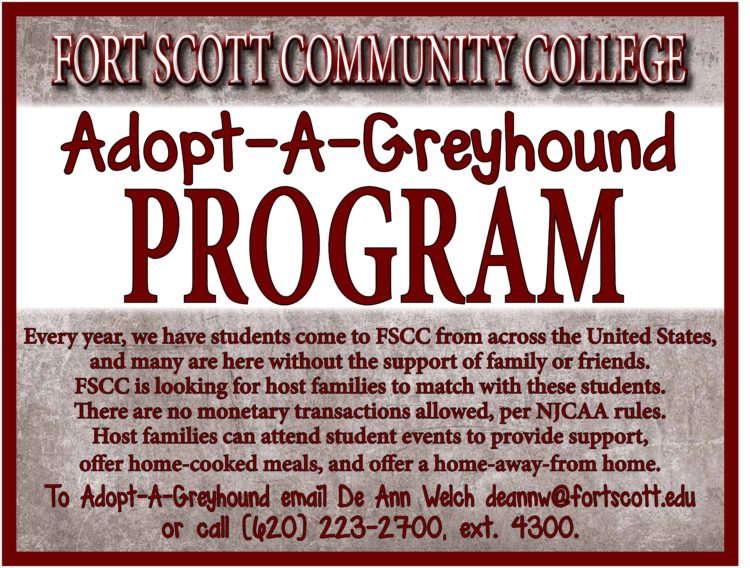
DeAnn Welch started the Adopt-A-Greyhound program eight years ago at Fort Scott Coummunity College because of a need she perceived.
In her job as FSCC Student Success Center Director and Tutoring and Testing Administrator see saw students coming to college from other distant states.
“They come here not knowing anyone,” Welch said. ” Some even come here on a one way bus ticket in hopes of playing football and getting away from a life that they could have ended up dead. It is a sad situation.”
She had an idea.
“I thought, why not place these kids with local families who can give them that home away from home,” she said.
“The families can have this student over for dinner, go to their games if they are athletes, and simply be a support system.”
The program has had many success stories, she said.
“Some families still keep in touch with their student and even travel to see their games when they advance to the next level. It truly has developed many lifelong friendships,” Welch said.
For more information, contact Welch at 620-223-2700, ext. 4300 or [email protected]
FULL TIME- O’REILLY AUTOMOTIVE
O’Reilly’s is seeking applications for a Store Counter Sales position. Must have excellent customer service skills. Automotive parts, equipment or systems knowledge. Available for flexible work schedule. ASE certification preferred. 2207 S Main St., Fort Scott
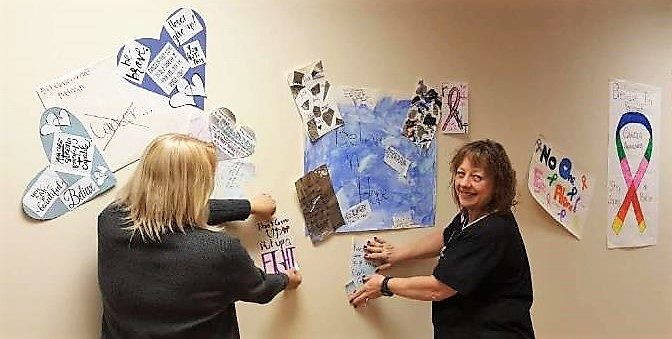
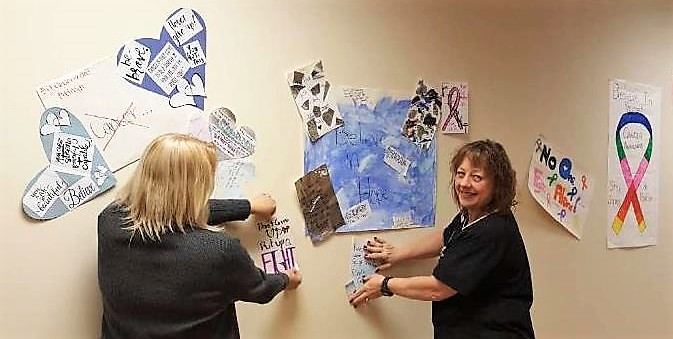
Fort Scott Middle School teacher Michelle Brittain and Susan Wood, RN at Mercy, post sentimental messages on the wall at Mercy Cancer Care Unit of Hope.
With the staggering prevalence of cancer in the United States, it’s likely every person personally knows of someone who has been diagnosed with the disease. According to the National Cancer Institute, an estimated 1,685,210 new cases of cancer were diagnosed in the U.S. in 2016.
More importantly, each case represents a life: a mother, father, sister, brother, friend or neighbor.
That’s where eighth-grade students from Mrs. Michelle Brittain‘s English class at Fort Scott Middle School decided to step in and take on a project which spreads a message of hope to patients at the Mercy Cancer Care Unit of Hope.
The students created sentimental hand-crafted notes on either cards, posters, or even in one case inside origami figures. The messages are displayed in the treatment area for patients, family members and caregiver to read.
“It is humbling to be included in this student-driven project that focuses on encouraging our cancer patients,” said Susan Wood, RN, Mercy Cancer Care Unit of Hope. “When I saw what the kids had created, it gave me goosebumps and brought a tear to my eye.”
The idea for the class project came after the class read a short story by Terry Brooks titled “Imaginary Friends” about a young man who was fighting leukemia. Additionally, all eighth graders recently traveled to the Coterie Theater for Project Art.
“On behalf of our patients, I want to extend a huge thank you to Mrs. Brittan and her students for this extremely kind gesture,” Wood added.
Mercy Hospital Fort Scott is an acute care hospital with 46 licensed beds, offering comprehensive medical, surgical, OB/GYN, pediatric, home care and hospice services. Inpatient care is provided with 24/7 physician coverage. In 2017, Mercy Hospital Fort Scott received The Leapfrog Group’s prestigious A rating. Mercy Clinic Fort Scott is located on hospital grounds as well as Mercy rural health clinics in Arma and Pleasanton.
Mercy, named one of the top five large U.S. health systems in 2017 and 2016 by Truven, an IBM Watson Health company, serves millions annually. Mercy includes more than 40 acute care and specialty (heart, children’s, orthopedic and rehab) hospitals, 800 physician practices and outpatient facilities, 44,000 co-workers and 2,100 Mercy Clinic physicians in Arkansas, Kansas, Missouri, and Oklahoma. Mercy also has clinics, outpatient services and outreach ministries in Arkansas, Louisiana, Mississippi and Texas. In addition, Mercy’s IT division, Mercy Technology Services, supply chain organization, ROI, and Mercy Virtual commercially serve providers and patients in more than 20 states coast to coast.