|
MANHATTAN, Kansas — The state rules and regulations board has approved the adoption of temporary amendments to the Kansas industrial hemp regulations which were proposed by the Kansas Department of Agriculture. The regulation amendments will align Kansas’ industrial hemp regulations with the USDA’s Final Rule on commercial hemp production. The amended regulations extend the timeframe to complete sampling and harvest, provide flexibility to producers regarding potential remediation of plants if sampling tests above acceptable THC levels, and increases the threshold at which a crop will be deemed to have been produced negligently. The full amended regulations for K.A.R. 4-34-24, K.A.R. 4-34-25 and K.A.R. 4-34-29 can be found at www.agriculture.ks.gov/IndustrialHemp. Because these amendments directly address regulations that affect harvest, they were expedited to be in place on a temporary basis. Plans are in progress to make them permanent through the official rules and regulations approval process. Public comments may be submitted online after September 2 and a public hearing will be held on November 8 as KDA considers finalizing the regulations; KDA will release details on the public comments and hearing soon. ### Kansas Industrial Hemp Regulations Amended for Harvest Season.pdf |
Category Archives: Kansas
KS New Heart Program
Governor Laura Kelly Announces Kansas Department for Aging and Disability Services Receives $2.7 Million to Fund New KS HEART Program
~ KDADS one of five organizations receiving funding to provide substance use disorder services for pregnant and postpartum women ~
TOPEKA – Today, Governor Laura Kelly announced that the Kansas Department for Aging and Disability Services (KDADS) is one of only five organizations nationally to be awarded a three-year, $2.7 million grant from the Substance Abuse and Mental Health Services Administration (SAMHSA), Center for Substance Abuse Treatment (CSAT). Grant funds through the FY 2020 State Pilot Grant Program for Treatment for Pregnant and Postpartum Women (PPW-PLT) will be used to provide evidence-based, family-centered treatment services to pregnant and postpartum women in Kansas with substance use disorders.
“This grant will expand critical treatment services to support pregnant and postpartum Kansans with substance abuse disorders – along with their children,” said Governor Laura Kelly. “By addressing the behavioral needs of mothers, we can protect mothers and their families.”
The KDADS program, which will be known as KS Helping Empower And Recover Together (KS HEART), will take effect September 30, 2021.
It’s estimated the KS HEART program will serve approximately 55 women a year at two pilot locations, for a total of 165 women over three years. Partners identified in the grant are DCCCA, Inc. and CKF Addiction and Treatment Services, with pilot sites in Salina and Wichita.
“By focusing on family-centered therapy, expanding outpatient programs, and providing community-based wraparound services, the KS HEART program aims to accomplish the goals of decreasing substance use, including opioids, among pregnant and postpartum women in Kansas,” KDADS Secretary Laura Howard said.
The purpose of the KS HEART program is to enhance flexibility in the use of funds designed to:
- Support family-based services for pregnant and postpartum women with a primary diagnosis of a substance use disorder, including opioid use disorders;
- Help state substance abuse agencies address the continuum of care, including services provided to pregnant and postpartum women in nonresidential-based settings; and
- Promote a coordinated, effective, and efficient state system managed by state substance abuse agencies by encouraging new approaches and models of service delivery.
Pregnant and postpartum women using substances face complex challenges that put the health and stability of their family at risk. Funding and eligibility restrictions to existing substance use treatment services often cause women to lose access to care during some of the most vulnerable points postpartum.
“The KS HEART program will bridge identified gaps to services and provide evidence-based treatments, including Medication Assisted Treatment and tobacco cessation as well as increase family stability and support and maintain community tenure and recovery for the whole family unit,” said KDADS Behavioral Health Services Commissioner Andy Brown.
“CKF Addiction Treatment is excited about this grant partnership with KDADS to help further treat the behavioral health needs of pregnant and postpartum women attending our services,” said CKF President and CEO Shane Hudson, MS, MSHCT, LCP, LCAC. “Addiction involves many layers and those with mental health symptoms that only exacerbate the symptoms of addiction need extra support. This grant aligns well with CKF’s focus of positively impacting patient health outcomes in addiction health care settings.”
“DCCCA is proud to partner with this project and excited to bring our expertise in women’s treatment to this work,” DCCCA CEO Lori Alvarado said. “We have prioritized services for pregnant and parenting women for more than 20 years and are eager to expand these critical services to women and children in Kansas.”

Keep Kids Safe In School
|
K-31 section closed west of Fulton on Wednesday
Wednesday, Aug. 25, the Kansas Department of Transportation (KDOT) plans to close K-31 west of Fulton to replace a crossroad pipe. The closure is between reference points 131 and 132 and will be in effect from 7:15 a.m. until 6 p.m.
Traffic should use alternate routes. Check KDOT’s updated traveler information website, www.Kandrive.org, for more road condition and construction details. Persons with questions may call KDOT Area Superintendent Derrick Shannon at (620) 901-6550 or Public Affairs Manager Priscilla Petersen at (620) 902-6433.
Flags Half-Staff to Honor Firefighter
Governor Laura Kelly Directs Flags be Flown at Half-Staff to Honor Firefighter Josh Schwindt
TOPEKA – Today, Governor Laura Kelly directed flags be flown at half-staff at all state grounds, buildings, and facilities on August 20, 2021 in honor of Morton County firefighter Josh Schwindt, who was fatally electrocuted while searching for survivors of a rollover accident on August 16, 2021.
“Today, I directed flags be flown at half-staff to honor Morton County firefighter Josh Schwindt,” said Governor Laura Kelly. “My condolences are with his family, loved ones, and fellow Morton County firefighters during their time of loss. Josh’s commitment to protecting his community and his service to our state will not be forgotten.”
Josh Schwindt will be interred during services held on August 20, 2021.
To receive future email alerts when the governor orders flags to half-staff, please visit: https://governor.kansas.gov/newsroom/kansas-flag-honor.
KS Flags At Half-Staff For Vern Miller
Governor Laura Kelly Directs Flags be Flown at Half-Staff to Honor Former Kansas Attorney General Vern Miller
TOPEKA – Today, Governor Laura Kelly directed flags be flown at half-staff at all state grounds, buildings, and facilities on August 17, 2021 in honor of former Kansas Attorney General Vern Miller. Attorney General Miller will be interred during services held on Tuesday, August 17, 2021.
“As Attorney General, District Attorney, Sheriff, or Marshal, Vern Miller was one of Kansas’ great law enforcement officers,” said Governor Laura Kelly. “His commitment to enforcing the law fairly and standing up for all Kansans defined law enforcement like few before or after. I know that Vern’s legacy will live on through his impact and service to our state.”
To receive future email alerts when the governor orders flags to half-staff, please visit: https://governor.kansas.gov/newsroom/kansas-flag-honor.
KDOT resurfacing K-65 in Bourbon County
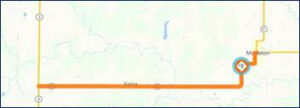
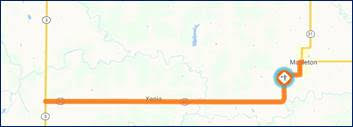
The Kansas Department of Transportation (KDOT) has started a resurfacing project on K-65 in Bourbon County, from K-3 east to K-31. Project activity includes a mill and overlay. Flaggers and a pilot car will guide one-lane traffic through the work zone; expect daytime delays of 15 minutes or less. Shilling Construction of Manhattan, Kansas, is the primary contractor on the project. Check KDOT’s updated traveler information website, www.Kandrive.org, for more road condition and construction details. Persons with questions may contact Area Engineer Troy Howard, (620) 901-6557, or Public Affairs Manager Priscilla Petersen, (620) 902-6433.
KS Dept. of Commerce Virtual Trainings
Commerce announces upcoming Certified Sites workshops
TOPEKA – Lieutenant Governor and Commerce Secretary David Toland today announced a series of upcoming training sessions for the Kansas Certified Sites program.
These three virtual trainings will provide an opportunity to learn more about the process of getting shovel-ready sites in Kansas certified for development.
“The Certified Sites program is a major game changer in the race to attract new businesses and bring more jobs and more dollars to Kansas,” Lt. Governor/Secretary Toland said. “Spreading the word and helping more site owners get certified will show developers the incredible amount of shovel-ready space Kansas has to offer. Join us and learn how to get your site certified.”
In addition to general information on the program, attendees will be invited to ask questions about their specific applications. A step-by-step guide to complete the certification process also will be provided.
All training sessions will be virtual and take place from 9 a.m. to 3 p.m. Registration for each date can be completed at the following links:
The window to register for each session closes five (5) business days before the date of the event.
“This program exists to help site owners get developments started quickly,” Certified Sites Program Manager Jonathan Clayton said. “These training sessions have been designed to make the process as easy as possible. We want to get your site developed now – and we’ve got the tools you need to get it done.”
About the Kansas Department of Commerce
As the state’s lead economic development agency, the Kansas Department of Commerce strives to empower individuals, businesses and communities to achieve prosperity in Kansas. Commerce accomplishes its mission by developing relationships with corporations, site location consultants and stakeholders in Kansas, the nation and world. Our strong partnerships allow us to help create an environment for existing Kansas businesses to grow and foster an innovative, competitive landscape for new businesses. Through Commerce’s project successes, Kansas in 2021 was awarded Area Development Magazine’s prestigious Gold Shovel award and was named Site Selection Magazine’s Best Business Climate in the West North Central region of the United States.
Immunocompromised People Now Authorized For Additional COVID-19
Additional Dose of COVID-19 Vaccine Now Authorized for Immunocompromised People
TOPEKA – The Kansas Department of Health and Environment announced that effective immediately Kansas providers may now administer an additional dose of Pfizer-BioNTech or Moderna COVID-19 vaccine to individuals who are moderately or severely immunocompromised and have already been fully vaccinated with the Pfizer-BioNTech or Moderna vaccines. This follows Thursday’s expansion of the emergency use authorization (EUA) by the Food and Drug Administration for these mRNA vaccines, today’s recommendation of the Centers for Disease Control and Prevention’s Advisory Committee on Immunization Practices (ACIP) and acceptance by the CDC Director. This EUA does not apply to those who received the Janssen/J&J vaccine as there is currently not enough data to determine if an additional dose of Janssen/J&J vaccine will improve immune response in people who are immunocompromised.
“The data shows us that the vaccine efficacy in some people who are immunocompromised is significantly lower than in people who are not immunocompromised,” said Lee Norman, M.D., Secretary of the Kansas Department of Health and Environment. “Additionally, people who are immunocompromised make up to 44% of hospitalized breakthrough cases in the United States. This additional dose may enhance the immunity for those who need extra protection from COVID-19.”
This additional dose is recommended for people who are moderately and severely immunocompromised due to a health condition or medical treatment. This includes
- Active treatment for solid tumor and hematologic malignancies
- Receipt of solid-organ transplant and taking immunosuppressive therapy
- Receipt of CAR-T-Cell or hematopoietic stem cell transplant
- Moderate or severe primary immunodeficiency
- Advanced or untreated HIV infection
- Active treatments with high-dose corticosteroids, alkylating agents, antimetabolites, transplant-related immunosuppressive drugs, cancer chemotherapeutic agents classified as severely immunosuppressive, TNF blockers and other biologic agents that are immunosuppressive or immunomodulatory
KDHE continues to urge people who are immunocompromised, including those who receive an additional dose of mRNA vaccine, to continue to follow prevention measures including
- Wear a mask
- Stay six feet apart from others they don’t live with
- Avoid crowds and poorly ventilated indoor spaces
Close contacts of immunocompromised people are strongly encouraged to be vaccinated against COVID-19.
Documents
Pfizer-BioNTech Vaccine Fact Sheet for Healthcare Providers
Pfizer-BioNTech Vaccine Fact Sheet for Recipients and Caregivers
Moderna Vaccine Fact Sheet for Healthcare Providers
Moderna Vaccine Fact Sheet for Recipients and Caregivers
FDA Press Release – Thursday, Aug. 12
Vital Statistics Services Remains Open, Closed for Walk-In Services
TOPEKA – The Kansas Department of Health and Environment (KDHE) announces that its Vital Statistics Office lobby will close to walk-in services due to COVID-19 effective Monday, Aug. 16. Those needing vital records can visit the KDHE website at www.kdheks.gov/vital to order via online, phone or mobile app.
To order certificates eligible for Will Call pickup, visit our website www.kdheks.gov/vital. Select the type of certificate and then complete the ordering process under the Will Call section. You will be notified by email when your certificate is ready to be picked up. Those customers using Will Call pickup should wear a mask when entering Vital Statistics.
For more information, please visit the KDHE website at www.kdheks.gov/vital.
Vital Statistics Services Remains Open, Closed for Walk-In Services
TOPEKA – The Kansas Department of Health and Environment (KDHE) announces that its Vital Statistics Office lobby will close to walk-in services due to COVID-19 effective Monday, Aug. 16. Those needing vital records can visit the KDHE website at www.kdheks.gov/vital to order via online, phone or mobile app.
To order certificates eligible for Will Call pickup, visit our website www.kdheks.gov/vital. Select the type of certificate and then complete the ordering process under the Will Call section. You will be notified by email when your certificate is ready to be picked up. Those customers using Will Call pickup should wear a mask when entering Vital Statistics.
For more information, please visit the KDHE website at www.kdheks.gov/vital.
Give Input on Future of Kansas Education on August 16

Kansans Can Success Tour will be in Fort Scott at 6 p.m. on Monday, August 16 at the River Room, 3 W. Oak, directly above Luther’s BBQ.
“We are happy to host Dr. Watson and Dr. Neusenwander in Fort Scott,” USD 234 Superintendent Ted Hessong said. “USD 234 is very supportive of the Kansas State Board of Education’s Vision that Kansas can lead the world in the success of each student and the outcomes they have chosen to help define a successful Kansas high school graduate.”
Kansas Commissioner of Education Dr. Randy Watson is facilitating community conversations across the state to gather feedback on the state’s vision for K-12 education, according to https://www.ksde.org/Agency/Fiscal-and-Administrative-Services/Communications-and-Recognition-Programs/Vision-Kansans-Can/Success-Tour
“The Kansans Can Success Tour is a 50-city event that kicked off July 26. Commissioner Watson, Deputy Commissioner Dr. Brad Neuenswander and members of the Kansas State Board of Education will gather community input on the current direction for Kansas K-12 education and share progress made toward achieving the vision established by the Kansas State Board of Education,” according to the website.
“The 2021 tour is a follow-up to the Kansas Children. Kansas’ Future. community conversations tour that took place in 2015. Using the feedback gathered from more than 2,000 parents, educators, legislators, school board members, business community members, and more, the State Board created a new vision for education: Kansas leads the world in the success of each student.
“Now, nearly six years later, we are again asking you to lend your voice to the conversation.
“Please plan to join one of the 50 events scheduled across the state. If possible, attendees are asked to bring a laptop, cell phone or tablet for an interactive portion of the presentation.”