
He gave the statistics of the number of COVID positive students and staff/total number of students and staff in a building as of Friday:
Category Archives: Health Care
COVID-19 Update and Status on Kansas Hospitals.
Rebecca Johnston, Southeast Kansas Multi-Health Department Administrator, presented a link to a Youtube video on a presentation about the dire state that Kansas Hospitals are in right now: https://www.youtube.com/watch?v=Nz62gGguXhw
“I urge our residents to wear a mask in large gatherings, use good hygiene, practice social distancing, get vaccinated if able and stay home when sick!” she said.
2022 Updated COVID-19 Guidelines
For General Population + K-12 Schools
January 6, 2022
IF YOU TEST POSITIVE FOR COVID-19:
ISOLATE
EVERYONE, REGARDLESS OF VACCINATION STATUS:
- Stay home for at least 5 days
- Stay home as long as you have symptoms. If you have a fever, continue to stay home until your fever resolves.
- If you have no symptoms or your symptoms resolve, you can leave your house after a minimum of 5 days of isolation.
- Continue to wear a mask around others for 5 additional days after you leave isolation.
IF YOU HAVE BEEN EXPOSED TO COVID-19:
QUARANTINE PROCEDURES
IF YOU ARE VACCINATED:
|
IF YOU: Have been boosted OR Completed the primary series of Pfizer or Moderna vaccine within the last 6 months OR Completed the primary series of J&J vaccines within the last 2 months OR Have had lab-confirmed COVID-19 within the last 90 days |
YOU SHOULD:
|
IF YOU ARE NOT FULLY VACCINATED:
|
IF YOU: Completed the primary series of Pfizer or Moderna vaccine more than 6 months ago and are not boosted OR Completed the primary series of J&J more than 2 months ago and are not boosted OR Are unvaccinated |
YOU SHOULD:
|
*Please note: these guidelines are not for healthcare workers or congregate settings (correctional facilities, long-term care facilities, daycares).
Health Department COVID-19 Guidelines
SEK Multi-County Health Department of Allen, Anderson, Bourbon, and Woodson Counties provided the following:
2022 Updated COVID-19 Guidelines
January 4, 2022
IF YOU TEST POSITIVE FOR COVID-19:
ISOLATE
EVERYONE, REGARDLESS OF VACCINATION STATUS:
- Stay home for at least 5 days
- Stay home as long as you have symptoms. If you have a fever, continue to stay home until your fever resolves.
- If you have no symptoms or your symptoms resolve, you can leave your house after a minimum of 5 days of isolation.
- Continue to wear a mask around others for 5 additional days after you leave isolation.
IF YOU HAVE BEEN EXPOSED TO COVID-19:
QUARANTINE PROCEDURES
IF YOU ARE VACCINATED:
|
IF YOU: Have been boosted OR Completed the primary series of Pfizer or Moderna vaccine within the last 6 months OR Completed the primary series of J&J vaccines within the last 2 months |
YOU SHOULD:
|
IF YOU ARE NOT FULLY VACCINATED:
|
IF YOU: Completed the primary series of Pfizer or Moderna vaccine more than 6 months ago and are not boosted OR Completed the primary series of J&J more than 2 months ago and are not boosted OR Are unvaccinated |
YOU SHOULD:
|
*Please note: these guidelines are not for healthcare workers, school-aged children, or people living in congregate settings.
Kansas sees a 54% increase in drug overdoses in first 6 months of 2021
TOPEKA – The Kansas Department of Health and Environment (KDHE) continues to highlight the importance of overdose prevention resources and education amid increased drug overdose deaths in 2021. Provisional surveillance results from the State Unintentional Drug Overdose Reporting System (SUDORS) show that at least 338 Kansas residents have died of drug overdose between January 1, 2021 and June 30, 2021. The tally represents a 54% increase from the 220 drug overdose deaths identified by SUDORS surveillance in the same 6-month time frame in 2020. Provisional data represents the most current estimates and is subject to change.
SUDORS collects information regarding unintentional and undetermined intent drug overdose deaths. It combines various data sources, including death certificates, medical examiner and coroner reports, and law enforcement reports to provide insight into circumstances surrounding overdose deaths. SUDORS is administered by the Centers for Disease Control and Prevention and more information can be found on their website.
Of the provisional 338 deaths, 149 involved fentanyl or fentanyl analogs, 149 involved methamphetamine and 40 involved other licit and illicit drugs, such as cocaine, benzodiazepines and prescription opioids. More than one drug can be involved in a fatal drug overdose, so these values are not mutually exclusive.
Fentanyl continues to drive the uptick in fatal drug overdoses in Kansas. This is largely attributed to increased availability, accessibility and use of illegally manufactured fentanyl statewide. Fentanyl is a powerful synthetic opioid that is often combined with other drugs, such as heroin and cocaine, or used as a standalone drug. Due to its potency, fentanyl-involved overdoses have a fast onset and may be difficult to reverse.
There are several resources available to prevent drug overdoses. Recovery from SUD is possible. Those in need of help can call Kansas’s SUD hotline at 866-645-8216 or visit FindTreatment.gov to locate treatment services. People who use drugs and their support networks have access to naloxone and are trained in overdose recognition and naloxone administration procedures. Naloxone is a medication that reverses the effects of opioid overdoses. Kansas allows pharmacists to dispense naloxone to patients without a prescription pursuant to KAR 68-7-23. Visit ktracs.ks.gov/pharmacists/naloxone-dispensing to find a naloxone-dispensing pharmacy near you.
DCCCA, Inc. has a naloxone program that is funded by the Kansas Department of Aging and Disability Services (KDADS) through the State Opioid Response (SOR) grant. DCCCA has a limited supply of naloxone kits available for those who are unable to access it through a local pharmacy or other means. Additionally, DCCCA offers free naloxone training. Please visit dccca.org/naloxone-program for more information.
Please visit PreventOverdoseKS.org for resources, epidemiological data, and more information on Kansas’s efforts to prevent drug overdoses.
Positive Events in Fort Scott: Mayor Jones

Fort Scott Mayor Josh Jones said many positive events happened in the community this past year, and the city is poised for some promising events in the new year.
“A lot of things done in 2021 laid the groundwork for 2022 and we expect a lot of 2021 things to be executed in 2022,” Jones said.
The following is what Jones provided fortscott.biz as accomplishments.
In 2021, the Fort Scott City Commission:
1. Refinanced city bonds saving $15,500 per year over the next five years.
2. Passed a half-cent sales tax with 90% of revenue going towards streets and 10% going towards parks. This money will start coming in, in 2022.
3. Started an in-house safety training program saving the city $15,000 per year.
4. Utilized the Firstsource Building for Southeast Kansas Multi-County Health Department’s giving mass vaccines during the height of the COVID-19 pandemic.
5. Put out Requests for Qualifications for a new city attorney leading to the city commission hiring a city attorney saving the city approximately $200,000 a year.
6. Approved to enter into a cost-sharing venture with the Bourbon County Commission for joint purchase of materials and equipment.
7. Approved a conditional use permit for an area south of town to allow a micro-meat processing plant to build a facility, which will create about 30 jobs.
8. Implemented the SeeClickFix app, which allows citizens to report road problems and code nuisances.
9. Started semi-monthly roller skating sessions at Buck Run Community Center for an added amenity for the community.
10. Moved city-county emergency dispatch to the Bourbon County Courthouse.
11. Improved the beach area at Lake Fort Scott.
12. Sold the Firstsource Building for $315,000.
13. Sold four Lake Fort Scott lots for approximately $500,000.
14. Entered into a shared services agreement with Bourbon County for information technology services, saving approximately $30,000 per year.
15. Used $200,000 of American Rescue Plan Act (ARPA) funds for a feasibility study for re-use of the former Mercy Hospital Building as a hospital.
16. Reworked and finalized setting up the Fort Scott Land Bank which focuses on the conversion of vacant, abandoned, tax-delinquent, or otherwise underused properties into productive use.
17. Approved $2,000 bonuses for all emergency services workers that work for the city.
18. Entered into an agreement with Bourbon County REDI (Regional Economic Development, Inc.) to provide economic development services for the City of Fort Scott, saving approximately $100,000 a year.
19. Repaired over one mile of city sewer lines.
20. Entered into an agreement with the Kansas Department of Transportation for traffic signal upgrades in 2022 on Highway 69.
21. Was awarded a $50,000 grant from T-Mobile Internet for upgrades to the Skubitz Plaza area on the north end of historic downtown Fort Scott.
Bourbon County Commission Highlights For 2021

Bourbon County District 1 Commissioner Lynne Oharah is optimistic for the future.
“I am seeing major endeavors in economic development, improved infrastructure, and continued cost savings to the taxpayers,” Oharah said in response to questions from fortscott.biz.
“One of the major accomplishments that was achieved in 2021 is the mill levy was reduced by 1.68 mills for the 2021 budget year and 2.43 for the 2022 budget year which is a total reduction of 4.11 mills or approximately $440,000 taxpayer dollars, which is a trend that the commission is dedicated to continuing.”
A significant success this year was the asphalt program for roads.
“Our Public Works Director and his crews were able to lay 14 miles or 28 lane miles of asphalt at the depth of 2 and ½ inches which has never been accomplished in at least the last seven years,” he said. “If this trend continues through a vigorous chip and seal program coupled with increased asphalt application we are in a position to improve all of our asphalt roads.”
Additionally, the public works crews are increasing gravel production which will mean more gravel on county roads, he said.
“Although COVID-19 hit our community hard this year, the residents continued to support our local economy, “Oharah said. “Sales tax receipts were up this year, allowing us to do more projects in the road and bridge department on hard surface roads.”
“2021 saw the reorganization of BEDCO (Bourbon County Economic Development Council, Inc.) into a county-wide economic development board which was able to consolidate economic development for the county and cities, as a whole,” he said.
It is now called Bourbon County REDI (Regional Economic Development Inc.) and a new economic development director was hired, Rob Harrington.
“One of Rob’s first tasks was to provide a roadmap to a successful economic development program,” he said.
“Just to name one of these successes is the introduction of a $125,000 granting program that awarded grants to the smaller communities to improve quality of life in these communities, plus a bike recreation project in Gunn Park,” he said.
Harrington, along with other individuals, is working to increase access to healthcare, which is one of the keys to the growth of Bourbon County, he said.
Oharah said the results of the hospital feasibility study will be released on January 31.
For the Bourbon County Courthouse, there have been many personnel changes.
The commission has hired Susan Bancroft as the financial/human resource director, which has been needed for many years, he said.
This position has resulted in an ability to provide the financial tracking and oversite, budget planning, program implementation, and human resource services that have been lacking, he said.
Additionally, Bancroft is working part-time for the City of Fort Scott until they can find a replacement finance director.
A new county appraiser was hired, Matt Quick.
“Matt is very good at what he does and very good at public relations,” he said.
The commissioners also hired a new county clerk, Ashley Shelton. “Ashley has hit the road running, is personable, and a fast learner,” he said.
The county’s information technology department has been busy, as the City of Fort Scott and the county signed a contract to share the services and their costs, he said.
“The IT department worked with the 911 dispatch center to move dispatch into the old jail area at the courthouse which increases safety for this essential group,” Oharah said. “IT is continuing to work on providing broadband access to areas of Bourbon County that are poorly served.”
“Lastly, I’m sure that you have noticed that the front steps at the courthouse have been replaced,” he said.
A few anticipated Bourbon County Commission 2022 projects:
- Start repairs on the Elm Creek Lake dam.
- Move all budget responsibilities under directors and elected officials.
- Move to electronic time reporting.
- Implement public works to handle public works projects and work orders.
“As we wrap up 2021, I want to wish our residents a happy new year and I look forward to a more prosperous year in 2022,” he said.
HAVE YOU TESTED POSITIVE OR BEEN EXPOSED TO COVID-19?
If you’ve recently tested positive for COVID-19 and have questions regarding isolation, please call:
(785)542-6625, then dial 0 for assistance.
If you have been exposed to someone with COVID-19 (close contact) and have questions about quarantine, please call:
(866)534-3463 and follow prompts. For contact tracing, dial 3.
Johnson and Johnson Vaccine No Longer Offered at Health Department
SEK Multi-County Health Department
Administrator/SEK Local Health Officer
*411 N. Washington, Iola, KS 66749
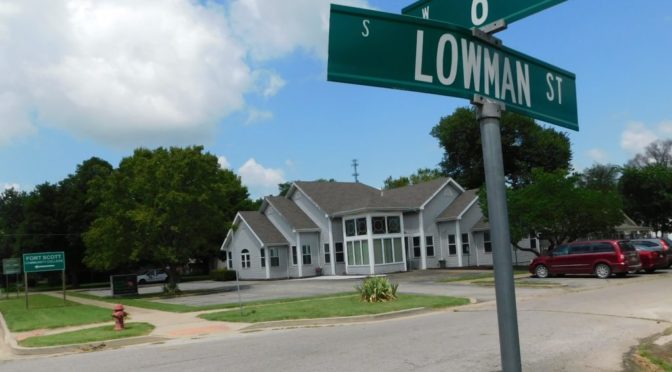
*524 S. Lowman, Ft. Scott, KS 66701
P(620)223-4464 F(620)223-1686
If someone has tested positive and has questions, they may call their Local Health Department, but otherwise if they would like answers on when they should return to work, school, etc. please call the COVID-19 hotline (866)534-3463.
Rebecca Johnson BSN, RN
SEK Multi-County Health Department
Administrator/SEK Local Health Officer
*524 S. Lowman, Ft. Scott, KS 66701
P(620)223-4464 F(620)223-1686
Area Missionaries Home on Furlough From Haiti

A former Girard medical doctor and his wife shared some of their experiences as medical missionaries to Haiti on Dec. 18 at Girard’s Public Library.
Dr. Jim and Sandy Wilkins have served in Haiti since 1999 and currently have approximately 35,000 patients in the area they serve west of the capital city, Port Au Prince. They are home visiting family for two weeks.
Haiti Health Ministries is located in Gressier.
Haiti is the poorest country in the Western Hemisphere and conditions have deteriorated even further since the assassination of the country’s president this year, Sandy said.

The COVID Pandemic has curtailed the normal amount of volunteers that the ministry has seen in the past.
The current need is a maintenance person and other Christian mission-minded volunteers, Jim said.
To learn more about the ministry:
https://www.haitihealthministries.org/
KDHE Amends Travel & Exposure Related Quarantine List
TOPEKA – The Kansas Department of Health and Environment (KDHE) has amended its travel quarantine list to remove the countries of Austria, Belgium, Cayman Islands, Czechia, Gibraltar, Jersey, Liechtenstein, Netherlands, Slovakia and Slovenia. The country of Andorra has been added to the travel quarantine list. An unvaccinated individual should quarantine if they meet the following criteria:
- Traveled between Nov. 4 and Dec. 17 to Slovenia.
- Traveled between Nov. 18 and Dec. 17 to Austria, Cayman Islands and Gibraltar.
- Traveled between Dec. 2 and Dec. 17 to Belgium, Czechia, Jersey, Liechtenstein, Netherlands and Slovakia.
- Traveled on or after Dec. 17 to Andorra.
- Attendance at any out-of-state or in-state mass gatherings of 500 or more where individuals do not socially distance (6 feet) and wear a mask.
- Been on a cruise ship or river cruise on or after March 15, 2020.
The next travel quarantine list update will be sent out during the first week of January.
The travel and mass gathering quarantine period is seven days with a negative test result or 10 days without testing, with release from quarantine on Day 8 and Day 11, respectively. Further information on quarantine periods can be found on KDHE’s website.
For those traveling internationally, the Centers for Disease Control and Prevention (CDC) is requiring testing within three days of flights into the U.S. For further information on this and other requirements, visit their website.
For those who are fully vaccinated (meaning it has been greater than two weeks since they completed their vaccinations) they are not required to quarantine regarding travel or mass gatherings if they meet all of the following criteria:
- Are fully vaccinated (i.e., ≥2 weeks following receipt of the second dose in a 2- dose series, or ≥2 weeks following receipt of one dose of a single-dose vaccine).
- Have remained asymptomatic since the travel.
Persons who do not meet the above criteria should continue to follow current quarantine guidance for travel or mass gatherings.
Additionally, people with previous COVID-19 disease are not required to quarantine following travel if they meet all of the following criteria:
- Have evidence of a previous infection supported by a positive PCR or antigen test
- Are within 6 months following infection. If an investigation was done documenting the date that symptoms resolved, or the date isolation measures were discontinued for asymptomatic patients, then the 6-month period can start from that end date. If those dates are not available, then the period will start from the date of the positive laboratory test. A serology or antibody test may not be substituted for a laboratory report of a viral diagnostic test.
- Have remained asymptomatic since the travel
Persons who do not meet all three of the above criteria should continue to follow current quarantine guidance for travel.
The travel quarantine list is determined using a formula to evaluate new cases over a two-week period, then adjusted for population size to provide a case rate per 100,000 population. This provides a number that can then be compared to the rate in Kansas. Locations with significantly higher rates — approximately 3x higher — are added to the list.
For more information on COVID-19, please visit the KDHE website at kdhe.ks.gov/coronavirus.
First confirmed case of Omicron variant detected by State Lab

TOPEKA – The Kansas Department of Health and Environment (KDHE) today announced that the state Health and Environmental Laboratories has found the Omicron variant of the SARS-CoV-2 virus in one Kansas resident.
The Kansas Health and Environmental Laboratories are screening all current positive PCR COVID-19 samples received at the lab to look for a specific genetic characteristic that would indicate the Omicron variant. Any samples that screen positive will be sequenced for confirmation of the Omicron variant. Additionally, the lab sequences a random sample of PCR positive COVID-19 samples regardless of whether they pass this screening process. This multi-pronged approach led to the detection of the variant.
“Since the Omicron variant was classified as a Variant of Concern, KDHE’s Kansas Health and Environmental Laboratories has been working to identify the variant in the state. Through genomic sequencing, they were able to confirm the first case of the Omicron variant in Kansas,” Janet Stanek, Acting Secretary, said. “The detection of the variant does not come as a surprise. This virus is highly infectious and transmittable. We must do our part to protect ourselves and those around us by using the tools available to us.”
The individual with the Omicron variant is a vaccinated adult in Franklin County. This individual has not received a booster dose. No additional details will be released to protect the privacy of the individual.
Health officials urge Kansans to use the following tools to protect against COVID-19 and the Omicron variant.
- Get vaccinated and boosted. Vaccines remain the best tool to protect people from COVID-19, slow transmission and reduce the likelihood of new variants emerging. The three authorized COVID-19 vaccines are highly effective in preventing serious illness, hospitalizations, and death. Scientists expect the vaccines to prevent serious illness, hospitalizations, and death in people infected with the Omicron variant. COVID-19 vaccines are now authorized for people ages 5 and over. The COVID-19 booster shots are authorized for all individuals ages 16 and over. To find a vaccine near you, visit Vaccines.gov.
- Wear a mask. Masks offer protection against all variants. It is recommended that people wear a well-fitting mask in public indoor settings in Kansas, where COVID-19 transmission remains high, regardless of vaccination status.
- Get tested. If you are sick or have been in close contact with someone diagnosed with COVID-19, it is recommended that you get tested for COVID-19. COVID-19 tests are available across Kansas. Go to KnowBeforeYouGoKS.com to find a free testing location near you.
At-home tests are available for purchase at grocery stores and pharmacies. These can be used at home, work or anywhere and can provide rapid results. If a positive result is received through an at-home test, individuals should follow up with a health care provider about a confirmation test.
- Social distance. When in public settings, stay at least 6 feet from other people, especially if you are at higher risk of getting sick.
KDHE Launches New Initiatives to Address Maternal Mortality
TOPEKA – The Kansas Department of Health and Environment (KDHE) has been selected by the U.S. Department of Health and Human Services (HHS) Office on Women’s Health to receive funding as part of the State, Local, Territorial, and Tribal Partnership Programs to Reduce Maternal Deaths due to Violence. Additionally, KDHE, in partnership with Kansas Perinatal Quality Collaborative (KPQC), has been accepted to enroll into the Alliance for Innovation on Maternal Health (AIM) for the October 2021 cohort. The Kansas maternal mortality rate of 14.8 (2014-2018) is 29.8% higher than the Healthy People 2020 goal of 11.4 maternal deaths per 100,0000 live births. These initiatives will help address the urgent matter of maternal mortality in Kansas.
“These initiatives will provide vital education and training to patients and providers across the state of Kansas,” said Janet Stanek Acting Secretary. “We are thankful for the ongoing collaboration with our partners across the state to implement these key initiatives to help in reducing the maternal mortality rate.”
Maternal Anti-Violence Innovation and Sharing Project
Through Kansas Maternal Mortality Review Committee (KMMRC) case reviews of maternal deaths in Kansas between 2016-2018, homicide was the second leading cause of maternal deaths with substance use disorder and/or mental health contributing to more than half of all pregnancy-associated deaths.
KDHE will work collaboratively with partners at the Kansas Coalition Against Sexual and Domestic Violence (KCSDV), Kansas Connecting Communities (KCC), the KPQC and the KMMRC to launch the Maternal Anti-Violence Innovation and Sharing (MAVIS) Project to reduce maternal deaths in Kansas due to homicide and suicide.
The MAVIS Project will continue to build and expand on the success of the KMMRC to gather additional data related to violent maternal deaths. Additionally, the MAVIS Project will provide cross-training to perinatal care providers and domestic violence service providers related to perinatal mood and anxiety disorders, perinatal substance use and intimate partner violence.
Alliance for Innovation on Maternal Health
KMMRC has determined that approximately one in four deaths of women during or within one year of pregnancy were pregnancy-related, and over 90% of these deaths were preventable.
The Alliance for Innovation on Maternal Health will implement a maternal quality initiative project based on their Postpartum Discharge Transition Patient Safety Bundle. It offers a national forum to exchange innovative ideas and a resource for continuous improvement in maternal safety and quality.
Additional Maternal Health Initiatives
KDHE has partnered with KPQC to launch the Fourth Trimester Initiative (FTI), a statewide effort focused on improving maternal health and decreasing maternal morbidity and mortality for all Kansas mothers. FTI uses a three-pronged collaborative approach to address maternal health by including the patient, private and public sectors in education and awareness efforts, including over 25 birthing facilities across the state.
KDHE’s Maternal Warning Signs Initiative (MWS), a component of the FTI project, provides patient, partner and community education throughout pregnancy and the postpartum period on key topics such as the signs of preterm birth and stillbirth, perinatal mood and anxiety disorders, and warning signs of life-threatening pregnancy-related complications.
More information on maternal and child health is available on our website, kdheks.gov/c-f/mch.htm.