Category Archives: Government

City Offices Closed Jan. 20

The City of Fort Scott City Administrative Offices will be closed on Monday, January 20th, 2020 in observance of the Martin Luther King Day holiday. The offices will reopen on Tuesday, January 21st, 2020.

The City’s tree and brush dump site located on North Hill will also be closed on Saturday, January 18th, 2020 for the Martin Luther King Day holiday. It will be open again on Tuesday, January 21st, 2020 from 4:00 p.m. to 6:00 p.m.

Bourbon County Commission Agenda Jan. 14

Agenda

Bourbon County Commission Room

1st Floor, County Courthouse

210 S. National Avenue

Fort Scott, KS 66701

Tuesdays starting at 9:00

Date: January 14, 2020

1st District-Lynne Oharah Minutes: Approved: _______________

2nd District-Jeff Fischer Corrected: _______________

3rd District-Nick Ruhl Adjourned at: _______________

County Clerk-Kendell Mason

1:30-2:00 – Jim Harris

2:00-2:15 – John George – Wind Generation Opportunities

2:15-2:30 – Jody Hoener – executive session Proprietary Information

2:30-3:00 – Jody Hoener-Business Incubator

3:00-4:00 – Alan Anderson-Polsinelli Law Firm

Executive Session

Confidential data relating to financial affairs or trade secrets

4:00-4:15 – Justin Meeks

4:15-4:30 – Courthouse Security

4:30-6:00 – Lunch

6:00-6:30 – Windfarm Discussion

6:30-6:45 – Kim Simons

Bourbon County Commission Agenda for Jan. 13

Agenda

Bourbon County Commission Room

1st Floor, County Courthouse

210 S. National Avenue

Fort Scott, KS 66701

Tuesdays starting at 9:00

Date: January 13, 2020

1st District-Lynne Oharah Minutes: Approved: _______________

2nd District-Jeff Fischer Corrected: _______________

3rd District-Nick Ruhl Adjourned at: _______________

County Clerk-Kendell Mason

2:00-2:15: executive session – Non-elected personnel

2:15-2:40: executive session – Contract Negotiations

Bourbon County Commissioner Answers Questions on Raises

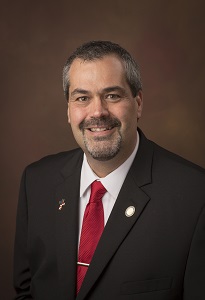
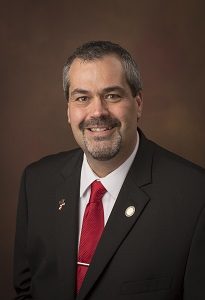
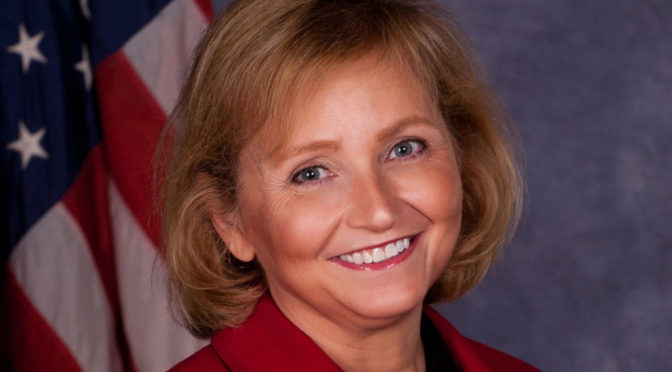
Lynne Oharah, District One Bourbon County Commissioner. Submitted photo

Bourbon County Commissioners are trying to close the gap in wages for its’ elected officials, according to chairman Lynne Oharah.

Recently the commission raised four elected officials earnings with a combined total of $46,000.

At the Dec. 17, 2019 county commission meeting Ohara made a motion to approve a salary resolution for elected officials effective Dec. 15, 2019, according to commission minutes. This raised the clerk and treasurer’s salary to $47,248 annually, the register of deeds to 44,821 and the sheriff’s salary to $60,000. Commissioner Jeff Fisher seconded and all commissioners approved.

Ohara then made a motion approving a wage resolution for Bourbon County employees changing the following: the salary for the correctional center captain, the emergency preparedness director and the deputy county appraiser were raised to $35,568 annually to comply with the U.S. Dept. Of Labor standards for salaried employees. A Maintenance 5 position was added at a rate of $17.47 per hour.  Commissioner Nick Ruhl seconded and all were in favor of those changes.  The economic development director’s salary was changed to $70,000 a year on the same resolution.

Jeff Fischer, District 2 Bourbon County Commissioner.

Ohara made a motion to approve changing her salary to $70,000. He said that if Bourbon County gets an administrative fee from Phase 2 of the Healthy Bourbon County Grant then part of the $70,000 salary would be subsidized from the grant, Fisher seconded this motion, Ruhl voted against this motion,  and the motion passed.

Nick Ruhl, District 3 Bourbon County Commissioner.

The following is an interview with Bourbon County Commissioner Lynn Oharah.

He started with a  history of the raises.

“In 2015, Sheriff Martin contracted an agency to do a wage study to compare Bourbon County wages with other comparable counties because he thought there was a large wage disparity between Bourbon County employees and other like counties,” Commissioner  Oharah said. “The county commissioners also accessed Kansas county wage information from the ks.gov website. The results indicated that Bourbon County wages were significantly behind our peers. The commissioners resolved to address these wage disparities and devised a plan to increase FTE (Full Time equivalent) positions first and address the next positions that had the most wage disparity, which happened to be the elected officials. Along with this effort we wanted to incentivize employees to continue working for the county and we did this by approving a $100 per year of service longevity pay increase.”

Where did the money come from to give the raises?
“We gave four elected officials raises when combined totaled $46,000.00. This money came from most of the departments managing their budgets and workforce which created a carryover from the 2015 and forward budget years. These wage increases did not increase the mill levy and this carryover gave us the resources to create a competitive wage with our peers although Bourbon County wages are still on the low side.”
What is the justification for the doubling of the earnings of the Bourbon County Economic Development Director?


“This position was initially created to see how the position could help the county,” Oharah said.  “It was created with a minimum of 20 hours of work per week at $35,000 annual salary and we would look at the performance and scope to see if we needed to increase the hours and wages.”

“Our economic developer has been a great asset and for the first six months spent a lot of time helping get the Bourbon County Ambulance Service up and running along with the other duties.”

“Since then all Bourbon County businesses and government entities have been contacted and surveyed to address their needs and identify what’s important to them.  Also, new businesses have been guided through the process of starting a business, grants have been written, the County NRP program has been implemented and coordinated under economic development.  Meetings and plans regarding healthcare are ongoing with economic development highly involved. This is just naming a few projects that are ongoing and the time spent well exceeds what was required.”

“Based on the need, the commission voted to increase the economic development salary and scope. The salary was based on what was being paid to other economic development directors in our surrounding market and the Bourbon County Economic Development budget is still lower than most of our competitive counties.”


“Bourbon County needs to grow and prosper and we cannot get there by doing the same thing that we have been doing for the last 100 years,” Oharah said.
The commission meets on Tuesdays at 9 a.m. at the courthouse.
To contact Ohara: 620-223-3800, ext 110; Fisher at ext. 112 and Ruhl at ext. 111.

Kansas gets new personalized license plate design: wind turbines are featured

Topeka – Beginning January 15, 2020, a new personalized license plate design will be seen on Kansas roads. The plate, featuring wind turbines on a Kansas sunrise, is aptly named “Powering the Future.” It will serve as a reminder of the state’s long history of embracing the natural energy resource of wind.

“Kansas is a leader in alternative energy and this plate helps feature the fact the state has a long history of adopting technology that shapes the future,” Secretary of Revenue Mark Burghart said.

“I am pleased that this license plate design comes on the heels of Kansas being ranked first in the nation for percentage of electricity produced by wind,” Governor Laura Kelly said. “At the same time, it is a display of an expanding industry that contributes so much to the economic fabric of our state.”

“The new personalized plate design has been highly anticipated,” David Harper, Director of Vehicles, said. “We are happy that people continue to take pride in and show interest in the option for personalized plates.”

Customers will need to go into their local county treasurer’s office to place the order for the personalized plate.

To obtain the personalized plate, county treasurers will require customers to have their current registration receipt, photo ID, and proof of insurance.

Customers who currently don’t have a personalized plate can go to their local county treasurer’s office with those documents and pay the plate fee and any additional fees associated with the plate order. They will receive a temporary vehicle tag and the metal plate will arrive in the mail. This can be done ahead of the regular renewal month.

Kansas gets new personalized license plate design

Topeka – Beginning January 15, 2020, a new personalized license plate design will be seen on Kansas roads. The plate, featuring wind turbines on a Kansas sunrise, is aptly named “Powering the Future.” It will serve as a reminder of the state’s long history of embracing the natural energy resource of wind.

“Kansas is a leader in alternative energy and this plate helps feature the fact the state has a long history of adopting technology that shapes the future,” Secretary of Revenue Mark Burghart said.

“I am pleased that this license plate design comes on the heels of Kansas being ranked first in the nation for percentage of electricity produced by wind,” Governor Laura Kelly said. “At the same time, it is a display of an expanding industry that contributes so much to the economic fabric of our state.”

“The new personalized plate design has been highly anticipated,” David Harper, Director of Vehicles, said. “We are happy that people continue to take pride in and show interest in the option for personalized plates.”

Customers will need to go into their local county treasurer’s office to place the order for the personalized plate.

To obtain the personalized plate, county treasurers will require customers to have their current registration receipt, photo ID, and proof of insurance.

Customers who currently don’t have a personalized plate can go to their local county treasurer’s office with those documents and pay the plate fee and any additional fees associated with the plate order. They will receive a temporary vehicle tag and the metal plate will arrive in the mail. This can be done ahead of the regular renewal month.

For customers with the current 2015 personalized plate, a letter will be in the mail 45 days before the regular due date of the registration telling them they have the option to switch their current personalized combination to the new plate. Customers will be able to keep their 2015 personalized plate.

An application for a personalized plate can be printed and completed prior to the visit to the respective county treasurer’s office by clicking the following link: https://www.ksrevenue.org/pdf/tr715.pdf.

The cost of the plate will be $45.50 in addition to other registration fees and taxes normally due.

For customers with the current 2015 personalized plate, a letter will be in the mail 45 days before the regular due date of the registration telling them they have the option to switch their current personalized combination to the new plate. Customers will be able to keep their 2015 personalized plate.

An application for a personalized plate can be printed and completed prior to the visit to the respective county treasurer’s office by clicking the following link: https://www.ksrevenue.org/pdf/tr715.pdf.

The cost of the plate will be $45.50 in addition to other registration fees and taxes normally due.

Office of Rural Prosperity to hold press conference Monday


Lt. Governor Lynn Rogers will hold a press conference at 10:30 a.m. Monday in the Lt. Governor’s Conference Room. The Office of Rural Prosperity will be announcing the release of its report after a year of traveling throughout the state, and the formation of the office.


Who:              Lt. Governor Rogers, Governor Laura Kelly, ORP Team

What:             Press Conference – Office of Rural Prosperity: Release of ORP Report

When:            10:30 a.m. Monday, January 13, 2020

Where:           Kansas Statehouse

Lt. Governor’s Conference Room 252-S

Topeka, KS

Governor’s State of the State address to be broadcast live on TV


For the first time since 2015, the Governor’s State of the State address will be broadcast on live television in Kansas.


During the annual State of the State speech, Governor Kelly will report to the Kansas Legislature and to the state on her administration’s priorities for the 2020 Legislative Session.


When: Live broadcast: Wednesday, January 15, at 6:30 p.m.

Where: Smoky Hills Public Television; KTWU in Topeka; KPTS in Wichita; Check your local PBS network listings for information on the live and replayed State of the State broadcast on those stations and others throughout Kansas.


Kansas Animal Health Board to Meet January 16


MANHATTAN, Kan. — The Kansas Department of Agriculture’s Animal Health Board will meet via conference call at 7:30 a.m. on Thursday, January 16, 2020. This is a regularly scheduled board meeting.


The meeting is open to the public. Individuals who have questions about the meeting, including how to access call-in information, should contact Animal Health Commissioner Justin Smith at 785-564-6601 or [email protected].


Persons who require special accommodations must make their needs known at least two days prior to the meeting.


###


WHO:            Kansas Department of Agriculture, Kansas Animal Health Board


WHAT:         Regular board meeting via conference call


WHEN:         7:30 a.m. on Thursday, January 16, 2020


WHERE:       Conference call

Medicaid Expansion In Kansas

Governor, Senate Majority Leader announce compromise
proposal to lower healthcare costs for Kansas families

Bipartisan agreement paves way for both Medicaid expansion and reinsurance

TOPEKA – After weeks of negotiations, Democratic Governor Laura Kelly and Republican Senate Majority Leader Jim Denning today announced a compromise proposal to expand Medicaid while lowering health insurance premiums for Kansas families.


“This process is far from over, as there are still several critical steps to be taken by the Kansas Legislature,” Kelly said. “But today, Senator Denning and I are proud to stand together to propose a bipartisan compromise that will expand Medicaid and lower healthcare costs for Kansas families. This proposal includes elements of my plan, of Senator Denning’s plan, of the 2019 House plan, and of the bipartisan plan that passed both chambers in 2017.”


The compromise proposal includes key elements to address concerns raised from both parties, in both chambers:


    • Full Medicaid Expansion: The proposal includes a full expansion of Medicaid to 138% of the Federal Poverty Level (FPL) with a 90/10 match, to be effective no later than January 1, 2021.
    • Reinsurance: Pending Centers for Medicare and Medicaid Services (CMS) approval of a 1332 waiver and release of funding by the State Finance Council, the proposal includes a reinsurance program to be effective no later than January 1, 2022. The agreement also requires the Kansas Insurance Department to complete an actuarial study of the reinsurance proposal and submit to the State Finance Council.
    • Medicaid Funding: The proposal includes an annual hospital Medicaid expansion support surcharge of up to $35 million, which has been endorsed by the Kansas Hospital Association, to be effective July 1, 2021. This compromise proposal does not require a tax increase.
    • Promoting Personal Responsibility: The agreement includes a robust work referral program that promotes self-reliance for non-working Medicaid beneficiaries, while limiting costly administrative red tape that drives up overall costs to taxpayers. Enrollees within the expansion population will make a modest contribution for health services through monthly premiums of up to $25 per month, or $100 for a family of four, as proposed in House Bill 2066.  The bill does not contain any lockouts. Instead, it collects unpaid premiums through the state’s debt setoff program. A hardship provision is also included.
    • Rural Health Care Innovations: The proposal creates an advisory committee within the Kansas Department of Health and Environment to support rural hospitals in assessing viability and identifying new delivery models, strategic partnerships and implementing financial and delivery system reform to improve the health of rural communities.


“My top priority is to lower the cost of healthcare for Kansans across the board. We want to give as many Kansans health care coverage as we can, in the Medicaid market and the non-Medicaid market,” Denning said.

While this proposal is the most sweeping compromise offered since the debate over Medicaid expansion began in 2013, both Kelly and Denning underscored that more work remains.


“We’ll both be working with our respective caucuses in the coming days to get their feedback and buy-in,” Denning said. “But all sides can find something in this bill to like. That means it’s probably about as middle of the road as it can get.”


“This compromise was an important first step, but our work is not over yet,” Kelly said. “Legislators, many of whom were here today, have the ability to bring this over the finish line in the early days of the 2020 session. I am calling on them to do just that.”


Via Christi Supports Expanding Medicaid In Kansas

Response to today’s announcement of a bipartisan agreement on Medicaid expansion
” Ascension Via Christi extends our appreciation to Gov. Laura Kelly and Sen. Jim Denning for
reaching an agreement on expanding Medicaid in Kansas. Ascension Via Christi, along with the
Kansas Hospital Association and many other healthcare organizations, have been advocating for
Medicaid expansion for the past eight years as a way to make sure that all of our citizens have
access to care.
Expanding Medicaid will bring hundreds of millions in federal dollars to our state, giving Kansans
residents increased access to health care coverage while supporting healthcare providers and our
entire Kansas economy.
Across Ascension’s markets we know that expanded Medicaid has enhanced access to coverage
and care, resulted in more appropriate utilization of services, and has created financial security
among the poor and vulnerable.
Our ministry’s support of Medicaid expansion is rooted in our mission to serve all persons, with
special attention to those who are poor and vulnerable, and to protect and promote the inherent
dignity of all human life from conception until natural death .”
-Submitted by Don King, chief executive officer, Ascension Via Christi

New Kansas Department of Human Services

Governor Kelly Announces Reorganization Creating

Kansas Department of Human Services

New agency to include DCF, KDADS and KDOC Juvenile Services


Governor Laura Kelly today announced her intent to submit an executive reorganization order to the Kansas Legislature creating the Kansas Department of Human Services (KDHS). The new agency will include the current programs at the Department for Children and Families (DCF), Department for Aging and Disability Services (KDADS) and the juvenile services division of the Department of Corrections.


Current Secretary of DCF and KDADS, Laura Howard, will lead the new KDHS.


“I ran for office, in part, to ensure that our most vulnerable citizens were protected and that somebody in Topeka was advocating for them,” Kelly said. “One of my key priorities since taking office has been fixing our broken safety net and ensuring that we have a system that is worthy of our citizens. The creation of this new, combined agency reinforces my commitment to our children and families in need and ensures they have access to critical services.


“The creation of the new agency allows us to focus on prevention, so that we can get to these families before their situation becomes a crisis,” Kelly said. “The Department of Human Services will partner with communities across the state to create a single point of entry for those who need access to services for things like child welfare, mental health, economic support and juvenile justice.”


Programs included in the new agency will include:

  • Adult protective services
  • Adult behavioral health
  • Long-term services and supports
  • Economic supports
  • Employment supports
  • Children’s mental-health supports
  • Child protective services
  • Juvenile justice and crossover youth
  • Foster care
  • Prevention
  • Licensing, credentialing, survey and certification
  • Kansas Juvenile Correctional Complex
  • Larned State Hospital
  • Parsons State Hospital
  • Osawatomie State Hospital
  • Kansas Neurological Institute


Governor Kelly recognizes juvenile justice reform has resulted in a reduced need for incarceration while at the same time improving county community corrections case management. Including juvenile services in the new agency continues the improvement process.


“Given the needs of families for community collaboration and overlap, it makes sense to organize juvenile services and child welfare resources under one agency,” Kelly said.


“This is not going to be business as usual,” Howard said. “This combination of services gives us an opportunity to think differently about service delivery. We want Kansans to have seamless access to programs and services that will allow them to thrive. KDHS will be known for its innovation and willingness to work with community partners.”


“Secretary Howard is the perfect person to lead the new agency,” Kelly said. “I am confident that she has the vision and experience to launch an organization of this magnitude and ensure that all Kansans are well served by a commitment to continuous improvement and accountability.”


Governor Kelly will submit the ERO to the legislature within the first 30 days of session. The ERO becomes effective on July 1, following its transmittal to the Legislature, unless either the Senate or the House takes action on the ERO within 60 calendar days after submission.