
Category Archives: Bourbon County

KState Southwind Extension: Join the Club

Submitted by: Carla Nemecek, Southwind Extension District, Director & Agent

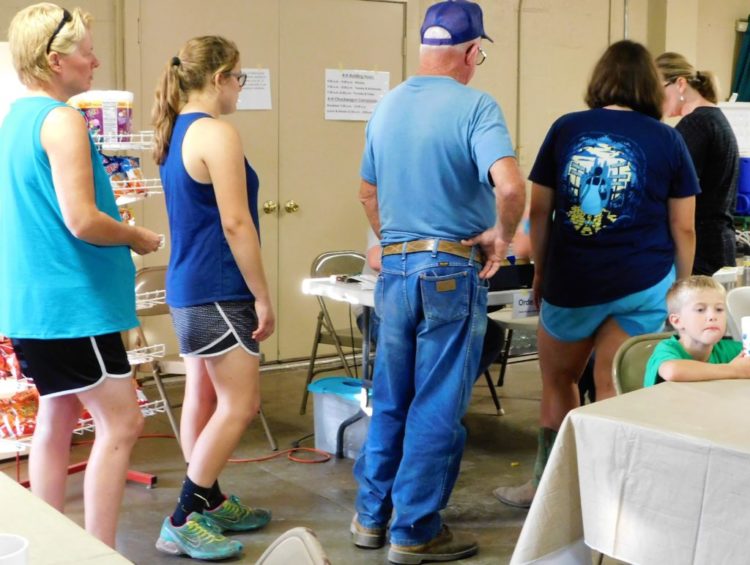
Aspire to be a fashionista? Have your kids just convinced you to get a pet? Do your kids want to garden but you have a brown thumb?  Life’s little questions aren’t meant to be answered alone. Join 4-H, the club of families who share in teaching kids practical things like pet care, growing gardens or designing clothing, and important values like responsibility. Whether you’re in the city or country, join 4-H and we’ll tackle life’s little questions together. With over 30 projects available, there is no doubt your kids will find something they’re interested in.
October 1-7, is National 4-H Week, and the Southwind Extension District in Allen, Bourbon and Neosho Counties are celebrating the 4-H youth who have made an impact on the community, and are stepping up to the challenges of a complex and changing world.

We can tell you how great 4-H is, but now the research tells the story. Students participating in 4-H report higher educational achievement and academic confidence, are nearly two times more likely to attend college, and more likely to pursue future courses or a career in science, engineering or computer technology.

Recent findings from Tufts University’s 4-H Study of Positive Youth Development indicate that young people in 4-H are three times more likely to contribute to their communities than youth not participating in 4-H. Notably, the Tufts research discovered that the structured learning, encouragement and adult mentoring that 4-H’ers receive play a vital role in helping them actively contribute to their communities. In the Southwind District, more than 565 4-H members and many more volunteers are involved in 4-H.

4-H teaches skills that last a lifetime, and leadership is at the forefront. Other life skills include: a positive self-concept, an inquiring mind, concern for the community, healthy interpersonal relationships and sound decision making. 4-H is more than a single game or activity. Your kids will learn to speak in front of a group, handle responsibility, help their community, try new things, work with others and make good decisions.

The fundamental 4-H ideal of practical, “learn by doing” experiences encourage youth to experiment, innovate and think independently. 4-H programs are offered through school-based, after-school and camp settings and within community clubs.

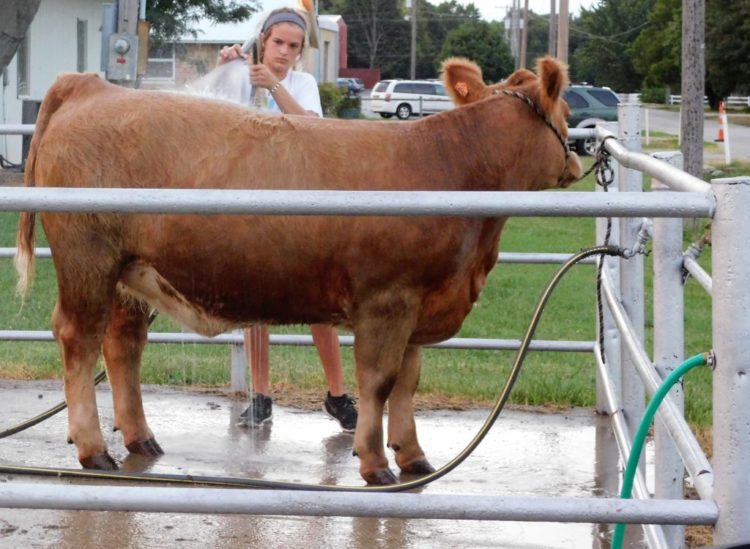
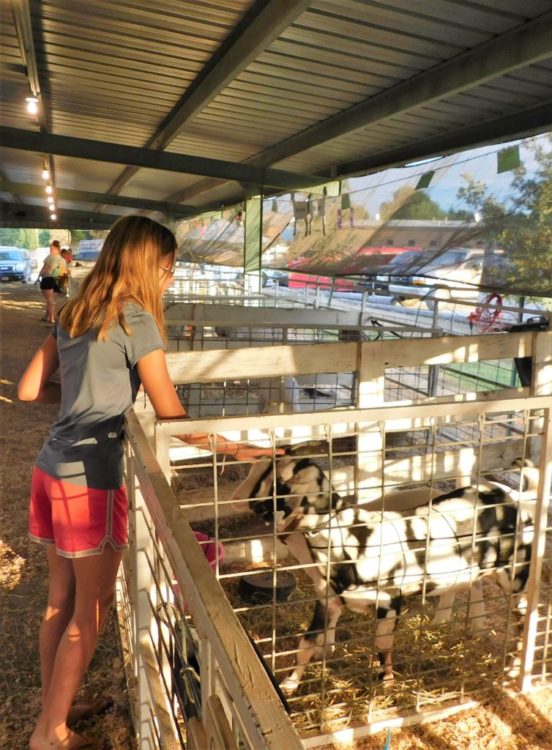
4-H isn’t just about cooking and sewing or showing an animal. Nowadays, members can choose to gain valuable leadership experiences while enhancing life skills. In our local 4-H programs, it is critical that the entire family be involved.  Kids can choose from dozens of activities related to science, the arts, citizenship, fitness and more. They can learn to train their dog, build a robot, run a meeting or raise an animal. Additionally, senior 4-H members are eligible for local and state scholarships. Along the way, we have a lot of FUN too, especially at 4-H Camp at Rock Springs.

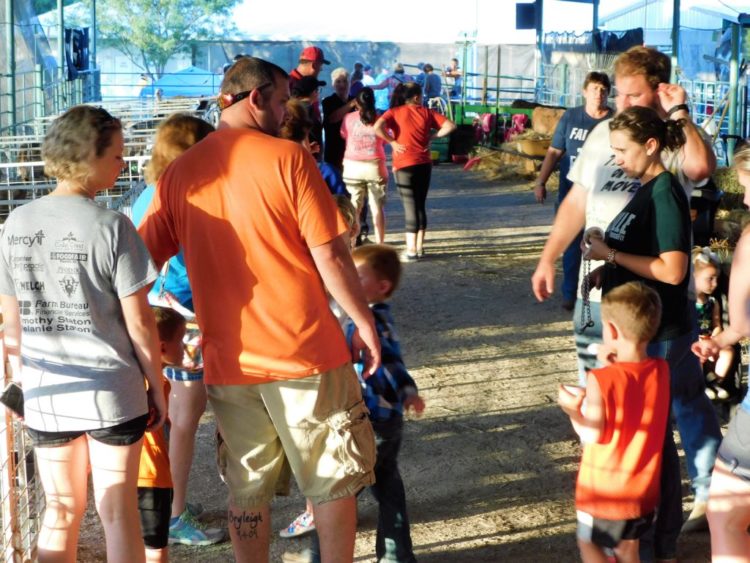
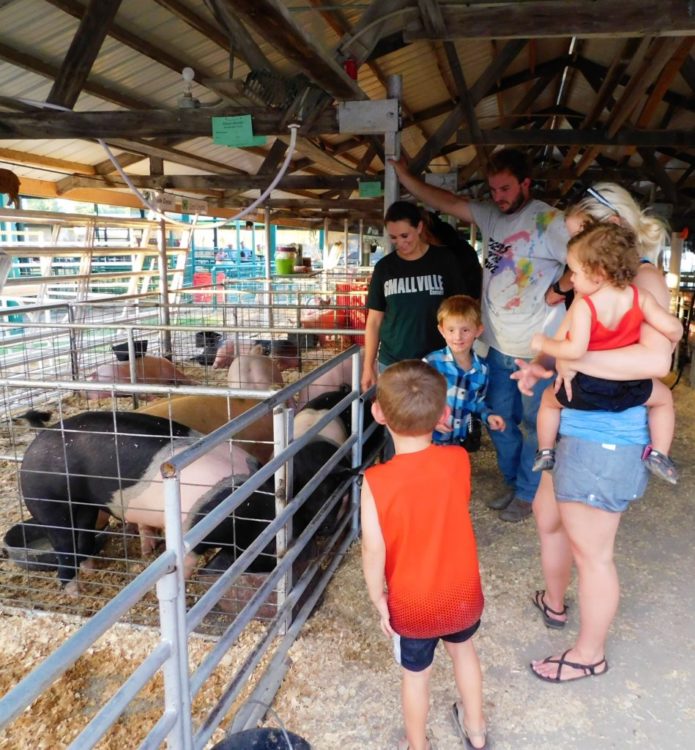
Raising great kids is a challenging task, but it’s easier when you have a team of people behind you. 4-H clubs are groups of families that do just that. Through working together, families share knowledge and interests to help kids learn practical skills and important values. If you have a child between the ages 7 and 18, a 4-H club in the Southwind District is excited to welcome you to the fold. Learn more at http://www.southwind.ksu.edu

Ninety-nine New Americans

Jane Njeri Lifer smiles following the U.S. Naturalization Proceedings Friday at Fort Scott National Historic Site.  In her hand is the certificate of naturalization.
One-by-one, new citizens were introduced to the audience.

Ninety-nine people from various nations were part of the U.S. Naturalization Proceedings Friday at Fort Scott National Historic Site.

During the hour ceremony, the group swore an oath of allegiance to their new country,  were introduced one-by-one to the audience, listened to speakers, were entertained by musicians, and recited the Pledge of Allegiance.

Members of Fort Scott High School orchestra, band and choir sing “America” during the naturalization ceremony.
Local Attorney Larry Nuss was one of the several speakers during the ceremony.

In the end, a certificate of citizenship and mementos were distributed to each of the ninety-nine new citizens.

The new citizens were invited to register to vote and enjoy a lunch provided by the Friends of Fort Scott National Historic Site.

A bird’s eye view of voter registration following the naturalization ceremony. The League of Women Voters, Johnson County, provided the resources for the registration.
New American citizens enjoy lunch provided by the Friends of Fort Scott National Historic Site in the Grand Hall.

“It was surprisingly emotional,” Sarah Lehman, Pittsburg, said of the proceedings. “We were here to support people from our church.”

Add Bulbs to the Landscape Now for Big Color in the Spring

Submitted by Krista Harding, KState Southwind Extension

Bulbs are a good addition to any landscape or garden because they offer a variety of bloom color, flowering time, plant height and shape. Now is the time to plant spring flowering bulbs. I just purchased some Allium bulbs for my landscape (good K-State purple color!). Spend some time thinking about the location you intend to plant before making a purchase. So many times we buy on impulse and then have to really squeeze plants into a spot that may be less than desirable!

Bulbs can be planted in a variety of locations including around house foundations, under deciduous shrubs and trees, along borders, in perennial beds and rock gardens, in containers and even on steep slopes.

When planted along a foundation, bulbs will add color in the early spring if planted in a grouping of twelve or more bulbs. If you have evergreen shrubs planted along a foundation, they will provide a nice background for planting of bulbs. Bulbs will “pop” with color in contrast to the green of the shrubs.

Spring bulbs can be planted under deciduous shrubs or small trees. You may be wondering how this can be because of a lack of sunlight. Early blooming bulbs receive plenty of light because they start growing long before trees and shrubs start to develop leaves. Some bulbs that do well in this type of setting include grape hyacinths, crocus, bluebells and early maturing daffodils.

A border of bulbs planted along the edge of the lawn will add a splash of color to the lawn area. Or consider planting low growing bulbs around the edge of a flower bed to add interest. You can add them directly into a perennial bed and the bulbs will bloom in March, April and May before perennials start to grow. Make sure to locate the bulbs so the dying foliage will not be noticed.

For steep slopes that are difficult to mow and maintain, bulbs with a fiberous root system such as daylilies, are an effective plant to use. The foliage is attractive and the bloom adds color to the area. The problem of trying to mow a steep area will be eliminated.

Both spring and summer bulbs can be planted in portable containers. The nice thing about container plantings is their versatility. For spring bulbs, once bloom is past, the container can be moved to a location out of sight while the foliage matures. Summer bulbs will add color all summer long to areas such as a patio or deck.

Keep in mind that planting bulbs of one variety or color in mass will have greater visual impact. This will provide uniform color and texture that is pleasing to the eye. With bulbs such as tulips or daffodils, plant at least twelve bulbs of one variety in a grouping. Smaller bulbs should be planted in groups of fifty to have visual impact.

Krista Harding is a K-State Research and Extension Agricultural agent assigned to Southwind District. She may be reached at [email protected] or 620-244-3826.

Fort Scott Livestock Market: Over 100,000 Cattle Sold Last Year

Fort Scott Livestock Market is the fourth largest in Kansas, according to owner Larry Martin.

Four generations of Martins work in the Fort Scott Livestock Market, Larry Martin said following the Chamber of Commerce Coffee  Thursday morning.

Jim, Larry’s dad, along with Tyler and Kyle, Larry’s sons, are the owners and managers of the business at 2131 Maple Road.

Now Tyler and Kyle’s kids work there too.

Gabby and Addy Martin help their grandmother, Deb Martin, in the office and Andrew and Eli Martin help where needed during the livestock auction sales that happen on Friday and Saturday.

Larry Martin speaks to attendees of the Fort Scott Chamber of Commerce weekly coffee.

Larry Martin said 60 to 70 people are working the sales on those two busiest days. There are 10 full-time employees.

“Last year we sold over 100,000 cattle,” Larry Martin told the Chamber Coffee attendees. “And about $10 million total dollars in sales. That puts money back into the community. Farmers will spend money on equipment.”

Martin told the attendees that the business is the fourth largest livestock market in the state.

The Martins leased the sale barn facility for 15 years and purchased it two years ago, he said.

They put up fences and added pens, he said

Martin thanked the Bourbon County Commission for the newly improved roadway in front of the business.

“We have the best road in Bourbon County,” he laughed.

Upcoming events at the market:

Equipment auction, 10 a.m. Oct. 19. Equipment can be brought to the site that morning and checked in.

Livestock Auctioneer’s Auction, 10 a.m., Oct. 14. KAA membership and Kansas Livestock Market Endorsement required.

FSCC Budget and Updates

Fort Scott Community College Bailey Hall.

Fort Scott Community College fall semester is in full force, and recently the administration approved the school’s budget.

FSCC Finance Director Julie Eichenberger provided Fort Scott Biz with information which was approved following a public hearing on August 14.

Information provided is on expenditures, leases/purchases, and tax rates.

Major expenditures in the budget are technical education and auxiliary expenditures.

Post-secondary technical education expenditures are for ” all the classes considered tech education,”  Eichenberger said.   “Those would be nursing/allied health/EMT, John Deere, construction trades, cosmetology, welding, Harley Davidson, agriculture.”

Total for this line item in the budget is $3,294,586.

For auxiliary expenditures – the dorm, cafeteria, and bookstore, the line item is budgeted for $2,073,486.

The cafeteria is an auxiliary budget item.

$8,458,958 are current funds unrestricted in the general fund.

To see the full summary, see the link:

FSCC Budget 2017-2018

The tax rate has stayed about the same, according to FSCC President Alysia Johnston.

Eichenberger provided Fort Scott Biz with the recent history of the mill levy and the statement of condition lease, lease purchase and certification of participation.

Cosmetology equipment, the environmental lease (formerly Chevron), the City of Fort Scott, Ellis Fine Arts Center, the baseball scoreboard, and the John Deere Building are all line items in the statement provided below in the link.

Lease Info & Mill levy history

In addition, Johnston provided student enrollment information.

The full-time student headcount at the college is 1,792 for 2017 fall semester.
“About even from last year,”  Johnston said Wednesday.
Tuition waiver for Bourbon County residents

Fort Scott Community College has expanded its tuition waiver for Bourbon County residents who wish to take classes at the Fort Scott campus or online, according to a press release from  the college. FSCC will waive the tuition costs, up to fifteen credit hours, for any Bourbon County resident who enrolls at FSCC. Students will be responsible for covering fees and purchasing books.

FSCC students can take general education classes for transfer to a four-year institution or pursue a certificate or associate degree. FSCC offers 55 courses that are guaranteed by the Kansas Board of Regents to transfer to any public college or university in the state of Kansas.

To apply for the waiver, students should contact the FSCC Admissions Department at 620-223-2700, ext. 3520 or ext. 3530. Students must also complete a Bourbon County Tuition Waiver Form and return it to the Admissions Department prior to the start of the semester.


New Organization Emphasizes Buying Locally

The audience listens to leaders of the group, Live Local BB, on Thursday.

Live Local BB is a grass-roots organization that had a public  introductory meeting Thursday at Sharkey’s Pub and Grub.

BB stands for Bourbon County and Live Local BB encourages growth of local businesses in the county.

“We want to educate the community on how it benefits the community to live locally,” Geoff Southwell told the group of interested  people. “Use local whenever possible. Money stays in the community. It’s creating and maintaining wealth and jobs”

Board member Geoff Southwell addresses a group of interested people Thursday at the initial public meeting of Live Local BB. Board member Melissa Wise listens in the background.

The group’s board members are Cindy Bartelsmeyer, Richard Goldston, Bryan Holt, Dave Lipe, Chris Maycumber, Andy Norris, Angie Simons, Southwell,  Rebecca Sutterby and Melissa Wise.

Live Local BB Board Members Rebecca Sutterby, left, and Melissa Wise, facing away, sign in interested attendees at the initial public meeting of the organization.


Live Local BB board members from left: Andy Norris, Dave Lipe, Bryan Holt, Chris Maycumber and Richard Goldston listen as Geoff Southwell addresses the attendees at the initial meeting.

Fort Scott City and Chamber of Commerce officials “have jumped on board with us,” Southwell said.

The City of Fort Scott presented a $500 check to the group  Thursday evening at the initial meeting.

To get the word out, the 65  businesses who have joined so far are encouraged to tell about their business on the local radio station.

“There will be  2 to 3 radio spots a day for the first twelve months,” Southwell said. “Talk in microphone, they will edit that. KMDO brings it together and it’s good. Volunteers are needed to get the word out.”

The group also has a Facebook page, Live Local  BB.

Live Local BB is a grass-roots organization just formed in Fort Scott to encourage residents to buy from local businesses.

Southeast Kansas Grazing Management School Set for October 14

Submitted by Christopher Petty, Southwind Extension Agent

A grazing school, focusing on ways Southeast Kansas farmers and ranchers utilize their resources to be productive, will be held on Saturday, October 14, at the Cherokee County Extension 4-H Building in Columbus, Kan. The meeting will begin at 9:30 with registration at 9 a.m. The program will feature experts from the Missouri, Oklahoma and Kansas Extension Systems as well as pasture tours and a demonstration of a fall fescue stockpile plot.

Topics will include:

 “Utilizing Your Resources to Meet Your Goals”

 “Grazing’s Effect on Plant Growth and Development”

 “Animal Nutrient Needs”

 “Matching Forage Resources to Your Herd”

 “Economics of Different Grazing Systems”

 Tours of two different pasture systems

 Fall Fescue Fertilization Demonstration

This program is jointly sponsored by K-State Research and Extension, Southwind Extension District, Cherokee County Extension, and Wildcat District. Cost for the meeting is only $10 per person, which is payable at the door. To facilitate planning and meal count, please call the Cherokee County Extension office at (620) 429-3849 by October 6. The meeting begins at 114 W. Country Road in Columbus, Kan.

Kansas State University is committed to making its services, activities and programs accessible to all participants. If you have special requirements due to a physical, vision or hearing disability, contact Dale Helwig, Cherokee County Extension (620) 429 3849 or email [email protected].

Get a Soil Analysis before Applying Lawn Fertilizer

Submitted by Krista Harding, KState Southwind Extension

September is here and that means it is prime time to fertilize your fescue lawns. Even if you faithfully fertilize in the spring, by September, fescue plants are literally starving to death.

Fescue is entering into its fall growth cycle as days shorten and temperatures moderate. Fall is the time that cool-season grasses naturally thicken up by tillering. Tillering is the term used to describe how the plant forms new shoots at the base of existing plants. Plants also build their root system for the following year in the fall. An application of fertilizer in September is put to immediate use by the plants.

However, before applying any fertilizer, I recommend that you have a soil test done. Lawn soils vary widely in pH, available phosphorus and potassium. It is very difficult to just “guess” about which nutrients are lacking and how much of each is needed. Soil testing can be done through the Extension office with a fee of $12 per sample. You will receive a detailed report that outlines your soil needs and how to fertilize accordingly. It is recommended to have a soil test every five years.

The procedure for soil testing is simple. Use a sharp shooter shovel and go straight down into the soil about four inches. Pull the soil clump up (grass and all) and knock the soil off into a bucket. Do this in about five to six locations in the lawn. In the bucket, mix the soil samples well and then randomly pull out about two cups of soil and place in a zip-lock bag and bring to one of our office locations in Erie, Iola or Fort Scott. For those living in or near Chanute, you can drop soil samples off at Breiner’s Feed Store for pick-up.

If you have not had a soil test, here is a general fescue lawn fertilizer recommendation. With a fall application, it is best to use a “quick-release” source of nitrogen. Apply 1 to 1 ½ pounds of actual nitrogen per 1,000 square feet of lawn. If the fertilizer analysis is 10-10-10, it is declaring that it contains 10 percent nitrogen, 10 percent phosphorus, and 10 percent potassium. So, to get the 1 pound of actual nitrogen per 1,000 square feet using a 10-10-10 blend, you would need to apply 10 pounds of the fertilizer.

Another application of fertilizer in November should be applied to help the plants build up their food reserves for use when the grass greens up in the spring. Don’t be fooled into thinking that you can get the same results if you just waited and only fertilized in the spring. Spring-only fertilizing leads to fast growth, which means more mowing. This can also promote shallow root growth and possible summer die out.

Fall is the ideal time to renovate poor lawns. If you have an overabundance of weeds, crabgrass, etc., then you may want to consider reseeding. New lawns should also be planted in the fall.

If you would like more information on lawn fertilization, seeding or soil testing, please contact me at the Extension office.

Krista Harding is a K-State Research and Extension Agricultural agent assigned to Southwind District. She may be reached at [email protected] or 620-244-3826.

Law Enforcement Center Nears Completion

After years of planning and months of  site-work, the new Bourbon County Law Enforcement Center is nearing its completion date set in early October.

Bourbon County commissioners received an update on the project during a meeting Tuesday. Project manager Gary Walker of Universal Construction Company, Inc., insured the center will be done by Oct. 2, with just the addition of furnishings remaining. Inmates are scheduled to be moved into the facility the week of Oct. 30.

in just the next couple weeks, curbs and gutters, carpeting, camera installations, concrete laying and paint touch-ups should be complete while work on the parking lot and landscaping are  scheduled to be started. Kitchen equipment, recently purchased outright by the county, is also to be delivered and installed.


KState Extension: Storage Methods to Reduce Hay Loss

Submitted by Christopher Petty, KState Extension Office

According to University of Nebraska Extension Specialist Bruce Anderson, hay stored outside will be damaged by rain, snow, wind and ice this fall and winter. The average round bale loses about one fourth of its original nutrients during storage, but these losses can be reduced to less than 10 percent or so. Now, I’m sure you are better than average. Still, let’s look at ways to reduce spoilage by storing that extra valuable hay more carefully this year.

For instance, do you usually line up bales for easy access so the twine sides touch each other? Or do you stack your bales? If so, extra spoilage will occur where these bales touch because rain, snow and ice will gather in spots where bales touch instead of running off. Round bales butted end-to-end, cigar-like, usually have less spoilage.

Does snow drift around your bales? Bales placed in east-west rows often have drifts on the south side. Hay next to fencelines or trees can get extra snow. As snow melts it soaks into bales or makes the ground muddy. Plus, the north side never gets any sun, so it’s slow to dry. This year, line your bales up north-and-south for fewer drifts and faster drying as sunlight and prevailing winds hit both sides of the row.

Most important is the bottom of your bales. Always put bales on higher, well-drained ground so water drains away from them. Keep them out of terrace bottoms or other low spots. If necessary, use crushed rock, railroad ties or even pallets to elevate bales to keep the bottoms dry. This also will reduce problems getting to your hay or getting it moved due to snow drifts or mud. Just a little pre-planning can save lots of hay and frustrations.

For information on testing your hay for nutrient quality, contact Southwind Extension District Livestock Production and Forage Management Agent Christopher Petty at 620-223- 3720 or by e-mail at [email protected].

61st Annual Pioneer Harvest Fiesta Begins

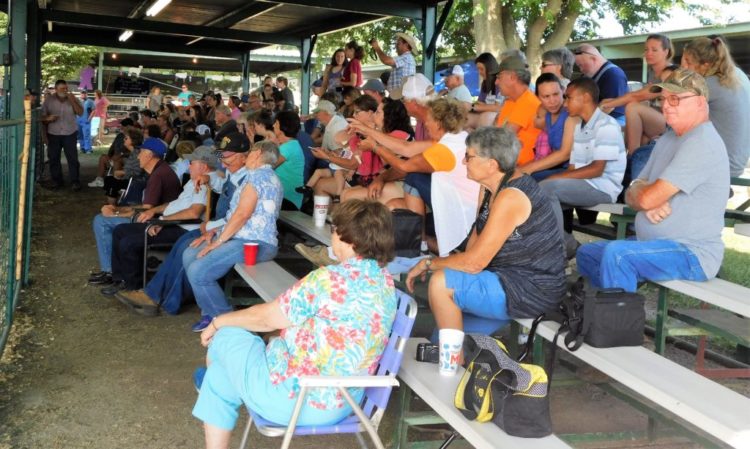
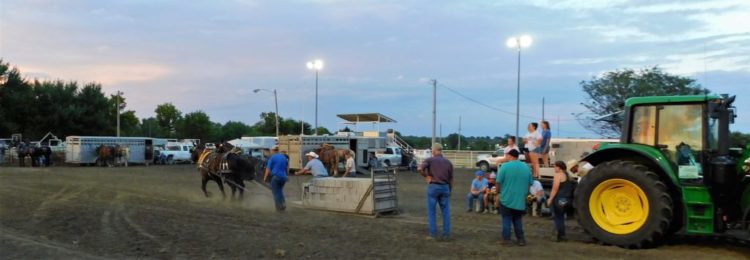
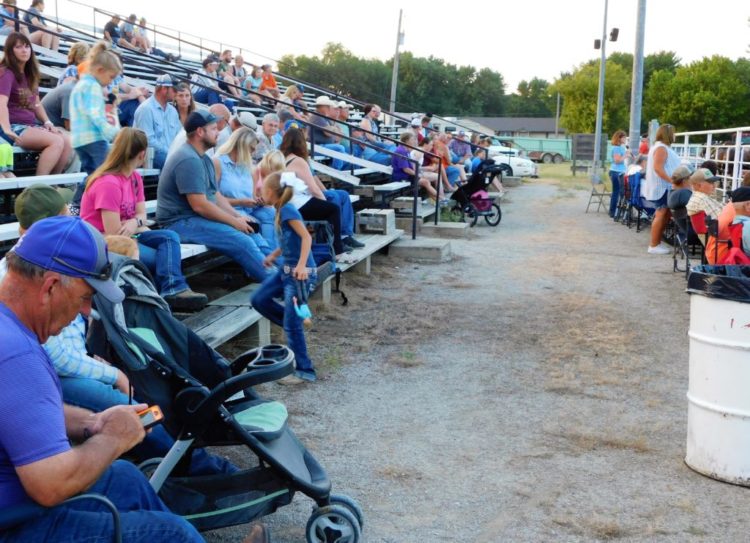
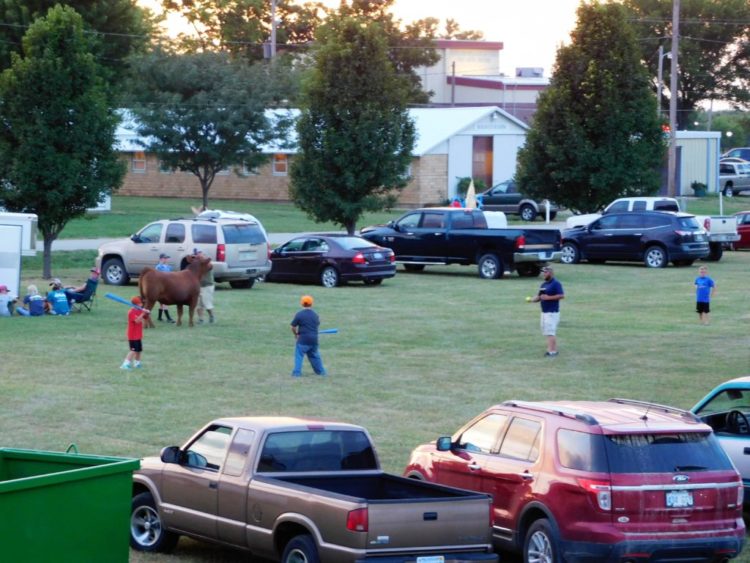
The Thursday evening parade kicks off the 61st annual Pioneer Harvest Fiesta and the numerous events involved in the weekend event at the Bourbon County Fairgrounds.

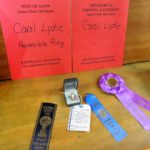
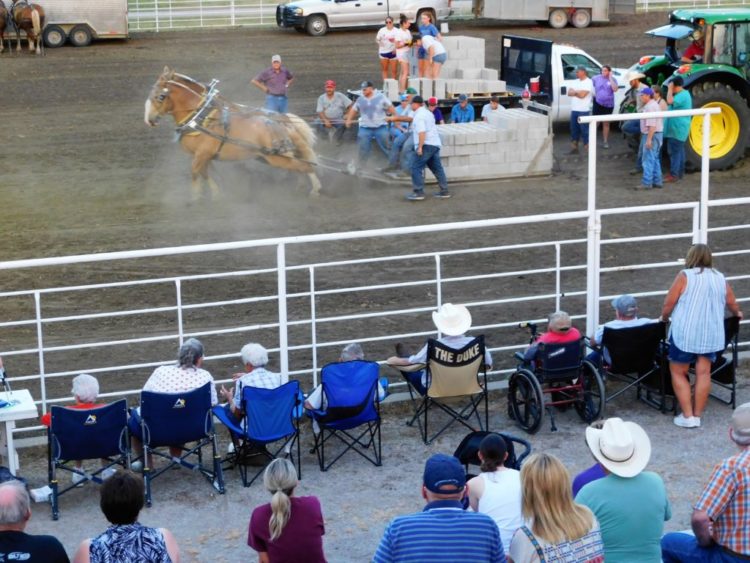
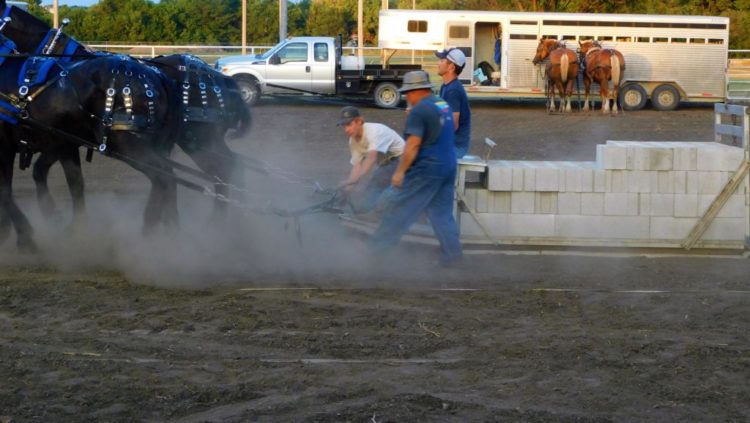
Starting with the downtown parade at 6 p.m. Thursday, other events continue Friday through Sunday, including a quilt show, tractor pulls, an arts and crafts show, a bean feed and a number of demonstrations with old crushers, balers and other equipment that have been restored by local and out-of-town participants.

“Lots of activities going on,” organizer Allen Warren says of the weekend event.

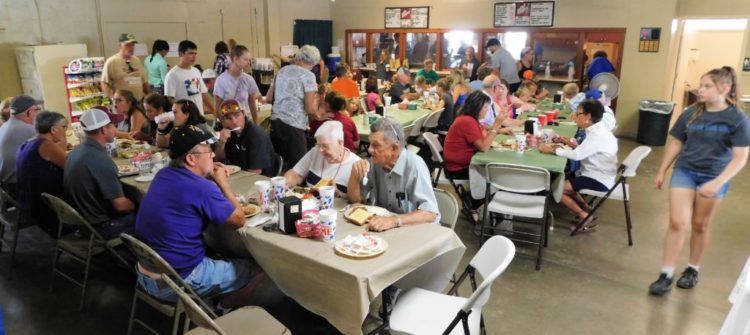
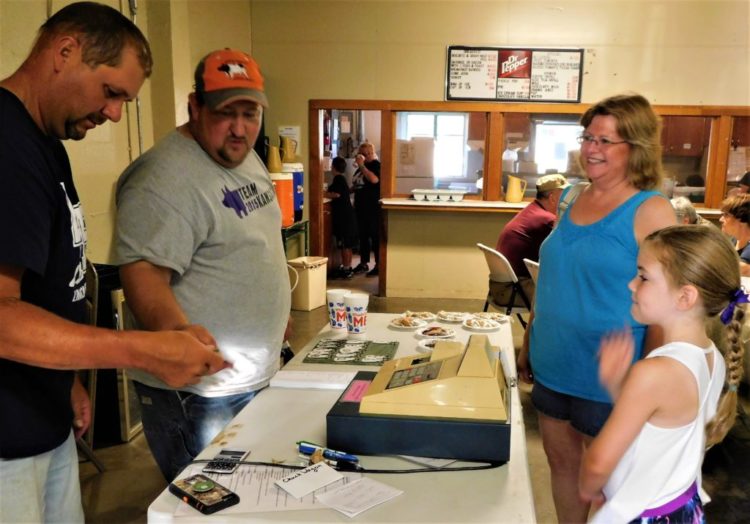
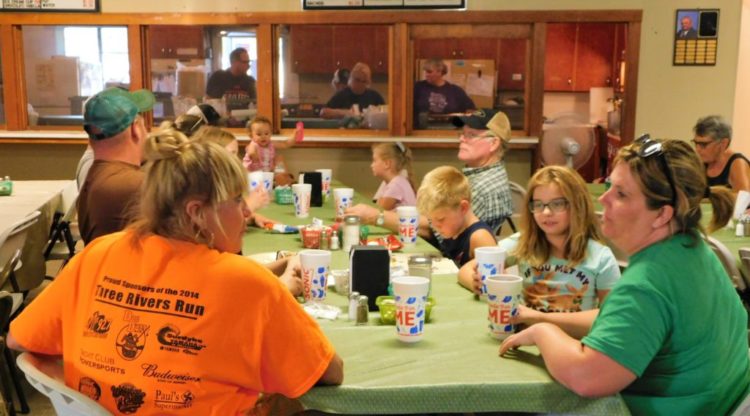
Weekend admission costs $5 and includes all three days of activities and the bean feed Friday evening.