|
|
||||||
|
|
Category Archives: Bourbon County





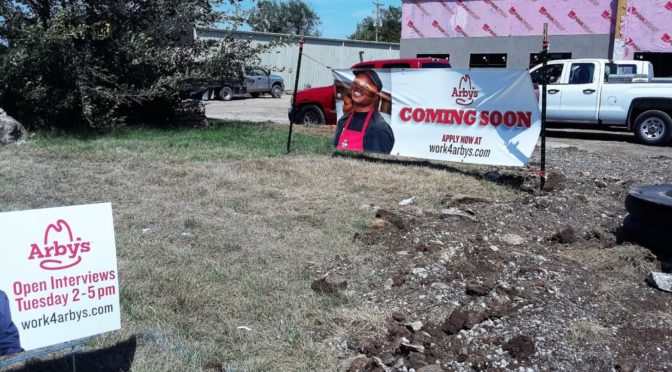
Arby’s Interviewing Tuesday at Sleep Inn
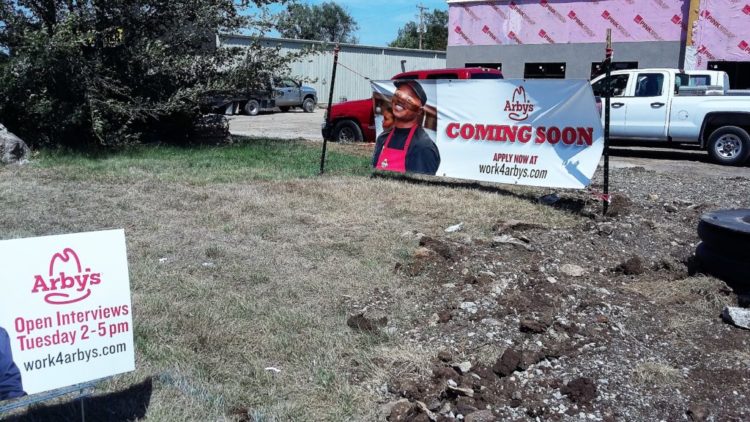
Arby’s Restaurant is interviewing for employees Tuesday, August 7, at Sleep Inn and Suites, 302 E. Wall.
Bourbon County Sheriff’s Office Daily Reports Aug.6
The Bourbon County Sheriff’s Office can be reached at (620) 223-2380.
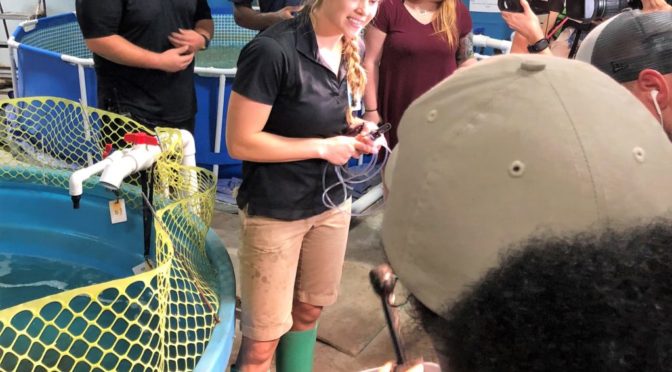
Local Woman In Story Of San Antonio’s Stolen Shark
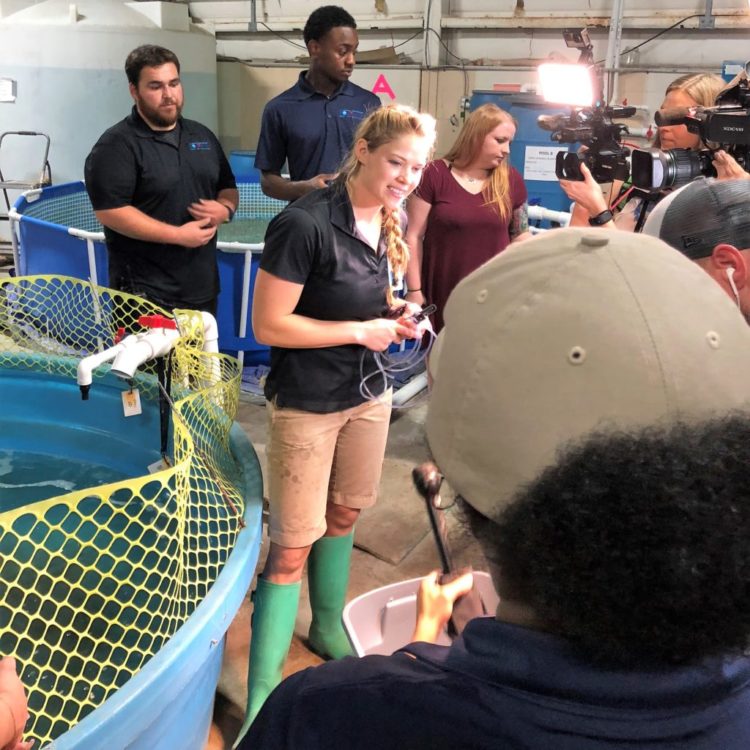
2008 Uniontown High School graduate Jamie Shank was in the national news this week.
As the assistant husbandry director at the San Antonio Aquarium Shank was responsible for getting a shark back after it was put into a baby stroller and stolen from the aquarium last Saturday.
“I wasn’t on duty when the shark was stolen but was involved in getting the shark back,” Shank told FortScott.Biz. “I went with the police to bring the shark back.”
“She is still in quarantine for observation to make sure she is eating right,” Shank said. “She was stored with other fish in (the suspect’s) garage.”
Click below to see the whole story:
https://www.cnn.com/2018/07/31/us/shark-stolen-san-antonio-aquarium-trnd/index.html
Shank, whose parents, Mark and Lisa, still live near Redfield, said she wanted to be a marine biologist since she was nine years old and continued her education to do so.
After many opportunities, she ended up at San Antonio Aquarium two and a half years ago.
“I love my job,” Shank said. “I love what I am doing.”
The Bourbon County Sheriff’s Office Daily Reports Aug. 3
The Bourbon County Sheriff’s Office Daily Reports August 2
Local Art Is Ageless Winners
Fort Scott Presbyterian Village artists among Art is Ageless® masterpiece level winners
Two winning artists in Fort Scott Presbyterian Manor’s annual Art is Ageless® juried competition will be featured in the 2019 Art is Ageless Calendar produced by Presbyterian Manors of Mid-America.
A quilted wall hanging titled Barnyard Beauties by Helen Nuzum and a painting by Aggie Keesling, Welcoming Light, will appear in the calendar when it is released this fall.
In addition, Mary Wood’s piece, Yo Yo Quilt, will be in the Honorable Mention gallery.
Works by local winners are automatically entered into a masterpiece level competition with winning art from 16 other PMMA communities. More than 180 entries were received for this year’s masterpiece competition. The winners are featured in the Art is Ageless calendar and greeting cards.
Art is Ageless, open exclusively to people age 65 and older, is a copyrighted program of Presbyterian Manors of Mid-America. For the competition, works must have been completed in the past five years.
Presbyterian Manors of Mid-America’s Art is Ageless program encourages Arkansas City Presbyterian Manor residents and other area seniors to express their creativity through its annual competition, as well as art classes, musical and dramatic events, educational opportunities and current events discussions throughout the year.
Started in 1980, Art is Ageless is an extension of Presbyterian Manors of Mid-America’s wellness programs, which focus on mental, physical, social and spiritual health. Residents and friends of Presbyterian Manors of Mid-America’s Art is Ageless program are proving that art, in any form, is an ageless ambition.
For more information about Fort Scott Presbyterian contact Becky Kellum Marketing Director at (620)223-5550 or at rkellum@pmma.org
Bourbon County Candidates: Responses From the Forum
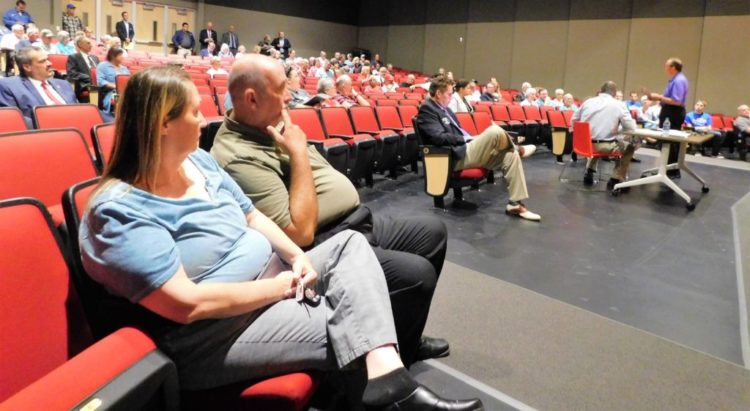
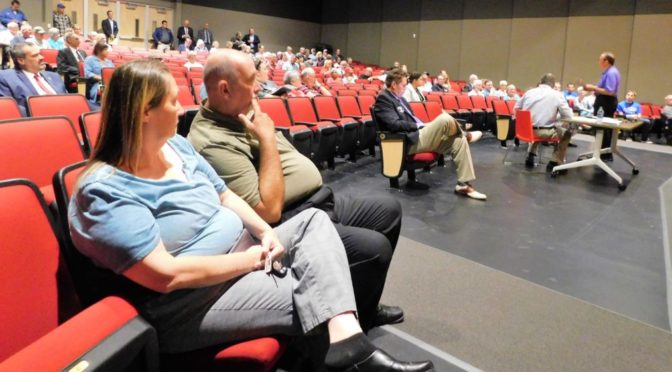
The 2018 Candidate Forum July 31 at Fort Scott High School lasted fours hours and featured 25 candidates from the national level to the county level. Tim McKenney was the moderator, Mark McCoy the timer. The event was sponsored by the Fort Scott Chamber of Commerce.
Four candidates are vying for Bourbon County Commission Dist. 1 and were allowed to respond to questions during the forum.
The current Bourbon County Attorney is running unopposed and was allowed a few minutes to give remarks.
Jackie Spradling is running unopposed for the Bourbon County Attorney position she has held since January.
Spradling has been a prosecutor for over 28 years, tried over 120 jury trials and 81 murder trials, she said.
“I stand proudly with Bill (Martin, Sheriff) and Travis (Shelton, Police Chief) and your law enforcement officers in fighting the crime in this community. We have filed more cases so far this year than was filed all of last year. We have also filed more Child In Need Of Care cases so far this year than all of last year. We are trying to hold offenders accountable, protect people who have been victims of crime and take care of the babies and kids who can’t take care of themselves.”
The following are the questions posed to the Bourbon County Commission District 1 candidates and excerpts of their responses.
Opening remarks:
Lynn Oharah is 70-years-old, has a wife and two daughters. He is a veteran, retired from ATT as a manager, was the state representative for two years, USD 235 Board of Education member for 10 years and the current District 1 Commissioner two years. Management experience is what he has to offer in the position.
Clinton Walker is married, has two children and spent 22 years in the military, where he learned to manage people, budget, equipment, facilities, and buildings. “I think that I can make a difference and save taxpayer money,” Walker said.
Matt Crystal served in the military 25 years and moved back to help on the family farm. “Leadership, budgeting, construction is what he brings to the table,” Crystal said.
Robert Query is a rancher and heavy equipment business owner. He served eight years as county commissioner. “I know how to do more, spend less,” Query said.
The candidates answered questions previously submitted to the Fort Scott Chamber of Commerce.
Question 1: The Bourbon County Jail was approved by voters with a cost of approximately 6.4 million dollars, the price has now increased. How do you make sure projects stay on track and not go over budget?
Walker: “You’ve got to be involved in that project. Staying on a budget that’s not hard to do. If you don’t have the money, you don’t buy it…you don’t put it on credit card. ”
Crystal: “You have to stay involved as commissioners. More involved with a contractor that was going to oversee the entire project, so they could stay on track and stay on budget.”
Query: “Involvement with it from day one, when it was going out for bids, I was not for the jail in the first place. We are going to have to be responsible out there to look at every bill… and work with Bill (Sheriff Martin).”
Oharah: “Unforeseen material and labors costs went way up, but we stayed within the parameters of the question on the ballot.” If we didn’t build the jail we would be spending over $300,000 this year to house our prisoners, a total waste of taxpayer money.”
Question 2: Some counties are hiring a manager to handle the daily operations, do you think it makes sense to hire a county manager and then use non-paid elected commissioners to oversee his performance?
Crystal: “I can see some efficiencies in it, however, that’s what the commission is doing and that’s the commission’s job. You can’t manage the county one day a week, you have to be out there to see what else is going on. I don’t think the county could afford to pay a salary that the commission was elected to do.”
Query: “It would be another big salary, we already have too many of those big salary employees at this time.”
Oharah: “I’m not in favor of a county manager. It’s the job of the county commissioners to oversee what is going on. I don’t take benefits from the county. I spend two and a half days a week looking at the county. The equipment we’ve bought has been a benefit to the county.”
Walker: “No it doesn’t make any sense to hire a manager. Lead from the front. I’ll be that leader.”
Question 3: How can you foster economic development in Bourbon County?
Query: “We had strategic planning to meet with us (when he formerly served on the Bourbon County Commission). I think it needs to be put back. The programs at the college are teaching welding and carpentry work and that can create jobs in this deal and that will help with economic development.”
Oharah: “Bourbon County is slated to lose population. We are putting the final touches on our Neighborhood Revitalization Plan. Which is going to give tax refunds for qualified construction projects for new and remodels on homes and farms and businesses.”
Walker: “First, stop buying new equipment, second, internet service we need to have that because you can’t have entrepreneurs come into the county without broadband.”
Crystal: “Airport expansion, could bring in a business. We can’t get people here fast enough. We need new blood, we need new thoughts and fresh ideas.”
Closing remarks by the candidates:
Oharah: “Reduce taxes through economic growth. We have implemented programs that should draw growth. We are Christian, pro-life, 2nd amendment supporters. Why run? I have a passion to see Bourbon County succeed and grow.”
Walker: “Number 1, debt. We don’t maintain vehicles. (in the county).We need to have a good maintenance program for this county. Buy with cash, I don’t want to pass this debt on to the next generation. I’ll manage personnel and equipment.”
Crystal: ” I want to serve my community. I’ll use my 25 years in the military, use that leadership expertise in order to improve the services in the county.”
Query: ” Eight years experience is needed in the county. We need to quit buying more than we can pay for. Bottom line, live within your means, we are the ones who pick up the tab.”
The Bourbon County Sheriff’s Office Daily Reports Aug. 1
The Bourbon County Sheriff’s Office Daily Reports July 31
The Bourbon County Sheriff’s Office daily reports can best be viewed on a computer.
It can be reached at (620) 223-2380.
Click below, then click on the image to enlarge it:
Wine Stroll/Art Walk: A Perfect Evening For Outside Activities
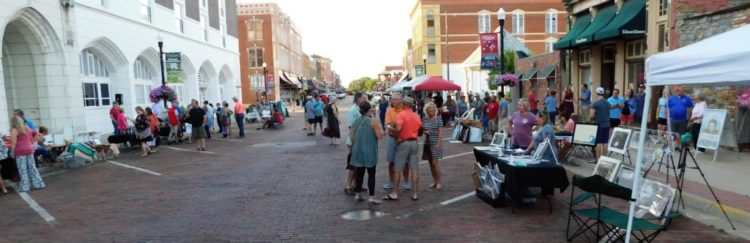
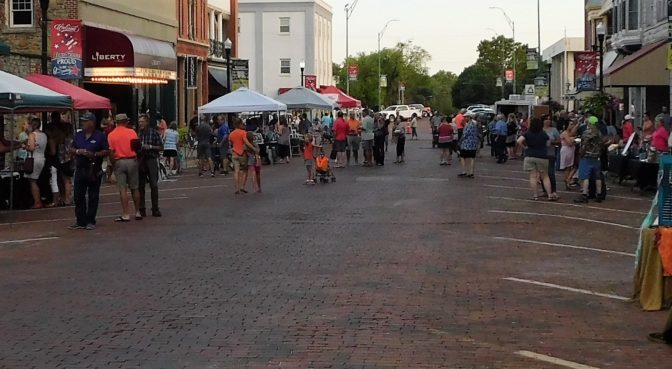
A mild evening provided a backdrop for the Mercy Wine Stroll/Bourbon County Arts Council Art Walk Friday evening on Main Street. Also downtown was the Friday night free concert series, the Lowell Milken Center Poland Reunion and a concert by Blane Howard at the Liberty Theater. Temperatures were in the low 80s, with a pleasant breeze
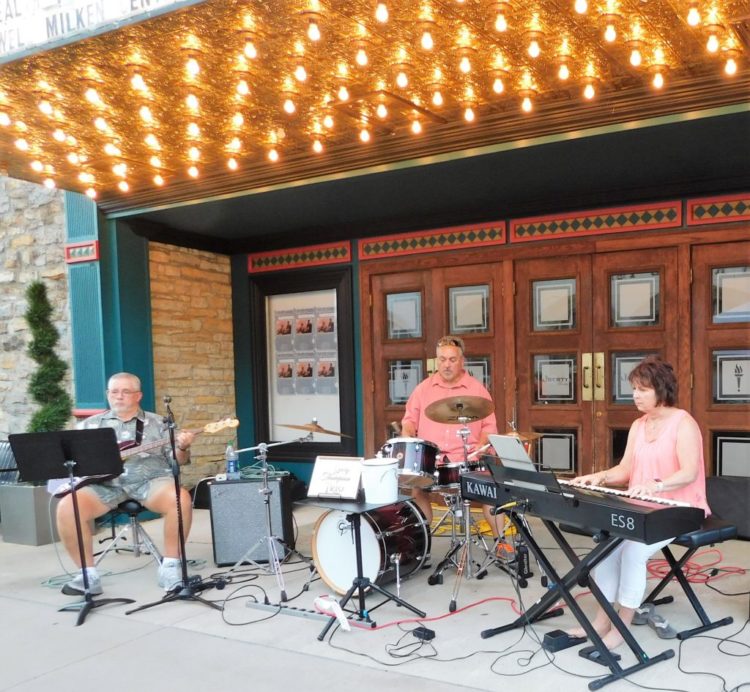
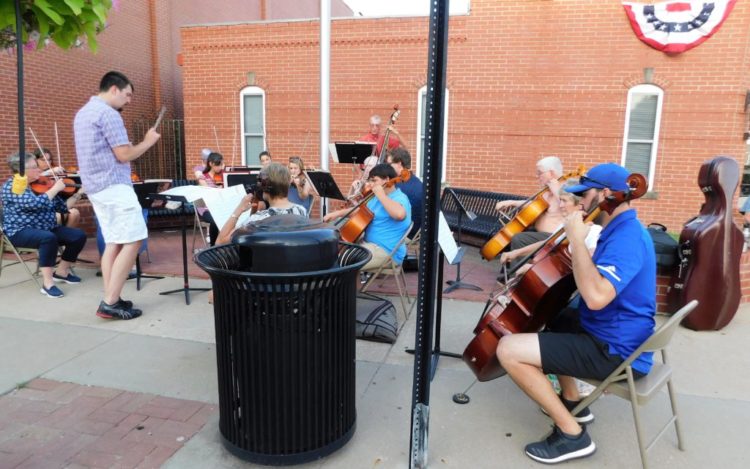
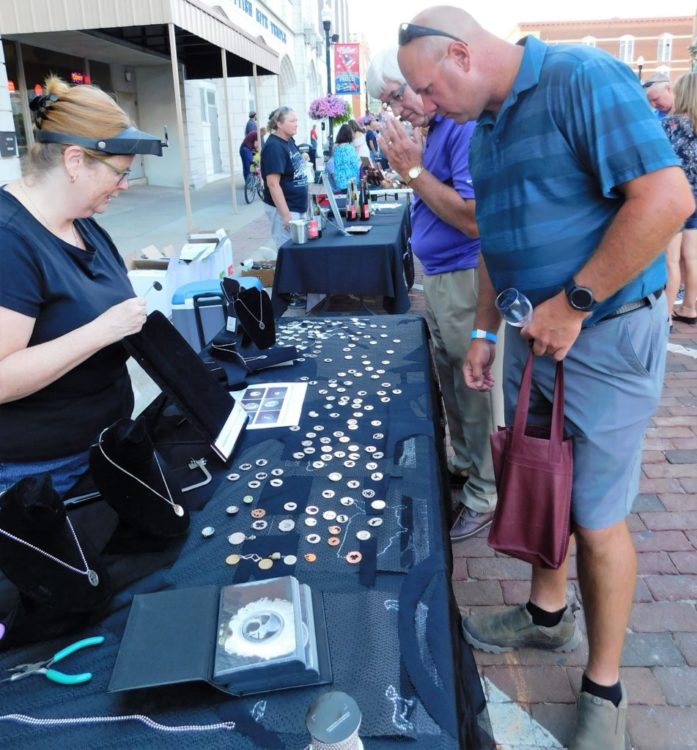
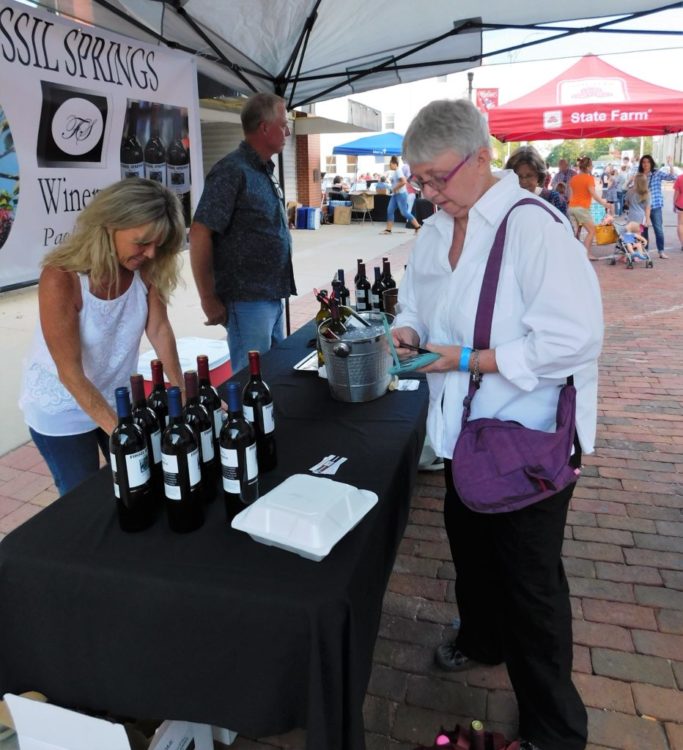
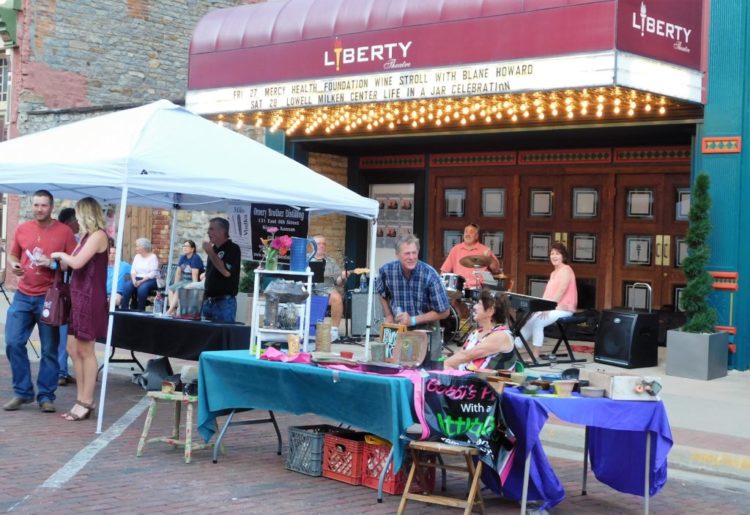
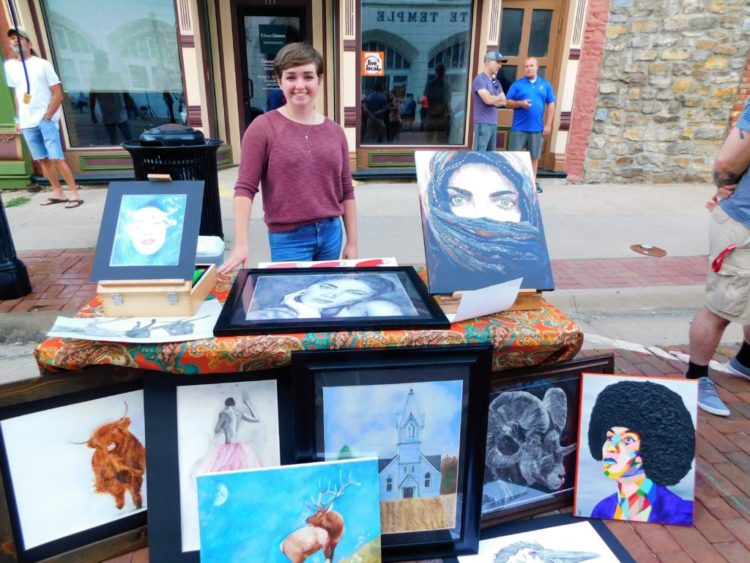
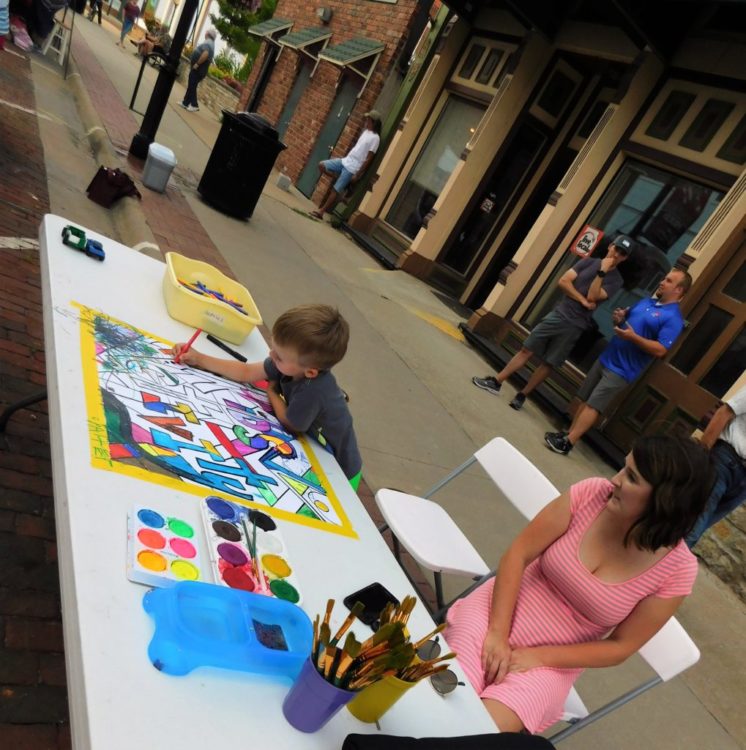
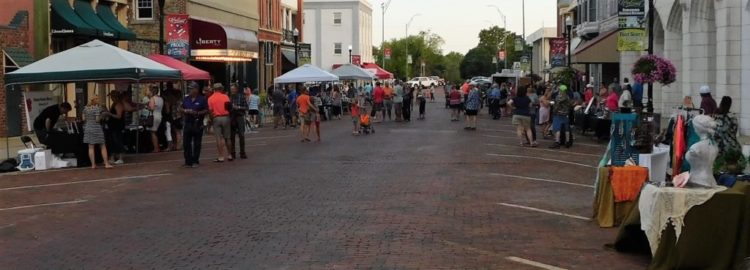
The following overview of alcohol vendors who were part of the evening was provided by Mercy Hospital:
.2018 Hit the Bricks Winery, Brewery and Microdistillery Profiles
Aubrey Vineyards (2), 7932 Santa Fe, Overland Park – Karine Hellwig
Aubrey Vineyards™ is a native Kansan family owned and operated winery & vineyard. From south Overland Park, diligent work is helping to revive the wine industry that once flourished here in the 19th century. The small batches of premium, hand-crafted wine capture this native, pioneering spirit. Aubrey Vineyards now invites local wine drinkers to meet modern Midwestern winemaking at its best. The tasting room and store is open daily (Mon-Fri 10-7, Sat 10-6 and Sun 12-5) and is located in downtown Overland Park, inside the Vinyl Renaissance & Audio record store. (913) 579-5004.
The Boiler Room Brewhaus (9), 2 S. National Ave., Fort Scott – Barbara Ritter
Fort Scott has a rich history of brewing great beer and has been for many years. At the Boiler Room Brewhaus, we believe that it’s about more than great craft beer, it’s about providing an atmosphere where people can grow closer and strengthen our community. Your local brewery is located in the historic Downtowner Motor Lodge on the corner of Wall St. and National Ave. The building was built in the 1950’s and looks brand new. We have several beers that rotate through the tap room, most are named after our farm animals or tractors. We would love for you to visit our microbrewery and become a part of our community. The Boiler Room Brewhaus is owned and operated by the Ritter’s who live on a little farm in Garland, Kansas.
Flustered Blonde Vineyard and Winery (5), 17064 Ness Road, Parsons – Kim Bogner
Flustered Blonde Vineyard and Winery is an established farm winery owned and operated by Kim & Tim Bogner, located in Parsons Kansas, a small rural southeast Kansas community. Our premium wines are blended to capture the distinctive flavors of the grapes to produce a pleasurable wine tasting experience. The tasting room is open to the public Saturdays from noon – 6 p.m. and Monday through Friday by appointment. For a private appointment, call (620) 605-8485 or (620) 820-1704.
Fossil Springs Winery (1), 20171 W. 327th St., Paola – Mark and Christina Allison
Fossil Springs is located atop giant limestone, on a farm in Miami County, Kansas. Through the years, underground springs have carved their paths into these stones, exposing fossils that were deposited centuries ago. One of the things the owners Mark and Christina Allison do on their farm is raising elderberries for their wine. The Elderberry wine is made with 100 percent elderberries, no other fruit is added. The wine is uniquely rich in flavor, aroma, and color.
Haven Pointe Winery (6), 961 E 1600 Rd, Baldwin City – Tom Holland
Located in southeast Douglas County, Haven Pointe Winery reflects the spirit of the Kaw River Valley – rustic, natural and bold. Our mission is to provide a truly unique experience that brings together great wine, good folks, and hands-on viticultural and enological knowledge. Haven Pointe Winery produces both red and white French-American hybrid varietal wines. Our estate-grown varietals include Chambourcin and Traminette. We also make fruit wine as well as a variety of meads. Each of our wines features Kansas-grown grapes, fruits and/or honey.
Ornery Brother Distilling and Milo Vodka (8), Kinsley – Tim Kyle
Ornery Brother Distilling was born out of Tim Kyle’s passion to develop a unique product from white sorghum grain. Over the past two years, he has done just that! The business model is simple: There is one guy and this solid grassroots Kansas product: Milo Vodka! Distilled, bottled, boxed, and out of his door to yours with pride & humility! He believes in using and reusing what is available and simplifying production, with integrity given to the “process”. It is Gluten Free & no sugar added!
Smoky Hill Vineyard and Winery (3), 2771 Centennial Road, Salina – Ken Mayfield
We capture originality for that one-of-a-kind, unique blend crafted to please every palette. We have 5 award winning wines in our collection: Sweet Lady, River Valley Red, Pink Catawba, Christmas Wine and Red Raspberry. We’ve been producing world-class wines indicative of our region of central Kansas since 1991. (785) 825-8466.
TJ’s Brew Microdistillery (7), 17064 Ness Road, Parsons – Tim Bogner
TJ’s Brew is a handcrafted spirit fashioned by a Southeast Kansas farmer. You can trace TJ’s brewing ancestry back through the moonshine swappers in the prohibition, all the way to his great-great-grandfather who sailed from Germany to America with grapevines in hand. Today TJ aims to make his mark on the industry with a collection of fine spirits. The tasting room is open to the public Saturdays from noon – 6 p.m. and Monday through Friday by appointment. For a private appointment, call (620) 605-8485 or (620) 820-1704.
Wine Drizzle (13), Higginsville, MO – Brandy Wisdom, Sales Consultant
Wine Drizzle is a unique wine topping for a variety of food from pancakes and crepes to cream cheese, sponge or vanilla cake, ice cream, oatmeal or your finger. They can be used as flavorful toppings, glazes, and dips too. There are both sweet and savory varieties! All of getting Drizzled’s Custom Wine Drizzles are true wine reduction sauces which means they are non-alcoholic due to the cooking process so anyone can enjoy them straight out of the bottle.
The Bourbon County Sheriff’s Office Daily Reports July 30
The Bourbon County Sheriff’s Office daily reports can best be viewed on a computer.
It can be reached at (620) 223-2380.
Click below, then click on the image to enlarge it.