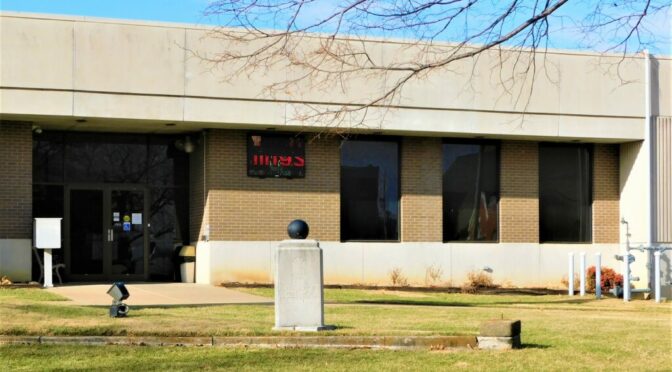
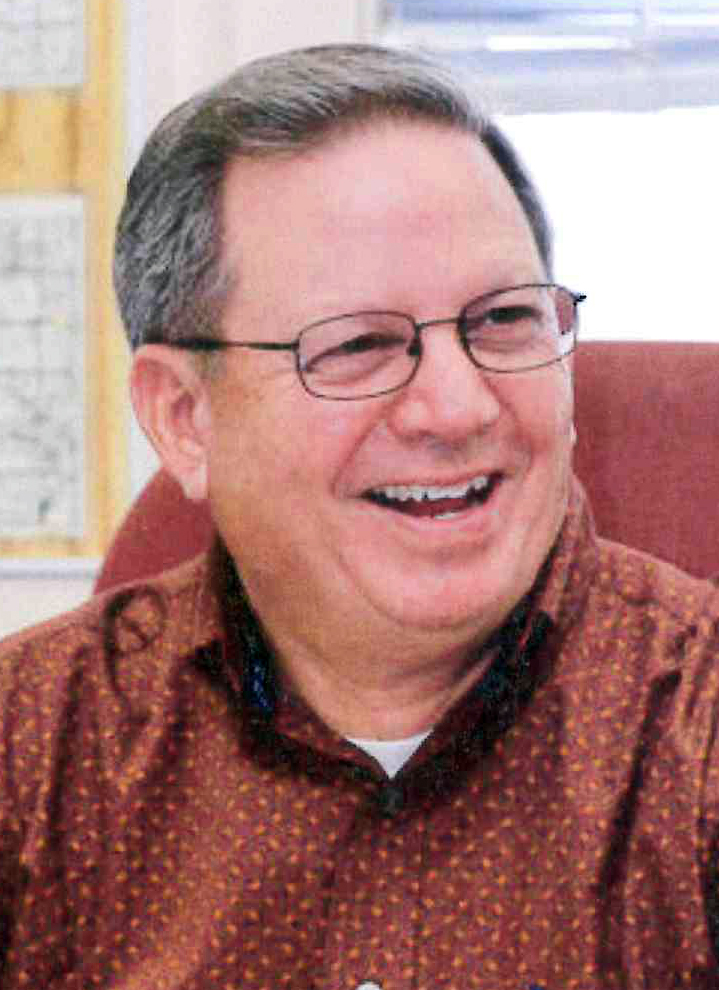
Kirk Sharp is the director of the Gordon Parks Museum on the campus of Fort Scott Community College. Submitted photo
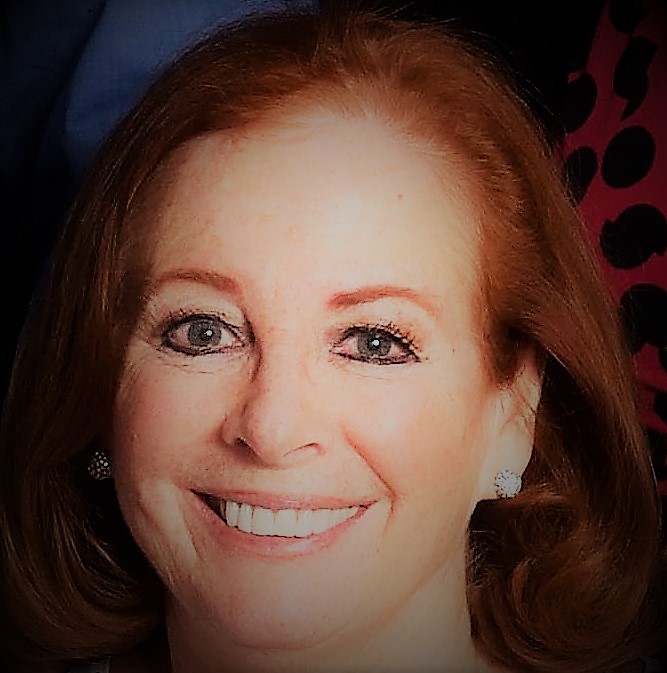
The Gordon Parks Museumwill host aPhotographyMeet & Greet SeminaronWednesday, April 27 at 5:30p.m.to 6:30 p.m.Come meet and greet Veretta Cobler, professional photographer, who will give a presentation on working with film and digital photography. Veretta has moved back home to Fort Scott after over four decades of living in New York City where she maintained her fully–equipped commercial photography studio. Throughout her career she transitioned from the classic photographic film and darkroom expertise to the complexity of today’s digital photography technology. Her experience expands to studio lighting and graphics computer skills. She is looking forward to sharing her knowledge in her home community. This in–depth seminar is designed for all levels of photographers from the beginner to the more experienced. She is looking to help improve and enhance their shots. While in New York City as a professional photographer, she worked in fine arts, fashion, portraiture, still life and journalistic cultural study. Her fashion images were published in various U.S. magazines including Bride, Modern Bride, Bridal Guide, Elegant Bride, Martha Stewart Living, The Knot, Seventeen, Prom, and New York Magazine. Her New York clients now use her images for their social media accounts. Veretta’s fine art photography has resulted in exhibitions and publications of her work throughout her career. Published works include New York Underground (2004), a coffee table photography book depicting the nightlife inNew York City in the late 1970’s. She has recently completed a book about the life and teachings of a Lakota spiritual man, and is in the process of seeking a publisher. Herworkcanbeviewedatherwebsiteatwww.veretta.com. Free registrationis available at the Gordon Parks Museum, online or over the phone, at 620–223–2700 ext. 5850.
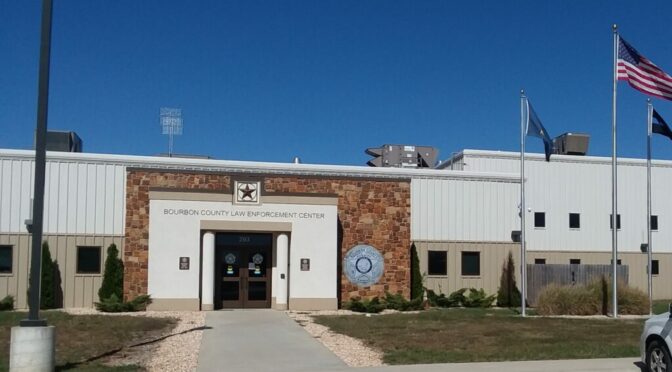
March 29, 2022Tuesday 9:00 am The Bourbon County Commission met in open session with all three Commissioners and the County Clerk present. Also present for all or some of the meeting were Clint Walker, Anne Dare, Don Coffman, Matt Crystal, Drew Solomon, Tom Booser, Merrill Atwater, Dr. Randy Nichols, and Mark McCoy. Eric Bailey presented permits for Joe Kerr at Indian Rd and 195thfor an entrance culvert. The second permit is for Craw-Kan to install fiber lines in the southwest part of the county. Clifton made a motion to approve the permits at Indian Rd & 195thand also for Craw-Kan in the southwest area of the county. Lynne seconded. All approved. Eric said that he received a phone call this morning regarding a utility company cutting Maple Rd. at approximately 190thor 195thhe has not seen it yet. He was not aware of this and is going to work with them to get the appropriate permits. Eric said that he does not think that cutting the road was the best option but he was not aware of the project prior to them cutting the road. Eric asked that if a utility company contacts a commissioner, then please refer them to his department so they can look at all options and get appropriate permits. Jim said that he had a conversation several months ago with a utility company but he said that he told them to contact Eric. Eric said that due to the road safety plan grant received last year, TranSystems Company is in town gathering data. Eric said that if you see vehicles with lights driving around gathering data but those vehicles should be clearly marked. Eric discussed the placement of a stop sign in Bronson in the area of 25th& Bay St at the far west part of the curve. He provided maps and of the location and it was discussed as to what the best placement would be. Jim made a motion to place a stop sign at the intersection of Bay and the curve between 25th& Bay. This would stop the westbound traffic on Bay Street and the sign would be placed on northwest corner of the intersection.Clifton seconded.All approved. Eric said that Dustin had worked diligently to find a dump truck and it paid off because they were able to find a 2008 Sterling in Tulsa for $60,000.00 and it has the plow attachments that they will be able to put the county plow on it. Eric said that they finished at 267thand Arrowhead with the 36” culvert replacement so that isn’t so narrow now. He said that they are scheduled to burn at Elm Creek Lake on Friday, weather permitting. Eric gave an update on the windmills saying that they are still working on the punch list that he submitted and everything is going good on finishing up. Jim Harris asked if Eric had received information on federal funding for the year yet. Eric said yes, but that it had been postponed. Lynne asked about the ditching on Wagon Rd that he had received a call on. Eric said that it is on the list and they are working as fast as they can but they also need to look at fixing cross tubes if the ditching is going to really help anything.
Millie Lipscomb,with the Elk’s Lodge, said that with costs rising on everything, that she was requesting a donation from the county of $750 instead of $500 that has been donated by the county the last few years. Clifton made a motion to donate $750 to the Elk’s Lodge for their fireworks display this year. Lynne seconded. All approved. Ashley presented the contract with Hamlin Energy to help secure the best price for a gas supplier since Pro Solutions is going out of business. She said that they will look and price as well as monitor bills and recommend locking in a price or changing suppliers. She also said that the contact is not for a specific time frame that it can be revoked at anytime with a written letter from the county. Clifton made a motion to allow Chairman Harris to sign the contract with Hamlin Energy. Lynne seconded. All approved. Clifton made a motion to amend the agenda to add mowing at 401 Woodland Hills Blvd. Lynne seconded. All approved. Clifton made a motion to move county counselor comments to the end of the agenda. Lynne seconded. All approved. Clifton said he had been asked if the bids received were apples to apple and he said that they are not. Justin Meeks recommended rejecting all bids and rebidding it.He said that he thinks that we should rebid with better specs. Jim agreed. Clifton made a motion to reject the bids for mowing and rebid it with more detailed specs and to be due back by nextTuesday’smeeting. Lynne seconded. All approved. Clifton made a motion to go into executive session under KSA 75-4319(b)(4) to discuss data relating to financial affairs or trade secrets of corporations, partnerships, trusts, and individual proprietorships. The session will last for 30 minutes returning to the commission room at 9:57 am and will include the 3 commissioners, Noble Health representatives (Drew Solomon, Tom Boozer, and Marrill Atwater), Josh Jones, Shane Walker, Susan Bancroft, and Justin Meeks. Lynne seconded. All approved. Clifton made a motion to resume normal session at 9:57 am with no action. Lynne seconded. All approved. Clifton made a motion to move the executive session for personnel matters to next week’s meeting. Lynne seconded. All approved. Susan reminded everyone that the meeting next week on March 5thwill be held at the Mapleton Community Center at 6 pm and asked what the commission wanted to do about future meetings in outside areas of the community. Jim said that he would like to see one held at Garland and Hiatville. Lynne said he would like to see a night meeting held here at the courthouse as well and Jim agreed. Lynne also said that if you are going to have meetings at those locations you should probably have one at Fulton, Hammond and even Devon. Jim said he would be in favor of trying that and
proceed based on attendance. Jim recommended that once we have been to several remote locations for meetings, that they continue with a remote location meeting once per quarter and an evening meeting at the courthouse every 4-6 weeks possibly. Susan said that she would work on a schedule.Susan handed out a capital improvements document to help department heads to understand what needs to be taken into consideration when looking at capital projects.This also includes personnel.If a department needed to add personnel they would have to justify the reason for requesting. Noble Health Presentation–Drew Solomon gave an update on the feasibility study.It is substantially complete.There are a few items that need to be done.A lot of good findings.Tom Booser will provide additional information.Tom is the coordinator of the research.All of rural Kansas has a demographic trend happening.Every year 25 families leave this county.Right now 19% of the population of Bourbon County is 65+. In 20 years 40% of the population will be 65+.This region is the least healthy in the entire state.Kansas used to rank 9thin terms of health and has declined to 29thout of the 50 states.Through community meetings and surveys the consensus is that we need more healthcare.Data shows there is a very significant trend in this county. There was substantial migration for healthcare from this area prior to the hospital closing.Eleven million dollars per year for healthcare leaves Bourbon County for care outside of this county. If this is going to be a sustainable hospital it must control the out migration.It must find a way to build trust in the community and attract people back.In this community, in this region, these hospitals carry twice the uncompensated care burden as most rural hospitals.As the population ages, you can see from a financial standpoint, your coverage may exceed, in terms of income from a hospital, 40% of revenue.Medicare pays less than private insurers.Medicare typically pays less than the cost to deliver the care.The current model of this hospital the cost to deliver the care is higher than what the reimbursement is.Every time you see a patient you lose money.The only way a hospital can fix that is from a high percentage of private insured patients. If you have a large Medicare/Medicaid population and you can control payments you have a very stable model.This is why so many hospitals get some level of tax subsidy because there is a structural mismatch between costs and revenue.The only way to surmount this, going forward, is to do something different than you’re doing right now or what has been done in the past. This is a structural problem and you have to change the approach. Part of that is collaboration.Rural hospitals should collaborate more.This is going to require transformation.A completely different way of behaving in regard to healthcare. There has to be some sort of community leadership to get people to understand that using healthcare in the region keeps it sustainable.In this region, workforce could be the main component of whether a hospital is viable or not.There is a nursing school in Pittsburg that graduates about 120 students per year.On average, those students owe $25,000 which could be about 15 to 20% of your pay every month to pay off that loan.What if there were help for these candidate nurses so they wouldn’t have that debt.This requires community activism and some original thoughts.The former hospital operated in a certain model allowing surgery and other things like that. There is a merging model called a rural emergency hospital that could be an option
for this hospital.It is emerging legislation that is not done.There is no assurance that this hospital would qualify for it but is at least an option to look at.It provides some sustainability for rural hospitals and may provide an option for this community. It is set to go into law in January 2023 so we will know how this plays out as this hospital comes.On the building itself, we believe could be supported by the operations.It can be a platform for other services for the community.You have a very large hospital, maybe not all of it is used for healthcare.Recommendations for viability–we believe moving the hospital into a non-profit 501(c)(3) status, given the appraisal on the hospital, is the appropriate way to go forward.We’ll need a tax exempt bond to support the building.Collaboration with other hospitals is needed. You have to reduce migration out on healthcare services.This is critical.We think given the space in the hospital, there is the potential for behavioral health unit.This behavioral health unit would house patients outside of Bourbon County and provide revenue for the hospital and provide the services needed.There is a high need for this.The structure and the size of the facility enables this and should happen.In the basement of the hospital, the idea to serve families with a daycare and headstart program.There is space to do it.That enables people who consider having careers and working in the hospital to have a way to care for their children while they work. The rest of the community can use it as well.The disconnect between people using services outside the region and staying put is based on the trust that people have in a hospital.You have to rebuild the trust of the community to use the hospital and to believe they get the best care there.If the $11,000,000.00, that leaves the county for healthcare, if just 30 to 40% were to remain in the community that is the difference between a viable and not viable hospital.The large burden of uncompensated care there has to be a way to mitigate that.Get people enrolled in Medicaid that can be and things such as that.Coordinate services with other hospitals in the region.Every hospital in the region loses money.Work with the business community to contract directly with them to provide healthcare in this town for the people who work here.If we can do that then you have a sustainable basis for a hospital going forward.It doesn’t fall on just hospital management it is a community project.Drew Solomon stated that the market rate value of the building is $19.6 million.The appraisal brings to light that there is a significant asset there.Clifton asked when the study would be complete and receive the report. Drew stated 4 to 6 weeks should see it completely finished.Rob Harrington thanked Noble Health for their work on this project. Public Comment–Donald Coffman asked if a new stop sign was being put out in Bronson that hadn’t been there before.Jim stated that they would be.Donald asked if a “stop ahead” sign should be placed before the stop sign to let people know it’s there.Jim confirmed Eric would be putting one out as well as the stop sign.Clint Walker talked about the loss of over $1,000,000 by not expanding Medicare.Clint also stated they Allen County subsidizes their hospital at $2,000,000 per year and their ambulance service $1,000,000 per year. Elected Official Comment–Bill Martin brought to the commission’s attention a Kansas Supreme Court case that affects the sheriff’s office.Bill suggested thatthe
commissioner’s get with thecounty counselor to go over the case. Justin stated there were comments in a previous meeting about the commissioners controlling elected officials employees.Some statutes say that commissioners are responsible for policy except elected officials.You guys have no control over the hiring and firing of elected official’s employees.If there is a policy in the handbook and the elected official doesn’t want to follow it they don’t have to. Commission Comments–Lynne wants to see commission meeting at Devon, and one at Lake Fort Scott.Jim stated he wants to go off-site once per quarter and have a night meeting every 5thor 6thmeeting depending on participation. Jim stated that he is not in favor of raising the mill levy.Lynne stated that department heads with a surplus should use that money for raises for their departments. Clifton made a motion for an executive session 75-4319(b)(2) for consultation with an attorney for the public body or agency which would be deemed privileged in the attorney-client relationship for possible litigation for 5 minutes, including 3 commissioners, Justin Meeks, and Shane Walker returning at 10:58am.Lynne seconded.All approved.Clifton made a motion to return to normal session at 10:58am with action. Lynne seconded.All approved.Lynne made a motion to allow Justin to handle litigation situation that has arisen.Clifton seconded.All approved. Clifton made a motion for an executive session 75-4319(b)(2) for consultation with an attorney for the public body or agency which would be deemed privileged in the attorney-client relationship for possible litigation for 7 minutes including Justin, Susan Bancroft and 3 commissioners returning at 11:06am.Lynne seconded.All approved. Clifton made a motion to return to normal session at 11:06am with no action.Lynne seconded.All approved. At 11:07 Clifton made a motion to adjourn. Lynne seconded.All approved. THE BOARD OF COMMISSIONERS OF BOURBON COUNTY, KANSAS (ss) Jim Harris, Chairman (ss) Lynne Oharah, Commissioner
Several Uniontown 4-H Club members have been busy competing in local Aggie Day events recently. On March 25th members competed at Fort Scott Community College Aggie Day in Meat Evaluation, Livestock Evaluation and Vet Science. The highlight of the day was our Junior Meat Evaluation teams as they finished 1st and 2nd overall in the contest. Marley Sutton was 2nd, Makinlee Bloesser 3rd, Austin Maycumber 4th, Kendyl Bloesser 5th, McKinley Sutton 6th and Seth Shadden 7th.
Two weeks later members competed in the Allen Community College Aggie Day Livestock Judging contest. The teams ranked 5th and 8th overall with Makinlee Bloesser leading the way with an 18th place individual finish.
Agenda Bourbon County Commission Room 1stFloor, County Courthouse 210 S. National Avenue Fort Scott, KS 66701 Tuesdaysstarting at 9:00 Date: April 12, 2022 1stDistrict–Lynne OharahMinutes:Approved:_______________ 2ndDistrict–JimHarrisCorrected: _______________________ 3rdDistrict–Clifton BethAdjourned at: _______________ County Clerk–Ashley Shelton MEETING HELD IN THE COMMISSION ROOM Call to Order •Flag Salute •Approval of Minutes from previous meeting •EricBailey–Road and BridgeReport •Lora Holdridge–Executive Session KSA 75–4319(b)(1) to discuss personnel matters of individual nonelected personnel to protect their privacy •Tri–Valley Agreement for Services •County Counselor Comment •SusanBancroft, Finance DirectorComment oExecutive Session–KSA 75–4319(b)(1) to discuss personnel matters of individual nonelected personnel to protect their privacy •Public Comment •Elected Officials Comment •CommissionComment
My brother (retired senior pastor) kept a jar of marbles on his church office desk just for a witty conversation piece. The thing that brought grins and chuckles from his parishioners was the sign posted beside it: “Lost your marbles? Take a few.” Randy’s container had Pee Wees, Shooters, and Boulders; the most-popular marble that people chose was the cat’s eye Shooter. Although I’ve never played the game, I have a few marbles of my own. “Losing your marbles” is a familiar colloquialism. If you’ve said or done something goofy, you may have even had a good friend ask, “Have you lost your marbles?!”
We all have days when we do ridiculously-stupid stuff and an eyewitness would probably think we’ve lost our marbles. I can use myself to illustrate this point. Many years ago, I was preparing to go somewhere and I placed my camera on top of the car as I loaded everything. Silly story short, I later found the smashed-to-smithereens camera on the road a half mile from my house. Needless to say, I didn’t take any pictures that day. I can recall two different times when I attempted to make sweet tea using salt. That didn’t turn out well at all. Now for the most-recent scatterbrained example: After I had written, proofed, tweaked, and saved this column for publishing, I opened it up several days later and accidentally deleted it. Poof! The document was gone like a ‘57 Chevy — so I had to rebuild it from scratch. I sure could’ve used one of my brother‘s marbles that day!
Sometimes it’s quite a challenge to get all your marbles in a row and keep ‘em there. Once they get loose, they’re liable to roll anywhere. The Bible speaks plainly about the mind of believers. “God has not given me a spirit of fear, but of power, love, and a sound mind” (2 Timothy 1:7 KJV). If our thoughts are causing anxiety, we’re probably not rejecting the lies, fears, and doubts that Satan throws at us. God gives believers the power to have a sound mind which enables us to be at peace in troubling situations.
Christians have to actively control what we allow into our minds. Understanding the following scripture may dissuade us from watching the news 24-7: “And now, dear brothers and sisters, one final thing. Fix your thoughts on what is true, and honorable, and right, and pure, and lovely, and admirable. Think about things that are excellent and worthy of praise” (Philippians 4:8 NLT). Fixing our minds on good news (what God says in His Word) is crucial. Not focusing on bad news is also crucial if we want God’s peace in our life. Jesus said that He was leaving His own peace with us, which is the real thing and not an imitation peace that the devil offers. “I am leaving you with a gift — peace of mind and heart. And the peace I give is a gift the world cannot give. So don’t be troubled or afraid” (John 14:27 NLT).
The biblical and common-sense approach to life is found in this scripture: “Lean on, trust in, and be confident in the Lord with all your heart and mind and do not rely on your own insight or understanding” (Proverbs 3:5 AMP). Believers are to entrust their lives and everything in life to their all-wise and loving heavenly Father. We can rest easy knowing we can rely on Him to take care of our every need.
The Key: God knows how to keep your marbles from scattering and getting lost.
Gregg Motley. President of the Regional Economic Development, Inc. Submitted photo.
In our economic system, nothing drives the economy more than capital investment. It is the fuel for the engine of business and our country’s fiscal wellbeing. Very little constructive happens apart from men and women with funds to invest deciding to take risks for an attractive return on their money.
Several megatrends that have impacted our nation since the beginning of World War II have served to shift capital investments away from small communities into urban areas. Government tax policy, the explosion of business regulation at all levels, and cultural sentiments that have moved us away from capitalism to socialism are a few of the factors that have decreased the amount of capital investment in rural American and our economy as a whole. More recently, our government has made it less attractive to produce energy by traditional means which discourages capital investments and disproportionately impacts rural America. One does not see oil wells in the urban core of our cities.
As evidence, consider that between 1980 and 1989, business investment in equipment, software and structures grew by 2.7% per year on average and 5.7% in the decade of the ‘90’s; between 2000 and 2011, that number was a paltry 0.5% per year, less than one-tenth the amount of the previous decade. Moreover, as a share of Gross Domestic Product, business investment has declined by more than 3% since 1980. If we had the numbers divided between rural America and urban areas, I am sure that they would show that we have borne much more of the decline on a percentage basis.
The most obvious example of this in Bourbon County is the dearth of new construction over recent decades. One simply cannot create value by building something new, as evidenced by the gap between an appraisal and construction costs. This is also true of new houses. Nothing puts a damper on capital investment more than the potential of an immediate double-digit percentage loss on that investment. Naturally, an entrepreneur will build their building and their business in a location where value is created.
As an alternative, many Bourbon County men and women have stepped up and purchased struggling buildings and converted them to productive use, opening the doors to a new business in the process. These people love Bourbon County and are willing to risk the negative return on investment to see us move forward. Next time you drive by a newly remodeled business location, stop in and thank them by buying something.
Bourbon County REDI has this capital investment gap in our crosshairs, looking for ways to close the value gap and help facilitate growth in our business community; sometimes this involves grants, creative financing or angel investments. If you love Bourbon County, be a part of the solution by helping us reduce barriers to successful entrepreneurship and supporting the men and women who have invested their
It was an intense time in the 2022 regular session of the Kansas Legislature, ending on April Fool’s Day. It turned out the joke was on legislators who had worked diligently just to be shut down. Friday around 1:30 am, the House Majority Leader made a motion to adjourn until April 25th at 11 am. – leaving several items to be addressed in Veto Session, including removing state sales tax on food, K-12 funding, and other issues. The Senate President and Senate Majority Leader worked diligently to complete our work in regular session and not leave work to be finished in Veto Session. I applaud their efforts.
You may have heard the quote, “Expect the best. Prepare for the worst. Capitalize on what comes.” Well, that is what I did the last couple of weeks to get tax relief for Kansans. I worked diligently to find solutions and to pass legislation to help Kansans this year and for years to come. As chairman of the Senate Tax Committee, I was able to develop and work to pass tax cuts – including property tax relief for homeowners and cutting state sales tax on food. It was great to work with the chairman of the House Tax Committee and other conferees to produce Conference Committee Reports (CCRs) 2239, 2597, and 2106.
To give you some background on conference committees, tax bills that passed either chamber could be worked in a Tax Conference Committee. It was difficult this year because the House did not debate one tax bill on the House floor, even though the House Tax Committee debated and worked bills. Conference committees are about negotiating to find common ground with the other chamber on bills that have passed both chambers in different forms. It’s difficult to negotiate when the House hasn’t voted on these items. However, the House was willing to accept many Senate positions as we negotiated tax relief policy for Kansans.
The first product of the Tax Conference Committee was CCR 2239. It passed the Senate unanimously, the House 103 to 10. Here is a sampling of items that will become law:
a property tax freeze via an income tax rebate for low-income seniors and veterans 50% or more disabled
up to $250 tax credit each year for teachers who purchased school supplies with their own money
over $40 million in property tax relief – presently there is a $20,000 exemption on the valuation of the 20 mil of property taxes for K-12, this legislation would increase the exemption to $40,000 and increase it each year based on valuation and inflation increases – it hasn’t been increased since 1997
removing state sales tax on delivery and postage costs
exempting sales tax on fencing materials for agriculture
allowing county commissioners an option to abate property taxes on property destroyed by a natural disaster
creating a tax credit program for donors to technical and community colleges, capped at $5 million a year
making the sales tax exemption on vehicle manufacturer rebates permanent
doubling the personal income tax exemption for 100% disabled veterans from $2250 to $4500
provides an option for Kansas taxpayers on State and Local Tax (SALT) deduction who are limited by the federal $10,000 cap
The House would not accept this good tax policy unless a provision to create a taxing authority in Shawnee County for the Zoo, Gage Park, and Discovery Center was included. The Senate accepted the offer since it would be voted on by the people of Shawnee County. We didn’t want to lose all the good Senate tax positions and good tax policy for Kansans.
The other two tax CCRs, 2106 and 2597, are still in play and will hopefully be passed in Veto Session. CCR 2106 would remove state sales tax on groceries within three years. Starting January 1, it would decrease from 6.5% to 4%, in 2024 it would drop to 2%, and in 2025 it would go to 0%. Groceries means that prepared foods would not be included. Beginning January 1st would provide time for vendors to implement the sales tax reduction. You may think it is simple to implement, but an example is rotisserie chicken at the grocery store is cooked and ready to eat, so you would think it is prepared food and not exempt. However, according to the Department of Revenue, it would be exempt unless utensils to eat the chicken were provided. It would have been simpler to remove state sales tax from all edible items, but many legislators would not support that effort.
Another tax bill negotiated but delayed until Veto Session was CCR 2597. It had several tax cuts to help Kansans. There are too many to name, but a few items included are:
gradually removing all state income tax on Social Security
decreasing income tax on retirement accounts
increasing standard deductions using the Internal Revenue Service (IRS) formula for inflation
removing state sales tax on commercial electric and other utilities, matching the residential exemption
up to $5,000 property tax relief for businesses shut down by the Governor during COVID-19
I will be working with others to get this legislation passed during Veto Session.
Fairness in Women’s Sports, CCR 160, is to ensure participation in women’s sports is for biological women. The Fairness legislation passed both chambers last week and was sent to the Governor. The CCR passed the House and Senate. The Senate vote was 25 to 13. The Senate would need 27 votes for a veto override. I voted Yes and will vote Yes on a veto override. Last year the Governor vetoed the legislation and there were not enough votes for an override.
Election Security was addressed in three CCRs, 2138, 2056, and 2252 which passed to the Governor’s desk. CCR 2138 had several provisions like requiring watermarked paper for ballots starting in 2024, cleaning up voter rolls, language for election audits in even-numbered years of four counties – one with a population greater than 90,000; one with a population between 20,000 and 90,000; and two under 20,000. It passed the Senate 28 to 8. CCR 2056 would limit the county election offices use of drop boxes to one for every 30,000 voters. Twenty-seven Senators voted Yes and 12 voted No. CCR 2252 would block the Governor or Secretary of State from altering election law without approval by the legislature. It passed 27 to 12. I voted Yes on all three CCRs.
I’ve seen press releases that Mississippi passed a law to block Zuckerberg and other money from influencing elections. Last year, I had several amendments to protect our elections that became law, including stopping Zuckerberg and other money being used in Kansas elections. It took a veto-override of 2/3 legislators to become law, but election security prevailed.
There are many more pieces of legislation that have passed. It can be found at www.KSLegislature.org. I’ll include more items in a later update.
It is an honor and a privilege to serve as your 12th District State Senator.