All posts by Submitted Story

Governor Kelly’s Disaster Declaration Temporarily Lifts Certain Commercial Vehicle Regulations

TOPEKA – As severe winter weather conditions continue impacting Kansas roadways, Governor Kelly announced today that her recent disaster declaration temporarily lifts certain hours of service regulations typically imposed on commercial motor vehicles.

In accordance with 49 C.F.R. 390.23(b), the disaster declaration made on January 8, 2024, temporarily lifts the hours of service regulations found in 49 C.F.R. 395.3-5 for motor carriers or drivers operating commercial motor vehicles so long as the motor carriers or drivers are providing direct assistance during the emergency.

The temporary lifting of the regulations lasts until the emergency ends or 14 days from the date of the disaster declaration, whichever is less.

“Temporarily lifting these regulations ensures necessary supplies and relief from the extreme winter weather can reach communities as quickly as possible,” Governor Laura Kelly said. “I encourage all Kansans to use caution over the coming days, including reconsidering travel, to be safe and warm.”

###

Martin Luther King Jr. Celebration on January 17

Celebrating The Life of Martin Luther King, Jr.

All events will be held at the Ellis Fine Arts Center (2108 S. Horton St., Fort Scott, Ks.)

Wednesday, January 17th, 2024 – Martin Luther King, Jr. Celebration

9:00 a.m. – 1:00 p.m. – “Day of Service: Canned Food Drive” – Join us as we will collect

canned and non-perishable food items to donate to the Beacon in Fort Scott. Anyone in

the community is invited to drop off canned and non-perishable food.

12:00 p.m. – 1:00 p.m. – “Celebration Soup Lunch” – Come and join us for free soup

followed by a music celebration performance at 1:00 p.m. Soup, drinks and dessert

provided by Great Western Dining. Photo Promotion taken with the “I Stand For Signs”

provided by the Lowell Milken Center. FSCC Ellis Fine Arts Center Lobby. FREE.

1:00 p.m. – “Celebrating Every Voice” An afternoon of celebration with great gospel

hymns and inspirational music. FSCC Ellis Fine Arts Center Theatre. FREE.

For more information, please call 620.223.2700 ext. 5850

Fort Scott Area Chamber of Commerce | 231 E. Wall Street, Fort Scott, KS 66701

Nearly $14 million to be Distributed to Kansas Families


Supplemental P-EBT auto-issuance begins next week

TOPEKA – Kansas families with school-aged children will receive a one-time benefit of $120 per child as part of the Supplemental Pandemic Electronic Benefit (P-EBT) program. A total of $13.6 million will be distributed to approximately 114,000 school-aged children in January.

“The Supplemental P-EBT program helps parents and care providers access nutritious food for their families,” said Laura Howard, Secretary Kansas Department for Children and Families. “I am pleased that we are able to provide this benefit to Kansas children to reduce food insecurity for our youngest citizens.”

Supplemental P-EBT, a result of the COVID-19 pandemic and the American Rescue Plan Act, is designed to benefit school-aged children who received free or reduced-price school meals through the National School Lunch Program during the 2022-23 school year. Due to the complexity of gathering the data, the benefit is for the summer months of June, July, and August of 2023.

The benefit distribution will be auto-issued through a direct certification process Jan. 17-26. Parents and guardians who believe their children are eligible, but do not receive a benefit in January may request the Supplemental benefit using the DCF Self-Service Portal Feb. 1-29, 2024.

Recipients may use their P-EBT funds to purchase eligible foods from approved retailers that accept Food Assistance benefits like grocery stores and online at Aldi, Amazon, or Walmart. For additional information visit www.dcf.ks.gov, Food Assistance.

# # #

The Kansas Department for Children and Families (DCF) mission to protect children, strengthen families and promote adult self-sufficiency. DCF’s more than 35 service centers across the state offers a wide range of support services including food, utility, and child care assistance, child support services, and employment education and training. DCF also partners with grantees to provide foster care services to children including case planning, placement, life skills, and foster parent recruitment and training. DCF works in partnership with organizations, communities and other agencies to support families, children and vulnerable adults connecting them with resources, supports and networks in their home communities.

Governor Kelly Announces Fiscal Year 2025 Budget


~~Balanced Budget Cuts Taxes, Fully Funds Schools, Makes Historic Investments in Child Care and Higher Education~~

TOPEKA – Governor Laura Kelly today announced her annual budget, which is balanced and continues to fully fund Kansas’ K-12 public schools, cuts taxes, and makes historic investments in child care and higher education.

“I’m a fiscal conservative, which is why, once again, I’m proposing a budget that’s balanced, pays off debt, and includes tax cuts for working families and retirees,” Governor Laura Kelly said. “This budget also delivers on my commitment to continue fully funding schools, investing in our workforce and child care system, and giving law enforcement the resources they need to keep Kansans safe.”

The budget:

Cuts property, retirement, and sales taxes for Kansans: Governor Kelly’s bipartisan tax plan announced earlier this week will save Kansans more than $1 billion over the next three years. The plan eliminates the state tax on Social Security; exempts the first $100,000 in state property taxes for all homeowners; increases the standard deduction for personal income taxes; immediately axes the state sales tax on food, diapers, and feminine hygiene products; doubles the tax credit that parents can claim to help pay for child care; and includes a back-to-school state sales tax holiday.

Expands Medicaid to 150,000 Kansans: Governor Kelly’s budget brings more than $1 billion in taxpayer dollars back to Kansas that is currently sent to other states. Medicaid expansion will provide access to affordable healthcare for 150,000 more Kansans and cut healthcare costs for everyone else. Through one-time federal funds and a delayed hospital surcharge, Medicaid expansion is revenue neutral – meaning it comes at no additional cost to Kansas taxpayers.

Makes the largest single-year investment in early childhood care and education: The budget provides more than $56 million to expand child care slots and support the child care workforce. That includes nearly $30 million to construct new child care facilities and $5 million for a pilot program in Northwest Kansas that will provide a model for how public-private partnerships can improve child care in rural Kansas.

Fully funds Kansas’ public K-12 schools for the sixth year in a row: Governor Kelly’s budget fully funds K-12 public schools for the sixth consecutive year and puts Kansas on track to fully fund special education within five years so that every district has the statutorily required resources to educate all students.

Makes an historic investment in higher education: Marking a new high since Governor Kelly took office, her budget invests over $230 million to support postsecondary institutions’ efforts to drive workforce development and lower costs for Kansas students. $14 million for need-based aid is added so more low-income students can access higher education. Institutions throughout the state will receive one-time funding to enhance their core programs, including $75 million for the construction of the University of Kansas Cancer Center, $25 million for the K-State University Ag Innovation Initiative, and $15 million for nursing education at Fort Hays State University.

Continues to repair Kansas’ foster care system: This budget invests over $10 million in families and adoption services, including through continued efforts to build a Comprehensive Child Welfare Information Service that provides reliable and timely data to improve services for Kansas children.

Uses one-time revenues to pay off debt and finish long overdue projects: Continuing the administration’s efforts to safeguard and enhance the state’s financial position well into the future, this budget uses one-time resources to invest close to $1.3 billion in one-time expenses, including $500 million to retire debt and save Kansans millions of dollars in future interest payments.

It also puts more than $500 million toward long-overdue projects like KHP Training Academy upgrades and a new Hutchinson Correctional Facility to replace the facility built in 1912.

Safeguards our water: Governor Kelly’s budget appropriates $53 million for water infrastructure and other projects, including the new funding level of $43 million now required by bipartisan House Bill 2302. The budget includes an additional $10 million for grants to rural communities in desperate need of improving local infrastructure in order to preserve local access to clean water. Altogether, this year’s budget will bring the three-year investment in water in Kansas to over $250 million.

Expands affordable and moderate-income housing: The governor’s budget invests more than $50 million in expanding affordable and middle-income housing. That includes one-time matching grants to local communities to address housing insecurity and to help Kansans find permanent housing, continued investment in moderate-income housing, and funding to expand the workforce needed to build housing throughout the state.

Improves public safety: The governor’s budget includes critical investments in the Kansas Highway Patrol, including improvements to its training academy, the construction of a new communications center, and funding for equipment and differential pay.

One-time funding for the Department of Corrections includes funding for a behavioral health center at the Topeka Correctional Facility and public matching funds for the Lansing Career Campus to help individuals achieve employment upon reentry and avoid reoffending.

There are also additional investments being made into the Kansas Bureau of Investigations to supplement the agency’s fight against the fentanyl crisis and expand its Child Protection Initiative.

Improves mental and behavioral health: In addition to Medicaid Expansion, which would increase access to mental health services, this budget puts $1.5 million towards Family Treatment Court to provide support for Kansas youth or parents with substance use or co-occurring mental or behavioral health issues. The budget also continues Governor Kelly’s efforts to expand access to mental health in schools by adding an additional $3 million for the Mental Health Intervention Pilot Program. This will bring the total funding to the program up to just more than $17 million, potentially expanding the program to over 100 school districts.

Makes investments to attract and retain state employees: To ensure the State of Kansas has the workforce necessary to deliver services effectively and efficiently, Governor Kelly’s budget implements a 5% pay raise and increases the minimum wage to $15 per hour for state workers to adjust for the job market and be competitive with private-sector employers.

Fiscal Year 2025 runs from July 1, 2024, to June 30, 2025.

Governor Kelly’s full budget proposal can be found here.

###

FSCC Initiates Community Conversations on January 24

FOR IMMEDIATE RELEASE
January 11, 2024
The Office of the President
Fort Scott Community College

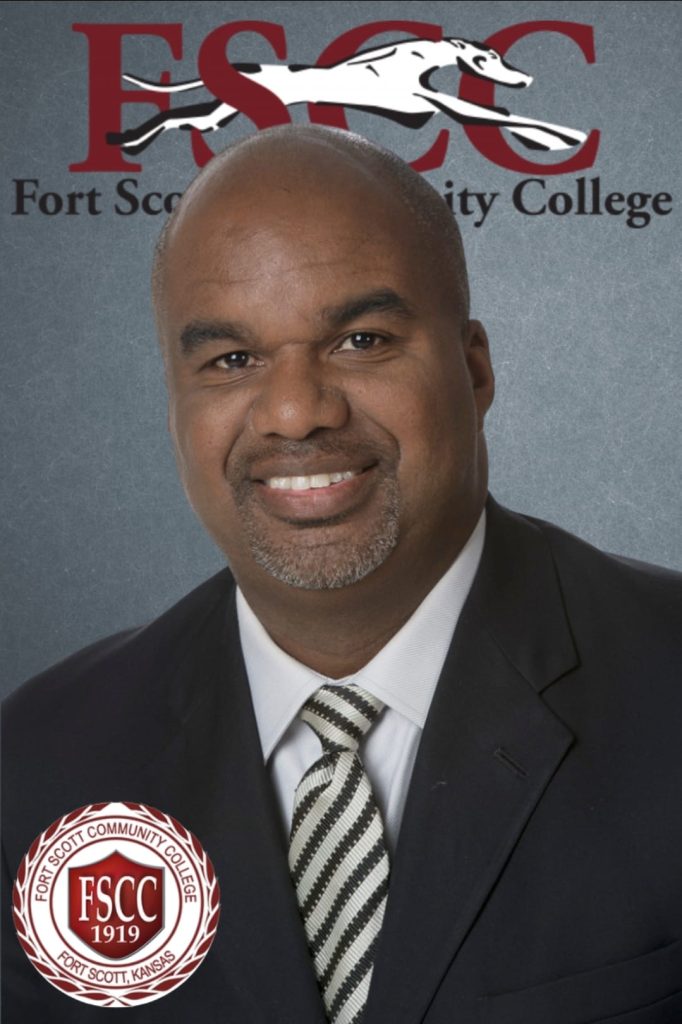
Fort Scott Community College President, Dr. C. Jason Kegler, would like to invite members of Bourbon County, the surrounding communities, and alumni to a series of conversations regarding the college and its impact on our community.

The first conversation will be held at 5:30 pm in the Ellis Fine Arts Center on January 24, 2024.

The purpose of the conversation series is to engage the community on matters related to the college.

We will be examining the college’s mission and vision, image, identity, economic impact, and other topics involving the community.

These conversations will occur monthly beginning in January and concluding in April, with the potential for future conversations.

The idea of the conversations is for this to be an opportunity for two-way conversations designed to gain information on this
community’s college for the people we serve.

The college and Dr. Kegler are looking forward to this opportunity to engage with the community and our constituents.
For more information, please call 620-223-2700 ext. 5202.

In Case of Water Emergency In Cold Weather

Brad Matkin. Submitted photo.

From Fort Scott City Manager Brad Matkin:

“In case of a water emergency during very cold weather, please call Emergency Communication Services at 620-223-1700 to report a leak”

“This number can also be used to determine where the shelter is located if the power is lost during a storm (Buck Run Community Center is our shelter). We have had some elderly people call us wanting to know these things and do not have Facebook.”


USDA Rural Development Announces Awards for Domestic Biofuels in Kansas


$5 Million Will Provide Fuel Station Improvements in Topeka, Ottawa and Ellis


TOPEKA, Jan. 11, 2024 – U.S. Department of Agriculture (USDA) Rural Development State Director Christy Davis announced today that $5 million in grants will increase the availability of domestic biofuels in Kansas and give travelers cleaner, more affordable fuel options at gas pumps.

“These grants will help people in rural areas access clean energy,” Davis said. “By increasing the supply of biofuels made here in Kansas and the U.S., we are strengthening our energy independence and lowering costs for Kansans in rural communities.”

The Department is making the awards through the Higher Blends Infrastructure Incentive Program (HBIIP). Blending ethanol into gasoline has helped reduce fuel costs by approximately 25 percent. HBIIP expands the use of ethanol-based fuels at gas stations around the nation.

This announcement is part of a larger national announcement that includes projects in 21 other states. The details of the Kansas projects are:

  • A $122,521 grant will help create infrastructure to expand the sales and use of renewable fuels through Capital City Oil Inc. This project will install one E15 dispenser, one E85 dispenser, one B20 dispenser, two ethanol storage tanks and two biodiesel storage tanks at one fueling location, located in Topeka. This project aims to increase the amount of biofuels used by 5,280,000 gallons per year.
  • A portion of a $4,943,820 grant will help create infrastructure to expand the sales and use of renewable fuels at two Kansas locations of Love’s Travel Stops & Country Stores, Inc. This project will retrofit 704 E15 dispensers at 88 fueling stations located in Arizona, Florida, Georgia, Iowa, Illinois, Indiana, Kansas, Kentucky, Missouri, North Carolina, Nebraska, New Mexico, Nevada, Ohio, South Dakota, Texas, and Wisconsin. Station locations impacted by this grant are: AZ – Eloy, Chandler, Gila Bend, Williams, Benson, Joseph, City; FL – Lee, Ocala, Ormond Beach; GA – Waco, Thomson, Brunswick, Richmond Hill, Jackson, Dublin, Tifton, Emerson, Hogansville; IA – Sioux City; IL – Williamsville, Ina, Kankakee, Dwight, Le Roy, Roscoe, Greensvile, Utica; IN – Mooresville, Richmond, Whiteland, Memphis, Gary, Whitestown, Haubstadt, Demotte, Marion, Pittsboro, St. Paul; KS – Ottawa, Ellis; KY – Waddy, Sparta, Horse Cave, Corbin, Richmond, Grayson, Calvert City; MO – St. Joseph, Matthews, Rolla; NC – Dunn, Marion; NE – Aurora; NM – Albuquerque; NV – Fernley, Wells, Las Vegas; OH – Zanesville, Hubbard, Jeffersonville, Perrysburg, Burbank, Baltimore, Dayton; SD – Sioux Falls; TX – Van, Midlothian, Hillsboro, Katy,  Luling, Rockwall, Anna, Edna, Three Rivers, Texarkana, Weimar, Hutchins, Seguin, Fairfield, Von Ormy, Weatherford, Mount Vernon, Lufkin, Cleveland, Houston, Fort Worth, Rhome; and WI – Tomah. This project is expected to increase the amount of ethanol sold by 86,085,412 gallons per year.

Background: Higher Blends Infrastructure Incentive Program

The Higher Blends Infrastructure Incentive Program (HBIIP) provides grants to fueling station and distribution facility owners, including marine, rail, and home heating oil facilities, to help expand access to domestic biofuels, a clean and affordable source of energy. These investments help business owners install and upgrade infrastructure such as fuel pumps, dispensers and storage tanks. Expanding the availability of homegrown biofuels strengthens energy independence, creates new revenue for American businesses and brings good-paying jobs to rural communities.

In June 2023, USDA made $450 million available in Inflation Reduction Act funding through the HBIIP to expand the use and availability of higher-blend biofuels. That same month, USDA also announced the first round of Inflation Reduction Act-funded HBIIP awardees.

USDA continues to accept applications for funding to expand access to domestic biofuels. These grants will support the infrastructure needed to reduce out-of-pocket costs for transportation fueling and distribution facilities to install and upgrade biofuel-related infrastructure such as pumps, dispensers and storage tanks. There are three quarterly application windows left, and the program ends Sept. 30, 2024. The next application deadline is March 31, 2024.

For more information, go to the HBIIP webpage.

USDA touches the lives of all Americans each day in so many positive ways. Under the Biden-Harris Administration, USDA is transforming America’s food system with a greater focus on more resilient local and regional food production, fairer markets for all producers, ensuring access to safe, healthy and nutritious food in all communities, building new markets and streams of income for farmers and producers using climate-smart food and forestry practices, making historic investments in infrastructure and clean energy capabilities in rural America, and committing to equity across the Department by removing systemic barriers and building a workforce more representative of America. To learn more, visit www.usda.gov.

To subscribe to USDA Rural Development updates, visit the GovDelivery subscriber page.

USDA is an equal opportunity provider, employer and lender.


###

Julia Fern Haggard Obituary

Julia Fern Haggard, age 50, a resident of Pittsburg, Kansas, passed away unexpectedly Saturday, January 6, 2024, at her home in Pittsburg. She was born November 30, 1973, in Pittsburg, Kansas the daughter of Harriett Walker Wisdom and Gary Falletti.

Julie graduated from the Ft. Scott High School with the Class of 1992. She married John Haggard on December 3, 1994, at Pittsburg, Kansas. Julie had worked for several years at Wal-Mart in Ft. Scott. John and Julie later lived in Texas for several years before moving to Pittsburg.

Julie loved sports of all kinds. She was a great fan of the Ft. Scott Tigers and of the Pittsburg State Gorillas and went to as many of their games as possible. She also enjoyed country western music. Some of her favorite singers were Kenny Rogers, Garth Brooks and George Strait. Julie had a gentle spirit and loved animals.

Survivors include her husband, John, of the home; two sisters, Amy Nance and Dustee Craddock-Harrison as well as her father, Gary Falletti. Also surviving are her mother-in-law, Barbara Haggard, an aunt, Elizabeth “Alee” Walker, an uncle, Mike Falletti and numerous nieces and nephews and many close friends.

Julie was preceded in death by her mother and grandparents.

Rev. Dustin Morris will conduct a memorial service at 2:00 P.M. Wednesday, January 17th at the Cheney Witt Chapel.

Memorials are suggested to the Julie Haggard Memorial Fund and may be left in care of the Cheney Witt Chapel, 201 S. Main, P.O. Box 347, Ft. Scott, KS 66701. Words of remembrance may be submitted to the online guestbook at cheneywitt.com.