This is part of a series of responses from candidates for the Nov. 6, 2018 election. There are two people running for 2nd District Representative.
State Representative, 2nd District (vote for one)
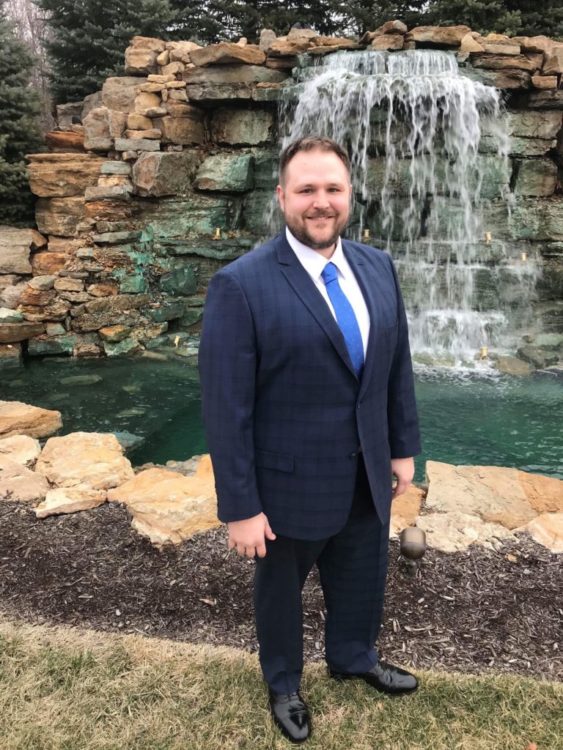
Adam J. Lusker Sr. 452 S. 210th St. Frontenac 66763 Democratic
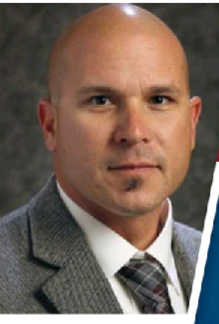
Kenneth Collins 102 E. 1st Street Mulberry 66756 Republican
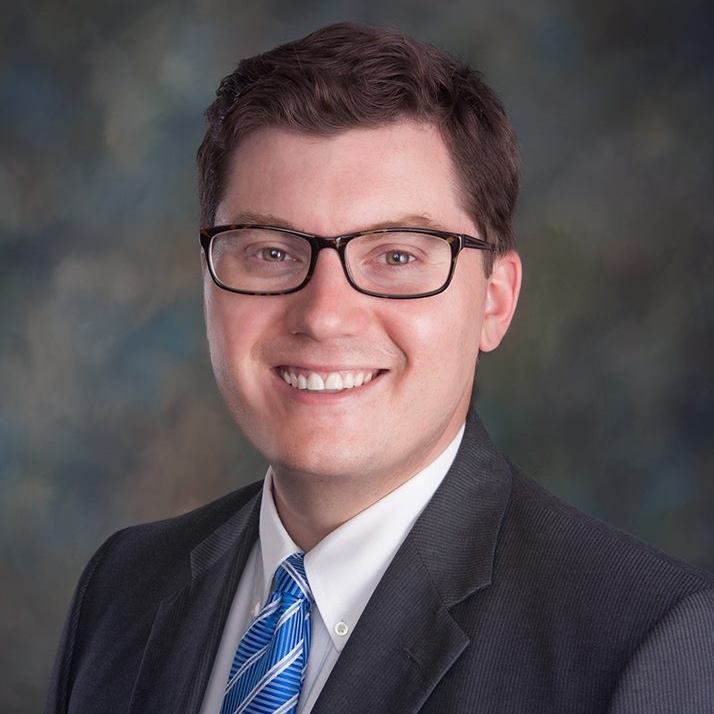
These are Ken Collins responses:
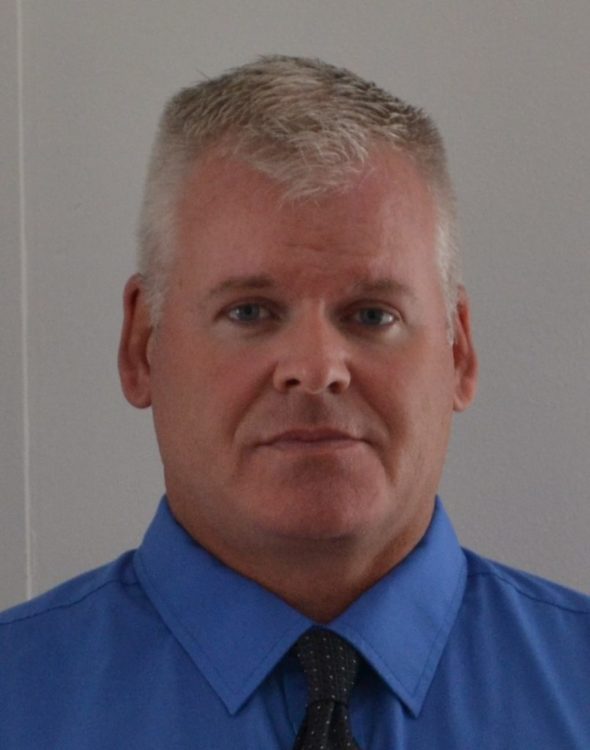
Ken Collins.
Name: Ken Collins
Age:55
Candidate for the position of: Second District Kansas State Representative
Place of residence: Mulberry, Kansas
Current occupation: Retired from AT&T and working to establish a convenience store business.
Community involvement: Adjutant of American Legion Post 176 in Mulberry.
Party affiliation: Republican
1) What is the biggest issue, if elected, and how do you plan to address it?
An important issue for me is economic growth in Southeast Kansas. I plan to advocate for continuing improvements on US Highway 69 and to look for ways to reduce taxes including sales, gasoline property and income taxes. We are in competition with neighboring states in several ways so we need to keep our tax rates as low as possible.
2)Give your views on food sales tax:
We need to try to find a way to lower sales tax, especially on groceries. Many states have reduced sales tax rates for food. A large percentage of Kansans live in close proximity to Missouri so we are losing business when consumers choose to cross the state line to shop. Missouri’s sales tax rate for groceries is 1.23% as compared to our basic rate of 6.5%. on all items including food.
3) Give your views on legalizing marijuana:
I haven’t seen any reliable information yet on how legalization has had an effect on states like Colorado so I haven’t come to a decision.
4) Give your views on health care for our state, including Medicaid:
We need to find some new ways to provide health care in rural areas. It is shocking news to everyone that Mercy Hospital of Fort Scott will soon be closing but hopefully solutions can be found to fill the gaps in service that will result. I’m generally leery of Medicaid Expansion, although the program would be federally subsidized it would still cost the Kansas taxpayers.
5) Give views on abortion and Planned Parenthood:
I am strongly pro-life and if elected I will vote in a manner to protect the unborn. I would not support any taxpayer subsidization of Planned Parenthood.
This is part of a series of responses from candidates for the Nov. 6, 2018 election. There are three people on the ballot for Kansas Secretary of State:
Secretary of State (vote for one)
Brian “BAM” McClendon1200 Oread Avenue #703 Lawrence 66044 Democratic
Scott Schwab 14953 W 140th Terr. Olathe 66062 Republican
Rob Hodgkinson 7111 W 151st St #104 Overland Park 66223 Libertarian
Here are Brian McClendon’s responses:
Brian McClendon
Name: Brian “BAM” McClendon
Age: 54
Candidate for the position of Kansas Secretary of State
Place of residence: Lawrence, KS
Current occupation: Research professor, University of Kansas
Party affiliation: Democrat
Community involvement:
● Helped found non-profit KSvotes to encourage non-partisan civic
engagement in Kansas and led the team that developed an online/mobile voter registration tool for Kansas
● With Beth Ellyn McClendon, established the McClendon Engineering Scholarship at the University of Kansas
● Pro bono STEM presentations at Kansas elementary, middle and high schools, colleges, and universities; and companies and organizations
● The University of Kansas Endowment, Trustee
● Member of Portola Valley Cable Committee for 8 years. Brought
broadband to small-town cable system against all odds
● Member, Consumer Technology Association Advisory Board (CES)
● Member, National Academy of Engineering
● University of Kansas School of Engineering Advisory Board
● University of Kansas EECS Advisory Board
● National Academy of Engineering
● United Nations “Champions of the Earth Laureate” award (the UN’s top environmental prize) for “harnessing the power of technology to support conservation and green economic development,” Entrepreneurial Vision 2013
1) What is the biggest issue, if elected, and how do you plan to address it?
The focus of the Secretary of State is and should be on supporting elections and voting, business registration and support, and government transparency. Protecting our elections from foreign interference, protecting the private data of Kansas citizens, protecting the fundamental right of every eligible citizen to vote,
and increasing voter engagement are critical challenges that the Kansas Secretary of State should prioritize.
As a businessman, a former executive with Google, and an innovator, I have the skills to accomplish these goals.
My first tasks will be:
● To use my technology expertise to monitor the state’s voting systems in order to help ensure that every vote is counted and to guard against any outside interference. Additionally, I’ll continue to promote voter registration and advance ballots. Registering to vote and requesting advance ballots should be as easy for eligible voters as using Google Maps.
● The voter registration system at the Kansas Department of Motor Vehicle driver’s license bureaus needs immediate attention. There are reports that some new voter registrations through the DMV are not being recorded at the county level. As a result, voters who believed they were registered to vote are discovering they are not. This needs to be investigated and fixed.
● I will return non-partisan public service to the Secretary of State’s office. I will modernize the Secretary of State’s website by updating the technology, especially search and navigation, to make the site easier to use for all citizens and businesses. The Secretary of State’s website is the front door for Kansas businesses and the front door for citizens. I will make sure that the door is open.
● As a businessman, I’ve started companies, built companies and built teams that delivered products that met stringent requirements for security, efficiency, and ease of use. At Google, I lead a team that grew from 29 to 2000. I can make the Secretary of State’s office accessible, secure and efficient.
● As the administrator of the Crosscheck database, Kansas absorbs the cost and liability of securing data for citizens in multiple other states, but it’s riddled with problems including tens of thousands of false results creating hundreds of hours of work lost chasing down false matches. Crosscheck’s security protocols have also been widely criticized, and some personal data of Kansans has already been leaked. Viable options exist. Crosscheck must be reviewed and then fixed or replaced.
2)Give your views on food sales tax:
The Secretary of State is an administrative position, not legislative. The office has no direct engagement with or influence upon tax policy. The focus of the Secretary of State is and should be on supporting elections and voting, business registration and support, and government transparency.
That said, food sales is a regressive tax placing a disproportionate burden for financially supporting shared public services upon working and middle-class families. Over-relying on a food sales tax means the state is not fairly or effectively distributing the responsibility to fund shared public services.
3) Give your views on legalizing marijuana:
The Secretary of State is an administrative position, not legislative. The office has no direct engagement with or influence upon substance legalization or related policy. The focus of the Secretary of State is and should be on supporting elections and voting, business registration and support, and government transparency.
4) Give your views on health care for our state, including Medicaid:
The Secretary of State is an administrative position, not legislative. The office has no direct engagement with or influence upon public health policy. The focus of the Secretary of State is and should be on supporting elections and voting, business registration and support, and government transparency.
That said, Bourbon County has just experienced a hospital closure that is largely a result of conservative Kansas leaders refusing to expand Medicare/Medicaid coverage in our state. The partisan opposition to expanding those services, and the resulting negative impact upon health care access to rural and smaller communities, are clearly not working in the best interests of all Kansans.
5) Give views on abortion and Planned Parenthood:
The Secretary of State is an administrative position, not legislative. The office has no direct engagement with or influence upon women’s health policy. The focus of the Secretary of State is and should be on supporting elections and voting, business registration and support, and government transparency.
Carla Nemecek is Southwind District Director and agent.
Do you know how that playground equipment at the park down the street was purchased? Or the new sign leading visitors to a local landmark? How about initial money for a festival? In any community, chances are that someone, or a group of individuals, wrote a grant proposal and received funding to help with the project.
Individuals and community groups can learn more about writing successful grant proposals at a workshop planned in Humboldt, KS on Friday, November 9, 2018. The workshop is presented by Nancy Daniels, a community vitality specialist with K-State Research and Extension and the author of many grant proposals. The training will be at the Humboldt Public Library, 916 Bridge Street from 9:30 a.m. to 3:00 p.m. and includes lunch. The cost to attend is $10.
“This workshop is for everyone, whether they’ve never written a proposal before and have no idea where to start, to those who have experience but are looking for ways to improve their approach,” Daniels said. “The magic that happens in a local community when people find out they don’t have to wait to get something done, that they can do it themselves, is incredible.”
Participants also learn from each other, Daniels said, adding that even experienced grant writers pick up tips and are reenergized after coming together with peers in their communities. Participants are encouraged to bring their grants or grant ideas to share.
Workshop topics include:
Sources of data for community needs (where do you find the numbers to back up your request?);
Where to find grants;
The five common elements of a great grant proposal;
Practicing the grant writing elements.
More information and registration is available by contacting Carla Nemecek at the Southwind Extension District Iola Office, 620-365-2242 or email [email protected].
A local helping agency will continue food and financial help but discontinue the distribution of clothing.
The Beacon Board of Directors voted last week to not accept clothing for distribution to its clients.
“While grateful for the years of generosity of Fort Scott citizens in their donations of clothing and household items, the Beacon Board of Directors has regretfully chosen to end receiving of donations of clothing and household items,” according to a press release from the Beacon.
“The board voted unanimously to continue offering only food service and financial services as it has in the past,” Carol MacArthur, president of the board told fortscott.biz.
“The Beacon will no longer distribute these (clothing) items effective November 1, 2018. This decision not made lightly and only after careful assessment.”
“Food and monetary donations are welcome and essential, as these needs are endless,” according to the press release.
“The Board would also like to thank all those who have worked in the Beacon for their tireless efforts in serving the community.”
At a recent Bourbon County Inter-Agency Coalition meeting, it was stated that these agencies still provide distribution of clothing in Fort Scott: Mother to Mother Ministry and Communities In Schools, with qualifiers.
This is part of a series of responses from candidates for the Nov. 6, 2018 election.
County Commission District #1 (vote for one)
Clinton L. Walker 1999 105th St. Mapleton 66754 Democratic
Lynne D. Oharah 2120 95th St. Uniontown 66779 Republican
Here are the responses from incumbent Lynne Oharah:
Lynne Oharah
Name: Lynne Oharah
Age: 71
Candidate for the position of County Commissioner District 1
Place of residence: 2120 95th St. Uniontown, Ks.
Current occupation: Semi-retired, Current County Commissioner District 1
Community involvement: USA Navy Veteran, Past Kansas State Representative. Former USD235 School Board Member for 10 years. Current member of the Uniontown Ruritan club. Member of the Southeast Kansas Planning Committee.
Party affiliation: Republican
What is the biggest issue, if elected, and how do you plan to address it?
Growing the economy and reducing taxes. We have held the line on raising the mill levy and raising the mill levy in the future is not an option. We must make every effort to reduce taxes through economic growth which will increase our population and provide new avenues for growth and continue providing services needed and wanted by the public.
The programs that have been started are the Bourbon County Neighborhood Revitalization Program which is already starting to show results, the continuation of the partnership with CrawKan Telephone Company to provide broadband access to the highspeed internet, plans to promote a Data Center (server farm) in the old jail facility.
We must work with all business, existing and new, agriculture and not-agriculture, to promote growth.
Another extremely important issue to be addressed is dealing with the loss of Mercy Hospital. We must work together, county, cities, and communities, to address how we provide quality medical services to the population of Bourbon County.
I would be very involved in this process and be part of a team to that will work to ensure we do have the medical services we need.
Supporting You launches, families who can offer support and guidance asked to volunteer
TOPEKA – Families of children with special needs benefit from the care and support that can only be offered by others who have shared their experience. The Kansas Department of Health and Environment (KDHE) and the Special Health Services Family Advisory Council (SHS-FAC) announce a new peer-support initiative in Kansas that will enable individuals and families who have similar experiences to communicate and gain support from one another, by sharing ideas, resources and strategies to meet the needs of their children.
“The program offers participants the opportunity to express their grief, concerns, and questions, without feeling judged,” said Heather Smith, KDHE Special Health Services Director. “We know that peer support is one of the strongest measures of individual/family support.”
Implementation of the network will occur in three phases, Support Peer Recruitment, Support Peer Training, and Peer Matching. We are actively recruiting Support Peers—those who have navigated various service systems, have experience with advocating for a loved one or themselves and have learned lessons that can be shared with others. It does not take specialized training, specific experience with services or systems, or any kind of degree to be a Support Peer. It simply takes a caring individual who has a desire to help others and shares experiences with caring for a child with special health care needs.
In the next phase, Support Peers will provide training on confidentiality, communication, active listening and helping families who are dealing with loss, grief or fear. Training will take place in-person and online through November and December. The final phase, Peer Matching, will take place in early 2019, and begin matching those looking for supports with the trained Support Peers recruited.
Two existing programs are part of the initial launch, the Kansas Special Health Care Needs program and the Kansas School for the Deaf, to connect families of children served through these programs with peer supports.
Supporting You will be administered by KDHE’s Special Health Services Section, within the Bureau of Family Health. The network has been developed by the SHS-FAC, which will provide oversight to monitor consistent practices and fidelity among partnering organizations, ultimately ensuring that participating programs are meeting the needs of the families served through the network.
More information can be found on the Supporting You website at www.supportingyoukansas.org or by contacting Heather Smith, Special Health Services Director, at 785-296-4747 or [email protected].
Krista Harding is a K-State Research and Extension agent assigned to Southwind District. She may be reached at [email protected] or 620-244-3826.
A desirable soil is the most important aspect of a garden. Time spent fertilizing, watering and tending to plants is necessary, but this time is almost a waste if the soil you’re working with is not in good condition. Fall is an excellent time to step back and analyze how well your garden performed during the summer, and to make improvements to the soil.
Soil is formed when rock is broken down by climate and vegetation over a period of time. Soil is nothing more than weathered rock fragments and decaying remains of plants and animals.
Most soils have three distinct layers – surface, subsoil and bottom. The surface layer is a coarse layer containing more organic matter than the other soil layers and the layer that people pay the greatest attention to. This layer is the most fertile and has the greatest concentration of plant roots. Plants obtain much of their nutrients and water from the surface soil.
The subsoil layer is finer and firmer than the surface soil and serves as support for the surface layer. The subsoil layer is a storage space for water and nutrients for plants, a temperature regulator of the soil and supplies air for the roots of plants. The bottom layer is decomposed rock. It is not hard like rock, but may show the form or structure of the original rocks.
Soil texture refers to the proportional amount of sand, silt and clay in a soil. Texture and soil structure affect the moisture holding capacity of soil, permeability, capacity to hold and furnish nutrients, tillage operations and erosion.
Our soils in the southeastern part of Kansas have a high clay content to it. The clay in the soil is what makes the soil stick to your shoes when the soil is wet. Many refer to our soil as “gumbo.”
One way to address a heavy clay soil and to improve the soil texture is to add organic matter. Organic matter includes such items as manure, leaves, and grass clippings that have been composted. Earthworms, insects, bacteria and fungi use the organic matter as food, breaking it down into humus. Through this process, materials are made available for use by growing plants. In a heavy clay soil, the organic matter allows water to move more freely and loosens the tight clay, which makes the soil easier to work.
Organic material can be directly applied to gardens and flowerbeds this time of year and allowed to compost directly in the soil. Add two to four inches of organic material and till into the soil. If the soil is dry, apply water to begin the decomposition process. After about two weeks you can repeat the process with another application of organic material. The organic material will decompose over the winter and soil will be ready for spring planting.
Sand is sometimes suggested as an amendment material for clay soils. However, there is a good reason to be cautious about using sand. For sand to be effective at breaking up a clay soil, sand grains must touch one another so there is pore space between grains that can hold air and water. If the grains don’t touch, the clay fills in the void between sand particles leaving no room for pores. This is the same principle used to make concrete and the result is somewhat the same.
Before doing any amendments to the soil, I recommend doing a soil test. Soil testing can be done through the Extension office for $12. For more information on how to take a soil sample, please give me a call.
K-State Research and Extension is an equal opportunity provider and employer.
Governor Jeff Colyer orders flags flown at half-staff on
Sunday, Oct. 7 in honor of National Fallen Firefighters Memorial Day
Topeka – In accordance with Executive Order 10-12, Kansas Governor Jeff Colyer has ordered flags to be flown at half-staff from sun-up to sun-down on Sunday, Oct. 7 in honor of the National Fallen Firefighters Memorial Day.
“Firefighters perform acts of heroism each day, some of whom have made the ultimate sacrifice protecting our communities,” said Governor Colyer. “We owe them our gratitude, our respect, our remembrance.”
On Oct. 16, 2001, President George W. Bush approved legislation requiring the American flag to be lowered to half-staff on all federal buildings to memorialize fallen firefighters in conjunction with the annual observance of the National Fallen Firefighters Memorial Service held each year in Emmitsburg, Maryland.
Vicky Polen, Safehouse Crisis Center Victim Advocate, speaks to the Bourbon County Inter-Agency Coalition members, Wednesday. Seated is Billie Jo Drake, coalition chairwoman.
Safehouse Crisis Center, Pittsburg, has served 33 victims of domestic violence, sexual assault and stalking that come from Bourbon County.
“It’s important that everybody be aware of these issues,” Vicky Polen, a victim advocate with the center told the Bourbon County Inter-Agency Coalition members during its’ monthly meeting.
Thirty-three might not seem like a big number, she said. “But we spent 433 hours with them.”
The crisis center serves Southeast Kansas.
From statistical data on the center’s website these are the numbers of the services that have been given from the center: 550- Hotline calls, 297-Victims were Sheltered, 857-Total Agency Victims Served (Unduplicated), 10,912-Peer Counseling Meetings, 769-Support Groups, 1,019- Safety Plans, 329-Court Advocacy, 248-Presentations to 10,023 Public and Professional Individuals, 216-Served through Child Exchange and Visitation Center, 776-Personal Advocacy.
The coalition meets the first Wednesday in the basement of the First Baptist Church at noon.
Members present during the meeting are allowed to tell what is happening and what services are offered from their agencies. A previously selected speaker presents a program on their agency. This month it was Vicky Polen of Safehouse. The November 7 speaker will be Mandi H-Woods, Kansas Children’s Service League.
The Hole in the Wall Liquor Store, at Wall and Scott Street September 2018..
HOLE IN THE WALL GRAND OPENING & RIBBON CUTTING
FORT SCOTT – The Fort Scott Area Chamber of Commerce announces a Grand Opening & Ribbon Cutting Celebration for Hole in the Wall Liquor Store in their new location of 124 E. Wall St. in Downtown Fort Scott. The event will take place Friday, October 12th from 5:30 to 7 pm with the Ribbon Cutting & Remarks at 6 pm. There will be samples, snacks, and door prize giveaways.
Owners Roy & Jody Hoener sought a new location for their liquor store in Fort Scott’s Downtown Historic District and after receiving a CDBG Grant (Community Development Block Grant) renovated the dilapidated building at the corner of Wall and Scott streets.
Hole in the Wall Liquor Store originally opened on Oak Street in the mid-1980’s by Roy’s mother Connie Hoener and her father Roy Louderman. Roy Hoener has since taken ownership of the business and he and Jody look to a successful future with the new location and loyal customers.
The Hoener’s would like to recognize those who completed the building redevelopment including:
Exterior: Hofer & Hofer & Associates, Inc., Ag Engineering, R II Concrete, Casper Enterprises, LLC, Peerless Products, Tanner Beckham & Dennis Speer, Murphy Roofing; Interior: Great Expectations, Geiger Plumbing, KTK Electric, Miles Woodworking, Ruddick’s Furniture, Terry Kirby, Perry Cannon.
For more information please contact the Fort Scott Area Chamber of Commerce at (620) 223-3566.