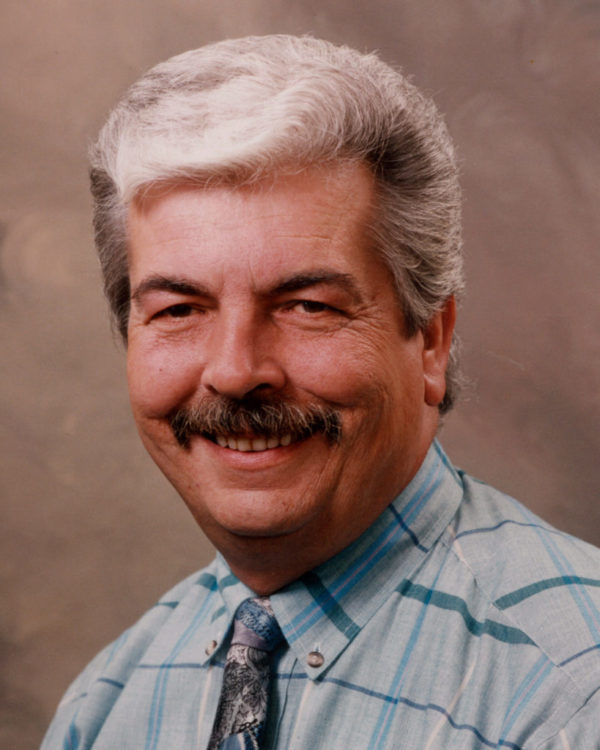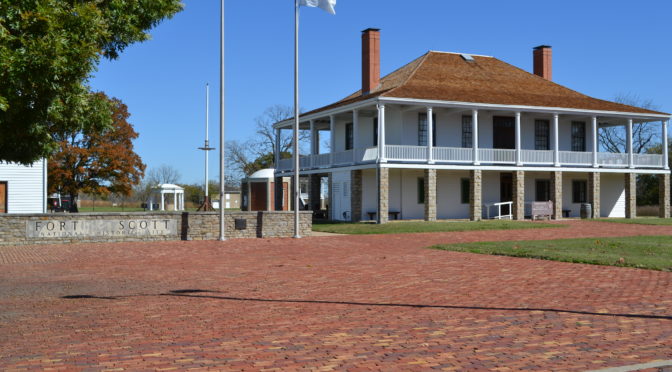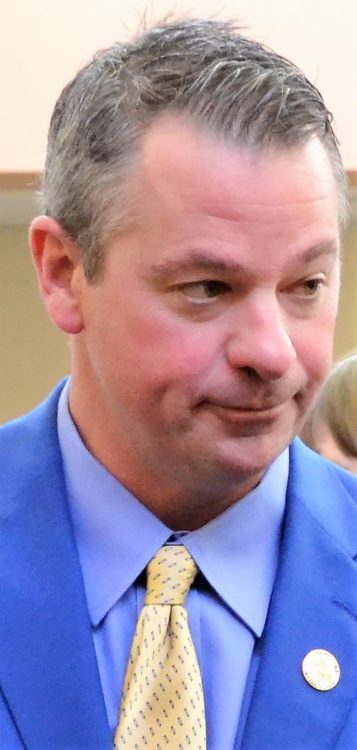
Carl Brenner, new Chief of Interpretation and Resource Management at Fort Scott National Historic Site, started July 22.
The new Fort Scott National Historic Site Ranger has been around.
From Shenandoah National Park, VA to Grand Canyon National Park, AZ to Pinnacles National Monument, Yosemite National Park, Golden Gate National Park-all in California to Lake Meredith National Recreation Area in the Texas Panhandle, Carl Brenner has been all across America.
As of July 22, Brenner is the new Supervisory Ranger and Chief of Interpretation and Resource Management at FSNHS.
“I came to Fort Scott to continue my journey,” Brenner said. “I grew up in St. Louis, MO. I love the history close to home.”
Brenner is ready to become a part of Fort Scott.
“I’m ready to begin engaging with the community-schools, hospital, veterans, all civic organizations here in town,” he said. “And reaching out to other communities to bring them here.”
He wants to tell the story of the fort and its opportunities.
Brenner has a passion for the National Park Service.
“The park service story is the story of America,” he said. “It’s our responsibility to share that story.”
“Growing up I never realized you could have a job in the park service,” Brenner said. “Learning about nature and the cultures, being able to share them can be a career.”
That’s what his father, John Brenner, taught him, which inspired him. His first supervisor, Barb Stewart, also ” instilled the values of what the park service is and the possibilities that exist.”
The N.P.S became his family, he said.
His personal family is a wife, Maggie, who is still packing up their belongings in Texas, and his dogs, a German Shepherd and a Golden Retriever.
Brenner has been welcomed by the community, he said, and he is impressed with the number of activities that go on in town.
He will have to coordinate with all the activities to “have people come and enjoy the fort,” he said.
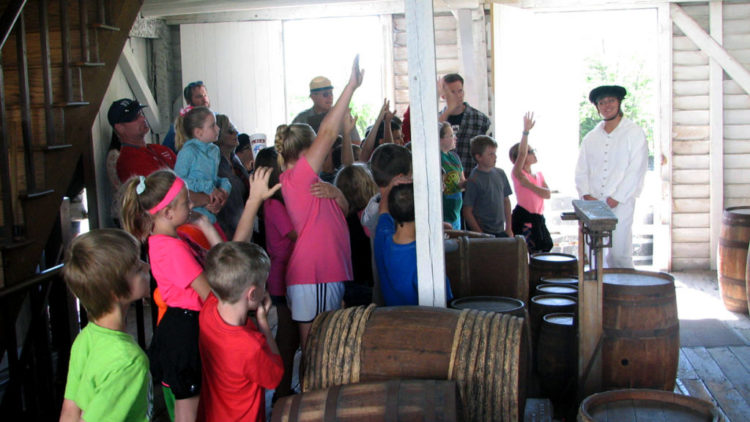
This week is Trailblazer Week at the fort.
Brenner believes this is an exposure to the fort and a pathway into a career for youth.
“I’d like to start doing that with schools, the curriculum at the schools,” he said. “Try to build pathways for people to learn about resources and opportunities with the park service.”
Uniontown schools have enrollment August 8 from 8 a.m. to 4 p.m. and again on August 9 from noon to 7 p.m.
The school district has its’ first day of school on August 30.
Uniontown native Vance Eden, 33, is the new principal at West Bourbon Elementary School, as of July 1.
” My first priority is to make sure every student and teacher have the things they need to have the best possible start to the school year,” Eden said.
Eden attended Uniontown schools from kindergarten through twelfth grade.
He then attended Pittsburg State University attaining a Bachelors Degree in Elementary Education and Masters Degree in Educational Leadership.
He taught seven years, four years as a 6th-grade teacher and three years teaching Title 1. He served as assistant principal in Webb City, Mo. for four years.
He and wife, Rachel have two children, a son-Scout, 6 years old and a daughter-Rhuey, age 4. They are members of Community Christian Church.
Why did you choose education for a career?
” Working in education is a great way to be a positive impact on the kids and families of the community where you live,” Eden said.
Ralph Carlson and Tammy Helm play as part of the Friday Night Concert on August 3.
The Hemphill Family and Friends will be the featured act at this week’s concert at Heritage Park at 7 p.m.
The weekly Friday Night Concert is at First and Main Streets and is free and open to the public.
Ralph Carlson is the organizer of the concert series, which is sponsored by the Fort Scott Chamber of Commerce.
Attendees are asked to bring lawn chairs.
Lawnchairs line Main Street at for the Friday Night Concert on Aug. 3. Lawnchairs also filled the area in front of and to the side of the pavilion. Several area musicians entertained the audience at this concert.
Winners of the County Commission District 1 Republican:
Lynne Oharah-287, Matthew Crystal-174, Robert Query-87
County Treasurer Republican: Patricia Love- 1,359
County Attorney Republican: Jacqie Spradling-1,246
State Board of Education Republican: Jim Porter-1,235
House of Representatives 4th District Republican: Trevor Jacobs- 1,268
House of Representatives 2nd District Republican: Kenneth Collins-130
State Senator 13th District Republican: Richard Hilderbrand-850
Commissioner of Insurance Republican: Vicki Schmidt-756, Clark Shultz-698
State Treasurer Republican: Jake LaTurner- 1,348
State Attorney General Republican: Derek Schmidt-1,377
Secretary of State Republican: Scott Schwab-516, Craig McCullah-266, Randy Duncan-258, Dennis Taylor-188, Keith Esau-178.
Governor Republican: Kris Kobach-803, Jeff Colyer-517, Ken Selzer-139,Jim Barnett-71, Patrick Kucera-24, Tyler Ruzich-6, Joseph Tutera-6.
U.S. House of Representatives Republican: Caryn Tyson-785, Kevin Jones-310, Steve Watkins-217, Steve Fitzgerald-128, Dennis Pyle-82, Doug Mays-34, Vernon Fields-20
Shane Walker, Fred Pather, Olivia Walker and Deven Coulter at the Gunn Park Pump Track Sunday morning.
Something new has been added to Fort Scott’s biggest park.
With no sign to designate the spot, it looks like piles of dirt on the south side of Park Avenue, just before entry to Gunn Park.
“It’s kind of evolving,” Fred Prather, one of the designers of the track said. “It needs bikes to pack it down.”
Prather, Shane Walker, and Frank Halsey started physical work on the new Gunn Park Trails Pump Track about four months ago.
“We’ve had the vision of a pump track since the land purchase,” Prather said. ” We wanted someplace to set up for the kids that was easy to access and spectator friendly. “
“The project was started last year, as a result of a grant from Timken (a local company), allowing for the purchase of the property,” said Frank Halsey.
Mid-Contenintal Restoration donated the dirt and the City of Fort Scott brought the dirt in.
Then the workers began piling into small hills with which to hone biking skills.
So, what is pump track racing?
“Pump track translates from the rider pumping the bike with his arm and legs to maintain and even create momentum,” Prather said.
Olivia Walker rides on the pump track Sunday morning, Deven Coulter is in the background.
To create the local Gunn Park Pump Track, Prather did his homework.
” For research I rode every pump, BMX and slopestyle course I could find in a 4-hour driving distance….well, there really isn’t that many, so it seemed like a perfect addition to our trail system, Gunn Park Trails, to draw in more riders.”
” It is loosely styled for BMX riding which stands for bicycle motocross, so when finished it will be wide enough to run 2-3 riders at a time in a head- to- head race.”
“I grew up riding BMX and ride mountain bikes now and I am involved with Gunn Park Trails and other bike projects in town,” Walker said.
“It is open to ride,” Walker said, “but we still have finish work to get done.”
“We will do improvements and additions to only increase the fun,” Prather said. “Things like adding obstacles called ‘skinnies’ to open areas where you can try riding along something 4-10 inches wide for a length of 10 foot, etc.”
” We also plan to construct ‘drop zones’ of progressing heights, where you effectively ride off a ramp to flat ground,” Prather said. “These are skills we commonly use on a mountain bike trail. It will be a place where it’s nice and open and you can practice and perfect technique. This not only improves your riding ability faster, it is also safer.”
There is a beginner course on the far south side of the property.
Eventually, there will be a sign with safety rules and “possible billboards behind the hills,” Prather said. “And grass will be sown on the side of the hills.” He also envisions bleachers for spectators.
” I’ve been involved with Gunn Park Trails since the beginning,” Prather said. “When you can get kids participating and excited about a project it’s a win, they tell their friends and family.”
“We started to feel a need for BMX style riding and to allow mountain bikers access to a pump track which is an activity becoming increasingly popular,” Shane Walker said.
From left: Steve Watkins, Steve Fitzgerald, Doug Mays at the podium, Caryn Tyson and Kevin Jones. Five of eight candidates for the U.S. House of Representatives seat spoke at the Candidates Forum on July 31 at Fort Scott High School.
There are eight candidates for the U.S. House of Representatives vacancy to be filled because incumbent Lynn Jenkins is stepping down. Five came to Fort Scott for the Fort Scott Chamber of Commerce sponsored Candidate Forum at Fort Scott High School.
These are excerpts from remarks given during the 2018 Candidates Forum which was July 31.
Dennis Pyle did not attend but sent a representative to tell the audience he is a fiscal conservative, pro-life, pro 2nd Amendment Rights and one who fought against tax hikes and will continue Trump’s agenda.
Kevin Jones is running because of the lack of servant leaders. He served in the military 5.5 years as a Green Beret and will fight for jobs and curb the national debt.
Vernon Fields is an Army veteran, federal law enforcement retiree, a criminologist, and registered nurse. His values are the sanctity of life, limiting government and constitutional rights.
Steve Watkins is a political outsider, engineer, and builder, who values religious freedom and family values. “If you believe we can do better, I will fight you.”
Doug Mays is a Southeast Kansas native and was Speaker of the House in Kansas for four years.
Caryn Tyson is a grassroots conservative who owns and operates a ranch in Linn County and has worked at NASA. “We waste money on the government and it needs to stop.”
Steve Fitgerald is a retired military officer, spent years in the Kansas Senate, is pro-life, pro 2nd Amendment and a businessman for 11 years.
Question 1: The Affordable Health Care Act, what is the replacement?
Kevin Jones: The first thing people can do is begin to exercise. The issue is the cost of the act. Create a healthcare open market pool.
Vernon Fields: Said he has affordable health care as a retired military officer. “I would look at opening that kind of pool up”.
Steve Watkins: A foundation of transparency and competition, with less regulation. His wife is a doctor, which is a heavily regulated market. There is a need to empower healthcare providers to treat it as a service, not a right.
Doug Mays: When the government takes over something done by private business, “they always mess it up.” The need is to allow competition on a nationwide basis.
Caryn Tyson: It’s hurting businesses, “get government out of the room.” The government should not be involved between us and a doctor. Regulation but options.
Steve Fitgerald: ” We need to end it, not play with it, get rid of it. We don’t need the federal government in insurance.” Health savings accounts should be allowed.
Questions 2: Are you for or against completion of the border wall, how would you fund it?
Vernon Fields: In the military, he saw the border. ” I know we have problems with it.” ” A 14-mile-stretch costs $14 million.” He would look at other budgets to build the wall.
Steve Watkins: ” I was a combat engineer and build walls, they are not a lethal tool”.
Doug Mays: The Mexican border wall is more than immigration, it’s about drugs. When the National Guard was at the border, the drugs coming across were less. The border needs to be secured.
Caryn Tyson: Supports building the wall, and would allow individuals to submit donations to help fund it. Also an issue is cutting government waste, with which she had success at the state level. She is willing to work on legislation to fight for U.S. security.
Fitzgerald: The border wall is needed as part of the overall security. “There is no reason why this country does not have walls for borders.”
Kevin Jones: Supports building a border wall, because it is a deterrent. “Congress just passed a $1,000 a month for renting cars for each Congressman”. “There are a lot of ways to pay for that wall.”
Question 3: Would you support the president’s use of tariffs as a means to force fairer world trade?
Stever Watkins: On tariffs, he would have to look at each proposal. “Our economy benefits from free trade. The government role is to stay out of the way.”
Doug Mays; Yes, use tariffs to trade more fairly. “This president will be known as the great negotiator. We don’t need a trade war. Farmers and ranchers especially. No tariffs anywhere, it would be a free market.”
Caryn Tyson: Fair and free trade is needed. Trump demonstrated he backs up agriculture, but farmers want to sell products for a fair price that covers their cost.
Steve Fitzgerald: Yes, trade more fairly. Trump is a tough negotiator. The EU is making noises like they are coming to the table.
Kevin Jones: Pres. Trump has started to do the negotiating. “We don’t want to be taken advantage of.”
Vernon Fields: As long as tariffs continue and are able to support our farmers.
Closing remarks:
Doug Mays: Pro-life, 2nd Amendment supporter. He knows Southeast Kansas .” I voted for highway bill tax, I hope people will forgive me of that.” Southeast Kansas has been the stepchild of this state. I’d like to see that changed.”
Caryn Tyson: She can stand up to Paul Davis, is a pro-life, 2nd amendment supporter. Her platform is limited government, traditional values, and economic development. Look at her record as representative.
Steve Fitzgerald: “I’d like to help the district with the infrastructure part-especially broadband. We need someone who has proven credentials.”
Kevin Jones: “911 changed us. We were going to a pastors retreat.” He then went on to serve in the military, then as a state representative. Jobs, debt and the lawful administration of justice are his focus.
Vernon Fields: Sanctity of life is important, and he elected not to work in hospitals that performed abortions. His focus is on issues and needs. Choose wisely because that person will represent the state for the future.
Steve Watkins: Although not many endorsements, he stands the best chance of beating Paul Davis. Leadership was proven in his eight years of military service.
Shirley Palmer answers questions about Josh Svaty prior to the candidate forum.
There are 12 candidates for governor of Kansas, four spoke at the 2018 Candidates Forum at Fort Scott High School July 31.
The following are excerpts from opening comments that were given:
One spokesperson, Shirley Palmer, did so for Josh Svaty. When Palmer served as a representative, she knew Svaty to be articulate, and “making a difference,” she said. He is a Kansas farmer, married with four children. Savty is able to unify Kansas. “Want to make a change…(and are ready) to move this state forward.”
Arden Andersen: He was a vo-ag teacher initially, is a doctor, and flight doctor, and has served in the military. “I am tired of a broken health care system, I have answers to solve that system…To make health care available to everyone from the least to the greatest.” Additionally “We need to get more money into the classroom for supplies and paraprofessionals.”
Lynn Rogers: He is running for lieutenant governor with Laura Kelly as governor. He is a senator, worked for a farm credit business, married with three children and three grandchildren, was on the Wichita School Board for over 16 years. “Services… are not being performed…roads.. and schools are falling apart.” “We are ready to work for you right away.”
Patrick Kucera: He is an entrepreneurial evangelist. Married 28 years with six children. He is a visionary leader, not a manager.
Ken Selzer: He attended K-State, married 38 years, CPA, business man, Conservative, pro-life, pro-2nd Amendment, and is the current state insurance commissioner. While in office he reduced the size of the office, reduced costs to the state, and improved customer service.
Question 1: The Supreme Court has said legislative funding for education is deficient. How would you propose it be financed?
Andersen: Diversity is needed in the state, other sources, perhaps tourism, getting the economy going. Medical marijuana helps with the opioid crises, he said, as a doctor. There isn’t one thing that will solve all problems. Health care and the prison system need to be overhauled. These are ideas to get more revenue.
Rogers: Legislature did that this year. “We did that through overturning the unfair Brownback tax experiment.” “We had 400,000 people who weren’t paying taxes. We have made it a fairness issue… We balanced the budget this year. As a state, we have begged borrow and stolen from every fund.”
Kucera: He said entrepreneurs create revenue and an evangelist creates a revival and he is creating a revival of revenue. Wants to redefine what revenue is: not taxation. “I’m the agricultural hemp guy in this race. We are an agricultural economy. I believe that revival of revenue is coming from industrial hemp.”
Selzer: Lean in on costs. Operate more effectively. Make Kansas grow. “We have to think more broadly. That will solve some of our funding problems.”
Question 2: What would you do to improve rural Kansas hospitals?
Rogers: Expand Medicaid, it would cover $1.2 million and create thousands of jobs. Another idea: Ark City pays a 1.5 percent sales tax to fund their hospital.
Kucera: “Agricultural, industrial hemp. A plant that can be grown, create jobs, make property tax grow up. That is the answer.”
Selzer: “A natural selection of hospitals…. sometimes yields a better result.” “Some rural hospitals will affiliate with larger hospitals.” “We need to be careful what we do with Medicaid Expansion., it’s incredibly expensive.”
Anderson: Some insurances cost $1,000 to $2,000 per month and with deductibles $5,000-10,000, he said. “you essentially don’t have insurance”. The medical system has to be overhauled and suggested looking at the Australian model.
Question 3: Would you lower the property tax?
Kucera: The state must make more and spend less. The more money you have in your tax, the more the economy will grow. The government should be more entrepreneurial.
Seltzer: Absolutely, we will take a business approach…increase the economy.
Anderson: Pproperty tax is not fair to seniors and lower social economic level.
Rogers: Many weren’t paying taxes, the tax burden was pushed on cities and counties. A county’s biggest expenses are law enforcement and mental health, those costs have been pushed from state to local level and are unfair.
Closing remarks:
Seltzer: He is a successful business man and has a government background. He has improved costs and productivity as the current insurance commissioner. “I have released my tax returns, you need to lead by example.” He has a farm and is connected to rural Kansas.
Anderson:” It’s important to understand there are a number of things we need to overhaul. Health care is the no.1 issue nationwide. It’s important to turn this thing around in three ways: 1) De-privatize, 2) go after drug costs,3) go after radiology and laboratory costs.
Twenty-percent of children have developmental delay in our classrooms, caused by mercury, aluminum, pesticides and industrial chemicals.” We won’t be able to train them…. and who will take care of them when their parents no longer can.”
Rogers: “We will be out in state visiting on a regular basis… Laura Kelley has fought back. Kansas deserves better service. We want to get to work for you as a no-nonsense problem solver.”
Candidate forum attendees were greeted by candidates in the hall of Fort Scott High School.
Kucera: A change of direction in the state is needed. Hemp can be converted into 50,000 products. Those will create jobs and farmers will have hope again. He is a visionary leader.
Barbara and Bryan Ritter chat before Bryan spoke at the 2018 Candidate’s Forum July 31, about changing the liquor by the drink law in Bourbon County.
Bryan Ritter, the brewer of Boiler Room Brewhaus Microbrewery, who along with wife, Barbara, run the establishment, lobbied for a change in local law, so they won’t have to have 30 percent of their profit in food sales at the microbrewery.
The question will be put to the public on November 6 in Bourbon County.
This map shows the current counties that allow liquor by the drink in Kansas. Bourbon County is one of the medium-pink shaded counties on this map that require 30 percent of business sales must be from food. The map was provided by the Ritters to FortScott.Biz.
These are the comments Ritter made at the forum:
“As a business owner and a citizen of Bourbon County I’m here today to ask for your support and a yes vote in November,” he said. “By voting yes, you are voting in support of new business and new visitors to our great city and county.”
” My wife and I own and operate the new microbrewery in town, let me quickly tell you about two of our customers. Jim, who has been traveling to our area for many years, has always stayed in Nevada, once he heard that there was a microbrewery in Fort Scott he now stays at the Sleep Inn.”
“Another customer drove over a 100 miles just to visit our microbrewery,” Ritter told the candidate forum audience. “He suggested that for us to comply with the dated law we should sell a hot dog with every beer. ”
“Over 30% of the counties in Kansas have already done away with this dated law and with your support so will Bourbon County.”
” Let’s change the narrative from ‘here’s your hot dog that comes with a beer’ to ‘here’s your beer would you like a hotdog’? We make great craft beer and we don’t want to make food, your yes vote will help support us, Fort Scott and Bourbon County.”