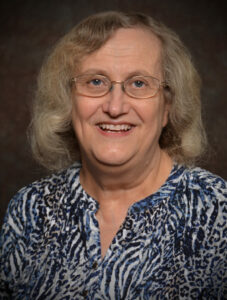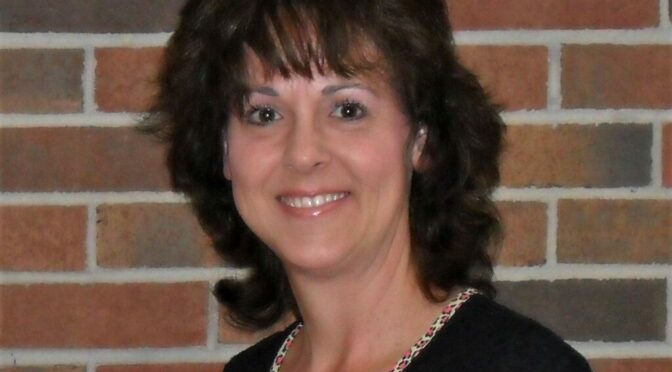
She has an associate’s degree in criminal justice from Fort Scott Community College.

She has an associate’s degree in criminal justice from Fort Scott Community College.

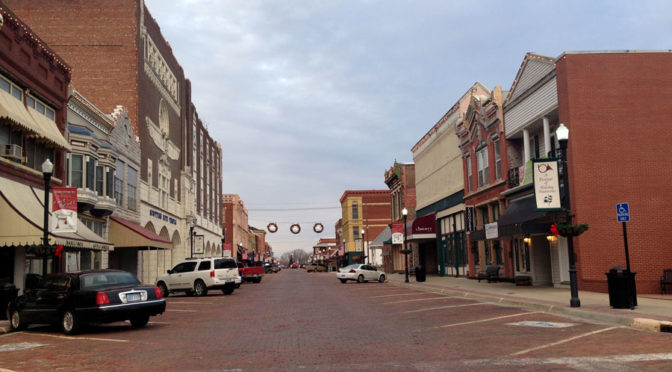
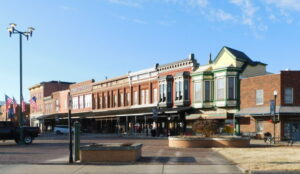
Several downtown Fort Scott buildings are in process of being transformed.

Work began on two historic side-by-side downtown buildings at 10 and 12 E. Wall St.,owned by Jennifer LaRoche on Nov. 5, 2018.
The outside work is now nearly complete and the interior spaces are on the list for completion.


The buildings on Wall Street at National Avenue have been the work of several local contractors and businesses, which were able to work through the COVID 19 Pandemic restrictions.
The LaRoche Building space housing the Common Ground Coffee Co. at 10 East Wall Street was completed just before the COVID 19 Pandemic started in the U.S. in March 2020.
Then Kenny Felt Photography moved its office to the space just west of the coffee shop at 12 E. Wall Street.
Now the building that faces both Wall and National is being worked on.
“By the middle of September, I will have the building weather tight,” Jennifer LaRoche said. “And then we will start on the inside. I do not know how long that could take to complete. I don’t have an end date.”

From the USD 235 Facebook page
PRATT – In a 5-2 vote, Kansas Wildlife, Parks and Tourism Commissioners passed a regulation change that will allow hunters to use artificial light and thermal-imaging equipment when hunting coyotes at night beginning in 2021. Once the regulation is implemented, interested hunters must purchase a Night Vision Equipment Permit, $2.50, to use artificial light, scopes and equipment that amplify visible light, and thermal-imaging scopes and thermal-imaging equipment, when hunting coyotes at night, with the following restrictions:
“The amount of public input we’ve received on this proposed regulation change was truly impressive,” said Kansas Department of Wildlife, Parks and Tourism Secretary Brad Loveless. “It just goes to show that, as a state agency, we make better decisions when we take good data, consult with our subject matter experts, and invite the public to provide their experience and insights. I’m pleased with this process and believe this will expand opportunities for hunters, and will benefit our ranching community, as well.”
The new Night Vision Equipment Permit will be valid beginning Jan. 1, 2021. Until then, hunters must observe all current laws and regulations pertaining to the use of special equipment and hunting coyotes (see ksoutdoors.com/Services/Law-Enforcement/Regulations for details).
To watch a recording of KDWPT’s Aug. 20 Commission meeting, visit ksoutdoors.com/KDWPT-Info/Commission.
For more on hunting in Kansas, visit ksoutdoors.com/Hunting.
SEK Multi-County Health Departments
Allen, Anderson, Bourbon, and Woodson Counties
Coronavirus (COVID-19) Update
August 24, 2020
On August 25, Rebecca Johnson, SEK Multi-County Health Departments Administrator sent the following clarification on this information.
“According to KDHE, the antigen test (the rapid Sofia test is being used in our area) is a presumptive laboratory test. So, if COVID-19 is ‘detected’ on an antigen test, we list it as presumptive on our weekly county update.”
“The PCR test is a confirmatory test, which meets laboratory evidence of SARS-CoV-2 infection. If the result of the PCR test is ‘detected’ it is listed as positive.”
“We needed to list them differently because at one point KDHE was not counting the presumptive tests on the county totals, although we had to do the same work on them as we would have done for a positive PCR test and the individual would still be considered a COVID-19 case. KDHE is now listing the COVID-19 cases that were tested with an antigen test as a probable case. But a probable case, to KDHE can also be one with no testing done at all. So, we’ve stuck with using the word presumptive, because again, the antigen test is a presumptive laboratory test.”
“For the most part, around our area, the PCR test is the one that has been used the most, because it’s been around the longest and has been more available. Recently SEK Urgent Care and Ashley Clinic have started performing the rapid Sofia antigen test, and so we’ve seen a number of COVID-19 cases (presumptive) come from those clinics.”
“We are still going to continue to list the out of state/county, because as we’ve gone along, we’ve gotten several more cases, and again with this, we still have to do the same work on these cases, as we would one of our own residents and the individual is still in our county.”
Thanks.
Rebecca Johnson
SEK Multi-County Health Departments
Administrator
Allen County
| Current Active Cases | 4 |
| Presumptive Cases | 3 |
| Positive Out of State-Staying in Allen County | 3 |
| Total Hospitalizations | 2-1 remaining in hospital |
| Current Recovered Cases | 26 (recovered positives + recovered presumptives ) |
| Total Positives Since Testing | 30 (Allen County + out of state) |
| Deaths | 0 |
Anderson County
| Current Active Cases | 2 |
| Total Hospitalizations | 0 |
| Current Recovered Cases | 30 |
| Total Positives Since Testing | 32 |
| Deaths | 0 |
Bourbon County
| Current Active Cases | 5 |
| Presumptive Cases | 14 |
| Positive Out of State/County-staying in Bourbon | 11 |
| Total Hospitalizations | 8-0 remaining in hospital |
| Current Recovered Cases | 92 (recovered positives + recovered presumptives) |
| Total Positives Since Testing | 86 (Bourbon County + out of state/county) |
| Deaths | 2 |
Woodson County
| Current Active Cases | 1 |
| Total Hospitalizations | 1-0 remaining in hospital |
| Current Recovered Cases | 11 |
| Total Positives Since Testing | 12 |
| Deaths | 0 |


Safety and security of foods preserved in the home depend on the cook. It is vital that proper techniques and processes are used to ensure that home-preserved foods remain safe.
The failure to follow a tested recipe or to store food in a safe place can jeopardize food safety, yet recognizing when home preserved foods are past their prime or no longer safe-to-eat is sometimes a challenge, said Karen Blakeslee, Kansas State University Research and Extension food scientist.
Tell-tale signs that suggest food is suspect and should be discarded include:
* Vacuum seal on the lid has been compromised; lid may pop, bulge, or show signs of rust;
* Jar is chipped, cracked or otherwise damaged;
* Evidence of loss of food quality, such as the presence of mold, loss or change of color, texture, or off odor.
* Evidence of insect or rodent infestation; and
* Date made is unknown.
Do not taste or use food from any jar that has become unsealed or shows any signs of spoilage, Blakeslee said.
To keep home canned foods safe, she recommends:
1) Choose a tested recipe from a reliable source;
2) Use canning equipment that is in tiptop shape. Check the pressure canner gauge annually or more frequently, if a malfunction is suspected. Replace damaged jars and containers. Use new lids;
3) Follow recipe directions exactly;
3) Label and date all home-preserved foods;
4) Store home canned foods in a cool, dry and dark place. Avoid attics, garages, or shelving near a water heater or other appliances that generate heat;
5) Use home preserved foods within one year; and
6) Check food storage area regularly to inspect for potential problems, such as a water leak or insect damage.
It is recommended that pressure canner/cooker gauges be tested for accuracy. This can be done quickly and easily in any of the Southwind Extension offices at no cost. Call any of the Southwind offices to schedule a time to have testing done.
More information about food preservation is available at K-State Research and Extension Southwind offices, and on our website at www.southwind.ksu.edu.
An additional resource is the National Center for Home Food Preservation, located at the University of Georgia and online at: http://www.uga.edu/nchfp.
|
|
|
|
|
|
|
|
|
|
|
|
|
|
|
|
|
|
|
|
|
|
|

Nevada Regional Medical Center (NRMC) proudly announces its approval of accreditation status by Accreditation Commission for Health Care (ACHC) for the NRMC Sleep Center.
“Our Sleep Center provides a consistently high level of service for our area that is comparable to larger hospitals,” said Steve Branstetter, Chief Executive Officer at NRMC. “Since opening, our staff have worked hard to repeatedly earn this accreditation.”
Every two years the ACHC surveys the Sleep Center to determine whether or not NRMC demonstrates compliance with national standards. Accreditation by ACHC reflects an organization’s dedication and commitment to meeting standards that facilitate a higher level of performance and patient care.
“Our accreditation is proof of our commitment to providing the highest quality healthcare to our community,” says Andrea Miller, Cardiopulmonary Supervisor at NRMC. “Through accurate sleep monitoring, we are able to help our patients determine the specific sleep disorder they may have, and take corrective measures to drastically improve quality of life.”

Kevin Thomure, 40, is a new Fort Scott Community College History Instructor. His office is located in Bailey Hall at the college.
Thomure earned a Bachelor’s in Science Degree (Social Studies Education) from Pittsburg State University, a Master’s in Science in Teaching degree (Secondary) from Pittsburg State University and a Master’s in Arts in History and Government Degree from Ashland University.
He has16 years teaching junior high and high school history and government classes and two years in administration for curriculum, and twelve years as an adjunct instructor in history and government.
His hometown is Fairland, Oklahoma.
Thomure has an 11-year-old son named Quincy and a 14-year-old daughter named Mya.
Community involvement/hobbies/interests:
Bicycling for fun and at bike ride events, supporting his kids in their sports and activities, visiting museums and historical sites, going to concerts and sporting events, and watching live theater and musicals.
How did you become an educator?
“I had teachers growing up who would challenge me to know more and do more with what I loved learning about. As I grew older I also saw the difference that teachers made with students and the impact they made in the classroom. I knew I wanted to make an impact and make a difference just like some of my favorite teachers did. I was able to pursue my interests in history and political science while learning how to teach it and spark a learning curiosity within the classroom. It was the best decision I ever made!”
Did someone inspire you to teach?
“I was fortunate enough to have several teachers growing up who were inspirational in making a difference with myself. The biggest inspiration for why I went into teaching in the field of history and political science definitely has to be my grandmother. From the early age of five, we had discussions on the Great Depression, World II, and the Vietnam War. I still remember the tons of questions I kept asking her about everything even during presidential elections. She always encouraged me to go learn more about it and it made for great conversations!”
What is the best part of teaching for you?
” I love helping and seeing the students make connections with how our past and how principles of key figures in history and the founding is relevant with every issue, situation, and action taken today. Challenging students to think and see events and perspectives in a way they never have before is so rewarding when you do see them make connections on their own. I enjoy playing any role I can as an educator in empowering students with knowledge and skills where they will be making their own positive impact on this world.”
What are the greatest challenges?
“Giving a voice to all students while creating an active learning environment can be challenging in a large classroom. Students can be extroverted and introverted so it is important to me to make sure I can get everyone involved in learning and being heard in different ways each class. I’m always looking to find various ways for each student to be involved in class and to be heard even if it is through a class discussion or using technology to empower each student.”

The Fort Scott Area Community Foundation is a funding resource for local organizations whose goal is to improve the quality of life in Bourbon County, according to Carla Farmer, FSACF Chairperson.
Applications are being received until August 31.
“In 2019, FSACF received 33 grant applications totaling over $106,000,” said Greg Motley, Grant Committee Chairperson. “The grant committee awarded over $33,000 for projects in our community, such as musical instruments and interesting field trips for elementary school children, food and clothing to serve the disadvantaged in our area, writing, music and art projects to support the arts in our community, amenities for parks and schools, critical medical equipment for our emergency room and equipment for high school girls’ athletics, to name a few.”
“The grant application period for 2020 ends August 31,” Motley said. “This year, we have over $42,000 in available grant money to be awarded during the October 29th Fort Scott Area Chamber Coffee at Landmark National Bank, 200 S. Main at 8:00 AM.”
For an application and copy of FSACF’s Grant Evaluation Guidelines, please email Gregg Motley, Grant Committee Chairman, at [email protected] .
History of FSACF, provided by Carla Farmer.
The Fort Scott Area Community Foundation is a 501(c)(3) organization established in 2007. The Foundation, led by a local, volunteer board, was created to meet the needs of greater Bourbon County. Its mission is to partner with and be a resource to organizations whose goal is to improve the quality of life in Bourbon County. The Foundation strives to create connections between donors and a variety of worthwhile causes.
With assets over $9 million, the FSACF provides a tax-exempt vehicle for donations to be given to charitable groups and government agencies of the donor’s choice. Donations, large and small, are gratefully accepted from individuals living within Bourbon County or around the world. The Foundation offers a variety of giving options from gifts of cash, securities, stock, to planned gifts.
FSACF operates as an affiliate of the Community Foundation of Southeast Kansas.
“The Fort Scott Area Community Foundation exists to support the good work being accomplished by our not-for-profit organizations in Bourbon County and to address the needs of our most vulnerable citizens. Board members recognize that the needs in our community and county continue to increase. The annual grants awarded by the Foundation is one tool for placing funds directly back into the hands of not-for-profits to meet these needs,” said Farmer.
“These are challenging times in our community and the country. The Foundation offers opportunities for creating many types of funds that can continue to benefit our citizens for generations to come. If you have questions about giving to the Foundation, please contact me or any board member,” added Farmer.
You may visit www.fsacf.com for more information or call 620-224-6500.