Katelyn Dancer Is Attending Tel Aviv Univsersity Then Columbia University

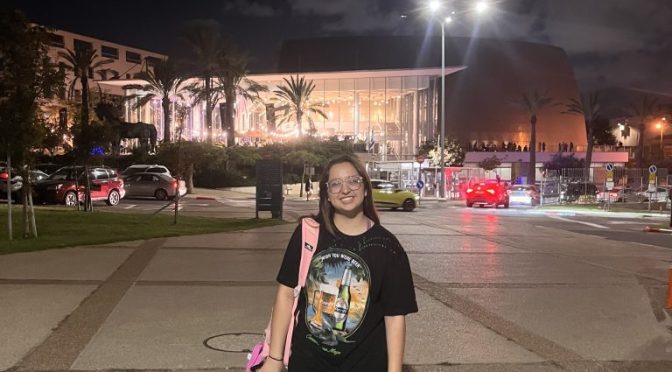
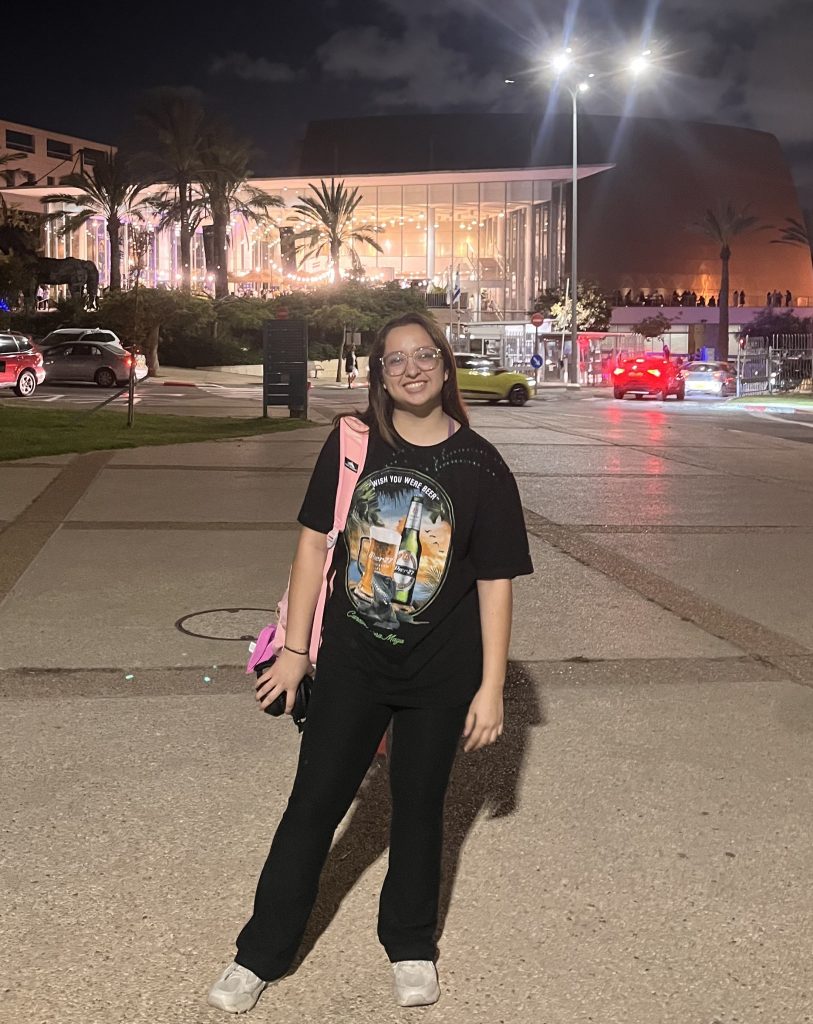
Katelyn Dancer in Tel Aviv. Submitted photo.


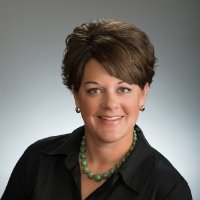
Katelyn Dancer, 19, is the daughter of Tracy Dancer and Kathy Gillmore Dancer, Fort Scott.

She decided to attend Columbia University for the opportunity to attend two colleges, one in Tel Aviv, Israel, and then a second degree at the Columbia campus in New York.

“I chose to attend Columbia for its unique dual degree program. This degree program allows students to complete  different bachelor’s degrees in the traditional four years.”

“For their first bachelor’s degree, students go to an overseas university in their freshman and sophomore years, and the second bachelor’s degree is completed at Columbia University in New York.”

“As a sophomore, I am currently attending Tel Aviv University in Israel— but I’m very excited to be in New York next year. For me, this program made attending an Ivy League of any sort possible, financially and acceptance-wise.”

“I get one degree from Tel Aviv University and one degree from Columbia University. At TAU, I will receive a Bachelor’s of Arts in Middle Eastern Studies, and my current plan is to major in American Studies at Columbia with future plans for Law School.”

“Paying an Ivy League tuition, in my case, became much more realistic when faced with only two years of tuition and housing in New York instead of four years. The acceptance rate to my dual degree program is also about 22%, whereas  the general acceptance rate for Columbia University is a whopping 4%.”

“I started gathering information about schools I was considering applying to in the middle of my junior year. The process of applying to colleges was very time-intensive because of my decision to apply to multiple low acceptance schools.”

“The total undergraduate population at Columbia University is about 9,500. However, there are only about 120 students in the Dual Degree program between TAU and Columbia.”

Not only classroom learning, Katelyn is also learning about other cultures by living in a foreign country.

“The best part about my experience so far has been the travel and independence I’ve gained. I’ve had a truly unique experience, and I’m extremely proud of myself, as is my family, for moving across the world and living and studying in a foreign country by myself.”

“The biggest challenge has been being so far away from my support system in Kansas and the large credit load each semester. The workload is manageable, but classes can run until 8 p.m., so I can have very long days of classes.”

“I am thrilled to be the first graduate in a very long time to attend an Ivy League school.”

Katelyn graduated from Fort Scott High School in 2024.

“I hope it is the beginning of a new period for FSHS graduates where students truly have the opportunity and support to apply and stand out to Ivy League schools.”

She credits the school counselor and teachers for the chance to follow her dream.

“I wouldn’t have been able to apply to these highly selective schools without the help of Mrs. Martin and the wonderful teachers who wrote recommendation letters, hosted clubs, and gave me a strong foundation on which to build. I would encourage every Fort Scott student to shoot for the stars because with the right focus, commitment, and timeline (start early!) FSHS graduates are absolutely capable of landing themselves as Ivy League alumni.”

Ivy League schools are considered the most sought-after institutions of higher learning in the country and around the world. Eight private Northeastern American schools are known for their highly selective admission process, academic excellence, and promising career opportunities for those who attend, according to U.S. News and World Report online.

Princeton University, New Jersey; Harvard University, Massachusetts; Yale University, Connecticut; University of Pennsylvania, Pennsylvania; Cornell University, New York; Brown University, Rhode Island; Dartmouth College, New Hampshire; and Columbia University, New York, are the Ivy League Colleges.



Ad: DBB Seeks Individuals With Accounting, Payroll, and Bookkeeping Experience

DBB Inc, formerly Diehl Banwart Bolton CPA PA’s, is looking to add to our great staff.  We are looking for qualified, motivated individuals with experience in accounting, payroll, and/or bookkeeping.  We have full-time and part-time positions available.  DBB Inc, is a full-service accounting, payroll, and tax preparation firm with a long history of excellence.  We offer competitive compensation and benefits for all full-time employees. Please send your resume to [email protected] , mail to PO Box 869 Fort Scott KS 66701 or drop off at 7 ½ E Wall St, Fort Scott KS.  We will schedule interviews with all qualified applicants.

Nothing but… by Carolyn Tucker

Keys to the Kingdom

by Carolyn Tucker

Nothing but…

When I was a kid, my parents frequently hung out with other adult couples. I basically didn’t add my two-cents worth to any of their conversations, I just listened. I heard a lot of topics being discussed and, most of the time, it revolved around comical stories. When visiting at Elda and Marge’s home, she kept a sketchbook for me so I could keep myself occupied. While drawing, I listened. I remember Elda telling a true incident that happened while driving his family somewhere. While stopped at an intersection, he asked if there was anything coming from the opposite direction. His eldest daughter calmly responded, “Nothing…but a bread truck.” I’d give money to hear, again, the laughter that erupted from this these two couples sitting around the kitchen table.

A huge crowd had followed Jesus and the disciples; it was getting late and all the people were hungry. The disciples recommended that Jesus send the crowds away so they could buy food for themselves. “Jesus said to them, ‘They need not go away; you give them something to eat.’ They (the disciples) replied, ‘We have nothing here but five loaves and two fish.’ And He said, ‘Bring them here to Me.’ Then He ordered the crowds to sit down on the grass. Taking the five loaves and the two fish, He looked up to heaven, and blessed and broke the loaves, and gave them to the disciples, and the disciples gave them to the crowds” (Matthew 14:16-19 NRS). The disciples didn’t think they had enough to amount to anything. But Jesus took what they offered and added His blessing to it and, voila, it was more than enough!

I’ve visited with enough Christ followers to know there are some that say they don’t know what their talents are. They mistakenly don’t think they have anything beneficial to offer. The little boy among the crowd of way over 5,000 people certainly didn’t think his five loaves of bread and two fish would make a difference. Nevertheless, he was willing to give it to the disciples anyway. Without Jesus’ blessing, these meager pieces of food were pretty worthless. Everyone thought it was nothing…but Jesus. He said, “Bring it to Me!” When believers come with nothing but our God-given talents — that’s enough! He knows how to turn it into something valuable.

Nothing is too small or insignificant for Jesus to bless and use. Others will benefit from your talents and you will receive joy in doing good. If you love to cook, share meals with others. If you love to bake, give away cookies. If you love to work on vehicles, organize, repair stuff, sew, etc., just lay it at the feet of Jesus to be used however He pleases. You may think that the talents you have and enjoy don’t amount to anything, but they are something beautiful and good because God created you in the womb to do these things! And for crying out loud, don’t compare your talents with other people’s. You’re an original on purpose!

Apostle Paul penned, “So let’s not get tired of doing what is good. At just the right time we will reap a harvest of blessing if we don’t give up. Therefore, whenever we have the opportunity, we should do good to everyone — especially to those in the family of faith” (Galatians 6:9-10 NLT). Please use your talents to help others on their journey of life.  The God-given talents that you were born with are not insignificant when multiplied with Jesus’ blessing on them. Little is much when Jesus gets done with it!

The Key: Jesus knows what to do with our talents. Just let Him have ‘em!

Oct. 27, 2025 Bourbon County Commission Agenda

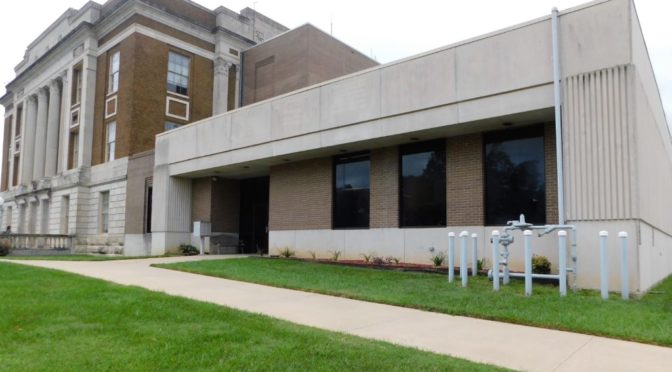
The north wing, east side of the Bourbon County Courthouse.

Bourbon County Commission Agenda: October 27, 2025

Location: Bourbon County Commission Chambers, 210 S National Ave.
Time: Monday, October 27, 2025, 5:30 PM

10.27.25 Agenda Packet PDF

Summary of Packet

I. Call Meeting to Order

  • Roll Call
  • Pledge of Allegiance
  • Prayer

II. Approval of Agenda

III. Approval of Minutes (unofficial until approved)

  • 09.22.25
  • 09.23.25
  • 09.26.25
  • 09.29.25
  • 10.06.25
  • 10.14.25
  • 10.20.25
  • 10.22.25

IV. Sign Approved Minutes

  • Sign 10.20.25 approved minutes for 09.15.25, 09.16.25, 10.07.25

V. Sign Adopted Resolution

  • Sign 10.20.25 adopted Resolution 33-25 Meeting Rules

VI. Payroll Discussion with Payentry (5:40 pm)

  • Jolene Ashpaugh & Cassie Johnson

VII. Consent Agenda

  • Approval of 10.24.25 Accounts Payable ($74,810.79)
  • September 2025 Financials
  • 3rd Quarter Financial Publication Approval

VIII. Public Comments for Items Not on The Agenda

IX. Old Business

  • Vehicle Lease Program – Sheriff
  • Technology Discussion with Sheriff
  • Noise Resolution Discussion
  • Gov Deals – Beerbower
  • Bitcoin Discussion

X. New Business

  • Hammond Community Center Discussion – Milburn
  • Stop Sign Discussion – Milburn
  • Credit Card Policy Discussion – Milburn
  • Longevity Discussion – Beerbower

XI. Department Updates

  • County Clerk, Election Reminder

XII. Build Agenda for following meeting

XIII. Commission Comments

XIV. Adjournment

Information Packet Summary

This summary provides detailed information from the minutes of previous Bourbon County Commission meetings, including key topics discussed and actions taken, along with the page number where the information can be found in the PDF.

Future Items and Executive Session Forms (Page 2)

The packet includes a standard form to be used for motions to enter Executive Session for privileged discussions (e.g., personnel, attorney-client, negotiations, real estate, security matters).

Future items for discussion include the Elevator, Noise Resolution, Payments (Payroll & AP), Sanitation, Economic Development, and the Juvenile Detention Contract (Spring 2026).

Minutes of September 22, 2025, 5:30 PM (Pages 3-8)

  • Budget Discussion (Page 3): Commissioners discussed budget creep, finding savings, and a potential $106,000 shortfall in the Sheriff’s department budget for 2026. They expressed a desire to reduce the mill levy to the revenue neutral rate.
  • Law Enforcement Vehicle Leasing (Page 3): A presentation was given by Enterprise Fleet Management for a proposed vehicle leasing program. Commissioners requested legal counsel review the contract.
  • Road Closures (Page 3): Discussion on closing a section of 140th Street was tabled for two weeks.
  • Planning Commission Selections (Page 4): Seven individuals were nominated and approved for the newly formed Bourbon County Planning Commission.
  • Actions Taken (Page 7): Approved $302,193.56 in Accounts Payable from 09/19/25. Approved a Cereal Malt Beverage License for KC Mart, Inc.

Minutes of Special Meeting, September 23, 2025, 5:30 PM (Pages 9-11)

  • Budget Review and Cuts (Page 9): Commissioners reviewed the budget line by line, making cuts, notably to the IT department budget, to achieve a revenue-neutral budget.
  • Sheriff’s Department Funding (Page 9): There was discussion on the legality of a separate Public Safety fund for inmate housing revenue and whether it should be in the general fund. The Sheriff and his financial advisor were invited to a special meeting for clarity.
  • NRP Funds (Page 9): The process for handling the 5% Neighborhood Revitalization Program (NRP) fee was found to be unclear and in need of clarification and formalization.

Minutes of Special Meeting, September 26, 2025, 3:35 PM (Pages 12-15)

  • Budget Finalization (Page 12, 15): The Commissioners reached a consensus on the 2026 budget, setting the mill levy at 56.678, which is below revenue neutral.
  • Review: The finalized budget was motioned to be sent to a third-party auditor for review at a cost not to exceed $1,500 (Page 15).
  • Sheriff’s Fund (Page 12): The Sheriff proposed a 60%/40% split of jail revenue for a separate fund (60% to Sheriff’s office, 40% to county).

Minutes of September 29, 2025, 5:30 PM (Pages 16-18)

  • 190th Street Benefit District (Page 16): Public Works was directed to assess the district.
  • Elevator (Page 16): The courthouse elevator was reported to be non-compliant, and the Commission will get quotes for repairs.
  • Credit Application (Page 17): The Sheriff’s Office received a credit application from Enterprise Fleet Management for a leasing program, and the Commission agreed to further review the Master Equity Lease Agreement.
  • Action Taken (Page 18): Approved the motion to remove the stop signs going east and west on North National at the 218th street intersection.
  • Planning Commission Terms (Page 18): One-year, two-year, and three-year terms were assigned to the new Planning Commission members.

Minutes of October 6, 2025, 5:30 PM (Pages 19-22)

  • 140th Street Road Closure (Page 21): A motion to take no action on the application was approved.
  • Bitcoin Mining/Noise (Page 21): Residents raised concerns about noise from a Bitcoin mining operation. The Sheriff advised the commissioners to work with the County Attorney and KDHE on a noise resolution.
  • Landfill Trailer (Page 21): Public Works requested and received approval to purchase an $85,000 walking floor trailer for the landfill.
  • Action Taken (Page 21): Approved the County Clerk as the voting delegate for the KCAMP annual meeting.

Minutes of October 14, 2025, 5:30 PM (Pages 22-26)

  • Law Enforcement Fund (Page 23): Approved a Resolution establishing a Law Enforcement Fund for the Sheriff’s Office, giving the Sheriff’s Office full control of the fund (without the previously discussed 60/40 split).
  • Vehicle Lease (Page 24): The Master Equity Lease Agreement with Enterprise Fleet Management was approved.
  • Bitcoin Moratorium (Page 24): Approved a moratorium on any new Bitcoin mining operations to allow the planning commission to develop regulations.
  • Health Insurance (Page 25): Commissioner Milburn-Kee reported that current insurance rates are unaffordable, and new plans are being developed.

Minutes of October 20, 2025, 6:00 PM (Pages 28-31)

  • Rules of Procedure (Page 30): A motion was approved to repeal previous resolutions and adopt a new resolution establishing rules of procedures for meeting agendas and conduct.
  • Public Works SOPs (Page 29): New Standard Operating Procedures (SOPs for sign installation and culvert installation) were approved.
  • Accounts Payable/Payroll (Page 30): The consent agenda was approved (2-1 vote) for Accounts Payable of $377,595.70 and Payroll of $300,350.36.
  • Road Projects (Page 29): Public Works discussed the potential option to purchase asphalt from an outside source for road projects.

Minutes of October 22, 2025, 6:00 PM (Pages 31-33)

  • Insurance (Page 32): The Commission discussed the critical need to approve a health insurance plan before the end of the month and set an insurance work session for October 23, 2025.
  • Longevity Pay (Page 32): Discussed the legal framework and eligibility requirements for a longevity pay policy.

County Clerk Calls for Collaboration (October 22nd Special Meeting)

Susan Walker, Bourbon County Clerk read a statement with information about the payroll situation and collaboration issues at the special meeting on October 22nd. FortScott.biz requested a copy of the statement, which is printed below.


I was elected, not appointed when I ran for County Clerk. I ran on the fact of being transparent. I am here today deeply concerned about the direction you have taken regarding major organizational decisions—decisions that were made unilaterally, without consultation with other elected officials. These are not small, routine matters; they are critical components of our county’s operations—payroll & benefits.

Over the past two months, my team has worked diligently to provide all necessary information for the payroll system conversion. However, today was the first time we were given access to view the actual payroll and time management systems. Despite this being our initial opportunity to see the systems firsthand, employees are expected to complete enrollment and begin clocking time by this Sunday. In addition, we must still train department heads how to approve time during the most critical time of an election. The election is my number one priority presently.

I believe this timeline is premature, as not all programming components have been fully configured or tested. At first glance, I see errors that need addressed and do not think it is fair that I must spend 15-hour days and weekends to keep us on this timeline. While I understand that some of these delays are the result of time constraints, I must emphasize that the Clerk’s Office manages many other statutory responsibilities that require significant attention and coordination. At no point was I consulted to determine whether this implementation schedule would be feasible within the existing workload of my office.

Mr. Beerbower, I appreciate your willingness to listen and treat me with respect the past few meetings. I called you on Tuesday following our training to express my concern that this payroll conversion is moving too quickly. As of today, I have not received a return call. I want to reiterate that my intent in reaching out was to communicate legitimate operational concerns—concerns that directly impact our ability to ensure a smooth and accurate transition for all employees. Timely communication on matters of this magnitude is essential to the success of this process and to maintaining trust among all offices involved.

Nonetheless, I have continued to cooperate in good faith and have made every effort to keep up with the process. It is important to note that the period from August through November represents the busiest time of year for the Clerk’s Office. During this time, we are responsible for producing more than 30 budgets, preparing for elections, open enrollment for benefits, and setting tax levies, each of which requires substantial time, precision, and staff resources.

In addition, I have been removed from benefit-related discussions, which has proven to be problematic as shown earlier. My office has received numerous calls from employees about open enrollment and I have no information, yet I am expected to run the process. Excluding key offices from these conversations has created unnecessary confusion and inefficiencies. It is unfortunate that, as Commissioners, you have not been willing to set aside personal grievances to collaborate on matters as important as payroll and employee benefits—issues that directly affect the very people who keep this county running.

I want to remind you that your employees are also your customers. They are the face of county government to the public and should be valued and appreciated accordingly. A successful organization depends on mutual respect, cooperation, and communication among its leadership and staff. I truly hope that moving forward, we can return to a more collaborative and respectful working relationship—one that serves both our employees and the taxpayers we represent.

The decision to remove payroll responsibilities from the Clerk’s office was portrayed as cost savings and improving processes. I must say plainly this was not an operational improvement; it was a political move. I have repeatedly explained that this change increases costs for taxpayers. Yet, instead of engaging in a transparent discussion or reviewing the data, this Commission has chosen to rely on the assurances of a salesman, who claims this move will “solve all our problems” (Yet, we had none) and “free up time in the Clerk’s office”.

That claim is simply not true. In fact, this decision adds unnecessary administrative oversight, no integration with our current accounting systems, increases the risk of human error, and fails to meet the governance requirements we must adhere to as a county. It undermines efficiency rather than improving it. Even though payroll is not a statutory duty of the Clerk, the Clerk is required to approve all expenditures of the county and book them accordingly per K.S.A. 311-318.

In addition, during recent public discussions and commission comments a commissioner questioned the integrity of the County Clerk’s financial processes and implied a failure to perform statutory duties. The County Clerk’s office is dedicated to transparency and adhering strictly to state law, and I feel I must clarify the established financial controls.

1. Clarification of Statutory Roles and Financial Controls

The duties of the County Clerk and County Treasurer are distinct and are defined by Kansas Statute Annotated (KSA), which establishes a crucial separation of powers:

  • The County Treasurer’s Office is responsible for the collection of all county revenues and collector of taxes and tax distributions.
  • The County Clerk’s Office is responsible for auditing, recording, and approving all county expenditures, maintaining records of financial statements, and ensuring budget compliance.

This separation is the cornerstone of financial controls and checks and balances for the county. The Clerk and Treasurer work collaboratively to ensure the general ledger and tax accounts are accurate and reconciled. Any action that circumvents these established roles places the county at risk of internal control failures.

2. Standardized Accounts Payable and Payroll Process

Our current process ensures that all expenditures are approved by the Commission before being paid, in full compliance with state law.

  • Process Implementation: Since 2021, I assisted in implementing a process where Accounts Payable (AP) and Payroll details are included in Commission agenda packets and must be formally approved prior to payment processing as CFO. In the past this was not included in agenda packets for transparency.
  • Commission Oversight: The Commission and County Counselor are provided ample time and opportunity for oversight:
    • Payroll: Details are delivered the Wednesday prior to payday, allowing Commissioners time to review and question any payment.
    • Accounts Payable: Detailed registers are presented at every Commission meeting.
    • The Commission and county counselor has the right and duty to pull any invoice or register item for review and withhold payment.

To imply that any payment has been processed without proper oversight or approval is factually incorrect and misrepresents the established, auditable procedure. The detailed records are available at every meeting, and my staff stands ready to answer any questions regarding invoices or the review process. In addition, another layer of control is in place with the current Human Resources representative, Dr. Cohen, identifying and giving direction on any exceptions to normal procedures.

3. Call for Collaboration and Education

My office has repeatedly invited the Commission to review our operations and receive clarification on our statutory duties. A functioning government requires clear, consistent communication and mutual respect for all elected and appointed offices. The continued focus on gossip and unsubstantiated opinions, rather than on fact-finding and process education, is unproductive and has had a demonstrable negative impact on the morale and retention of critical county staff.

I say this not out of defiance, but out of duty. It is my responsibility to protect taxpayer dollars, ensure compliance with the law, and maintain the integrity of the Clerk’s office. Decisions made out of spite or political motivation hurt not only the employees who must carry them out, but also the citizens we are all here to serve. In the end, it will be the taxpayers, the employees, and the operations of this county that will suffer the consequences of these shortsighted decisions. I urge the Commission to reconsider its approach to restore collaboration, transparency, and fiscal responsibility in these matters. The people of this county deserve nothing less.

Late October – The Perfect Time to Tackle Lawn Weeds and Fertilize

Late October – The Perfect Time to Tackle Lawn Weeds and Fertilize

So far, this fall has brought fairly favorable weather—but winter is just around the corner. Before the deep freeze sets in, there are two important tasks every homeowner should check off their lawn care list: weed control and fall fertilization.

Why Worry About Lawn Weeds Now?

Weeds might be the last thing on your mind this time of year. But think back to last spring—was your lawn speckled with purple henbit or dotted with dandelions? If so, those weeds didn’t just show up in spring—they actually started growing last fall.

Cool-season broadleaf weeds like henbit, dandelions, and chickweed germinate in the cool, moist conditions of September and October. They overwinter as small, low-growing plants that often go unnoticed. Once spring temperatures rise, they rapidly grow and bloom, making them much harder to control.

Fall is the Best Time for Broadleaf Weed Control

Treating these weeds in the fall is your best chance for effective control. During this season, the weeds are actively transporting nutrients to their roots in preparation for winter. Herbicides applied now are carried down to the roots, killing the plant from the inside out. Plus, the young, small weeds are much more vulnerable to herbicide treatments.

Look for broadleaf herbicides that contain 2,4-D, or combination products with 2,4-D, MCPP, and Dicamba—commonly sold under names like Trimec, Weed-B-Gon, or Weed-Out. Another effective option is Weed Free Zone, which includes all of the above ingredients plus carfentrazone for enhanced control.

Important Note: Avoid applying herbicides to newly seeded lawns until the grass has been mowed at least two or three times. Always read and follow the label instructions carefully.

Fall applications also reduce the risk of herbicide drift, a common issue during warm, windy spring days. The cooler, calmer conditions of fall—along with the dormant state of many plants—make this an ideal time for treatment.

Don’t Forget Fertilization

Early November is the perfect time to apply the final dose of nitrogen fertilizer to your cool-season lawn. This late-season application can make a big difference come spring.

Why? As temperatures drop, top growth slows, but grass plants continue producing and storing carbohydrates in their crowns and roots. These stored reserves help your lawn green up earlier and grow more vigorously in the spring—often eliminating the need for early spring fertilizer.

Apply 1 to 1½ pounds of actual nitrogen per 1,000 square feet. Use a quick-release nitrogen source like urea or ammonium sulfate for best results.

Krista Harding is a K-State Research and Extension Horticulture agent assigned to Southwind District.  She may be reached at [email protected] or 620-244-3826.

U.S. Senator Roger Marshall Newsletter

Image

Senator Marshall Op-Ed: Serving Kansans doesn’t stop during a shutdown

Early in the week, I published an op-ed in the Hays Post, writing that despite the ongoing government shutdown, my offices remain open and continue to serve Kansans.

Read the full op-ed HERE or see the excerpt below:

Washington is shut down – again – and Americans have every right to be frustrated. Once again, the dysfunction in D.C. threatens to disrupt lives far beyond the Beltway. And while the political blame game plays out, Kansans are left wondering how this gridlock will affect their families and their livelihoods.

“It’s important to know how we got here in the first place. A clean, short-term funding bill — known as a continuing resolution — was introduced by Republicans to keep the government open for seven more weeks.

“This measure would have given Congress the time to complete the normal appropriations process, work towards a balanced budget, and hammer out the details of next year’s funding. But to pass in the Senate, the bill needed bipartisan support — at least 60 votes — which means cooperation across the aisle. Unfortunately, that cooperation didn’t transpire.

“Like many Americans, I am frustrated that we are in this situation. But while some federal offices may close their doors or scale back operations, I want to be clear with the people of Kansas: my office is open, and we’re still working for you.”

Senator Marshall Blasts Democrats for Voting Against Military Pay Bill

Disgracefully, Senate Democrats voted against my colleague Senator Ron Johnson’s (R-Wisconsin) bill, which would have provided paychecks for military service members and “excepted” federal employees who have worked without pay during the last 24 days.

Chuck Schumer’s party showed heartless indifference to military families today and federal workers, including members of their own staff, by blocking their pay to push funding for illegal aliens’ healthcare.

The brave men and women of our military risk their lives every day to defend our freedom — and they deserve better than this.

Sadly, on Oct. 31, those military troops will miss a paycheck.

On Nov. 1, the following federal programs will run out of federal funding:

  • WIC
  • SNAP
  • Federal education impact aid
  • Military tuition assistance
  • Head Start
  • All federal employees will have missed at least one full paycheck

Several public-facing programs have already run out of funds, impacting Kansans of all ages across the state:

  • Some FSA programs and services
  • USDA Rural Development programs and payments to local contractors
  • Federal Flood Insurance Program
  • Medicare telehealth
  • Acute Care Hospital Care at Home
  • National Parks
  • Eisenhower Presidential Library

Senator Marshall: It’s Time for Democrats to Come to Their Senses

As the Schumer Shutdown entered its third week, I spoke with multiple news outlets, including Fox Business, MSNBC, Newsmax, Bloomberg, Fox News Radio, and KCMO, to discuss potential off-ramps, the unaffordability of the Affordable Care Act (ACA), what solutions Republicans are proposing, and our attempts to get paychecks for our troops and federal workers.

We also discussed a potential congressional stock trading ban, renovations at the White House, President Trump’s trade negotiations with Argentina for beef imports, rural healthcare, my Patients Deserve Price Tags Transparency Act, and the strikes against drug cartels near Venezuela.

Image

Click HERE or on the image above to watch my interview with Fox Business.

Image

Click HERE or on the image above to watch my full interview with Newsmax.

Image

Click HERE or on the image above to listen to my full interview on Fox News Rundown.

Image

Click HERE or on the image above to watch my interview with Fox Business.

Image

Click HERE or on the image above to watch my interview with Bloomberg.

Image

Click HERE or on the image above to watch my interview with MSNBC.

Image

Click HERE or on the image above to listen to my full interview with Pete Mundo on KCMO.

Senator Marshall: Democrats Own the Problems with the ACA

I also took to the Senate floor this week to call on Democrats to come to their senses and reopen the government so there can then be a conversation about their broken healthcare system.

As I said in part during my remarks, “as all America knows, my friends across the aisle have kidnapped the federal government.

“In fact, they’ve now voted a dozen times not to reopen the government, and even, surprisingly to most of us, twice, they voted against funding the military during these challenging times. I think it’s obvious to all of America that this is a political shutdown, that this is showbiz to them, this is an opportunity for their left legacy media to shout and scream at President Trump and to kowtow to their far-left Marxist base.”

Image

Click HERE or on the image above to watch my full remarks.

Senator Marshall: We Need to Turn Patients Into Consumers Again

During a Senate Special Committee on Aging, I had the opportunity to question numerous witnesses, including Entrepreneur Mark Cuban, Co-Founder of the Surgery Center of Oklahoma and the Free Market Medical Association, G. Keith Smith, M.D., and Chief Health Director of CalPERS, Don Moulds, PhD. My questions focused on how shoppable services can improve outcomes and lower costs for Americans.

I asked those in the hearing, “Could you imagine going into a restaurant, you look at the menu, have your choice between a good Kansas City strip or some day-old chicken with gravy and cream on it to make it taste good, and not knowing what the price tags are?

“But for some reason, in healthcare, it’s the only industry in the world, in America, that doesn’t have a price tag with it.”

Image

Click HERE or on the image above to watch my full line of questioning.

Senator Marshall: Broken ACA Sticks 24 Million Americans with $5,000 Deductibles

In a separate Senate Health, Education, Labor, and Pensions hearing, focused on the 340b program and examining its growth and impact on patients, I was able to question Michelle Rosenberg, Director of Health Care at the U.S. Government Accountability Office, Aditi Sen, Ph.D., Chief of the Health Policy Studies Unit at the Congressional Budget Office, and William B. Feldman, MD, Dphil, MPH, physician and health policy researcher at the University of California.

Image

Click HERE or on the image above to watch my full line of questioning.

Senator Marshall Tours Clinical Reference Laboratory & Highlights Dangers of Synthetic Kratom Compound “7-OH”

Earlier today, I joined leaders from the Clinical Reference Laboratory and the Midwest High Intensity Drug Trafficking Area (HIDTA) to raise awareness about the growing threat of 7-hydroxymitragynine (7-OH) – a powerful, unregulated opioid compound derived from the kratom plant and now widely available in retail stores across the United States.

This product, despite sometimes being marketed as harmless, can, in fact, be 13 times more potent than morphine.

Image

During this tour, I met with Matt Roney and Bob Thompson of Clinical Reference Laboratory and Dan Neill, Executive Director of the Midwest HIDTA, to review their findings showing that 7-OH is being sold in gas stations, convenience stores, and vape shops – often disguised as natural kratom products.

What we know is that these synthetic versions of kratom are highly addictive and dangerously misleading. In June 2025, I sent a letter to FDA Commissioner Makary urging the agency to act on 7-OH’s growing prevalence in over-the-counter products. I hope the FDA will provide consumers and retailers with the clarity of knowing what’s safe and what’s not.

Click here to learn more.

USD235 Vocational Agriculture Building Is Prepared For The Future


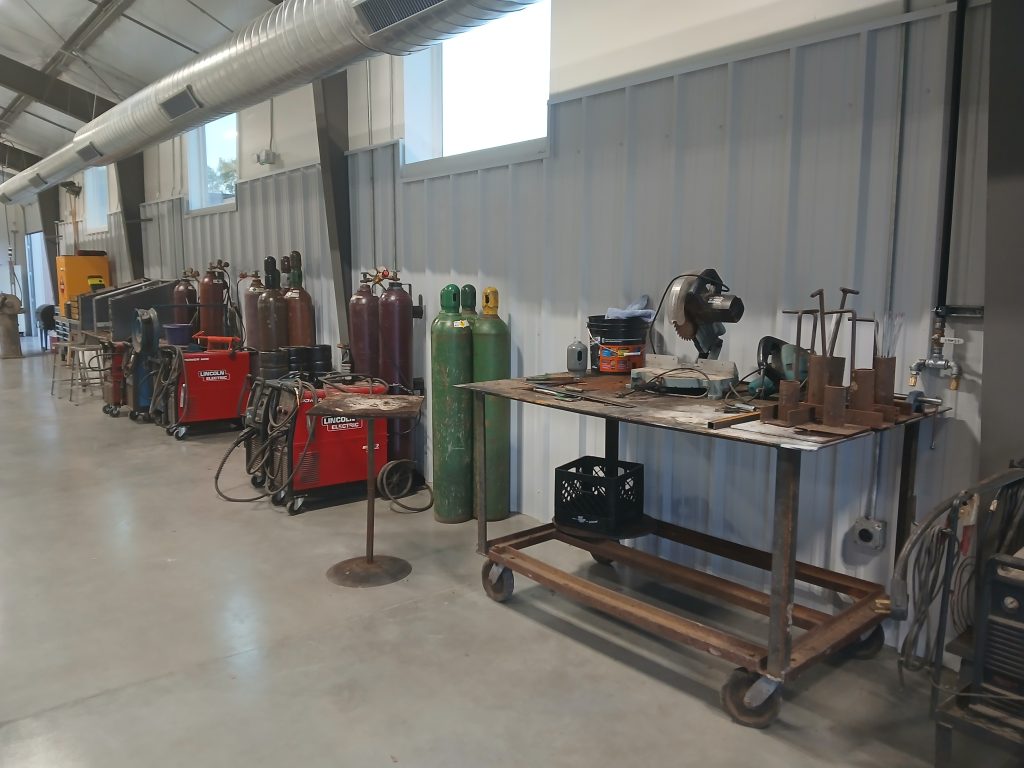
Machines of various types are available to students at Uniontown VoAg. shop.

The Uniontown school district has an expanded classroom and shop, all new workspaces, heating, air conditioning, and ventilation, along with new security features to take the vocational agriculture program at the junior high and high school into the future.

Scott Sutton, from the USD 235 Staff Directory.

Vocational Agriculture Instructor Scott Sutton told attendees at the October 23 open house that there was a definite need for the renovation to the building constructed in 1967. The building is on the north side of the main campus building on Fifth Street in Uniontown.

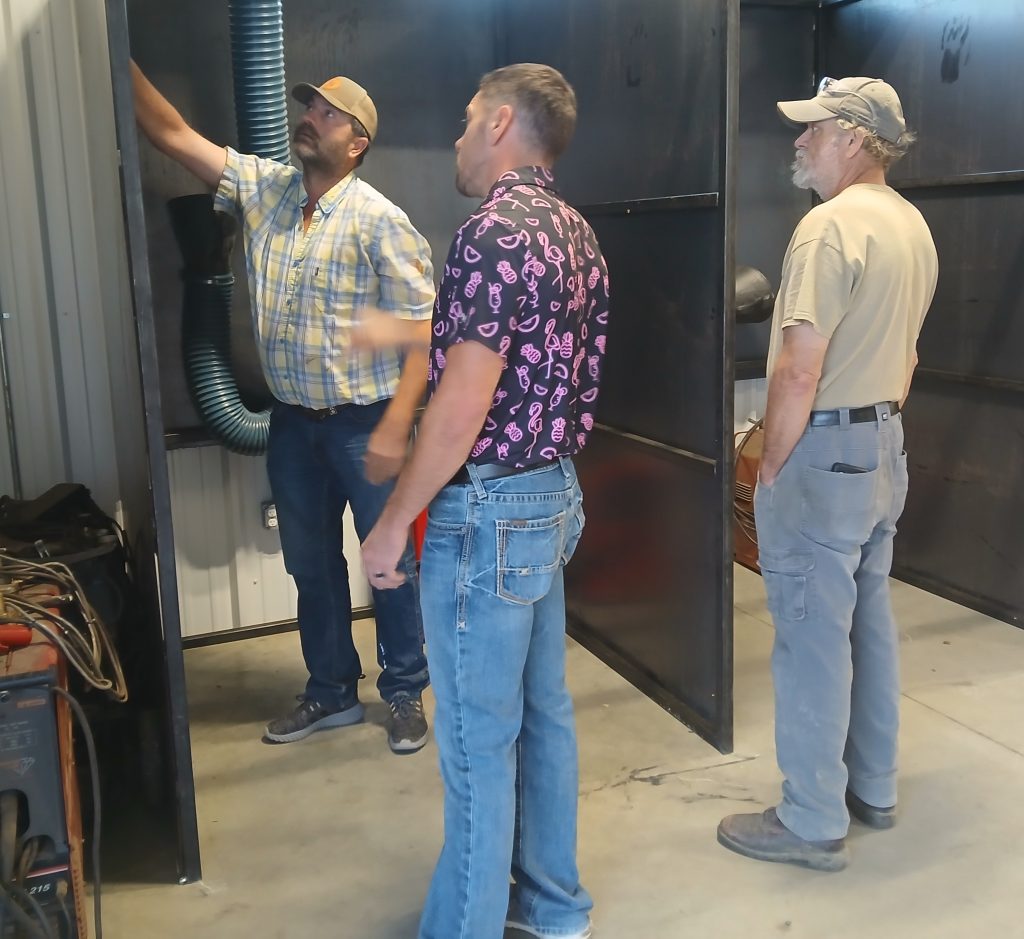
Scott Sutton, center, discusses the newly made (by students) welding spaces with attendees.

The shop floor was uneven, there was no air conditioning, and the electrical, plumbing, and ventilation systems needed to be upgraded. The roof was replaced about nine years ago and was still under warranty, Sutton said.

The classroom space was extended in size, and additionally,  space was added to the shop by removing some stairs to a loft that was taken out. And now the teacher can see what is going on in the shop, while in the classroom, with a security camera.

“It’s ADA compliant, fire marshal approved,” he said.

The modernization of the 40-foot by 70-foot building began in February 2025. “It was gutted to the beams, the floor was torn out, and the new windows, electric, plumbing, ventilation system, air conditioning, and heating installed. We had heat, but no air conditioning,” Sutton said. “A new CNC Plasma Table to make metal parts will be here next week. It’s a common industry standard.”

An example of what can be made from a plasma table, Sutton said.

Sutton is the only vo.ag. teacher in the district with 187 students in the junior/senior high school, and 59 of those students are enrolled in the vo.ag. classes.

Freshmen students are offered an agriculture science class. Sophomores are offered plant and animal science, Juniors- agriculture mechanics (welding, electrical, engines), Seniors- agriculture leadership and communication.

Vance Eden, from the USD 235 Staff Directory.

USD 235 Superintendent Vance Eden said the program helps students with the teaching of “presentation of self and team effort.”


Sutton said students have been very successful with livestock judging, meat judging, parliamentary procedure,  and public speaking competitions in the program. “Several students have received scholarships for livestock and meat judging at the collegiate level. And there are a lot of other scholarship opportunities in the agriculture field and through FFA.

The renovation was sparked by an audit in 2021 that declared there was a need for a plan for the future of the building, USD235 Superintendent Vance Eden said.  There was poor insulation, leaks and exhaust fume problems, among others.

A bond issue that included a renovation of the building failed in November 2023. COVID-19 Pandemic era funds were able to be set aside along with some Capital Improvement State Aide, Eden said. “We knew something was going to have to be done, so we saved for 3-4 years.”

The building renovation was just under one million dollars. There was also a donation from the Timken Foundation for the project.


Proposed Bourbon County Noise Ordinance Presented at Meeting on 10/23/2025

AN ORDINANCE OF THE BOARD OF COUNTY COMMISSIONERS OF BOURBON COUNTY, KANSAS, REGULATING UNREASONABLE, EXCESSIVE, AND DISTURBING NOISE WITHIN THE COUNTY, AND PROVIDING PENALTIES FOR VIOLATIONS THEREOF.


Article I — Purpose and Authority

Whereas public health, safety, comfort, and welfare are best served by reasonable regulation of loud, unnecessary, or unusual noises, the Board of County Commissioners of Bourbon County, Kansas, by authority granted under K.S.A. 19-101a and other applicable laws, does hereby adopt this Noise Ordinance.


Article II — Definitions

  1. Noise means any sound that is loud, discordant, or unnatural to the surroundings and which endangers or injures the public health or welfare, or disturbs the reasonable peace, comfort, or repose of persons.
  2. Residential property means any property upon which a dwelling unit is located.
  3. Plainly audible means a sound that can be heard by an unaided human ear at a distance of seventy-five (75) feet from the source.
  4. Stationary source means any sound-producing device which is not mobile, including mechanical devices, fixed engines, or equipment.
  5. Motor vehicle means any vehicle intended for highway use, including automobiles, trucks, and motorcycles.

Article III — Prohibited Acts

  1. It shall be unlawful for any person to make, continue, cause, or permit to be made or continued any loud, unnecessary, unusual, or unnatural noise which either:

    a. Annoys, disturbs, injures, or endangers the comfort, repose, health, peace, or safety of others; or

    b. Interferes with the comfortable enjoyment of life or property by a person of reasonable sensibilities.

  2. Between the hours of 10:00 p.m. and 7:00 a.m., it shall be unlawful to cause any noise which is plainly audible at a distance of seventy-five (75) feet or more from the source on any residential property.
  3. No person shall operate or permit to be operated any motor vehicle or sound amplification system in a motor vehicle so as to make or cause to be made any sound which is plainly audible at a distance of fifty (50) feet or more from the motor vehicle.
  4. Stationary sources shall not emit sound that exceeds the maximum permissible levels below when measured at the boundary of another property:
Zoning/Use District Daytime (7 a.m.–10 p.m.) Nighttime (10 p.m.–7 a.m.)
Residential 60 dB(A) 50 dB(A)
Agricultural/Rural 65 dB(A) 55 dB(A)
Commercial/Industrial 70 dB(A) 60 dB(A)

Article IV — Specific Prohibitions

The following acts are declared to be violations of this ordinance, but this list is not exclusive:

  1. Operating outdoor power equipment, lawn tools, or machinery between 10:00 p.m. and 7:00 a.m..
  2. Discharging the exhaust of any engine or device except through a muffler designed to prevent loud or explosive noise.
  3. Operating a vehicle or machinery in such a manner as to create unnecessary grating, grinding, or rattling sounds.
  4. Operating amplified music or loudspeakers at a volume plainly audible at or beyond the property boundary.

Article V — Exceptions

This ordinance shall not apply to:

  • Emergency vehicles and public safety operations during emergencies.
  • Activities authorized by county permit (special events, parades, etc.).
  • Normal farm and agricultural operations consistent with accepted practices.
  • Construction or maintenance activities conducted between 7:00 a.m. and 9:00 p.m., provided reasonable noise control is observed.

Article VI — Enforcement and Penalties

  1. Enforcement shall be by the Bourbon County Sheriff or authorized designee.
  2. Violations may result in a Notice of Violation, citation, or both.
  3. Any person convicted shall be guilty of a misdemeanor and subject to a fine of not more than five hundred dollars ($500.00), imprisonment in the county jail for not more than thirty (30) days, or both.
  4. Each day of violation constitutes a separate offense.
  5. The county may seek abatement or injunctive relief to stop continued violations.

Article VII — Severability

If any portion of this ordinance is held invalid, the remainder shall remain in full force and effect.


Article VIII — Effective Date

This ordinance shall take effect and be in force after publication once in the official county newspaper, as provided by law.

Opinion: Bitcoin, Noise, & Zoning’s Future

In a recent county commission meeting, a moratorium on commercial bitcoin mining was passed. The moratorium makes it illegal for an entity to run a cryptocurrency mining algorithm if it meets the following criteria:

  1. Contains 3 or more interconnected computers.
  2. Is operated for commercial purposes.

If it isn’t immediately apparent the breadth of what the commissioners have voted to ban, here is a photograph of three computers that can be interconnected, can be used to mine cryptocurrency, and are owned by a commercial entity.

Why would the commissioners write a moratorium that would ban a particular algorithm from running on these three computers that can fit in the palm of your hand? It all goes back to a complaint by Cassie and Dereck Ranes, who reside in the county. (It isn’t clear exactly when they moved in, but tax records show they made their first tax payment on a modular home in January of 2025.) In 2024, a company called Evolution Technology, LLC leased a gas well across the road from them and at some point after January of 2024 put a large generator on it to run a bitcoin mining operation.

The Ranes say the sound of the generator is unbearable, even to the point of making it difficult to sleep. While the Ranes have standing to seek resolution in civil court under existing Kansas nuisance laws, they have not chosen to exercise that option. The county does not currently have standing to do anything on their behalf. The Ranes and other neighbors asked for this moratorium to prevent any new bitcoin mining operations from being started. A moratorium does nothing to deal with existing businesses operating in the county and would only stop new installations from operating.

Imagine that you have a problem with cars driving by the front of your house at high speeds. You go to the commissioners to complain and mention that there is a red car that drives by really fast. The commissioners could tell you to talk to law enforcement about laws that were being broken. They could change the speed limit to 45 mph to help slow people down. They might even have the county put a speed bump in front of your house. Those would all be things related to the speed issue.

But what if instead they passed a moratorium on registering cars that match the particular shade of red that you mentioned? What would that do?

  1. It would deprive everyone in the county of the freedom to buy a car of a particular color.
  2. It would introduce a huge burden of compliance with silly rules that would need to be enforced by someone.
  3. It would require the commissioners to spend time and attention doing things that individual citizens can better handle for themselves and away from things that only commissioners can do (deal with benefits, understand the budgeting process, make sure the payroll service they selected can handle the county needs, etc.).

Would it address the actual problem in any way? No. Absolutely not.

Is the car example just silliness, or is it a good proxy for what the county is doing with this moratorium?

When the commissioners wrote the moratorium, the problem at hand was noise, but they inexplicably wrote and passed a resolution that doesn’t contain a single parameter, guideline, or requirement related to noise. Instead, they banned an algorithm with parameters that encompass hardware that a middle schooler might run in their bedroom. (Though the middle schooler might be able to claim they are not operating commercially when law enforcement shows up at their door.)

Would the moratorium keep a company from putting another loud generator on another gas well they have leased? Absolutely not. The moratorium is completely orthogonal to the use of generators, production of sound, or pretty much anything else that is causing an issue. They could put in another installation, exactly like they have now, and run a different algorithm on it. For example, their setup would be perfect for training large language models.

I suppose the commissioners could try to pass another moratorium this time to ban a different algorithm. If they used a similar definition, they could ban people with a job working on AI training models who happen to have more than three computers in their home. The commissioners can play whack-a-mole with various algorithms without ever actually addressing the underlying problem. What if the commissioners finally decide to ban any GPU installation capable of more than 20,000 tera hashes per second? That would take care of the noise problem, right? Well, no. The generator can still be used to charge electric vehicles, pump water for irrigation, and all the other things that electricity can be used for.

While the moratorium is a bit silly with problems a crypto-savvy high-school student could have pointed out, it seems unlikely it could legally be applied to everything it technically applies to. However, I believe it points to a much bigger problem with the direction the commissioners are trying to go with zoning. As I’ve mentioned before, under the best conditions, maybe zoning would have some positive aspect for the county. There is some theoretical possible future where zoning does more good things than it does bad. But this moratorium illustrates that there are many more possible futures where zoning creates a huge mess.

How do we know what type of future zoning would have in Bourbon County? This moratorium is a good way to predict what would be a probable future. With full access to legal counsel and citizens who are willing to look over technical details, the commissioners managed to pass a moratorium that is completely divorced from the actual problem they were trying to address and is so broad that it covers things people run under their desks and even things that would fit in the palm of your hand.

In an effort to pass a moratorium quickly, no one stopped to consider what was actually in the documents they were signing. Imagine that same type of decision-making process being applied in the future with an expanded set of powers under zoning. This particular example is relatively benign, but it should serve as a warning about where the commission is trying to take the county with zoning.

Mark Shead

Note: FortScott.biz publishes opinion pieces with a variety of perspectives. If you would like to share a perspective or opinion, please send a letter to [email protected]