|
|
|

|
|
|
|

|
|

|
|
|
|
|
|
|||||||||
|
|
|
|
|
|
|
|
|
|
|
|
|
|
|
|
|||||||||
|
Many Southeast Kansas high school seniors and current college students will receive support for their education thanks to the 2025 scholarship cycle at the Community Foundation of Southeast Kansas (CFSEK) and its affiliate foundations in Columbus, Fort Scott, and Girard. Scholarship applications became available on January 15th and will be open through March 31st.
CFSEK and its affiliates host 45 scholarship opportunities and have awarded over $700,000 in scholarships since 2008 to hundreds of students from Southeast Kansas. In 2024, scholarships totaled over $160,000 to area students.
“I’m so excited for scholarship season and seeing all of the wonderful things area students are achieving,” said Kara Mishmash, CFSEK Program Coordinator.
Mishmash has prepared a pre-application checklist (available on CFSEK’s website) and is planning to offer workshops and virtual office visits for high school seniors.
“The new workshop opportunities and virtual meetings we’ve implemented will also be a fantastic way to put CFSEK in front of the students to ensure they’re comfortable with our software and confident in their understanding of the questions,” said Mishmash. “Being a small part of their journey is amazing!”
Scholarship applications are available now through March 31st. The online only application is available at SoutheastKansas.org/Scholarship-App. For questions, please contact Mishmash at SoutheastKansas.org/Contact/Kara, or call (620) 231-8897.
Producers Can Enroll in the 2025 Agriculture Risk Coverage and Price Loss Coverage Programs Beginning Jan. 21 and Dairy Margin Coverage Beginning Jan.29
WASHINGTON, Jan. 13, 2025 – The U.S. Department of Agriculture (USDA) announced the 2025 enrollment periods for key safety-net programs – Agriculture Risk Coverage (ARC) and Price Loss Coverage (PLC) as well as Dairy Margin Coverage (DMC). Agricultural producers can submit applications to USDA’s Farm Service Agency (FSA) for ARC and PLC for the 2025 crop year from Jan. 21 to April 15 and for DMC for the 2025 coverage year from Jan. 29 to March 31.
ARC and PLC provide financial protections to farmers from substantial drops in crop prices or revenues and are vital economic safety nets for most American farms. Meanwhile, DMC provides producers with price support to help offset milk and feed price differences.
“Our safety-net programs provide critical financial protections against commodity market volatilities for many American farmers, so don’t delay enrollment,” said FSA Administrator Zach Ducheneaux. “If you’re getting coverage through the Agriculture Risk Coverage or Price Loss Coverage programs, avoid the rush and contact your local FSA office for an appointment. Even if you are not changing your program election for 2025, you still need to sign a contract to enroll.”
“And at $0.15 per hundredweight for $9.50 coverage, risk protection through Dairy Margin Coverage is a relatively inexpensive investment in a true sense of security and peace of mind.”
The American Relief Act, 2025 extended many Farm Bill-authorized programs for another year, including ARC and PLC as well as DMC.
ARC and PLC
Producers can elect coverage and enroll in ARC-County (ARC-CO) or PLC, which provide crop-by-crop protection, or ARC-Individual (ARC-IC), which protects the entire farm. Although election changes for 2025 are optional, producers must enroll through a signed contract each year. Also, if a producer has a multi-year contract on the farm it will continue for 2025 unless an election change is made.
If producers do not submit their election revision by the April 15 deadline, their election remains the same as their 2024 election for commodities on the farm from the prior year. Farm owners cannot enroll in either program unless they have a share interest in the cropland.
Covered commodities include barley, canola, large and small chickpeas, corn, crambe, flaxseed, grain sorghum, lentils, mustard seed, oats, peanuts, dry peas, rapeseed, long grain rice, medium grain rice, safflower seed, seed cotton, sesame, soybeans, sunflower seed and wheat.
USDA also reminds producers that ARC and PLC elections and enrollments can impact eligibility for some crop insurance products including Supplemental Coverage Option, Enhanced Coverage Option and, for cotton producers, the Stacked Income Protection Plan (commonly referred to as STAX).
For more information on ARC and PLC, producers can visit the ARC and PLC webpage or contact their local USDA Service Center.
DMC
DMC is a voluntary risk management program that offers protection to dairy producers when the difference between the all-milk price and the average feed price (the margin) falls below a certain dollar amount selected by the producer.
DMC offers different levels of coverage, even an option that is free to producers, minus a $100 administrative fee. The administrative fee is waived for dairy producers who are considered limited resource, beginning, socially disadvantaged or a military veteran.
DMC payments are calculated using updated feed and premium hay costs, making the program more reflective of actual dairy producer expenses. These updated feed calculations use 100% premium alfalfa hay.
For more information on DMC, visit the DMC webpage.
More Information
Producers can apply for ARC, PLC and DMC through the FSA at their local USDA Service Center.
FSA helps America’s farmers, ranchers and forest landowners invest in, improve, protect and expand their agricultural operations through the delivery of agricultural programs for all Americans. FSA implements agricultural policy, administers credit and loan programs, and manages conservation, commodity, disaster recovery and marketing programs through a national network of state and county offices and locally elected county committees. For more information, visit fsa.usda.gov.
USDA touches the lives of all Americans each day in so many positive ways. In the Biden-Harris administration, USDA is transforming America’s food system with a greater focus on more resilient local and regional food production, fairer markets for all producers, ensuring access to safe, healthy and nutritious food in all communities, building new markets and streams of income for farmers and producers using climate smart food and forestry practices, making historic investments in infrastructure and clean energy capabilities in rural America, and committing to equity across the Department by removing systemic barriers and building a workforce more representative of America. To learn more, visit usda.gov.
#
USDA is an equal opportunity provider, employer and lender.
I left this past Monday’s Commission meeting feeling something I did not expect to feel when I first entered the Courthouse that evening – depressed. A meeting that started out feeling hopeful and optimistic at the beginning by the end had descended into the same feeling of anger and discontent that has marked pretty much every meeting for at least the last two years, all due to the mother of all political hot potatoes – pay raises.
 In my experience, City and County Commissioners really don’t like talking about or dealing with pay raises. It’s a subject that makes politicians squirm, because it inevitably makes people mad, and people whose top priority is re-election don’t want to make anyone mad. This of course inevitably leads them to making LOTS of people mad and hurting their chances of re-election, but that’s another topic for another time.
First a little primer – every year Kansas County Commissioners vote on a salary schedule for the new year. Some do it as a resolution, others as a regular vote, but they all do it….well, everyone except Bourbon County, I’ve discovered. Up until this past Monday night, the Bourbon County Commission hasn’t passed a Salary Schedule since August of 2021. This didn’t really surprise me – pay raises are something many local politicians have played kick the can with for many years in this area, and I suspect we’re not alone. That said, not voting on a salary schedule is a violation of state statute, and does get flagged in audits.
Further complicating things is the issue of job responsibilities. Kansas state law has specific responsibilities set in stone for certain elected offices like Treasurer and Clerk, but in almost all cases those holding those offices are given several responsibilities that they are not statutorily required to do. A good example is Human Resources – most counties I spoke to over the last week have the County Clerk’s office handle Human Resources. A few, like Cherokee, have an actual HR Director. Another sort of obscure one I learned about when running for County Clerk in 2020 is Road Records. Bourbon County (and I imagine many other counties like ours) have TONS of paper road records that need to be digitized and organized, on top of keeping current records of roads. Several years ago this responsibility went from the Clerk’s office to the Register of Deeds office here in Bourbon County, but as you can imagine, it’s a pretty time intensive job for a busy office of only three people. These responsibilities more often than not come with no extreme compensation or manpower even if they are time and labor intensive.
In some cases, elected offices have special state mandated responsibilities that they do get paid above their base pay for. For instance, County Clerks get $10,000 a year for being the County Election Officer, and County Treasurer’s get a sizable chunk (generally around $10,000, sometimes more) for being the Investment Officer and running their Motor Vehicle offices – these are all dictated by KSA 8-145, which is separate from the statutes dictating the responsibilities of the Clerk and Treasurer (state law is weird like that).
After the less than jubilant meeting on Monday night, on Tuesday I began emailing the County Clerks of neighboring counties to get their salary schedules. These schedules are all public record, so they’re pretty easy to get (well, except for Neosho County, which I never heard back from even after sending a KORA request). What I found surprised me – I figured we were behind our neighbors on salaries, but I was not aware just HOW behind we are. Before we go further, I want to state that I’m not writing this article as an endorsement for any set salary for any set office. If I were to guess, the resolution passed on Monday night is very likely to be reconfigured, because that’s just political reality…but, I’m willing to take some heat here and say that it’s not as crazy as it seems when you compare it to what our neighboring counties, including smaller ones, are paying. What I think everyone who reads this will agree on is that we have people who have served this County well for years, some for over a decade, who are WAAAAY underpaid, particularly when ALL of their positions require special skills and experience that are in short supply in rural America. These are not jobs you want to fill using the same labor pool as fast food and retail. The fact that many of them are incredibly specialized and yet 1) have no real education or experience requirements and 2) are determined by what amounts to a popularity contest is pretty insane, but that’s another topic for another article.
For this article I’m gonna stick with the five elected positions of Clerk, Treasurer, Register of Deeds, Sheriff, and County Attorney. I’ve thrown in Commissioner salaries largely just for fun..but I do think we underpay our Commissioners. I’ve combined Bourbon County’s old and new salary schedules with the new salary schedules from Allen, Cherokee, Labette, and Linn Counties into what I hope is an easy to read graph HERE.

If you take a look, you might be surprised by what you find – I certainly was. If you want to look at the individual salary schedules I received from the counties, you can go here. Again, I may lose some of my “clout” as the kids call it these days by saying this, but looking at it in context, I don’t think the new Bourbon County salary schedule is as crazy as it first appeared. Should it be stair-stepped across a couple of years given the cash reserve crunch we’re currently experiencing (if you watched Monday night’s meeting, it was clear that we are still in a tight spot cash reserves-wise), or should we just tear the band-aid off now and get it over with, maybe with a few nips and tucks? I can see an argument for both. What I do know from my own political experience is that our elected officials’ pay will continue to get further behind the more it is dragged out. There is also the almost certainty that if our Sheriff, Treasurer, Clerk and Register of Deeds are this behind, how likely is it that many of our un-elected employees are ALSO that behind, or further, victims of a can kicked down the road in some cases for many, many years?
These are questions that make me glad I’m not currently a County Commissioner, nor eligible to run for another four years due to the recent redistricting. I wanted to close by saying this – knowing all of them, and having worked with most of them, I don’t think we have a single elected official that isn’t worthy of a substantial pay raise, and who have unfortunately found themselves the victims of a long line of politicians playing kick the can when it came to their incomes. They all have long, difficult, and often thankless jobs that few people have the education, training, or experience to do,and they deserve our respect for that.
Now, you can stop reading this article now and pretty much have the full story, but I just realized I didn’t cover the whole Department of Labor Salary Rules part of this controversy, so if you’d like, stick around a bit longer and I’ll run through that.
Epilogue: That Whole Department of Labor Rule Deal
If you watched the County’s budget process last summer, you’ll know that the reason (if we’re being honest, almost certainly the only reason) sizable salary raises were being discussed was because it appeared the federal government was going to force those salaries to be raised. A new rule enacted by the Biden Department of Labor, would have bumped the minimum salary for executive, administrative, and professional (EAP) exemptions (aka salaried folks) to a base salary of $58,656 on January 1st, 2025. This would have by default been a substantial and in my opinion needed increase to the salaries of many of our full-time Bourbon County officials. With this rule scheduled to go into effect on January 1st, 2025, extra money for the increased salaries had to be budgeted for 2025 to ensure compliance with the rule. However, two things happened late in the year, well after the budget process for every county in the country was completed, that threw a wrinkle into things.
First, the State of Texas sued the Department of Labor over the rule, and the rule was overturned in mid November. Now the Department of Labor appealed the decision, but that appeal will now be in front of one of the most conservative appeals courts in the country. The double whammy is that even if the appeal is granted, by that time Donald Trump will be in office, and a Trump Department of Labor is unlikely to pick up a baton from the Biden Department of Labor and run with it. So yes, the federal mandate was real, right up until it got upended at the end of the year, and the Presidential election was likely the final nail in its coffin. That being said, I’m glad it all happened, as it forced our former County Commission to tackle an issue most County Commissions would just as turn a blind eye to, at a time when it was long overdue.
Nick Graham
Uniontown, Kansas
NOTICE OF AND AGENDA FOR REGULAR
MEETING OF FORT SCOTT CITY COMMISSION
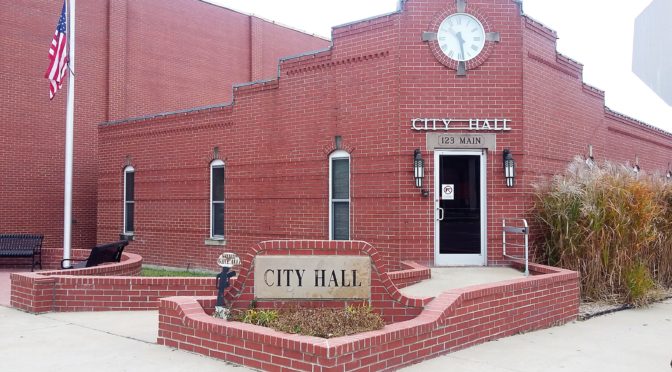
City Hall Commission Room – 123 S. Main Street, Fort Scott, KS 66701
January 21, 2025 – 6:00 P.M.
III. Invocation
VII. Appearances
Cory Bryars – Care to Share – Update
Amanda Lancaster/Deihl, Banwart, Bolton – Audit results
VIII. Unfinished Business
Action Items:
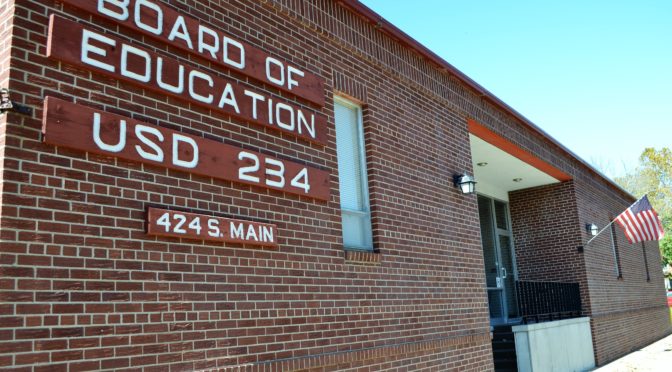
Unified School District 234
424 South Main
Fort Scott, KS 66701-2697
620-223-0800 Fax 620-223-2760
DESTRY BROWN
Superintendent
BOARD OF EDUCATION REGULAR MEETING
January 20, 2025 – 5:30 P.M.
AGENDA SUMMARY PUBLIC
1.0 Call Meeting to Order David Stewart, President
2.0 Flag Salute
3.0 Approval of the Official Agenda (Action Item)
4.0 Interview with Board
5.0 Discussion
6.0 Adjourn Meeting _______ (Time) David Stewart, Board President


Alta Dean Davis, age 97, a resident of Fort Scott, Kansas, passed away Sunday, January 12th, 2025, at her home. She was better known by Kansas relatives as Aunt Deanie, to California relatives as Auntie Alta and to many friends as Miss Alta.
Alta was born on December 31, 1927, in La Harpe, Kansas, the daughter of Benton More, Jr. and Mary Ann (Fifer) More. Benton and Mary moved to Fort Scott, Kansas, with their nine children, Alta being the youngest. Alta started school at the age of five, skipped a grade in elementary school and ventured West to California in hopes of adventure and higher wages at the age of 16.
After arriving in California, Alta first worked as a waitress, then went to work at a car dealership for Mr. Phil Davis. It was at the car dealership where she met Craig Chandler Davis, the dealership’s owner’s son. Craig and Alta were married on April 16th, 1949 in Oakland, California. The couple owned and operated the All Automatic Transmission Company in Hayward, California. The Davis family welcomed their son, Curtis Dean Davis on December 15th, 1953.
In addition to being a wife and mother, Alta was an entrepreneur, real estate investor, financial all-around business woman and philanthropist. She worked diligently to provide for her family working a variety of jobs at the transmission shop and working trade shows and events at Bay West/Showplace in the San Francisco Concourse. It was at the concourse where her entrepreneurial spirit was sparked; while working here she ran a popcorn machine on the side for extra income.
Alta attended Bible Study at the Greek Orthodox Cathedral of the Ascension in Oakland, California, was a member of the Martin C. Kauffman 100 Club of Alameda County, and loved to support many organizations including the American Red Cross, Habitat for Humanity, the Boys and Girls Club of San Leandro, The First Church of God and the Wheelchair Foundation.
Alta enjoyed traveling with friends and family. Her adventures took her around the world including many cities and countries in Asia, Europe, North America, South America and even a penguin expedition to Antarctica.
After living in California for more than 70 years, she returned to Fort Scott and enjoyed reconnecting with family and making new friends. She was always ready to make a witty joke, share a smile, lend a helping hand, play a game of Hand and Foot or a round of Mexican Train dominoes.
Alta is survived by her great-great nephews, Jared Leek and Rob Shaw of the home, nieces Johnna Kay (Davis) Ballou, Betty Joan (More) Crane, Joyce (More) Love, Juanita (Rhyerd) Sinn, all of Fort Scott, Kansas, niece Sheryl (Davis) Hardin of Danville, California, nephews Leroy Bedingfield of Kansas City, Missouri, and Michael Davis of Oakdale, California, and many generations of nieces and nephews.
Alta was preceded in death by her parents, siblings, husband, son, daughter-in law Laurie Henrietta Britton Davis, beloved friend of many years Norman L. Bradshaw “Brad” and many family members.
Friends, family and community members are invited to a Celebration of Life service to be held on Sunday, January 26, 2025, at 3:00 PM, Liberty Theatre, 113 S. Main Street, Fort Scott, Kansas
. A private burial at Evergreen Cemetery in Fort Scott, Kansas, will take place prior to the service.
Memorial contributions may be made to Mount Carmel Hospice or the First Church of God and may be left in the care of the Konantz-Cheney Funeral Home, 15 W. Wall Street, P.O. Box 309, Fort Scott, KS, 66701. Friends and family may sign the online guest book and share memories at www.konantzcheney.com.
TOPEKA – Lieutenant Governor and Secretary of Commerce David Toland encourages jobseekers and employers to take part in the Statewide Virtual Job Fair, hosted by KANSASWORKS, from 8:00 a.m. to 5:00 p.m. Wednesday, January 22.
“Kansas is experiencing a remarkable period of growth that’s creating countless new opportunities for employment,” Lieutenant Governor and Secretary of Commerce David Toland said. “As businesses look to expand and seek talent, our workforce centers are excited to connect Kansans with fulfilling careers.”
The virtual job fair allows for anyone searching for a position to fill out applications, chat live and interview virtually with participating employers.
The Statewide Virtual Job Fair portal features helpful information such as a jobseeker training video, a list of participating employers and channels for attendees to register and log in. Jobseekers are encouraged to dress professionally, as employers may request to engage in a video interview.
Candidates can participate through any digital device. Any individual with a disability may request accommodation by contacting their nearest workforce center at (877) 509-6757 prior to the event.
Registration is required to participate in virtual job fairs, regardless of previous participation. To register, click here.
About the Kansas Department of Commerce:
As the state’s lead economic development agency, the Kansas Department of Commerce strives to empower individuals, businesses and communities to achieve prosperity in Kansas. Commerce accomplishes its mission by developing relationships with corporations, site location consultants and stakeholders in Kansas, the nation and world. Our strong partnerships allow us to help create an environment for existing Kansas businesses to grow and foster an innovative, competitive landscape for new businesses. Through Commerce’s project successes, Kansas was awarded Area Development Magazine’s prestigious Gold Shovel award in 2021, 2022, 2023 and 2024, and was awarded the 2021 and 2022 Governor’s Cup by Site Selection Magazine.
About KANSASWORKS:
KANSASWORKS links businesses, job candidates and educational institutions to ensure that employers can find skilled workers. Services are provided to employers and job candidates through the state’s 27 workforce centers, online or virtual services KANSASWORKS is completely free for all Kansans to use. Learn more at KANSASWORKS.com. State employment opportunities can be found at jobs.ks.gov.
###

Dr. Ethan Couch, 23, is a new associate doctor with Dr. Kaylee Clifton. He began duties on January 14.
Couch graduated from Nevada High School in 2019, received his associate’s degree from Crowder College, Nevada, and then went to Cleaveland University in Kansas City, earning a bachelor’s degree in human biology. He then enrolled in the school’s Doctor of Chiropractic program in 2020 and graduated in December 2024.
“I did a year of training with the Veteran’s Administration Hospital in K.C. with the clerkship program,” he said. “I got to meet with doctors- neurosurgeons, pharmacists, occupational therapists and orthosurgeons- and ask questions to have a better understanding of multi-disciplinary treatment options.”
“I knew I wanted to be in the medical field, but wanted to provide conservative treatment for musculoskeletal conditions,” he said.
“Conservative treatment is non-invasive therapeutic exercise or adjustments, anything that doesn’t stretch into injections, surgery or medications.”
So far, the best part of the job is “Getting to know the patients and providing quality care that helps with day-to-day life.”
Couch and his wife live in Nevada, MO are expecting their first child, a son, on April 1.
Dr. Kaylee Clifton is returning in February, following maternity leave.
On February 1, Couch’s hours will be from Monday through Wednesday from 9 a.m. to 5 p.m. Friday from one Saturday a month from 9 a.m. to noon.
The Clifton Chiropractic office is located at 203 E. Third, Fort Scott and can be reached at 620.644.5000.
Years ago, when I was counseling a young woman in an abusive relationship, I recommended the book Boundaries by Dr. Hendy Cloud and Dr. John Townsend. Years before when I read it, it left a profound mark on my life. I hoped it would do the same for her. The book’s message is clear: although we are called to love, we must protect ourselves from harmful, toxic people, provided, of course, we have tried looking past our differences and betrayals and chosen to love. That’s the hard part.
Why not just walk away? Because God created us to be in community with one another. Read Ecclesiastes 4:9-10: “Two are better than one, because they have a good return for their labor: If either of them falls down, one can help the other up. But pity anyone who falls and has no one to help them up.” No qualifiers are given. Solomon doesn’t say, “Just be sure the other people are like you, share your values/interests and never disagree with you.” But what if those people really test our boundaries (like the Mean Mom in last week’s article), and we want to bang our heads into a concrete wall every time we are around them?
Here’s where it gets sticky. The first thing we need to do is to ask ourselves if we have any ownership in this destructive relationship. I mean, if we completely cut disagreeable people out of our lives, we probably won’t have many friends, and there’s a great chance we deserve to be in that “disagreeable” group. Maybe that’s why Jesus himself said to “love others as ourselves.” Sometimes–most times–the only way we can do that is to ask the Holy Spirit to guide our thoughts and words. He has been faithful to show me at least one redeeming quality I need to glean from every irritating person I’ve met.
The first week we were in Las Vegas, Dave and I met Clare, a woman who asked if we play pickleball. She wanted to know how long we had played and told us about a group that meets every morning at 7:00 and that she would add us to the list. We could start “tomorrow.” The following morning, we walked onto the court where ten other people had gathered. “Rita” approached us. “Uh, I’m sorry, but these courts are reserved for a group that meets every day at this time.” I told her that we had been invited.
“Who invited you?” she said, curtly. Dave held me back from pulling her tongue out and politely told her about Clare. “Well,” Rita continued, pulling out her phone, “I don’t see you anywhere on the list.” At that time, an elderly man approached us. “What’s going on here?” I explained that Clare had invited us to join but we had just found out that this was a closed group.
“What?” he said, clearly embarrassed. “This isn’t closed. You definitely can join us.”
And then Rita sent me into Crazyville. “That’s exactly what I was telling them.” Had Dave not been with me, I think my paddle would have left its mark on her face. \
Clearly, Rita and I would be friends.
Or so I thought. But the more I was around Rita, the more I liked her. Over the next few weeks, we played pickleball together often. I found her to be considerate and kind, and I learned a valuable lesson. We cannot judge a potential friendship until we have given it a chance to flourish. One time never should be our gauge to determine if we give it that chance. Maybe I need to remember that the next time I encounter a Mean Mom in the grocery store.
~~Balanced Budget Fully Funds Schools, Continues Investments in Early Childhood Education and Special Education, and Addresses Water Needs~~
TOPEKA – Governor Laura Kelly announced on Thursday her annual budget, which is balanced and continues to fully fund Kansas’ K-12 public schools. The budget also invests in early childhood services and special education and addresses both short and long-term water needs.
“I’m a fiscal conservative, which is why, once again, I’m proposing a budget that’s balanced, maintains fiscal stability in the future, and ensures Kansans have access to the services their government has promised them,” Governor Laura Kelly said. “This budget also delivers on my commitment to continue fully funding schools, investing in our workforce and child care system, and securing water resources both immediately and in the future.”
The budget:
This budget also includes $500,000 to cover the costs of certain Advanced Placement (AP) test fees for low-income students.
This budget is practical in its aim to focus on accountability and measurable progress, building the long-term water plan asked for by Kansans to ensure the state can sustain populations and promote economic growth now and into the future.
This budget also invests in cybersecurity infrastructure across the postsecondary system.
This budget also includes $2.6 million to establish Behavioral Health Intervention Teams statewide for Child Welfare Providers to increase placement stability for youth in care who experience frequent placement disruptions.
Governor Kelly also recognizes the importance of mental and behavioral health. This budget includes funding for additional psychologists at Osawatomie State Hospital to provide direct patient services including individual and group psychotherapy.
This budget addresses the demands of a rapidly growing aging population and funds essential services to the most vulnerable Kansans.
Governor Kelly’s full budget proposal can be found here.
###