|
|



|

|
|

|
|
|
|
|
|
|
|
|
|
|
|
|
|
|
TOPEKA – The following are Governor Laura Kelly’s full remarks from her COVID-19 Press Briefing on October 28, 2020, detailing the framework for the Unified Testing Strategy. Graphics from today’s press conference can be found here.
Good afternoon.
As you know, yesterday I brought together a bipartisan group of legislators to ask whether they would support my efforts to call a special session for emergency legislation to implement a statewide mask requirement.
I convened the meeting because, as we have discussed previously, case rates and hospitalizations are spiking in counties that opted out of my July mask order, and today Kansas surpassed 1,000 total COVID-19 deaths.
To put this into context: the state did not reach five hundred COVID deaths until September, roughly six months after the pandemic began. It took a little over six weeks for another 500 Kansans to die.
Yesterday’s call was productive, and I believe both sides were acting in what they felt were the best interests of the State of Kansas.
I began the conversation by asking Legislative leadership to reconvene in a special session to pass bi-partisan legislation to restore my ability to require mask wearing across Kansas.
In response, Republican leaders asked if – before calling a special session – I would consider a strategy of reaching out to local leaders to implement their own mask requirements.
I agreed, with the stipulation that Legislative leaders, in conjunction with their caucuses, reach out with me to county and city leadership, as well as stakeholder groups, and that we move as quickly as possible.
We can’t afford to wait another moment to begin this process.
I have directed my staff to put all our energy into this strategy.
However, if we are unable to convince communities to voluntarily implement a mask mandate, I will move expeditiously to find another way to implement a statewide mask requirement.
Now on to the numbers update.
Since Monday, Kansas has reported 3,369 positive COVID-19 cases and 31 new deaths.
This brings us to a total of 82,045 cases, 3,752 hospitalizations, and it is with deep sadness that I say we have reached 1,007 deaths.
I offer my sincere condolences to the family, friends, and loved ones of those who have succumbed to COVID-19.
In acknowledgement of their losses, today I ordered flags to be flown at half-staff statewide effective immediately until sundown, Friday, October 30, 2020.
Though case numbers I shared moments ago offer some insight into Kansas’ current pandemic response, they do not tell the full story of how the virus is moving through our state.
So, before I move into today’s announcement, I want to give a brief recap on what we have learned since my COVID update last Wednesday.
Last week, our state’s seven-day rolling average test positivity rate was 10.54% percent – which is just above the 10 percent threshold recommended to open schools and businesses.
On Monday, for the third week in a row, Kansas broke the record for the highest number of new cases of any reporting period at nearly 2,500 – which we broke again today at over 3,300.
Hospitals – particularly in our rural areas – continue to see increasing numbers of COVID-19 patients, putting a strain on bed capacity and staff.
Though case numbers in Kansas may be increasing, as always, there is still time to turn our virus response around.
We are learning more every day about the effectiveness of COVID-19 mitigation strategies and public health guidelines – especially mask use.
A study conducted by researchers at the University of Kansas found that counties with mask mandates have effectively stopped virus transmission from increasing.
Counties with no mandate have seen infection rates climb.
A report from the institute for Health Metrics and Evaluation at the University of Washington showed that strict adherence to mask orders could save 130,000 American lives by the end of February. If not, United States death toll could reach 500,000 in that time.
It’s clear that until a vaccine is available and widely deployed, mask usage is one our most important strategies for keeping Kansas schools and businesses open.
But masks are just one piece.
We must also increase testing capacity, isolate those who test positive, identify those who have been in close contact, and communicate the importance of quarantining to keep our communities safe.
This brings me to the framework for our new Unified Testing Strategy.
Over the last four weeks, a team at the Kansas Department of Health and Environment – under the direction of Special Advisor to the Governor Marci Nielsen, PhD – has been working diligently to develop this strategy in a way that fits Kansas.
Broadly speaking, the new strategy identifies where Kansas currently stands, and paints a picture of where we need to go – and how we can get there.
To give some background:
Since the pandemic began, local and state public health departments have largely focused their efforts on testing only those who have symptoms of COVID-19, or testing in areas where outbreaks are occurring.
We have made great strides in improving outbreak response over the past several months.
However, to effectively locate the virus in our communities, keep Kansans safe, keep kids in school, and keep our businesses open, we must do more.
We need to expand testing to include regular screening for the virus before it spreads.
That’s what the new Unified Testing Strategy will allow us to do.
It will coordinate both public and private COVID-19 testing efforts across Kansas to allow for broader routine screening in places like schools and nursing homes, to stop community spread before it starts.
With the investment of SPARK funding which was recently competitively bid and will soon be announced, we can nearly double the amount of testing we are doing in Kansas by years end.
That will move us from a total of 600,000 COVID-19 tests to date, to more than one million by the end of 2020. We will also expand beyond the types of testing we are conducting from just diagnostic to screening and surveillance.
KDHE will be working with our partners in the private sector to expand labs and supplies, enhance data and reporting, provide support for isolation and quarantine, and increase our public communications about controlling the virus’ spread.
This is especially important for populations at high risk, but also for businesses across the state worried about keeping their workforces safe and their doors open.
A unified testing strategy will be resource intensive, but will help us to save lives and rebuild our economy.
The graph behind me visually demonstrates how this will work.
For those populations at the highest risk, located in the green section, state and local public health officials will continue to investigate outbreaks, but also regularly screen for the virus and isolate those who test positive.
For populations at medium risk, in the blue band, health officials will once again continue to investigate outbreaks but also use surveillance testing – which uses methods like testing wastewater for signs of COVID-19.
Through the new strategy we have also cast a wider net when it comes to accessing information and resources for our COVID-19 response.
If you recall, I recently announced that Kansas had joined the Rockefeller Foundation COVID-19 Testing Solutions Group.
Today I am pleased to report that Kansas is now part of collaborative effort funded by the National Institutes of Health to improve COVID-19 testing for underserved and vulnerable populations.
The University of Kansas Medical Center is one of 32 institutions across the United States that will focus on increased testing in populations disproportionately affected by the pandemic.
Referred to as the Rapid Acceleration of Diagnostics (RADx) initiative, 10 counties will be working with a KUMC research team to build a learning collaborative that will help support our most vulnerable populations and help inform the work of Kansas’ unified testing strategy.
I know that oftentimes when we think of testing, we may not consider the whole picture. We only think about the test itself and receiving the results on our phones afterward.
But there is so much more for our public health officials to consider.
We need comprehensive, accurate data that health officials can analyze to determine our most vulnerable populations or locations so that the state can respond accordingly.
We need access to labs that have sufficient testing capacity.
We need reliable transportation to move samples from health facilities to labs, where they can be tested for COVID-19.
The Unified Testing Strategy has all of that in mind, and more.
Through this approach we can work together with local health departments to analyze what we have, what we need, and how we can get it.
Last week I visited Salon Chemistry in Wichita to learn more about the owners’ COVID-19 mitigation strategies and commend them for their diligent efforts to keep Kansans safe.
While I was there, we talked about how hard it was for them when virus spread required my administration to close certain businesses last Spring.
At that time, our state did not have access to sufficient testing supplies or PPE to ensure customers and employees could stay safe.
We had little understanding of how the virus spreads, or how it manifested.
We have learned a lot over the past several months.
With that evolving knowledge and understanding, with a unified testing strategy, we can provide businesses like Salon Chemistry with absolute certainty that they will be able to continue operation this winter and beyond.
Adding the Unified Testing Strategy to our tool box, along with universal mask usage, social distancing, and avoidance of mass gatherings, we can contain this virus and give our scientists time to develop a vaccine that will allow us to resume our normal activities.
With that, I will take questions.
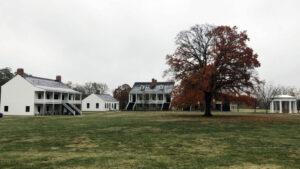
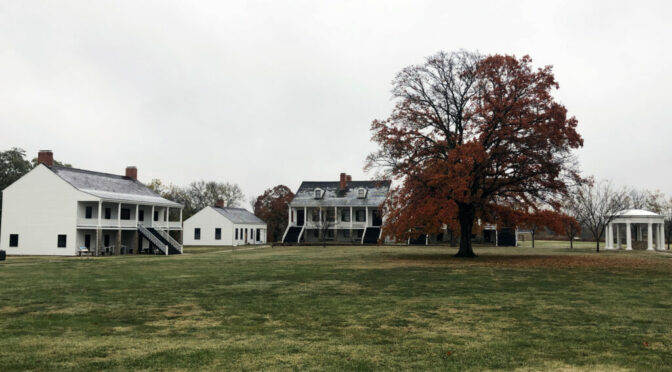
Fort Scott, Kan. – The leaves are changing for fall and winter, so are the hours of operation at Fort Scott National Historic Site. Beginning Sunday, November 1, the park historic structures will be open daily from 8:30 am–4:30 pm through March 31, 2021. The buildings are closed on Thanksgiving, Christmas, and New Year’s Day. The park grounds, walkways, and parking lot continue to be open from ½ hour before sunrise until ½ hour after sunset daily.
Fort Scott National Historic Site is a fee-free park that offers a glimpse into the growth of our nation through a short film, interactive audio-visual programs, displays, the museum, and historic objects. A walk through the fort reveals the significant role it played in the opening of the West, as well as, the Civil War and the strife in the State of Kansas that preceded it.
Park Rangers are on hand and happy to help you learn more about the area and plan your visit. For more information about Fort Scott National Historic Site programs or other activities, please call the park at 620-223-0310, or visit our website at www.nps.gov/fosc.
About the National Park Service. More than 20,000 National Park Service employees care for America’s 421 national parks and work with communities across the nation to help preserve local history and create close-to-home recreational opportunities. Visit us at www.nps.gov, on Facebook www.facebook.com/nationalparkservice, Twitter www.twitter.com/natlparkservice, and YouTube www.youtube.com/nationalparkservice.
There will be a Special Meeting of the Fort Scott City Commission held at 10:30 a.m. on Thursday, October 29th, 2020. This meeting will be held to discuss the City’s insurance and the Interim City Manager position and City Manager search.
This meeting will be held at 123 S. Main Street in the City Commission meeting room. This meeting will be broadcast on the City’s You tube channel. This meeting is open to the public.
TOPEKA – Kansas surpassed 1,000 Kansas deaths due to COVID-19. In honor of the lives lost and the families they left behind, Governor Laura Kelly has directed that flags be lowered to half-staff throughout the state effective immediately to sundown, Friday, October 30, 2020.
“It is with deep sadness that I announce the passing of 1,007 Kansans who lost their lives to COVID-19,” Governor Laura Kelly said. “One of the many terrible impacts of this virus has been that families are unable to hold in-person services to mourn the passing of their loved ones. Each one of these Kansans was someone’s child, parent, or grandparent. They were part of a community. Today, I’m directing that flags be lowered to half-staff, so that we may honor and remember them.”
To receive email alerts when the governor orders flags to half-staff, please visit https://governor.kansas.gov/newsroom/kansas-flag-honors.
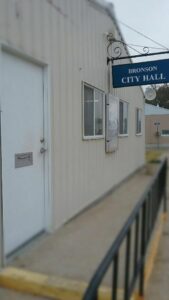
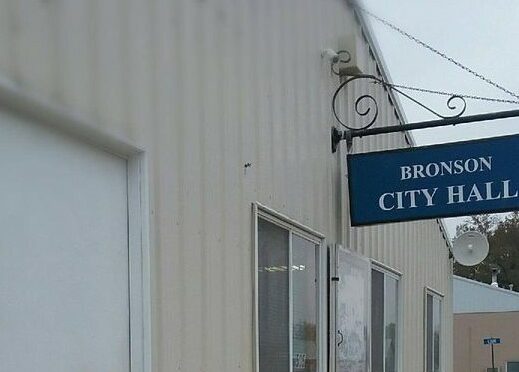
The City of Bronson received grant funds to better serve its’ community safely during the COVID-19 Pandemic.
In mid-October, City Clerk Ellen Harper received a SPARK Grant in the amount of $1,200 for providing help to safely serve the town, located in western Bourbon County.
The Strengthening People and Revitalizing Kansas (SPARK) program is charged with leading Kansas forward in recovery from the far-reaching effects of COVID-19, according to its’ website.https://covid.ks.gov/spark-recovery-office/
SPARK Committees are distributing money from the U.S. Coronavirus Relief Fund.
The City of Bronson will use it to provide masks, sanitizers and cleaning products to mitigate the spread of the virus at city hall.
“We put a shield up in our office for when we interact with customers,” Harper said. “And we sanitize.”
In addition, the city is recommending wearing masks and social distancing as part of the plan.
“This is for employees, city council members, or anybody that comes in and wants to use it for council meetings,” Harper said.
As in the rest of America, the way meetings are organized, or if held at all, have changed.
Bronson has already cancelled its annual town-wide event, Bronson Day, because of the virus and will probably cancell the annual Christmas fundraiser as well, Harper said.
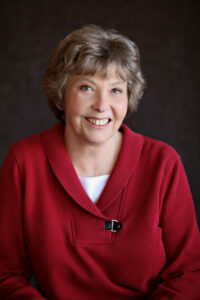
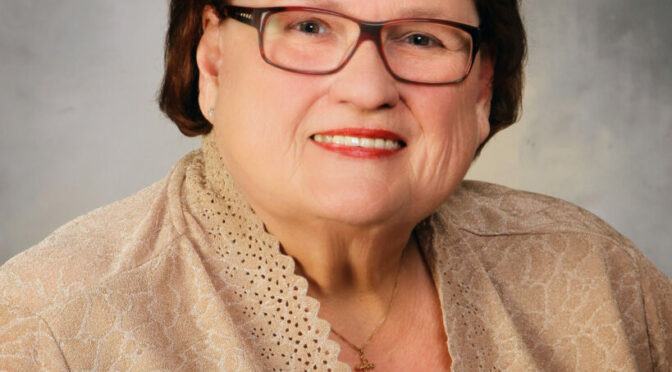
Lynn Grant. Submitted photo.
Lynn D. Grant, the longtime city councilor and widow of 10-term Kansas legislator Bob Grant, is running for her late husband’s seat representing Kansas State House District 2.
Kansas State House of Representatives District 2 includes most of Crawford County, the eastern 1/3 of Allen and Neosho Counties, and a small portion of SW Bourbon County.
“I have been involved in the community that is SEK for over 50 years,” said Grant, who was born in Overland Park, but moved southeast to attend Pittsburg State University and never left. “This is my home. Now I hope to honor Bob’s legacy by representing the constituents of the second district in Topeka.”
Here are the key issues, Grant said:
Transportation Good highways, bridges and railways are essential to not only the safety of Kansans, but to the positive economic development needed in Southeast Kansas. Locally, US 69 must always be a top priority and Highway 7 north of Girard needs critical attention.
Jobs/economy In order to attract businesses that will create full time, good paying jobs, I will support efforts to establish responsible tax policies and to protect education and infrastructure.
Public Education I am passionate about the Legislature supporting public education. That begins with fair funding of early childhood through post-secondary education, be it technical, trade or higher education, so all students have endless possibilities for their future. Good education is the cornerstone for a good society. It is also the best investment we can make for the good of our communities.
Local government control Representatives to local government know our needs, priorities and are elected by the people in their community. I object to the current trend of the state making decisions for local governments and handing down mandates that adversely affect the ability of local governments to do their jobs.
Health Care I believe that all Kansans deserve affordable health care. I will fight the tax policies and callous decisions that have contributed to lack of adequate treatment and facilities for those who undergo any kind of illness. Expansion of Medicaid MUST be on the table in the next Legislative session. We are judged by the way we treat our most vulnerable.
Higher Ed Kansas must support the institutions that allow students to pursue a college education. Post-secondary education enables people to learn and follow a path to a productive life no matter what course of study they choose. These institutions are drivers in economical benefits for their communities through employment and the services required for students.
Judiciary There are three, separate, independent branches of government because those checks and balances are essential to maintaining a system that is of, by and for the people.
Food Insecurity With the decline of our small towns and their grocery stores, Kansas is beginning to experience “food deserts.” This doesn’t mean the food is not available, but that healthy food is increasingly hard to get. The United States Department of Agriculture defines food insecurity as “limited or uncertain availability of nutritionally adequate and safe foods . . .”
People are getting fed but not in a way that contributes to overall good health.
We need to examine ways to rectify that to protect people of all ages in our communities.
* I respect all life from the preborn to those making end of life decisions. Health care, care for women before and after giving birth, education, fighting poverty, providing safe homes for foster children, taking care of our seniors, respecting the dignity of all. This is all pro-life.
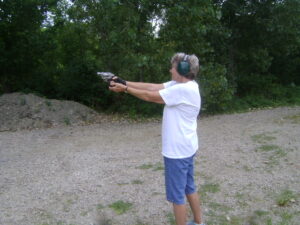
*I respect the 2nd Amendment and have never considered taking away guns as an option. I have always supported reasonable, safe gun ownership.
Paid for by Grant for Kansas, Becky Messinger, Treasurer
(click to watch video on youtube)
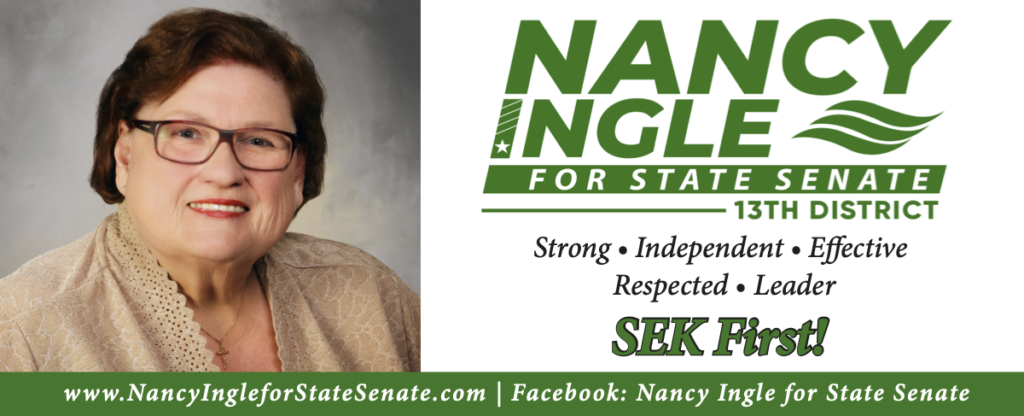
“I will always put SE Kansas FIRST!
Our communities deserve the best schools for our children, safe highways, access to quality, affordable healthcare, and economic development.”
Please contact me if you have questions:
Email: [email protected]
Facebook: Nancy Ingle for State Senate
Paid for by Ingle for State Senate, Steve Langerot, Treasurer.
 Donald J. Trump, United States President
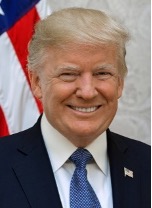
Kansas
Dr. Roger Marshall, United States Senate
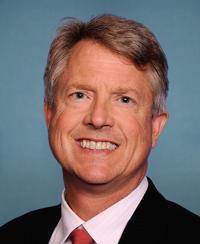
Jacob LaTurner, United States House of Representatives, District #2
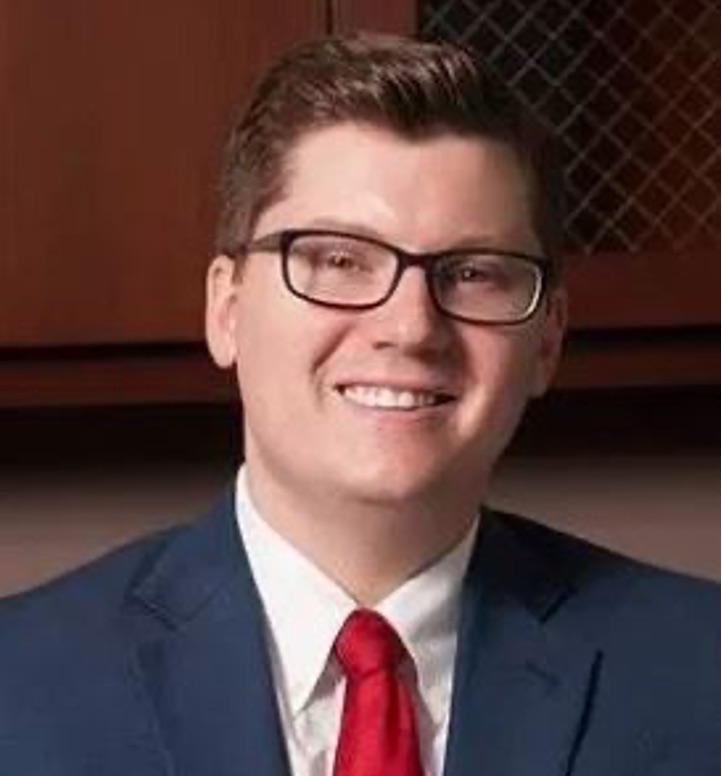
Richard Hilderbrand, Kansas State Senator, District #13
Caryn Tyson, Kansas State Senator, District #12
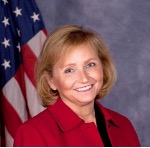
Kenneth Collins, Kansas House of Representatives, District #2
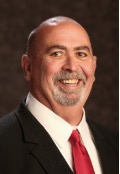
Trevor Jacobs, Kansas House of Representatives, District #4
Bourbon County
Clifton Beth, County Commissioner, District 3
Jim Harris, County Commissioner, District 2
Kendell Mason, County Clerk
Patty Love, County Treasurer
Lora Holdridge, County Register of Deeds
Jacqie Spradling, County Attorney
Bill Martin, County Sheriff
Paid for by Bourbon County Republican Central Committee, Nancy VanEtten, Treasurer.
|
|
|
|
|
|
|
|
|
|
|
|
|
|
|
|
|
|
|
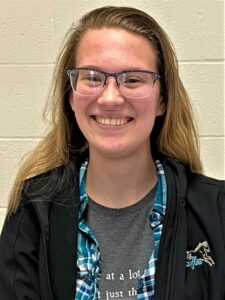
Submitted by Adelay Martin, UHS Student Sports Reporter
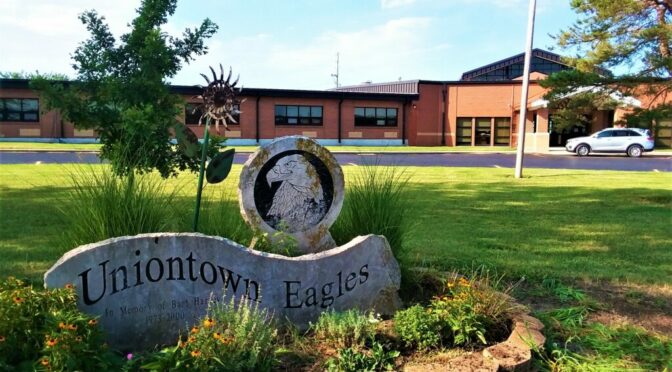
The Lady Eagle Volleyball season came to an end Saturday at the 2A Sub-State Tournament hosted at Uniontown.
In the first round, Uniontown defeated Pleasanton 25-19 and 25-15. Bri Stokes had 10 points and 10 assists. Danielle Howard was 14/18 on attacks with 7 kills and 5 solo blocks. Paige Mason was 11/11 on attacks with 2 kills.
The second round saw Erie defeat Uniontown 26-24 and 25-10. Bri Stokes had 5 points and 4 assists. Karleigh Schoenberger was 12/14 on attacks with one kill and Danielle Howard was 9/10 on attacks with 3 kills. Gwen Fry had 3 solo blocks.
“The team played hard,” Coach Hall says. “We just couldn’t shut down Erie’s middle hitter when she got to the front row, and she was on fire. I’m so proud of this team. The six seniors have shown great leadership throughout their career and this challenging season. I wish them the best in their future plans and look forward to the 2021 season.”
The Varsity squad finished the season with an overall record of 12-4 and were Co-Champions of the Three Rivers League, tied with St.Paul and Chetopa.
On Friday, the Varsity football team faced Lyndon and lost 41-0. Treden Buckman had 14 rushes for 61 yards, and Drew Perry had 20 rushes for 103 yards. Perry also completed 4/5 passes for 12 yards. and had 3 unassisted tackles. Jake Harvey had 5 assists and received two passes, and Luke Perry had 1 interception.
The first round of playoffs is Friday, October 30th at Uniontown, so let’s run down some cumulative stats…
Hunter Schaaf, SR – 111 carries, 532 yards, 4.79 ypc, 8 TDs (6 games)
Drew Perry, SR – 143 carries, 696 yards, 4.87 ypc, 5 TDs (8 games)
Treden Buckman, SO – 93 carries, 490 yards, 5.27 ypc, 4 TDs (8 games)
Hunter Schaaf, LB, SR – 68 tackles (6 games)
Jake Harvey, LB, SR – 57 tackles, 1 INT (8 games)
Drew Perry, DB, SR – 42 tackles (8 games)
Zach Franklin, DE, SR – 40 tackles (8 games)
Luke Perry, DB, JR – 30 tackles, 2 INTs (8 games)
Korbin Miller, DT, JR – 29 tackles, 2 sacks (8 games)
Bring a warm coat, some blankets, and hot cocoa, and come support your Uniontown Eagles in the playoffs on Friday, October 30!