TOPEKA – In response to the continued spread of the Delta variant of the COVID-19 virus, Governor Laura Kelly today released new guidance directing state agencies under the jurisdiction of the Executive Branch to resume remote work operations where possible.
“Since the start of the pandemic, my administration has followed the best public health guidance to keep our communities safe, mitigate the spread of the virus, and reduce strain on hospitals,” Governor Kelly said. “The decision to return to remote work was not made lightly – but we know that this is a necessary step to prevent COVID-19 infections. I am confident that our state employees will continue to provide quality services to all Kansans who need them.”
The remote work model will remain in place through October 4th. At that time, a re-assessment of current COVID-19 infection rates will determine when state employees can return to fully on-site work.
At the outset of the COVID-19 pandemic, state agency operations shifted to remote work for employees whose job functions could be performed remotely. In June, after a significant reduction in daily COVID-19 infections, state employees began returning to state office buildings.
As infection numbers began to rise again throughout the summer, a transition to remote work will help control the spread of the virus among state employees. Onsite staffing will be limited to only those necessary to safely conduct agency operations.
Mask requirements, social distancing and other mitigation measures will remain in place for employees whose jobs must be performed on-site. Public offices serving customers will be encouraged to re-institute mitigation measures that were previously utilized during the pandemic, such as scheduling “by appointment only” or making allowances for virtual as opposed to in-person interactions. All such measures will be carried out in a way as to have as minimal an impact or inconvenience on customers.
MANHATTAN, Kansas — The state rules and regulations board has approved the adoption of temporary amendments to the Kansas industrial hemp regulations which were proposed by the Kansas Department of Agriculture. The regulation amendments will align Kansas’ industrial hemp regulations with the USDA’s Final Rule on commercial hemp production.
The amended regulations extend the timeframe to complete sampling and harvest, provide flexibility to producers regarding potential remediation of plants if sampling tests above acceptable THC levels, and increases the threshold at which a crop will be deemed to have been produced negligently. The full amended regulations for K.A.R. 4-34-24, K.A.R. 4-34-25 and K.A.R. 4-34-29 can be found at www.agriculture.ks.gov/IndustrialHemp.
Because these amendments directly address regulations that affect harvest, they were expedited to be in place on a temporary basis. Plans are in progress to make them permanent through the official rules and regulations approval process. Public comments may be submitted online after September 2 and a public hearing will be held on November 8 as KDA considers finalizing the regulations; KDA will release details on the public comments and hearing soon.
The Southeast Kansas Multi County Health Department offices are now offering an additional dose of the Moderna COVID-19 Vaccine for those moderately to severely immunocompromised.
Mondays are walk-in days, but otherwise someone wanting vaccinated would need to call for an appointment.
Please bring ID and your COVID-19 vaccine card to the appointment.
This is part of a series of features on new educators in the Uniontown district. USD 235 School District starts school on August 26.
April Stock, center, with her family. Submitted photo.
April Stock, 35, is a new first-grade teacher at West Bourbon Elementary School, Uniontown.
Stock earned her Master of Science in Elementary Education from Fort Hays State University.
“This will be my first year as a classroom teacher but I have been lucky enough to be a para and work with the amazing special education teacher and be a part of the great team of paraprofessionals at West Bourbon Elementary!” she said.
She is married to Kolby Stock and has three children, Klara (13), Kyson (10), and Kort (8).
“I have wanted to be an elementary teacher ever since I was in the first grade and I wanted to be just like my first-grade teacher,” she said. “I have been blessed with being a stay-at-home mom for many years and now that my children are all in school, I decided it was time for me to pursue teaching.”
“The best part of teaching is getting to spark the curiosity and creativity inside of students and instill within them a desire to learn and seek out knowledge,” Stock said. “I enjoy connecting with each student to see just what each of their individual needs are so that I can provide them with what is necessary for them to learn.”
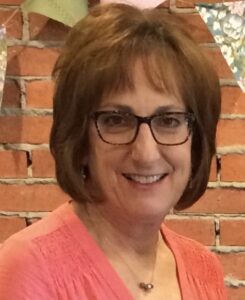
Linda Rogers. Submitted photo.
Linda (Ramsey) Rogers will be teaching reading and math for 1st and 2nd-grade students at West Bourbon Elementary School.
She graduated from Uniontown High School in 1974, Pittsburg State University in Elementary Education in 1979, and received a master’s degree in 1987.
She and her husband, Harold, have been married for 31 years and have two sons, and Harold’s married daughters have given them seven grandchildren, she said.
“Most of my career was spent in second grade for USD 234, Fort Scott,” she said. “I’ve also taught 1st, 4th, 5th, and 6th grade, for a total of 39 years.”
For the past two years, she has substituted for USD 235 in Uniontown.
“One of the most rewarding aspects of teaching for me is working with children; to see their progress and watch them take pride in their accomplishments,” Rogers said. “Education is a tough job, but being a part of something that will impact the future of our community, our nation, and our world makes this profession extremely rewarding.”
In her spare time she is involved in her church and crafting.
“This summer and last, I’ve helped with Feeding Families In His Name Ministry every Monday, through Community Christian Church, and also led a women’s Bible study on Sunday mornings. For the past 2 1/2 years, I’ve learned how to quilt, and have become addicted!”
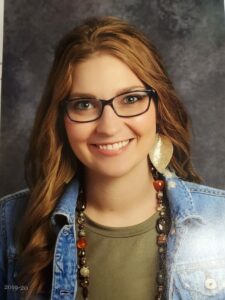
Stephanie Defebaugh. Submitted photo.
Stephanie Defebaugh, 29, will teach preschool at USD 235.
She graduated from Pittsburg State University after receiving her associates degree at Coffeyville Community College.
Defebaugh has taught the last three years in Iola as a kindergarten teacher.
She has been married for five years to her husband, Andrew and has a son, Blaine, who is four years old and a daughter, Kendall, who will turn one this month.
She pursued her career because of a teacher she had.
“I had a wonderful and patient teacher who was able to identify my learning struggles and helped me overcome them. I would like to pay that forward to others.”
“One of the basic human needs is belonging, and teaching can provide that,” she said. Teaching plays a vital role, alongside the families, in shaping young children of our community and nation. Plus, I enjoy coloring with them.”
“Teaching is a tough job, but it is one where you can make the most impact in another person’s life,” Defebaugh said. “The challenges we, as teachers, face is different by the day, so you have to make sure you have a Plan Z as A-Y may not work.”
In her spare time, she has been playing one of her husband’s past times, golf.
“I am enjoying it more than I thought,” she said. “I also enjoy watching baseball.”
The Fort Scott Area Chamber of Commerce invites members and guests to a Chamber Coffee this Thursday, August 26th at 8 a.m. hosted by Museum of Creativity located at 102 S. National Ave. Coffee, juice, and light refreshments will be served and attendees may enter a drawing for door prizes.
Owners Lorina & Jonathan have recently been working on renovations as funds become available. They welcome everyone to come and see what they have changed and accomplished since they have become Chamber members.
Contact the Chamber of Commerce at (620) 223-3566 for more information.
This newsletter about new books is distributed to people who are registered adult users at a southeast Kansas library participating in the SEKnFind catalog. We hope you find it useful, but if you don’t wish to receive this anymore, you can click on the “Manage Subscriptions or Unsubscribe” link at the bottom.
All the books included in this newsletter are new additions in one or more SEKnFind libraries–and since the catalog is shared, that means they are available to you whether they are in your local library or not! Just place a hold on the item(s) you want. If you don’t know how, your librarian can show you.
When a visiting professor spreads lies so that fact and fiction are so confused it’s near impossible to tell them apart, leading to murder, Chief Inspector Armand Gamache must investigate this case as well as this extraordinary popular delusion – and the madness of crowds. 750,000 first printing.
“A story of resilience and redemption set against one of America’s defining moments-the Dust Bowl. It’s 1935 in Oklahoma, and lives are determined by the dust. Fourteen-year-old Kathryn Baile, a spitfire born with a severe clubfoot, is coming of age in desperate times. Once her beloved older sister marries, Kathryn’s only comfort comes in the well-worn pages of her favorite book, The Wonderful Wizard of Oz.
Back in Boise City, Melissa Baile Mayfield is the newest member of the wealthiest family in all of Cimarron County. In spite of her poor, rural upbringing, Melissa has just married the town’s most eligible bachelor and is determined to be everything her husband – and her new social class – expects her to be. But as the drought tightens its grip, Henry’s true colors are revealed.
Beth Chevalier quits school, lies to her parents and becomes addicted to pills while dealing with the murder of her sister on the notorious Cold Creek Highway in the new thriller by the author of Still Missing. 100,000 first printing.
Belmont Academy’s Teacher of the Year, Teddy Crutcher is frustrated by his colleagues and endlessly meddlesome parents who begin digging a bit too deeply into his affairs after the death of an Academy parent and his seemingly missing wife.
“Kentucky packhorse librarian Tansy Calhoun doesn’t mind the rough trails and long hours as she serves her mountain community during the Great Depression. Even the rough people-like ornery Perdita Sweet-have their charms. But can love bloom in such rockysoil?”
Doug, a rescue pug, wants his owner, Julie, who is in a bad relationship, to be happy and sets in motion a chain of events that leads her to Tom, whom Doug believes is perfect for her, if only she can get over her initial animosity towards him. Original. 50,000 first printing.
The prime suspect in a murder investigation after the body of a rival bar owner is found on her doorstep, Hattie Hayes, to clear her name, must distill the evidence herself and serve the killer a swift shot of justice. Original.
“Scientist Marian Creighton was skeptical of her father’s lifelong research of ancient holy water-until she ingests some of it and finds herself transported back to the Middle Ages. With the help of an emotionally wounded nobleman, can she make her way back home? Or will she be trapped in the past forever?”
While serving the common people Amalo, Thara Celehar, a Witness for the Dead, finds his skills leading him out of the quiet and into a morass of treachery, murder and injustice, in this stand-alone sequel to The Goblin Emperor.
“When Keira wakes in a strange forest, she can remember only two things: she can see ghosts, and strange, mask-wearing men are hunting her. She seeks shelter at a church, and the kind pastor offers to let her stay in the groundskeeper’s cottage for a fewdays. But the cottage is situated behind the graveyard, and its spirits are only too eager to make themselves known. This sleepy, quaint town has dark secrets from the past that continue to haunt in increasingly terrifying ways. Keira’s shocked to discover her lost memories may be woven through the town’s bizarre hauntings, and soon, she’s thrown full-tilt into a race to unravel the decades-old mystery…before it’s too late”
Trying to return to normalcy after a young life filled with loss, Jack takes a job as a guide for the elite Kingfisher Lodge where he, while guiding a well-known singer, discovers that this idyllic fishing lodge may be a cover for a far more sinister operation.
When a railroad crew at Hell’s Jaw Pass in Wyoming Territory is slaughtered, detective Wolf Stockburn is sent in to investigate and stays at a nearby mining town where he must contend with train holdups, ranch wars, murder — and a deputy’s pretty daughter. Original.
Collected here are interviews with forty-seven accomplished authors, including Michael Connelly, Ken Follett, Meg Gardiner, Dennis Lehane, Laura Lippman, and Don Winslow. These are their personal stories in their own words, much of the material never before published. How do these writers’ life experiences color their art? Find out their thoughts, their inspirations, their candid opinions. Learn more about your favorite authors, how they work and who they truly are.
Incorporating a wealth of sources from across history, science and his own experiences, the New York Times bestselling author of The Midnight Library offers reassurance and encouragement for anyone looking for a more fulfilling, more uplifting way through life.
A San Francisco Chronicle reporter, drawing on years of on-the-ground reporting and reams of public records, provides a first-hand account of California’s Camp Fire—the nation’s deadliest wildfire in a century, investigating root causes and how to avert future tragedies as the climate crisis unfolds. Maps.
An incredible, revolutionary true story and surprisingly simple guide to teaching your dog to talk from a speech-language pathologist who has taught her dog to communicate using simple paw-sized buttons associated with different words. 100,000 first printing.
Outlining revolutionary treatments, an internationally recognized expert in the mechanisms of neurodegenerative diseases presents first-person accounts from survivors of Alzheimer’s—amazing stories of hope told in their own words. Original.
“So many people get all tense when faced with a piece of fish or a bag of shrimp. It’s understandable: you went through all that effort to catch it, or, if you bought it from the store, we all know that fish isn’t cheap. You don’t want to mess things up.Hook, Line and Supper aims to cure that stage fright once and for all by breaking down the essence of fish and seafood cookery, allowing you to master the methods that bring out the best in whatever you catch or bring home from the market”
“The Green Indoors is a useful guide on how to find perfect plant matches for your home environments with a sustainable and innovative approach. Focusing on working with the plants you already own, the book is divided into chapters detailing all the possible conditions: extreme sun/heat, dry air/central heating, deep shade, high humidity, draughty, cold. By matching awkward spaces in your home with environments in the natural world, this book shows you how to relocate plants to improve their growth and help them thrive. Features an extensive section with informative plant profiles that include their origin, easy-to-follow tips on feeding and watering, optimum conditions, prospective growth, and is concluded by a helpful troubleshooting chapter dealing with common problems, and what to try when all hope is lost”
“A guide to the materials and safe practices that will take your oil painting practice to new heights–whether you are just starting out, or have been painting for years”
“The American War in Afghanistan is a full history of the war in Afghanistan between 2001 and 2020. It covers political, cultural, strategic, and tactical aspects of the war and details the actions and decision-making of the United States, Afghan government, and Taliban. The work follows a narrative format to go through the 2001 US invasion, the state-building of 2002-2005, the Taliban offensive of 2006, the US surge of 2009-2011, the subsequent drawdown, and the peace talks of 2019-2020. The book examines the overarching questions of the war: Why did the United States fail? What opportunities existed to reach a better outcome? Why did the United States not withdraw from the war?”
Governor Laura Kelly Announces Kansas Department for Aging and Disability Services Receives $2.7 Million to Fund New KS HEART Program
~ KDADS one of five organizations receiving funding to provide substance use disorder services for pregnant and postpartum women ~
TOPEKA – Today, Governor Laura Kelly announced that the Kansas Department for Aging and Disability Services (KDADS) is one of only five organizations nationally to be awarded a three-year, $2.7 million grant from the Substance Abuse and Mental Health Services Administration (SAMHSA), Center for Substance Abuse Treatment (CSAT). Grant funds through the FY 2020 State Pilot Grant Program for Treatment for Pregnant and Postpartum Women (PPW-PLT) will be used to provide evidence-based, family-centered treatment services to pregnant and postpartum women in Kansas with substance use disorders.
“This grant will expand critical treatment services to support pregnant and postpartum Kansans with substance abuse disorders – along with their children,” said Governor Laura Kelly. “By addressing the behavioral needs of mothers, we can protect mothers and their families.”
The KDADS program, which will be known as KS Helping Empower And Recover Together (KS HEART), will take effect September 30, 2021.
It’s estimated the KS HEART program will serve approximately 55 women a year at two pilot locations, for a total of 165 women over three years. Partners identified in the grant are DCCCA, Inc. and CKF Addiction and Treatment Services, with pilot sites in Salina and Wichita.
“By focusing on family-centered therapy, expanding outpatient programs, and providing community-based wraparound services, the KS HEART program aims to accomplish the goals of decreasing substance use, including opioids, among pregnant and postpartum women in Kansas,” KDADSSecretary Laura Howard said.
The purpose of the KS HEART program is to enhance flexibility in the use of funds designed to:
Support family-based services for pregnant and postpartum women with a primary diagnosis of a substance use disorder, including opioid use disorders;
Help state substance abuse agencies address the continuum of care, including services provided to pregnant and postpartum women in nonresidential-based settings; and
Promote a coordinated, effective, and efficient state system managed by state substance abuse agencies by encouraging new approaches and models of service delivery.
Pregnant and postpartum women using substances face complex challenges that put the health and stability of their family at risk. Funding and eligibility restrictions to existing substance use treatment services often cause women to lose access to care during some of the most vulnerable points postpartum.
“The KS HEART program will bridge identified gaps to services and provide evidence-based treatments, including Medication Assisted Treatment and tobacco cessation as well as increase family stability and support and maintain community tenure and recovery for the whole family unit,” said KDADS Behavioral Health Services Commissioner Andy Brown.
“CKF Addiction Treatment is excited about this grant partnership with KDADS to help further treat the behavioral health needs of pregnant and postpartum women attending our services,” said CKF President and CEO Shane Hudson, MS, MSHCT, LCP, LCAC. “Addiction involves many layers and those with mental health symptoms that only exacerbate the symptoms of addiction need extra support. This grant aligns well with CKF’s focus of positively impacting patient health outcomes in addiction health care settings.”
“DCCCA is proud to partner with this project and excited to bring our expertise in women’s treatment to this work,” DCCCA CEO Lori Alvarado said. “We have prioritized services for pregnant and parenting women for more than 20 years and are eager to expand these critical services to women and children in Kansas.”
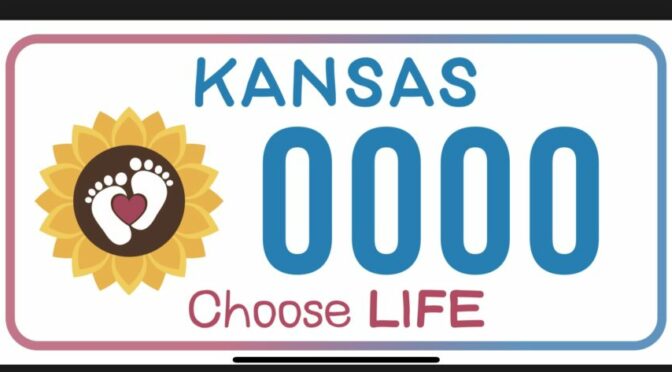
Christians for Life, Inc. is pleased to announce that we no longer need to collect prepaid applications for Choose Life Plates. We thank you for all your assistance in getting the word out to Kansans across the state.
We have turned over the applicant’s information to KDOR and the money collected. After January 1, 2022, KDOR Inventory Manager will send certificates to take to treasurers where applicants will receive their long awaited Choose Life license plate.
If anyone has a question the number to call at KDOR is 785-296-2228.
Christians for Life, Inc. would like to thank Chris Martin of L&M Solutions for helping with the printing of the brochures. Russ Amberling, National Choose Life organization based in Florida was so very helpful. Concerned Women for America of Kansas certainly did their share in helping with the collection of funds the first year. Of course, we thank Representative Trevor Jacobs for actually getting the bill passed and getting the amount needed to print the plates reduced.
Publicity was well handled by Lee Hartman, C5 Alive and the Metro Voice. BOTT Radio and Phil Anderson, Topeka Capital-Journal also did spots on the station and an article in the paper.
Kansans for Life, Kansas GOP, Culture Shield and their patrons were so helpful. We received many orders from people on your mailing lists.
We are so humbled by your responses and appreciate it from the bottom of our hearts.
Best Regards,
Barbara Saldivar, Founder & Director of Christians for Life and CFL Board Members
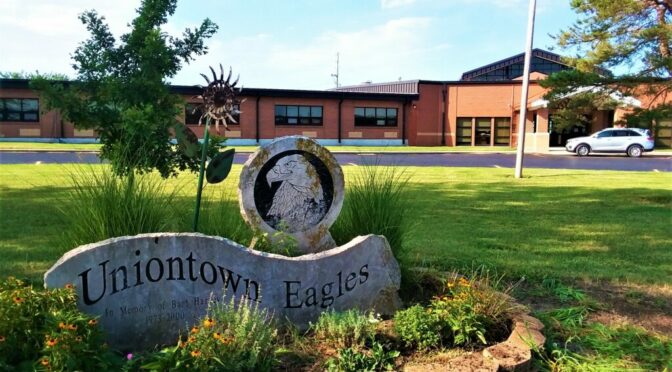
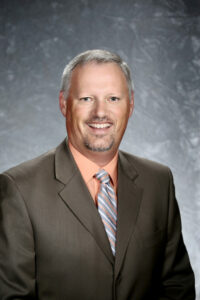
Bret Howard, Superintendent of USD 235. Submitted. photo.
Uniontown USD 235 has teacher in-service Aug. 23-25 with an open house from 4-6 p.m. on Aug. 25
The first day of school is Thursday, August 26.
New teachers this year are Linda Rogers who will be teaching first/second grade, April Stock who will teach fifth grade and Stephanie Defebaugh who will teach pre-kindergarten.
The USD 235 Board of Education passed in a 6 to 1 vote, its 2021-22 Operational Guidelines on Monday, August 9. The approved guidelines may be accessed on the link https://5il.co/wxj7
“Masks will be highly recommended but not required inside all USD 235 buildings,” Superintendent Bret Howard said. “Masks will be required on all school-provided transportation. A federal mandate on all public transportation was enacted over the summer that includes school busses and school vehicles.”
New this year is a restroom and concession area.
The former restroom and concession area, in the old superintendent’s office south of the football field, now houses the Girard Medical Center Clinic in Uniontown.
The district is working on replacing the restrooms/concession facility.
“There will be a concession stand and bathroom built on the northwest side of the home football bleachers,” Howard said. “We have taken the fence down and will be starting construction soon.”
TOPEKA – Residential distributed generation (DG) customers served by Evergy Kansas Metro will soon have a new monthly electric rate that does not include a demand charge. This morning, the Kansas Corporation Commission (KCC) issued an order that will move DG customers from a three-part rate design to a standard two-part residential rate. In addition, customers will receive refunds within 60 days for any difference in the amounts paid between the two rates. Evergy Kansas Metro provides power to customers previously served by Kansas City Power & Light (KCPL) prior to the 2018 merger between KCPL and Westar to form Evergy Inc.
Earlier this year, the same rate design change was approved for customers in Evergy’s Kansas Central region (formerly Westar) after a Kansas Supreme Court opinion called the three-part rate design price discriminatory and sent the matter back to the KCC for further proceedings. The three-part rate design was originally implemented following separate rate cases filed by Westar and KCPL prior to the merger, but only the Westar DG rate was challenged.
Today’s order resulted from a proposal by KCC Staff, Evergy, and the Citizens Utility Ratepayer Board to make the rate for DG customers consistent across both service areas. The Commission agreed there is potential for confusion and frustration over the disparate treatment of residential DG customers between Evergy’s two Kansas service territories and that it is in the public interest to treat Evergy’s residential DG customers consistently in this regard throughout both of its service territories.