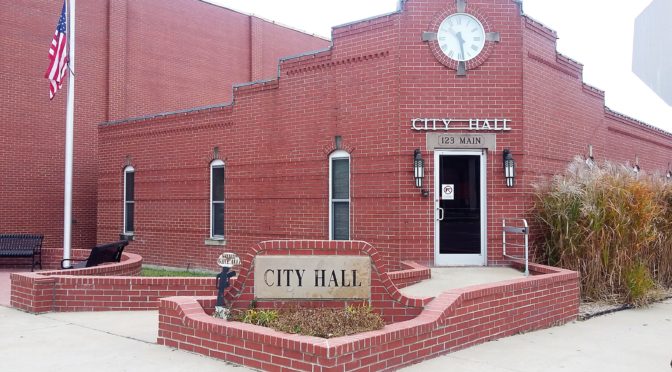
The Tourism Advisory Board will meet on Thursday, February 25th, 2021 at 3:30 p.m. in the City Commission Meeting Room at City Hall, 123 S. Main. This meeting is open to the public.
The Tourism meeting will be available on the City’s YouTube channel.
The deadline to sign up for the Friends of Fort Scott National Historic Site’s Fly the Flag project is quickly approaching. Applications for new subscriptions must be postmarked by March 1st. Subscribers renewing for 2021 must submit a renewal application and payment by March 31st.
The project provides homeowners and businesses, within the city limits of Fort Scott, the opportunity to fly the Stars and Stripes, hassle free, on five different flag holidays. For $35 annually, the Friends will install a 3’x5′ flag on a 12 foot staff at your home or business on Memorial Day, Flag Day, Fourth of July, Labor Day, and Veteran’s Day.
Application forms can be obtained at the Fort Scott Area Chamber of Commerce or can be requested by phone or text by calling Kelley Collins at 417-684-2484. Renewals notices have been mailed/emailed to all 2020 subscribers. Questions can be directed to Kelley or Martha Scott at 620-224-9924.
All proceeds support programs at Fort Scott National Historic Site. These include: Symbols of Sacrifice, a Citizenship Ceremony, Candlelight Tour, Youth Engagement, and many others.
Show your patriotism and help our local National Park by lining the streets of Fort Scott with our nation’s symbol!
The Fly the Flag project is a yearly project sponsored by the Friends of Fort Scott National Historic Site. Once signed up, you will receive the option to renew annually.
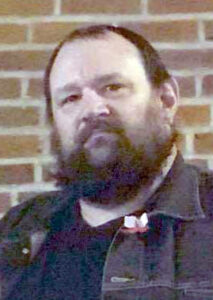
Gary Dean Beerbower, age 54, resident of Ft. Scott, KS, died Friday, February 19, 2021, at his home. He was born August 13, 1966, in Ft. Scott, the son of Lowell William Beerbower and Donna Kay Lawson Beerbower.
Gary graduated from FSHS with the class of 1985. He married Angie Riley on February 4, 1999. They later divorced but remained good friends.
Gary enjoyed shooting and was a member of the Old Fort Sharpshooters. He liked music and was a horror movie buff. He was a packrat and lover of junk. He enjoyed spending time with his family.
Survivors included 3 sons, Landon Beerbower, Trevor Pulliam, and Zach Riley; ex-wife Angie Riley; 3 brothers David Beerbower and wife Donna Jo, Ft. Scott, Allen Beerbower and wife Kim, Redfield, KS, and L. W. Beerbower, Ft. Scott; a sister, Rhonda Tinkey and husband Preston, Ft. Scott; and many cousins, nieces, nephews, and beloved friends.
He was preceded in death by a brother, Troy Beerbower, and his parents.
There was cremation. Services will be announced at a later date. Memorials are suggested to the Gary Beerbower Memorial Fund and may be left in care of the Cheney Witt Chapel, PO Box 347, 201 S. Main St., Ft. Scott, KS 66701. Words of remembrance may be submitted to the online guestbook at cheneywitt.com.
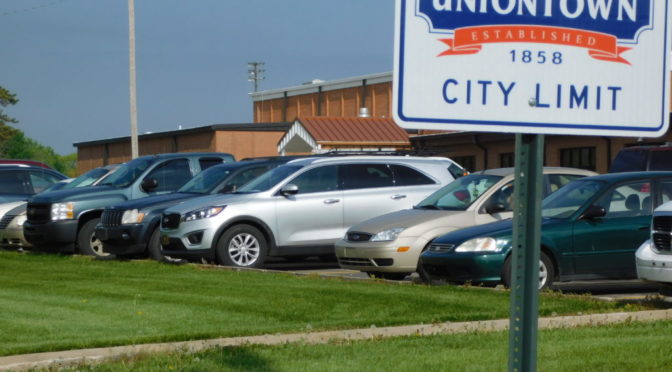
Kansas Municipality Gas Agency is the natural gas supplier for Uniontown, in western Bourbon County.
“They are the broker that the gas comes through,” Mayor Larry Jurgensen said. “We are the only town in Bourbon County to get gas from them.”
This last week, during the long duration of sub-freezing weather, the Uniontown City Council was involved in a Zoom online meeting with the agency every day.
“The gas companies couldn’t keep up with the demand,” Jurgensen said. “We were close to being shut down.”
Due to the warmer weather, that has been averted, however people need to still conserve their gas usage, he said.
“We don’t want people to panic,” Jurgensen said.
“Our supply is going to be there,” he said. “The cost is extremely high.”
“We had money put back for emergencies, whether it’s enough, we don’t know, we don’t have the bill yet. We won’t get the February bill, until March.”
At a special meeting on February 18, the city, in conjunction with other local entities, devised an emergency plan. That plan is in bold in the provided minutes from Uniontown City Clerk Sally Johnson.
The following is a comment from the City of Uniontown Council that was approved at a special meeting on Feb. 18.
“As many of you have heard, with the extreme cold we have recently experienced, gas prices have skyrocketed.
At this time the City of Uniontown is able to pay for the gas we supply to you. However, a portion of this may
have to be passed on to you.
We have an emergency plan if for some reason our gas supplier is unable to supply us. We appreciate all of the conservation efforts you have put forth and ask that you continue to conserve. Thank you for your patience and understanding.”
Following are the unapproved minutes of that meeting. Minutes are not approved until the next city council meeting.
CITY OF UNIONTOWN
FEBRUARY 18, 2021 SPECIAL COUNCIL MEETING MINUTES
The Special City Council Meeting on February 18, 2021 at Uniontown City Hall, was called to order at 7:00 PM by
Mayor Jurgensen.
Council members present were Jess Ervin, Danea Esslinger, Josh Hartman (by phone), Amber Kelly, and Charles Wehry.
Also in attendance for all or part of the meeting were Joe George, City Superintendent Bobby Rich,
and City Clerk Sally Johnson.
SPECIAL CONSIDERATIONS/PROJECTS
To discuss and make decisions on the following topics:
KMGA February 17, 2021 invoice –
Invoice consisted of usual March 2021 estimate prepayment, January 2021 true-up,
but also included a Collateral Call to reimburse for the $1,000,000 cash collateral required to secure gas to all of their
members through the holiday weekend.
Our portion of the collateral call is $6,295. The invoice is due by Monday, February 22, 2021, instead of the usual 30 days.
Motion by Ervin, Second by Wehry, Approved 5-0 to pay the KMGA February 17, 2021 invoice in the amount of $10,178.22 by March 22, 2021
How to pay KMGA March Invoice –
Council reviewed the usage to date and the daily indexes to date. Clerk Johnson estimates the bill to be $133,678.47 without the collateral call adjusted back off. She will ask KMGA if the collateral call will be adjusted on the next billing and if we could possibly get a month-to-date or weekly statements/invoices to better understand the true financial impact for the month.
Council will look at whether to pass on to customers, how much, and in what manner at the March 9, 2021, regular meeting.
Finalize emergency procedures for this gas/extreme weather emergency.
Mayor Jurgensen, Councilman Wehry, Superintendent Rich, and Clerk Johnson met on February 16, 2021, with Will Wallis, Bourbon County Emergency Manager, and Commissioner Lynne Oharah.
Bourbon County Emergency Management has cots, blankets, etc needed to set up a warming station.
Clerk Johnson had spoken with Bret Howard, Superintendent USD #235, about using the WBE gym for a warming station in the event of loss of gas. It was verbally agreed on
A calling tree has been set up to notify the gas
customers in the event of loss of gas.
Superintendent Rich informed that manpower would be an issue if this occurred.
All gas meters would have to shut off and when the flow was reinstated all meters would have to be turned on, bled, and all pilots lit. This would require several people if to be done in a timely manner and each person would have to have to proper tools to complete the task. It was suggested to compile 4-5 tool kits with all the tools that would be needed.
The emergency procedures for a loss of gas event would be:
1. Notify Bourbon County Emergency Management and USD 235.
2. Notify Governing Body to implement calling tree. If no answer, visit the location. If they have special needs or need transportation they are to call City Hall.
3. Shut off meters.
4. Help transport citizens to the warming station.
5. End of the event, an adult household member must be present to turn on gas, bleed lines, and light pilots.
Moved by Ervin, Second by Hartman, Approved 5-0, to adjourn at 8:40PM
The Fort Scott City Commission will meet on Tuesday, February 23rd, 2021 at 6:00 p.m. in the City Hall Commission Meeting Room at 123 S. Main Street, Fort Scott, Kansas to hold a work session to discuss upcoming Streets and Parks projects if the proposed sales tax passes. This meeting is open to the public, but no action will be taken.
The work session will also be available on the City’s YouTube channel.
Learn how to prepare your home for a power outage and what to do when one occurs
Prepare in Advance
Create a support network. Identify people who can help you stay at home or evacuate during an extended power outage. Keep a paper copy of your contact list.
Stay connected and alert. Sign up for and monitor alert systems and apps for text alerts. Have communication devices that work without home power, including a crank or battery radio, a non-cordless home phone, chargers/batteries for your cell phones and your computers.
Stock food and water.
Store non-perishable food and water supplies for at least two weeks. Plan to use coolers and ice to extend food refrigeration and keep a thermometer in the fridge, freezer or cooler to monitor the food temperature.
Know and plan for your personal and medical electrical needs.
Take an inventory of your electrical needs. Consider both back up and non-power alternatives for lighting, communication, medical devices and refrigerated medicine, cooking, garage doors, locks and elevators. Discuss a plan with your primary care or medical device providers for your medical needs.
Prepare a pet emergency kit for your companion animals.
Plan for heating or cooling your home.
Use methods such as sealing around windows to insulate your home. If the weather is very hot or very cold, plan to go to a location with air conditioning or with heat. Never use a generator, outdoor stoves or heaters indoors.
Install smoke alarms and carbon monoxide alarms.
Install smoke alarms with battery backup on every floor, inside and outside sleeping areas. Test monthly. Make sure that you have one carbon monoxide detector on each level of your home.
Plan for surge protection. Make sure that you have current surge protectors for household electronics.
Plan how to decide to stay or go.
Plan how and when you will evacuate safely to maintain needs such as power-dependent medical devices. Keep your car gas tank at least half full.
Safety Tips for After a Power Outage
Keep away from power lines. Stay at least 35 feet away from fallen power lines and anything they are touching. Call 911 and let them know.
Avoid electrical shock in flood areas. Don’t go into flooded areas or use any electrical equipment or electronics that may have been submerged. Have a qualified electrical inspector check the electrical system.
When in doubt, throw it out. If food is 40 degrees F or warmer, especially dairy and meat, throw it out. Ask your provider about using refrigerated medicines.
Prevent carbon monoxide poisoning. Keep generators, camp stoves and charcoal grills outdoors only in well-ventilated areas at least 20 feet away from windows.
Winter Storm Safety
Learn how to stay safe during a blizzard and how to prevent or thaw frozen pipes
Take immediate precautions if you hear these words on the news:
Winter Storm WARNING:
Life-threatening, severe winter conditions have begun or will begin within 24 hours.
Blizzard WARNING:
Sustained winds or frequent gusts of 35 miles per hour or greater, plus considerable falling or blowing snow reducing visibility to less than a quarter mile, expected to prevail for three hours or longer.
Staying Safe During a Winter Storm or Blizzard
Stay indoors and wear warm clothes. Layers of loose-fitting, lightweight, warm clothing will keep you warmer than a bulky sweater. If you feel too warm, remove layers to avoid sweating; if you feel chilled, add layers.
Listen to a local station on battery-powered radio or television or to NOAA Weather Radio for updated emergency information.
Bring your companion animals inside before the storm begins. Move other animals to sheltered areas with a supply of non-frozen water. Most animal deaths in winter storms are caused by dehydration.
Eat regularly. Food provides the body with energy for producing its own heat.
Keep the body replenished with fluids to prevent dehydration. Drink liquids such as warm broth or juice. Avoid caffeine and alcohol. Caffeine, a stimulant, accelerates the symptoms of hypothermia. Alcohol, such as brandy, is a depressant and hastens the effects of cold on the body. Alcohol also slows circulation and can make you less aware of the effects of cold. Both caffeine and alcohol can cause dehydration.
Conserve fuel. Winter storms can last for several days, placing great demand on electric, gas, and other fuel distribution systems (fuel oil, propane, etc.). Lower the thermostat to 65° F during the day and to 55° F at night. Close off unused rooms, and stuff towels or rags in cracks under the doors. Cover windows at night.
Check on relatives, neighbors, and friends, particularly if they are elderly or if they live alone.
After a Winter Storm
Continue listening to local news or a NOAA Weather Radio for updated information and instructions. Access to some parts of the community may be limited or roads may be blocked.
Help people who require special assistance—infants, elderly people, those without transportation, large families who may need additional help in an emergency situation, people with disabilities, and caregivers.
Avoid driving and other travel until conditions have improved.
Avoid overexertion. Heart attacks from shoveling heavy snow are a leading cause of death during the winter.
Check on your animals and ensure that their access to food and water is unimpeded by drifted snow, ice, or other obstacles.
If you are using a portable generator, take precautions against carbon monoxide poisoning and fire.
Home Fire Safety
Learn how your family can prevent home fires, escape from a home fire in 2 minutes, and recover after a home fire.
Did you know that if a fire starts in your home you may have as little as two minutes to escape? During a fire, early warning from a working smoke alarm plus a fire escape plan that has been practiced regularly can save lives. Learn what else to do to keep your loved ones safe!
Top Tips for Fire Safety
Install smoke alarms on every level of your home, inside bedrooms and outside sleeping areas.
Test smoke alarms every month. If they’re not working, change the batteries.
Talk with all family members about a fire escape plan and practice the plan twice a year.
If a fire occurs in your home, GET OUT, STAY OUT and CALL FOR HELP. Never go back inside for anything or anyone.
If a Fire Starts
Know how to safely operate a fire extinguisher
Remember to GET OUT, STAY OUT and CALL 9-1-1 or your local emergency phone number.
Yell “Fire!” several times and go outside right away. If you live in a building with elevators, use the stairs. Leave all your things where they are and save yourself.
If closed doors or handles are warm or smoke blocks your primary escape route, use your second way out. Never open doors that are warm to the touch.
If you must escape through smoke, get low and go under the smoke to your exit. Close doors behind you.
If smoke, heat or flames block your exit routes, stay in the room with doors closed. Place a wet towel under the door and call the fire department or 9-1-1. Open a window and wave a brightly colored cloth or flashlight to signal for help.
Once you are outside, go to your meeting place and then send one person to call the fire department. If you cannot get to your meeting place, follow your family emergency communication plan.
Need Help Now?
If you need help after a home fire or other disaster, the following resources are available 24/7:
Suite of Emergency Apps: Available in English or Spanish for Android or Apple devices, these apps will alert users of severe weather while also connecting users to emergency shelters and resources, when necessary. Apps can be downloaded here.
Recovering Emotionally: For free 24/7 counseling or support, contact the Disaster Distress Helpline at 1-800-985-5990 or text “TalkWithUs’ to 66746 or find additional help here.
Krista Harding District Extension Agent, Horticulture Southwind Extension District 111 S. Butler Erie, KS 66733 Office: 620-244-3826 Cell: 620-496-8786
The K-State Garden Hour – a popular online program featuring horticulture experts from across the state – will highlight best plants for a beginning landscape on Wednesday, March 3rd from noon to 1 p.m. Learn how to choose the right plants for your landscape including tough plants that will grow well for any level of gardener.
Garden hour programs will continue two times a month through the summer. To register and participate in the K-State Garden Hour, visit www.ksre-learn.com/KStateGardenHour-register
For more information, please contact Krista Harding, horticulture agent, at [email protected] or 620-244-3826.
The intent is to increase regional and national visitation to Kansas.
The Bourbon County Workforce and Entrepreneur Resource Center (BWERC) has heard an interest from the local community with many ideas and is looking into pursuing a possible STAR Bonds Project.
What are STAR bonds?
According to the Kansas Department of Commerce, “Sales Tax and Revenue (STAR) Bonds are a financing tool that allows Kansas municipalities to issue bonds to finance the development of major commercial, entertainment and tourism projects.
How are STAR bonds paid off?
The bonds are paid off through the sales tax revenue generated by the development
Living in the Midwest gives you a right-good taste of all four seasons. Sometimes I wonder how odd it would be to live in Southern California with no snow during the winter months. Driving in this inclement weather challenges the young and old alike. With a snow-packed driveway, we recently had a 20-year-old young lady come out to visit us. As we welcomed her, she explained that her father had insisted she drive his pickup due to the severe road conditions.
This vehicle was not a 4X4, and when she nervously admitted that she’d never driven his pickup before, I immediately saw a big red flag! Long story short, when she attempted to turn around in the driveway, she accidentally backed over our snow-covered fire pit and got very stuck. After I gave her some instructions and we added four arms to push, she drove out with no harm done. Since she hadn’t even tested the pickup in good weather, she would have been better off driving her own car simply because she was used to it.
A test drive is important if you want to experience how the vehicle handles. Knowing the limits and capabilities of a vehicle can keep you safer in hazardous weather when maneuverability counts most. Often in redneck country, you can watch someone showing off in a test drive (or stunt) as he yells, “Hey ya’ll, watch this!”
There’s a biblical account of a young man that hadn’t tested something he was offered. David and King Saul are talking about Goliath in 1 Samuel 17:32,33 NLT: ‘“Don’t worry about this Philistine,” David told Saul. ”I’ll go fight him!” “Don’t be ridiculous!” Saul replied. “There’s no way you can fight this Philistine and possibly win! You’re only a boy, and he’s been a man of war since his youth.”’ Saul thought the cards were stacked against the boy. But David assured Saul that since he had killed lions and bears, the Lord would rescue him from Goliath too. King Saul finally consented to the unmatched duel.
Even though David was going to do the fighting, Saul wanted to help him in the only way he knew how. ‘“So Saul clothed David with his armor, and he put a bronze helmet on his head; he also clothed him with a coat of mail. David fastened his sword to his armor and tried to walk, for he had not tested them. And David said to Saul, “I cannot walk with these, for I have not tested them.” So David took them off’ (1 Samuel 17:38,29 NKJV). Then David took his staff, put five stones in his shepherd’s bag, and grabbed his slingshot because he was used to these weapons. David had tested them and knew that, with God‘s help, he would be victorious in defeating this obnoxious overgrown Philistine.
We’ve heard, “If it ain’t broke, don’t fix it.” As a young shepherd boy, David had experienced many test drives with His unfailing God. Therefore, he wasn’t willing to trade his tried-and-true Lord for some fandangled and unproven method. David’s faith and confidence was in the Lord of hosts, whom Goliath had openly defied. David boldly predicted victory for God’s sake, and his trust was strong enough to literally lay his life on the line.
The Key: Take God for a test drive and He’ll prove Himself to you.
Carla Nemecek is Southwind District Director and agent.
Submitted by: Carla Nemecek, Southwind Extension District Director
“A pessimist sees the difficulty in every opportunity; an optimist sees the opportunity in every difficulty.” – Sir Winston Churchill
Conflict is challenging – I don’t enjoy it and I dread when I know in advance that conflict is headed my way. Most people perceive “conflict” as a difficulty rather than as an opportunity. Those who view conflict as the difficulty in every opportunity are not necessarily pessimists, however they may not be viewing the conflict as a creative dynamic. The reality is, no matter what you do or how you act, there will always be some conflict — especially when you serve as a community board member.
Conflict can be both positive and negative. Conflict allows people to learn about a problem from different sides, and often the most creative ideas and solutions emerge from conflict. Negative aspects of conflict can involve frustration or confusion and sometimes lead to violence. The key to approaching conflict constructively is to recognize it as a process to be managed, not something to be avoided or eliminated.
Managing conflict requires certain skills and techniques that may not always be easy to implement.
For example, when a person learns to paint it involves learning strokes and techniques to create an image. However, only after continuous practice does the person finally become an artist. You may think of conflict management as an art that benefits everyone through learning the skills, but it takes practice implementing the techniques to be a skilled conflict manager.
The skills and techniques outlined here work best when the person applying them carries the attitude that conflict is about a problem that needs solving, rather than something to win.
Listen Actively
Listening involves more than simply hearing the words spoken, it also requires active involvement that includes understanding, acknowledging, and responding. To make sure you understand what the person has said summarize by saying out loud, “What I think I heard you say was … Is that right?”
Keep Emotions in Check
Although Newton is famous for stating, “for every action there is an equal and opposite reaction,” he was referring to objects, not people. Objects react, but people can chose not to. You can’t change your emotions, but you can decide how you want to act.
Separate People from the Problem
In every conflict there exists both the content of the problem and the human relationships. As a consequence, “people and the problem” often become entangled in discussions that sometimes lead to treating people and the problem as one.
Reframe
Reframing is a powerful method to reinterpret a statement or comment into a problem-solving frame. For example, if someone is yelling and screaming, don’t think of the person as being disrespectful and rude, but reframe your perception of that person as having limited skills in communication. (Easier said than done, right?) In addition, help the other person reframe the conflict into a problem by asking for their advice. For example, “What would you suggest I do?” “Knowing what my interests are, what would you do if you were in my shoes?”
Conflict is just a part of our lives. Let’s work together to turn a little conflict into a lot of opportunity. For more information about leadership and community vitality, visit the Southwind Extension website at www.southwind.k-state.edu or find us on Facebook.
Carla Nemecek
Southwind Extension District
Director & Agent [email protected]
620-365-2242
1006 N. State, Iola, KS 66749