~RESEA program will assist unemployed Kansans with job searches and provide career counseling~
TOPEKA – Today, Governor Laura Kelly announced the Reemployment Services and Eligibility Assessment (RESEA) program has relaunched to assist unemployed Kansans with job searches and career counseling.
“By connecting unemployed Kansans with the resources needed to secure a high-quality job, the RESEA program will improve our economy, communities, and the livelihoods of Kansans statewide,” said Governor Laura Kelly. “It’s not good enough to return to the days before the pandemic; instead, we must rebuild a healthier, stronger, more resilient workforce and economy.”
RESEA is a collaboration between the Kansas Department of Commerce and the Kansas Department of Labor to provide early-intervention job search assistance and career counseling to unemployment claimants deemed likely to exhaust their benefits. In order to continue receiving benefits, individuals who are selected are required to participate.
“We’re here to help the people of Kansas find meaningful, in-demand jobs in our state, and the RESEA program is a key resource to make that happen quickly,” Lieutenant Governor and Commerce Secretary David Toland said. “RESEA helps Kansans get jobs, and get them as soon as possible. We’ve experienced an unprecedented employment crisis, and we’re here to provide every resource possible to make sure affected Kansans can provide for themselves and their families.”
Due to the COVID-19 pandemic, appointments will be entirely virtual. If internet access is an issue, case managers will work with participants to find an alternative appointment method.
This program is being reinstated with the following objectives in mind:
Kansans receiving unemployment who are selected to participate in the RESEA program will receive a letter soon with more information. They will also be assigned a Case Manager who will provide necessary documentation.
Appointment dates for RESEA program participants will begin on March 29.
About the Kansas Department of Commerce
As the state’s lead economic development agency, the Kansas Department of Commerce strives to empower individuals, businesses and communities to achieve prosperity in Kansas. Commerce accomplishes its mission by developing relationships with corporations, site location consultants and stakeholders in Kansas, the nation and world. Our strong partnerships allow us to help create an environment for existing Kansas businesses to grow and foster an innovative, competitive landscape for new businesses.


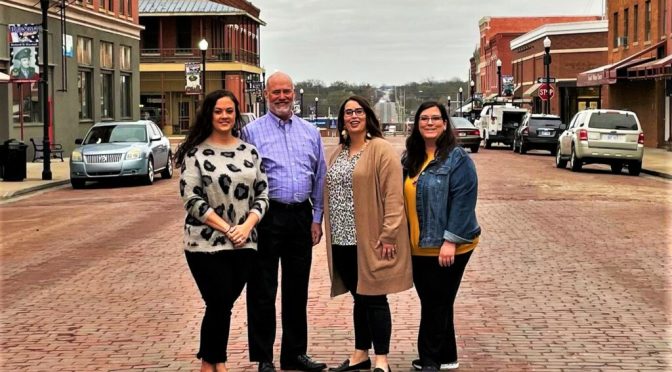
With the new calendar year also came new membership for the Fort Scott Downtown Chamber Committee.
Committee members are now Bailey Lyons, chairwoman, and owner of Lyons Realty Group; John Crain, owner of Crane Insurance Agency; Angela Simon, owner of Bids and Dibs and Angie Dawn’s Boutique; and Rachel French of W/K Holdings Company.
Each member of the Downtown Committee is also a Board Member of the local chamber of commerce.
In February, during their first meeting of the year, the committee wasted no time in getting to work! They decided to change their 2021 focus and take the committee in a new direction – one that they hope the community will find exciting!
Chairwoman Bailey Lyons shared the board’s thoughts behind this change of focus. “In the past, this committee has mainly helped with retail promo events downtown, but Lindsay Madison and Rita Schroeder of the Chamber are now handling those,” Lyons said. She explained that since Madison and Schroder have done such a good job in this area, it makes sense for the 2021 Downtown Committee to choose a different focus.“We are trying to redirect our efforts on tangible projects that will make a positive impact, while continuing to support the retail efforts.” she said.
DOWNTOWN SPRING CLEAN
The first new thing to come of this committee is a plan to host a downtown clean-up day periodically, the first of which is slated to take place on Friday, April 16th starting at 3:00.
The group has identified many projects which they plan to tackle, such as re-striping the parking spaces, implementing “artistic crosswalks”, cleaning off and repainting benches and trashcans, clearing parking lots and sidewalks of dirt and debris, washing windows in vacant buildings, and much more.
In addition to this list, they are open to suggestions from the community, so if you have an idea of something that would make the downtown area more esthetically appealing, please share that idea with Bailey Lyons as soon as possible, as she is organizing for labor and materials. Lyons can be reached via call or text at 620.224.7795.
The downtown committee welcomes and encourages volunteer laborers for the April 16th Spring Clean.
They intentionally scheduled the event at the end of the workweek in hopes that area employers – especially those with a presence downtown – would allow some of their employees to participate in the event as community service.
Lyons says to let her know if you, or your organization, would like to help with these efforts, so that she can plan enough projects to keep everyone busy, and enough materials to get the job done.
She said that she and her fellow committee members “have lofty goals for this event, but are hopeful the old adage ‘many hands make light work’ will play out and everyone’s collective efforts will produce an immediate visible change in the historic downtown area.”
IMPROVED HOLIDAY DECOR
The second new item to come from the downtown committee is a plan to adopt a project which they will focus their attention on each year.
The project they have identified for 2021 is the improvement of the downtown Christmas decor, and as such, this group will be fundraising to purchase new Christmas decorations for the downtown area.
When asked why they identified this as their goal for the year, Lyons said “The current decorations have been used for more than 30 years and community members have asked for enhancement in this area. The committee feels this is a project that we can tackle to improve community esthetics and morale, and one that will impact both locals and visitors.”
They plan to purchase 8’ LED toy soldiers to hang on the light posts – a fitting nod to the historic Fort located just North of downtown. The soldiers will add extra beauty during the holiday season, while also paying tribute to our town’s great history. The committee is asking for help in these efforts to make the Fort Scott downtown more festive. The cost to purchase one 8′ toy soldier silhouette is $400.
You may “adopt” (purchase) an LED toy soldier on your own, with a group of friends or family, or through a workplace or organization. Lyons explained that “in appreciation for contributions, those who have purchased a toy soldier silhouette will be recognized when the decorations are put up each year”. If you’re not able to cover the full cost of a toy soldier, but simply want to donate to the cause, the committee says that is also welcomed with gratitude. Every bit will help update and replace the current dilapidated Christmas decorations.

You can view these new Christmas decorations or donate to “adopt a soldier,” by visiting the new website that the committee put together to share information: https://fstoysoldier.wixsite.com/home.
You can also contact any downtown committee member (Bailey, John, Angie, Rachel), or the Chamber of Commerce, to make your tax-deductible donation.
The committee has additional plans in motion to host a fundraising event in mid-September that will further support these efforts; more details will come on that at a later date. The proceeds of the event will go to the new decorations.
~Executive orders to be revoked on March 31st will be reissued on April 1st~
TOPEKA – Governor Laura Kelly today signed a bill to ensure Kansas can continue providing communities with resources and support critical to the state’s COVID-19 response and recovery efforts.
Among other provisions, Senate Bill 40 modifies the procedure for the declaration and extension of a state disaster emergency under the Kansas Emergency Management Act, and extends the current disaster declaration to May 28, 2021.
“This bipartisan compromise will extend the State of Disaster Emergency that allows us to provide hospitals with PPE, support food banks and pantries, and otherwise respond to the COVID-19 pandemic,” Governor Kelly said. “The bill includes provisions that I do not support and that could complicate our emergency response efforts. But I will continue to work with legislators and local leaders to keep Kansans safe and healthy during this pandemic.”
Several executive orders related to the COVID-19 pandemic were set to expire on March 31 in conjunction with the expiration of the state of disaster emergency. Senate Bill 40 includes a provision that revokes all current executive orders related to the COVID-19 pandemic, but the Governor retains the authority to re-issue orders under the new process imposed by the bill.
On April 1, the Governor will re-issue the following orders, which will remain in effect until rescinded or until the statewide state of disaster emergency expires, whichever is earlier:
The following orders will not be re-issued and therefore allowed to expire:

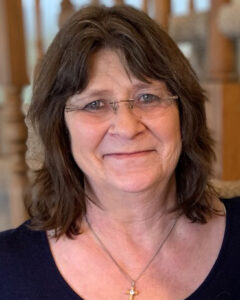
Linda Lou Zornes, age 64, a resident of Fort Scott, Kansas, went to be with the Lord, her Heavenly Father on Monday, March 22, 2021 at the Via Christi Emergency Department in Fort Scott, Kansas.
She was born November 11, 1956 in Iola, Kansas.
Linda graduated from Iola High School with the class of 1974. She had worked as an aide in the home health care field for many years.
Linda enjoyed gardening and tending to her flowers, this was her favorite summertime activity.
She enjoyed putting together puzzles and loved the companionship of her three dogs.
Linda always enjoyed going to garage sales, she stopped at everyone she could. She loved adding to her knick-knack collection as well.
She treasured the time she spent with her grandchildren and family. Her grandchildren were the light of her life.
Linda was a devout Christian and her faith was of the upmost importance to her. She loved sharing her love of Christ with others.
Linda was blessed with a large and loving family. She had eight children who will love her and miss her forever.
Linda is survived by her children, Tisha Crump, Mt. Washington, KY, Richard Springston, Melissa Springston, and Kenneth Springston, all of Fort Scott, Sarah Gilpin, Lenexa, KS, Kelsey Lampe, LaHarpe, KS, Sara Burris and Kaci Peres, Iola, KS.; two brothers, Terry Zornes, Iola, KS. and Tracy Zornes, Weatherford, TX., a sister Joyce Vest, Crawfordville, FL.
She was preceded in death by her parents, a sister, Karen Dible, and a brother, Larry Zornes.
There was cremation. A celebration of Life will be held at Fellowship Regional Church in Iola, KS. Friday, March 26th at 11:00 am.
Burial will take place at the Highland Cemetery in Iola. Local arrangements are being handled by the Cheney Witt Chapel, 201 S. Main St. Fort Scott, KS. 66701.
Next week’s Johnson & Johnson vaccines to be smaller than anticipated
TOPEKA – The Kansas Department of Health and Environment (KDHE) has learned that the number of Johnson & Johnson (Janssen) COVID-19 vaccines slated for delivery next week will be smaller than expected. Approximately 16,500 doses are scheduled to arrive next week, rather than the estimated 100,000 that had initially been indicated.
According to national reports, the full supply of vaccine expected from J&J has been delayed due to production issues and may not be ready to ship until the second or third week of April. In an attempt to boost the J&J supply, Merck – another international pharmaceutical company – has agreed to help manufacture J&J’s COVID-19 vaccine.
In addition to the J&J vaccine, Kansas is receiving an increase in Pfizer Prime doses 47,970 and 38,100 Pfizer Boost along with 27,800 Moderna Prime and 27,800 Moderna Boost.

HEERF funds cover fall 2021-summer 2022 fees
Fort Scott, KS. — Fort Scott Community College (FSCC) is pleased to announce a plan to utilize federal funding to assist in paying student fees for fall 2021 through summer 2022. Federal funding from the Higher Education Emergency Relief Fund (HEERF) will be utilized during the next academic year to pay general fees for all students. FSCC believes the plan will save students nearly two million dollars for the next academic year.
To take advantage of the opportunity to attend FSCC without paying general fees, visit the Fort Scott website at fortscott.edu to apply and enroll today. General fees are 55 dollars per credit hour and courses at all campus locations, including online and concurrent high school courses, will be covered. Some fees for specialty items, such as a cosmetology kit, are not eligible for this funding. Please contact the admissions office at [email protected] with any questions.
After Identifying Gaps in Previous Aid, USDA Announces ‘Pandemic Assistance for Producers’ to Distribute Resources More Equitably
USDA Reopens Program Sign-Up to a Larger Share of Producers with Plans to Expand Outreach and New Programming
Washington, D.C., March 24, 2021 – Agriculture Secretary Tom Vilsack announced today that USDA is establishing new programs and efforts to bring financial assistance to farmers, ranchers and producers who felt the impact of COVID-19 market disruptions. The new initiative—USDA Pandemic Assistance for Producers—will reach a broader set of producers than in previous COVID-19 aid programs. USDA is dedicating at least $6 billion toward the new programs. The Department will also develop rules for new programs that will put a greater emphasis on outreach to small and socially disadvantaged producers, specialty crop and organic producers, timber harvesters, as well as provide support for the food supply chain and producers of renewable fuel, among others. Existing programs like the Coronavirus Food Assistance Program (CFAP) will fall within the new initiative and, where statutory authority allows, will be refined to better address the needs of producers.
USDA Pandemic Assistance for Producers was needed, said Vilsack, after a review of previous COVID-19 assistance programs targeting farmers identified a number of gaps and disparities in how assistance was distributed as well as inadequate outreach to underserved producers and smaller and medium operations.
“The pandemic affected all of agriculture, but many farmers did not benefit from previous rounds of pandemic-related assistance. The Biden-Harris Administration is committed to helping as many producers as possible, as equitably as possible,” said Vilsack. “Our new USDA Pandemic Assistance for Producers initiative will help get financial assistance to a broader set of producers, including to socially disadvantaged communities, small and medium sized producers, and farmers and producers of less traditional crops.”
USDA will reopen sign-up for CFAP 2 for at least 60 days beginning on April 5, 2021. The USDA Farm Service Agency (FSA) has committed at least $2.5 million to improve outreach for CFAP 2 and will establish partnerships with organizations with strong connections to socially disadvantaged communities to ensure they are informed and aware of the application process.
The payments announced today (under Part 3, below) will go out under the existing CFAP rules; however, future opportunities for USDA Pandemic Assistance will be reviewed for verified need and during the rulemaking process, USDA will look to make eligibility more consistent with the Farm Bill. Moving forward, USDA Pandemic Assistance for Producers will utilize existing programs, such as the Local Agricultural Marketing Program, Farming Opportunities Training and Outreach, and Specialty Crop Block Grant Program, and others to enhance educational and market opportunities for agricultural producers.
USDA Pandemic Assistance for Producers – 4 Parts Announced Today
Part 1: Investing $6 Billion to Expand Help & Assistance to More Producers
USDA will dedicate at least $6 billion to develop a number of new programs or modify existing proposals using discretionary funding from the Consolidated Appropriations Act and other coronavirus funding that went unspent by the previous administration. Where rulemaking is required, it will commence this spring. These efforts will include assistance for:
Part 2: Adding $500 Million of New Funding to Existing Programs
USDA expects to begin investing approximately $500 million in expedited assistance through several existing programs this spring, with most by April 30. This new assistance includes:
Part 3: Carrying Out Formula Payments under CFAP 1, CFAP 2, CFAP AA
The Consolidated Appropriations Act, 2021, enacted December 2020 requires FSA to make certain payments to producers according to a mandated formula. USDA is now expediting these provisions because there is no discretion involved in interpreting such directives, they are self-enacting.
Part 4: Reopening CFAP 2 Sign-Up to Improve Access & Outreach to Underserved Producers
As noted above, USDA will re-open sign-up for of CFAP 2 for at least 60 days beginning on April 5, 2021.
Please stay tuned for additional information and announcements under the USDA Pandemic Assistance to Producers initiative, which will help to expand and more equitably distribute financial assistance to producers and farming operations during the COVID-19 national emergency. Please visit www.farmers.gov for more information on the details of today’s announcement.
USDA touches the lives of all Americans each day in so many positive ways. In the Biden-Harris administration, USDA is transforming America’s food system with a greater focus on more resilient local and regional food production, ensuring access to healthy and nutritious food in all communities, building new markets and streams of income for farmers and producers using climate-smart food and forestry practices, making historic investments in infrastructure and clean-energy capabilities in rural America, and committing to equity across the Department by removing systemic barriers and building a workforce more representative of America. To learn more, visit www.usda.gov.
USDA is an equal opportunity provider, employer, and lender.

Motorcyclists in the community will now have some help with repairs.
Jesse Hazen spent the last eight years working for Harley-Davidson Motorcycles as a research and development mechanic.

“Before that, I was a race mechanic for an amateur racer in Phoenix,” Jesse said.
He recently opened a new motorcycle service shop at 223 N. National and is the owner-operator.
Old 54 Cycles is a full-service shop.
“I am Harley-Davidson, Yamaha and Suzuki certified, but can work on it all,” he said. ” We work on American V-twins, import motorcycles, dirt bikes, ATVs, and side-by-sides. We are in the process of getting part supplies. We can do anything from tire changes, services all the way to full builds.”
“Quality work, growth, and exposure are our number-one priorities,” Jesse said.
Business hours are Monday through Friday, 9 a.m. to 6 p.m., Saturday from noon to 4 p.m. and closed on Sunday.

4-Minute Listen
Along with skepticism about the pandemic’s seriousness, some rural Americans aren’t interested in getting the COVID-19 vaccine.
As the massive coronavirus vaccination effort has gotten underway, we’ve talked a lot about vaccine hesitancy, people who do not plan to take the coronavirus vaccine. Roughly a quarter of both white and Black Americans don’t plan to get the vaccine, according to the latest NPR/PBS NewsHour/Marist survey. Thirty-seven percent of Latino respondents said they would not get the shot. White Republicans, though, are more vaccine-hesitant than any other group, with 49% of Republican men saying they do not plan on getting vaccinated. And rural residents were more likely to say that they don’t want the vaccine, too.
In the small town of Fort Scott, Kan., 1 in 11 people has been infected by the coronavirus. Even so, reporter Sarah Jane Tribble found some are still questioning how severe the virus really is.
SARAH JANE TRIBBLE, BYLINE: Seventy-year-old Linda Findley lives just outside of Fort Scott. She’s always been active in the community, helping with the Elks and fundraising. Like a lot of people here, she doesn’t think COVID-19 is that dangerous.
LINDA FINDLEY: I don’t even know what I think about it. I don’t know if I trust the testing if – because it’s so messed up or – I’ve had nieces and nephews that have it. I’ve lost good friends to it, or supposedly it’s to that. It seems like no matter what is…
TRIBBLE: Findley pauses to calm her two little dachshund dogs. They get excited when she’s on the phone.
FINDLEY: Everything seems to be coronavirus. I mean, it’s just – no matter what somebody has, it’s coronavirus. I don’t know whether it is or isn’t.
TRIBBLE: Her husband died about two years ago. Robert ran a popular auto body shop. He slipped on the ice and hit his head hard at the end of a workday. The emergency room, along with the hospital, had closed days before. Fort Scott is one of nearly 140 rural communities that have lost a hospital in the past decade. But not having a hospital doesn’t really come up when people here talk about COVID.
DAVE MARTIN: You know, when I got it, I was in good health, and it did take me a while to recover.
TRIBBLE: That’s Dave Martin. He’s the former city manager, and he’s pretty sure he caught COVID-19 at work last August.
MARTIN: I do remember waking up one of my bad nights and thinking – when I was running a temperature and not feeling very well. And I’m thinking, oh, wow, this could kill me – that I can get killed the next day, too. So it didn’t really stick with me.
TRIBBLE: After recovering, Martin went ahead with his retirement. He took his wife to Disney, and then they hiked Yellowstone. That casual disregard for the dangers of COVID worries health care leaders here.
Jason Wesco helps lead the regional clinic that took over primary care services when the hospital closed.
JASON WESCO: Me, my family – I think we are a significant minority. I think most people just keep doing – have maybe modified a little bit. Maybe they put on a mask in public. But I – the way I see it is I think life here has changed a lot less than it’s changed in D.C. And I think we’re seeing the impact of that, right?
TRIBBLE: Like much of rural America, the coronavirus skipped over Fort Scott last spring. But the pandemic hit hard in the fall, peaking in December. Across the county, two dozen have died from COVID, and most people know someone who had the virus and survived. But residents just seem tired of talking about it. And Findley says she won’t get the vaccine.
FINDLEY: How did they come up with a vaccine that quickly? And how do they even know for sure that it’s working?
TRIBBLE: The three vaccines approved by federal regulators in the U.S. are being given out to millions, and their efficacy has been shown through massive clinical trials in the U.S. and globally. But Linda’s skepticism isn’t unusual in southeastern Kansas, and that also concerns health leaders like Wesco of the Community Health Center.
WESCO: Yeah, I mean, yeah, there’s hesitancy. I’m sensing that it’s less. But I guess my point is when directly provided the opportunity to get it, it’s probably a different discussion when the vaccine is widely available.
TRIBBLE: Wesco says he’s hopeful attitudes are changing. His clinic has a waitlist for vaccines and is giving out as many doses as they can get their hands on.
I’m Sarah Jane Tribble.
GARCIA-NAVARRO: That reporting came from NPR’s partnership with Kaiser Health News.
Copyright © 2021 NPR. All rights reserved. Visit our website terms of use and permissions pages at www.npr.org for further information.
NPR transcripts are created on a rush deadline by Verb8tm, Inc., an NPR contractor, and produced using a proprietary transcription process developed with NPR. This text may not be in its final form and may be updated or revised in the future. Accuracy and availability may vary. The authoritative record of NPR’s programming is the audio record.
By subscribing, you agree to NPR’s terms of use and privacy policy. NPR may share your name and email address with your NPR station. See Details. This site is protected by reCAPTCHA and the Google Privacy Policy and Terms of Service apply

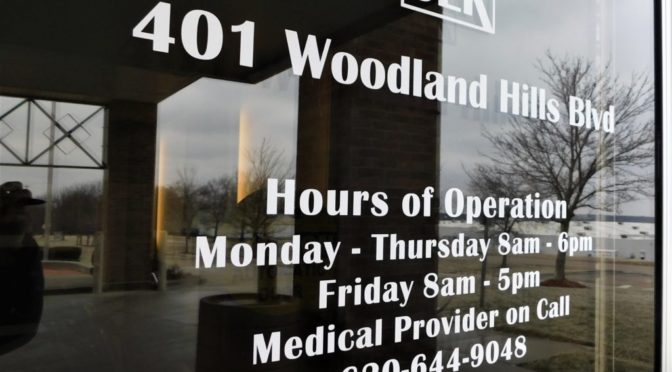
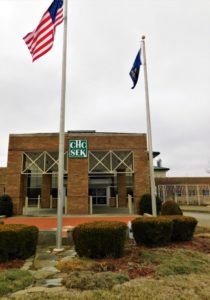
Community Health Center of Southeast Kansas/Fort Scott will be vaccinating against COVID-19 using Moderna vaccine on Saturday, March 27 at the 401 Woodland Hills Blvd. clinic. All vaccinations are by appointment.
Individuals age 18 and older qualifying under KS Phase 3-4 include persons with conditions that increase the risk for severe illness from COVID-19, including: Cancer; Down Syndrome; heart conditions; Type 1 & 2 diabetes; Pregnancy; Asthma; Cystic fibrosis; Liver disease; Neurological conditions like dementia; and other medical risks. Non-health care workers in critical infrastructure who cannot work remotely, including: Agricultural and food workers not included in previous phases; workers performing in-person activities indoors; Utility workers; Social service and government workers not included in previous phases; Logistics workers, such as truck transportation workers and couriers; Water and wastewater workers; Shelter, housing, and finance workers; information technology and communication workers. Persons from previous phases are also eligible to be vaccinated.
Request an appointment by clicking the get-my-shot button at www.chcsek.org, or by calling 866.888.8650.
COVID-19 vaccines are safe and effective in reducing sickness and death from the virus. It is up to each of us to do our part to get life back to normal, schedule your COVID-19 vaccination today with CHC/SEK.