The Fort Scott Police Department Daily Reports April 28

Swim Pass Applications Due April 30
Bourbon County Coalition Applications for the 2021 Family Pass to the Fort Scott Aquatic Center are due at Buck Run by the end of the day Friday, April 30.
Application forms are available at Buck Run and The Beacon.
Republicans Meet May 13
The Bourbon County Republicans will meet THURSDAY, MAY 13, 2021 6 PM, at the EMPRESS EVENT CENTER, 7 N MAIN, FT SCOTT, KS.
All Republicans & Independents are cordially invited.
Submitted by Deb Martin, Correspondence Secretary
620-224-6846
The Fort Scott Police Department Daily Reports Apricl 25-27
Chamber Coffee April 29 at Papa Don’s
|
|




|
|

|
|
|
|
|
|

Thriving Families, Safer Children: Kansas Special Mentoring Project
Governor Kelly Announces Kansas Chosen for Special Mentoring Project
~ Thriving Families, Safer Children project seeks to create strong families and communities where children are free from harm ~
TOPEKA – Today, Governor Laura Kelly announced Kansas is one of twelve jurisdictions chosen for a special mentoring project through the Administration for Children and Families called Thriving Families, Safer Children. Designed to leverage various stakeholders to steward longstanding, transformative change, Kansas’ partnership with Thriving Families, Safer Children will create the conditions for strong, prosperous communities where children are free from harm.
“I am pleased to see Kansas has been selected as a Thriving Families, Safer Children jurisdiction,” said Governor Laura Kelly. “The safety and well-being of Kansas’ children is my top priority, and since 2018, we have made needed progress and investments to focus on early prevention and intervention. Through our participation in this project, we will be able to reshape child welfare in Kansas for the betterment of all children and families.”
Kansas was selected to participate in the Thriving Families, Safer Children program because of the Kelly administration’s ongoing commitment to creating safer, more nurturing environments for children in Kansas.
The team overseeing the Thriving Families, Safer Children project will involve the Kansas Department for Children and Families, Kansas Children’s Service League and the Kansas Children’s Cabinet and Trust fund to improve primary prevention efforts. This team will address longstanding challenges to:
- Address the systemic barriers to creating a child well-being system in Kansas,
- Develop robust networks of community based primary prevention support,
- Integrate family, youth and community expertise into child well-being systems,
- And revise statutory definitions of neglect and mandatory reporting to clearly differentiate maltreatment from poverty.
“The Department for Children and Families is excited about the opportunity to leverage the Thriving Families, Safer Children project to improve our work,” said Secretary of DCF Laura Howard. “This project is a continuation of Governor Kelly’s commitment to improve the lives of Kansas’ future leaders and will be instrumental in improving our state’s primary prevention efforts and keeping children in their homes safely.”
“We are excited for this opportunity to collaborate with these national and state partners to reimagine and recreate our child welfare system into one that achieves the outcomes we all want to see: thriving children, families, and communities,” said Melissa Rooker, executive director of the Children’s Cabinet, which will help lead this effort in Kansas.
Kansas has been selected as a Round Two jurisdiction to develop strategies to transform existing child welfare systems and build infrastructure to support and strengthen child and family well-being. Round Two jurisdictions will specifically provide support for the integration of community, family, and youth expertise in creating the foundation for strong child and family well-being systems by welcoming and harnessing community, family, and youth voices, conducting policy analysis and drafting new policy or legislation, strategic consultation on approaches for human services delivery system integration, expert technical assistance on data infrastructure and other specific assistance.
About Thriving Families, Safer Children:
The United States Children’s Bureau (CB), Casey Family Programs (CFP), the Annie E. Casey Foundation (AECF) and Prevent Child Abuse America (PCA) (“National Partners”) have joined together with parents, youth and community organizations in partnership across the public, private, and philanthropic sectors to assist Thriving Families, Safer Children jurisdictions in creating a more just and equitable child and family well-being system that benefits all children and families and breaks harmful intergenerational cycles of trauma and poverty.
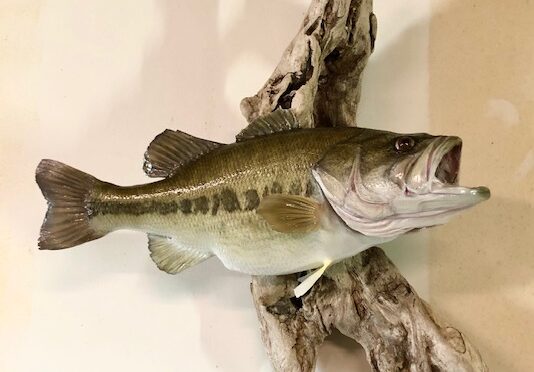
Tiger Replica Fish Mounts: A Passion for Art and Fish
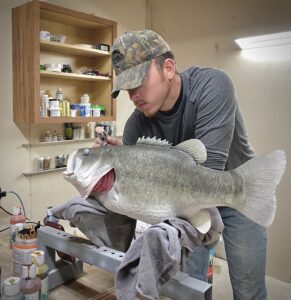
Tyler Davidson, also known as Tiger, is a fisherman and an artist.
He began his business Tiger Replica Fish Mounts, three years ago.
“I have been an avid angler and artist for most of my life and I’ve always had an interest in preserving the beauty of these fish,” he said. “I started this adventure with the thought of combining my extensive knowledge of fish coloration, their anatomy and my passion for art.”
“I’m really passionate about putting all of the detail in these fish,” Davidson said. “I definitely don’t mass produce them. Each one is special. My favorite part of the process is handing over the fish, or getting photos of the fish on the wall from a happy customer.”
“So far it’s worked out great!” Davidson said. “I have customers from all over the United States coming to me.”
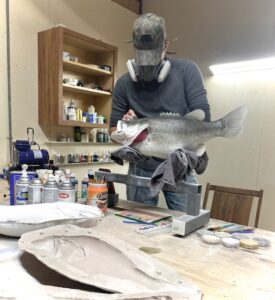
“My mission is to provide customers with the highest quality fish mounts available,” he said. “I strive to create highly realistic one-of-a-kind replicas that match every last detail of your trophy.”
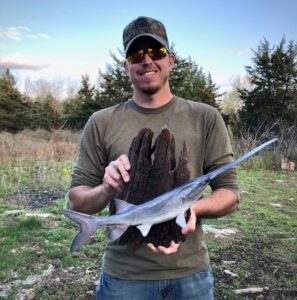
His business is located in Bronson, in the western part of Bourbon County.
“I do not allow public visits to my shop as it is on the same property as my home,” he said. “Customers need to call and arrange pick-up. My plan, for now, is to gain recognition and further construct my shop into a more efficient fish studio. In the future, I’d like to have a more public studio with a display room.”
Davidson’s contact info: (785)521-5192 or
Facebook page: TigerReplicaFishMounts or
Instagram: Tigerfishmounts
His starting cost is $20 per linear inch, he said.
The Bourbon County Sheriff’s Office Daily Reports April 28

Kansas Youth Community Change Conference June 1-15


Protect Kids From Heatstroke
|
|
|

|
|
|
|
|
|
|
|
|
|

Planning on canning?

Family and Consumer Science Extension Agent
Adult Development and Aging
Family Resource Management
K-State Research and Extension
Southwind Extension District
210 S. National
Fort Scott, KS 66701
Office: 620-223-3720
Fax: 620-223-0332
[email protected]
Prep now for safely preserving garden foods.
Gardeners are making their plans, and in some areas, vegetables and other foods are already being planted. That is a sign that food preservation season is not far away and now is the time to check canning equipment and make repairs needed or replace worn items.
Examine jars and take damaged ones out of your canning supply. It is also recommended that you have your dial gauge pressure canner checked to make sure it is working properly. This service is free at Extension offices, just drop off the gauge and lid.
Following recipes and directions will help insure a safely canned food. And don’t forget to adjust your processing for your location’s elevation. Sources for recipes include the So Easy to Preserve by University of Georgia Cooperative Extension or Blue Ball/ Kerr. K-State Research and Extension along with other State Cooperative Extension websites will have recipes and resources, too.
What else? Learn how canners work with your stovetop. Some canners should not be used on flat, glass stovetops. Always follow the canner and stove manufacturer’s directions. Each year there is a new trendy way to preserve food in jars but have NOT been validated with research. These include oven, microwave, and electric pressure cookers.
Take the time to get educated and practice with jars filled with water as a substitute, this will help guide you to making safe food and reducing waste. K-State Research and Extension has how-to videos and publications on food preservation and canning available online and a bimonthly newsletter called Preserve It Fresh Preserve It Safe to keep you up to date. To learn more and for publications visit our website at southwind.ksu.edu/food_preservation/food preservation.html
For more information, contact Joy Miller at [email protected] or by calling 620.223.3720