|
|
||||||||||
|

|

|
|
|
|

|
|
|
|
|
|
|
|
|
|
|
|
||||||||||
|
|
|
|
|
|
|
|
|
|
|
|
|
|
|
|
~April receipts show $91.3 million more than estimated~
TOPEKA – Today, Governor Laura Kelly announced Kansas saw a $91.3 million, or 10.2%, growth over the estimated tax receipt with $982.4 million in total tax collections during the month of April. That is $404.3 million, or 69.9%, better than last year. This increase is due, in part, to businesses having opened back up compared to the same month last year.
“Our April tax collection numbers are encouraging, but we must maintain fiscally-responsible policies as we continue to recover from COVID-19 to ensure our continued growth,” said Governor Laura Kelly.
With federal stimulus money, federal tax refunds, and state tax refunds getting into the pockets of Kansans, retail sales and compensating use tax collections were more than the estimate. Retail sales tax collections were $236.5 million; a 9.5%, or $20.5 million, growth from the estimate. Compensating use tax collections were $59.2 million; up $13.3 million, or 29.0%, for the month.
In addition to changing consumer purchasing patterns, another contributing factor to the increase in compensating use tax collections is the fact that more out-of-state businesses are registering with the state to collect and remit taxes that are due and owing.
Individual income tax collections are $26.5 million, or 5.8%, more than the estimate with $487.3 million collected. Corporate income tax collections were $152.8 million; a 23.9%, or $29.4 million growth from the estimate.
To view a complete breakdown of April tax receipts, click here.
Cognition and Swallowing Among the Common Challenges Persisting for Many Americans After COVID-19
Speech-Language Pathologists Can Help Patients Regain Health and Quality of Life, NRMC Expert Stresses During Better Hearing & Speech Month
With an estimated 10 to 30% of COVID-19 survivors experiencing “long-haul” symptoms including brain fog and swallowing difficulties, Nevada Regional Medical Center speech-language pathologist Andrea Wydick is encouraging the public to seek care from qualified experts who can help them regain their functioning and quality of life. Wydick is sharing this message in recognition of May being national Better Hearing & Speech Month (BHSM).
“The pandemic has posed so many challenges to us all as a society, but one of the persisting and most vexing ones right now is the daunting set of difficulties many people are having for months after contracting COVID-19,” said Wydick. “From brain fog, to difficulty eating and drinking, to speech and language problems, these can affect return to work, the ability to take care of one’s family, and overall recovery. Many people don’t know about the services of speech-language pathologists—professionals trained in these areas who can make a huge difference for these people. This is an important time for us to spread the word: Help is available.”
How They Help
Speech-language pathologists (SLPs) can help people with, or recovering from, COVID-19 who are having short- and longer-term difficulties in the following areas:
• Cognition
Many COVID-19 “long-haulers” are reporting persistent brain fog as a debilitating symptom after their bout with the virus. This can prevent a return to work and impact their ability to tend to family responsibilities. SLPs can work with individuals to improve their memory, attention, organization and planning, problem solving, learning, and social communication—such as re-learning conversational rules or understanding the intent behind a message or behind nonverbal cues. The focus is on the person’s specific challenges as well as regaining the skills that are most important to their daily life and priorities.
• Swallowing
People diagnosed with COVID-19 may experience swallowing problems that can put them at risk for choking or aspirating, which is when food goes into the lungs instead of the stomach. This may be the result of time spent on a ventilator, or it may be another side effect of the virus. SLPs use different types of tests to determine what happens when a person swallows and how the related muscles are working—helping a patient’s medical team, including the SLP, decide on the best course of action with the patient and their family. SLPs may recommend modified textures of food and drink for patients; therapy exercises to strengthen the tongue, lips, and muscles in the mouth and throat; and strategies to make eating and drinking safer, such as modifying the pace of chewing/eating, size of food, and more.
• Communication
People diagnosed with COVID-19 are also experiencing speech and language difficulties. Some, such as those who spent a significant amount of time on a ventilator or experienced low oxygen to the brain, may have muscle weakness or reduced coordination in the muscles of the face, lips, tongue, and throat—making it difficult to talk. Others, particularly those who experienced a COVID-related stroke, may experience a language disorder called aphasia—which makes it hard for someone to understand, speak, read, or write. SLPs work with patients through targeted therapy to improve their communication and understanding.
People who have severe speech and/or language difficulties may need to find other ways to answer questions or tell people what they want, such as through gesturing with their hands, pointing to letters or pictures on a paper or board, or using a computer. These are all forms of augmentative and alternative communication (AAC). SLPs help find the appropriate AAC method to meet an individual’s needs.
Where to Find Care
SLPs work in settings that include hospitals, long- and short-term care facilities, private practices, and patients’ homes. Many SLPs are also providing their services via telehealth at this time. If you or a loved one are experiencing communication challenges, Wydick recommends letting your doctor know.
For more information, Vernon County and area residents can contact NRMC Performance Therapy at 417-448-3790, or visit www.asha.org/public.
###
About Nevada Regional Medical Center
Serving a six-county area since 1937, Nevada Regional Medical Center is a 71-bed acute, intensive and skilled care hospital. Nevada Regional Medical Center has earned recognition as a respected regional medical center for its comprehensive health care services, skilled and caring employees and state-of-the-art medical technology. Staff represent more than a dozen medical specialties, including family practice, women’s services, neurology, urology, psychiatry, orthopedics, wound care services, and general, vascular, thoracic and oncological surgery. Additionally, consultation clinics are held regularly by specialists in oncology, pulmonology, podiatry, ear, nose, and throat and cardiology.
~Revitalization Fund Grants will boost hospitality industry and aid continued economic recovery~
TOPEKA – Governor Laura Kelly today urged Kansas restaurants and eligible businesses in the hospitality industry to apply for federal funding through the Small Business Administration’s (SBA) Restaurant Revitalization Fund (RRF). Registration for the RRF began on Friday, April 30, 2021, at 8 AM CT and applications will open on Monday, May 3, 2021, at 11 AM CT.
“These RRF grants will boost our hospitality industry and aid our continued economic recovery as we get our state back to normal,” said Governor Laura Kelly. “I strongly encourage all eligible businesses to apply for this program and thank the SBA for their partnership to provide relief for Kansas businesses.”
The SBA will be co-hosting a webinar for Kansas businesses with the Governor’s Office of Recovery, the Kansas Department of Commerce and the Kansas Department of Agriculture on Wednesday, May 5 at 9 AM CT. Learn more about the webinar at https://covid.ks.gov/rrf/.
“Restaurants are vital to our state’s hospitality sector, and this program exists solely to help them,” Lieutenant Governor and Commerce Secretary David Toland said. “Hospitality businesses have been incredibly resilient through this historic and unprecedented challenge, and restaurants have had to be creative to get through the storm. This program is a lifeline for them, and I would encourage all Kansas restaurant owners who need help to take full advantage.”
The American Rescue Plan Act established the Restaurant Revitalization Fund (RRF) to provide funding to help restaurants and other eligible businesses keep their doors open. This program will provide restaurants with funding equal to their pandemic-related revenue loss, up to $10 million per business and no more than $5 million per physical location. Recipients are not required to repay the funding as long as funds are used for eligible uses no later than March 11, 2023.
Entities eligible for the RRF include:
“Restaurants and the food service industry are critical to the economic wellbeing of our communities,” said Michael Barrera, District Director, SBA-KC District. “Restaurants are gathering places for our cities and towns and are where many milestones and everyday conversations take place in our lives. The RRF will help keep these ‘centers of influence’ going and we here at the SBA look forward to working with our Kansas partners to make this program a Kansas success!”
“The RRF provides critical support to restaurants, food trucks, small caterers, coffee shops and other food service companies hit hard by the pandemic,” said Wayne Bell, District Director, SBA-Wichita District. “We want Kansas small businesses to be fully prepared for this opportunity.”
“As we look toward the future, it is crucial that we support the restaurant industry in every way we can,” said Ryan Wills, Kansas Department of Commerce Hospitality Industry Liaison. “Food service organizations provide nourishment to our community not just through food, but also through fellowship. They are essential to our economic vitality, and the Department of Commerce is looking forward to the RRF providing much needed relief to businesses across our great state.”
Learn more about the RRF and apply at https://www.sba.gov/funding-programs/loans/covid-19-relief-options/restaurant-revitalization-fund.
Chamber Coffee hosted by Nu Grille announcing celebrating 15 year anniversary!
The Fort Scott Area Chamber of Commerce invites members and guests to a Chamber Coffee hosted by Nu Grille, Thursday, May 6th at 8 a.m. located at 24 N. National Ave. to announce their 15 year Anniversary at their current location.
John and Cindy Bowman want to invite everyone to join them to celebrate their family business that has been running strong for 75 years, and 15 years of that is at the location they are now serving the community and travelers. Coffee, biscuits and gravy and cinnamon rolls, will be served and a drawing.
Chamber members and guests are invited to Chamber Coffee events each Thursday at 8 a.m. to network, make announcements, hear about happenings in the community as well as learn about the host business or organization.
***
|
Continue reading U.S. Senator Jerry Moran’s Weekly Newsletter
The Fort Scott Hurricanes Swim Team will be having their pre-season parents meeting and registration on Wednesday, May 5th at 6:00 pm at Buck Run Community Center.
The Hurricanes are a competitive summer swim team for kids ages 6U-18.
Swimmers need to be able to swim one length of the pool , 25 yards, of any stroke unassisted in order to participate.
The Hurricanes practice in the mornings, Monday through Friday starting June 1st-August 6th.
Swim meets are on Wednesday nights and on the weekend.
Please attend the meeting to learn more and to register your swimmers.
If you are unable to attend you can contact team President April Stock though the Fort Scott Hurricanes Swim Team Facebook page
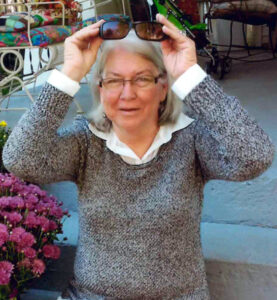
Jessie Leona Hicks, age 74, resident of Ft. Scott, KS, died Sunday, May 2, 2021, at her home. She was born May 11, 1946, in Lebanon, MO, the daughter of Alexander Lee Williams and Jewel Lonnie Sherrer Williams. Besides raising her family, Jessie managed multiple rental properties. She enjoyed gardening, sewing, fishing, and shopping. She loved spending time with her family, especially her grandchildren.
Survivors include her husband Larry of the home; 5 sons, Eddie Piatt and wife Glenda, Nevada, MO, Michael Piatt, Lenexa, KS, Donald Piatt and wife Heather, Reno, NV, Troy Piatt and wife Tonya, Ft. Scott, and Nathan Hicks and wife Latisha, Ft. Scott; 2 daughters, Julie Tavis and husband David, Jasper, MO, and Joie Moore, Ft. Scott; 3 brothers, John, Joe, and Jeff Williams; 2 sisters, Janet Jackson-Materanek, and Pat Nance; and numerous grandchildren and great grandchildren. She was preceded in death by 2 brothers, Jerry and James Williams; a sister, June Loomis, a great grandson, Canaan Rons; and her parents.
Rev. Kevin Moyers will conduct funeral services at 1:00 PM Thursday, May 6th at the Cheney Witt Chapel. Burial will follow in the Evergreen Cemetery. The family will receive friends from 12:00 Noon until 1:00 Thursday at the funeral home. Memorials are suggested the American Kidney Fund and may be left in care of the Cheney Witt Chapel, PO Box 347, 201 S. Main St., Ft. Scott, KS 66701. Words of remembrance may be submitted to the online guestbook at cheneywitt.com.