Bourbon County Sees Increase in Criminal Drug Activities: New Drug Control Positions Created

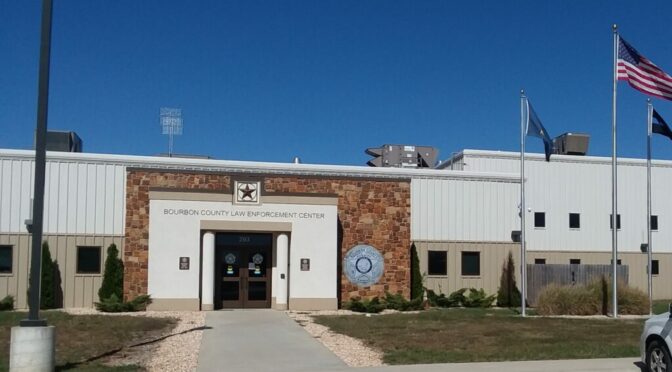
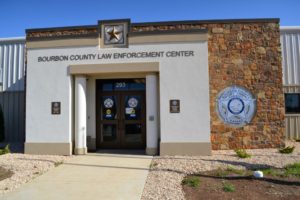
The Bourbon County Law Enforcement Center.

The Bourbon County Sheriff’s Office is the recipient of a grant to assist local and area law enforcement agencies in controlling criminal drug activities, which have increased.

On September 30, 2021, the Kansas Criminal Justice Coordinating Council reviewed 45 grant applications that were requesting money to either start, support, or maintain current law enforcement services, Bourbon County Sheriff Bill Martin said.

“This was a very competitive process where some entities and agencies were not awarded their requested grant,” Martin said.

“We requested $123,040 but was awarded $113,292,” he said.

“The newly created position will assist local and area law enforcement agencies in criminal drug activities (cases),” he said.

“The Bourbon County Sheriff’s Office is excited and very grateful in receiving this grant and we hope to have the drug deputies in place by December of this year,” Martin said.

“Deputies interested in applying for the position will have to submit a resume and … go in front of oral interview board that will consist of local representatives and area sheriffs,” Martin said.

The sheriff currently has nine road deputies that work 12-hour shifts, and one School Resource Officer.  They cover the 642 square miles of Bourbon County.

This grant created two more positions, Martin said.

Illegal drug activity has increased significantly.

There is a need for more help with illegal drug activity law enforcement in Bourbon County, Martin said.

“Drug cases have doubled from 56 total cases in 2018 to 110 cases in 2019,” Martin said.

“The number of controlled narcotic pills seized has already risen from 60 dosage units in 2019 to 343 dosage units in 2020.”

This is an increase of over five-fold.

“Oxycodone, oxycontin, hydrocodone, and fentanyl being the biggest narcotic drug that law enforcement is dealing with nationwide,” Martin said.  “Make sure you hide the (prescription) medication (you take) or keep it with you.”

“In 2019, 10.67 ounces meth was seized; in 2020 10.74 ounces of meth was seized, and 38.7 ounces was seized in the first half of this year,” he said.  This is three times the number of the total of last year.

“In 2019, of heroin, .16 ounces were recovered.  In 2020, 4.5 grams of heroin was recovered,” Martin said.

That is four times as numerous as the previous year.

About the KCJCC Grant

Governor Laura Kelly, on behalf of the KCJCC, announced on October 21 that more than $2 million will be awarded as part of the 2022 grant awards for the Federal Edward Byrne Memorial Justice Assistance Grant (JAG) Program.

The KCJCC oversees the criminal justice federal funding made available to Kansas through the U.S. Department of Justice, Office of Justice Programs, Bureau of Justice  Assistance.

The U.S. Department of Justice is committed to advancing work that promotes civil rights,  increases access to justice, supports crime victims, protects the public from crime and evolving threats, and builds trust between law enforcement and the community.

Specifically,  JAG awards are made to local, state, and nonprofit agencies to fund prevention activities; equipment and technology needs; and programs designed to reduce crime, decrease recidivism rates, and provide crime victim services.

A total of $2,396,959 was awarded to 25 agencies, according to the press release.

KCJCC Members:
Derek Schmidt, Attorney General, Chair
Clay Britton, Vice-Chair  (Governor’s Designee)
Justice Caleb Stegall, (Chief Justice Designee)
Jeff Zmuda, Acting Secretary of Kansas Department of Corrections
Herman Jones, Superintendent of the Kansas Highway Patrol
Kirk Thompson, Director of the Kansas Bureau of Investigation
Governor Announces Cybersecurity Task Force Recommendations

TOPEKA – Governor Laura Kelly announced today that the interim report from the Cybersecurity Task Force has been released with an initial set of recommendations.

“These recommendations will help secure our data, strengthen our digital infrastructure, and grow our cybersecurity workforce – all while protecting Kansans’ privacy,” said Governor Laura Kelly. “I want to thank the Cybersecurity Task Force for their hard work creating this report – I look forward to seeing the final recommendations this December.”

On July 13, 2021, Governor Kelly signed Executive Order No. 21-25, establishing the Governor’s Cybersecurity Task Force to protect Kansas’s digital infrastructure. Comprised of bipartisan members from across Kansas in both the public and private sectors, the Task Force has spent the last three months meeting with stakeholders and subject matter experts to collect input for recommendations that will improve the cybersecurity posture for the State of Kansas.

The Task Force is comprised of four subcommittees: Statewide Coordination and Collaboration, Workforce Development and Education, Cyber Incident and Disruption Response, and Strategic Vision and Planning.

Under the leadership of co-chairs Mike Mayta and Jeff Maxon, the Task Force met bi-weekly with subcommittees meeting on alternate weeks.

“Thank you to everyone who played a role in putting this interim report together. To the many associations, educational institutions, and our State and Federal partners who took time to meet with us, your input and ideas provided the framework for many of these recommendations. Without your engagement, this would not have been possible,” said co-chairs Mike Mayta and Jeff Maxon. “Organizations across Kansas are doing the hard work to protect their data, educate their employees and the public, and develop a robust cybersecurity workforce. Through these recommendations, we hope to leverage and build upon their success and see it come together in a more whole-of-state approach.”

The Task Force submitted its interim report to the Governor on October 5, 2021, with 45 recommendations for how entities from state and local government, education, the private sector, and other critical infrastructure sectors can address cybersecurity challenges from a whole-of-state approach. Recommendations include cybersecurity training, partnerships to support workforce development and cyber response, as well as education.

The Task Force and its subcommittees will continue to convene throughout the fall as they prepare their next report due in early December. The second report will include new recommendations while further developing some of the recommendations included in the interim report.

Members of the public can read the full report here and submit any feedback to [email protected].

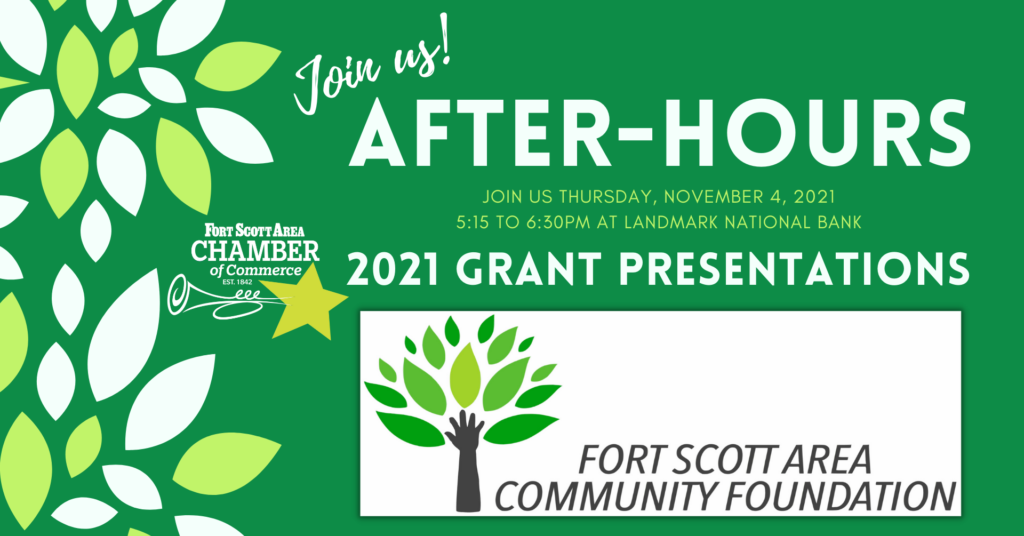
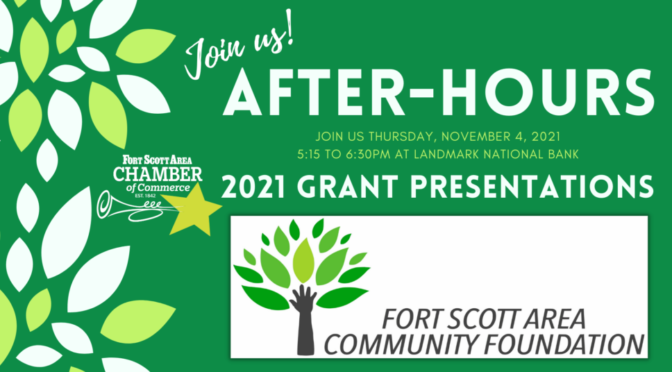
Chamber After-Hours on Nov. 4 at Landmark Bank

Chamber After-hours hosted by the Fort Scott Area Community Foundation

The Fort Scott Area Chamber of Commerce announces an After-hours event hosted by the Fort Scott Area Community Foundation will take place Thursday, November 4, 2021 from 5:15 to 6:30pm at Landmark National Bank, 200 S. Main Street.

The mission of the Community Foundation is to “Honor the Past, Impact the Future” by creating a giving and granting environment which addresses the immediate and long-term charitable needs of our community. The After-hours event will feature grant presentations to the 2021 award recipients. Light refreshments will be served.

Any individual or organization can donate to the foundation in the form of monetary gifts, transfer of real estate, investments, or a memorial. Contributions are placed in an endowed fund which is a permanent pool of resources of which only the interest is used in granting each year. The goal of the endowed funds is to exist in perpetuity so that the needs of the greater Bourbon County area are met both now and in the future.

Contact Community Foundation Chairman Carla Farmer at 620-224-6500 or the Chamber at 620-223-3566 for more information.

Ratepayers Pay More For Heating Because of Natural Disasters and Exporting of U.S. Energy

Ratepayers can expect to pay more for heat
this winter and how to minimize the impact

TOPEKA – Kansans have heard the warnings that energy costs are on the rise. As a result, consumers have questions and some may need assistance to keep pace with the higher costs. The Kansas Corporation Commission (KCC) has launched an online resource to explain the reasons prices are escalating, help consumers minimize the impact, and find financial and weatherization assistance.

Topics covered include tips to reduce energy use, assistance programs available throughout the state, information on the Cold Weather Rule, steps to take if you receive a disconnection notice and who to call for help with utility issues.

The KCC regulates investor-owned utilities in the state; however, the agency does not set fuel prices. The price for natural gas, the predominant heating source used by Kansans, was deregulated by the U.S Congress in the mid 1980’s. As a result, prices are driven by the market. The cost utilities pay for natural gas is a direct pass through to its customers.

More information is available on the KCC’s website at https://kcc.ks.gov/kcc-consumer-alert.

Why are energy costs going up?

First, it is important to note that the U.S. Congress deregulated
natural gas prices in the mid 1980’s.

As a result, prices are driven by the market. The cost utilities pay for energy is a direct pass-through to its customers. Utilities do negotiate contracts with their suppliers and utilize hedging and storage to help manage costs, but overall, supply and demand play a huge role in market prices.

Natural gas storage levels have been below five-year average levels all summer and that continues. Coming out of Winter Storm Uri in February 2021, the nation’s storage levels for natural gas were significantly depleted.

This storage has been slow to  refill for a variety of reasons:

1. Natural gas is used as a fuel for electric generation. Demand has been higher than average  due to heat waves in the west and southern parts of the U.S. Plus, there was a need to replace
hydroelectric production in the west due to record drought.

2. Energy shortages in Europe and Asia are fueling exports, which displaces production that might otherwise go to domestic storage and other uses.

3. Domestic production of natural gas has declined recently as offshore natural gas wells were disrupted from Hurricane Ida and extremely low energy prices during the pandemic caused shutdowns in domestic oil and gas wells.

4. U.S. producers are exporting record amounts of natural gas to Mexico, up 25% from a year earlier and 44% more than the previous five-year average.

Yet another factor that could affect supply is the arrival of winter weather, which will increase demand and lead to higher prices. How much will vary depending on where you live.

“High demand + lower than average supplies and storage = higher than expected prices


Flags At Half-Staff For Rep. Jennings

Governor Laura Kelly Directs Flags be Flown at Half-Staff in Honor of Kansas Representative Russ Jennings

TOPEKA – In accordance with Executive Order #20-30, Governor Laura Kelly has directed flags be lowered to half-staff on all state buildings, grounds, and facilities effective immediately until sundown on Sunday, October 31, in honor of Kansas Representative Russ Jennings. Jennings, Lakin, has represented Kansas House District 122 since 2013.

“I was deeply saddened to hear of the passing of Representative Russ Jennings. Russ and I shared a commitment to reforming the Kansas criminal justice system, particularly our juvenile justice system,” Governor Kelly said. “His commitment to public service, his mastery of the subject matter, and his boundless tenacity made him a natural leader, well-respected by his colleagues and his constituents. I will miss him, and I know others in the State Capitol and throughout his district will too. I offer my sincerest condolences to his wife, Judy, their children and all who knew and loved him.”

Prior to being elected to the Kansas House of Representatives, Representative Jennings served as a deputy sheriff in Kearny County, director of the Southwest Kansas Regional Juvenile Detention Center, a district magistrate judge and as a member of Kansas Juvenile Justice Authority.

To receive email alerts when the governor orders flags to half-staff, please visit https://governor.kansas.gov/newsroom/kansas-flag-honors.

Bourbon County Fair Association Received Heartland Grant

Heartland Rural Electric Cooperative, Inc. has announced the recipients of its 2021 Concern for Community grants.
“We had a great group of applicants this year and we’re excited to be able to support nine projects,” said Doug Graham, communication specialist.
The recipients are listed in alphabetical order below. Please see the attached press release for more information, and feel free to reach out if you have any questions.
  • Bourbon County Fair Association will receive $5,000 for a new furnace and roof repairs at the 4-H building in Fort Scott.   
  • Castaways Animal Shelter & Sanctuary east of Chanute will receive $200 for equipment to furnish its animal boarding area. 
  • The Learning Center, an alternative school program operated by Interlocal 637 and located in Girard, will receive $5,000 for a soft pour playground surface to help complete their playground renovation project. 
  • The Learning Tree Institute at Greenbush will receive $4,963 to build a ramp and pathways in the education service center’s simulated rainforest to make the environment and learning stations accessible to people of all abilities. 
  • Library District #2 of Linn County will receive $5,000 for a memory lab at the La Cygne library. The memory lab will include equipment for creating digital copies of physical media such as photos, VHS tapes, cassettes, and more.   
  • Neosho County Fair Association will receive $5,000 to go toward construction of a new rodeo arena at the Neosho County fairgrounds. 
  • Saint Paul Mission Township Fire Department Auxiliary, Inc., will receive $5,000 to purchase handheld radios to complete the fire department’s communications upgrades. 
  • Tri-Valley Developmental Services, Inc., will receive $1,300 for an automated external defibrillator at its Chanute service center.
  • Wesley United Methodist Church Iola will receive $5,000 to go toward construction of transitional housing for Allen County residents in need. 

Drive-Through Flu Clinic Oct. 28

Rebecca Johnson, SEKMCHD Director.

Tomorrow, October 28, 2021, from 11 am-1 pm
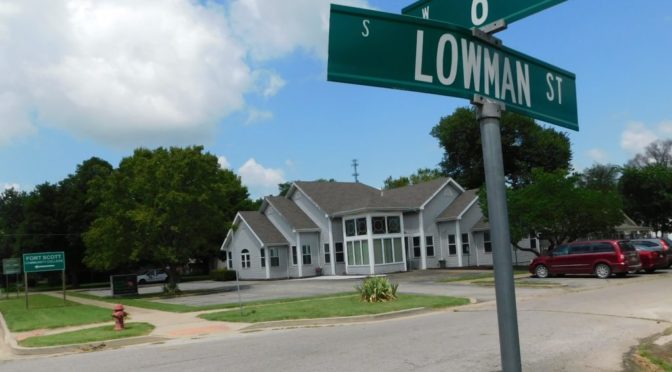
the Bourbon County Health Dept. at 524 S Lowman St.
Fort Scott will have a flu drive-through clinic.

“We are having a drive-through flu clinic at our Ft. Scott office tomorrow,” Rebecca Johnson, SEK Multi-County Health Department Administrator said. “Please bring your insurance card with you & we will bill your insurance. We accept Medicare Part B, Medicaid, BCBS, United Health Care and Cigna. Sorry, but we do not accept Railroad Medicare. Or cash fee is $50 low dose or $90 high dose.”

The clinic will be at 524 S. Lowman, Ft. Scott, KS 66701

SEK MULTI COUNTY HEALTH DEPARTMENT, Fort Scott’s phone number is  620-223-4464.

Third Street Underpass will Close at Clark Street on Nov. 1

CITY OF FORT SCOTT NEWS RELEASE

October 27th, 2021

The City of Fort Scott Wastewater Department will be closing the 3rd Street underpass at Clark Street on Monday, November 1st, 2021 from 8:30 a.m. until 2:00 pm. Local traffic should avoid this area during this time frame.

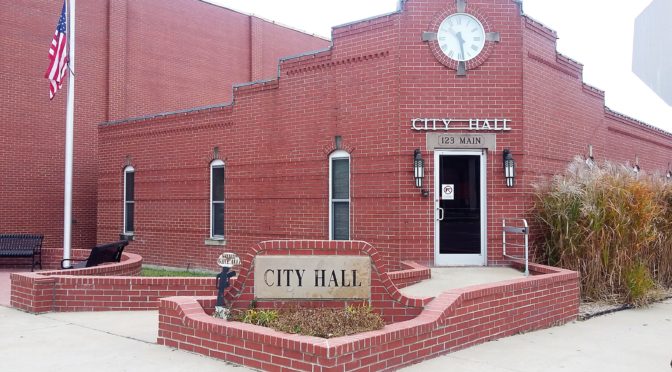
Should you have any questions, call City Hall at 620-223-0550.

We appreciate your patience and apologize for any inconvenience during this time.

FSCC TRIO Student Support Services celebrate First Generation Day

maroon, white, and gray. Trio logo top left, two paws under that. "first generation day" written at the bottom. Two pics of students on the right

Fort Scott, KS. — Fort Scott Community College’s TRIO Student Support Services (SSS) program will be celebrating First-Generation College Celebration Day on November 8, 2021.

“First-Generation College Celebration Day is a day to recognize and celebrate the bravery and tenacity of first-generation college students,” says Holli Mason, Director of TRIO SSS at FSCC.

First Generation College students are students who are the first in their families to attend college.

In 2017, the Council for Opportunity in Education (COE) and the Center for First-Generation Student Success (Center) launched the inaugural First-Generation College Celebration.

COE and the Center said, “We are particularly excited to elevate the celebratory efforts of the community and technical colleges, and Minority-Serving Institutions, as these institutions serve and graduate a significant proportion of first-generation students.”

FSCC TRIO is participating by hosting an inspirational speaker, Juan Cangas from CoolSpeak.  He will speak to students about making smart decisions and decisions that will make a positive difference in their lives.

“Student morale starts to drop towards the end the semester, so we thought this would be a great pick-me-up to motivate students to finish the semester strong,” says Stacy Bishop, a TRIO Advisor and chairperson for FSCC First-Generation College Celebration Day.

“We will be sharing motivational quotes, highlighting First Gen students, faculty, and staff, and hosting a reception following Juan’s presentation,” explains Bishop.


Mason explains how important TRIO programs are to Bourbon County, Ft. Scott, and FSCC:


“Nationally, approximately 1/3 of students seeking higher education are first generation students.  54% of FSCC students are first gen, and 80.8% of Bourbon County residents over age 25 have not obtained a bachelor’s degree.”


TRIO Student Support Services (SSS) is a federally funded program that provides academic support to 150 eligible students enrolled at Fort Scott Community College.  SSS provides the following services to all members, free of charge: mentoring, academic advising, personal coaching, transfer and scholarship assistance, campus visits, cultural events, tutoring services, and workshops.

Bourbon County Local News